Category Archives: Transportation

Housing Needs More Freedom, Innovation, Not More Loans

This post is based upon remarks I made in a panel discussion yesterday, a blogger luncheon on Housing & Opportunity hosted by Housing Opportunities Made Equal. — JAB

Housing policy is badly flawed, the artifact of the-Post World War II era of boundless geographic expansion of our metropolitan regions. Here in Virginia, we must thoroughly re-think our approach to housing as embedded in our zoning policies and comprehensive plans. We need to place less emphasis on expanding the housing stock and making it “affordable” by traditional means (like borrowing more) and put more emphasis on making it affordable by reconfiguring the existing housing stock to meet changing market needs.

The era of mass OverConsumption is over. Bipartisan policy in Washington, D.C., pushed home ownership for more than 60 years: tax deductions on mortgage loans, Fannie and Freddie, the Community Reinvestment Act, the lowering of lending standards and the relentless expansion of credit. The 2000s housing boom was the logical result, and the 2007 crash the inevitable consequence. Consumers are still digging out from under the debt. Households no longer harbor the illusion that home ownership is a sure pathway to wealth accumulation. Chastened lenders have tightened lending standards. There is no going back to the way things were. We have entered a new era for housing.

Consumer demand for housing is undergoing an epochal shift. Baby Boomers are retiring, and most of them haven’t saved enough money to retire comfortably. Many would trade down to smaller houses if they could, but personal market conditions aren’t terribly obliging. One thing we can say for sure, the Boomers, who drove the housing mania for bigger houses, larger lots and vacation homes, are spent as a force for continued expansion of the housing market.

The Millennial Generation (the under 30 crowd) has a very different attitude towards home ownership than their parents. They don’t buy into the American Dream of living in a Single Family Dwelling on a large lot, spending half their spare time maintaining the house and yard, and the other half commuting long distances to work. They value freedom and flexibility. Even if they wanted to buy houses, most of them couldn’t. This generation is weighed down by $1 trillion in student debt.

We’re seeing an increase in demand for multi-generational housing. Boomerang kids are living with their parents longer than anyone expected. And, often, grandpa and grandma are moving in with their Boomer children. One way to cope with hard economic times is to economize on living space, for more people to live under roof together. Perhaps that togetherness will diminish when the economy improves — assuming that it does improve, which can’t be taken for granted — and 20-somethings move out to live on their own. But the trend toward multi-generational living as a means for caring for aging seniors is only likely to increase.

Finally, the country has yet to come to grips with the rising cost of automobile ownership. Gasoline prices get a lot of attention but the media has overlooked the bigger story, that automobiles are getting more expensive as government continues to impose stricter safety, environmental and fuel-economy standards, and as manufacturers convert cars into mobile entertainment and communications centers. The higher cost undermines the logic of “drive until you qualify.” Virginians will be less attracted to communities on the suburban frontier and more drawn to walkable, mixed use communities closer to their jobs and more transportation options.

Supply is seriously out of whack  with demand. Looking ahead, Virginia will need fewer Single Family Dwellings on big lots in the boonies and more apartments, condos, small-lot housing closer to the urban core. It’s impossible for anyone to know the exact mix, and indeed the precise mix will continually change. But it’s safe to say that county comprehensive plans are way behind the curve.

County zoning codes represent adaptations to six decades of growth and development, flight from urban cores and expansion of metropolitan peripheries. These codes, and the comprehensive plans that translated them into real life, created what we call “suburban sprawl”: segregated land uses, low-density development, hop-scotch development and auto-centric community design that virtually eliminated walking, biking and mass transit as transportation options.

Freer markets are the solution. The way to approach Virginia’s housing needs of the 2010s is not to gin up more low-interest loans so people can buy more square footage. Rather, we need to scrape away the regulatory barnacles that impede the ability of real estate markets to adapt to the new realities. For starters, that means giving developers more flexibility to be creative and innovative. Instead of forcing them into cookie-cutter developments, we should give them more freedom. If they use that freedom to build more cul de sac subdivisions in response to demand, so be it. But if they think the market is better served by increasing density, mixing land uses and creating communities reminiscent of what was built in the 1920s or even earlier, we should let them.

Meanwhile, we should allow home owners more flexibility. Instead enshrining the one-family-per-house uniformity, let people do what they want with their own property. Let them generate extra income — and create affordable housing units — by converting excess space into granny flats, basement apartments or garage apartments — or, the gods forbid, even turning single-family dwellings into duplexes.

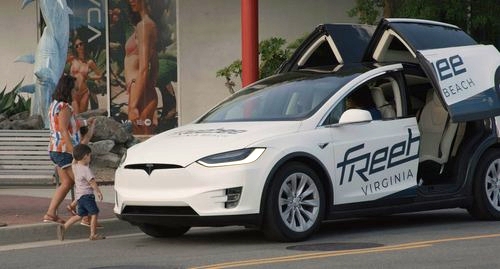
Finally, recognizing the increasing expense of automobile ownership, we should take a fresh look at shared ridership as a means to connect people between home and work. Traditional models of mass transit are perennial money-losers and we cannot long afford them in times of fiscal austerity. It’s time to bust up the municipal transit monopolies and encourage private competition to serve the growing need.

From zoning, comprehensive plans and transportation, the answer isn’t more government action — to a large extent, ossified government institutions and practices are the problem. The answer is rolling back government and letting developers, entrepreneurs and homeowners the freedom to reinvent the way we live and travel.

Subscribe To Site:

Commonwealth Lines up Talent for Infrastructure Deals

An important story that I (and everyone else) missed… The Office of Transportation Public-Private Partnerships (OTP3) announced earlier this month the selection of its team of consultants to help in negotiations with complex P3 deals. (See the press release.)

Developing a bench of outside consultants is critical as the Commonwealth pursues partnerships to build billions of dollars worth of mega-transportation projects. Private infrastructure-investment firms hire top financial, legal and engineering talent to support their deal making, allowing them to run circles around career public-sector employees not trained in deal financing, risk management, traffic modeling and other arcane issues.

The outside expertise won’t come cheap but it should allow Virginia to cut better deals on multi-billion dollar P3 deals, potentially saving hundreds of millions of dollars over the life of the projects, often lasting 50 years or longer, and obviating hidden risks.

The outside teams include:

  • Halcrow, a cH2M Hill company (engineering)
  • Infrastructure Management Group (project finance)
  • KPMG (infrastructure finance)
  • Mercator Advisors (capital markets expertise)
  • Public Financial Management (financial advisory services)
  • Reynolds, Smith and Hill (infrastructure consulting)
  • CDM Smith (transportation consulting)

– JAB

Subscribe To Site:

Virginia Ports Need More than Rail to Handle Cargo Growth

MSC Roma

by James A. Bacon

In Mid-March the MSC Roma paid a stop at the Port of Virginia. Setting a record for a container ship in Virginia waters, the vessel drew 48 1/2 feet when it departed with export-bound containers. Virginia was the only port on the East Coast with channels deep enough to handle the vessel loaded that heavily.

There are a lot more vessels the size of Roma, says Joe Harris, media relations manager for the ports. “They’re all over the water — they’re just not coming to the East Coast yet.” But they will, he says, and Virginia will see them even before the Panama Canal opens its third, wider canal lock in 2014.

The Virginia Port Authority, railroads, shipping companies, logistics companies and even the state of Virginia are preparing for the boom in East Coast container traffic that will flow from the shift in the shipping industry to ever bigger vessels. The question logically arises, will the Hampton Roads transportation network be able to handle the surge, or will roads and railroads become a bottleneck that constrains growth?

Here at the Bacon’s Rebellion command bunker, we have been investigating the impact of the big-ship revolution on Virginia’s economy from a public policy perspective. How can Virginia business and government maximize the benefits of the big ships? And what public investments make sense? In particular, does the commitment of $500 million in public funds to the U.S. 460 Connector, which would provide a second Interstate-quality highway link between the ports and Interstates 95 and 85, make economic sense?

A spirited debate has taken place in previous blog posts, and Rebellion contributor Peter Galuszka posed a very good question in “Closely Watched Trains.” Norfolk Southern and CSX are investing hundreds of millions of dollars upgrading their rail systems to handle double-stacked trains out of Hampton Roads, he noted. Doesn’t that make the $1.8 billion road project unnecessary?

In answer to that question, here’s what I found: Railroads are most competitive for cargo being shipped 500 miles or more. Norfolk Southern and CSX totally dominate the movement of goods to the Midwest and other points far to the west. But trucks are more competitive for shorter hauls. While the railroads can accommodate some of the growth in container shipments, they cannot handle it all.

The ports move 1.1 million containers yearly. Rail moves about 30% of that traffic, barges 4% and trucks the balance, or about two-thirds. Harris is optimistic that railroads will grab a rising share of a growing market. Norfolk Southern and its public-sector partners have invested $320 million upgrading its Heartland Corridor route to handle double-stacked trains, effectively doubling its capacity to serve Midwest markets from Norfolk. As part of the National Gateway Freight Project, CSX Corp. is spending $165 million on a single improvement, the Virginia Avenue Tunnel in Washington, D.C., to create a double-stacking corridor to Ohio.

Harris is reluctant to forecast container traffic through the Virginia ports because the volume is so dependent upon general economic conditions over which the port has no control. Will the American public start consuming again, he asks. Will retailers continue to boost imports from the Far East? Early in the past decade, the ports showed growth rates of 8% to 9% annually. After taking a big hit during the 2007-2008 recession, the ports now are forecasting a more modest 3% yearly volume growth. That may be conservative. Ship lines and shipping alliances are testing Virginia to see how well the ports handle their big vessels.

Long-term, Harris expects the railroads to increase their inter-modal share to 40% of container traffic, an increase of 10 percentage points. That’s all the more remarkable when you consider that the Virginia ports already move a higher percentage of its containers by rail than any other East Coast port. Rail accounts for only 18% in New York and Savannah.

A rule of thumb is that rail captures the container business to markets more than 500 miles away, while the economics favor trucks for shorter distances, says Quintin Kendall, regional vice president for CSX. That means trucks will predominate in shipments to Mid-Atlantic markets, competing with Baltimore and Philadelphia in the north and Wilmington and Charleston to the south. That business will be highly competitive. As Kendall puts it, Virginia is a “discretionary market” port.

What does this all mean for our analysis of Virginia’s $500 million commitment to the U.S. 460 Connector?

  • Railroads are poised to capture a growing share of the inter-model market for Virginia’s ports, from 30% currently to 40% in the indefinite future.
  • Railroads are less competitive serving markets less than 500 miles away, where truck traffic will predominate.
  • If container traffic increases 3% annually over the next decade, railroads will be able to handle only that portion destined for distant markets. (Barges are a negligible factor.)
  • Truck traffic will increase. The rate of increase may depend upon the degree of congestion on Virginia bridges, tunnels and highways and the ability of competing ports to improve their infrastructure.

Thus, to answer Peter’s query, yes, railroads can handle some of the increase in container shipments over the next decade but only a fraction of it. For Virginia to reach its full economic potential, the commonwealth needs to increase its highway capacity serving Hampton Roads. Failing to increase that capacity could mean foregoing some economic growth, though how much is hard to say.

That still leaves open the question of whether the U.S. 460 Connector is economically justified: $1.8 billion, including $500 million in public dollars, is an immense sum. That money could be invested elsewhere or left in the hands of taxpayers. Alternative investments would have economic benefits of their own. Perhaps the most objective way to address this issue is this: Does the U.S. 460 Connector create enough economic value to support the toll structure required to finance its construction? If so, state government should find a way to make it happen. If not, perhaps the economic justification does not exist.

We’ll dig deeper in a follow-up article.

Subscribe To Site:

Where’s the P3 Money Going?

The big winner: Southeastern Virginia

Four days ago Stewart Schwartz, executive director of the Coalition for Smarter Growth, issued an analysis contending that the McDonnell administration could find $300 million to support the Rail-to-Dulles heavy rail project from funds set aside for public private partnerships. That argument is moot now that the state Senate approved the 2013-2014 budget without the extra monies for Dulles rail.

But Schwartz made a point that still resonates: “The Virginia Secretary of Transportation,” he said, “should provide a clear presentation of his funding allocations and priorities to the legislators.”

Here’s how Schwartz reconstructs state commitments to public private partnerships so far:

  • $124 million to the Coalfields Expressway
  • 350 million in GARVEE bonds for the Midtown/Downtown tunnels
  • $124 million (proposed) for Interstate 95 HOT lanes
  • $500 million (proposed) for Route 460

(Note: The precise state allocation to the Midtown/Downtown tunnels is still under negotiation as the administration seeks to provide roughly $100 million in toll relief.)

Those projects account for nearly $1.1 billion, or more than two-thirds of all the money the state has set aside for public-private partnerships (P3s). As it currently stands, Hampton Roads, with 21% of the state population, will wind up with 57% of all the boodle. I find it remarkable that no one is complaining that one corner of the state should receive the lion’s share of P3 funding. Is anyone paying attention?

Schwartz is particularly critical of the U.S. 460 Connector: “Hampton Roads officials have said Route 460 is not their priority and that they would rather have the funds allocated to their traffic choked bridge/tunnel crossings. During this legislative session, they have campaigned for funds to reduce the toll burden imposed in the current PPTA deal for the Midtown/Downtown tunnels and they have asked for Route 460 funds to be allocated to the James River crossings.”

Governor Bob McDonnell views U.S. 460 as an economic development project, and economic developers concur that the potential exists to turn U.S. 460 between Suffolk and Petersburg into a world-class manufacturing and logistics corridor. But the question remains: Is the potential so enormous that it justifies allotting one-third of all P3 money to a single project?

Count on Bacon’s Rebellion to keep asking the questions that people should be asking.

– JAB

Subscribe To Site:

Loudoun’s Metro Marriage

This guest column was contributed by David LaRock, a Loudoun County resident and member of the Loudoun Opt Out Group.

Speak now, or forever hold your peace.

Spring is here, romance is in the air, and the arranged marriage between Loudoun County and D.C. Metro seems destined to take place. Although the courtship has spanned decades, the moment draws near when Loudoun must choose whether to whisper the final words of acceptance.

The people of Loudoun know a little about their persistent suitor, but do they know enough? Metro appears to have serious character and money problems.

Around 2004, the Washington Metropolitan Area Transit Authority (WMATA) initiated a fund-raising campaign to address an unfunded $1.5-billion, six-year capital program. Today, according to WMATA’s 2012 budget, the Capital Needs Inventory — the stuff that needs to be replaced as it wears out — has soared to $13.3 billion projected through 2020. That is a total increase of $11.8 billion over 8 years — an addition of $1.5 billion per year. Where will these funds come from?

Beyond 2020, where will the $1.5 billion per year come from to keep the 35-year-old, 106-mile Metro system in good repair? If there is a schedule or plan showing how WMATA will address the ongoing physical depreciation of equipment and facilities, it is nowhere to be found.

For all of its life, Metro has struggled with a lack of dedicated funding sources, relying heavily upon annually appropriated support from state and local governments. That dependence makes the agency vulnerable to recurring financial crises. What if anything, is being done to change that? Loudoun needs to know before tying the knot.

Metro has been hounded for many years by a series of setbacks: lethal accidents, mechanical problems and breakdowns on buses and trains, overcrowding, communications troubles, and ongoing elevator and escalator hassles. Is there any evidence to support the idea that this is changing? Loudoun is listening. Read more.

Subscribe To Site:

CTB Authorizes $100 Million for Norfolk Toll Relief

Virginia Highway Commissioner Gregory Whirley

by James A. Bacon

The Commonwealth Transportation Board has allocated approximately $100 million in transportation funds to cover the cost of delaying tolls on the Midtown-Downtown tunnels for a year and half, but Norfolk-area commuters still will be stuck paying tolls for two or more years before the new tunnels and Martin Luther King Boulevard extension are complete in 2017.

The $100 million does not come at the expense of other projects. The Virginia Department of Transportation had originally dedicated $395 million in state funds to the tunnels, the top transportation priority in Hampton Roads, but ended up needing only $305 million at deal closing, freeing up $87 million. The state also will tap up to $50 million in GARVEE bonds, backed by future federal transportation fund payments, to cover the balance, explained Virginia Highway Commissioner Greg Whirley. The state had set aside that GARVEE bonding capacity for the project but ended up not needing it.

Whirley could not say exactly how much it will take to eliminate the tolls under the agreement with Elizabeth River Crossings (ERC), the tunnel project concessionaire, but he’s confident that it’s in the $100 million range. The final figure will have to be negotiated with ERC. The CTB action should provide more than enough to cover the cost.

Transportation Secretary Sean Connaughton described the action as an effort to be “responsive to the requests and desires of the General Assembly.” Senator Louise Lucas, D-Portsmouth, had introduced legislation to delay the onset of tolling for a year and a half.

However, foes of tunnel tolls are little mollified. As the Virginian-Pilot reports today:

Del. Kenny Alexander, D-Norfolk, who has hired a lawyer and threatened a lawsuit, called the action “a $100 million giveaway.”

“I’m not in favor of giving Elizabeth River Crossings any more money, not another dime,” Alexander said, adding that he still prefers to stop the project and work out a new deal. “$100 million doesn’t change the toll rate.”

CTB members expressed disbelief that Hampton Roads legislators were taken by surprise by the tolls. “I’ve been on this board two years. I was shocked that there was an uproar over the tolls,” said Aubrey L. Layne, Jr., Hampton Roads district representative. “There were always going to be tolls. There were numerous meetings.”

Shep Miller

“I don’t see how anyone could view this as a surprise,” echoed W. Sheppard Miller III, an urban at-large representative from Norfolk. However, he conceded that Virginia is still new at rolling out public-private partnerships like the Midtown-Downtown project. “We’re learning.”

Tony Kinn, director of the Office of Transportation Public Private Partnerships, defended VDOT’s outreach efforts, listing CTB discussions in Richmond and public hearings in Hampton Roads. (See presentation.) But, he conceded, “There are things we could do better.” In future projects, he said, “We’re planning to add a mass communication component to the process.”

Subscribe To Site:

ALEC, the Tea Party and the Feral GOP

House Speaker William J. Howell

By Peter Galuszka

Virginia’s conservatives have gone through a spasm of controversy as they struggle to find their message. They desperately need to balance their ideas of fiscal discipline and limited government with a wide spectrum of unrelated hard-right social issues.

The clearest evidence yet of the quandary for their soul involves the American Legislative Exchange Council (ALEC), which has just backed away from pushing “Stand Your Ground” laws that were involved in the shooting of a young African-American from Florida, Trayvon Martin.

ALEC had been a cozy, four-decades-old group of deep-pocketed corporations and lobbyists that ghostwrote template-style laws for state legislatures around the country to boost the conservative agenda of cutting taxes and government spending and cater to the business community’s desire for few regulations. For a long while, it seemed like a gigantic Chamber of Commerce funded by big corporate names such as Coca-Cola, Wal-Mart and Johnson & Johnson to push business-friendly laws.

But as the Tea Party movement gained steam in 2010, its disparate elements pushed right-wing social issues that ended up alienating many and polarized legislatures, including Virginia’s General Assembly. That spilled over into ALEC, which ended up pushing voter ID laws designed to take voting power away from minorities when there was no real issue over identity fraud and suck up to the gun lobby by pushing the idea that if one feels under attack, he or she may whip out a firearm and blow away an assailant without much legal consequence.

Incredibly, Virginia taxpayers have shelled out $231,000 over the past decade so legislators, mostly Republicans, can go to ALEC confabs and learn what the latest is in conservative designer legislation. A big player is House Speaker William J. Howell (R-Stafford), who, according to The Washington Post, made 60 percent of his publicly funded trips to ALEC meetings.

The unexpected fury over the  Trayvon Martin shooting involving a Stand Your Ground law blew everyone’s cover. It had the entire cossetted ALEC world tossed on its head. Firms such as Coca-Cola, Mars, Wendy’s and Kraft, all of which are consumer products firms whose billions debate on a positive public image bailed on ALEC. The constant deluge of the Trayvon shooting was very bad for their business. Now ALEC says it is dumping social issues and sticking to economic ones.

Howell didn’t seem to know what to do. He attacked left-leaning critics such as “ProgressVa” and had the bad taste and judgment to personally insult Anna Scholl, the head of ProgressVA at a press conference, demeaning her intelligence by saying he needed to speak to her only in monosyllables. Howell, usually more stately than that, soon issued a public apology to Scholl.

What’s revealing about Howell’s tantrum, however, is how it shows that mainstream conservatives really don’t know what to do with the social radicals in their movement. For years, they’ve enjoyed the upscale, closed-door demeanor of ALEC meetings until the Tea Party types shook everything up. It was fine, everyday work bashing unions and trying to cut taxes for companies and the rich. Yet they became spooked by what ended up being a weak, ephemeral and loosely organized group that they went freak-out if not totally feral.

Big business interests figured it out faster and with the exceptions of firms such as Wal-Mart, they bailed on ALEC. This shows that a lot of the GOP stalwarts in Virginia and nationally have feet of clay. They are not sure of their agenda, as their unimpressive primary run so far has shown. Locally, they have let social right-wingers hijack this year’s General Assembly with issues that had been decided decades ago, such as women’s right to abortions and gay rights. Real work important to the Commonwealth didn’t get done. Because of the distractions, it took four tries to get a (bad) $85 billion budget passed.

It is time to put the Tea Party in its place and get past it. The Republicans are paying a huge price and will probably lose the presidential election if they continue. Meanwhile, the Democrats, who have stood on the sidelines snickering at the GOP melee, need to get engaged and shut down this social nonsense once and for all.

Subscribe To Site:

Drive Down Dulles Tolls by Restructuring Bond Financing

Sean Connaughton

by James A. Bacon

If the Metropolitan Washington Airports Authority (MWAA) restructured the way it plans to finance the Rail-to-Dulles project, it could reduce tolls on the Dulles Toll Road by $.90 per driver in the early stages, Transportation Secretary Sean Connaughton told the Commonwealth Transportation Board today.

“We’ve been going through their finances. We can show them very easily how they can … dramatically reduce the toll rates by changing how they sell bonds and [utilize] fund balances,” Connaughton said.

“These changes would be more beneficial than the $300 million being tossed around” in the General Assembly, added Virginia Highway Commissioner Gregory Whirley.

Northern Virginia toll rates emerged as the deal-killer issue in the budget showdown between Republicans and Democrats this year. Senate Democrats blocked approval of the 2013-2014 budget on the grounds that it did not contain $300 million to help offset the fare increases that would be needed to finance Phase 2 of the Metro extension to Dulles airport.

Connaughton expressed frustration that the VDOT analysis had gotten no traction in the Senate. “We are attempting to get them to understand. … This could have a dramatic impact.”

Phase 2 of Rail-to-Dulles, currently estimated to cost about $2.8 billion, does not meet the cost-benefit prerequisites to qualify for federal funding. Therefore, Fairfax County, Loudoun County, MWAA and the state of Virginia must finance the entire cost themselves. Under the original financing agreement negotiated by the Kaine administration, the state’s share would come from revenues from the Dulles Toll Road. It has recently dawned upon Northern Virginia politicians that the financing requirements of the rail project could push tolls to $10.75 by 2028.

Earlier this year the McDonnell administration said it could contribute an additional $150 million in undesignated transportation funds to help buy down the toll increases for the first two  years. But Senate Democrats, locked in a power struggle with Republicans, insisted upon $300 million more from unidentified sources.

Connaughton said it’s not easy to come up with $300 million on the spot. Transportation funding is bound by rules and restrictions. Funds allocated for roads and highways, for instance, can’t be willy nilly transferred to mass transit. Moreover, most state construction funds are committed already as matching dollars on federal projects, and yanking the money could lead to the loss of the federal dollars. And there are practical limits to how much more the state can borrow.

It would be easier to find the money next year. The irony, says Connaughton, is that the money for Rail-to-Dulles isn’t even needed until next year. He thinks the issue is a “power play.” First the Senate Dems, whose 20 votes are sufficient to block the budget, said they wanted more power sharing. Then they wanted money for K-12 schools in Northern Virginia. Now it’s money for Dulles rail. “Every time we address their concerns, it’s something else.”

Even if the General Assembly coughed up the $300 million from some as-yet-unidentified source, there is no assurance that the CTB, whose approval is required by state law, would allocate it to Dulles rail. Several CTB members expressed reservations yesterday.

Cord Sterling, representing the Fredericksburg district, will be a hard sell on extra money for Dulles Rail.

Most outspoken was Cord Sterling, the Fredericksburg district representative. Giving an extra $300 million to Dulles rail, he said, would be “draining the rest of the commonwealth of resources.”

“Somebody made an irrational decision to do a phase of the project that was not feasible,” Sterling said. The project could not be funded without sky-high tolls, and the prospect of high tolls raised an outcry. Now Northern Virginians want taxpayers from across the state to bail them out. “Northern Virginia is not hurting” in terms of transportation expenditures, he said referring to an earlier statement by Thelma Drake, director of the Department of Rail and Public Transit (DRPT) that Northern Virginia already consumes 89% of departmental funds allocated to transit capital spending and 72% allocated to transit operations.

Whirley contended that there was no need for added funds, at least not right now. VDOT has not conducted an “exhaustive” review but he’s seen enough to suggest that MWAA should go back to the table. By his calculation, MWAA could avoid issuing $400 million in bonds by 2016, enough to eliminate the need for two planned toll increases.

What makes VDOT, a highway agency, an expert in financing heavy rail projects? Said Connaughton: VDOT has developed considerable experience with mega-projects involving large fund balances.

Update: This just in… Governor Bob McDonnell has issued a press release hailing Senate passage of the state budget. Apparently, the final budget version does not contain the earmark for Dulles rail. Regardless, the McDonnell administration should push MWAA to take another look at its bond financing plans to see if the savings postulated by Whirley are achievable.

Subscribe To Site:

Rail-to-Dulles Controversy Goes Statewide

A house divided

The debate over Rail-to-Dulles has taken a fascinating new twist. For years the controversy over the heavy rail project and its concomitant financing through Dulles Toll Road revenues has been a purely Northern Virginia issue. It received zero coverage in the Rest of Virginia (RoVa). Ninety-nine percent of downstate residents were ignorant of it, and the other one percent was indifferent (with the exception of your humble correspondent and a handful of others).

Now Rail-to-Dulles financing has become the sole remaining object of dispute between Senate Republicans and Democrats in resolving the state budget impasse. The controversy has spilled over regional boundaries. Suddenly, what happens in NoVa matters to RoVa.

So far, the proposal to borrow an additional $300 million — to be applied to reducing Dulles Toll Road fares incurred to help finance Phase 2 of the Rail-to-Dulles construction — has divided the General Assembly according to partisan, not regional, lines. Senate Democrats from RoVa have hung tough on the issue, even though their constituents will help shoulder the added debt burden. That raises the issue of whether Rail-to-Dulles is really a cause or pretext. Is it just a tool for getting Senate Dems what they really want, which is parity in committee and subcommittee representation in line with their 20 seats in the 40-member body?

It will be interesting to see if regional tensions manifest themselves later today at the Commonwealth Transportation Board. The McDonnell administration will ask the board to allocate $100 million to help offset tolls for the Midtown-Downtown Tunnel project in Norfolk and Portsmouth. Sounds fair, considering that Governor Bob McDonnell has already promised $150 million in state funds for Rail-to-Dulles (possibly contingent upon resolution of a controversy over Project Labor Agreements in the bidding process). Is that enough to mollify CTB members from Northern Virginia? Will they express support for the additional $300 million in borrowed funds? Will rural representatives object to all the swag going to urban districts. Or will they simply rubber stamp administration requests?

Stay tuned.

– JAB

Subscribe To Site:

Skirting the Maelstrom

by James A. Bacon

It’s Business As Usual in Virginia as the political class grapples over budget issues seemingly oblivious to what’s happening in other parts of the world. Politicians of varied political stripes seem to think it’s a perfectly good idea to borrow another $300 million, over and above $150 million already set aside, to subsidize the Rail-to-Dulles project, an action that would push Virginia to the edge of its borrowing capacity consistent with a AAA bond rating.

What could possibly go wrong?

We’ll, let’s see. Despite the most massive peace-time monetary and fiscal stimulus in the modern history of the United States — near-zero interest rates and four years of $1 trillion+ deficits — the economic recovery remains the weakest since the Great Depression. Meanwhile, Hampton Roads and Richmond are under-performing in the current economic recovery, while slowdowns in the federal spending trajectory promises to slow future growth of the state’s only economic engine, Northern Virginia.

There is nothing left in the economic arsenal to goose the national economy along. The United States is caught in the same kind of debt trap as Europe, in which cutting spending or raising taxes will damage short-term economic growth prospects and not cutting spending or raising taxes only postpones the final reckoning. That reckoning will come, whether it takes a year or a decade. The longer the delay, the greater the debt build-up and the more painful the ultimate confrontation with reality.

Once again, we are reminded of how vulnerable some of the major European economies are, and by comparison we ourselves. Spain, a democratic welfare state with the world’s 12th largest economy, is back in the headlines.

Madrid has committed to reducing a budget deficit of 8.5% of GDP last  year to a mere 5.3% this year, which is necessary to maintain credibility among the buyers of Spain’s debt. Trouble is, such austerity is shrinking the economy — not a good thing when unemployment is already running higher than 24%. And the cuts still may not be enough to restore investor confidence. The yields on 10-year Spanish Treasuries topped 6% Monday. As interest rates rise, so do debt payments. Higher debt payments mean bigger deficits, bigger deficits push up interest rates, and so on.

The United States faces a similar challenge. The deficit this year is roughly 8% of GDP, comparable to Spain’s. But our debt as a percentage of GDP is way higher: 94% in 2010 compared to 60% for Spain. If Treasury bond yields reached 6% as in Spain, it would translate eventually (after long-term bonds matured) into additional debt payments of roughly $450 billion a year! There would be no way to cut spending or raise taxes enough to offset that burden. Of course, the U.S. is not Spain. We have our own currency, which means the Federal Reserve can buy as much Treasury debt as it wants. But that would lead to runaway inflation, which would substitute one form of economic chaos for another.

I have seen absolutely nothing since writing “Boomergeddon” two years ago to suggest that the U.S. can avoid a fiscal meltdown. Locked in internecine political warfare, Democrats and Republicans have blown their chance to reduce the deficit and establish credibility with financial markets. We are fast approaching the point at which the fiscal slide becomes irreversible.

Now, ask yourself. When federal finances melt down, with incalculable consequences, where would you rather be living? A state with strong enough finances to maintain core services through the ensuing chaos? Or a state that gets sucked into the maelstrom along with the federal government? Personally, I’d prefer to live in a solvent state and a solvent county. And that means making responsible financial decisions now.

On the positive side, Moody’s Investment Services just noted that this year’s changes to the Virginia Retirement System will reduce state pension contributions by $3.6 billion over the next 21 years and “put it on a more sustainable path to fully [fund] its pension commitments, which is credit positive.”

It will be interesting to see whether Moody’s will have anything to say if Virginia takes on an additional $300 million in transportation-related debt.

Update: I have made a small edit to this post in response to an exchange with DJ Rippert in the comments.

Subscribe To Site: