• “Bert, You Useless, Racist, Fat [Bleep]!”

    by James A. Bacon

    So much for civil discourse at the University of Virginia. So much for empathetic listening. Soothing aspirations emanate from the President’s Office, but it appears that many members of the University community haven’t gotten the message — or just plain reject it.

    A week ago, The Cavalier Daily student newspaper published an article reporting that the UVA administration had suspended the Student Guides from giving historical and student-orientation tours. By way of context, the article noted that Bert Ellis, a Board of Visitors member and former president of The Jefferson Council, had been a vocal critic of the Guides, some of whom gave what amounted to half-hour walking tours of the history of racial oppression at UVA.

    The article then quoted Ellis as follows:

    โ€œโ€‹โ€‹The University Guides now seem intent on โ€˜contextualizingโ€™ Mr. Jefferson as a slave holder and rapist, and to completely undermine his part of the Founding of America and our University,โ€ Ellis said in a 2021 article published to The Jefferson Councilโ€™s website.

    Ellis has been labeled as a racist and a homophobe by people who disagree with his political views, and he has shrugged off the slurs. But even he was unprepared for this response.

    (more…)


  • Jamming Statistical Square Pegs into Round Holes

    by James A. Bacon

    Another day, another study highlighting a racial “disparity.” In this case the study, published by Julian, a civil-rights and international andย internationalย human-rightsย organization, focuses on racial disparities in traffic-stop outcomes in Virginia.

    The findings have been uncritically reported by Radio IQ — headline: “Race is a factor when police stop drivers in more than 90 Virginia communities” — as well as the VA Scope newsletter, WVEC in Norfolk, and what surely must be an AI-generated recapitulation by MSN for national distribution.

    The authors, Charles Meire and Saman De Silva with Julian, dig into data on 3.2 million traffic stops compiled since the Virginia Community Policing Act mandated its collection in 2020. The underlying supposition of the enabling legislation was that racial disparities were evidence of “bias-based profiling,” and such is the underlying premise of this report as well.

    The only thing that can safely said about the conclusions in the study, “Disparate Impact: A Statistical Analysis of Virginia Police Stop Outcomes,” is that racial disparities in the incidence of traffic stops and outcomes from those stops do exist. But the interpretation of those disparities is very open to debate.

    (more…)

  • Why Is Fairfax Unhappy With the New K-12 Accountability System?

    by James A. Bacon

    Fairfax County educators are dissatisfied with the Youngkin administration’s new accountability system for Virginia’s public schools. They are arguing that the Every Student Succeeds Act (ESSA) plan, which goes into effect next year, will paint an inaccurate picture of how schools and students are performing, reports WTOP News.

    During a school board work session last week, Michael Molloy, director of the school districtโ€™s government relations office, said the system is โ€œextremely heavily weighted toward mastery, toward passing a test.โ€ While there is a growth component included in the evaluation, he said, itโ€™s โ€œa relatively limited component, less so than I think the current system accounts for growth.โ€

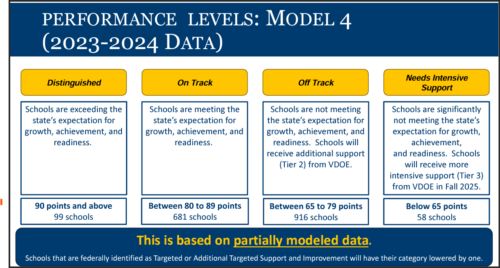
    Under the new regimen just approved by the Virginia Board of Education, public schools will be classified in 2025 as Distinguished, On Track, Off Track, or Needs Intensive Support. More than half of Virginiaโ€™s public schools would be labeled โ€œoff trackโ€ under the new system. Using a provisional model based on partial data, Virginia Board of Education staff estimated that 58 would be labeled as needing “intensive support.”

    Source: FINALIZING VIRGINIAโ€™S SCHOOL PERFORMANCE AND SUPPORT FRAMEWORK Virginia Board of Education August 2024

    (more…)


  • New Battle of the James Centers on Dominion Gas Plant

    By Steve Haner

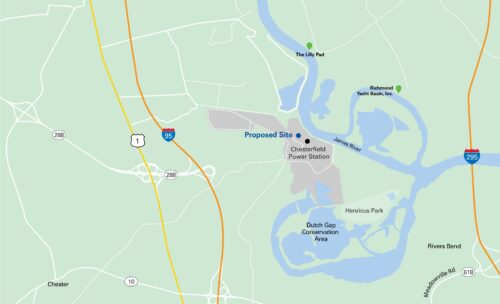
    Lee pulled his army out of the trenches along the James River south of Richmond and retreated to Appomattox just under 160 years ago (Iโ€™m rereading some Civil War history this month). Now the peace of the region is about to be shattered by the next battle in America’s great energy civil war, because Dominion Energy Virginia wants to build a new natural gas powerplant in the area.ย 

    Dominion has been making an outreach effort to the people of that part of Chesterfield County and has mounted a public relations campaign in support of the proposed 1,000 megawatt plant. The activist opponents, who would fight any gas-fired facility no matter what the circumstances, have now announced they plan to bring their challenge to Dominionโ€™s neighborhood open house tomorrow, Sept 5.ย  ย 

    The 6 p.m. Dominion presentation at a local hotel (details here) will be preceded by the opponentโ€™s program at a restaurant next door.ย The message, of course, is that if the plant is built, its emissions will worsen health and even kill people. One flaw in the message is that the small gas plant will be built on the site of a former much more massive, and much more polluting, coal generation station. If that didnโ€™t devastate and depopulate Enon, it is doubtful this will. (more…)


  • Bravo For Sweet Briar College!

    by Kerry Dougherty

    Well done, Vixens!

    Officials said they made the move to comply with recent changes to the Common Application, used by more than 1,000 higher ed institutions, which now lists four legal gender options. That change, Sweet Briarโ€™s leaders said in a message to the campus community, โ€œpresents a challenge both for students applying for admission and administrators and staff making admissions decisions.โ€

    Sweet Briar College, a small all-womenโ€™s liberal arts college, has announced a firm new policy barring the admission of transgendered students. In the past, acceptance was decided on a case-by-case basis, according to a story by insidehighered.com.

    Sweet Briar College was founded in 1901 by the estate of Indiana Fletcher Williams, who wanted to honor her deceased daughter, Daisy. The woman who left the sprawling campus was specific: Her legacy was intended to establish a place of learning for โ€œgirls and young women.โ€

    That was a straightforward mission at the turn of the last century. Itโ€™s straightforward now.

    According to the AP, in an August letter, the college president and board chair reiterated the schoolโ€™s determination to follow their founderโ€™s directions. Continue reading.


  • Down With the Machines

    Voting machine in widespread use in Virginia.

    by Dick Hall-Sizemore

    Republicans seem determined to destroy any credibility they may have regarding elections.

    The chairman of the Hanover County Republican Committee recently presented a resolution to the Hanover County Board of Supervisors that requires counting all ballots in an election by hand rather than through the use of electronic counting machines.ย The resolution also calls upon the Commonwealthโ€™s Attorney to request an opinion from the Virginia Attorney General regarding the constitutionality of the use of electronic counting machines.

    The committee bases its claim that the use of voting machines is unconstitutional on language in the Virginia constitution that states that votes may not be counted in secret.ย Apparently, the committee feels that, because one cannot see what is happening inside the machine when a ballot is inserted, the machine is counting the ballot in secret.ย That argument ignores the provision of the law that requires each machine to be tested before the election and allows a party representative to be present at the testing.

    Underlying the constitutional question is the claim that a โ€œvoter should be able to feel confident that the vote is going to count, and we don’t have that anymore.โ€

    Under the current process of administering elections, (1) any voting machine used by a locality must have been approved by the state Dept. of Elections; (2) each voting machine must be tested to ensure that it is working properly and set to O before being used in any election; (3) the voting machines are not connected to the internet;  (4) the actual ballots are retained in case there is any question; (5) the chief election officer must account for every ballot issued to his precinct; (6) the machines produce paper tapes showing the vote count for each candidate or question on the ballot and those tapes are preserved; and (7) a representative of each political party is allowed to observe each step of the process.

    I would like someone to explain to me why they feel that they have more confidence in election officers hand-counting thousands of paper ballots after they had been at the polls since 5:00 that morning than they have in the current process using voting machines.


  • Hey, What Happened to Times Tables?

    by Todd Truitt

    Virginiaโ€™s new Mathematics Standards of Learning (SOL) includes a return to memorizing the times tables this school year, like 44 other states and the District of Columbia, following a 6-year absence on ideological grounds.

    The prior SOLs’ end goal for basic number facts was Virginia students using cognitively taxing computation strategies (e.g., repeated addition for multiplication), ignoring the cognitive science that, in addition, those facts need to be memorized. The return of Virginiaโ€™s evidence-based standards on number facts (the SOL also includes memorizing addition, subtraction, and division facts) are especially important for Virginiaโ€™s least advantaged children, who are much less likely to learn such essential skills through outside resources like parents and/or tutors.

    But will Virginia school districts follow these standards or instead repeat the same mistake with math that they did with literacy, choosing ideology over science-based instruction?

    (more…)


  • “Anti-Racism” As Oppressive System

    What “anti-racism” looks like when it looks in the mirror. Bing Image Creator.

    by James A. Bacon

    One of the seven families filing a lawsuit against Albemarle County to end the county’s “anti-racist” school policies came to the United States from Panama. The father of another student listed in the lawsuit hailed from Turkey. Sometimes it takes an immigrant to see clearly just how racist “anti-racist” policies are when put into practice.

    In 2019 the Albemarle County School Board adopted an “Anti-Racism Policy” with the stated purpose of eliminating “all forms of racism in Albemarle County Public Schools,” asserts the lawsuit, which was heard by the Virginia Supreme Court last week.

    “Defendants claim that they want to stand against racism,” the lawsuit says. “But rather than eliminate racism from the School district, Defendants have done the opposite…. The policy is racist at its core.”

    The suit continues:

    The Policy and the curriculum it mandates indoctrinate children in an ideology (sometimes called “critical race theory,” or “critical pedagogy”) that views everyone and everything through the lens of race. Far from exploring ideas or philosophies surrounding justice and reconciliation, that ideology fosters racial division, racial stereotyping, and racial hostility.

    (more…)


  • Tax Reform Ideas a Stalemated Assembly Could Adopt

    By Steve Haner

    During his four-year term, tax reductions approved by Governor Glenn Youngkin (R) will save Virginians just under $8 billion, and approximately $1.5 billion or more in additional annual savings after he departs.ย Most of the rule changes that have produced these benefits occurred in the 2022 and 2023 General Assembly sessions.ย ย ย ย  ย 

    Then in 2024 the General Assembly stalemated over tax issues as Youngkin stymied a hard push from Democrats to increase several taxes, while Democrats spiked any efforts on the Governorโ€™s part to expand on his tax cuts.ย A final budget compromise that left the tax rules basically unchanged was the best possible outcome in that environment.ย 

    This stalemate environment will not have changed for the 2025 Assembly, Youngkinโ€™s final one.ย A legislative study commission that first met August 14 is heavily stacked in favor of Democrats, 9 to 3, and dominated by legislators who make all the spending decisions.ย Its work plan includes reopening the debate over expanding the sales tax to cover the digital economy, including the business-to-business provisions that were so controversial in 2024.ย ย 

    The data on the value of the Youngkin-era tax cuts come from page 14 of that work plan presentation.ย Most of the meeting was taken up with a primer on Virginiaโ€™s tax code.ย Legislators are usually better informed on how the money gets spent than on how it is raised by the state.ย ย ย 

    (more…)


  • The Little School District That Could

    by James A. Bacon

    Microsoft Image Creator’s nostalgic rendering of “little school in the Appalachian Mountains.”

    Socioeconomic status is not academic destiny.

    To be sure, there is a strong correlation between the socioeconomic status of any given school district’s student body and the average level of academic achievement as measured in Virginia by the Standards of Learning (SOL) scores. But correlation is not causation.

    Do students in a high-performing district pass the SOLs at high rates because they come from families that make more money… or because they come from families that value educational achievement, which also happens to be correlated with higher incomes? That is a critical question underlying the debate over K-12 education today.

    Dickenson and Albemarle Counties make a useful case study. Students in both school districts scored almost identical pass rates on their English SOL exams at the end of the 2023-24 school year.

    Dickenson is the poorest locality in Virginia measured by median household income. It is isolated by rugged Appalachian Mountains, accessible to the wider world only through twisting, winding roads. Its economic monoculture based on coal is almost dead. Poverty and near-poverty are endemic. More than three out of five students qualify for free or reduced lunch.

    Despite immense socioeconomic disadvantages, Dickenson ranked above average — 50th — among Virginia’s 132 school districts in the percentage of students who passed their English Reading SOLs last year.

    (more…)


  • Jeanine’s Memes

    From The Bull Elephant.


  • UVA Suspends Student-Guided Tours

    by James A. Bacon

    The University of Virginia administration has suspended the student-run University Guide Service from giving admission tours to prospective students and historic tours to the general public. The news was announced in an UVA Guides Instagram post Wednesday.

    The story generated national attention. The New York Times was the first to pick it up, followed by NBC News. The story was then repackaged and disseminated widely in other media. The prevailing narrative played up the ideological-conflict angle, noting that The Jefferson Council, an organization of “conservative alumni,” criticized the student tours for painting UVA’s history in a uniformly negative light. The Charlottesville Daily Progress went so far as to proclaim the decision a “victory” for those who disliked the Guides’ “woke version of history.”

    But, as I shall explain, it’s not clear at all why the administration acted as it did or whether the Guides’ suspension represents a vindication of The Jefferson Council — as much as I, as an active member of the Council, would like to think UVA leadership was cowed when we flexed our rhetorical muscles.

    The University administration made no mention of The Jefferson Council’s criticisms. University spokeswoman Bethanie Glover told the Times that the decision was related to โ€œissues and concernsโ€ with the guidesโ€™ attendance and the content and consistency of the tours. 

    (more…)

  • Bacon Meme of the Week


  • Keep Your Hands Off My Single Family Zoning

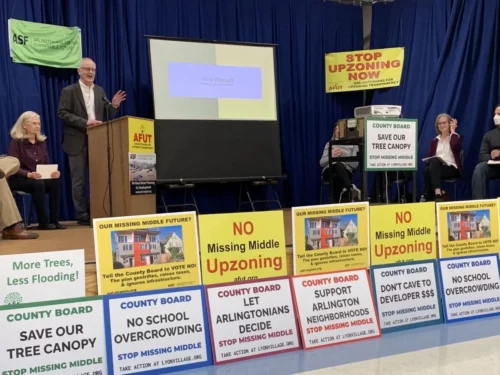
    Protest against proposed “missing middle” zoning in Arlington Photo credit: Patch, Arlington

    by Dick Hall-Sizemore

    The high cost of housing is a frequent topic of discussion in society and on this blog.ย Some observers fault local governments for their restrictive zoning practices that limit density.ย According to this argument, increasing density would help mitigate the increase in housing costs.

    The argument has merit.ย However, its proponents seem to assume that it is a simple matter for local governments to change their zoning policies.ย After all, they only have to pass an ordinance to do so.

    The experiences of two Northern Virginia localities illustrate the difficulties local governments face when trying to increase housing density. In short, they end up in court.

    After years of consideration, multiple public meetings and hearings, and much controversy, Arlington County adopted last year what is known as โ€œmissing middleโ€ zoning. The policy allows by-right construction of duplexes up to six-plexes in areas previously zoned for single family housing. The ordinance calls for limited implementationโ€”a maximum of 58 such structures per year, for five years, geographically dispersed by zoning district. (The Arlington proposal was the subject of an article on this blog earlier this year.)

    Next door, the city of Alexandria amended its zoning ordinance to allow buildings with up to four housing units in any residential neighborhood.ย 

    (more…)


  • Demolishing History: Black Hospital Edition

    by Jon Baliles

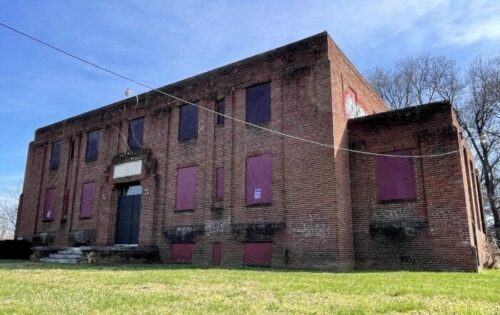
    Virginia Union conducted a staged community meeting two weeks ago to feign concern over the fate of the former Richmond Community Hospital (RCH) so they can instead quickly get shovels in the ground to build new housing developments that they find more important than preserving a critical piece of the cityโ€™s black history and heritage.

    In February, the school announced the project to build 200 new โ€œaffordableโ€ apartments for students and the public on the edge of campus and raze the depression-era, art deco style RCH building. After significant community pushback, VUU and the developers (who are based in Philadelphia) said they will preserve the faรงade of the RCH and incorporate it into one of the two six-story apartment buildings that will be built on site. VUU and the developers will co-own the project and share in the profits.

    The school said in an announcement at the time of the recent meeting: โ€œThe Virginia Union development intends to adaptively reuse much of the former Richmond Community Hospital and create the Cityโ€™s largest honor for black medical professionals โ€” permanently preserving the hospitalโ€™s legacy after decades of the building being abandoned.โ€

    Using the phrase โ€œmuch of the former RCHโ€ is a stretch, to say the least, considering the only parts that will be preserved are the faรงade, which includes the 1932 cornerstone, and some bricks which will be repurposed in the new building.

    (more…)