

by Todd Truitt
Virginia’s new Mathematics Standards of Learning (SOL) includes a return to memorizing the times tables this school year, like 44 other states and the District of Columbia, following a 6-year absence on ideological grounds.
The prior SOLs’ end goal for basic number facts was Virginia students using cognitively taxing computation strategies (e.g., repeated addition for multiplication), ignoring the cognitive science that, in addition, those facts need to be memorized. The return of Virginia’s evidence-based standards on number facts (the SOL also includes memorizing addition, subtraction, and division facts) are especially important for Virginia’s least advantaged children, who are much less likely to learn such essential skills through outside resources like parents and/or tutors.
But will Virginia school districts follow these standards or instead repeat the same mistake with math that they did with literacy, choosing ideology over science-based instruction?
Virginia’s Math SOLs and Automatic Recall of Math Facts
Virginia’s Math SOL defines what math knowledge and skills students should master. The first Math SOL was approved in 1995, and was replaced per Virginia law in 2001, 2009, 2016 (in effect from Fall 2018 until Spring 2024) and 2023 (taking effect this fall).
Other than the 2016 Math SOL, all Virginia Math SOLs have specified for students to “recall” (i.e., memorize) all basic addition, subtraction, multiplication and division facts consistent with cognitive science (“automaticity”).
Automatic Recall of Math Facts is Critical to Success in Math
Former Brookings Institution math education scholar Tom Loveless summarized the importance of automaticity for preparation for Algebra and higher math courses (echoing the U.S. Department of Education):
Cognitive psychologists have long pointed out the value of automaticity with number facts—the ability to retrieve facts immediately from long-term memory without even thinking about them. Working memory is limited; long-term memory is vast. In that way, math facts are to math as phonics is to reading. If these facts are learned and stored in long-term memory, they can be retrieved effortlessly when the student is tackling more-complex cognitive tasks.
EdWeek recently explained how automaticity is achieved:
First, students learn strategies that help them learn the facts and commit them to memory. Over time, they rely less on these backup strategies as their recall of the facts becomes automatic.
For this second step to achieve automatic recall, the U.S. Department of Education’s latest What Works Clearinghouse math guide (2021) recommends to “regularly include timed activities.” Citing 27 high-quality empirical studies, teachers should use “flash cards, computer programs or worksheets…[that] require students to generate many correct responses in a short amount of time.”
Ideological Opposition to Automatic Recall of Math Facts
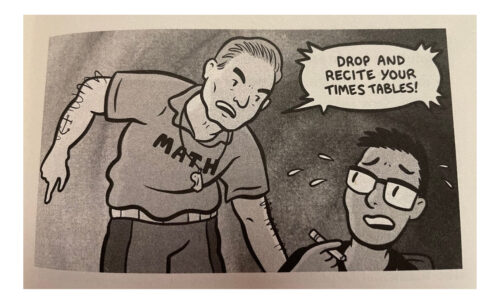
Math “reformers” have objected to automaticity since the 1990s Math Wars. Like whole language and balanced literacy, math reform ideology (mocked as “whole math”) is partially based upon the century-old romantic educational theories of John Dewey, who disdained fact memorization. Automaticity’s fact memorization exercises are anathema to reformers, who denigrate them as “drill and kill” and “rote learning” (whole language and balanced literacy supporters used identical pejoratives for phonics).
Reformers additionally allege that memorizing basic number facts inhibits developing number sense (composing and decomposing numbers in many ways)—something Brian Conrad, Stanford University Mathematics Professor and Director of Undergraduate Studies in Mathematics, dismisses as a false dichotomy. Further, as educational psychology professor Brian Poncy and math professor Anna Stokke discussed, memorizing number facts (freeing up working memory) enables children to use mental computation strategies with much larger numbers, thereby enabling them to develop even better number sense.
The most influential K-12 math education academic of the past 20 years, Stanford University Education Professor Jo Boaler, has spent years pushing for school systems to remove automaticity. Boaler is known as the Lucy Calkins of math and has repeatedly stated that she never memorized her times tables.
Boaler, for instance, unsuccessfully tried asserting that the requirement in the Common Core math standards (2010) to “know from memory” addition and multiplication facts did not mean memorizing. Boaler later co-authored the 2023 California Math Framework on how to teach the Common Core standards, whose 1,000+ pages of recommendations omit any mention of its automaticity provisions. (The 2023 California Math Framework’s recommendations generated significant opposition from many of the world’s leading STEM professors and professionals, including multiple Nobel Prize, Fields Medal and Turing Award winners.)
Boaler also apparently fabricated a claim she repeated for over a decade that “research shows” automaticity’s timed exercises cause math anxiety (a medium- to long-term anxiety disorder). As part of his review of numerous misleading and false citations in the 2023 California Math Framework, Conrad found none of the cited references supported the math anxiety claim, concluding it is an “ideological narrative.” Nonetheless, prominent pro-reform education professors and organizations continue to widely rebroadcast her math anxiety claim as fact.
A recent peer-reviewed study by leading educational psychologists found Boaler’s math anxiety allegation to be false. In fact, automaticity’s timed exercises likely reduce math anxiety since building math skill is the best way to prevent math anxiety, which requires timed practice for math facts.
Ideological Removal of Automatic Recall of Math Facts in 2016 Math SOL
The 2016 Math SOL removed automaticity, contrary to the guidance of the U.S. Department of Education. Nonetheless, the 2016 Virginia Department of Education (VDOE) claimed in a filing with the federal government that the 2016 Math SOL has “at least the same mathematical content” as Common Core. In addition, the VDOE math department’s 2016 Common Core comparison for Virginia teachers omits Common Core’s times table-memorization requirement. For addition, it vaguely states that Common Core “includes practice (drill) to develop fluency” while the 2016 Math SOL “emphasizes the use of properties and strategies.”
The VDOE math department’s 2018 implementation presentation to teachers also labeled memorizing math facts as an “unproductive belief” (an identical statement is in the 2023 California Math Framework). Lacking empirical evidence, it instead cites the opinion of the controversial Reston, Virginia-based math reform organization, the National Council of Teachers of Mathematics (NCTM). (Boaler is a longtime thought–leader for NCTM and NCTM was involved in the wildly unpopular Virginia Math Pathways Initiative.)
Virginia Guidance Now Follows U.S. Department of Education, But Will School Districts?
The 2023 Math SOL lists automaticity as its #1 notable change. Furthermore, the 2024 VDOE’s Math Instructional Guides (which describe to teachers how to teach the 2023 Math SOL) follow the U.S. Department of Education’s recommendation for timed exercises for automaticity. But cognitive science-based recommendations are only effective if school systems choose to follow them.
The largest organization of Virginia math school leaders, the Virginia Council for Mathematics Supervision (VCMS), objected to the 2023 Math SOL’s statement that “automaticity with basic mathematics facts is critical” for higher level math—even though the SOL’s statement closely follows the U.S. Department of Education’s last comprehensive math education report. Moreover, VCMS parroted the ideological position of Boaler, NCTM and the 2023 California Math Framework on automaticity, implying automaticity inhibits development of number sense and stating students should focus on strategies for math facts instead of automaticity.
The least advantaged kids pay the price when school systems choose ideology over evidence-based instruction (especially for foundational knowledge), as demonstrated when whole language and balanced literacy supporters ignored the 2000 National Reading Panel report’s evidenced-based phonics recommendations. Hopefully Virginia school districts will make the right decision on automaticity before disadvantaged Virginia children predominantly suffer the consequences once again.
Todd Truitt is a parent of two school-age children in Arlington County, Virginia. He is also the former Chair of the Math Advisory Committee for Arlington Public Schools and active in the Arlington Democrats. He is a business transactions attorney and a Certified Public Accountant.
Leave a Reply
You must be logged in to post a comment.