by James A. Bacon
American conservatives revere the Founding Fathers of the American republic as exemplars of the classic virtues — for good reason — but our nostalgia for the past does have blind spots (and I’m not talking about just slavery, an evil that everyone acknowledges). We rarely remark upon the fact that leadership of the early republic consisted of a goodly number of ditherers, drunkards, self-dealers and profiteers. As George Washington wrote to Benjamin Harrison, most members of Congress were idle, dissipated, and extravagant, and consumed by “an insatiable thirst” for getting rich.
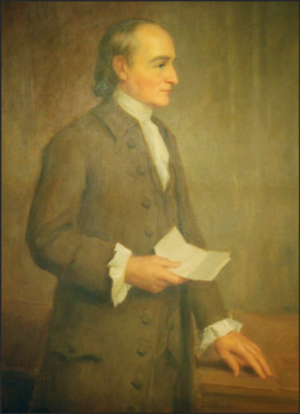
That the newly formed United States managed to surmount the inevitable quirks and flaws of human nature Richmond author Suzanne Munson attributes in her new book, “First in Law, First in Leadership,” largely to the labors of one of America’s most insufficiently appreciated founders, George Wythe.
Wythe, a professor of law at the College of William & Mary, did more than shape the minds and character of luminaries such as Thomas Jefferson and James Monroe, who would become presidents; John Marshall, the most consequential Supreme Court justice in history; Henry Clay, the Kentucky legislator who became Speaker of the House; and senators, governors, judges, and other leaders too numerous to mention. He transformed the practice of law into a learned profession.
“Wythe taught more American leaders than any other mortal has since or ever will,” Munson quotes Taylor Revely, president emeritus of the College of William & Mary.
Oh, and by the way, Wythe was an ardent opponent of slavery who impressed his anti-slavery views upon Jefferson and many others. In 1806, as a judge later in life, he ruled in the case Hudgins vs. Wright to free a slave woman, Jackie Wright, and her two children. Drawing upon Virginia’s Declaration of Rights, he argued that that individuals “should be considered free until proven otherwise,” and that “freedom is the birthright of every human being.”