• City’s Too Big, Council’s Too Small

    by Joe Fitzgerald

    Harrisonburg is a city of 60,000 or so with a City Council for a town of 15,000.

    A quick check of Virginiaโ€™s cities finds that besides Harrisonburg, only Charlottesville among the larger cities has five council members. Most have seven, or six and a mayor, with Winchesterโ€™s nine and Virginia Beachโ€™s eleven being the outliers.

    The smaller council size, with only three votes needed to make major changes for the city, makes it more possible for a small clique of like-minded council members to make changes out of step with the city at large. The most unfortunate example of this is the Bluestone Town Center, passed by three members with less than three years of experience, combined.

    No one would argue that a seven-member council makes fewer mistakes. But the extra vote needed on a seven-person council makes it a little less likely that inexperienced or ideological members will push through a project without any real deliberations.

    (more…)

  • Voting to Impose Big Solar on Other Legislator’s Voters

    by Steve Haner

    Virginiaโ€™s legislators are expected to look at more bills in January to provide ways to override local objections to major renewable energy projects, especially the large solar fields that can cover hundreds of acres. A regional media outlet with a focus on rural Virginia just pointed out an inconvenient truth.

    The legislators likely to vote to force these projects on the balking rural Virginians wonโ€™t be the legislators who represent the balking rural Virginians.

    The insight comes from Dwayne Yancey at Cardinal News. Loyal readers know Yancey was a colleague of mine and Jim Baconโ€™s in Roanoke 40 years ago, and keeping up with his work at Cardinal News is exhausting. It is always interesting, and always data driven.

    The data here comes from 1) the 2020 almost purely partisan roll call on passage of the Virginia Clean Economy Act and 2) a new database of pending and approved solar project proposals proffered by Weldon Cooper Center at the University of Virginia. He produced a quick map of the localities where at least some of the legislators voted โ€œaye.โ€ Yancey cross references and writes:

    (more…)

  • The New Normal: Massive Infrastructure Cost Overruns

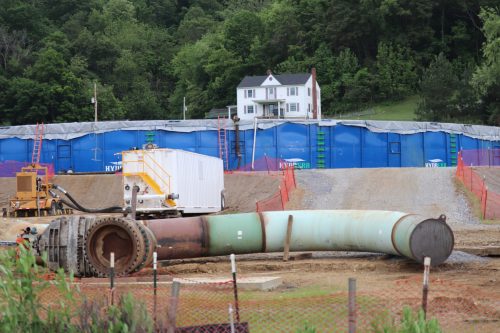
    Mountain Valley Pipeline site in Lafayette, Va. Image credit: West Virginia Public Broadcasting

    by James A. Bacon

    When the Mountain Valley Pipeline was proposed in 2018, the estimated cost was $3.5 billion. When completed in June, the final cost was reported in a Federal Energy Regulatory Commission filing to be $9.6 billion — nearly three times as much.

    A fraction of that increase can be attributed to inflation over the eight years the 303-mile natural gas pipeline was bitterly contested and bogged down by lawsuits and regulatory appeals. Management failures undoubtedly contributed — a portion of pipe near Roanoke burst under a pressure test, suggesting manufacturing flaws — and WV Broadcasting cites weather and labor issues.

    But three times the cost? The sad reality is that it has become nearly impossible to build any large infrastructure project in the United States. Remember the Atlantic Coast Pipeline? Dominion Energy just gave up and took $1 billion+ in write-offs.

    Now PJM, the regional electric transmission organization of which Virginia is a part, says someone needs to build a 765kw transmission line across Loudoun County to upgrade the electric grid in anticipation of unprecedented demand growth.

    (more…)

  • Caves, Hokie Stone, and Crayons

    by Dick Hall-Sizemore

    This yearโ€™s Virginia Geological Field Conference was held in Radford the weekend before Election Day. Like the one I attended last year in the Mt. Rogers area, it was an opportunity to go back in time as well as get a brief respite from the drumbeat of politics.

    The tenor of this conference was different from last yearโ€™s, which focused on ancient rock formations and the forces that created them. There was a considerable amount of that kind of focus this year, as well. After all, these are geologists and that is what they do. However, the main focus was on the current effects of these geological forces and formations. The theme of the conference was โ€œRocks, Water, and People: Establishing Connections Between Geological Processes, Water and Mineral Resources, and Human Activity in the New River Valley of Virginia.โ€

    The geology of the New River Valley is significantly different from that of the Mt. Rogers area. Mt. Rogers is part of the Blue Ridge physiographic province, dominated by granites and โ€œbasement rock.โ€ The New River Valley is in the Valley and Ridge province, which encompasses the area west of the Blue Ridge to the West Virginia border, including a good part of Southwest Virginia.

    The area that now constitutes the Valley and Ridge, along with most of the northeastern coast of the United States, began to form during the break-up (rifting) of the ancient supercontinent Rodinia about 800 million years ago. For about 500 million years, that tectonic plate drifted in ancient seas with much of it covered in fluctuating levels of water. As a result, some of the basement rock is still present, but the most prevalent geological formations are sedimentaryโ€”sandstones, shale, limestone, and dolomite. These are the formations that have shaped the interconnections among rocks, water, and people.

    (more…)

  • New Accountability System Supports Advanced Math Learners

    Image credit: Grok

    by Todd Truitt

    Virginia’s new accountability system incentivizes schools to provide valuable middle-school math pathways, resulting in more opportunities for Virginia students, especially the most underprivileged. It will also counter the non-evidence-based, anti-acceleration ideology of certain discredited thought leaders in K-12 math education who have had a corrosive effect on Virginia K-12 math education.

    Why Algebra in Middle School Is Civil Rights Issue

    Civil rights leader Bob Moses referred to the ability to accelerate in math (i.e. go above grade level) in order to take Algebra in middle school as a civil right. It has been a longstanding goal of the US Department of Education and civil rights organizations. Nationally, middle schools that are not offering Algebra disproportionately serve lower income and underrepresented minority students.

    As explained by Stanford University Math Professor, and Director of Undergraduate Math Studies, Brian Conrad:

    โ€œA solid grounding in math from high schoolโ€”which traditionally has included two years of algebra, a year of geometry, and then, for more advanced students, other coursework leading up to calculus [and beyond]โ€”is a prerequisite for a four-year college degree in data science, computer science, economics, and other quantitative fields. Such a degree is, in turn, the price of entry for jobs not only in the sciences and Silicon Valley but also in a number of seemingly distant fields.

    (more…)

  • How to Frame a Positive Story as a Negative

    Graphic credit: Richmond Times-Dispatch

    by James A. Bacon

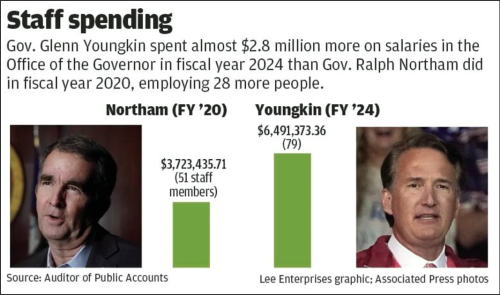
    The Governor’s Office under Glenn Youngkin grew staff from 51 under former Governor Ralph Northam to 79 by the end of fiscal 2023, and increased spending on salaries from $3.7 million to $6.5 million, finds an audit by the Auditor of Public Accounts.

    Cue the partisan sniping.

    โ€œHis actions donโ€™t add up to his rhetoric,โ€ Sen. Adam Ebbin, D-Alexandria, chairman of the Senate Committee on General Laws and Technology, told the Richmond Times-Dispatch in referring to Youngkin’s claims to have made state government more efficient. “This is not a transformational governorship that requires a transformational staff.โ€

    How, exactly, do Youngkin’s actions fall short of rhetoric? Details, please, Mr. Ebbin.

    It turns out, as Michael Martz reports a bit lower in the story, that the apparent growth in the Governor’s Office staff and spending can be attributed mainly to (1) pay raises enacted by the General Assembly; (2) new staff authorized at the initiative of the General Assembly, such as for the Office of Diversity, Equity & Inclusion (renamed Diversity, Opportunity & Inclusion); and (3) the hiring of a Chief Transformation Officer and staff.

    In other words, the primary spending increase that can be pinned on Youngkin was the hiring of a Chief Transformation Officer and staff. The only meaningful question raised by the numbers is this: has the Chief Transformation Officer paid his way?

    (more…)


  • Bacon Meme of the Week


  • Socioeconomic Stratification at UVA — the Podcast

    Lila Maverick and Jaxon Wilder are back with another Deep Dive podcast, this one based on my post, “UVA More Socioeconomically Segregated Than a Century Ago.” As is their wont, they explore key points raised in the post and use them as a springboard to expound on their own AI-generated thoughts. — JAB


  • UVA More Socioeconomically Stratified Than a Century Ago

    by James A. Bacon

    Source: “The G.I. Bill, Standardized Testing, and Socioeconomic Origins of the U.S. Educational Elite Over a Century”

    by James A. Bacon

    Earlier this year, the University of Virginia Board of Visitors voted to change the name of the Alderman Library, which honored Edwin Alderman, the university president who led UVA through its institutional transformation into a modern university. Although Alderman championed public education, women’s rights and the pursuit of science, sadly for his reputation a century later, the “science” favored by political progressives in the early 20th century was eugenics. Repudiating his now-retrograde views on race, the university to which he devoted much of his life removed his name from the library that became one of his signature achievements.

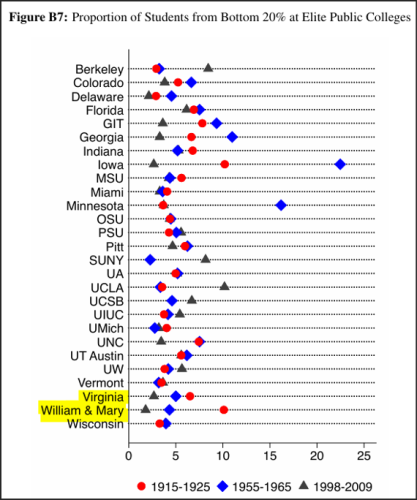
    Now comes research on the socioeconomic composition of America’s elite universities in a study published by the National Bureau of Economic Research (NBER) that puts Alderman’s UVA in a more favorable light. It turns out that UVA during the Alderman era was less rigidly stratified from a socioeconomic perspective than it became in 1955-65 and in the modern era of 1998-2009.

    (Lest William & Mary alums derive schadenfreude from UVA’s sins, be reminded that W&M has moved even more dramatically toward socioeconomic exclusivity than UVA over the past century.)

    While more lower-income students manage to attend college thanks to the expanding number of colleges, the percentage of lower-income students at elite universities has changed little over the past century, contend the authors of “The G.I. Bill, Standardized Testing, and Socioeconomic Origins of the U.S. Educational Elite Over a Century.” These institutions have become more racially and geographically diverse but are as socioeconomically exclusive as ever. Two major policy changes thought to expand access to higher education — the G.I. Bill and the introduction of SATs — made little difference at top institutions over the long run.

    (more…)


  • Giving Thanks for What Makes America Great

    by Chris Braunlich

    Alexis de Tocqueville

    Alexis de Tocqueville never met Nancy Slater White, but he would have liked her.

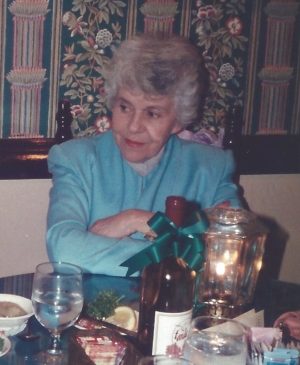
    Tocqueville, of course, is the observational author whose 1835 book, Democracy in America, is considered by many to be a seminal work in defining what made America and the American character unique among nations.ย White was a Bethlehem, Pennsylvania businesswoman and community leader whose death in Northern Virginia, at the age of 91, left her with few contemporaries but plenty of devoted friends and family to mourn her passing.

    At a time in which defining what makes America great too often boils down to an election return, they offer a lesson on why we should be thankful this weekend.

    Raised in a time when opportunities were limited for women, Nancy White attended college on a scholarship, becoming a social worker and doing whatever was necessary to protect abused children โ€“ at one point tracking down a judge on the third tee of a golf course to get a court order signed before it was too late to help a particular child.

    But it was in voluntary community efforts that she shone.ย 

    (more…)


  • Happy Thanksgiving!

    by Kerry Dougherty

    Norma Dougherty in 1990. Queen of the casseroles.

    When youโ€™re a mediocre cook, you have to find ways to distinguish yourself at holiday meals.

    My mother, who perked up nearly all of her overcooked dishes with Lipton Onion Soup Mix, was respected widely for her punctuality.

    And her eclectic collection of guests.

    My parents regarded a holiday shared exclusively with family members as a sad sign of social isolation. To avoid that, they always were on the lookout for folks with no place to go. If an acquaintance mentioned that family lived far away, my mother would beam. Spend Thanksgiving with us, she’d suggest.

    No car? No problem. We’ll pick you up. Be ready.

    Holiday invitations were issued early, before anyone else could get to these hapless prospective guests. That is how a rotating cast of oddballs came to arrive every Thanksgiving. Any awkwardness at finding themselves in our misfit midst evaporated in the quick-step timing of our holiday gatherings.

    A bachelor college professor was a fixture at our Thanksgiving and Christmas tables for more than 20 years. So was a widowed steelworker. They sat beside a single nurse, who’d served in the Women’s Army Corps during World War II. I recall several holidays with uniformed soldiers from Fort Dix at the old oak table. And at least one with an Indian family who’d bought a house from my father’s little real estate business and was unfamiliar with American traditions. Prime targets.

    Continue reading.


  • Rules for a Harmonious Thanksgiving

    Note from reader Kim Acquaviva:

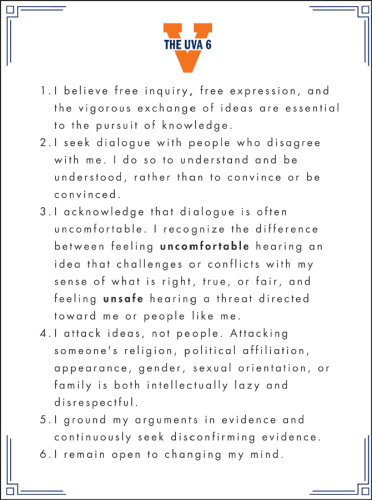
    If youโ€™ll be celebrating Thanksgiving with a politically diverse group of family members and/or friends, consider printing out copies of The UVA 6 for those in attendance. In my experience, dinner conversations are much less fraught with tension when everyone strives to follow the six principles listed in the document.  

    May your Thanksgiving holiday be filled with family, food, and friendly conversation with those you love!   


  • Happy Thanksgiving — from the Turkey Resistance

    Image credit: ChatGPT

    Take this, settler colonialists!


  • Finding Common Ground — the Podcast

    Bacon’s Rebellion’s AI podcasters, Lila Maverick and Jaxon Wilder, are back, this time to talk about the Hoos Connected program at the University of Virginia. The avatars use content in the article as a jumping-off point for making their own observations, drawing original conclusions, and waxing philosophical. I love hearing AI avatars talking about what it takes to be human! — JAB


  • Finding Common Ground

    by James A. Bacon

    I’ve written a lot about what’s wrong with “Diversity, Equity & Inclusion”: how it classifies people as oppressed or oppressors, feeds feelings of victimhood and grievance, pits groups against one another, and leaves people, especially minorities, feeling isolated and alienated. But I’ve been challenged by the avatars of Bacon’s Rebellion latest podcast to explore the idea of what inclusion should look like. How do institutions, in particular universities, create a sense of belonging for students, faculty and staff from all walks of life?

    Much of my criticism has taken aim at the Oppression Narrative at the University of Virginia and the DEI bureaucracy that enforces it. But, as it happens, there is an excellent positive example at UVA of how to foster a sense of belonging — the Hoos Connected program.

    Joe Allen

    Hoos Connected is the brainchild of psychology professor Joseph P. Allen, who runs an adolescence research lab at UVA. The program brings together a diverse group of first- and second-year students weekly to get to know one another, share their personal experiences, and hear the perspectives of others. The goal is for young people to explore what they have in common — not what divides them.

    As one Asian-American student in a Hoos Connected a promotional video put it, the best part “was being able to hear other peoples’ experiences and stories, and how different or similar they were to my own.”

    (more…)