
by Steve Haner
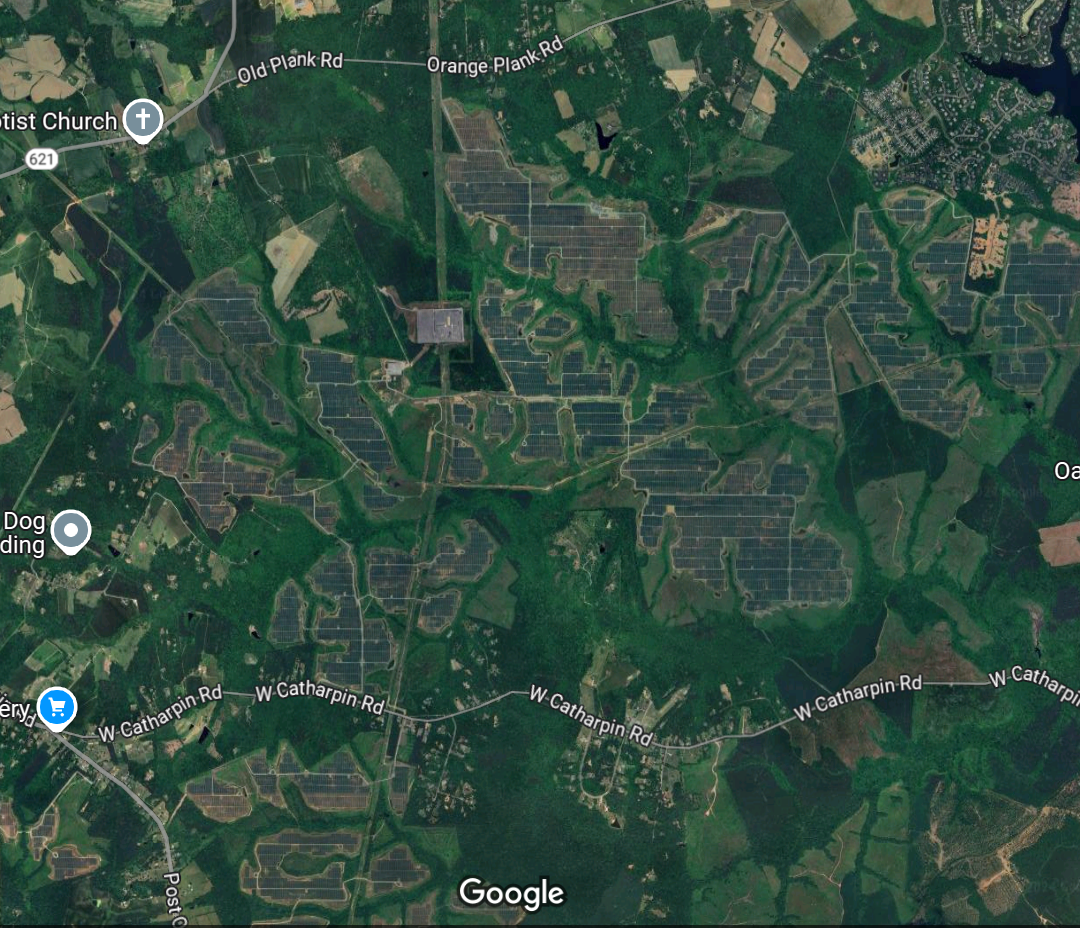
Virginia’s legislators are expected to look at more bills in January to provide ways to override local objections to major renewable energy projects, especially the large solar fields that can cover hundreds of acres. A regional media outlet with a focus on rural Virginia just pointed out an inconvenient truth.
The legislators likely to vote to force these projects on the balking rural Virginians won’t be the legislators who represent the balking rural Virginians.
The insight comes from Dwayne Yancey at Cardinal News. Loyal readers know Yancey was a colleague of mine and Jim Bacon’s in Roanoke 40 years ago, and keeping up with his work at Cardinal News is exhausting. It is always interesting, and always data driven.
The data here comes from 1) the 2020 almost purely partisan roll call on passage of the Virginia Clean Economy Act and 2) a new database of pending and approved solar project proposals proffered by Weldon Cooper Center at the University of Virginia. He produced a quick map of the localities where at least some of the legislators voted “aye.” Yancey cross references and writes:
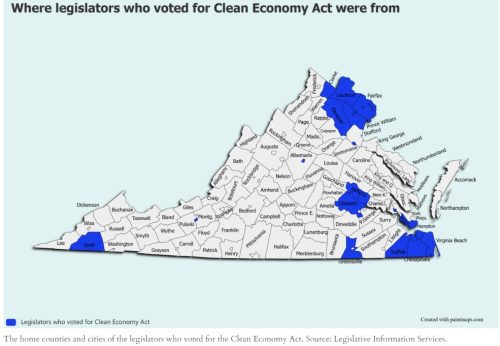
Let’s take a closer look at this divide. This map shows the home cities/counties of the legislators who, in 2020, voted for the Clean Economy Act. Within those localities, the Virginia Solar Database shows just 29 of the state’s 343-plus solar projects. Only one of those, in Chesterfield County, is in the largest size classification of more than 150 megawatts.
So even most of the projects that are in those localities are smaller, too small to trigger the state oversight and state override authority being contemplated. Those legislators won’t face constituents angry over a large solar project across the street. Even fewer VCEA “ayes” have constituents who will look from their beach front property and see a sea of blinking red lights at night and of swirling turbine blades on clear days.
The map includes two localities -– Scott County in Southwest Virginia and Clarke County in the DC suburbs -– because Republicans Terry Kilgore and Jill Vogel voted in favor. Kilgore voted for VCEA because the final version protected a coal plant in his region from quick closure. That was hardly the worst bit of hypocritical sausage making in the bill. Remove those two counties, and the map basically reflects the partisan divide in the Assembly, and the Democratic desert outside the urban centers.
Just another example (think private jets to clean energy confabs and fancy restaurants during lockdowns) where the rules apply to everybody but them.


Leave a Reply
You must be logged in to post a comment.