
by James A. Bacon
I’ve written a lot about what’s wrong with “Diversity, Equity & Inclusion”: how it classifies people as oppressed or oppressors, feeds feelings of victimhood and grievance, pits groups against one another, and leaves people, especially minorities, feeling isolated and alienated. But I’ve been challenged by the avatars of Bacon’s Rebellion latest podcast to explore the idea of what inclusion should look like. How do institutions, in particular universities, create a sense of belonging for students, faculty and staff from all walks of life?
Much of my criticism has taken aim at the Oppression Narrative at the University of Virginia and the DEI bureaucracy that enforces it. But, as it happens, there is an excellent positive example at UVA of how to foster a sense of belonging — the Hoos Connected program.

Hoos Connected is the brainchild of psychology professor Joseph P. Allen, who runs an adolescence research lab at UVA. The program brings together a diverse group of first- and second-year students weekly to get to know one another, share their personal experiences, and hear the perspectives of others. The goal is for young people to explore what they have in common — not what divides them.
As one Asian-American student in a Hoos Connected a promotional video put it, the best part “was being able to hear other peoples’ experiences and stories, and how different or similar they were to my own.”
Allen described the program in a presentation to the Board of Visitors in December 2022. He did not position the program as an alternative to DEI, but rather as a way to address isolation, loneliness and depression in the student body by fostering that elusive sense of belonging.
The program, which counts as a one-credit class, has proven to be very successful. In 2022 438 students were participating. This year the program has grown to about 1,000.
One important thing that Allen did that administrators of DEI programs do not is measure the efficacy of his program by conducting controlled experiments and collecting data. Students were assigned randomly to small groups led by older students acting as facilitators. Half were wait-listed until the following semester. Questionnaires to both groups were administered at the beginning and the end.
Hoos Connected participants showed a significant increase in their sense of “school membership,” or belonging, Allen found, while the control group actually declined slightly.
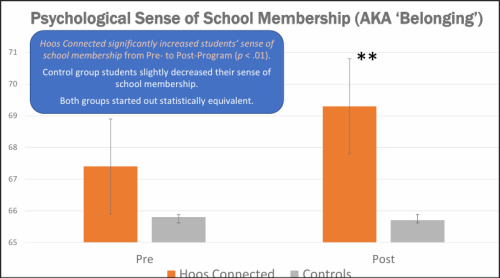
Similarly, the Hoos Connected kids experienced a major decline in loneliness, while their control-group peers felt a slight increase. Beneficial effects for loneliness were especially pronounced for racial/ethnic minorities and students with lower socioeconomic backgrounds.
Ninety-five percent of participating students said they would recommend the program to a friend.
A stated goal of “diversity” is to bring together students from varied backgrounds so they can learn from their varied perspectives. But that works only if students connect with one another. It can’t work — and this is me talking, not Allen — if they are siloed into racial, religious, or other identity groups and seek belonging only by making friends with others like themselves. It can’t work if they are fed with grievances organized around differences in race, ethnicity, gender or sexual orientation. It can’t work if students are taught to react defensively to “microaggressions” and perceive every slight as an assault on their identity.
Clearly, that’s not what many UVA students are looking for. Many want to make connections with classmates with different backgrounds.
As of 2022, Allen’s goal was to broaden the program so that 50% of UVA eligible students were participating — effectively doubling the number by 2025. He’s on track to achieving his goals, Allen tells Bacon’s Rebellion.
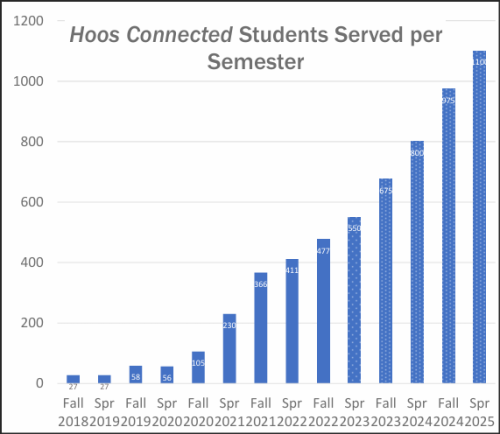
I expect he will continue to do so for two reasons. First, most students don’t want to be pigeonholed by racial/ethnic identity and will seek out ways to expand their friend networks. Second, with the Trump administration talking about dismantling DEI programs across higher-ed, universities might find themselves looking for alternative ways to promotion inclusion and belonging. Allen has the answer, or at least part of the answer. Hoos Connected has been so well received that he has exported the concept to Virginia Tech and Georgetown University.
“Under the surface,” Allen says, “students find they have much more in common than they thought.”
What a beautiful insight. Let’s hope it spreads.
James A. Bacon is contributing editor to The Jefferson Council.


Leave a Reply
You must be logged in to post a comment.