Lila Maverick and Jaxon Wilder, Bacon’s Rebellion’s AI-generated avatars, are back with a new podcast based on my recent post, “DEI Training Makes Race Relations Worse.” For those not inclined to wade through my dense prose, they cover the same ground in an easy conversational manner.
It’s fascinating to hear the avatars depart from the article about two-thirds of the way through the podcast and head off on their own tangent: If “anti-racism” training is counter-productive, they ask, what should a DEI program look like? It should emphasize peoples’ common humanity, engage in respectful dialogue, and build bridges, they say. That message wasn’t in my post… but it should have been. — JAB
Diversity, Equity, and Inclusion (DEI) training is now an $8 billion-a-year industry. More than half of Americans have been exposed to it. The training varies considerably in rhetoric and content, but programs that emphasize structural racism and White bias engender attitudes that can make race relations worse, not better, finds a new study, “Instructing Animosity: How DEI Pedagogy Produces the Hostile Attribution Bias.“
Remarkably, for all the resources poured into DEI training, the efficacy of the programs has been little studied, contend the authors, who are affiliated with the Network Contagion Research Institute (NCRI) and the Rutgers University Social Perception Lab. The study addressed the research deficit by conducting a randomized, double-blind study that compared attitudes of 423 participants after exposure to the thinking of DEI “anti-racism” popularizers Ibram X. Kendi and Robin DeAngelo.
The experiments touching on attitudes toward race (and religion and caste as well) assess a crucial question, the authors write. “Do ideas and rhetoric foundational to many DEI trainings foster pluralistic inclusiveness, or do they exacerbate intergroup and interpersonal conflicts? Do they increase empathy and understanding or increase hostility towards members of groups labeled as oppressors?”
I have been asking the same questions of the DEI programs at the University of Virginia and Virginia’s other public four-year institutions. Do DEI programs do what they are designed to do — increase a sense of inclusion and belonging among traditionally under-represented groups — or, by placing greater emphasis on racial identity, do they accentuate feelings of victimhood and alienation?
University boards of visitors should pay attention to the NCRI-Rutgers findings:
I’ve been asked a number of times why I rarely write about local matters anymore. Particularly, why I don’t write much about Virginia Beach. After all, as a newspaper columnist I made my bones by skewering the corrupt and indescribably stupid “dancing bears” on the city council.
I’ve got to admit it was fun. They provided endless material.
Why stop now?
Here’s why: it’s fruitless. I’m tired of it. I’ve thrown in the proverbial towel.
The faces on the local government change, their party affiliations change, but their feckless policies remain the same.
This council, like the ones that went before, is a rudderless ship of fools. It matters not the political make-up of the members, they follow the same tax-and-waste path of their predecessors. They shell out hundreds of thousands of dollars for worthless “studies” that simply confirm that spending more money will have marvelous results. Frequently a developer waves a shiny object in front of them, the obedient city staff canoodles with the developer before informing the politicians that the project is magnificent and will “pay for itself.”
Next thing you know, the mindless members vote YES!
Taxes go up, the project flames out and they blame miserly taxpayers for forcing them to cut corners on the cockamamie scheme. If only they’d sent more money, it would have been a smashing success.
Lila Maverick and Jaxon Wilder, Bacon’s Rebellion’s AI-generated avatars courtesy of Google Notebook, conduct an amazing conversation based on my previous post, “Hey, Virginia Beach, Acknowledge THIS.” I hate to admit it, but their chat is better than the column it’s based on. All I can say is, Lila and Jaxon, please, please don’t take over my job! — JAB
This plaque, commissioned in 1901, commemorates the coordinated Indian attacks on March 22, 1622, that wiped out a third of the English settlers in Virginia. The bearded settler at center, sword in hand, motions to other Virginia colonists to flee. A woman attends to another settler lying injured on the ground. Image credit: Encyclopedia Virginia.
by James A. Bacon
The City of Virginia Beach is crafting a statement to “acknowledge” the Native Americans who lived there before the English settlers. Last week a draft presented to City Council proclaimed: “We, the City of Virginia Beach, acknowledge that the present-day land on which this city exists is situated on lands that have been inhabited by Indigenous peoples since time immemorial.” So reports WHRO.
You’d think City Council would have better things to worry about, like fixing public schools, making housing affordable, coping with rising sea levels, or making sure taxpayers aren’t ripped off by madcap development schemes. But, no, in modern-day America, such practical matters are of far less interest to educated elites than symbolic issues that will have no discernible impact on anyone’s life.
So, here I go, rising to the bait, engaging in a symbolic issue of no use to anyone…
The land acknowledgement plays into the grand narrative that “white settler colonists” displaced the local inhabitants. The implication is that the English presence in these lands was coercive and illegitimate, and by implication that the institutions erected by those who followed are tainted.
The Native American population in Virginia in 1607 is estimated to have been around 50,000. Of those, 15,000 in the Tidewater region belonged to Algonquian tribes led by Chief Powhatan in what is called the Powhatan Confederation. The logical question is, who occupied the land before the Powhatan Confederation?
Does America have state universities? Or does it have publicly funded universities that just happen to be located in a particular state? They’re not the same thing.
Regular Bacon’s Rebellion readers know that I have more than a passing interest in Confederate history and heritage. (Insert rolling-eyes emoji here). In January of 2023, I’d just read the report of the Naming Commission. The commission chose to opine on the overall worth of Confederate heritage within the Department of Defense, now and in the future. America’s military is possibly its most respected institution. If the federal government takes actions or renders opinions that indicate that a certain segment of American society no longer warrants respect from our military, that echoes far beyond the confines of military bases and federal facilities.
The Naming Commission’s judgments on Confederate heritage, and the sweep and totality of their recommendations, are scathing and contemptuous toward former Confederates, their descendants and their communities. For example, its final report said that
…during the end of the nineteenth century and the start of the twentieth century, the South and much of the nation came to live under a mistaken understanding of the Civil War known as the “Lost Cause.” As part of the “Lost Cause,” across the nation, champions of that memory built monuments to Confederate leaders and to the Confederacy, including on many Department of Defense assets. In every instance and every aspect, these names and memorials have far more to do with the culture under which they were named than they have with any historical acts actually committed by their namesakes. [Emphasis added.]
The eight large Northern Virginia school board chairs have released a joint letter asking for a “delay of at least one year” on the new accountability system until a new governor is in office, claiming that a three-year development and implementation period is “rushed” (i.e., they may need five years or more). In fact, this development and implementation period is longer than for the last accountability system, which was implemented in less than nine months.
The joint letter touts how these districts contain approximately 60% of the state’s English Learners, but then proceeds to attack 22+ year-old federal English Learner civil rights protections, describing such protections as “unrealistic runways for English Language Learners (3 semesters for Mastery rather than the current Demonstration of Growth)”.
Notably, their resistance to such English Learner civil rights also puts these school systems in opposition to:
Three major national civil rights groups, including two major Latino civil rights organizations, who provided a formal comment in July 2024 supporting Virginia’s accountability system change to include English Learners consistent with the 2015 U.S. Every Student Succeeds Act (ESSA).
Both major national teachers unions and 40+ national civil rights organizations who all reconfirmed their support this year for the inclusion of English Learners consistent with ESSA in accountability systems.
As I previously detailed, the 22+ year-old federal civil rights protections include English Learners in school accountability systems after three semesters (vs. after 11 semesters in Virginia’s old state system). Last week, I also detailed how any further “delay” of the new system’s implementation would prioritize the sensitivity to greater transparency of adults who run certain Virginia public school systems over the civil rights of Virginia communities, families and students.
Christopher Darnell Jones, Jr., has plead guilty to three counts of first-degree murder, two counts of aggravated malicious wounding, and five counts of use of a firearm in the commission of a felony in connection with the mass shooting at the University of Virginia two years ago.
Now UVA officials should release the Attorney General’s report on the university actions leading up to the shooting, which resulted in the deaths of three UVA football players.
That’s what UVA leadership promised. Now it’s time to make good on that promise.
Initially, UVA officialdom declared that it would release the report to the public shortly after receiving it on Oct. 30, 2023. UVA Spokesperson Brian Coy was quoted by media as saying “The University will share the report publicly, with a goal of doing so by early November.”
But President Jim Ryan and Rector Robert Hardie sang a different tune after having had time to digest the findings.
The states that belong to RGGI? Or the states that voted for Kamala Harris? Works both ways.
Grapevines sequester carbon dioxide, so Virginia’s climate alarmism activists are pulling corks without guilt today, after learning that a Virginia circuit court judge will order Virginia to rejoin the Regional Greenhouse Gas Initiative (RGGI).
During the three years Virginia was part of the multi-state cap and tax compact, Virginia collected $827 million from electric power producers seeking permits to emit CO2. The largest of the payers in the state, Dominion Energy Virginia, simply passed its cost along to consumers dollar for dollar right on monthly bills.
The final order from the judge has not been produced, so the details of any relief he will order are not settled. But on Monday Floyd County Judge C. Randall Lowe circulated a letter stating he agreed with RGGI’s boosters that only the Virginia General Assembly could pull the state out of the compact, based on his reading of 2020 legislation.
It was the position of Republican Governor Glenn Youngkin and Republican Attorney General Jason Miyares that the statute was permissive but not mandatory. Both issued brief statements today disagreeing with the judge’s order and promising to pursue an appeal to the Supreme Court of Virginia. Presumably they will also ask the upper court to stay the order, but that motion could be denied.
Photo credit: Virginia Roadmap to End Hunger, 2024 Update
by James A. Bacon
We learn today courtesy of Radio IQ that Virginia’s Commission to End Hunger, which began meeting this year, has identified measures for legislators to consider in the 2025 General Assembly session. The one tangible initiative mentioned in the article was doing something to address food insecurity on college campuses.
“There are a lot of college students going under the radar, who are food insecure, can’t access food and are probably embarrassed to say so,” Del. Rae Cousins, D-Richmond, told Radio IQ.
Apparently, we’ll learn more about food insecurity in the Commonwealth when the Commission releases results of a survey, which is expected any time now. I’m not holding my breath in the expectation that we’ll learn anything useful.
It is hardly original to observe that Americans’ problem with food is that they have too much of it, not too little. Obesity is a major social issue; malnutrition is not. Frankly, I’m struggling to understand the nature of the problem. Consider the multibillion-dollar programs we already have:
While the U.S. Department of Education is only a small fraction of total education spending – accounting for less than 10 percent of education spending in the United States (9 percent in Virginia) – it has a huge impact on how states and localities spend their own money on schools, on how teachers are educated and certified, and on the curriculum used in classrooms. Through regulation, accreditation, grant language, testing, and the force of law, the U.S. Department of Education literally steers how most education funds are spent in this country.
The Department of Education’s one size fits all, Washington-centered approach reduces efficiency, penalizes innovation, limits the ability of schools to respond to changes in student needs, pushes progressive cultural beliefs, and generally funds bloat and bureaucracy over teachers and classrooms.
While working for the Oversight and Investigation’s Subcommittee of the Education and the Workforce Committee in the U.S. House of Representatives, I was part of a team of Congressional staff that worked on Chairman Pete Hoekstra’s “Education at a Crossroads” report (cited generously in the much-maligned Project 2025 education chapter by my friend, Dr. Lindsey Burke). Notably, our report found that only 65 to 70 cents of every dollar sent to local schools ever made it to the classroom.
Want to learn about the whole Thomas Jefferson, not the slave-holding-rapist Jefferson taught at UVA? Go to Colonial Williamsburg and meet Jefferson reenactor Kurt Smith, urges Sidney Sebold, undergraduate winner of this year’s UVA Student Oratory Competition.
Memorable quote: “My professors and fellow students taught me to hate founding fathers like Thomas Jefferson. ‘He was a good writer, but we must reject him and his ideals from this university as a misogynistic slave owner,’ my first-year English writing professor told my class on a required historical tour. Any attempts I witnessed to put Jefferson on a pedestal garnered social media hate, social exclusion, and hard-to-shake labels like bigot and white supremacist.”
Many thanks to Think Again @ UVA and the Karsh Institute for hosting the event in partnership with Heterodox Academy at UVA and others. View The Jefferson Council’s full tweet here. — JAB
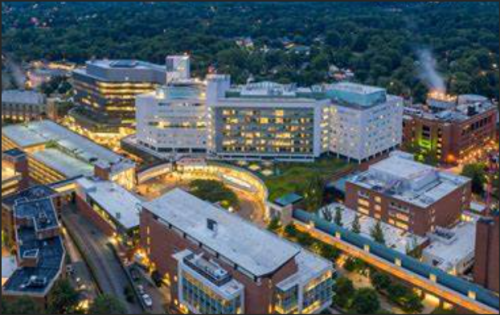
A half-dozen vendors have put the University of Virginia Health System on credit hold, interrupting supplies of important medical supplies and equipment, alleges a group calling itself the Concerned UVA Health Physicians & UVA School of Medicine Faculty.
The vendors include Boston Scientific, a supplier of catheterization and electrophysiology supplies, which in June 2024 was owed $2 million with $700,000 overdue, states the group in a public letter published on the TheTruthAboutUVAHealth.com website.
Also, Phillips, a supplier of intracardiac echocardiography supplies and lead extraction supplies, has placed at least two credit holds on UVA Health. The most recent was November 2024 with over $400,000 not paid, according to the doctors’ group.
Meanwhile, Parrhesiastes, an allied website, says it knows of three “life-threatening incidents” in the past two months when dangerous situations unfolded after “suspicious odors” disrupted surgeries in Operating Rooms 25 and OR 33 at the UVA University Hospital.
The year: 2075. The American colonies on the Moon are getting restless under Washington’s tyrannical rule….
This second edition of “Dust Mites” has a snazzy new cover, includes helpful lunar maps, and is 5,000 words tighter than the original. The sequel, “Trogs,” is scheduled for publication this summer.
Advertisement
Advertisement
Advertisement
Advertisement
About
Bacon’s Rebellion is Virginia’s leading politically non-aligned portal for news, opinions and analysis about state, regional and local public policy. Read more about us here.
Fund the Rebellion
Shake up the status quo! Your contributions will be used to pay for faster download speeds and grow readership. Make a one-time donation by credit card or contribute a small sum monthly.
Can’t wait until tomorrow
For your Bacon’s Rebellion fix?
Enter your email address to receive immediate notifications of new posts by email.
SUBSCRIBE
Search Bacon’s Rebellion
Categories
Archives
The Jefferson Council
Protecting Thomas Jefferson’s Legacy at the University of Virginia
Forgot Your Password?
Shoot me an email and I’ll generate a new password for you.