
-
Jeanine’s Memes
-
Bacon Meme of the Day

-
Fight the Culture Wars — Get Married!
The institution of marriage is under attack in popular culture. Celebrating the single life, childlessness, and the pursuit of individual self-fulfillment, many journalists, academics, and Hollywood script writers view marriage and parenthood as barriers to happiness. But Brad Wilcox, a sociology professor at the University of Virginia, says they’ve got it all wrong. The sociological data show that married people live longer, healthier, wealthier, happier lives on average than their unmarried peers.
Wilcox makes a powerful case in his new book, Get Married: Why Americans Must Defy the Elites, Forge Strong Families, and Save Civilization. I was privileged to interview him in a Jefferson Council webinar earlier this week. Bacon’s Rebellion readers will especially enjoy Wilcox’s explanation of why conservatives, religious people, Asian-Americans, and “strivers” (which admittedly includes college-educated liberals) have stronger marriages on average than other Americans.
Watch the half-hour video, buy Wilcox’s book, check out the Jefferson Council website, and donate to the Council so it can bring cool interviews to your attention. — JAB
-
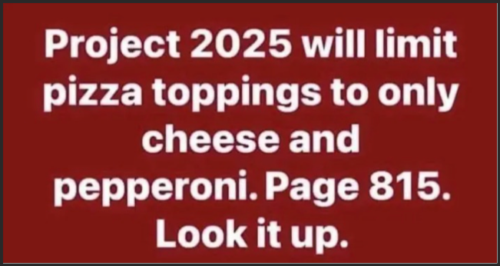
A Project 2025 Revolution at GMU?
by James A. Bacon
Lefty professors are fearful that a new Board of Visitors, now comprised of a majority of Youngkin appointees, is about to unleash a right-wing revolution at George Mason University, Virginia’s largest public university.
Six of the 12 Youngkin-appointed board members are, or have been, affiliated with the conservative Heritage Foundation think tank, which recently produced a detailed document, Project 2025, laying out policy options for the next Republican president. Many on the left have decried Project 2025 as a dystopian blueprint for ending democracy and imposing a right-wing autocracy if Donald Trump is elected.
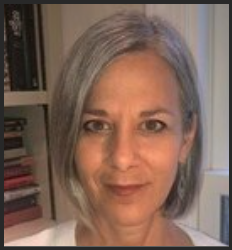
Bethany Letiecq An article in The Chronicle of Higher Education catalogs concerns articulated by Bethany Letiecq, a professor in GMU’s College of Education and Human Development and chair of the state American Association of University Professors (AAUP) conference.
Letiecq avoids the apocalyptic rhetoric typical of “progressive” media voices, but she warns that GMU is “incredibly vulnerable as a test case for what Project 2025 could look like on campus…. My feeling is, we’ve been captured.”
Letiecq is worried that the new board will bring a new governing philosophy to GMU. “All the ingredients” appear to be in place for “real change,” she said. “We’ve had a strong sense as faculty that once the board shifted to 12-4, the gloves would come off.”
She might be right about that. I hope she is.
-
Give Charter Schools a Chance in Virginia
by Chris Braunlich

The Youngkin Administration is trying to jumpstart the creation of independent public charter schools in Virginia, in order to provide students additional high-quality options for their education.
This effort is long overdue. But the road to quality choices in Virginia is a steep climb.
Public charter schools were first established in Minnesota 32 years ago. Now, more than 7,800 public charter schools serve 3.7 million students – eight percent of all public schools in the United States. Charter schools also attract diverse student populations (29 percent white, 24 percent black, 36 percent Hispanic) and because they are not bound by public school boundaries, each school often attracts a more diverse population both geographically and racially. Public charter schools also better deliver the goal of quality education.
Stanford University’s Center for the Study of Educational Outcomes (CREDO) has studied charter school performance for 15 years. In a study published last year comparing two million charter students with two million comparable traditional public school students, the center noted that in reading and math charter schools provide stronger learning for students, with reading advancing by an additional 16 days and math an additional six days each year.
Those are badly needed outcomes for educationally at-risk children. But here in Virginia, only seven such schools exist today.
-
Every State Is a Border State
by Kerry Dougherty
File this under “Illegals Committing Crimes.”

Anibal Guzman I know, I know, the Democratic Party line is that illegals commit fewer crimes than American citizens. Frankly, one violent crime by an illegal alien is too many.
Fact is, if the southern border closed, crime rates would drop dramatically. Including in Virginia.
Last weekend the body of an Hispanic man aged 20 to 30 was found in a wooded area off Rte. 29 near Oakton. He’d been bludgeoned and stabbed to death.
Two men were arrested, and guess what? One was an illegal from Honduras: Maudin Anibal Guzman-Videz.
Was this the suspect’s first brush with the law since he snuck into the country?
Of course not.
He was arrested in Fairfax in March for malicious assault, but never showed up for his court date. ICE issued detainers for him, which the Fairfax County Sheriff ignored. Now this same man was allegedly involved in a murder. Continue reading.
-
Is the Cure Worse Than the Disease?
by James A. Bacon

Dave Singer is a radiologist at a Virginia hospital. He’s not a front-line physician with primary responsibility for patient care, but, as an in-house expert in reading x-rays, CT scans, MRI scans, and other medical images, he reviews hundreds of cases weekly. His vantage point allows him to spot patterns that might elude physicians who, by the nature of their jobs, focus on individual patients.
Since the COVID-19 epidemic, or, more precisely, since the roll-out of the COVID-19 vaccines, Singer has observed dozens of anomalies. Medical syndromes that he encountered rarely — uncommon types of internal bleeding, blood clots, and cancers, especially among younger patients — have surged in frequency at his hospital.
Drawing upon large bodies of data, scientists in other countries have drawn increasing attention to the risk of vaccine side effects. According to these high-altitude studies, many countries are experiencing higher-than-expected, or “excess,” mortality rates even as the COVID epidemic has receded. Some of the elevated mortality may be attributable to suicides, drug overdoses, delayed medical diagnoses or other repercussions of the COVID shutdowns. Vaccine side effects may be another contributing factor.
Singer’s experience provides a ground-level view. He believes that side effects are far more common than the U.S. medical establishment is willing to acknowledge. One reason — not the only one, but a big one — is that there is no system for capturing information about possible vaccination side effects. There is a system for reporting COVID infections and vaccinations, but doctors and hospitals don’t collect data on potential side effects in the same comprehensive way. Some actively suppress such reporting.
Our COVID statistics, Singer says, are “artifacts of how we measure COVID infections and COVID deaths” — not an accurate reflection of reality.
-
Richmond Planned Parenthood in Expansion Mode
Image credit: Virginia League of Planned Parenthood website by James A. Bacon
Richmond City Council voted Monday night to sell the old Brookhill School to the Virginia League of Planned Parenthood (VLPP) for $10. The nonprofit organization, which provides abortions among other reproductive services, plans to construct a $6 million, 10,000-square-foot women’s facility on the property, reports the Richmond Times-Dispatch.
In the wake of the Supreme Court ruling overturning Roe v. Wade, which has resulted in abortion restrictions in nearby states like West Virginia, Kentucky, South Carolina, Georgia, and Florida, abortion has become a booming business in Virginia.
Statewide, there has been a nearly 85% increase in clinician-provided abortions since 2020, according to the RTD, and much of the growth has come from outside the state. In 2016, only 6% of Planned Parenthood’s Virginia clients came from out of state, a percentage that had remained roughly the same since 1980. Earlier this year, Planned Parenthood reported 30% of its clientele comes from out of state.
The RTD article does not say explicitly that the new facility is being built to meet the increased demand for abortions, but the VLPP website does pitch its services to out-of-state residents:
-
Not a Healthy Development

Gun rights rally in downtown Richmond. Photo credit; Virginia Public Media by James A. Bacon
As conservative as I am, right-wing “militias” make me nervous. I’m sympathetic to some of what these citizen groups say they want to accomplish — keep neighborhoods safe, provide backup to local law enforcement in emergencies — but I don’t see why they need to parade around with guns to do that. I don’t hear sheriffs and police chiefs crying out for assistance from an armed citizenry.
A basic precept of any well-ordered society is that government maintains a monopoly on violence. Any other arrangement is an invitation to anarchy.
In an article describing the rise of self-described militias, Virginia Public Media highlighted the Virginia Kekoas, a militia group in Eastern Virginia that was formerly affiliated with the Bugaloo movement but broke away over disagreements with the Bugaloos’ white-supremacist ideology. Writes VPM:
Virginia-based militia members VPM News spoke with considered their activities legal and said they had organized primarily to protect themselves and their families from criminals, an overzealous federal government and natural disasters.
I distrust an “overzealous federal government,” too, but I’m not attending monthly meetings to conduct weapons training and learn how to patch up bullet wounds.
-
Don’t Politicize Cell Phone-Free Education

Photo credit: U.S. News and World Report By Chris Braunlich
Governor Glenn Youngkin’s Executive Order for developing policies restricting or eliminating cell phones in schools – a concept garnering widespread support among parents, with 61 percent favoring requiring students to leave their phones in secured locations during the day – responds to a clear and rising mental health, academic and behavioral problem.
Seventy-two percent of high school teachers say cell phones in the classroom are a major distraction. Ninety percent of principals support restrictions on middle- and high-school cell-phone use during the day. And 68 percent of all American adults believe that smart phones should not be allowed in school.
The reason for this level of support is self-evident: more than 80% of American adults – young and old – are concerned about the impact of social media on today’s children. This concern is supported by the evidence.
According to the American Psychological Association, 41% percent of teens with the highest social media use rate their overall mental health as poor or very poor, compared with 23% of those with the lowest use. Ten percent of the highest use group expressed suicidal or self-harm intent in the past 12 months compared with 5% of the lowest use group; and 17% of the highest users expressed poor body image compared with 6% of the lowest users.
-
The South Shall Rise Again

The South is projected to have the fastest-growing population of any region in the U.S. through 2050, surpassing even the West, according to the demographics research group at the Weldon Cooper Center for Public Service. The population of the Midwest and Northeast are expected to shrink slightly between 2030 and 2050.
However, the population boom in the South is not uniform — it is concentrated in Texas, Tennessee and the South Atlantic states — Florida, Georgia, and the Carolinas. Other Southern states are projected to experience slow population growth. Virginia, one of three states nationally classified in this analysis as having population growth that “fluctuates over the decades,” is more of a question mark.
-
Money Burning a Hole in their Pockets

by Dick Hall-Sizemore
If anyone needs concrete evidence that the 2024 General Assembly had more money for the 2024-2026 biennial budget that it could responsibly spend, he need only to examine one little-known item in the budget: capital maintenance reserve (MR).
In an earlier article, I examined this budget item and identified five agencies that likely could get through the upcoming biennium using only their existing balances without any additional appropriation. That would have resulted in a saving of about $200 million.
This article is a follow-up to that earlier analysis and examines what approach the legislature took. The conclusion: rather than cut off any additional money because these agencies already had enough, the legislature gave four of them more than the governor had recommended and, for the fifth one, decreased the governor’s recommendation only slightly.
(more…)
-
Virginia Supremes Limit Sovereign Immunity in Portsmouth Case

H. Cliff Page by James A. Bacon
H. Cliff Page, an artist, sculptor, Vietnam vet, merchant mariner, civic activist and former candidate for Mayor of Portsmouth, won a victory for individual property rights when the Virginia Supreme Court ruled unanimously in his favor July 3 in a dispute with the Portsmouth Redevelopment and Housing Authority (PRHA).
“This is a precedent-setting case of huge import to all Virginians,” Page tells Bacon’s Rebellion. The ruling “will make cities and municipal housing and economic authorities sit up and take notice that they cannot abuse the protected rights of the citizens with tyrannical impunity!”
The case has been a decade in the making, dating to when the PRHA demolished a building sharing a wall with Page’s property, causing major damage to its supporting structure, interior walls and roof.
The PRHA argued that it enjoyed sovereign immunity because it tore down its building at the instruction of the City of Portsmouth, which was exercising its governmental powers to eliminate a blight. The Portsmouth Circuit Court ruled in favor of the housing authority, and its interpretation was upheld by a Court of Appeals. But the Supreme Court accepted Page’s argument that the PRHA was carrying out a proprietary function — in effect, acting as a property owner, not a sovereign government.
-
DEI at UVA Astronomy: The Stars Are Not Aligned
by James A. Bacon
Back in 2020, the University of Virginia Astronomy Department jumped on the Diversity, Equity & Inclusion (DEI) bandwagon. Ashamed of its history of attracting so few Blacks and Hispanics, the Department formed a DEI committee to advance the goal of making the department more demographically diverse.
The committee quickly resolved to hire an outside expert to conduct a climate survey and help write a strategic plan. The Department scraped together $3,000 of its own funds and applied to the College of Arts & Sciences for another $3,000 to pay for an outside consultant.
“The changes to the admissions process should result in more applications from underrepresented students and should result in more equitable admissions offers,” stated the Committee’s application. “Changes to the department climate should result in better retention of URM (Underrepresented minority) students, staff, and faculty.”
The Astronomy Department was a microcosm of the DEI fever that gripped UVA as a whole in 2020 in the aftermath of the George Floyd killing. The Astronomy Department’s earnest endeavors to advance racial justice were mirrored in dozens of other departments across the University.
The details described here, based on emails and documents the Jefferson Council obtained through the Freedom of Information Act, occurred four years ago, but they provide context for a climate survey underway at the College of Arts & Sciences. As documented by Bacon’s Rebellion and the Jefferson Council (“UVA Arts & Sciences to Conduct ‘Belonging’ Survey“), numerous departments have conducted climate surveys. To “ensure consistency and validity of survey instruments,” Arts & Sciences is undertaking a college-wide survey.
-
Virginia Risks Running Out of Other People’s Power
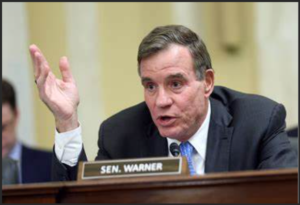
Warner: Wind and solar power will not suffice. By Steve Haner
An electricity drought is looming, not only for Virginia but also for much of the United States, if the political hostility toward the most reliable forms of electricity generation is not reversed. Warnings that wind and solar power alone will not be sufficient resonated like a drumbeat from the podium of a two-day conference on Virginia’s energy future last week.
Virginia is on the leading edge of the national risk because Virginia is ground zero for the expanding data center industry, including the massive power-hungry facilities needed to harness artificial intelligence. Some use power measured in gigawatts, not megawatts. Virginia’s electricity demand could double by the mid-2030s.
“All the solar and all the wind cannot get you to the 24-7 baseload you need to run the AI economy,” reported U.S. Senator Mark Warner, D-Virginia, who leads the Senate Intelligence Committee. Warner was one of many speakers to use the “all of the above” cliché to summarize his advice on needed power sources, but he focused on emerging small modular reactor (SMR) nuclear technology and recent federal legislation to accelerate it. The giant corporations are still standing by their public carbon-free promises, “without SMRs none of them will get there.”
Winning the international race to develop the dominant designs for the next generation of nuclear “ties directly into national security,” Warner said. We cannot let the Chinese win that race.
Virginia Republican Governor Glenn Youngkin, another speaker at the Virginia Manufacturers Association gathering in Virginia Beach, highlighted his own support for those SMR reactors, and 2024 legislation that will allow Virginia utilities to collect their exploratory development costs from ratepayers. But Youngkin was also blunt about the need not just to preserve natural gas as an electricity resource, but to expand it, including a contested new plant proposed for Chesterfield County. (more…)

