

There’s Gold in Them Thar Hills!
Share this article
ADVERTISEMENT
(comments below)
Comments
Comments
134 responses to “There’s Gold in Them Thar Hills!”
-
I wonder if there’s a correlation between having a surplus of MR funds and having a lot of water-stained drop ceiling tiles…
-
I just checked my personal MR fund. Well blow me down! Says insufficient funds. Dear GA. Please forward your unused MR money to my MR fund. Need a new roof. Sprung a leak from that avalanche of rain the other day.
-
You may want to have someone check your plumbing vent stack boots on the roof (or check them yourself if you are so inclined–sometimes the problem is visible in the attic). The ones they’ve been using for at least the last 3 decades are made of rubber that doesn’t seem to hold up to the sun very well. This is a major cause of leaks; the boot deteriorates and allows water to leak down the outside of the pipe into the attic.
If this is the problem, a perma-boot repair kit (available at Home Depot) can be used to easily fix the problem.
In a real pinch, you can go into the attic and spray some Great Stuff foam around the pipe where it goes through the roof.
-
👍
Flex-seal also works.
-
I have the original tin shingle roof from 1936 up there. Flat cap at the peak. 4 square design. Will check the spot you have pointed out. I have had a leak there before too. Always happens with sideways rain. Calgon take me away!
-
what is a tin shingle? Not a continuing standing seam ?
-
Old school architectural shingles that came in long strips and nailed down horizontally. Very rare to find an old house that still has them.
-
New metal ‘strip’ shingles are still available, but most of them are now made from aluminum.
-
This Old House (showing the most expensive way to do anything) did an episode with a “single piece” metal roof. It’s vertical strips with a flap and flange. The flap is screwed to the sheathing and the next strip is swaged to the flange. Makes the entire roof a single piece of metal.
-
-
-
-
-
👍
Flex-seal also works.
-
Not nearly as fun as expanding foam, though. The satisfaction of dispensing Great Stuff from a can without making a huge mess is incomparable to almost anything else.
-
3M 5200. When they tear down the house, it’ll still be where it’s put, stuck to the air.
-
Sikaflex Polyurethane Construction Sealant is very similar to 3M 5200 and is available at Home Depot for about 1/4 the price.
Dunno what’s so special about 3M 5200 to warrant the $22 per 10oz tube cost. It’s major ingredient, an MDI polyurethane prepolymer, is about $70 a gallon.
-
Sikaflex Polyurethane Construction Sealant is very similar to 3M 5200 and is available at Home Depot for about 1/4 the price.
Dunno what’s so special about 3M 5200 to warrant the $22 per 10oz tube cost. It’s major ingredient, an MDI polyurethane prepolymer, is about $70 a gallon.
-


You can always just put a boot over the boot. Galoshes, so to speak.
-
That’s what the perma-boot is, except it’s a little more permanent of a repair.

And … that’s why the poster is named, “how it works …”

Let the fun begin, it seems. SS (can we abbrev?) on WTOP radio this AM saying we need taxes due to under-funded schools in Va. compared to other states. Where does our money go? I mean we have tremendous cost savings compared say to typical home rule state (eg; NJ) since we have no towns here, just County services.
-
The largest employer in Virginia pays no taxes. All the land they own is not taxable. That MAY be part of the problem.
-
Government:
Virginia Commonwealth University (VCU): With over 51,000 employees across its multiple campuses, VCU is Virginia’s largest public university and a major employer in Richmond and beyond.
University of Virginia (UVA): This prestigious public university employs over 23,000 people in Charlottesville and offers significant economic impact to the region.
Virginia Department of Transportation (VDOT): VDOT employs over 8,600 individuals responsible for maintaining and improving the state’s transportation infrastructure.
Naval Station Norfolk: With over 10,200 civilian and contractor employees, this naval base is a major economic driver in Hampton Roads.
Joint Expeditionary Base Little Creek/Ft. Story: This joint base employs over 5,000 civilians and contractors in Virginia Beach and contributes significantly to the local economy.
Healthcare:Sentara Healthcare: This non-profit health system employs over 36,000 people across Virginia and is a major provider of healthcare services throughout the state.
Inova Health System: Located primarily in Northern Virginia, Inova employs over 18,000 individuals and operates nine hospitals and numerous outpatient facilities.
University of Virginia Health System: With over 12,000 employees, this academic medical center in Charlottesville serves as a major healthcare provider and research institution.
-
They might go elsewhere… which if done slowly enough.
-
I find it hard to believe that Dollar Tree pays no taxes.
-
Dollar Tree is the largest company in Virginia. The largest employer in Virginia is not a company.
-
I had no idea and I would have thought Dollar General was far bigger.
We have two Dollar Trees that I know of in the Fredericksburg area and at least a dozen Dollar Generals.
-
Okay.
But what taxes should the federal government and/or the military pay? Neither of them actually produces a product, nor do they sell anything for profit.
And by the way, there are more Dollar Tree employees in Virginia (+/-190,000) than there are civilian federal employees (+/- 145,000).
-
They shouldn’t pay any taxes.
The problem has been recognized…there is or was something called “impact aid” to reimburse local government (Edit: school districts only) for the tax loss associated with Federal employment and property ownership. I haven’t heard about it in years. Questionable how much it helps or helped.
-
-
I had no idea and I would have thought Dollar General was far bigger.
We have two Dollar Trees that I know of in the Fredericksburg area and at least a dozen Dollar Generals.
-
I thought the employment king in the retail sector in Virginia would’ve been Wal-Mart.
-
Dollar Tree owns Family Dollar, if you didn’t know. So they may be bigger than they appear.
-
had no idea. So when we say Dollar Tree – it INCLUDES all the DGs?
-
No, it includes all of the Family Dollars.
Dollar General is a separate company from Dollar Tree/Family Dollar. The Dollar Tree and Family Dollar merged in 2015, from what I read.
-
Family Dollar…. Dollar General… Dollar Tree? All are now Dollar Tree?
-
eh….
here’s a summary of the number of Dollar General and Dollar Tree stores in Virginia:
Dollar General: Approximately 390 stores in Virginia.
Dollar Tree: Approximately 215 stores in Virginia.
-
-
Too many Dollars…
-
But not enough dollars.
-
We have 2 Dollar Trees, 1 Family Dollar and a dozen or more Dollar Generals.
-

I thought the employment king in the retail sector in Virginia would’ve been Wal-Mart.

I was surprised, too.
Of course, Dollar Tree is based in Virginia, so a large percentage of their corporate staff are employed here.
It is quite possible that Walmart has a larger number of store employees in Virginia than does Dollar Tree.

Why you gotta talk about Uncle Sugar like that.
-
All that sugar is bad for one’s health.
-
NOVA might be tranquil and a cheaper place to live without it also.
-

Government:
Virginia Commonwealth University (VCU): With over 51,000 employees across its multiple campuses, VCU is Virginia’s largest public university and a major employer in Richmond and beyond.
University of Virginia (UVA): This prestigious public university employs over 23,000 people in Charlottesville and offers significant economic impact to the region.
Virginia Department of Transportation (VDOT): VDOT employs over 8,600 individuals responsible for maintaining and improving the state’s transportation infrastructure.
Naval Station Norfolk: With over 10,200 civilian and contractor employees, this naval base is a major economic driver in Hampton Roads.
Joint Expeditionary Base Little Creek/Ft. Story: This joint base employs over 5,000 civilians and contractors in Virginia Beach and contributes significantly to the local economy.
Healthcare:
Sentara Healthcare: This non-profit health system employs over 36,000 people across Virginia and is a major provider of healthcare services throughout the state.
Inova Health System: Located primarily in Northern Virginia, Inova employs over 18,000 individuals and operates nine hospitals and numerous outpatient facilities.
University of Virginia Health System: With over 12,000 employees, this academic medical center in Charlottesville serves as a major healthcare provider and research institution.
-
By the way, George Mason, with more than 38,000 students is the largest public university in Virginia. VCU ranks third in that regard. Virginia Tech has almost 10,000 more students enrolled than does VCU, and they employ about 13,000 people (including full and part time).
I find it very difficult to believe that VCU employs 51,000 people. With about 28,600 students enrolled, that comes to almost 1.8 employees per student. The source I found says VCU employs +/-23,000, but that’s still a much higher employee to student ratio than VT.
I wonder why VCU needs so many employees.
-
By the way, George Mason, with more than 38,000 students is the largest public university in Virginia. Virginia Tech is a close second. VCU ranks third in that regard.
I noticed Virginia Tech has almost 9,000 more students enrolled than does VCU, and they employ about 13,000 people (including full and part time).
I find it very difficult to believe that VCU employs 51,000 people. With about 28,600 students enrolled, that comes to almost 1.8 employees per student. The source I found says VCU employs +/-23,000, but that’s still a much higher employee to student ratio than VT.
I wonder why VCU needs so many employees. More security personnel?
-
is VCU also a hospital like UVA?
interesting data – not guranteed 100% accurate, note differences
in George Mason and VCU…Federal Employers in Virginia
**Rank
Employer
Location
Estimated Employee Count**
1
Pentagon
Arlington County
23,000
2
Department of Navy Crystal City
Arlington County
15,000
3
Marine Corps Base Quantico (MCBQ)
Quantico
20,000
4
Fort Walker (formerly Fort A.P. Hill)
Caroline County
1,500
5
Defense Logistics Agency (DLA) – Richmond Branch
Richmond
5,000
6
National Geospatial-Intelligence Agency (NGA) – Quantico Facility
Quantico
300
7
Federal Bureau of Investigation (FBI) Academy
Quantico
1,000
8
Defense Security Service (DSS) Headquarters
Alexandria
1,500
9
National Science Foundation (NSF) Headquarters
Alexandria
1,000
10
U.S. Patent and Trademark Office (PTO)
Alexandria
1,200Fairfax County Public Schools: 18,000 employees
Prince William County Public Schools: 14,000 employees
Loudoun County Public Schools: 12,000 employees
Virginia Beach City Public Schools: 10,000 employees
Chesterfield County Public Schools: 9,000 employees
Henrico County Public Schools: 8,000 employees
Chesapeake Public Schools: 7,500 employees
Norfolk Public Schools: 7,000 employees
Higher Education:
Virginia Commonwealth University (VCU): 16,000 employees
Old Dominion University (ODU): 12,000 employees
University of Virginia (UVA): 11,000 employees
George Mason University (GMU): 10,000 employees
Virginia Tech: 9,500 employees
James Madison University (JMU): 8,000 employees
Christopher Newport University (CNU): 7,500 employees
William & Mary: 7,000 employees
Virginia Colleges:
Northern Virginia Community College (NVCC): 7,000 employees
Tidewater Community College (TCC): 6,500 employees
Virginia Western Community College (VWCC): 5,000 employees
J. Sargeant Reynolds Community College: 4,500 employees
Blue Ridge Community College: 4,000 employees
Total Estimated Employees in Virginia Education:
K-12: 85,500 employees
Higher Education: 82,000 employees
Virginia Colleges: 31,000 employees
Total: 198,500 employees -
is VCU also a hospital like UVA?
Yes, but I’m pretty sure VCU Health is not included when counting the number of University employees*. And with 12,500 people employed there, even if you added the numbers up the total is significantly lower than 51,000.
Also, from the list you posted: Virginia Commonwealth University (VCU): 16,000 employees. This is even less than the number I found earlier, and it seems a more reasonable figure to me.
Where did you see the 51,000 figure?
*Edit/Correction: I just noticed that the figure I mentioned above (23,000 VCU employees) does include VCU Health employees. Now I am really confused.
-
From BARD – which is full of guano…sometimes:
” who are the largest employers in Virginia that are not companies?
Virginia boasts a diverse range of large employers beyond just private companies. Here are some notable examples:
Government:
Virginia Commonwealth University (VCU): With over 51,000 employees across its multiple campuses, VCU is Virginia’s largest public university and a major employer in Richmond and beyond.
University of Virginia (UVA): This prestigious public university employs over 23,000 people in Charlottesville and offers significant economic impact to the region.
Virginia Department of Transportation (VDOT): VDOT employs over 8,600 individuals responsible for maintaining and improving the state’s transportation infrastructure.
Naval Station Norfolk: With over 10,200 civilian and contractor employees, this naval base is a major economic driver in Hampton Roads.
Joint Expeditionary Base Little Creek/Ft. Story: This joint base employs over 5,000 civilians and contractors in Virginia Beach and contributes significantly to the local economy.from VCU: ” With more than 23,000 employees, VCU and VCU Health also have a significant impact on Central Virginia’s economy.”
-
The figures for university employees from BARD do seem to be guano.
It underestimated the number of employees at UVA (UVA themselves say 28,000 including UVA Health); and it vastly overestimated for VCU . Perhaps BARD added students and employees together to get 51,000 at VCU… 😎
-
BARD goes out on the internet and “grabs” stuff and with great abandon and error… like media… I never trust one source and that includes BARD but if you ask it to do the equivalent of a number of separate searches… it will do but I’d double check it for sure if you want more than just some rough comparisons…
It also was claiming that Arlington is part of DC so you KNOW it’s full of guano and when you call it on it… it apologizes and then repeats the same error again… until you insist it stop doing that!
-
“It also was claiming that Arlington is part of DC ”
That was true, once….
-
perhaps, but not today… and BARD has somehow got it stuck in it’s “mind”.
question to BARD….
”
is Arlington part of DC?I apologize for the confusion in my earlier responses. Arlington County is not actually part of the District of Columbia (DC). While it’s geographically located directly across the Potomac River from DC and shares close economic and cultural ties, Arlington is an independent jurisdiction within the state of Virginia.
Here’s a brief clarification:
District of Columbia (DC): The federal district established in 1790 as the national capital of the United States. It has its own elected government and operates independently from any state.
Arlington County, Virginia: A separate county within the Commonwealth of Virginia located directly across the Potomac River from DC. It has its own elected government and is subject to Virginia state laws.
While historically a part of DC, Arlington County was retroceded back to Virginia in 1847. Since then, it has become its own thriving city and county with a distinct identity and government.I’m still under development and learning to provide accurate information consistently. I appreciate your patience and understanding as I continue to improve. Please let me know if you have any other questions or need further clarification about the relationship between DC and Arlington.”
-
Ask her what the definition of “is” is.
-
Or “why are we here”
-
“What is the meaning of life”
If she says 42…
-
Wow. BARD is quite loquacious, isn’t he/she?
yes…. and can lie out the wazoo..
and can lie out the wazoo..
Oh, well, a politician, then.
When do you think BARD will run for elected office?
never. It’s got a place… it can find some kinds of info faster than you and then you
can follow on to verify, etc… it’s far from infallible.. and never use as authorative unless
you can verify with a second source.
But what if it becomes self-aware?…
it seems to but I don’t know if it really “remembers” as much as it “apologizes” multiple times as it continues to make the same mistakes….. not sure if I go back a month later, that it continues making the same mistakes and apologizing… It’s data driven, so if it’s still using data that conflicts or it can’t distinguish between bad data and good data and just continues to use it badly, is it “learning” and in turn, self-aware that it is not?
Larry, good to see you working in the modern world with Large Language Models like Bard.
I use ChatGPT 4 myself and fork over the $20 / month. Of course, I need that capability for work so it’s reimbursed.
CharGPT 4 has a 3% hallucination rate. In other words, it’s 97% accurate.
I’m not sure how accurate you think most of the posters on this board are, but I’d say 97% would be pretty good.
As for GenerativeAI overall, I see it as game changing in much the same way that cloud computing changed the game.
Yet, Luddites are everywhere.
I remember back in 2008 when cloud was just getting started – people would say that cloud was just the next generation of time sharing. They swore their companies would never use it.
The few of those people who retained their employment changed their tune.
GenAI will be the same.
Here is a list of predictions about GenAI for 2024:
https://www.infinitive.com/2024-predictions/
Here is the “leaderboard” for LLM hallucination rates:
https://github.com/vectara/hallucination-leaderboard
I believe that over 3 years, the state government in Virginia could reduce its headcount by 20% if it implemented an effective GenerativeAI program.
Of course, that would require those in the state government to actually care about how much tax money they spend.
Totally agree. People’s fear of AI reminds me ever so much or luddite behaviors in the past with regard to industrialization…and other advances.
People do not understand how the “cloud” works, or how Amazon is way more than selling “stuff”, AWS is huge and driving the need for data centers – which many also do not understand even what the data centers do and oppose them even as they themselves use the internet on an almost continuous basis but don’t realize it.
But I disagree with you about the state and it’s motivations and behaviors with regard to costs and tax revenue. I look at agencies like DMV – which have changed dramatically even from 10 years ago. THere is still more need for more efficiency but they have changed with more and more services available online. VDOT is another example with Smartscale – has dramatically changed how transportation is funded and prioritized and yes, includes variable tolling using technology and “cloud” that did not exist even 10-20 years ago. How many people do taxes by hand and on paper? Yes, private companies offer the tools but without IRS and efile – forget it. You no doubt, use GPS, That’s from GOVT satellites, dude. You no doubt pay attention to weather. Again GOVT satellites!
Given that VDOT has sold out much new road construction in NoVa to for-profit transportation companies like Transurban, I wonder why they don’t just continue that practice for maintenance and drop head count from 8,600 to about 600.
Don’t be silly. VDOT sold out the Beltway Toll Road and the Greenway. It didn’t build either. In exchange for the right to charge sky high tolls, VDOT factored those roads out to private enterprises.
Why?
Because VDOT finally admitted they lacked the competence to build those roads quickly and (relatively) cheaply.
Given the admission of VDOT regarding their inability to build major new roads, why would you doubt that outsourcing existing maintenance to private enterprise would be cheaper than VDOT doing it themselves?
Don’t be silly. VDOT sold out the Beltway Toll Road and the Greenway. It didn’t build either. In exchange for the right to charge sky high tolls, VDOT factored those roads out to private enterprises.
Why?
Because VDOT finally admitted they lacked the competence to build those roads quickly and (relatively) cheaply.
Given the admission of VDOT regarding their inability to build major new roads, why would you doubt that outsourcing existing maintenance to private enterprise would be cheaper than VDOT doing it themselves?
there ain’t no more right-of-way for major roads in NoVa without tearing down already developed property. TRUTH! You’d want VDOT to condemn people’s property right? VDOT had no choice in
NoVa. People insist on driving solo at rush hour to the point where you’d have virtual gridlock if VDOT did not step in an institute congestion tolling. TRUTH! 800 million dollars worth of non-toll projects! And you apparently don’t realize that VDOT contracts out to the private sector for BOTH construction and maintenance! VDOT is doing it right! Other states are emulating VDOT in many areas because it’s a better operation, a more cost-effective operation, actually protects tax-payer dollars. They no more are building roads to serve those who want all they drive anytime, anywhere… without regard to impacts.
” I wonder why they don’t just continue that practice for maintenance and drop head count from 8,600 to about 600.”
Because it’s a jobs program.
??? ya’ll don’t think maintenance is an important issue for roads?
Do you realize than fully 1/2 of the VDOT budget is for maintenance ?
you don’t think it is needed?
They should outsource the maintenance to the lowest bidder.
They DO for almost all of it! Where you see VDOT onsite sometimes is for operations – like dealing with the traffic signals or monitoring contractor work or emergency work that can’t get done fast with a contract.
You’re not happy with how they deal with your drainage issue but you should realize what happens when a culvert blows out or trees come across the road or a road needs to be milled and re-paved… like I said, fully 1/2 of their budget is for maintenance and they fund that first BEFORE they fund new construction. The basic problem is the critics take a lot of stuff for granted … just forget it is even done.
“emergency work that can’t get done fast with a contract”
You can have contractors on-call. There are places in this country where all of the traffic signal work, for example, is done by contractors. If a signal is damaged in an accident, an on-call contractor deals with it.
most of it works that way… the vast majority of it works that way. no?
For traffic signal work, it’s more common with small towns that have only a handful of traffic signals that cannot justify having a full time traffic signal tech.
towns often maintain their own, right? Some probably have on-call services. Are ya’ll 100% 24/7 where you work?
bullet proof? 😉
Yes, in most states, Virginia included, towns are responsible for maintaining their own traffic signals. Where I work, if the customer wants 24×7 support, they can get it…just goes in the contract and it’s staffed accordingly. That can be either someone on site or someone on-call or both (in case there’s a major problem
the on-site person cannot handle), all depends on what the customer wants and is willing to pay for. The majority of contracts from what I’ve seen just have someone on-call after hours.
but you perform 100% flawlessly 24/7 like VDOT should? 😉
I can’t speak for the organization I work for, but I’ve worked plenty of late nights. Sometimes till 2 in the morning.
Oh, VDOT works late, even double and triple shifts… for sure.. but they still don’t get a pothole fixed within a day of it appearing… either… so they’re still not doing their job according to their critics! They got blamed for that snowstorm!
I reported a “pavement deficiency” to them in August. They fixed it in late December. I just hope it wasn’t fixed with a bunch of cold patch.
Whatever they’re using on the secondary road I use…. it hardens and becomes a bump/rumble strip but no more
pothole. I try my best to steer around it if no other cars are coming but if they are I just have to suk it up!
Does that count as a “fail”? 😉
They use cold patch when the asphalt plants are closed during the winter, or so I’ve heard. Cold patch isn’t a permanent repair, unlike hot patch.
They’re using a hot patch machine… I’ve seen it.
Even in winter?
yes…. the truck carries hot stuff in the back and pipes it to the snout tube I think. At least seems to work
that way on the secondary road to my subdivision entrance that used to generate potholes but now is
a series of “bumps” where the potholes used to be…
That sort of sounds like the “Pothole Killer” but I haven’t seen VDOT use those in 10 years or more. Are they still using them down your way?
https://www.youtube.com/watch?v=gIzRO61COSg&ab_channel=VirginiaDepartmentofTransportation
I think they are… I think there was an article about it in the local paper but can’t find the article.
Wonder why I haven’t seen them in use around here.
Dunno… what would they be using on major arteries?
I dunno. But they seemed to do better fixes than hot patching…. I think also, there is a difference in what they do
for a major arterial versus a secondary road or a subdivision road (where down this way, it’s a lot of chip seal).

Hospital.
Money maker.
ooh I like that…I mean I do not like it, but it is down my alley (line of thinking)
It is noteworthy that, during a little more than the first half of this fiscal year, DOC has spent only $5.1 million of its MR balance.
This sounds to me like a management issue, not a funding issue. I am 100% certain that DOC has more than +/-$10-million per year in Replacement and Renewal (R&R) needs. They have about 50 correctional facilities they operate statewide. Ten million dollars in expenditures comes to only $200,000 per facility per year. Unless all of Virginia’s prisons are less than 20 years old, that is nowhere near enough money to cover the actual R&R work needed at facilities the size of our state prisons. I strongly suspect that DOC either does not have a comprehensive R&R Plan, or that if they do have one they are not following it.
I know an argument can be made that if they don’t spend the money they should lose it, but I would much rather see the GA require DOC to implement and maintain a system-wide R&R Plan that is adequate to keep up with the maintenance and replacement needs of our prisons.
NOTE: Edited at 1330 to correct my misuse of an acronym.
-
DOC likely has a “plan”. Years ago, when I was at DPB and was the analyst assigned to DOC, I would complain about their relatively low spending on MR. The capital director would show me how every one of the dollars appropriated for MR was committed. So they had a plan. They just could not spend the money they had as quickly as it was appropriated. And the unexpended balance has been building up every since then. My point: stop giving theses agencies money until they have spent what they have.
By the way, the Code requires agencies to have a six-year capital plan (not including MR) It’s useless.
-
I agree. In fact, it should be a requirement to getting that money to start with and that “plan” used to guide the future appropriation process.
I’d put some of this on the GA itself for not requiring all agencies to keep a “plan”.
Not doing such a process, makes the overall appropriation an “attractive” place to grab
money rather than go through a full budget process and give justification to those who might say this is “proof” that we collect too much tax to start with!One agency where you DO see such robust planning is VDOT. That started to happen “better” after they spent decades “approving” projects that they had no idea where the money was coming from – other than “sometime in the future”.
Now, they know how much total funding they have for the year and they use the SmartScale process to prioritize it to as many of the smartscale proposals that they can fund. Anything they can’t fund, goes to next year where the Smartscale process repeats.
-
By the way, I neglected to mention it in my comment, but I think all state agencies should be required to develop and maintain a comprehensive R&R Plan.
I agree with you that VDOT is better at planning for it than most state agencies.
-
So what’s the rainstorm water collection bucket deployment limit before the roof must be replaced?
I figure that more than 2 buckets per 1000 sq ft of roof area might warrant a roof replacement…
-
You raise a good point. I agree with Larry that VDOT is pretty adept at planning and allocating funds for transportation-related R&R projects.
On the other hand, I have no idea how good (or bad) they are at R&R planning for their own buildings and facilities.
-
I would imagine they are good at that also if they use the same in-house folk.
Not that long ago, VDOT was terrible at this…. They had approved 2-3 times as many projects that they had money for – over 10 years. Once they went to SmartScale, it got a lot better.
And they have tough issues because it can take 7-10 years to get a road built and over that period of time bad stuff can happen to costs originally estimated.
-
My observations and experience is that in both government AND private sector, building maintenance is always a low priority.
-
You’ve got that right. My own opinion is that an R&R plan should be funded from the first year a new building or facility goes into service. The simplest and most expensive method is to divide the original construction cost by the useful life expectancy and put that amount of dollars away every year.
When actually implementing an R&R Plan, things are far more complicated than this simple equation. In my experience developing R&R funding plans for public buildings and facilities, most of the time putting between 25% and 50% of the “full” amount into the R&R fund each year is quite sufficient to pay for keeping things in an acceptable state of repair.
R&R for things like wastewater treatment plants needs to be funded at the higher end of the above range, while office buildings can usually get by with something closer to the 25% figure.
Of course, expensive unexpected failures can and do occur, and these will quickly deplete your R&R fund.
-
I’m not shopping in a Walmart that leaks or the doors don’t work or the heat/air don’t work, or the cold coolers are not working…
not going to a DMV that has broken stuff …
not going to hospital that has broken stuff…
going to complain mightily if VDOT stuff is broke…
going to complain if the PO has broken stuff…etc..
etc, etc…
I KNOW that people will do that for their homes….
trying to think of what places I’d tolerate with broke stuff.
I KNOW the prisons have broke stuff….
but not sure of what else.
-
New (3 years old now) Taco Bell had broken air conditioning for most of last summer. A lot of stores in strip malls seem to have stained ceiling tiles. Parking garage at work had a busted light fixture with live wires hanging out of it (it was like that for months, probably still isn’t fixed). Just a few examples I’ve seen. Outside of broken HVAC, a lot of people won’t notice or care.
-
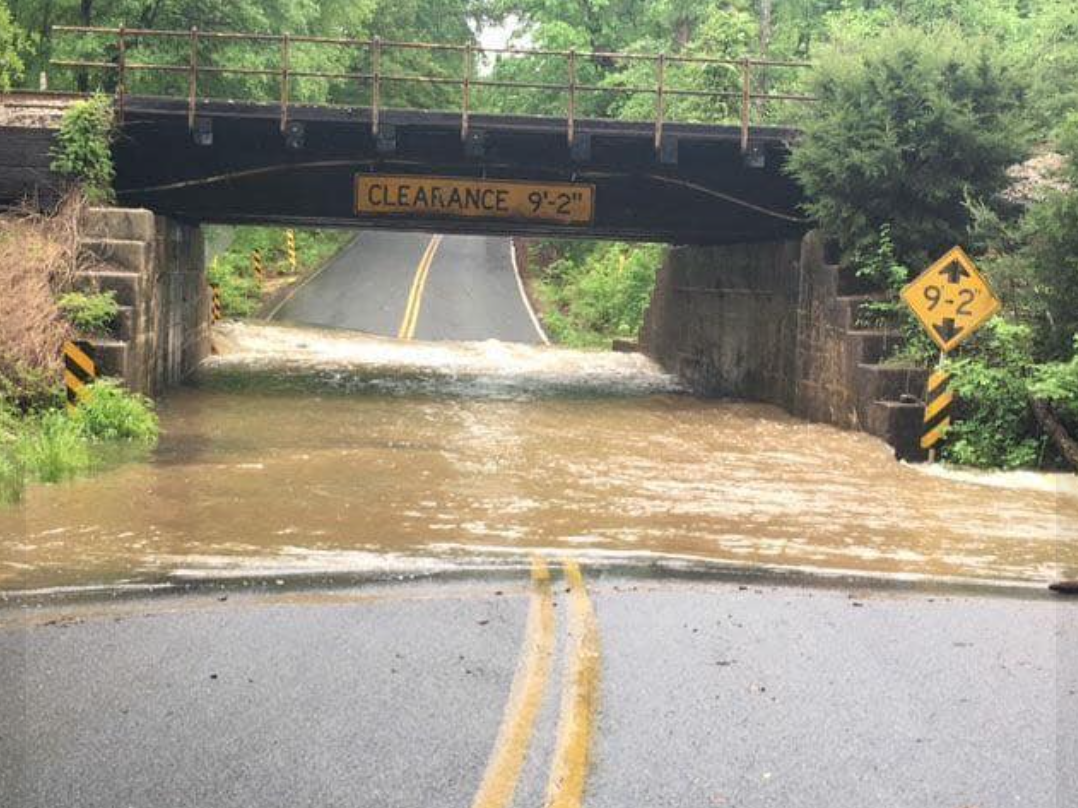
small non-company small busines stores in malls…yep… I’d leave a McD’s or Burger King that had broken stuff / HVAC, etc.. Parking garage, yep…not surprised… but vast majority of most stores and govt would be a problem I think. BTW, we had quite a number of flooded culverts and roads… do you consider
that to be “broke”? 😉 -
Depends on how often the flooding is happening, what the cause is, and what the effects are. If it happens frequently, is caused by clogged storm drains or culverts, and is effecting traffic on a heavily-used road…yep…that’s broke.
-
How many VPD, is there an alternative route, how often does that happen and what would be involved in remediating it…lots of questions.
-
Never get a boat through there.
-
-
-
You’ve got that right. My own opinion is that an R&R plan should be funded from the first year a new building or facility goes into service. The simplest and most expensive method is to divide the original construction cost by the useful life expectancy and put that amount of dollars away every year.
When actually implementing an R&R Plan, things are far more complicated than this simple equation. In my experience developing R&R funding plans for public buildings and facilities, most of the time putting between 25% and 50% of the “full” amount into the R&R fund each year is quite sufficient to pay for keeping things in an acceptable state of repair.
R&R for things like wastewater treatment plants needs to be funded at the higher end of the above range, while office buildings can usually get by with something closer to the 25% figure, with schools somewhere i between.
Somewhere on my 2Tb backup drive I have a very complicated spreadsheet I developed for computing the overall life expectancy and the ‘required’ R&R funding of a building or facility. I haven’t thought about that in several years.
And, of course, expensive unexpected failures can and do occur, and these can quickly deplete your R&R fund.
I’m registered to a group called Abandoned in Va and it’s folks posting pictures of old farmhouses and such – and one of the things that seems to be often is the roof if made of metal.
Spotsylvania Schools , a few years back after years of roof leaks from conventional roofs in the schools, had a study done, and metal roofs won hands done but the upfront cost was substantially more than a conventional roof.
The other. A study to rehabilitate and older school. The results of the study was that it was cheaper to tear it down and rebuild than to try to rehabilitate it.
so this goes to the idea of paying to maintain a building. Once you’ve sunk money into it – you may be between a rock and a hard place. It may have been cheaper to pull the plug and rebuild.
A study to rehabilitate and older school. The results of the study was that it was cheaper to tear it down and rebuild than to try to rehabilitate it.
Old school buildings are tricky. If you propose tearing one down a lot of people come out in opposition because “my grandmother, my mother, and I all attended that school – it’s an important part of our locality’s history” or “it was once an all-black school and by tearing it down you’ll be erasing black history”, etc. etc.
Believe me, I have been there. In a lot of cases, no matter what the cost/benefit analysis says, you’re not tearing down that school. Sure, we’ll have to spend more money to acquire land for the new school, but you’re not tearing the old one down.
Then it becomes your job to find a new purpose for the building and develop a plan for refurbishing it to that purpose while spending as little money as possible.
Bottom line, citizens’ emotional attachments aside, sometimes an old building is just an old building.
A study to rehabilitate and older school. The results of the study was that it was cheaper to tear it down and rebuild than to try to rehabilitate it.
Old school buildings are tricky. If you propose tearing one down a lot of people come out in opposition because “my grandmother, my mother, and I all attended that school – it’s an important part of our locality’s history” or “it was once an all-black school and by tearing it down you’ll be erasing black history”, etc. etc.
Believe me, I have been there. In a lot of cases, no matter what the cost/benefit analysis says, you’re not tearing down that school. Sure, we’ll have to spend more money to acquire land for the new school, but you’re not tearing the old one down.
Then it becomes your job to find a new purpose for the building and develop a plan for refurbishing it to that purpose while spending as little money as possible.
Bottom line, citizens’ emotional attachments aside, sometimes an old building is just an old building.
Not even beginning to mention the cost of asbestos and lead paint mitigation when discussing older buildings.
Yup.
Well, someone in Spotsy had the bright idea of leasing the old high school to a Catholic Church for their school… until they found out what it would have cost to bring it up to code and realized the cost of the lease to pay for it far exceeded what it would cost for an entirely new modern facility.
So the county continues to use it for various sundry functions… and exempts the code.
When I was on the HOA board where I used to live, the management company did a reserve study to make sure that there is sufficient funds being saved to repave the parking lot and other things so the money would be there when the time came. I was kind of impressed.
A wise HOA board.
It was the management company, not so much the HOA board. They were wise in hiring a good management company.
and I agree with you about all agencies and in fact, having that function in-house would be
a requirement to be eligible for such funding.

DOC likely has a “plan”. Years ago, when I was at DPB and was the analyst assigned to DOC, I would complain about their relatively low spending on MR. The capital director would show me how every one of the dollars appropriated for MR was committed. So they had a plan. They just could not spend the money they had as quickly as it was appropriated. And the unexpended balance has been building up every since then. My point: stop giving theses agencies money until they have spent what they have.
By the way, the Code requires agencies to have a six-year capital plan (not including MR) It’s useless.
-
At least tell me it’s in an interest bearing account.
-
All GF is in a big interest-bearing account. In a way, the failure of these agencies to spend all their GF MR funding contributes to the state’s bottom line.
-
Who do I contact about investing for them… small fixed fee. 😊
They should give it to the folks who do UVa’s endowment. We’d own North Carolina in a decade.
-
I generalized too much in my comment. I don’t know the details, but the Dept. of Treasury invests the GF balances in a variety of instruments.
-
-
I definitely see your point, and I don’t necessarily disagree with the concept.
However, before ‘defunding’ them, I’d like to know exactly why DOC cannot implement their planned R&R projects, and utilize the money they are given each year.
Do they not have enough in-house project managers? Do they not know that they can contract project management out to engineering and/or architectural management consultants?
It baffles me that they can only utilize $10 million in R&R funds every year.
-
part of this might be like the probem VDOT has in staging projects, just because you got the money does not mean you can go forward … there may be other pieces and parts involved.
-
I need to point out that DOC is not the only culprit. The Community College System has an even lower average annual expenditure. As for figuring out why they can’t do it, that seems to be a job for the Governor’s Chief Transformation Officer: “The Chief Transformation Officer leads change efforts to bring
business efficiency to government bureaucracy and make government more
responsive, efficient and transparent for all Virginians.”Even if someone figures it out and fixes the process, it would still take DOC, VCCS, and others years to spend down their balances.
-
I need to point out that DOC is not the only culprit. The Community College System has an even lower average annual expenditure. As for figuring out why they can’t do it, that seems to be a job for the Governor’s Chief Transformation Officer: “The Chief Transformation Officer leads change efforts to bring
business efficiency to government bureaucracy and make government more
responsive, efficient and transparent for all Virginians.”Even if someone figures it out and fixes the process, it would still take DOC, VCCS, and others years to spend down their balances.
-
I need to point out that DOC is not the only culprit.
Yes. I was picking on DOC as an example, but I have appended one of my previous comments to mention the other culprits you included in your article.
-
I’d wonder if that is a fairy universal issue with other agencies, companies or if it is an issue with only some while others do better at it.
For instance, take a McDonalds, Each one operates on a stand-alone basis, revenues/expenses. profit per square foot etc,,
They’d have to do a pretty good job of estimating building and equipment costs over time if they are going to keep costs under control and accounted for in their total sales.
McDonalds actually closes some stores when they become untenable financially.
I’d think important for big-box stores or really any business that sells stuff… they’d have to properly price their products and services to generate enough money to pay for repairs and maintenance and still turn a profit.
-
Yes, but aren’t you opposed to people who run businesses entering the public sector? 😉
-
I must have said that badly because I’m NOT at all opposed to business people entering the public sector. What I’ve said is that govt is not the same as business in all areas. In the area of Capital Improvements, for instance, the public sector does that function and planning for it as they should but the how and why is different from the business sector in which capital improvements are related and tied to operating expenses and profits. Public buildings like schools or govt offices do not need to worry about trading off costs/expenses with bottom line profits but instead the operating costs and meeting code standards, etc. Most McDonalds , and other retail don’t seem to go near as long as public buildings do before they are essentially torn down and rebuilt or a new site…. So.. the functional procedure of capital improvements is the same but the timing and tempo are not.
-
It’ okay, Larry, I was just teasing you.
-
Leave a Reply
You must be logged in to post a comment.