• The Rise of Virtual Schools

    Image credit: Thomas Jefferson Institute for Public Policy

    by James A. Bacon

    One of Gov. Bob McDonnell’s signature educational initiatives has been to promote “virtual schools.” In June the state Department of education approved 13 virtual school programs aligned with the commonwealthโ€™s Standards of Learning (SOL) and delivered by licensed teachers.

    Approved online providers include full-time virtual schools, programs offering supplemental instruction, and blended-instruction programs in which students have a trained, on-site mentor in addition to an online teacher. “School divisions now can broaden the array of courses they offer โ€“ and reach out to more non-traditional students โ€” by contracting with virtual schools or online providers that meet criteria and standards set by the Board of Education,” said Superintendent of Public Instruction Patricia I. Wright in making the announcement.

    Who will avail themselves of virtual education? In a new virtual school brochure, the Thomas Jefferson Institute for Public Policy suggests several niche categories that could benefit, including:

    โ€ข Military families who move frequently
    โ€ข Students on homebound instruction with medical needs
    โ€ข Students with special education needs, such as the autism spectrum or ADHD
    โ€ข Students with gifted education needs , who need to be challenged and move at their own pace
    โ€ข Students who need credit recovery to graduate
    โ€ข Competitive athletes with conflicts in traditional school day hours
    โ€ข Any student who is dissatisfied with their current traditional public school as a result of overcrowding, bullying, lack of rigor.

    I’ll be really interested to see how the virtual schools pan out. The increased choice and access provided by the technology is a good thing. Hopefully, we’ll see increased competition and innovation among providers. Perhaps it’s wishful thinking but virtual schools could augur a more sweeping transformation of Virginia’s moribund public education system.


  • Tax the Rich!

    By Peter Galuszka

    One the recurring themes of James A. Bacon, the Bacon-In-Chief, and his Baconauts, is that while the vast, unwashed masses of Americans must endure cutbacks in their lifestyles and spending to prevent “Boomergeddon,” the rich are strangely left out of the equation.

    Keep in mind that in the past 30 years, the percentage of the super rich has risen dramatically, while the middle class, the backbone of America, has stagnated. So, as we face years of spending cuts and pressures, for better or worse, to rein in taxes, it is interesting what one of the richest man in the world has to say.

    Writing in this morning’s New York Times, Warren Buffett, sage of Omaha and investment king, writes that the tax breaks for the super-rich have gotten way out of control. “While poor and middle class fight for us in Afghanistan, and while most Americans struggle to make ends meet, we mega-rich continue to get our extraordinary tax breaks,” he writes.

    A few examples:

    • The billionaire last year had a tax bill of $6,938,744. As big as that may seem, it was only 17.4 percent of Buffett’s taxable income and significantly below what ordinary Americans pay percentagewise.
    • The rich are allowed to classify some of their income as “carried interest” taxable at a 15 percent rate.
    • If the rich trade stock futures for all of 15 minutes, some 60 percent of their gain can be taxed at the 15 percent rate.
    • Go back to 1976. Capital gains rates were 39.9 percent. Yet, in 1992,ย  the highest-earning individuals — and that must include income from investments — paid only 29.2 percent to the feds. By 2008, that rate had slipped to 21.5 percent.

    Buffett’s not alone in pointing out the inequities with the Daddy Warbucks. Writing today in The Washington Post, economist Robert Samuelson notes that with capital gains at a paltry 15 percent, they represent the lowest tax rates of all. What’s more, two thirds of capital gains go to the wealthiest one percent of the population.

    Now if you read this blog, you get a Fox News Warp of reality. The Baconauts and Boomergeddons out there will insist that even thinking about raising the tax rates for the ultra-rich is “redistribution of wealth” more suitable for mangy, flea-bitten Bolsheviks. They argue that the richest earned their wealth, a point that is Looney Tunes since the vast majority got it by being lucky enough to have been born into the right family. I am constantly amazed at the lengths these people go in apologizing for the rich since they, themselves, are not all that rich.

    Anyway, when the Congressional Gang of 15 gets around to reviewing budget and debt cutting strategies, let’s hope they take a gander at the super rich. That’s what Warren Buffett would have them do, and he’s not often wrong.


  • Are People Fleeing High Taxes — or the Blue State Governance Model?

    by James A. Bacon

    It’s one of the most contentious issues in state-level tax policy: To what extent are higher taxes self defeating? Do higher taxes drive people into other states and, thereby, undermine the tax base and defeat the purpose of higher taxes in the first place? Throughout my Bacon’s Rebellion commentary, I have always contended that taxes are one factor — a significant one — that influence peoples’ decisions where to live.

    Now comes a thoughtful, if not entirely convincing, study from the Center for Budget and Policies Priorities that suggests otherwise. The authors of “Tax Flight Is a Myth: Higher State Taxes Bring More Revenue, Not More Migration,” argue that the effects of tax flight are so small that state governments can raise taxes and be assured of a substantial gain in revenue.

    The study makes a number of points worth considering. First, inter-state migration is not common; only 1.7% of U.S. residents move from state to state in a given year. Second, low taxes can prevent a state from maintaining the kinds of high-quality public services that potential migrants value. And third, migration is more likely to be driven by cheaper housing than higher taxes.

    Here’s how I would respond. First, while only 1.7% of U.S. residents move from one state to another in any given year, that movement can add up over time. That figure implies that 17% of U.S. residents undertake an interstate move over the course of the decade. That is enough to affect a state’s tax base. In the short run, a state can raise taxes with impunity. But the consequences can be severe over the longer run.

    Second, higher taxes do not necessarily contribute to better public services. Sometimes they do. But sometimes they just support featherbedding and expensive pensions for public employees. Sometimes they underwrite boondoggle public works projects that favor the politically connected. Sometimes they support entitlement programs that make life easier for the poor but do nothing for the people who pay the taxes.

    Third, housing prices are a factor influencing where people move. So are average wage levels and the general cost of living. Also, as economic geographer Richard Florida has illuminated, members of the “creative” class (who are desirable from an income and tax-generating viewpoint) are drawn by a metropolitan region’s character — its openness to newcomers, its tolerance for diversity, and its cultural vibrancy and authenticity. To those factors I would dd the role of human settlement patterns: Some regions are more livable than others. Finally, I would hazard a guess that the single-most important factor driving inter-state migration is simply the availability of jobs. If you can’t find work, none of the other factors really matter. Taxes are only one factor in the mix, and it is important not to over-sell them.

    But tax levels are correlated with job creation and income growth. (For evidence, click here.) That’s not because they are the critical driving variable, I suspect, but because they are a proxy for a larger mindset, what Walter Russell Mead terms the “blue state governance model” of high taxes, public employee unions and heavy regulation. (For a taste of Meade’s thinking, read “Blue State Schools: Shame of a Nation.”) Overall, the Red State policy mix is better at creating jobs and raising incomes than the Blue State policy mix.

    Bacon’s bottom line: Taxes don’t matter as much as some conservative analysts think they do. But they are a proxy for the Red State policy mix that has been proven to be far more robust than the Blue State model.


  • The Wonk Salon, August 12, 2011

    Snuff Out Tax Hikes on Cigarettes
    Heartland Institute
    In most states (but not Virginia) smokers already pay more in taxes than the costs they impose on society. Raising taxes even higher would punish the poor, encourage black markets and potentially lose revenue.

    Digital Tax Reform Still Needs Work
    Center for Budget and Policy Priorities
    Proposed federal legislation would regulate how states and localities tax downloaded movies, music and online services. As currently worded, though, it would reduce state and local revenue.

    Immigrant Workers Hit Hardest by Construction Downturn
    Economic Policy Institute
    Immigrants were hit harder by the construction downturn than native-born Americans. They were more likely to get laid off and to suffer reduced wages.


  • Forget FOREX, VRS’ problem is with active management

    by Norm Leahy

    The headline news is that Virginia and Florida are suing Bank of New York Mellon for “…cheat[ing] pension funds in those states by choosing improper prices for currency trades the bank processed for the funds.

    But the real headline story that, so far, I’ve only seen posted here, is how Virginia’s public employee retirement system is paying handsomely — with retirees’ money — for investing in actively managed funds:

    The Virginia Retirement System, or VRS, pays millions to Wall Street, as well as highly-paid internal managers, to oversee its $55 billion fund. The state paid $125 million more to fund managers in 2010 than it did in 2005, when the system first embraced a โ€œmore activeโ€ investment strategy. The strategy yielded results in 2011, as the fund grew nearly 20 percent, still $3.4 billion short of its pre-recession high.

    The fund needs a 49 percent gain to make up for recession losses.

    โ€œThe reason the fees are so high is because 89 to 90 percent of our investments are under active management,โ€ VRS Director Bob Schultze said. โ€œWe have to go to outside firms that put out all of these results.โ€

    This feeds into an old debate: whether actively-managed funds perform better over the long term than index funds:

    The VRS could achieve similar long-term investment gains with an index fund, a computer generated investment scheme designed to react to market trends, according to Andrew Biggs, a retirement scholar at the conservative American Enterprise Institute.

    โ€œThe whole point of active management is to try and outsmart the market,โ€ he said. โ€œBut 75 percent of the time, active managers donโ€™t beat the index funds. You canโ€™t outsmart the market.โ€

    Some large index funds have been able to churn out results similar to the systemโ€™s performance.

    I remember having a long-running argument argument with the retirement fund managers at a former employer. They weren’t keen on index funds, preferring to stick with actively-managed funds that carried higher fees.

    So I asked for information on the active funds’ holdings. When that data was provided, it was not surprising to find that funds which, by their names alone, would seem to have vastly different investment goals also tended to own shares in the same companies. But we could only see what the top ten holdings were — in the past. A complete list of current holdings was unavailable, nevermind how long those holdings had been in the portfolio. And tax considerations? Fuggedaboutit.

    So what did active management provide? The promise of greater returns, but rarely greater than the index used as a benchmark. And at a far higher price, with less diversity, than those same benchmark index funds. But the idea that smart people were watching the market like a hawk every day, as opposed to a dumb index that just sat there, gave some of my colleagues great comfort.

    It’s the same with the VRS. The state’s retirement plan took a huge hit coming out of the 2008-2009 market swoon. They turned to active management to try to cover the losses because they believed the smartest guys in the room would give them an edge. But that move has cost them a great deal — arguably, far more than the monies in question in the suit pending against Bank of New York Mellon.

    So why does the VRS stick with active managers that cost a heckuva lot more? Sen. Roscoe Reynolds offers the classic response:

    โ€œIf something went wrong, could you imagine the response from the public if we were relying on a computer? I can tell you it wouldnโ€™t be good.โ€

    Is SkyNet running the Russell 2000? Or the Wilshire 5000? Not yet. But there’s also no indication that the bright minds behind active investment strategies — and the costs they bring — do any better than the far cheaper, and in many ways far smarter, index approach.


  • Drunk On Debt

    U.S. Senate candidate Jamie Radtke asked for an opportunity to respond to Peter Galuszka’s recent column, “Drunk on Tea.” I figured, sure, why not? It’ll make Peter’s day when he gets back from the beach! Here’s what she has to say. — JAB

    Peter Galuszka entitled his recent post / article about me and the Tea Party, “Drunk on Tea.โ€ (He posted it on WashingtonPost.com, and at Baconโ€™s Rebellion, and got it into Style Weekly magazine โ€“ now thatโ€™s initiative, if not exclusivity.)

    As evidence of our impairment, Mr. Galuszka offered that the Tea Party movement (and I), โ€œcheered on freshmen Republicans in the House of Representatives to do everything they could to thwart a compromise.โ€

    Well, we got a โ€˜compromiseโ€™ and ended up with the worst of three worlds: trillions more in debt, no real spending cuts in the near future, and a downgrade of our credit rating. If one option is steering clear of an iceberg and the other option is running straight into the iceberg, a โ€œcompromiseโ€ that crashes half of the ship into the iceberg is still not a good plan.

    Within days of Washington politiciansโ€™ making it clear that they were not committed to serious spending cuts and long term structural spending reform, the Dow dropped more than 1,100 points, S&P downgraded the U.S. to AA+, and we added $250 billion to the debt (bringing total U.S. debt to more than the entire Gross Domestic Product of the United States).

    Furthermore, our largest foreign creditor, China, demanded, “international supervision over the issue of U.S. dollars… and a new, stable and secured global reserve currency may also be an option to avert a catastrophe caused by any single country.”

    In other words, half the ship hit the iceberg.

    The bond rating agencies and investors in our markets say we must cut spending. Foreign countries say we must cut spending. Tea Party advocates say we must cut spending. A majority of Americans say we must cut spending. Only Washington Politicians (along with Mr. Galuszka) could have the audacity to claim that that the majority view is stubborn and that we should submit to their business-as-usual destructive ways. To better understand their minority worldview, perhaps we should all remember these are the same politicians and pundits who define โ€œspending cutโ€ as โ€œreducing the rate of spending increases.โ€

    It seems to me that Mr. Galuszkaโ€™s disagreement with the Tea Party comes down to two things: 1) He wants to spend more. We donโ€™t. 2) He wants to elect Tim Kaine. We donโ€™t.

    But perhaps heโ€™s right on one point. Perhaps there is something in our tea (versus whatever it is the Washington crowd is drinking). Unlike the Washington Establishment, Americans can see the world LOGICALLY. We can do simple math and understand that spending $1.5 trillion of money we don’t have EVERY YEAR (and borrowing money from China to feed that spending addiction) cannot continue without severe consequences.

    I wonder how much of that tea weโ€™d need to get all of Congress into that state of mind?


  • When Does a Deal Become a “Side Deal”?

    Albemarle County Supervisor Rodney Thomas takes issue with my characterization in the story, “Gentleman’s Agreement,” of the access-management agreement reached with the Virginia Department of Transportation as a “side deal.” He was so upset by the article that he asked me to never contact him again. I tried to explore how he would describe the understanding but he refused to talk anymore.

    For the record, I did not mean to imply anything secret or underhanded by describing the understanding as a “side deal.”ย  I didn’t know how else to describe it. I invite readers to give their reaction. Did I blow it? Was I unfair? If so, I’ll publicly apologize to Mr. Thomas.

    By way of context, the original deal was one that Thomas and fellow Albemarle Supervisor Duane Snow reached with Transportation Secretary Sean Connaughton: If the two supervisors helped overturn a previous Albemarle County vote to oppose the Charlottesville Bypass, Connaughton would come up with the money to pay for the Bypass and smaller, high-priority projects in the U.S. 29 Corridor (as well as rebuilding the Belmont Bridge in Charlottesville). Thomas and Snow made good on their end of that deal, and Connaughton partly made good on his end, getting Commonwealth Transportation Board approval for the Bypass plus a widening of a stretch of U.S. 29. However, the CTB did not address the status of the other projects.

    Before the Bypass project could be approved, Thomas and Snow, who also sat on the regional Metropolitan Planning Organization (Thomas is chairman) had to reverse an earlier MPO vote opposing the Bypass. That was trickier. The Southern Environmental Law Center had put them on the spot by publicly distributing a letter to the Albemarle board asking it to get concrete commitments from Connaughton. “It is essential that the County have clear, firm, and legally enforceable conditions in place as part of any vote to amend the Metropolitan Planning Organization’s transportation plans to allow funding for the bypass,” the letter said.

    Whether motivated by the SELC letter or not, Connaughton wrote a letter to the MPO board specifying precisely what he was willing to do to advance the priority road projects, including the Berkmar Drive Extension, the Hillsdale Drive project, the Best Buy ramp and the Belmont Bridge. He also stated his expectation that the MPO would cooperate in curtailing direct access to U.S. 29 by developers and property owners in accordance with the state’s Corridor of Statewide Significance policy. In a Friday interview with me, he described that condition as a “quid pro quo” and expressed his desire to make Charlottesville-Albemarle a “test bed” for the state’s access management policies.

    That condition was not part of the original deal with Thomas and Snow, at least not as the two supervisors publicly described it. But Connaughton’s letter was vague about what he expected from the MPO and Albemarle County. Those expectations were clarified, at least to some degree, in a meeting that Thomas had with VDOT Commissioner Gregory Whirley yesterday. Thomas shared those details of the conversation with me, and I wrote the article yesterday.

    In my article, I variously described the access-management arrangement as a “side deal,” a “handshake deal,” and an “informal understanding.” What else could you call it? Thomas and VDOT had reached an understanding separate from the original agreement. This one stemmed from the original deal but it was distinct from it and it addressed a totally different topic: access management.

    If readers believe that by “side deal” I conveyed the impression that it was reached in secret or was in any way sinister, then I apologize to Mr. Thomas.

    It has since occurred to me that Thomas may have participated in the meeting with Whirley in the company of other Albemarle or MPO officials. When I interviewed him, he never mentioned that anyone else was in the meeting with him, so I mentioned only him in the article. Readers may have drawn the conclusion that Thomas met with Whirley alone. A more astute reporter would have clarified that point and also would have made clear whether Thomas was acting in his capacity as an Albemarle supervisor or as chairman of the MPO. I don’t know the answers. For those oversights, I beg readers’ forgiveness.


  • The Wonk Salon, August 11, 2011

    And Now, a Good Word for Property Taxes
    Show-Me Institute
    Property taxes are a levy that only policy wonks could love. With property taxes, the public sees the connection between the public services they demand and the tax dollars they pay.

    Latino Youth and Civic Engagement
    Carolina Population Center
    Three out of five Latino high school students report having strong American identities… in North Carolina at least.

    Saving Medicare through Competition
    Heritage Foundation
    If getting insurance companies to compete for Medicare enrollees’ business works for the drug benefit, why wouldn’t it work for Medicare as a whole?

    Saving Marriage in Middle America
    Brookings Institution
    First marriage began eroding among poor Americans. Now it’s eroding in the middle class. Public policy can halt the decline.


  • Gentlemen’s Agreement

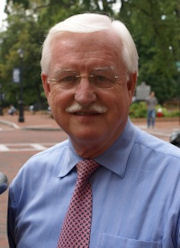
    Rodney Thomas. Photo credit: Charlottesville Tomorrow

    Albemarle County and VDOT have reached an informal agreement on how to approach access management on U.S 29 north of Charlottesville.

    by James A. Bacon

    In a side deal forged to grease the skids forย  construction of the $200 million Charlottesville Bypass, the chairman of the regional Metropolitan Planning Organization and member of the Albemarle County Board of Supervisors has agreed to limit private property owners from opening new access points to U.S. 29ย  north of Charlottesville.

    The specifics of the handshake deal had not been spelled out until today during a meeting between Rodney S. Thomas and Gregory Whirley, commissioner of the Virginia Department of Transportation. In exchange for Albemarle’s approval of the Charlottesville Bypass, the McDonnell administration has committed to fund or assist four smaller projects on the region’s list of priorities. But that help is contingent upon the county’s commitment to the state’s “access management” strategy for U.S. 29.

    In addition to limiting new access to the highway, the County also may buy up “a few driveways” from private property owners, Thomas says, and it will “consider” deleting some median-strip crossovers.

    The informal understanding worked out between Thomas and Whirley brought clarity to a side deal that had been worked out between Thomas and Whirley’s boss, Transportation Secretary Sean Connaughton in negotiations to gain funding and approval for the Charlottesville Bypass.

    Roughly two months ago, Thomas and fellow Albemarle supervisor Duane Snow met with Transportation Secretary Sean Connaughton to discuss funding of priority transportation improvements to Charlottesville and Albemarle County. The supervisors were committed to a handful of modest projects, including four in the U.S. 29 corridor and the replacement of the aging Belmont Bridge in Charlottesville. Connaughton floated the idea of funding the Charlottesville Bypass, a mega-project long considered to be unfundable. The supervisors said they would love it as long as the Bypass wasn’t being funded at the expense of the smaller projects. Connaughton gave them the assurances they were looking for.

    Thomas and Snow then wrung an endorsement of the Bypass from the Albemarle County Board of Supervisors, reversing its previous opposition. Connaughton next won approval from the Commonwealth Transportation Board, finding the funds from pots of money that did not diminish the Six Year Improvement Plan in which the smaller projects were listed. Indeed, he found money for one of those projects, the widening of a stretch of U.S. 29. Finally, Thomas and Snow, who both sit on the Charlottesville-Albemarle County Metropolitan Planning Organization (MPO), reversed that organization’s previous opposition to the Bypass. No more approvals were needed.

    While the Bypass project was a “go,” it was not clear to the public what was included in the side deal. In a letter to the MPO board, Connaughton specified the recommendations he would make to the CTB to advance or accelerate the remaining priority projects. (See “Promises, Promises” for details.) Overlooked in the MPO board discussion of the deal and in subsequent press coverage was the fact that Connaughton had attached what he later described as a “quid pro quo” — the region had to get serious about keeping U.S. 29, a Corridor of Statewide Significance, free from curb cuts, traffic lights and other access points that slowed traffic on the highway. (See “Connaughton to Charlottesville: Implement a Plan to Prevent More U.S. 29 Congestion,” for details.)

    But Connaughton’s letter did not spell out local obligations with any specificity. And when I talked to Thomas yesterday,ย  he didn’t have the details either. But he said he would know more after his meeting today.

    What emerged from Thomas’ discussion with Whirley could better be described as an informal understanding than a formal agreement. Albemarle, whose previous zoning and design decisions bred the traffic congestion plaguing U.S. 29 today, must restrict future access of developers and property owners to the highway. The county also may have to conduct some remediation, but there is no hard-and-fast agreement. “A few driveways, with some negotiation, may have to be closed up,” Thomas said. The county also will have to “consider deleting some crossovers.” (Crossovers are where intersections cut through the highway median strip.)

    “There is no specific proposal or plan. We don’t have to sign anything,” Thomas said. “It would be nice if we could cooperate with VDOT to improve traffic situations rather than make problems for them.”

    Likewise, Connaughton’s commitment to advance Albemarle’s transportation priorities is an informal one. Thomas says he believes the transportation secretary will deliver. “I trust Sean Connaughton.”

    =============

    This article was reported and written thanks to a sponsorship by the Piedmont Environmental Council.


  • Who’s Getting Hosed?

    Who’s Getting Hosed?

    by James A. Bacon

    Everywhere I go around Virginia, I encounter a universal sentiment: “We’re not getting our fair share of state transportation dollars.” Northern Virginians take it for granted that the politicians in “Richmond” are short-changing their region, the economic engine of the state. Downstaters are equally convinced that NoVa, with its voracious transportation needs, is hogging more than its fair share.

    Who’s right?

    Sen. Janet Howell, D-Reston, asked the Senate Finance Committee to figure out how much each region of the state pays in transportation taxes and fees and how much money each region gets back. Remarkably, no one had ever made that calculation before, at least not in the 12 years that Jason Powell, the legislative analyst for the SFC tasked with the job, has worked in Richmond. The results he came up with (view here) are surprising — although they must be taken with important caveats.

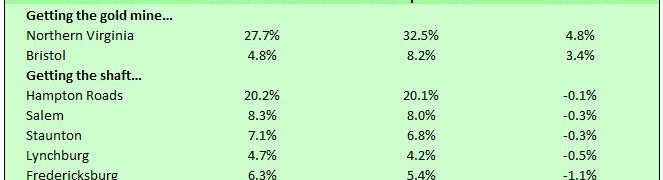
    First, we can drive a spike through the long-held myth that Virginia’s highway funding formula routinely short-changes Northern Virginia. In truth, NoVa, which accounted for 28% of Virginia’s population in Fiscal 2010 and a like percentage of the state’s annual gas tax revenue, received 33% of all transportation dollars in Fiscal 2012.

    For all the ire that Northern Virginians direct at “Richmond” — as if the inhabitants of the Richmond region were culpable for the transgressions of state government — the Richmond transportation district, with 15% of the state’s population, contributed 16% of all state highway revenues in FY 2010 and got back only 11% in FY 2012!

    Here are the numbers, which I have extracted from Powell’s presentation, ranking the VDOT districts by winners and losers.
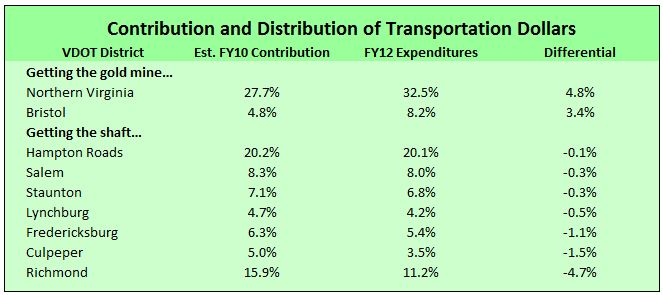
    (Click on table for more legible image.)

    Jeff Schapiro, the Times-Dispatch reporter who highlighted the findings in a column this morning, framed the issue from a downstate Virginia perspective:

    When it comes to total state spending, Northern Virginia consistently plays the victim. Its legislators yowl that the region, with its usually robust, federally fed economy, keeps the entire state afloat. That’s a tad hyperbolic. Because personal income in Northern Virginia is higher than the statewide average, the area generates more revenue relative to its percentage of the total population.

    This is what literally makes Virginia a commonwealth: It shares its wealth.

    As for highway finance, Northern Virginia can’t scream poverty. Of nine transportation districts, two โ€” Northern Virginia and Bristol โ€” take out more than they chip in. Bristol, with 4.6 percent of the population, produces 4.8 percent of road revenues, but draws 8.2 percent.

    Schapiro’s analysis may appeal to downstate politicians, but the caveats are important. First, there is no way to know exactly how much tax revenue each transportation districts contributed. Powell made an estimate based upon population, Vehicle Miles Traveled and tax data. His assumptions are reasonable, but they are still assumptions.

    More important, Powell provides only a one-year spending snapshot. While the tax revenue percentages won’t vary much from year to year, he says, the distribution of state transportation dollars will. Indeed, the numbers are already out of date: They do not include $200 million that the Commonwealth Transportation Board recently transferred to the Culpeper District to pay for the Charlottesville Bypass and related improvements.

    The numbers could shift even more — and not in NoVa’s favor — when the McDonnell administration begins spending funds from $3 billion in bond issues on mega-projects such as the Norfolk-Portsmouth Mid-Town Tunnel, U.S. 460 corridor improvements and the Coalfield Expressway.

    “There is year-to-year variability,” Powell told me. “I was just trying to do the most rigorous analysis I could.”

    Will the analysis change anyone’s mind? Probably not. NoVa partisans can argue that FY 2012 is an aberration. And they may be right. We can hope that Powell will update his figures annually. In another 10 or 12 years we might have enough data to settle the debate once and for all.


  • With Warner snub, “super committee” shows it’s hardly super

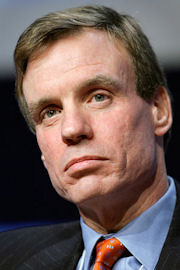
    Senator Mark Warner had some small hope of being named to the congressional “super committee” that is supposed to pore over the federal budget and find hundreds of billions of dollars worth of additional savings (or taxes increases, or both) in order to avoid across the board cuts. Those automatic cuts would result in a $600 billion hit to defense spending which could throttle Virginia’s defense-spending dependent economy.

    Before Senate Majority Leader Harry Reid made his “super committee” picks, Warner characterized his chances of being picked, and the committee’s likely Democratic make-up, this way:

    …he doesnโ€™t see much chance of winning one of the three Senate Democratic seats โ€” because he wants to tackle entitlement reform and tax reform on a much broader scope than is envisioned by the new committee.

    โ€œThe fact that Iโ€™m willing to do that probably means that Iโ€™m not actually going to get on the committee,โ€ Warner said on Fox News. โ€œI donโ€™t actually expect to get on the committee. … I also know that chances are that there will be enormous pressure on leadership in both parties to put members that might not be willing to be as bold.โ€

    As Ken Falkenstein notes, Mr.Warner was passed-over for membership on the committee in favor of the odious John Kerry, Democratic Senate campaign chair Patty Murray and Finance committee chair Max Baucus.

    So give Warner the credit he’s due: he knew Reid would pick those who weren’t interested in sweeping entitlement reform. If anything, the Murray choice ensures just the opposite. In addition to her charge to look after Democrats’ electoral concerns, according to the Wall Street Journal, Murray is also “a vocal supporter of Social Security and Medicare.”

    In that same Journal article, we learn more about why Warner was shut out of the committee — his involvement with the “Gang of Six” — and Harry Reid’s take on entitlements:

    That group irked Mr. Reid by going its own way and trying to influence matters during the recent negotiations on the debt ceiling. In addition, those senators accepted cuts to Social Security at a time when Mr. Reid was strongly rejecting such cuts.

    Hope, change…not on his watch.

    It’s anyone’s guess who will be named to the other spots on the “super committee,” but the snubbing of Mark Warner has made a few things clear:

    * Serious entitlement reform is off the table for Democrats.

    * This and taxes will likely lead to no agreement, meaning the automatic cuts of the debt ceiling could be on their way. Buckle-up, Virginia, it’s about to get bumpy.

    * Warner has been given an additional reason not to make the Senate a long-term career. Terry McAuliffe, you’d best call your office.


  • The Mystery of the Missing Jitneys

    Precious Ramotswe will need an economics degree to solve the Mystery of the Missing Jitneys

    by James A. Bacon

    The other day, I was watching HBO’s “The No. 1 Ladies Detective Agency” whose main character, Precious Ramotswe, solves mysteries set in Gabarone, the capital of Botswana. The characters are delightful and the story lines entertaining, but, wonk that I am, I began wondering about incidental things such as, how did a once-impoverished, land-locked African country become so prosperous, and how did Grace Makutksi, the Watson to Ramotswe’s Holmes, come to ride to work in a large, comfortable, air-conditioned van?

    Since independence, Botswana has vaulted from one of the poorest countries in the world into the ranks of middle-income nations, a rare feat in Africa. A full explanation is beyond the scope of this blog post, but suffice it to say, Botswana has nurtured its democratic institutions and maintained the freest economy on the African continent, ranking No. 40 (moderately free) in the Index of World Economic Freedom. Which brings us to the issue of public transportation. It appears that Botswana encourages the use of jitneys: vans that offer unscheduled but regular service along a mostly fixed route.

    Now,ย  I have no way of knowing the extent to which Botswana regulates its jitneys, but clearly it has not banned the entire category of transportation as the United States has nearly done. As a consequence, poor Batswanan (as one refers to the inhabitants of Botswana in the plural) have a transportation option not available to poor Americans in any but a handful of U.S. cities.

    The American political class, ever confident in its ability to regulate the daily affairs of lesser mortals, has created monopolies and/or cartels in taxicab and bus service that haveย effectively eliminated jitneys as a shared-vehicle transportation mode. Espying a “market failure” — transportation remains exceedingly expensive for poor Americans — lovers of big-government solutions then call for subsidies to cover money-losing bus or mass-transit services. As the world hurtles ever closer to Boomergeddon, however, subsidies for money-losing transit modes is not a fiscally sustainable strategy over the long run.

    That’s why a case studying appearing in a recent report, “Enterprise Programs: Freeing Entrepreneurs to Provide Essential Services for the Poor,” is so timely. Jennifer Dirmeyer, a professor at Virginia’s own Hampden-Sydney College, makes the case for resurrecting jitneys in the U.S. Dirmeyer writes:

    Low-income individuals make up the largest percentage of bus riders and the second largest percentage of taxi riders. This points to the potential for a welfare-enhancing travel alternative that is slightly more expensive than a bus fare yet more โ€œconvenient.โ€ However, choosing between taking a taxi and a bus may be somewhat like choosing between a filet mignon and a spam sandwich. …

    Where jitney services have operated, either legally or illegally, consumer-reported benefits fall into three categories: Jitneys are faster than buses, save walking and waiting time, and offer better quality service. On the supply side, jitneys are better able to adjust to changing transportation patterns, respond to the differences in peak and off-peak demand, and they provide moderately more convenient services such as making small detours off route for a lower price than a taxi. These characteristic features explain the persistent popularity of jitney services in urban environments, even where illegal.

    Dirmeyer advocates significant deregulation of taxicabs and jitneys, even to the extent of allowing them to pick up passengers at bus stops. That would create a problem, she acknowledges — it would divert passengers who otherwise would ride buses. Then transit companies, which bear the cost of maintaining the routes and stops, would be put at a competitive disadvantage. She believes that the public benefit is greater than the revenue lost to government enterprises, although the point is probably impossible to prove or disprove.

    I suspect that jitneys can flourish even without free-riding on the investment made by transit companies. People can already download smart-phone apps to find other car poolers. Thus, the means already exists for riders to communicate with jitney operators. Who needs to raid bus stops? Indeed, the inherent flexibility of smart phone-enabled jitneys could revolutionize the shared transportation industry. Taxicabs and transit companies will fight to preserve the status quo but riders, poor riders especially, could be big winners in a world where jitneys were free to operate. Taxpayers could be winners, too, if free jitneys spelled the end to mass transit monopolies and taxpayer subsidies without end.

    Update: Reader “Darrell” sends a link to the following story, “Carpooling a Click away with Online Ride Sharing” about two Seattle start-ups that are connecting riders with car pools.


  • The Wonk Salon, August 9, 2011

    How to Run Off Rich People in Three Easy Steps
    Mercatus Center
    Sick of all those millionaires and billionaires stinkin’ up your state? Just run them off in three easy steps: (1) Raise personal income tax rates, (2) lower the “high income” threshold for the top rate, and (3) jack up property tax rates.

    Public-Private Partnerships for School Facilities
    American Enterprise Institute
    If you’re not ready to privatize school management, consider privatizing the management of school facilities. Outsource extraneous services such as parking, dining, upkeep and energy maintenance and let the educators focus on their core competencies, educating students.


  • Chart of the Day: Tuition Inflation

    Recent news articles report that college tuitions are soaring this year… again. Does anyone really believe that the price hikes for higher education at public universities can be fully accounted for by cutbacks in state funding? Let’s take a look at the long-term picture comparing the cumulative change in tuition and fees (for all colleges and universities, not just public ones) to other elements of the Consumer Price Index.

    Source: Moody’s Analytics

    — James A. Bacon


  • The Wonk Salon, August 8, 2011

    Want to Help the Poor? Get Government Out of the Way
    National Center for Policy Analysis
    Don’t blame market failure for the difficulty poor people have finding affordable transportation, housing, child care, health care and security services. The real culprit: government regulation.

    Introducing the Debt-to-Degree Ratio
    Education Sector
    A new way to measure the performance of an academic institution is to calculate the ratio of how much its students borrow compared to the number of degrees granted. The trends are not favorable.

    Elite “Exam” Schools Provide Little Educational Value Added
    National Bureau of Economic Research
    The frenzied competition to get into elite Boston and New York “exam” schools isn’t justified by the results. An analysis of standardized test scores shows little educational value added.