The Impact of Minimum Wage on Somoa, Marianas Government Accountability Office
Increases in the minimum wage have devastated the tuna cannery industry in Somoa but has been less of a factor in the tourism-based economy of the Northern Mariana Islands.
L.A. Gang Reduction Program Is Helping Urban Institute
A drop in gang-related crime was evident before the Gang Reduction and Youth Development Program was launched, but the program appears to have accelerated the decline.
The Declining Impact of Extreme Weather Events Reason Foundation
Global warming be damned. Aggregate mortality due to all extreme weather events globally — droughts, storms, floods and extreme heat — has declined by 90% over the past century in spite of a four-fold rise in population.
Empower States to Regulate Gas Drilling Heritage Foundation
The feds should not hamper development of the country’s plentiful natural gas reserves. Let the states deal with environmental issues.
Creating Jobs by Conserving Public Lands Center for American Progress
Conservation of public lands supports 388,000 jobs in recreation, tourism, renewable energy, restoration and landscape restoration.
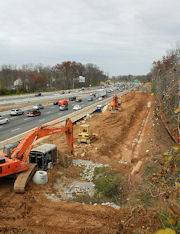
A design-build approach worked beautifully on the 495 Beltway widening, Connaughton says.
The McDonnell administration hopes that VDOT’s “design-build” approach to highway engineering will advance projects more quickly and save millions of dollars. But public accountability may suffer.
By James A. Bacon
Transportation Secretary Sean Connaughton liked this story so much that he told it twice this week during the September meeting of the Commonwealth Transportation Board in Portsmouth. When Virginia Department of Transportation (VDOT) engineers conducted the initial design for the I-495 Beltway, he said, they estimated that the project would cost $3 billion. But when Transurban, the Australia-based toll road builder/operator, took a crack at the same design challenge, the cost dropped to $1.5 million. What’s more, said Connaughton, “They added four lanes; we would have added only two.”
One big difference between the two designs was that VDOT envisioned the necessity of acquiring more than 600 houses and commercial buildings while Transurban figured out how to build the project with a much smaller footprint, saving hundreds of millions of dollars in right-of-way acquisition costs.
And that is why Connaughton is a big believer in “design-build” contracts. He wasn’t knocking the professionalism of the VDOT engineers. But he did make the argument that soliciting a design from a private-sector group like Transurban could yield fresh, creative thinking on how to design a project more economically.
Under the McDonnell administration there will be more design-build contracts in Virginia’s transportation future, a philosophical shift that represents a big change in how VDOT manages road projects and how it interacts with the public. Design-build offers the potential to cut the cost of big-figure mega-projects. But because the projects move so much faster, the approach also threatens to reduce meaningful public involvement. Indeed, the controversial Charlottesville Bypass, which is being rushed to bids, may be a case in point.
Traditionally, VDOT used the “design-bid-build” approach to designing and building roads. It was a linear process, Charlie Kilpatrick, chief deputy commissioner, explained to the CTB. Projects moved sequentially from one phase to the next, a process that could take years. The contracts were very “prescriptive,” with the quantity of materials specified precisely. Contractors liked it because it was low-risk. If there were overruns in the quantity of materials, VDOT would pay for them. The process had all been worked out, and everyone was comfortable with it.
The design-build approach transfers much of the risk to the contractors but gives them more flexibility in solving problems. Contractors, who typically partner with engineering firms, are required to meet broad specifications and guidelines but have considerable latitude in figuring out how to meet them. If they miscalculate the volume of materials required, they are liable for the overrun. An advantage of the process is the ability to run many of the design and construction phases concurrently. Construction could be underway on one section of the project even while engineers were designing another section. In theory, completing projects more quickly cuts construction costs.
Another reason VDOT is resorting to design-build projects right now is that the department has largely run out of off-the-shelf project designs. In the past, VDOT engineers would do rough designs entailing about 30% of the work in order to develop cost estimates and move quickly to take advantage of unexpected funding opportunities. When the 2007 recession hit, VDOT curtailed its engineering work in an effort to cut costs. Later, when the Obama administration started distributing highway construction dollars under the American Recovery and Reinvestment Act (the so-called “stimulus” bill), VDOT drew down its off-the-shelf plans. Now, said Virginia Highway Commissioner Gregory A. Whirley, the cupboard is almost bare. VDOT’s updated strategic plan calls for setting aside 10% to 15% of the state’s construction program budget for preliminary engineering in order to beef up its project inventory. Until then, the department will use more design-build, in effect outsourcing the design to engineering-construction firms and partnerships.
James A. Davis, former president of Shenandoah University in Winchester, said Virginia’s higher education sector went through a similar transition two decades ago. Colleges and contractors were comfortable with the design-bid-build process and were reluctant to change. “You have to be very clear about the specifications,” he told the board. “It’s a very different management process. It’s more creative, and you don’t know until you reach 90% [project completion] what the final cost will be.”
Despite the anxieties, design-build did cut the construction time of college buildings dramatically and saved considerable money. It’s largely standard for the higher ed sector today.
On the other hand, as Davis conceded, highway projects are typically more complex than college buildings. Also, he might have added, highways have a far greater impact on the public than college buildings do.
“How do we reconcile this with our obligation to consult with taxpayers?” asked James E. Rich, the Culpeper District representative on the CTB, who opposed the Charlottesville Bypass. It wasn’t an academic question. Read more.
Comparing Public- Vs. Private-Sector Compensation: Private Wins by a Hair Boston Center for Retirement Research
Private-sector workers earn about 9.5% more than state-local government workers with comparable skills. If benefits are included, total compensation is just about equal on a national level.
Immigration Assimilation: It Takes Two to Tango Center for American Progress
Historically, Americans have put the burden on immigrants to assimilate, emphasizing the learning of English and naturalization. But there is much that communities can do to hasten the process.
Make Government Data Machine Readable Cato Institute
How to make government more transparent: Make government data machine discoverable and machine-readable.
Want More People on Food Stamps? Eliminate the Fingerprinting Requirement Public Policy Institute of California
Apparently, not enough people are applying for food stamps in California. Eliminating the fingerprinting requirement could increase participation by 7%. No guarantees, though, that the some of the new enrollment won’t be fraudulent.
Helping Patients Share in Decision Making New America Foundation
Every medical procedures involves tradeoffs between benefits and risks. It’s a good thing for patients to be involved in making the decisions. State legislatures should revise their informed-consent laws to help make it happen.
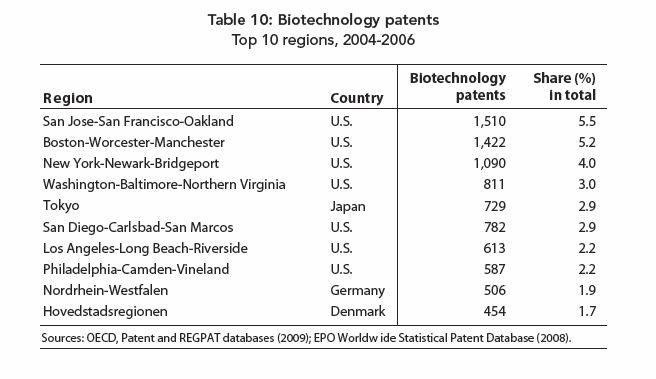
How about that? The Washington metropolitan region has emerged as the No. 4 biotech region in the world based on the number of biotech patents between 2004 and 2006, according to a new Milken Institute report, “The Global Biomedical Industry: Preserving U.S. Leadership.” (Click on chart for more legible image.)
Of course, it’s one thing to create intellectual property, another thing to commercialize it and yet another to build job-creating growth companies. The availability of venture capital is a major competitive advantage for the U.S. biotech sector, says the Milken Institute report, but the authors did not provide data on the availability of venture capital in different regions. Most likely, there is a large gap between Silicon Valley and Boston on the one hand and the Washington-Baltimore-Northern Virginia region (and everyone else) on the other. Regardless, the concentration of human capital suggests at least one potential growth generator to replace the federal government, which inevitably will sputter as Congress gets serious about controlling spending.
The metro-wide figures are undoubtedly skewed by the presence of Johns Hopkins, the largest medical research university in the nation, on the Maryland side of the Potomac. Still, Northern Virginia has a number of strong biotech assets. This sector bears watching.
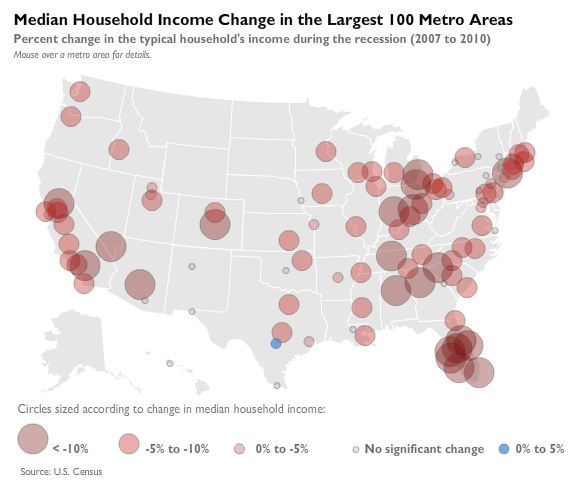
Ouch. My home metro of Richmond is looking pretty bad, with an increase in poverty in the 5% to 10% range. Good to see that Hampton Roads is holding its own. — JAB
Phew! Between the flow of stories from three days worth of Commonwealth Transportation Board meetings and the eruption of the Cville Bypass cost-estimate controversy, its been crazy here at the Rebellion. I’ve got a couple more stories to file from the CTB conclave and a couple of press releases to attend to but, frankly, I need a break from transportation. I will leave you with some random facts presented at the CTB meeting yesterday and then turn to other subjects.
Number of potholes patched by the Virginia Department of Transportation in fiscal 2011: 108,203.
Acres of grass along state roads and highways mowed: 159,000.
Number of stranded motorists assisted by safety service patrols: 53,300.
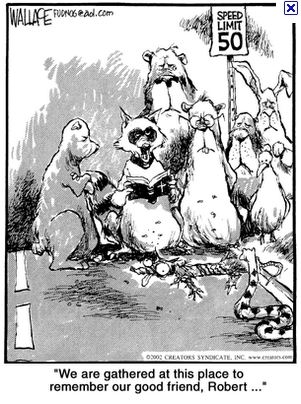
Dead animals removed from state roads: 12,000 … at a cost of $3.9 million, working out to an average of $325 per critter.
Fears of repeating another Solyndra or Fannie Mae/Freddie Mac fiasco shadowed discussions of an innovative Virginia Transportation Infrastructure Bank (VTIB) at the Commonwealth Transportation Board meeting today.
Funds from the VTIB, which will be capitalized initially with $283 million, will help finance transportation projects that might not otherwise be built. Initially, the bank will provide loan guarantees or pledges against other types of financial leverage. Repayments of principal and interest will be reinvested in new projects. Eventually, the bank may provide outright grants.
The infrastructure bank is a centerpiece of the McDonnell administration’s strategy to jump-start construction of transportation projects in Virginia. The administration plans to borrow $3.4 billion during its four-year term, a sum it hopes to leverage through toll-financed public-private partnerships. The infrastructure bank will chip in resources to help close deals for projects large and small, drawing upon revenue streams as diverse as developer proffers or leases from airport hangars. “If you’ve got a good financial adviser, you can turn one dollar into three or four dollars,” Transportation Secretary Sean Connaughton told the board.
Talk of leverage and loan guarantees was disconcerting to some members, however. “Do we have the safeguards in place to make sure this doesn’t turn into another Solyndra?” asked James E. Rich, the Culpeper District representative, referring to the solar-panel manufacturer that recently went belly up after the Obama administration guaranteed $535 million in the company’s debt.
John Lawson, chief financial officer of the Virginia Department of Transportation, outlined how the infrastructure bank would work. The Virginia Resources Authority (VRA) will administer the bank, while the CTB will set policies and have the final say over project approvals. The bank is expected to lend or grant money mainly to local governments or authorities, but private companies working under a public-private partnership agreement also are eligible. Loans will be amortized over as many as 35 years; principal payment can be delayed for five years after substantial project completion. Interest rates will be pegged to the rate paid by AAA government entities, but lower rates may be negotiated.
The VTIB will rate projects by 18 scoring criteria, such as project readiness, impact on air quality, safety enhancements and the recipient’s credit worthiness.
Of all the criteria, creditworthiness of the recipient is the most critical, asserted Cord A. Sterling, the Fredericksburg District representative. Other scores could be perfect, but a weak credit ranking should be an automatic disqualifier, he said.
“This is not Fannie Mae or Freddie Mac selling bundled loans,” insisted Connaughton. For the most part, the CTB will be considering projects that it has already voted to include in the Six-Year Improvement Plan. “This is just one tool in the tool chest.” In a worst case scenario, if the loan recipient goes under, said Connaughton, Virginia ends up with the underlying transportation asset — something it would have paid to build anyway.
Also, said the transportation secretary, the Virginia Resources Authority, which will help run the bank, has the financial savvy to sniff out the dubious financings. The VRA has issued $4.2 billion of dollars of loans for 875 scandal-free projects ranging from government buildings and solid-waste projects to brownfield remediation and oyster restoration.
The first project could well originate in Chesapeake, said Connaughton, with a nod to representatives from the Hampton Roads city in the audience. Not all projects will be for roads and highways, he added. He has already received inquiries for “ports” and “space,” the last presumably referring to the Wallops Island space-launch facility. “You’ll see loans for things you’ve never seen before.”
Connaughton said he would like to get the first projects financed before the General Assembly reconvenes in January, but he will be running on a tight schedule. Board members refused to sign on before details of the bank were published and the public had a chance to provide input. The next opportunity to vote on acceptance will be in December.
This article was written thanks to a sponsorship by the Piedmont Environmental Council.
Virginia Highway Commissioner Gregory A. Whirley is sticking with his $197 million estimate for how much money it will take to complete the Charlottesville Bypass, although he acknowledges that the final bids could come in above or below that number. The estimate was called into question yesterday by the Charlottesville Albemarle Transportation Coalition (CATCO), a citizens group that had found a much higher estimate in a Freedom of Information Act request. (See the previous post for details.)
Addressing an article in Charlottesville Tomorrow that detailed the CATCO findings, Whirley explained to the Commonwealth Transportation Board today how the estimate was derived. The original estimate came from the Culpeper District staff. An engineer in the central office staff got wind of the estimate, thought it was too low and developed his own estimate. But the engineer was basing his estimate on an outdated design, the VDOT chief said. The thinking at the district level had evolved on how to cut costs, he said, so he stuck with the district estimate.
The central-office estimate inflated costs in two major ways, Whirley said. First, the engineer used used old plans for the interchanges at both ends of the bypass that the district staff thinks can be significantly simplified. Second, it assumes that the construction crew will have to remove large volumes of rock and dirt. But the excavation costs can be cut significantly by elevating the highway. “I reviewed it (the central-office estimate),” he told the CTB. “I felt that the Culpeper district engineering estimate was closer to the project we planned to build.”
Whirley also noted that even the Culpeper estimate is not based on the final design. VDOT is issuing a design-build RFP, which means that bidding firms will execute the final design with the goal of bringing down costs even more. The hope, says Whirley, is that the winning contractor will “bring his creativity to the table and just maybe find a better way.”
James E. Rich, the Culpeper District representative on the CTB, expressed umbrage at the fact that VDOT had not informed the board of the full range of estimates before it voted to allocate $197 million to complete the project. “I feel left out of the process. I don’t want to have to FOIA the department” to get a full briefing on transportation projects in his district. Rich said that he still is not confident that the board has access to the correct financial and technical data.
Transportation Secretary Connaughton acknowledged that VDOT needs to complete a “cultural shift” in how it approaches costs. He’s seen too many instances of the department gold-plating projects, spending far more money than necessary. But he predicted that the Charlottesville Bypass bids would come back “dramatically less” than the official estimate. He also assured CTB members that no final decision will be made without their participation. “The board will be given the opportunity to say if we should go forward with this project.”
This article was written thanks to a sponsorship of the Piedmont Environmental Council.
A citizens group opposed to the proposed Charlottesville Bypass has unearthed documents showing that official Virginia Department of Transportation (VDOT) estimates of the project’s cost may be gravely understated. Just weeks before the Commonwealth Transportation Board voted to allocate $197 million to the project (to supplement the sum already spent on design and right-of-way acquisition), VDOT engineers calculated a total project cost as high as $436 million.
The Charlottesville Albemarle Transportation Coalition (CATCO) obtained the documents under a Freedom of Information Act request. “It is obvious that this project will cost substantially more than has been presented and approved,” said a CATCO press release. Albemarle County, the Charlottesville-Albemarle Metropolitan Planning Organization and the CTB all should reconsider their approval of the project in light of the new information, the organization said.
Some of the higher costs may be more apparent than real. In an interview with Sean Tubbs, a reporter with Charlottesville Tomorrow, VDOT commissioner Gregory A. Whirley said that the $436 million estimate assumed the “ultimate design.” By stripping out the over engineering, the project can be simplified and costs reduced before the project is put out for bids. The high number also includes a 10% contingency figure of $26 million.
However, the CATCO documents brought to light significant engineering issues associated with the 6-mile project, which would circumvent a congested strip of U.S. 29 north of Charlottesville. As Tubbs sums up the problem, “This estimate factored in the cost of at least $46 million to excavate 3 million cubic meters of land, as well as $76 million to extract 340 cubic meters of rock. This third estimate also added $26 million for more accurate bridge costs. None of this information was made available to members of the CTB.”
Important questions arise from this new information. Did VDOT officials knowingly understate the real cost of the Bypass to the CTB and local authorities? If so, why would they understate costs, knowing that construction bids on the project could come in embarrassingly high only a half year later? Were the cost issues suppressed for political reasons and, if so, by whom?
The issue could evaporate if construction bids for the project meet VDOT’s cost estimates. But if overruns run into the tens of millions of dollars, as the documents suggest they could, someone’s going to have a whole lot of ‘splaining to do.
Update: Responding specifically to the Charlottesville Tomorrow article, Whirley briefed the CTB at the close of today’s meeting about the cost estimates for the Charlottesville Bypass and how they were derived. See the next post for details.
This article was written thanks to a sponsorship of the Piedmont Environmental Council.
Time to factor in truck damage to roads in the state maintenance-funding formula?
by James A. Bacon
A subcommittee of the Commonwealth Transportation Board is discussing new criteria for the distribution of state dollars for road and highway maintenance. At the urging of CTB member Sheppard Miller, a Norfolk businessman and urban at-large member, Virginia Department of Transportation staff will present data at the next subcommittee meeting showing how the state funding formula, which currently is based upon the number of lane miles in a transportation district, might change if it incorporates measures such as Vehicle Miles Traveled or indicators of economic activity.
The subcommittee, which met in Portsmouth this afternoon, is charged with examining how state maintenance dollars might be more efficiently or effectively spent. Subcommittee members raised a variety of issues but Sheppard focused like a heat-seeking missile on the funding formula and drove the conversation toward the adoption of criteria that would give measures of traffic congestion and economic impact equal weight with lane-miles.
The current system distributes funds to areas that can’t put all the money to good use and short-changes areas with major maintenance backlogs, Miller charged. He cited a road he is familiar with, Rt. 33, which runs through an unspecified rural county. The road had no cracks or potholes but VDOT repaved it anyway. “Government fixes things that don’t need fixing and doesn’t fix things that do,” he said. “From my vantage point, the system we have now is neither equitable or efficient.”
Miller reiterated his view that every district should receive enough funding to maintain a minimum of service — a safety net — no matter how low the traffic counts. After all, he explained, people need to get to work or drive to the hospital. But he objected to the gold-plating of little-traveled rural roads. He suggested adding a measure like Vehicle Miles Traveled, which reflects how many people are using the roads. That figure could be adjusted for the number of heavy trucks, which tend to inflict more damage on pavement than automobiles. Such an adjustment would benefit areas like Norfolk, which has heavy port-generated truck traffic, and the coalfields, where heavy-laden coal trucks pound the roads.
John Lawson, VDOT’s chief financial officer, noted that the Federal Highway Administration uses three criteria when allocating Interstate-maintenance funds to the states: 1/3 based on lane miles, 1/3 based on vehicle miles traveled, and 1/3 based on revenue generated by commercial vehicles. The third criteria captures an economic dimension of the highways that the other measures did not.
Gary Garczynski, a Woodbridge developer and urban at-large member, agreed that the economic dimension was critical, especially given Governor Bob McDonnell’s emphasis on jobs and economic development. He also suggested that Northern Virginia localities ought to get some credit for their large investments in mass transit, which takes traffic off the roads.
James Lee Keen, a rural at-large member from the coalfields of Southwest Virginia, gave Miller some gentle pushback, reminding the subcommittee how much the maintenance funds meant to a jurisdiction like Dickenson, a mountainous county of 18,000 people lacking a single four-lane road. “If we look today at what’s being spent on Dickenson County, I venture to say that we’re not spending the money we think,” he said. “I think it’s only a very small amount of money. But it’s very important to the quality of life of the people who live there.”
A related issue, which received only brief discussion, was the idea of abandoning transportation assets that could not longer be economically justified. Miller gave the example of a bridge in Suffolk that VDOT shut down, even though it added many miles to the commute of local residents. “Those people were disadvantaged,” he said. “But the cost to maintain it was more than the value of having it.” In the previous meeting, the subcommittee discussed stricter criteria for admitting new subdivision roads into the state system but did not return to the subject today.
Ideally, suggested Miller, subcommittee members would reach a consensus on the desired criteria based on their merits before looking at how the numbers shook out for individual localities. But he had no illusions. “Somebody’s ox is going to get gored,” he said. “We’re all going to get parochial. We’ll look at how the numbers work out and see how it affects us.”
Important update: A number of people, me included, have been laboring under an illusion about how Virginia’s maintenance funds are allocated. The issue didn’t surface to be resolved until Shep Miller brought up the subject at the regular CTB meeting two days following the subcommittee meeting described above. Connie Sorrell, VDOT’s chief of systems operations, set the record straight. Two points. First, “lane miles” are the criteria used to divvy up only maintenance funds between cities and towns. Second, the allocation of funds among counties whose roads are maintained by VDOT (which excludes Arlington and Henrico) is done on the basis of need. “Need” is determined by the condition of roads and bridges as tracked under VDOT’s asset management plan.
Unfortunately, it appears that a good deal of the first two subcommittee meetings was wasted as Miller pursued his line of thinking based upon a misunderstanding. Why did not someone set him straight?
This article was written thanks to a sponsorship of the Piedmont Environmental Council.
Tolls on Interstate 95? They could be in our future. The Federal Highway Administration yesterday granted the Virginia Department of Transportation preliminary approval to a request by Governor Bob McDonnell to toll the Interstate, subject to certain “important steps” that VDOT must take before full approval is granted, according to a press release issued by the governor’s office.
It was not clear from the press release where the McDonnell administration will place the tolls or what rates would be charged. In a May 2010 Washington Post article, written when Virginia submitted the request, Transportation Secretary Sean Connaughton said he was contemplating tolls of $2 to $4 at a location near the North Carolina border with the goal of capturing primarily inter-state traffic. But the Times-Dispatch says today that state officials will look at other locations because the feds “want tolls to be collected in the areas where the money will be spent.”
In yesterday’s press release, VDOT estimated that tolls could generate $50 million annually. The revenues could be applied to widening the highway between I-295 north of Richmond and the North Carolina border, enhancing Intelligent Transportation Systems, installing over-height detectors on bridges, widening shoulders, installing guardrails, and improving pavement on more than 700 lane-miles within the corridor.
McDonnell described the heavily traveled highway corridor as having “deficient pavements and structures, congestion, higher crash density and safety concerns.” The entire I-95 corridor averages a level of service of ‘D’ and some more urban portions are ‘F’ during peak periods.
I have to say, this announcement took me by surprise. I had no inkling of it. The conservative radio talk shows will probably have a field day with it. But I have no objection in principle to tolling I-95, with the provisos, which the McDonnell administration apparently intends to abide by, that (1) the funds will be restricted to making improvements within the corridor, and (2) the money will be spent in the areas in which they are collected. The guiding principle is that the user/beneficiary of the project pays. Thus, if a priority project is widening I-95 between Hanover County and Petersburg, motorists in the Richmond metropolitan region are the ones who should pay the tolls — not motorists in Northern Virginia or Emporia.
I have to agree with the Federal Highway Administration on this one: Charging $2 to $4 at a single location near the North Carolina border was a terrible idea. The whole purpose was to soak inter-state travelers while exempting drivers in the Richmond-Petersburg area who use the Interstate every day. Such a strategy would invite a retaliatory response from North Carolina. It would set a horrific precedent that could be replicated nationally.
It’s too early to say whether the tolls, even as provisionally approved, are a good idea. I’d like to see the McDonnell administration’s cost-benefit study — assuming there is one. Politically, imposing a toll on a road where there was none will be wildly unpopular. People want the improvements — but they want “someone else” to pay for them. But in the abstract an Interstate corridor as important as I-95 should have an ongoing source of revenue to pay for maintenance and upgrades, much as is done in the case of the Powhite Parkway/Downtown Expressway here in the Richmond region. Of course, the devil is in the details.
(Note: It appears that Peter beat me to the punch on this topic. We were drafting posts simultaneously. He published his first.)
Update: In the post below, Peter contends that the toll amounts to a tax. I think it’s too early to say. It all depends on how the money is spent. It is useful to distinguish between “taxes” and “user fees.” With user fees, people pay for a good or service they receive from the government, such as access to roads and highways. If the tolls exceed the sum needed to pay for maintaining and upgrading the roads and if the surplus is diverted to another use — think Dulles Toll Road and Rail-to-Dulles — then it would constitute a tax. We’ll have to see where McDonnell wants to put the I-95 tolls and how he proposes to spend the money. On the other hand, from the standpoint of political perceptions, the tolls inevitably will be considered a tax because they will be imposed on roads that people had previously ridden upon toll-free.
Virginia’s “no tax” governor is on his way to sticking the state’s motorists with a tax by another name.
Robert F. McDonnell has won preliminary federal approval to stick drivers with a toll of from $2 to $4 on parts of Interstate 95 supposedly to help the cash-starved state fund “safety” improvements. The last time Virginia had a toll on I-95 was in 1992 when they were finally ended between Richmond and Petersburg.
A few problems with his plan. First, it is hugely out of character for a Republican governor with national ambitions who tries to keep in vogue with the “no tax” mantra of his GOP colleagues. A toll is a tax.
Second problem: McDonnell is most likely to place the tax on parts of I-95 that are the least traveled. Toll booths could be stuck at the North Carolina border and then again at Massaponax just south of Fredericksburg. Daily volumes are 40,000 vehicles a day around the Ta Heel line and about 145,000 a day near Fredericksburg.
Road use is much higher in the D.C. area, namely 215,000 cars a day at the Springfield interchange in Northern Virginia. So if you are really going to stick it to the motorists and rack up some cash, why not put the tolls where there are the most cars?
The answer is that McDonnell doesn’t have the guts to annoy Northern Virginia drivers. My guess is that this is the advice that Secretary of Transportation Sean Connaughton, McDonnell’s in-house Cardinal Richelieu, gave him. If you want your tolls put them where the people with the least political clout have to endure them, namely, the folks who live in the rural, less affluent areas of Southside.
Plus, Yankees, ahem Northerners, running their vans up and down 95 to see grandma in Florida or go to Disney World don’t vote in Virginia and are used to paying tolls on the New Jersey Turnpike. Don’t even bother to think about the North Carolinians. Years ago, being from the Tar Heel state could bring a jail sentence in a Richmond court.
The McDonnell interstate tax would generate a mere $30 million to $60 million a year. That’s pin money when the state’s transportation needs are $20 billion.
This troubling news comes just as federal cutbacks could kill the highly-successful Amtrak train from Lynchburg to Washington passenger train. In fact, 60 percent of Amtrak service in the state would end.
Meanwhile, let’s hope McDonnell’s toll idea goes the way of his plans to privatize liquor stores and drill for offshore oil.
Songdo, a city 40 miles from Seoul, South Korean, can easily generate a case of “thinking big” envy. The Songdo International Business District, being built from scratch, aspires to become “the world’s smartest, greenest city” and “the commercial epicenter” of Northeast Asia. It’s a 1,500-acre mixed-use project with 600 acres of open space and parks, an advanced technology infrastructure, signature buildings designed by world-class star-chitects, and a commitment to sustainable design.
Among other highlights, Sangdo’s development consortium is partnering with Cisco Systems to impregnate the business district with smart-city services such as integrated building and facility management, on-premises safety and security, home networking and virtual concierge services. Businesses will have access to state-of-the-art video conferencing technology. Residents will be able to control lighting, HVAC, gas, curtains and other home devices with touch-screen wall pads, computers, tablets and smart phones.
Can anyone imagine such a project taking place in Virginia? Not by a long shot. Twenty years ago, Korea was still considered an “emerging” economy. Now it’s pole vaulting past us. It won’t be long before the Koreans and other East Asians consider us the developing economy.
But before you anyone spazzes out with wild-eyed ideas of sinking tens of billions of dollars Virginia doesn’t have into keeping up with the Jeungs, heed the words of Carlo Ratti and Anthony Townsend in a an article, “The Social Nexus,” in Scientific American.
Real estate developers, global information-technology companies and governments are attempting to build urban centers from scratch that are filled with technologically enhanced infrastructure and services. The designers say their grand conceptions will determine how future cities will be built.
But as models, these top-down projects pale in comparison to the emergent form of intelligence that is bubbling up from millions of newly cyber-connected residents. Truly smart — and real — cities are not like an army regiment marching in lockstep to the commander’s orders; they are more like a shifting flock of birds or school of fish, in which individuals respond to subtle social and behavioral cues from their neighbors about which way to move forward.
Ratti and Townsend advocate a ground-up approach to creating smart cities. The potential for change already exists thanks to the digital technologies already blanketing our cities: broadband fiber-optic and wireless technology grids connected with increasingly affordable PCs, tablets and smartphones, supplemented by a network of sensors and digital control technologies. Thanks to smart phones embedded with a GPS capability, every person becomes a sensor. “Our cities,” they write, “are quickly becoming like ‘cities in the air.’”
Here’s the key: Networked individuals can contribute vast amounts of data that would be useless individually but can provide valuable information in the aggregate.
The Copenhagen Wheel, a hybrid-like mechanism for storing otherwise wasted energy in bicycles, doubles as a sensor that measures temperature, humidity, noise and pollution data — data than can be mapped and made accessible on smart phones.
Trash Track in Seattle embedded electronic tags in household trash to track what happened to more than 2,000 items, including recyclable materials, hazardous waste such as rechargeable batteries, and electronics. One printer cartridge traveled 6,152 kilometers. Some ended up in illegal destinations.
Instead of building a costly network of dedicated vehicle sensors along roadways, Google polls a network of anonymous volunteers whose mobile devices report their location, thus revealing where traffic is flowing, slowed or stopped.
Ratti and Townsend advocate embedded sensors and actuators in buildings, plazas and even sculptures: “We need to build mechanisms for scanning, evaluating and cross-fertilizing good ideas — ways to spread the best methods for crowd-sourcing public services or using citizens as sensors.” In contrast to a top-down vision imposed by master designers, they argue, a bottom-up approach is inherently more innovative, flexible and tailored to the wishes and culture of the people.
Virginia cities don’t need to spend billions of dollars building Songdos from scratch. But we have to get off our derrieres and take the “smart city” concept seriously. By adopting the decentralized, bottom-up approach advocated by Ratti and Townsend, we can accomplish remarkable things to improve the livability of our communities. But someone has to take the lead. Is there anyone out there who might be interested in collaborating with Bacon’s Rebellion in drumming up interest?
The anticipated opening of the Panama Canal expansion in three years represents a tremendous opportunity for East Coast ports to capture new business. Massive post-Panamax vessels will sail from the Far East directly to eastern seaborne destinations rather than unloading their cargo on West Coast ports and shipping it across country by rail. The ports of Virginia want to get in on the action.
“This project has the potential to be the biggest game-changer in transportation since the intermodal container or the hybrid car,” Virginia Business magazine quotes David T. Matsuda, the maritime administrator for the Obama administration. But as VB makes clear, there will be plenty of competition.
In theory, Norfolk, Portsmouth and Newport News should enjoy a tremendous competitive position: They are served already by the 50-foot-deep channels that the massive new vessels require. But that advantage may be ephemeral. Writes Jessica Sabbath:
That 50-foot depth is critical for post-Panamax ships, and East Coast ports are racing to dredge sand and rocks from their harbor bottoms to accommodate them. For example, the Georgia Ports Authority is seeking federal money for a $625 million plan to dredge the 30-mile-long channel to its terminal. The Port of Miami, expecting to benefit from being the closest U.S. East Coast port to the canal, is dredging its channel to 50 feet and building a $1 billion tunnel to connect the port to interstate highways. The Port of Baltimore has leased one of its terminals to Ports America Chesapeake to build a 50-foot ship berth.
The largest port on the East Coast — the Port of New York/New Jersey — is undergoing a $2.3 billion project to dredge its rocky harbor to 50 feet. Plus, it plans to spend $1.3 billion to raise the Bayonne Bridge which is too low for today’s large ships.
Take note of a key component of the Miami and New York capital improvement plans: Miami is building a $1 billion tunnel and New York is spending $1.3 billion to raise the Bayonne Bridge. There is little chance that those expenditures have escaped the notice of Transportation Secretary Sean Connaughton who, before he joined the McDonnell administration, served as MARAD administrator under President Bush…. which helps explain why the McDonnell administration is so determined to build a new U.S. 460 limited access highway between Petersburg and Suffolk that would allow trucks to avoid the bottleneck of Interstate 64. The administration is planning to contribute hundreds of millions of dollars of public funds to a public-private partnership that will build the roughly $2 billion project.
That’s a lot of money for a 55-mile, Interstate-grade highway running through rural hamlets and peanut fields, but Connaughton believes it’s the only way to accommodate the anticipated surge in truck traffic that will occur when the post-Panamax vessels begin regularly unloading containers at the rate of 6,000, 7,000 and even 9,000 per ship. (The MSC Bruxelles, which visited the ports of Virginia in July is capable of carrying 9,200 twenty-foot equivalent units, or TEUs). Indeed, the economic stakes extend far beyond the Hampton Roads port and maritime community. Connaughton sees the new U.S. 460 as critical for attracting a complex of new warehouse and distribution centers that will create jobs and generate taxes.
In sum, there are substantive reasons for contemplating a massive injection of state funds into the new U.S. 460. But it’s not a slam dunk. The project represents a huge obligation and needs to be fully aired and debated. However, the Virginia Department of Transportation has gotten as far as soliciting and receiving conceptual proposals from three building consortia and no meaningful public debate has yet to take place.
I’m neither for nor against the project, but I do have a lot of questions. Here are some of them:
If the new U.S. 460 project is economically justified, why does the state need to contribute hundreds of billions of dollars to help build it? Why won’t shipping companies willingly pay the tolls?
What development will occur around the new U.S. 460 interchanges, and what infrastructure obligations will the state and localities (Isle of Wight, Surry and Prince George counties) incur to accommodate that growth?
What assumptions regarding port-cargo and truck-traffic volume is the McDonnell administration making? Given the falling value of the dollar and retrenchment of the U.S. consumer, can we count on foreign imports increasing for years to come? What happens if those projections don’t pan out? Who will bear the risk?
Meanwhile, Virginia has begun subsidizing port operations by means of three tax credits that Gov. Bob McDonnell signed into law in June: (1) a $25 per TEU income tax credit for shippers transferring their containers by barge or rail ; (2) a $50 per TEU income tax credit for manufacturers and distributors of manufactured goods that increase their port cargo volume by 5 percent in a single year; and (3) a $3,000 income tax credit for every employee hired by a Virginia shipper that results from increased cargo moving through the port or an income tax credit of 2 percent of the cost of any capital improvement that facilitates increased cargo moving through the port. (See the press release.)
How much will those tax expenditures cost the state treasury? Do we have any idea? If legislators and the McDonnell administration want to subsidize port operations, why not do it through the appropriations process, in which expenditures can be measured precisely and reviewed annually?”
Let’s get all the numbers out on the table. The Ports of Virginia are a vital economic asset — not just to Hampton Roads but to the many businesses whose manufacturing operations depend upon it. But the ports are only one asset among many. And every “investment” of public funds represents resources not “invested” somewhere else. Please, let’s have a thorough vetting of these issues.
Feds and State Must Cooperate to Save the Bay Government Accountability Office
The federal government is basing its save-the-bay policy on The Strategy for Protecting and Restoring the Chesapeake Bay Watershed. State policy is based upon Chesapeake 2000 Agreement. Feds and states need to get on the same page.
Denser Cities Mean More Concentrated Pollution Heritage Foundation
Densification of cities will not reduce air pollution. Even if it reduces automobile traffic overall, it concentrates that traffic in a smaller geographic area. Pollution is worse in the densest cities, not better.
The year: 2075. The American colonies on the Moon are getting restless under Washington’s tyrannical rule….
This second edition of “Dust Mites” has a snazzy new cover, includes helpful lunar maps, and is 5,000 words tighter than the original. The sequel, “Trogs,” is scheduled for publication this summer.
Advertisement
Advertisement
Advertisement
Advertisement
About
Bacon’s Rebellion is Virginia’s leading politically non-aligned portal for news, opinions and analysis about state, regional and local public policy. Read more about us here.
Fund the Rebellion
Shake up the status quo! Your contributions will be used to pay for faster download speeds and grow readership. Make a one-time donation by credit card or contribute a small sum monthly.
Can’t wait until tomorrow
For your Bacon’s Rebellion fix?
Enter your email address to receive immediate notifications of new posts by email.
SUBSCRIBE
Search Bacon’s Rebellion
Categories
Archives
The Jefferson Council
Protecting Thomas Jefferson’s Legacy at the University of Virginia
Forgot Your Password?
Shoot me an email and I’ll generate a new password for you.


 by James A. Bacon