 By Peter Galuszka
Sarah Wyscoki seemed to be doing well as a fledgling fifth grade teacher in the District of Columbia public system. Last spring her appraisal praised her “sound teaching” along with her ability to motivate students and keep things positive, according to The Washington Post.
She was fired two months later. Why? The D.C. school system had adopted an Obama-instigated program that puts a much higher emphasis on students’ test scores and their “value added” computer consensus as a way to retain or get rid of teachers. Because of the shift in appraisal methods, Wyoscki went from being a highly regarded teacher to one with a stigma of being fired for poor performance.
Her predicament shows just how efforts to “reform” public school education are so wanting. Barack Obama shares plenty of blame with his “Race to the Top” program. So does George W. Bush with his “No Child Left Behind” program.
Both are known among educators as part of the “Global Education Reform Movement” (or “GERM,”) that is pushing tougher testing and productivity as yardsticks for academic success. But according to The New York Review of Books, the approach teaches children to learn the test and for teachers to teach it. Obama has said that teaching the test is not the way to go, but his program directly c contradicts that motive.
I’ve been fascinated by some of the bloggers on this blog, notably Jim Bacon, who suddenly have taken up the mantle for some type of GERM. Jim, who apparently has very little real life experience in K-12 public education either as a student or parent, writes predictably that education must be made “efficient” and “cost-effective.” I was always puzzled by Bacon’s sudden interest in public school education because it dovetailed with a national offense on the topic by conservatives.
There may be a few little problems with that idea. Writer Diane Ravitch in the Review notes:
“The GERM model seeks to emulate the free market, by treating parents as consumers and students as products, with teachers as compliant workers who are expected to follow scripts. Advocates of GERM often are hostile to teachers’ unions, which are considered obstacles to the managerial ethos necessary to control the daily life of a school. Unions make it hard, if not impossible, to carry out cost savings, such as removing the highest-paid teachers, and replacing them with low-wage, entry-level teachers.”
I wish I could have said it so well. Ravitch is spot on. The problem with the bean-counting efficiency types get hold of social programs, they start treating them as if they were General Electric making a jet engine blade to the best and cheapest tolerance. Fact is, kids aren’t widgets. The same ethos translates into health care, but that’s something else. Another problem with the GERM system is that it always punishes teachers and never the administrators who make much more in salary and decide the issues with the biggest impact, such as budgets.
In her article, Ravitch reviews a book about Finland’s highly successful public school program. Most Finnish teachers and principals belong to one union. The teachers are motivated by a love of teaching, not fear of some arbitrary test and “value-added” methodology that mysteriously massages the results.
I haven’t read the book about Finnish school, but I have been to Finland a bunch of times. It was our major source of resupply when I ran a news bureau in Moscow during the Cold War. I always found the Finns smart, efficient and friendly. I may still have an account at Stockman’s, downtown Helsinki’s largest department store.
 Estimado Jefe!

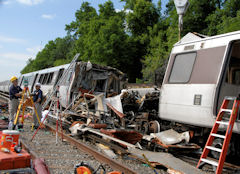 The McDonnell administration has warned the Metropolitan Washington Airports Authority (MWAA) board that a recent decision to favor Project Labor Agreements (PLAs) in Phase 2 of the Rail-to-Dulles construction project could jeopardize $150 million in state funding for the project.


 By Peter Galuszka