• UVA’s President Was Right to Resign

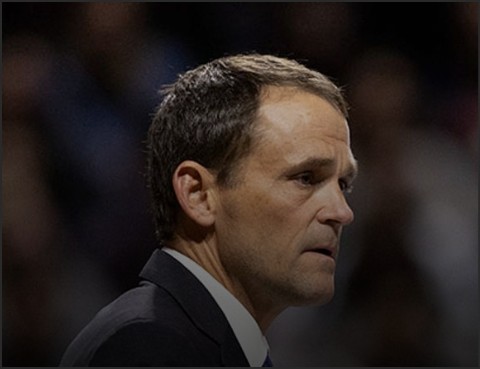
    Close-up profile of a man in a suit, looking thoughtful or contemplative, with a blurred background.
    Jim Ryan

    “Former university head Jim Ryan presided over a potential pattern of civil-rights violations, writes John D. Sailer at the Manhattan Institute — highlighting a fact that has largely been ignored by state Senate leaders intent upon asserting control over the University of Virginia’s Board of Visitors.

    From his article in the City Journal:

    Rather than take responsibility for the fact that his institution had drawn a federal investigation, he conjures a shadowy cabal plotting his ouster. But the only cabal at work was the DEI apparatus that Ryan failed to dismantle.

    Ryan appears unable to concede that the DOJโ€™s concerns were likely justified. Near the end of his public letter, he writes: โ€œToo often, people within the DOJ and on our own Board have implied that if we were following policies that they did not favor, we were somehow doing something illegal. . . . We were committed to following the actual law.โ€

    This assertion is suspect, given his administrationโ€™s embrace of racialist practices. Under his watch in 2020, the UVAโ€™s Racial Equity Task Force implemented aย nearly $1 billionย plan that would, among other things, dramatically strengthen racial preferences inย admissionsย and faculty hiring. According to a 2023ย studyย by the Heritage Foundationโ€™s Jay Greene, UVA had a uniquely massive DEI bureaucracy, with 6.5 DEI personnel for every 100 faculty. It had the second-largest DEI apparatus, proportional to its faculty, of any public university in America.

    Ryanโ€™s record makes it unsurprising that the DOJ would doubt his commitment to correcting problems stemming from DEI at the university.

    Read the whole article.


  • $62 Billion For Grid Batteries is Not a Path to Affordability

    A 550 megawatt hour battery storage facility in California. The pending legislation would mandate over 150 such plants in Virginia.

    By Steve Haner

    The 2026 General Assembly is likely to amend the Virginia Clean Economy Act (VCEA) to greatly expand the construction of utility-scale batteries for our electric grid. Based on the current prices for Virginia battery installations, this may saddle ratepayers with $54 billion in new capital expenses over 20 years.    

    The Commission on Electric Utility Regulation (CEUR) has endorsed a revised version of a bill that passed in the 2025 General Assembly but was vetoed by Governor Glenn Youngkin (R). The senators and delegates on the panel discussed the bill briefly at two meetings last week without anybody even asking what this might cost.   

    The lack of attention to costs on this battery bonanza bill is legislative and media malpractice when the political meme of the day is affordability. But the same thing happened last year as a similar bill rode a railroad track to fast approval.   

    The Virginia Clean Economy Act as passed in 2020 included a demand for battery installations and deemed them โ€œin the public interest.โ€ Appalachian Power was directed to develop 400 megawatts of battery storge by 2045, and Dominion Energy a larger 2,700 megawatts. The assumed technology to be used was batteries of up to four-hour duration, so that was a total for both utilities of up to12,400 megawatt-hours of backup.   

    How many hours the batteries can discharge is the key metric, so the faceplate megawatt value must be multiplied by their claimed duration. What the VCEA is demanding now is about 12.4 gigawatt hours (GWH) of storage. From here on, this discussion will use GWH. A gigawatt hour is a great deal of electricity, the output of a nuclear plant or that natural gas plant Dominion just got approved.  

    (more…)

  • Geographic Schism Among Virginia Dems?

    Louise Lucas, D-Portsmouth, the president pro tempore of the state Senate, goes on to tweet:

    Recently Fairfax commissioned a study with the Weldon Cooper Center at UVA claiming they only get 50 cents back on each tax dollar raised by the Commonwealth. This is false- and is a number derived by only counting money we send the county directly- not services used by all.

    For example they donโ€™t count money spent supporting the Fairfax County Sheriff, Clerk of Court or Commonwealths Attorney. They donโ€™t count the billions spent in support of our colleges and universities that have more students from Fairfax County than anywhere else in Virginia.

    (more…)

  • Do Students Benefit from College Athletics?

    James V. Koch, a former university president, prolific writer about college governance, and huge college sports fan, chats with Jim Bacon about the seismic changes in the college sports landscape. In his new book, “The Economic Impact of Intercollegiate Athletics on Former Students,” Koch explores the pros and cons of college athletics for students and concludes that they are a net negative for graduates as measured by a variety of economic outcomes.

    Lightly edited transcript

    Jim Bacon: Hello, everyone. I’m Jim Bacon, and this is the Oinkonomics Podcast.

    No doubt, some of you have surmised that oinkonomics is a wordplay on my name — Bacon, pigs, oink — and oiko, the Greek word for economics. Although I’m a historian by academic training and a journalist by profession, I’m a great admirer of the economist’s way of thinking. Such economic concepts as alternate opportunity cost, return on investment, and net present value are indispensable for the rational analysis of public policy issues. Today, for the first time on this podcast, I’m actually interviewing a real live economist — Dr. James V. Koch.

    Virginia listeners may recall Jim Koch from his 11-year tenure as president of Old Dominion University. Since retiring from that post in 2001, he has spent the past 24 years as president emeritus doing pretty much what he pleases, which has meant focusing on the economics and governance of higher education in the United States. From his time at ODU, and previously as president of the University of Montana, he has a deep well of hands-on experience to draw from.

    In his latest endeavor, Koch is co-author with Richard J. Cebula and Robert N. Finili of โ€œThe Economic Impact of Intercollegiate Athletics on Former Students.โ€ The book touches upon many issues of interest to anyone concerned about higher education in America today, and we’ll get into some of those questions in the interview. The central question of the book is what impact does athletics have on students’ financial well-being after they graduate?

    As Virginia universities grapple with new rules governing college athletics, effectively turning football and basketball programs into professional farm teams for major league franchises, governing boards at some institutions will have to cough up tens of millions of dollars to pay their athletes. Where will that money come from? And how much of the cost will be passed on to students as athletic fees, And what is the payoff, if any, for the students?

    Jim, welcome to the Oinkonomics podcast. Bring us up to speed on how big-time college athletics is changing, and the kind of choices boards of visitors here in Virginia and elsewhere are faced with.

    (more…)

  • Governance Breakdown in Virginia Higher Ed

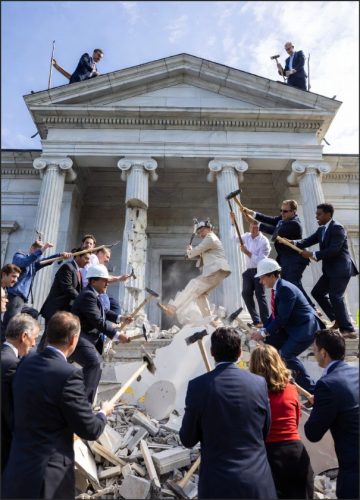
    A group of individuals in formal attire and hard hats are demolishing a crumbling building, with one person in a suit seemingly caught in the chaos amid falling debris.
    Artificial image credit: Grok

    by Gordon C. Morse

    Hereโ€™s the thing to sort out about Virginiaโ€™s colleges and universities: These schools achieved widespread acclaim on the basis of a rather specific, long-standing governing arrangement. Today most everyone looks upon Virginia higher education with pride and satisfaction. It works for us; it has for a long time.

    So why have so many people, serving in state government, in both political parties, labored so hard to undermine it? Thatโ€™s what we need to understand and, if possible, avoid further damage to a justly celebrated collection of state schools.

    Letโ€™s start with the good news: Gov.-elect Abigail Spanbergerโ€™s leadership potential is impossible to miss. Sheโ€™s easy on her feet, laughs quickly and seems naturally adept at the political arts and sciences. She will enter the Virginia governorโ€™s office on a wave of good will and with a clear opportunity to get things done.

    Just last week, for instance, she gave confidence-inspiring public reassurances that she will not support legislation to force people to join unions. Good. The business community has enough on its hands with Democrats controlling all of state government and the next surge โ€“ starting just next month — of fix-the-world progressive legislation.

    Spanberger says she will be a moderate, pragmatically-minded governor and that will be no snap to achieve. Her leadership will be challenged by members of her own party. Do this, do that, do it all, they will say.

    One thing not to do: A quick and furious overhaul of higher education governance in Virginia.

    (more…)

  • Demographic Change and Virginia Republicans

    by James C. Sherlock

    A diverse crowd of people gathered outdoors in Virginia, with some participants wearing casual clothing and expressions of engagement, amidst trees and a building labeled 'Virginia' in the background.
    Artificial image credit: Grok

    The author attended a Virginia Republican convention a decade or so ago. He found it strange. He had the same unfortunate experience with too many members of both parties in the General Assembly. Since then, he has avoided advising the Virginia Republican Party leadership.  

    But here goes.

    Republicans will have to face the facts of demographic change and target their policies to maintain relevance. It would prove instructive if they began by studying the Weldon-Cooper Centerโ€™s population projections. Weldon-Cooper authors rightly suggest the numbers be taken with a grain of salt. Especially farther out in time. But they can be assumed to be directionally correct.

    They would agree that their local demographic projections in Virginia depend on macro-level affordability across the state. Affordability can be roughly defined as a combination of well-paying jobs, the availability and cost of housing, and the cost of other goods and services.

    But Weldon-Cooper projects that growth will expand existing trends. They forecast that it will be concentrated in metropolitan areas and that the population of the Southwest will continue its ongoing decline. Immigrant families will drive population growth.

    The Republican Party must adjust.

    (more…)

  • The Disturbing Politicization of UVA’s Faculty Senate

    A conference room scene featuring a group of people at a long table, some sitting and others standing. Participants are holding signs that read 'EQUITY NOW' and 'END CUTS,' while a serious discussion takes place.
    AI-generated image credit: Grok

    — written by a correspondent in Virginia

    Inside Higher Ed, an online publisher of news and opinion in the higher education sphere, recently published an article entitled, โ€œThe Angry 8: On Faculty Senates.โ€ The thrust of the story is that the faculty senates at many colleges and universities have been hijacked by a relatively small number of activists who have turned the amorphous concept of โ€œshared governanceโ€ into a license to criticize and intrude into decisions far beyond academics and their areas of expertise. One can now add the UVA Faculty Senate, under the leadership of Jeri Seidman, to the list of such faculty senates. The leadership of UVAโ€™s Faculty Senate have in essence become avatars of politicized, partisan advocacy rather than a voice for academic excellence.

    The UVA Faculty Senate has undeniably entered a new era. It is taking more positions on contentious topics, passing resolutions involving broader UVA issues, and engaging in discussions that extend well beyond academic policy. This marks a significant shift from its historical norms in which few, if any, formal resolutions were issued each year and activist behavior was relatively non-existent.

    (more…)

  • One Man’s RPV Advance is Another Man’s Valley Forge

    Virginia Republicans have a lot to consider as they select their new RPV Chairman.

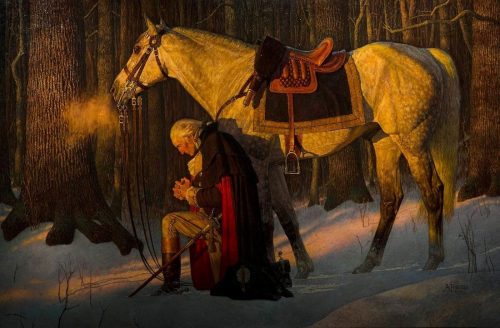
    A historical painting depicting a man in traditional attire kneeling in the snow with his hands clasped, while a white horse stands beside him in a forest setting.

    by Shaun Kenney

    First things first โ€” if you havenโ€™t watched Ken Burnsโ€™ American Revolution on PBS, I hope you have a few history books at your side to confirm whether or not the good guys actually won the war, because if you are new to the thing, you might be excused for wondering whether or not the Americans were actually the good guys.

    By the third episode, the postmodern historians begin to drive their knives into General George Washington โ€” effectively stating that he was not a great man, that he was deeply flawed, and that we have no โ€œmarble menโ€ in our pantheon of American heroes.

    Oddly enough, we get very little of the religious temperament of any of the Founding Fathers. Wedged between two Great Awakenings, the American experiment was most certainly borne out of the Scottish Enlightenment and a revival of classical era thought. Yet significant to the entire project was that the Founding Fathers were indeed deeply religious and Protestant men โ€” and they gave us a republic and not a theocracy.

    (more…)

  • GMU Law School Dean Tenders Resignation

    Ken Randall, dean of the Scalia Law School at George Mason University, has tendered his resignation effective the end of the academic year, according to Virginia Business magazine, citing remarks by GMU Provost James Antony to GMU’s academic affairs committee.

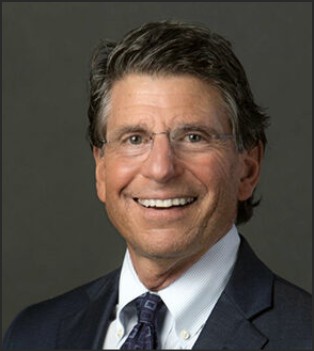
    Professional portrait of a middle-aged man in a suit, smiling at the camera.
    Scalia Law School Dean Ken Randall.

    A university spokesman denied that Randall’s departure is related to last month’s House Judiciary Committee report, based on evidence in Randall’s testimony, that accused GMU President Gregory Washington of lying to Congress.

    Reports Virginia Business: Randall … said that Washington retaliated against the law school for the deanโ€™s decision not to appoint an equity adviser for hiring decisions, and Randall also accused Washington of apparently sabotaging an American Bar Association accreditation audit of Scalia Law School.

    (more…)

  • Feel-Good Story of the Day

    No, the drunken raccoon of Ashland hasn’t started his own YouTube channel. This is a horse story…

    Aerial view of lush green farmland known as The Cove, bordered by a river and surrounded by trees, showcasing the historic agricultural land now protected by a conservation easement.

    From the Capital Region Land Conservancy:

    Doswell, VA โ€“ Nearly 350 acres of farmland where the legendary Triple Crown champion Secretariatย frolicked as a colt are now protected forever by a conservation easement held by the Capital Region Land Conservancy.ย 

    Known as โ€œThe Cove,โ€ย the low-lying pasture bordered by the North Anna River was the โ€œnurseryโ€ for the broodmares and foals of Christopher Cheneryโ€™s renowned Meadow Stable, founded in 1936. The Coveโ€™s rich grasses nurtured many other celebrated Thoroughbreds such as Riva Ridge, who won the 1972 Kentucky Derby and Belmont Stakes, and the eminent broodmare, Somethingroyal, dam of Secretariat. In fact, The Cove was instrumental in establishing The Meadow as โ€œan empire built on broodmares.โ€

    Today, thanks to the generosity of Kevin Engel of Engel Family Farms, who purchased The Cove in 2023, the historic land will remain dedicated to agricultural use. ย 


  • “Better Have a Very Good Buyout Clause”

    House speaker predicts short tenure for any UVA president selected by current UVA Board.


  • Day of Infamy


  • Outfoxing Judge Thomas

    An alternative redistricting strategy for VA Democrats

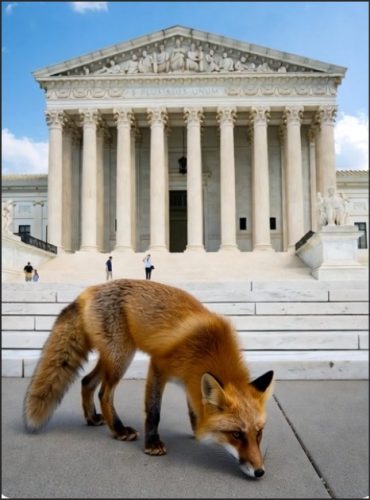
    A red fox standing on the steps in front of the U.S. Supreme Court building.

    by Paul Goldman

    On Friday, I showed how the recent U.S. Supreme decision on the GOP Texas redistricting put a fork in the Spanberger/Scott/Surovell mid-decade redistricting plan. The High Court made certain that Virginia and other states got the message:ย once the campaign season is in full swing, fundamental changes to election rules like giving final approval to new congressional districts in close proximity to the start of early voting would be rejected.ย The liberal Warren Court of the 1960โ€™s actually agreed. Thus, even if Virginians approved a constitutional change in an April referendum, the timeline for getting the courts to sign off on the proposed changes to the congressional districts would be too late to implement in 2026.ย 

    But today, I will layout a different strategy for how VA Democrats can use the Texas rationale to possibly do a redistricting the Supremes will have far more difficulty in rejecting. This alternative strategy is admittedly a long shot. But it beats a no shot. Moreover, the General Assembly should do both strategies simultaneously: continue withย the Spanberger/Scott/Surovell approach while also pursuing the alternative proposed below.

    BASIS OF MY THESIS IS ARTICLE II, SECTION 6 of the VA CONSTITUTION 

     It reads in pertinent part: 

    โ€œEvery (congressional) district shall be drawn in accordance with the requirements of federal and state laws that address racial and ethnic fairness, including the Equal Protection Clause of the Fourteenth Amendment to the Constitution of the United States and provisions of the Voting Rights Act of 1965, as amended, and judicial decisions interpreting such laws.โ€

    (more…)

  • Jeanine’s Memes

    A humorous meme featuring three images: a surprised character with glasses and a beard on the left, Santa Claus in the top right, and Karl Marx in the bottom right. Text on the image comments on children's belief in receiving gifts from someone with a beard.

    See more memes at The Bull Elephant.


  • RGGI Tax Rose Again. How, When Does it Return to VA?

    Virginia returns soon to the Regional Greenhouse Gas Initiative.

    by Steve Haner,

    The regional carbon tax on electricity generation favored by Governor-elect Abigail Spanberger and legislative Democrats rose to a record amount in the December auction, $26.73 per ton of carbon emissions.

    That is a 20% increase from three months ago and is 4% higher than the previous top price, set last year. The tax amount is up 80% since Virginia left the process just two years ago. The Thomas Jefferson Instituteโ€™s predictions that the tax take in Virginia will reach or surpass $500 million per year looks a safe bet. 

    Had Virginia sold 5 million allowances in the December 3 auction, about what it will be selling once it returns to the program, generation companies would have paid $133 million or so. 

    This, of course, is the Regional Greenhouse Gas Initiative, or RGGI. There are four such auctions a year. Governor Ralph Northam (D) took Virginia into RGGI, collecting $828 million over three years. Two years ago, Governor Glenn Youngkin (R) was able to repeal the underlying state regulation, but Spanberger (D) expressed the intention to join again during her campaign. 

    The only suspense, really, is how and when Virginia rejoins the other ten states still in the compact. RGGI runs on a three-year contract schedule and restarting as of January 2027 is the easiest path. It is possible, however, that Virginia could join in time to participate in some of the 2026 auctions, the final four in the three-year cycle. 

    One of two things is likely to happen. The Virginia Court of Appeals, which is considering the Youngkin Administrationโ€™s appeal of a legal challenge to the repeal, could issue a ruling now and uphold the circuit courtโ€™s ruling that the regulation could not be repealed.

    Or the incoming General Assembly could pass legislation to rejoin as part of a “must pass” emergency bill such as the annual set of corrections to the current budget. The Republicans who control Pennsylvaniaโ€™s state senate refused to pass a budget that included RGGI membership and thus killed it there. Republicans have sufficient votes in the new Virginia legislature to prevent it being passed on an emergency basis, if they wish to. They do not have the ability to stop a regular bill, which could take effect in time for the September and December 2026 auctions.  

    Then the third thing will happen, the energy companies that buy the allowances (pay the tax) will figure out how to pass the cost along to customers. When last we saw it on our Dominion bills, it worked out to $4.43 for every 1,000 kilowatt-hours of use โ€“ residential or industrial.  Will this be touted as move toward affordability? Sure, why not?