

-
Bacon Meme of the Week
-
Still Clueless
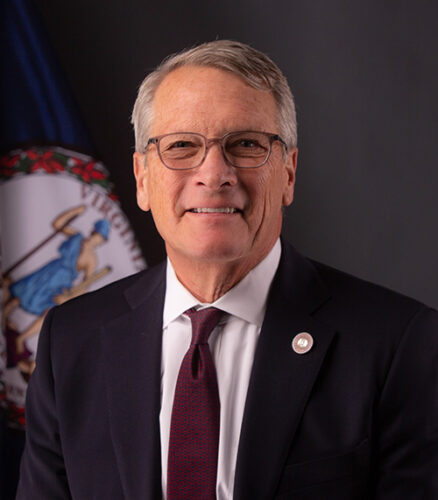
Stephen Cummings, Virginia Secretary of Finance by Dick Hall-Sizemore
In a break from the practices of previous governors, Gov. Glenn Youngkin appointed an outsider totally unfamiliar with state government in general and Virginia in particular to be his Secretary of Finance. Before his appointment, Steve Cummings had held several high-level positions in investment banking. After two and a half years on the job, Cummings still has a lot to learn.
The governor recently met with the General Assembly money committees in the annual meeting to report on the year-end financial status of the Commonwealth. As is customary, Cummings spoke to the committees after the governor and provided additional details on the year-end financial report.
As reported by the Washington Post, one of his slides had a footnote noting “a backlog of corporate refunds [that] had accumulated from prior years.” Lt. Gov. Winsome Earle-Sears, who was in the audience asked about it. (Earle-Sears is not a member of any of the committees and, ordinarily, the committees do not take questions from the audience at this meeting. However, the chair of the committee, due to her position, extended her the courtesy of asking for an explanation.)
(more…)
-
Shut the Bleep Up, You Bleeping Bleep!
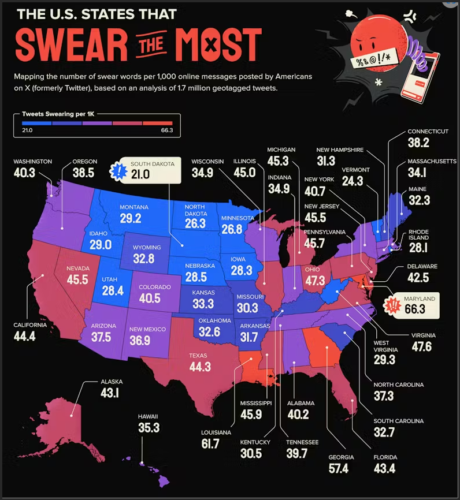
In an analysis of 1.7 million tweets, WordTips has found that Americans swear more than any other nationality. And with the exception of those bleeping bleeps in Maryland, Virginians swear more than other Americans.
I don’t know who those bleeping mother-bleepers are who befoul the discourse in Virginia, but I’m pleased to say that Bacon’s Rebellion keeps the bleepers out of our comments. We’re a no bleep zone. — JAB
-
This Year’s SOLs Don’t Look Any Better from the Perspective of Race
by James A. Bacon
by James A. Bacon
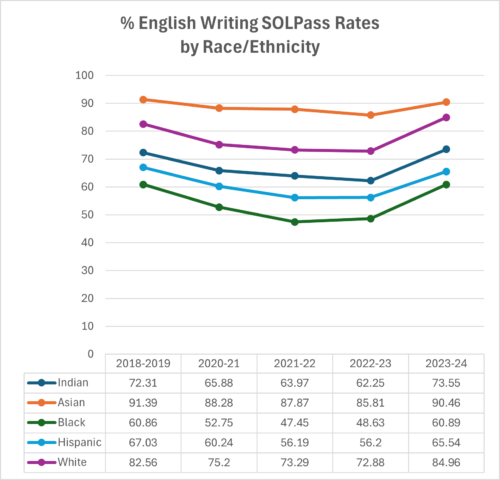
It’s been four years since Virginia public schools canceled their Standards of Learning (SOL) exams in response to the COVID-19 epidemic. When the SOLs resumed in the spring of 2021, they exposed massive learning loss across all categories of students. This spring — three years later — exams showed that students had clawed part of the way back to the pre-COVID status quo.
A breakdown of SOL scores by race/ethnicity offers a few rays of hope, but the big takeaway is the persistence of the same racial/ethnic disparities that existed before the epidemic.
The happiest news that can be gleaned from the test scores occurs in the English Writing exams. Pass rates for Whites and Blacks in 2023-24 both exceed those of the pre-pandemic 2018-19. Those scores were nothing to brag about — 85% for Whites and 61% for Blacks — but I’m highlighting them because we’re all desperate for a return to normalcy and that’s the only scrap of good news in sight. Asians, Hispanics and American Indians (who I’ve included in this analysis despite their small numbers) have yet to return to the pre-COVID norm.
-
What the H-E-Double Hockeysticks?
by James A. Bacon
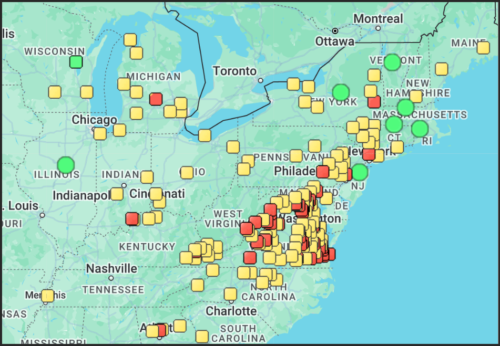
The Center for Immigration Studies (CIS) maps cities, counties, and states across the country whose practices obstruct immigration enforcement and shield criminals from Immigration and Customs Enforcement (ICE).
Types of obstruction include not complying with ICE detainers, imposing unreasonable conditions on detainer acceptance, denying ICE access to interview incarcerated aliens, or otherwise impeding communication or information exchanges between their personnel and federal immigration officers.
According to CIS mapping data, Virginia has one of the largest clusters in the country of non-cooperating law-enforcement authorities.
-
Dominion Wind Partnership Deal Drawing No Opposition at SCC
By Steve Haner
Dominion Energy Virginia’s proposal to sell a half-interest in its first offshore wind farm to a hedge fund is drawing no opposition at the State Corporation Commission, which will hold a hearing on the issue August 27.

The only analysis of the impact of the transaction has come from the SCC’s own staff, which filed comments on July 23. The Office of the Attorney General and an industrial energy consumer group have also joined the case as participants, but neither has filed any testimony, pro or con. No public comments have been filed, and the environmental activists who participate in many energy development cases are not involved.
The case file as it stands is here. The SCC staff conclusion is easily summed up with:
Staff also does not oppose a finding from the Commission that “adequate service to the public at just and reasonable rates will not be impaired or jeopardized” by the proposed transfer of the CVOW (Coastal Virginia Offshore Wind) Property.
-
Masking the Motive to Wear Masks
Stu Smith at StuStuStudios captured this message from a Virginia Commonwealth University student stating objections to VCU’s recent tightening of codes of conduct. The young woman is upset that the new rules will inhibit pro-Palestinian students from exercising their right to free speech by interfering with the rights of others to go about their business, although she doesn’t put it quite that way.
Here’s my favorite part: “Last May students wrote messages in support of Palestine, passed out flyers demanding VCU’s disclosure and divestment from Israel, and distributed masks to prevent the spread of COVID-19.”
She neglected to mention that student protesters also set up a tent encampment and resisted arrest. But let that pass. Does anyone believe that the motive for passing out masks was to prevent the spread of COVID-19? As we used to say back in my college days, har de har har.
Let’s take a trip down memory lane.
(more…)
-
Incremental Gains on the SOLs
by James A. Bacon

Lipstick on a pig Virginia’s public schools face a long, hard slog before they reverse the damage done by prolonged school closings during the COVID epidemic. Virginia students made minor gains in Standards of Learning exams taken in the spring of 2024, but still fall far short of pre-COVID levels of achievement, according to data released by the Youngkin administration today.
Putting lipstick on a pig, administration officials credited higher standards, a crackdown on absenteeism, longer school hours, summer programs, and high-intensity reading tutoring for reversing some of what Governor Glenn Youngkin termed “the worst pandemic learning loss in the nation.”
Students showed notable gains in the pass rates for English writing, equaling pre-COVID levels. They scored smaller gains in English Reading, Math and Science but remained significantly below pre-COVID levels. They lost a little ground in History and Social Science.
In a statement made Tuesday morning, Youngkin also blamed previous administrations. Under the Northam administration, he noted, Virginia ranked 46th among the states for reopening classrooms. He also cited “a systematic reduction of expectations,” and an “honesty gap” about how Virginia students’ performance was eroding even before COVID.
-
Pardon Our Technical Difficulties

Bacon’s Rebellion readers, please hang in there. We are experiencing technical issues of uncertain origin. There are indications that the blog is experiencing a Denial of Service attack from overseas, but we’re not sure. (We could understand if certain Americans wanted to take us out– but Russians or Chinese? Do they even know we exist?)
We’re working on it. As we try one thing and then another, you may experience significant lag times in viewing the blog. We appreciate your patience. — JAB
-
It Might Be Too Late to Fix School Discipline
by Dr. Kathleen Smith

In a recent article about his new book, E.D. Hirsch argues that “child-centered individualism started the slide in American education.” Although he refers to the slide in academic outcomes, in my opinion, child-centered individualism is responsible for increased school disciplinary responses as well.
As an educator in Petersburg, including the time spent as a (deciding) member of many disciplinary hearing committees, I have listened to hours of parents communicating why their child or adolescent had disruptive behaviors so serious that they warranted referral for expulsion or alternative interventions outside the accepted convention of suspension.
For decades now, schools mostly follow constructivism theory — the child is taught to construct his/her own learning. However, when a child or adolescent is left alone to “construct a response to a situation” — like what to do when someone posts something ugly about you on social media, or what to do when you don’t like the teacher telling you what to do — the “constructed reaction” often opens the door for a multitude of responses not acceptable to general society (e.g. school shootings, suicide).
-
Teacher Vacancies Up Again
by James A. Bacon
As K-12 schools open up this week, the good news is that the school-bus shortage has eased a bit. According to the Virginia Mercury, the bus driver vacancy rate is down 5% compared to last year. There’s still a shortfall that leaves school districts scrambling for bus drivers, but the situation is not as bleak as it has been.
The bigger, badder news is that teacher vacancies have gotten worse. Citing Virginia Department of Education (VDOE) data, the Richmond Times-Dispatch reports that Virginia public schools have 230 more vacancies than last year. That amounts to a 4.74% vacancy rate.
The shortfall comes not from a lack of funding. The 2022-24 biennial budget contained $19.2 billion for public education, a 20% increase over the previous biennium. The current biennial budget steers another $2.5 billion to schools, an additional 13% boost. Teachers are getting 3% raises this year and next.
But you can count on the Virginia Education Association to take a partisan cheap shot against Governor Glenn Youngkin.
-
Un-Cancel Robert E. Lee
by Gibson Kerr
Cancel culture is all about tearing things down. It is inherently destructive. It builds nothing. It creates nothing. It only destroys.
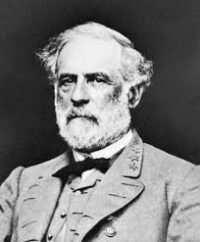
Robert E. Lee Like the Vandals who destroyed Rome, cancel culture is destroying American culture. Systematically, it targets and eliminates America’s heroes. It is fueled by anger, bitterness, envy, and vindictiveness.
It is the same mean-spirited mindset that led French revolutionaries to reject their past, create a new calendar starting with Year Zero, and execute thousands of their fellow citizens.
The widespread growth of cancel culture in America, with its unforgiving intolerance of all things past, instills a sense of terror—particularly in young people—that they too may be cancelled for expressing dissenting opinions. This leads to massive self-censorship, the absolute squashing of debate and civil discourse, and ultimately to the suppression of free and creative thinking.
Cancel culture rejects the Western and Christian notions of grace, forgiveness, and reconciliation. In its place, it promotes violence, terror, intimidation, intolerance, and retribution.
-
Short-Changing Richmond’s At-Risk Youth
by Jon Baliles
Tyler Layne with WTVR News reported last week another disturbing story about how City Hall has been shortchanging the city’s at-risk youth and leaving a lot of state money on the table that could be helping them find brighter and better futures. According to Layne, about $1 million of available state money meant to help court-involved youth and reduce their risk of re-arrest has gone unused by the city over the last three years, despite the city experiencing an upward trend in crimes committed by youth since the pandemic.
Valerie Slater leads the nonprofit Rise for Youth , with the goal of helping youth before they get into trouble with the law and face court action for an arrest. It and other non-profits try to steer youth onto career opportunities and help them start to develop life skills. The Richmond Department of Justice Services provides some of these programs, but Slater calls the city’s overall effort “so woefully deficient.”
Every locality in Virginia participates in the Virginia Juvenile Community Crime Control Act (VJCCCA), which was set up to deter youth from getting involved in crime or re-offending, and also to divert youth out of the courts without absolving them of responsibility for their actions. The state provides funds to each locality to help provide these services and the flexibility to determine which services it wishes to provide based on the needs of its community from among 30 identified and approved programs.
According to Layne, in our region, Henrico County provided 14 programs last year, including anger management, mental health services, parenting coaching, and mentoring.
-
Ranked Choice Voting is Spreading. Do We Like It?
By Steve Haner
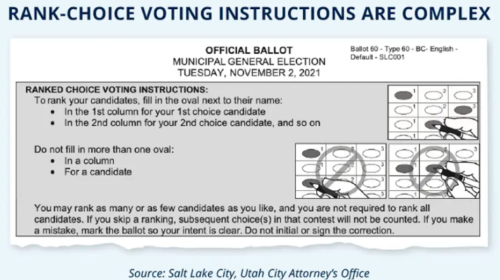
Virginia’s experiment with ranked choice voting may soon expand to a second locality, as the Charlottesville City Council is now considering that method for its future local elections. It is time for more people to pay attention to this voting method and decide whether they think it is a good idea.
The pros and cons are complex, and opinions are strong on both sides. Current Virginia elections allow a victory with a plurality, often far less than a majority of the votes cast. Making voters declare a second or third (or fourth or fifth) choice and continuing to count until a majority is reached is a major shift in our elections.
Former Virginia Delegate Sally Hudson, a Charlottesville Democrat, is leading one Virginia-based effort to expand the process here, Ranked Choice Virginia. Another, UpVote Virginia touts its bipartisan support, mentioning Congressman Don Beyer (D) and former Governor George Allen (R). The Foundation for Government Accountability, a national group on the other side, considers the idea a disaster.
-
How Dead is the Richmond Times-Dispatch? Very Dead.
The Richmond Times-Dispatch, a once-great newspaper, is done. You can put a fork in it.

Just before 5 p.m. Sunday a brief but fierce thunderstorm struck our part of western Henrico County, knocking down trees and power lines and finishing with a rare burst of hail. I watched amazed as the steel lamp post in our front yard swayed widely. The storm didn’t last more than ten minutes or so, but proved fatal for at least one man. About a block from our daughter’s house, on the street parallel to hers, a huge tree landed on a truck and killed the person inside.
The newspaper’s online and print edition did report this fact, but in a very brief story. The data all came from the cops. No reporter or photographer came to the scene. There is no mention of the widespread power outages, which lasted six hours at our townhome and nine hours on our daughter’s street and even longer for some, who were still out of power as of 6 a.m. A reference to the storm itself links to a weather forecast from another part of town. Embarrassing.
The storm cleared soon after 5 p.m. so there were almost three hours of daylight remaining – enough time to photograph the damage. But the online story is illustrated only with a map of the rough location where the man died, pulled from offline and copied.
What this tells this aging newspaperman is that there was no reporter or photographer on duty at all yesterday evening. Forty years ago it was standard practice at the Roanoke Times to have one or two reporters on duty in the evenings, and one photographer, usually until the final edition was put to bed after midnight, to dart out and cover stories like this — fire, accident deaths, storm damage. I did the job (we called it “night cops”) at least a few times per month. I’m not sure if Jim Bacon, officially a business writer, had to do it. But this is what a newspaper is supposed to do.
I don’t know what the RTD is now, but it is not a local newspaper.
— Steve Haner

