• Tough Luck, Ken

    Tossing Virginia Attorney General Kenneth Cuccinelli a defeat, the U.S. Supreme Court has refused to consider his bid to fast track his politically-charged challenge to President Obamaโ€™s health-care reform law. The high court didnโ€™t even bother to issue comments on its decision.

    Why? The usual procedure is for the justices to wait to get the decisions of lower appeals courts before weighing in on them.

    But that obviously wasnโ€™t good enough for Cuccinelli, a hard-right politician who wants to score national points by being especially aggressive against Obamacare. Heโ€™s been show-boating and playing to the Republican faithful with his fast-track scheme, which, of course, is costing the Virginia taxpayer extra.

    It is likely that the high court will eventually hear arguments about health-care challenges but only after the judicial chain of command has been followed. So, far judges in lower courts have been split along party lines on the lawโ€™s constitutionality.

    Peter Galuszka


  • Dust to Dust, Gravel to Gravel

    Once upon a time, it was considered a sign of progress in rural American to pave over dusty gravel roads. After decades of spreading asphalt, economic reality is catching up with many counties in the Midwest. Iowa, Michigan, the Dakotas and other farm states are letting little-traveled paved roads revert back to gravel, reports the Minneapolis Star-Tribune.

    County and state transportation officials are simply recognizing reality. The cost of asphalt has risen with the price of oil and the cost of replacing a mile of paved road costs up to $300,000 now. An emerging rule of thumb is that a road needs 150 to 200 cars a day to be worth paving. Michigan has switched more than 100 miles of pavement to gravel, South Dakota 120 miles.

    As Virginia’s road-maintenance budget stretches thinner and thinner, we may start to see a reversion to gravel roads in the Old Dominion. Citizens demand road upgrades but they aren’t willing to pay for it. Everyone concocts a reasons why “someone else” ought to pay. But the Virginia Department of Transportation can’t pave roads with hopes and wishes.

    We face three broad options: (a) Raise the gasoline tax, (b) figure out how to make our road-transportation dollars work harder, or (c) live with deteriorating road conditions. Raising the gas tax is a political non-starter — even though it’s the closest thing we have to a user fee, in which the people pay the tax in direct proportion to which they ride the roads. Stretching our maintenance dollars is theoretically possible, if VDOT could break out of its biennial budget cycle long enough to invest in road improvements that pay themselves back within three or four years, but there’s too much lethargy in state government for that to happen.

    That leaves the third option: deteriorating road conditions. That’s the way we’re heading. There were so many pot-holes in Interstate-295 this winter that I was thinking for a while that state officials had decided to let the Interstate revert to gravel. Get used to it. There’s more where that came from.


  • The Bubble of Rising College Attendance

    There is a growing sentiment among think tanks and in the blogosphere that the higher ed industry is experiencing a financial “bubble” that cannot long be sustained. I have used this blog for years to document that college tuition and fees long ago detached from the Consumer Price Index and now constitute the most chronically inflationary sector of the economy, exceeding even health care. It’s good to see that others have begun to systematically explore that phenomenon.

    The underlying cause of higher-ed inflation is the widespread conviction that “everybody” ought to be able to go to college if they want to. As a consequence, 70% of high school graduates are attending at least some college, more than at any time in history. Unprecedented federal funding has enabled students to pay the tuition and fees, but recent research suggests that higher ed is not becoming any more affordable — colleges and universities are “capturing” the federal largess to underwrite non-instructional expenses. (See “Why Colleges Grow Fat while Students Starve“)

    Now a commentary by the John William Pope Center for Higher Education Policy joins the chorus arguing that the bubble cannot long continue. Writes Jenna Ashley Robinson:

    Federal Pell grants, direct loans, and state need-based and merit scholarships, zealous parents, and helpful guidance counselors encourage more students to attend universities than ever before. President Obama wants more students in college as well, saying, โ€œBy 2020, America will once again have the highest proportion of college graduates in the world.โ€

    But this growth is unsustainable. And if it is predicated on the assumption of value that isnโ€™t really there, the conditions are ripe for the bubble to burst.

    Robinson publishes the following graph:

    There is growing evidence that the value is not there. Many students do not belong in college. Many are learning little, dropping out and racking up debt for an education that will do little for them. (See “Want to Cut Costs? Start by Slashing Subsidies for Sorry-Ass College Students“).

    It’s one thing to say that “anybody ought to be able to go to college,” if that statement means that college should be open to Americans of all racial, religious, ethnic and class persuasions, or even if that it means lack of income should not be a barrier to attending college. But that is very different from saying that everyone should go to college, because it is manifestly evident that tens of thousands of students are acquiring few of the cognitive skills they need to prosper in the knowledge economy. Instead, they are saddling themselves in debt and spending time out of the workforce where they could have been learning a useful craft or trade.

    The fact is, not everybody has the ability or inclination to succeed in college. Sooner or later, the reality of that fundamental fact will sink in. Stories will spread of college drop-outs saddled with thousands of dollars in debt they cannot repay. At some point, people will understand that college is an investment that offers a higher rate of return to some people than to others. It makes economic sense for the cognitively gifted to attend. It makes little economic sense for others.

    This is a hard truth, but it must be said: The federal government is doing people no favor by encouraging people to attend college if they only wind up dropping out. Further, state government need not build a higher education system capable of accommodating every high school grad who would like a college degree. As I repeat endlessly on this blog, government needs to begin making hard choices. Abandoning the notion that “everyone” should go to college would be a good start.


  • Leahy and Lee — a Great Combo for a New Media Venture

    After a gig at the Virginia Institute for Public Policy, Bacon’s Rebellion alum Norm Leahy (right) has joined forces with Scott Lee (of the radio Lee Brothers fame here in Richmond) to launch The Score Radio Network. With the tag-line of “free market radio for free people,” the Score provides an outlet for rational yet passionate conservative views on the radio and in the blogosphere.

    It’s an interesting combination. Other radio show hosts publish a blog as an afterthought, but The Score puts Norm’s blogging front and center… which makes total sense because Norm is one of the best bloggers in Virginia (some say he’s the best blogger). The radio show is not unlike Norm’s blogging — irreverent but very substantive. Scott is entertaining, as a talk show host must be, but he has a great line-up of guests and addresses serious topics from a conservative perspective.

    At present, The Score produces an hourly show once a week and is broadcast on WLEE radio in Richmond, WMBG in Williamsburg and WLNI in Lynchburg as well as three Internet talk radio sites. The ambition is to expand the show into a network spanning the state.

    Norm and Scott have interviewed some of the leading lights (or dim bulbs, depending upon your perspective) of Virginia politics, as well as think tank gurus, pundits and other odd, assorted characters such as myself. Earlier this month, Scott and I pontificated (or ranted, if you will) on the budget debate in Washington, D.C. Later in the show, Scott interviewed former Del. Chris Saxman and former Republican Party chairman Ron Nehring.

    Listen to the podcast.

    Update: Speaking of blogs branching into other media, Bearing Drift does a super job of melding blogging, podcasting and now a magazine. It is fascinating to see blogs climb out of the primeval ooze and evolve into real-live media enterprises. I don’t know if they meet Ed Risse’s standards for “citizen” media, but they do represent the honest voices of citizens before they have become rich, successful and corrupt.


  • The Wonk Salon: April 23, 2011

    Fighting Poverty with Behavioral Research
    Brookings Institution
    Poor people don’t always behave as “rationally” as we think they should. Research shows how to fine-tune poverty-fighting programs to make them more effective.

    A Report… on a Plan… to Fight Hospital-Acquired Infections
    Rand Corporation
    If we think about it hard enough and publish enough studies, we might actually figure out how to stifle hospital-acquired infections that kill 100,000 people a year.

    Americans Ship More Freight by Truck than Economically Optimal
    Government Accountability Office
    Government subsidies and regulations distorts the transportation market. As a result, Americans move more freight by truck than is economically optimal.


  • The Wonk Salon: April 22, 2011

    Nearly 5,000 Criminal Aliens in Virginia Prisons and Jails
    Government Accountability Office
    Of the estimated 10.8 million illegal aliens in the United States, 350,000 are held in federal, state and local prisons and jails. Virginia ranks 11th in the nation for criminal alien population. (Would someone please explain the roughly 7,000 German illegals in U.S. jails?)

    Everybody Wins But Wall Street
    Demos
    Yank state deposits out of Wall Street banks and use them to set up “main street partnership banks” that bankroll community businesses instead of synthetic mortgages, derivatives and other weapons of financial destruction.

    BPA Do-Gooders Jeopardize Public Health
    Competitive Enterprise Institute
    Maryland is the latest state to restrict Bisphenol A (BPA) from baby product packaging on the grounds. But there is no ready substitute for the chemical that wards off pathogens. The BPA ban could prove detrimental, not helpful, to babies.


  • TIFS: a Template for Development in the 2010s

    I co-wrote this column, published in the Washington Times today, with Kenneth E. Powell, an investment banker with Stone & Youngberg, which sells TIF bonds.

    Four years ago, the Coliseum Mall in Hampton, Va., the cityโ€™s largest taxpayer, was on its last legs. Traffic was drying up. Tax revenues were wilting. The vacancy rate was approaching 40 percent and major leases were expiring. As a former city councilman put it, the retail center was becoming โ€œa flea market.โ€ But seeing turnaround potential, New York-based Mall Properties, Inc. was prepared to invest $275 million into the property. Just one hitch: The project required a large public investment in infrastructure.

    The city found the money by creating a special tax district and issuing $95 million in bonds to pay for new streets, sidewalks, fountains, plazas, utilities and a 750-car parking deck. The bonds will be repaid by means of Tax Increment Financing (TIF): revenue from added sales and property taxes generated by the project, backed up by an assessment on the developer-landowner in the event of a shortfall.

    Ground was broken in 2008. Despite the financial crisis and ensuing recession, development has proceeded on schedule. Today, Peninsula Town Center is more than 70 percent full. Fifty retailers signed leases this spring and landowners are investing in nearby properties. A neighborhood in Hampton stands transformed.

    TIFs are the municipal financing tool of the 2010s, as state and local governments buckle under chronic fiscal stress. The Center for Budget and Policy Priorities estimates that budget shortfalls for the 50 states will amount to $196 billion this year, $180 billion next year, and $120 billion the following year. The federal government, which is projected to run another $1.47 trillion deficit in fiscal 2011, is in no position to help.

    Some may see the growing incapacity of governments to fund economic development projects as a misfortune. We regard it as a positive. With TIFs, municipal governments have an opportunity to change their development paradigm from an inefficient, politically driven model to a transparent, accountable, market-driven model.

    The past 30 years saw too much money chasing too few quality deals. Developers bought cheap land on the metropolitan periphery and used political clout to shift the cost of providing infrastructure to taxpayers. The disconnected, helter-skelter development left a legacy of expensive-to-serve transportation, public safety and other government services. Then the collapsing real-estate bubble left billions of dollars in bad deals and stranded infrastructure.

    As developers crawl from under the rubble, municipalities now face a dearth of new development. Tax Increment Financing can help cash-starved governments jump-start new projects. Moreover, government leaders will be assured that developers will vet their projects more carefully. Not only do TIF projects have liens on the developerโ€™s property, developers must persuade bond holders that projects make economic sense and likely will be completed. Thus, TIF deals benefit from an extra layer of sophisticated business oversight that government infrastructure projects ordinarily do not receive.

    TIFs work for the developer, too. TIF districts can raise the money for upfront improvements. Developers donโ€™t have to wait for municipalities to phase in upgrades as overstretched capital spending programs allow. The TIF tool allows entrepreneurs to jump on business opportunities quickly.

    Citizens should love TIFs. All funds are handled in segregated accounts, not co-mingled with other projects in the public works budget where they are impossible to track. TIF projects are required to file public annual reports. If the promised benefits never materialize, the citizens know it. They can hold public officials more accountable than ever.

    Best of all, TIFs with backup special assessments put the risks associated with real-estate development where they belong – with private developers. Municipalities are not set up to appraise complex deals and weigh business risk. Driven by the promise of โ€œeconomic development,โ€ they often approve deals that pose ill-defined risks they donโ€™t fully understand.

    Advocates of free markets should love TIFs because they are a mechanism to ensure an allocation of capital to projects that make economic sense. Developers must focus on the completion and performance of their project instead of courting public officials. And for smart growth advocates, TIFs shift the onus of paying for infrastructure from taxpayers to those who benefit from the investment. A development process disciplined by TIFs would finance less of the scattered, low-density development commonly called suburban sprawl.

    The halcyon days of real estate development are over, collapsed in a bubble made possible by courthouse cronyism, public subsidies, easy money and rising prices. Good riddance. We welcome the return to sanity. With TIFs, we can resume redevelopment and growth free from the excesses of the past.


  • Virginia Tech Boosting Tuition 9.4%

    Brace yourselves. Here comes the onslaught of massive tuition-and-fees hikes from Virginia’s institutions of higher education. Virginia Tech has just announced that it will raise tuition and fees from $15,879 per year to $17,365 — an increase of 9.3%. (See press release.)

    Tech’s board of visitors placed the blame largely upon to declining state support — and not without reason. From the Virginia Tech press release:

    State funding for Virginia Tech remains well below that of 10 years ago, even though our enrollment and programs have grown significantly. State funding for Virginia Tech’s educational division has plunged from $182 million in 2000-01 to $131 million in 2011-12,” said [President Charles] Steger.

    State support per in-state student at Virginia Tech is less than half today, once adjusted for inflation, than it was a decade ago. The stateโ€™s share of Virginia Techโ€™s educational cost has dropped from 58 percent in 2000-01 down to 28 percent in the coming fiscal year.

    Here’s what goes unanswered in the press release: What were tuition and fees 10 years ago? How much have they increased over the same period? How much has administrative overhead increased during that period? What has been the trend for average teaching load? What are the trend lines for faculty/student ratios and the employee/student ratios?

    I doubt that Tech is any more culpable of unjustified tuition hikes than any other Virginia university. The same questions should be posed to every public institution of higher learning in the state.


  • Honoring Wounded Warriors the Wrong Way

    I’ll never forget it. It was bright sunny day at the Tuckahoe Little League park. Hundreds of kids and their parents were wandering around a grassy field. Standing stationary amidst the hub-bub was a tall, solidly built man, maybe 40 years old, holding his wife’s hand. Scars covered his cropped head, leaving his eyes utterly ruined.

    He had a military bearing, and the war was raging in Iraq, and I could only assume that he was one of the many soldiers ravaged by an IED. I choked up a bit, thinking, “There is no way I could ever repay you for the sacrifice you made for your country.” I wanted to thank the man but words seemed so inadequate, so I said nothing at all.

    A new law signed by Gov. Bob McDonnell will attempt to honor a small part of the debt we owe veterans like the one I saw that day. Qualifying veterans who are 100 percent and permanently disabled as a result of a service-connected injury will receive a real estate tax exemption for his principal residence. (See Luz Lazo’s story in the Times-Dispatch.)

    The Virginia Department of Veteran Services estimates that as many as 7,500 veterans statewide could qualify, although not all of them will own their own houses, so not all will be able to avail themselves of the break. Henrico County officials project that the exemption for some 260 veterans will cost the county about $510,000 in tax collections. Projected statewide, that implies the law will cost local governments roughly $15 million a year.

    I can think of no group more deserving of public support than the veterans who paid such a devastating price. But I think the tax break is bad public policy.

    The law adds one more exemption, albeit a small one, to Virginia’s ever-narrowing tax base. The problem with these “tax expenditures” is that they are not transparent. There may be a debate the year they are enacted, but they then renew automatically more or less forever. They cost the state or local governments money, but they do not appear as a line item in the budget. Lawmakers do not know what they cost, and they rarely if ever think to review them. The lack of transparency is even worse when the General Assembly mandates that local governments provide the tax break. The expenditures become one more step removed from accountability.

    Back when he was grappling with Virginia’s last budget crisis nearly a decade ago, Gov. Mark Warner had identified roughly $1 billion in exemptions, deductions, credits and other loopholes that shrink tax revenues. That number has grown markedly since then, as the General Assembly has dispensed tax breaks like the Good Humor man tossing popsickles from his truck.

    If the General Assembly wants to demonstrate its generosity to Virginia’s disabled warriors, then it should fund its compassion through a line-item expenditure in the General Fund so taxpayers can see the level of commitment they are making. While they’re at it, they should convert all other tax breaks to line-item expenditures as well. It’s one thing to show largesse — it’s another to do so blindly.


  • The Myth of Racial Disparities in Public School Funding

    We hear the mantra so often that we have stopped questioning it: A major cause of sub-par educational performance for African-American and Hispanic students is due to the fact that school districts where minority students predominate suffer from less funding than school districts where white students predominate.

    But that so-called disparity is a myth, argues Jason Richwine with the Heritage Foundation in “The Myth of Racial Disparities in Public School Funding.” Actually, it’s the other way around: Whites receive the least funding of any racial group. African-Americans, Hispanics and Asians all fare better, although the gap is a small one.

    Drawing upon two federal government data sets — the Secondary School Universe Survey for the 2006-2007 school year, which provides the racial and ethnic breakdown of schools across the nation, and the Financial Survey for the 2006-2007 school year — Richwine calculates an average expenditure per student broken down by racial classification . The figures account for cost-of-living differentials across the country.

    The funding disparity disfavoring whites occurs nationally and in every region, although the gap is the smallest in the South. (The report provides no breakdown by state, so numbers for Virginia are not available.)

    Richwine concedes that there may be a disparity in needs: Public school districts with larger percentages of poor or English-as-second-language students may require more resources than comparable white- or Asian-dominated districts. But that, he contends, is a very different argument than the one most commonly made.

    Bacon’s bottom line: The study that adjusts dollars spent for the incidence of special needs (children from poor families, non-English speaking families, etc.) has yet to be written, as far as I know. It is an object worthy of study and debate. In the meantime, let’s stop pretending that white students benefit from more spending in their school districts than minorities do in theirs.

    (Click on table for more legible image.)


  • The Wonk Salon, April 21, 2011

    Energy-Water Nexus: Amount of Energy Needed to Supply, Use, and Treat Water Is Location-Specific and Can Be Reduced by Certain Technologies and Approaches
    Government Accountability Office
    The nation is using up the inexpensive sources of water. Future water sources will be more energy-intensive, hence expensive. Hampton Roads, take a look at your future.


  • Don’t Follow Virginia’s Antiquated Example

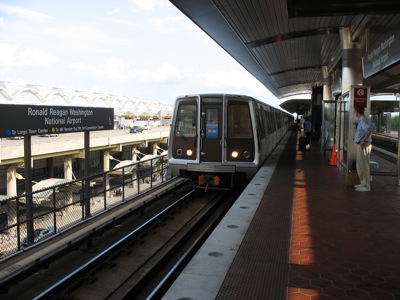
    The growing national battle over union labor has popped up regarding plans to continue with the Dulles rail project, including building an underground station at the international airport in the Virginia suburbs of Washington.

    Conservatives, including editorial writers at the Washington Examiner, are aghast that a resolution passed by the Metropolitan Washington Airports Authority issued a โ€œproject labor agreementโ€ that contractors and subcontractors involved in the $3.5 billion Phase 2 of the Dulles rail project will have to meet union rules and working conditions, although the specifics arenโ€™t clear. Opponents criticize former Democratic Gov. Timothy Kaine for giving up state authority for the project to the MWAA a few years ago.

    Claiming that the labor agreement is a โ€œslap in the face of all working Virginiansโ€ in the right-to-work state, as the Examiner put it, critics also claim that requiring unionized workers will add up to 20 percent more to the projectโ€™s costs. Since only about 4 percent of construction workers in the Old Dominion are unionized, many union workers from out of Virginia will be flocking to the project, they say.

    The outcry is the latest in a wave of union-bashing that has swept the United States after the Republicansโ€™ big win in the midterm elections. Public unions were singled out by conservative Republicans in Wisconsinโ€™s brutal recent budget battle and in other states. The trickle-down is smearing all union workers.

    A broader view is needed here. One reason Virginia is a right-to-work state is that years ago its business elite wanted to keep pay for manufacturing workers low so theyโ€™d have a better chance of stealing jobs from companies in states where unions are strong and wages and benefits are better. The history is an unsavory Southern one in which those in power beat down weaker folk for economic and political gain.

    The fact is that unions bring on better wages and have forced companies and state legislatures to provide better benefits and safer working conditions. The choice for the MWAA is clear. Who do you want to follow? The antiquated ways and so-called โ€œcultureโ€ of the failed Southern past or something a bit more modern? Itโ€™s time to move on from โ€œBeggar Thy Neighbor.โ€

    Peter Galuszka

  • Immigration, Education and Income Disparity

    Let us explore another aspect of the old class warfare theme invoked so often by my esteemed liberal counterpart on this blog: the increasing disparity of incomes between rich and poor.

    Many possible causes have been invoked, mostly entailing the rapacity of the rich. One cause that gets relatively little attention is immigration. Because a large majority of immigrants into the United States are poor and ill-educated, they compete for, and drive down the wages of, lower level jobs for immigrants and native-born Americans alike. That much stands to reason. But the contribution to income disparity is more pervasive than that.

    I draw from a recent policy brief, “The Future of Immigrant Children,” published by the Brookings Institution, a think tank that is, not, incidentally, funded by the “radical right-wing Koch Brothers.” The report dwells on a very real problem: the low level of educational achievement of Hispanic immigrants and its impact on their upward mobility and living standards.

    As authors Ron Haskins and Marta Tienda explain, federal immigration legislation in 1965 changed the criteria for gaining admission to the United States from a quota system that favored European immigrants to one that gave priority to family reunification. The volume of immigrants surged, and newcomers’ countries of origin shifted from Europe to Asia and Latin America. Since 1990, the U.S. has admitted roughly 1 million immigrants per year, and another 500,000 have entered illegally.

    For a variety of reasons, Latinos significantly under-perform Asians and whites in standardized test scores. They also are more likely to drop out of high school and less likely to attend college. Because education is a necessary credential for achieving upward income mobility in a knowledge-based economy, the income prospects of Latinos are stunted. Write the authors:

    Latin American immigrants arrive in the United States with a strong work ethic and strong family values. But by the second generation, their work rates decline, their wage progress appears to slow, and both their nonmarital birth rates and their divorce rates rise. These social and economic trends bode ill for immigrant parents, their children, and the nation. Finding ways to boost achievement and help more Latinos complete high school and attend college or other postsecondary training should be high on the nation’s policy agenda.

    This reinforces my long-held contention that much (not all, but much) of the increasing income disparity in the United States has sociological causes. When the ranks of the lower-income brackets are continually replenished by immigrants (whether legal or illegal), and when second-generation Latinos fail to thrive in school, suffer a diminished work ethic, and develop the social pathologies of divorce, illegitimacy and female-headed households, all other things being equal, income disparities will worsen.

    Nearly one quarter of all schoolchildren in the U.S. are immigrants or the children of immigrants, Brookings says, and the majority of those are Latino. Of course, many of them will turn out to be successful, upwardly mobile contributors to American society. But on average, the flood of poor, ill-educated immigrants effectively depresses average incomes, especially for Americans in the lower income brackets.


  • Why Can’t Poor Virginia Kids Get Dental Service?

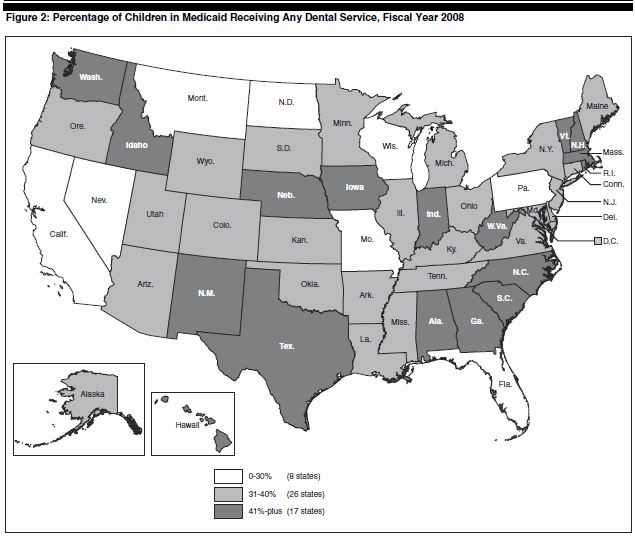
    Virginia falls in the middle tier of states for the percentage of children in Medicaid receiving dental service — somewhere between 31% and 40% — according to a recent study published by the Government Accountability Office. (Click on map for more legible image.)

    The GAO estimated that 6.5 million children nationally had untreated tooth decay, and that rates of dental disease among children in Medicaid have not improved over time.

    A big problem is the low participation rate of dentists in Medicaid and CHIP (the Child Health Insurance Program). Among those who do participate, many place limits on the number of Medicaid patients they will treat. Who would have figured? One solution would be to pay health care professionals enough so they don’t lose money for treating Medicaid patients. Of course, that would be expensive.

    Another might be to expand the number of “mid-level” practitioners, or dental therapists, who can provide routine dental services like teeth cleaning and cavity filling, as they do in the U.K., Canada, Australia and New Zealand. But the use of dental therapists has been highly limited in the United States, according to the GAO: There is one program in Minnesota and another for Alaska Natives. In Minnesota, people can earn an M.A. degree in “dental therapy”, which is a much easier-to-surmount occupational barrier than earning a four-year Dental school degree.

    Seven states (Virginia not among them) do allow dental hygienists and primary care physicians to provide certain dental services without the on-site supervision of a dentist. But these are limited mainly to preventive services.

    The GAO report does not explicitly say so, but it appears that the American Dental Association (ADA) and its state counterparts keep a tight lid on who can practice dentistry and when — using their influence over state government licensing and higher educational programs to limit competition. Responding to the crying need to expand coverage, the ADA response has developed the position of “community health coordinator” to provide “oral health education” as well as limited preventive services. As of last summer, the program had enrolled 27 students in a pilot program. The ADA plans to train an additional 18 by September 2012. Woo hoo! That’ll really help close the gap for millions of poor kids!

    What’s been going on in Virginia? I found this summary by the Children’s Dental Health Project.

    In 1997, concerned about low utilization of dental services in Medicaid, the General Assembly ordered a study. The Department of Medical Assistive Services then convened a Dental Advisory Committee. Then in 2000, a coalition called Virginians for Improved Access to Dental Care formed. Legislative proposals were submitted in 2004. And actual programs were rolled out in 2006 — 10 years later.

    The Virginia solution? The state Medicaid department contracted administration of the dental program through a vendor, Dora Dental, inc., which offered a number of administrative and billing improvements, and the state increased dental fees by 28%. An additional 190 dentists were credentialed to provide Medicaid and CHIP services. Children’s utilization of dental services increased from 29% to 36% by 2006.

    That is still a pitiful number. I see no reason why dental hygienists or dental therapists should be banned from working independently to clean teeth, take x-rays, fill cavities and provide other basic services that they already do routinely in dentists’ offices. Dentists predictably will trot out the old “quality of care” argument. In other words, it is preferable to let two-thirds of Virginia’s poor kids go without dental care of any kind than run the risk that a handful might receive improper care. Such would be the logic of a craft union, er, profession, determined to protect its turf.


  • Rail-to-Dulles: More FUBAR than Ever

    Back when Tim Kaine was governor, he handed control over the Rail-to-Dulles heavy rail project to the Metropolitan Washington Airports Authority over the objections of those who thought that a multi-state authority might not represents the interests of Virginians.

    Well, it turns out that “not represent the interests of” was an under-statement. “Trample on” the interests of Virginians would be more like it. No, make that “run the interests of Virginians through the wood chipper.”

    Last week the MWAA board resolved, contrary to Virginia’s long-held Right to Work law, to require any contractor winning the bid for Phase 2 of the Rail-to-Dulles project to have a labor agreement. As a Washington Examiner editorial notes, because unions represent only a tiny percentage of Virginia construction workers, most employees hired for the job will be union members from other states. Moreover, union wage rates and the lessening of competition to union-shop contractors likely will add between $350 million and $750 million to the bid.

    Where will the money come for all this boodle? Let’s put it this way: It won’t come from Maryland or Washington, D.C., taxpayers, who won’t share any of the burden of funding the MWAA’s decisions. Most likely, the funds will come from drivers on the Dulles Toll Road, who have already been socked with pay for most of Phase 1. Or, who knows, maybe Virginia taxpayers generally may have to pony up.

    Speaking of paying for the Rail-to-Dulles project, I have received interesting correspondence from Gary Woodward with Hurley’s Auto Audio in Tysons Corner. Tysons “landowners” are paying for a modest portion of extending Metro to their neck of the woods by means of a special tax district. But, according to Woodward, many landowners are just passing the cost on to their tenants. Writes Woodward:

    “Most tenants who lease property in tysons have what is called a triple net lease. This lease is a lease in which all expenses (insurance, upkeep, management, and TAXES) are paid by the tenants. This puts the tenants who were railroaded into paying the tax (without input to the Tysons landowners) without representation. In fact we are paying the tax to develop ourselves out of a small business location. Paying for our own poison.”

    Wow, this project just goes from bad to worse. This looks like an issue custom-made for Jamie Radtke, the former Tea Party chair running for the Republican nomination. It won’t work to George Allen’s favor the same way, as he championed the Rt. 288 project in Chesterfield/Henrico Counties long ago… although, I must say, the scale and abuse of that boondoggle pales in comparison to the Rail-to-Dulles fiasco, which, like everything in Northern Virginia, is bigger and more grandiose than anything in Richmond.

    Watch out, Tim Kaine, you’d better get your talking points in order!

    Update: After pondering this post, I do wonder if the Examiner got the whole story. Uncle Sam is helping to pay for Phase 1. Are the Phase 1 contractors required to use union-contract labor as a condition of the Davis-Bacon Act? (No, I’m not related to that Bacon.) If any federal money is being used for Phase 2, could it be that the MWAA had no choice but to comply? Does anyone know the answer?

    Second update: It appears that the Examiner got the story exactly right. Read an extended (if adversarial) commentary in “The Truth about Project Labor Agreements” website. The MWAA’s action is extraordinary. I think this issue will prove to be highly damaging to Tim Kaine in his (anticipated) campaign for U.S. Senate.

    Third update: I must correct an error that appeared in the original post. (I have deleted the offending passage from the post because, once corrected, it is no longer germane.) Drawing from the Examiner editorial (third paragraph, last sentence), I stated that the decision by the MWAA board to build a modified underground Metro station would add $330 million to Phase 2 of the Rail-to-Dulles project. That was incorrect. It would actually reduce the cost by $330 compared to the most recent financing plan, although the alternative selected would be roughly $330 more expensive than a cheaper, above-ground option that also had been considered.