• Compromise Bill Ending the Rate Freeze Advances In Senate

    Lightning show

    How good is the electric-regulation compromise worked out between the governor’s office, electric utilities, consumers, and other interest groups? It’s so good, Sen. Frank Wagner, R-Virginia Beach, said today that the average homeowner will see electric rates locked in at 2009 levels “for a long time,” even as Virginia invests heavily in solar power, wind energy, energy-efficiency, and grid modernization.

    While some legislators in the Senate Commerce and Labor Committee worried that the compromise legislation to end the 2015 rate freeze would allow Dominion Energy Virginia and Appalachian Power Co. to “double dip” on earnings invested in grid modernization, Wagner and Senate Minority Leader Richard L. Saslaw, D-Springfield, insisted that they would not.

    “There is not an avenue for double charging,” said Wagner. The “reinvestment” model, first advanced by Dominion and subsequently backed by Apco, would plow back over-earnings into grid-modernization projects, enabling the utilities to spend “in the neighborhood of” $200 million a year without increasing rates. Customers will receive more than $1 billion in give-backs and other benefits.

    Governor Ralph Northam endorsed the controversial package after a Senate subcommittee made extensive changes to the legislation earlier today. Then Commerce and Labor voted 10 to 4 in favor of the package, advancing the legislation to the full Senate. Opponents of the compromise — strange bedfellows ranging from leftist environmental and activist organizations to a large industrial user group — registered their opposition.

    โ€œThe goal of that legislation should be simple,” said Northam in a press release: “Give Virginians as much of their money back as possible, restore oversight to ensure that utility companies do not overcharge ratepayers for power, and make Virginia a leader in clean energy and electrical grid modernization.”

    The compromise would repeal the 2015 rate freeze, provide immediate relief to rate payers, and restore State Corporation Commission oversight of electric utilities. Dominion would issue $200 million in rate credits to consumers who were over-charged during the rate freeze, and Apco $10 million. Dominion would pass along savings from recently enacted federal tax cuts to rate payers in the form of $125 million a year in lower rates, while Apco would give back $50 million. The SCC would review electric rates every three years, which Saslaw characterized as giving the Commission, utilities and other parties a respite from biennial reviews.

    The legislative package would require utilities to invest in $1 billion energy-efficiency projects over the next 10 years, while declaring it to be in the public interest for Dominion to install 5,000 megawatts of solar and wind power, and for Apco to install 200 megawatts of solar. Other favored projects include a battery-storage pilot project, a pumped-storage facility in Southwest Virginia, and extensive upgrades to the electric grid to make it more accommodating to intermittent renewable energy sources, safer from cyber attack, and more resilient in the face of severe weather.

    The greatest source of concern was the mechanism by which Dominion and Apco would reinvest excess earnings — no surprise, considering how complex and difficult to understand it is. Under current law, the utilities are allowed to earn 9% return on investment on their assets, with provisions for keeping an extra 30% over over-earnings as an incentive to invest in productivity and efficiency. The SCC reviews the books every two years, and requires utilities to return excess revenues to rate payers. Under the new law, instead of returning 70% over-earnings to rate payers, the utilities would have to reinvest 100% (including the 30% they would normally be allowed to keep) into renewables and grid modernization. None of those reinvestments could be used to trigger a rate increase during the life of the legislation.

    “The technology is here,” said Wagner. “The question is, is Virginia going to embrace it?”

    For some legislators, claims that the legislation would encourage billions of dollars in new investment while guaranteeing that that rates would not increase seemed too good to be true.

    “This is a lot to digest real quickly,” said Sen. Mark Obenshain, R-Harrisonburg. If solar is so economical, why does the General Assembly need to declare it to be in the public interest — why not just let utilities make their own best decisions? “If we’re making a social judgment, let’s not dress it up” as a great deal for rate payers, he said.

    “When I look at this bill, it appears that any costs that you have with any of these new facilities with solar or wind, or grid transformation, could still be charged back a second time,” said Sen. Bill Stanley, R-Moneta. “There will be an ability to double charge for these projects.”

    One charge would be incurred when rate payers are denied a rebate for over-earnings. Utilities would reinvest the over-earnings in grid modernization projects, adding the capital to the rate base upon which the utilities are entitled to earn a profit. Earning a rate of return on that investment constitutes a second charge to rate payers. But the utilities counter that were they not allowed to invest the over-earnings, they would recoup the investment through a “rider,” or rate adjustment clause. In the end, they say, it all equals out.

    While the bill advances goals for which environmentalists and activists have been fighting for years — more solar; more wind; more energy-efficiency; a smart, distributed grid; more rooftop solar — several groups opposed the legislation. The Virginia Chapter of the Sierra Club, Appalachian Voices, and the Chesapeake Climate Action Network cited concern about the double-dipping issue as reason for their opposition. Ironically, the Virginia Poverty Law Center, representing poor energy consumers, declared itself neutral on the bill.

    But the line-up of speakers in favor of the bill was considerably longer. Environmental groups supporting the compromise included the Natural Resources Defense Council and the Virginia League of Conservation Voters. Alternative energy groups such as Apex Energy, the Alliance for Industrial Efficiency, Virginians for Clean Energy, and the Virginia Offshore Development Authority registered their approval. Prominent business groups such as the Virginia Chamber of Commerce and the Virginia Manufacturers Association, signed on as well.


  • Public-Hearings-for-Tuition-Increase Bill Still Alive

    Student loans are morphing from a social catastrophe for indebted students into a fiscal disaster affecting taxpayers. For years, U.S. government officials insisted that the student loan portfolio, which now exceeds $1.4 trillion, would remain profitable. But the feds now project that debt repayments will fall $36 billion short of what’s needed to cover outstanding debt and accrued interest.

    There are multiple causes of the emerging deficit, which the U.S. Department of Education is acknowledging in the wake of a 2016 Government Accounting Office study, according to the Wall Street Journal. Nearly five million direct-loan borrowers have defaulted (defined as going at least a year without making payments). Other borrowers are going to private lenders to refinance at lower interest rates, eliminating an income stream the government had been counting on. Yet others are being relieved of debt obligations contracted from schools deemed to have defrauded them with deceptive recruiting. Finally, thousands of students are enrolling in repayment plans that cap repayments at a percentage of their income.

    Two years ago, the government expected to run a surplus. Last year, the bean counters projected an $8.4 billion shortfall. This year projected losses stand at $36 billion. If student repayment rates continue to worsen, the projected deficit could well grow.

    Meanwhile, back on the ranch…. As the federal just-lend-’em-more-money model for dealing with the tuition crisis sputters and wheezes toward a breakdown, what is happening in here in Virginia? Legislators have submitted several bills in the General Assembly this session designed to rein in runaway tuition increases. Only one of them has gained traction.

    HB1473 submitted by Del. Jason Miyaris, R-Virginia Beach, wouldย require colleges and universities to allow public notice and public comment on proposals to raise undergraduate tuition and fees.ย To members of the House of Delegates that modest proposal seemed uncontroversial. The Appropriations Committee passed it 22 to 0.

    But the companion bill in the state Senate,ย SB824, submitted by Sen. Chap Petersen, D-Fairfax,ย hit an obstacle in an Education subcommittee. Three legislators — including Sen. Richard L. Saslaw, D-Springfield, Sen. John A. Cosgrove, Jr., R-Chesapeake, and (voting by proxy) Richard H. Black, R-Leesburg — voted to recommend killing the bill.

    That vote came as a surprise to more than one observer attending the subcommittee meeting. When Petersen walked into the subcommittee hearing to discuss his bill, he said, “We have peace in the valley.” One lobbyist took that as a reference to Petersen’s discussions with higher-ed institutions that had differing views on the bill. “He believed that he was presenting a bill that the institutions were OK with,” said the lobbyist.

    But in the hearing Saslaw and Cosgrove proceeded to pick apart the bill, the lobbyist said. Saslaw observed that requiring public input amounted to “micromanaging,” and noted that only a handful of other states imposed such a requirement. Cosgrove asked questions insinuating that the requirement would impose a hardship on higher-ed governing bodies.

    No higher-ed lobbyist was willing to oppose the bill openly. But Peter Blake, executive director of the State Council of Higher Education for Virginia (SCHEV) confirmed that the higher-ed community was divided on the issue. “Different institutions are looking at this differently,” he said. ‘Some are saying they don’t like it — they don’t want to have the public comment period. Others are saying, ‘Why not?’ Opinion is not uniform.”

    Another lobbyist attending the subcommittee hearing suggested that the University of Virginia and the College of William & Mary worked the legislators behind the scenes. The University of Virginia Board of Visitors has a long history of being anti-open government, he said. He sarcastically described the colleges’ unwillingness to state their opposition publicly as “real profiles in courage.”

    Lobbyists for the University of Virginia and the College of William & Mary declined to return Bacon’s Rebellion phone calls.

    Petersen’s bill is still alive. He amended it — and Miyaris made a similar amendment to his House bill — to give higher-ed institutions a bit more flexibility in how to go about holding the public hearings. The House Education and Health Committee went on to pass the bill.

    Bacon’s bottom line: One of the most important decisions that boards of visitors make every year is to set tuition, fees, room and board. Students and parents have zero input into that decision-making process, and board members are insulated from the impact of their decisions as a result. While board members are fully versed in the dreams and schemes of college presidents to grow the institutions, they get no feel for the hardships of those who pay the bills. Thus, the practice of excluding the public biases the system toward higher tuition & fees.

    Opening up the process may not change much — boards likely will continue to rubber stamp tuition increases. Students will continue to pay higher tuition and take out bigger loans, and Uncle Sam will continue to write off billions of dollars in bad loans. But giving higher-ed’s customers a voice — a voice that potentially could be magnified by news reporters covering the hearings — could create enough push-back to slow the tuition increases. And that would be a very good thing.


  • Laborers Union Recruits, Trains Pipeline Workers

    Pipeline worker in Oklahoma. Photo credit: Daniel Acker/Bloomberg

    I’ve been critical of labor unions on many occasions, but I’m not anti-union out of general principle. Unions can play a positive role in the economy. As an example, look at the partnership between the Laborers’ International Union of North American (LIUNA) and the Virginia Community College System.

    LIUNA and VCCS have signed a memorandum of understanding to recruit and train Virginians to work on the Atlantic Coast Pipeline.

    Pipeline workers will train at six Virginia community colleges near the pipeline route: Dabney S. Lancaster, Blue Ridge, Piedmont, Southside Virginia, Paul D. Camp, and Tidewater. In partnership, LIUNA and the colleges will recruit, screen, and train prospective workers, according to a joint press release issued last week.

    Training will provide skills necessary for a range of pipeline work, including installing environmental control devices, clearing ground, coating and installing pipe, and restoring the right of way.

    โ€œThrough our partnership with Virginiaโ€™s community colleges, we intend to hire well over half of the Atlantic Coast Pipeline workforce from those who live in nearby communities,โ€ saidย Dennis Martire, vice president and regional manager of LIUNA Mid-Atlantic.

    โ€œThis partnership reinforces LIUNAโ€™s commitment to recruit and train as many Virginia residents as possible to work on the Atlantic Coast Pipeline. This project is going to provide middle class wages and family health benefits to hundreds of our members across Virginia,โ€ Martire added.

    Now, I recognize that there are many outstanding issues associated with the pipeline construction — in particular, whether pipeline trenches can be dug without causing significant damage to fragile mountain terrain and water supplies. That issue will not be answered definitively until the project is complete and we can observe, not speculate, how well the job is done.

    But everyone should agree about one thing: If the pipeline is to be constructed, which it is 99% certain to be despite last-ditch legal challenges, we want to make sure that the pipeline workers are well trained in their crafts and well versed in the construction plans to minimize environmental harm.

    A construction company employing non-union labor would be hard-pressed to pull off the feat of screening, hiring and training thousands of construction workers in remote communities across the state. Fulfilling that critical hiring and training function is a significant value-add. Good for LIUNA.


  • The New Normal: Rising Interest Rates

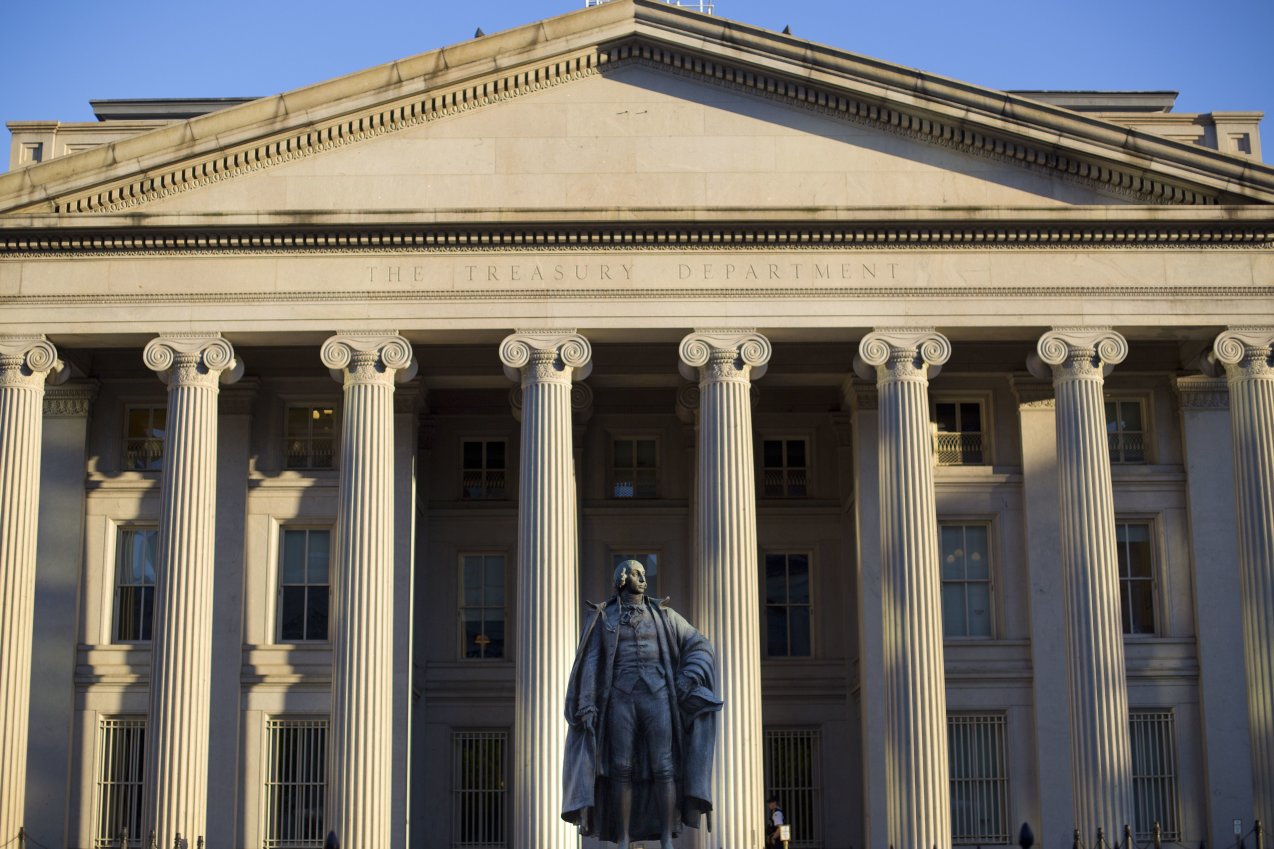
    U.S. Treasury Department

    The United States enjoyed a three-decade decline in interest rates, beginning with the early-1980s quashing of inflation by Federal Reserve Board Chairman Paul Volker and culminating with Ben Bernanke’s Quantitative Easing in the mid-2010s. Lower interest rates, which made equities look more favorable by comparison, helped drive stock market indices like the Dow Jones Industrial Average and the S&P 500 to record highs.

    Now the age of declining interest rates is over. Dead. Pound the nail in the coffin. Dig the grave.

    The implications of this seismic shift are dire for the world’s largest debtor, the U.S. federal government. But state and local governments have cause for concern, too.

    The manic bull market for stocks took its first big drubbing earlier this week when U.S. Treasury yields took an unexpected uptick. It is finally dawning on financial markets that as good as the Trump tax cuts may prove to be for the economy, they will increase federal budget deficits and borrowing, which will pressure interest rates higher. Even accounting for a stronger economy that pumps up tax revenues, nonpartisan groups say the tax law could add $1 trillion to deficits over the next 10 years.

    Meanwhile, the Treasury Borrowing Advisory Committee has estimated that the Treasury will need to borrow a net $955 billion in the fiscal year ending Sept. 30, 2018, up from $519 billion the previous year. Borrowing will increase further to $1,083 billion next year and $1,128 billion the following year. That’s with a strong economy, not a recession.

    The Treasury borrowed even larger sums back in 2009 and 2010 as the U.S. economy struggled to pull out of the global recession. But the economic picture looked very different back then, allowing the U.S. to finance $1.6 trillion annual deficits without driving interest rates higher. As the Wall Street Journal explains:

    Back then, global demand for safe assets was high and investors gobbled up U.S. Treasury issues, pushing up Treasury prices and down their yields. The Federal Reserve had also cut short-term interest rates to near zero and was beginning a series of programs to buy government debt itself, putting further upward pressure on Treasure prices and downward pressure on interest rates. …

    Treasury’s increased borrowing now comes against a much different economic and financial backdrop. The economy is strong and inflation is expected to rise gradually in the months ahead. In response, the Fed is pushing short-term interest rates higher and allowing its portfolio of Treasury and mortgage debt to shrink as bonds mature.

    Another factor, I might add, is the weakness of the dollar, which also discourages foreign purchases of U.S. debt and adds to inflationary pressure.

    Why am I writing about the end of the era of low interest rates in a blog dedicated to Virginia public policy? Because state and local governments, colleges, universities, economic development authorities, and public service entities are big borrowers, too. Higher interest rates makes life harder for all of them.

    To draw from the latest headlines, Mayor Levar Stoney wants to increase the City of Richmond meals tax to fund school building improvements because the city has maxed out its debt capacity and can borrow no more without undermining its AA bond rating.ย Likewise the Commonwealth of Virginia has borrowed close to its cap, constraining the state’s ability to issue new debt.

    Virginia policy limits annual service on its long-term debt to 5% of General Fund revenues. Debt service can be broken into two main parts: the principal borrowed and the interest paid. It is axiomatic: If interest rates increase, so does the annual debt service…. Which means the state can borrow less.

    Most important of all, Virginia has a massive unfunded pension liability. That liability, about $20 billion now, has shrunk modestly in the past couple of years thanks to the strong performance of the Virginia Retirement System (VRS) equities portfolio. The next VRS report, reflecting results from the astonishing Trump-era bull market, likely will be positive. Virginia, it will appear, is making continual progress in whittling down its liabilities. No one will be concerned.

    But the stock market cannot possibly extend the past decade’s performance into the future. While earnings may continue to improve, stock prices will be dampened by interest rates and shrinking price-earnings multiples. Do not be deceived. The turning point in the bond market does not augur well for either the United States with its $20 trillion national debt or Virginia with its more modest obligations.


  • Chesterfield County Leaking Affluent Households

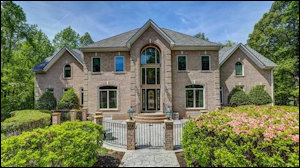
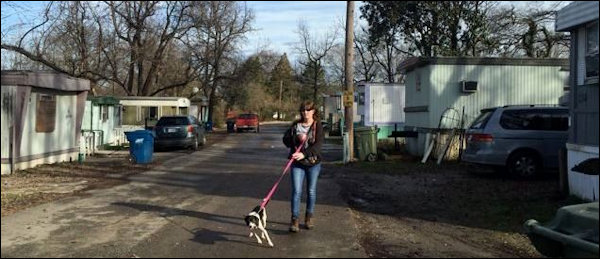
    Which better represents the future of Chesterfield County? Rudd’s Trailer Park……. (Photo credit: Richmond Magazine

    This column was published originally in the Chesterfield Observer. While the details of migration trends in and out of Chesterfield is unlikely to prove of great interest to anyone outside of Chesterfield, the analysis shows how citizens can use IRS migration data to gauge the health of their home locality.ย 

    Hobbled by the sequestration-driven budget squeeze of defense spending, Virginia experienced its fourth consecutive year in 2016 of out-migration, the University of Virginiaโ€™s Demographic Research group reported late last year. While 301,000 income tax-filing households moved into the state, 315,800 moved out, for a net loss of 14,800 households. The last four years are quite a comedown for a state that previously had seen healthy population inflows every year since the Internal Revenue Service began compiling the statistics in 1978.

    The picture looks somewhat better for Chesterfield County, which saw a net gain of 687 households from people moving in and out of the county in 2016. Some 10,300 households entered the county while 9,600 left and another 123,400 stayed put.

    ….or this McMansion?

    People move from one locale to another for a multitude of reasons, but itโ€™s normally a good sign when more people move in than out. Insofar as people follow jobs when they move, a net gain in migrants could mean that more jobs are being created. An inflow of residents also pumps up demand for housing, retail and services, thus stimulating local economic activity.

    On the flip side, an influx of households places greater burden on the county to provide education, public safety, streets and roads, and other basic government services. In an ideal world, the newcomers bring in more taxable income and spending power to help pay for those services than those who leave. Unfortunately, thatโ€™s not whatโ€™s happened in Chesterfield. Households that moved here in 2016 reported an average income of $56,200; those that left reported $58,500 โ€“ for a total net loss of $17 million in countywide income. Admittedly, thatโ€™s a drop in the bucket compared to the $10.1 billion in total income reported by all non-migrants. But if this becomes a trend and persists for years and decades, it could fundamentally change the nature of the county.

    A large percentage of the coming and going consists of people moving to and from neighboring jurisdictions in the Richmond metropolitan area. In 2016, Chesterfield experienced a net gain of 401 residents from Henrico County, 229 from the City of Richmond, and 56 from the city of Petersburg. However, the county lost a net of 126 households to Powhatan County.

    The good news for Chesterfield is that it is importing more affluent households from Richmond, Henrico and Petersburg than it is exporting.

    Newcomers from Richmond earned on average $46,100, while those moving from Chesterfield to the city reported only $39,500 in income.

    Similarly, Henrico immigrants to Chesterfield earned $60,200 on average while households going the other way earned only $49,900.

    The differential for Petersburg was $37,200 on average for households heading from the city to the county compared to a lowly $29,800 for households heading in the reverse direction.

    However, Chesterfield lost significant income to Powhatan County in 2016. While the number of migrants is relatively small, the income differential is vast. Households moving from Powhatan to Chesterfield made $48,900 on average while those leaving Chesterfield earned $87,200, a differential of $37,300.

    The largest sources of in-migrants from outside the region are Fairfax County, Virginia Beach, and Wake County, North Carolina (in the Raleigh metropolitan area).

    The wrong conclusion to draw from this data is that Chesterfield taxpayers might benefit from crafting policies and ordinances that make the county less attractive to the poor, say, by blocking real estate projects developed for lower-income households. Aside from the ethical issues raised by discriminating against the poor, thatโ€™s not even good policy. Poor people will gravitate toward the cheapest, least desirable housing stock available in the metro area, whether itโ€™s public housing projects in Richmond or aging cul-de-sac neighborhoods of small, rundown 1950s and โ€™60s era ranch houses in Chesterfield, regardless of any policies the county pursues.

    A better strategy is to make carefully considered investments that help build a more prosperous, livable and sustainable community for all. Tracking the IRS migration data is a good way to tell how well county leaders are doing to create a desirable place for everyone to live, work and play.


  • Transparency and Accountability for EDAs

    Image credit: Chesterfield Observer

    How transparent and accountable should Economic Development Authorities be to the public?

    That’s the fundamental issue raised by Sen. Amanda Chase, R-Chesterfield, who submitted a bill that would require local government approval for all EDA grants and budgets. That bill was defeated by one vote in the Senate’s local government committee, reports the Richmond Times-Dispatch, but Chase said she hopes to resurrect it in the near future.

    “Bureaucrats who are not elected by the people should not be allowed to dole out taxpayer money,” said Chase. “I’m tired of elected officials abdicating their responsibility so bureaucrats can do their dirty work.”

    The bill arises from a controversy in Chesterfield County over county plans to build an industrial megasite in the Bermuda district. The EDA wants to rezone and buy about 1,700 acres of land as a site for potential large, industrial users. The paucity of so-called megasites in Virginia has been identified as a bottleneck to economic development, ruling out the state for consideration by automobile companies, aerospace firms and other large-scale manufacturers. Success in attracting a major manufacturing concern could create $1 billion in investment and create up to 5,000 jobs.

    Chesterfield economic developers contend that EDAs are accountable indirectly because authority members are appointed by boards of supervisors, and EDA expenditures of tax dollars are approved in counties’ budgetary process in open meetings. Additionally, all EDA expenditures are recorded by Chesterfield’s accounting department, and the EDA does an annual audit.

    But members of a Chesterfield citizens group, the Bermuda Advocates for Responsible Development (BARD), say they have many unanswered questions about EDA expenditures and the proposed megasite.

    EDAs have many powers, including the ability to acquire land and borrow money, said Patrick McSweeney, an attorney speaking on behalf of Chase’s bill.ย “This creates a shadow government potentially in every locality in Virginia.ย Once a decision is made by these authorities there is little that can be done about it unless they have done something blatantly illegal.”

    “There’s no reason that local governments can’t do what they do,” he said. “There’s no reason not to have (EDAs) as an advisory body.”

    Bacon’s bottom line:ย EDAs do spend millions of local dollars, they do issue tens of millions of dollars in municipal bonds, and their decisions do impact local communities. Virginians should insist upon total transparency in decision making regarding the assembly of land and building of infrastructure in industrial parks, and they should insist that elected officials be accountable for multimillion-dollar grants and expenditures. I don’t see how Chase’s bill does EDAs any harm, and I can’t understand why anyone would object to it.


  • Tinkering with the Electricity Regulation Bill

    Lightning show

    In yesterday’s fast-moving action in the General Assembly, bills to end the electricity rate freeze underwent several important changes. I have done no original reporting here. I’m just extracting key details from Robert Zullo’s article in today’s Richmond Times-Dispatch.

    A substitute bill submitted by Del. Terry Kilgore, R-Scott:

    • Increases one-time rebates to Dominion Virginia Energy customers from $133 million to $175 million.
    • Allows the State Corporation Commission (SCC) to order refunds and lower base rates after a single triennial review instead of after two consecutive three-year reviews.
    • Allows the SCC to review 2017 earnings as part of the first review.
    • Incorporates elements from other bills that would authorize the burial of transmission lines, streamline the approval of efficiency programs, and declare solar development to be in the public interest.

    The Kilgore bill still converts two-year reviews of base electric rates to three-year reviews, and it preserves Dominion’s proposal for a “reinvestment” regulatory model for modernizing the electric grid to make it more resilient from storms, more secure from cyber-attack, and better suited to renewable power, energy efficiency and microgrids.

    I’m still unclear on how the reinvestment model works. David Ress with the Daily Press describes the concept this way:

    Any excess profits Dominion earns would go to pay for those investments, instead of going in part to customers or justifying cuts in its base rates. …ย By using any excess earnings to improve the grid and install an eightfold increase in solar facilities, the company can finance those projects out of existing rates without imposing the โ€œridersโ€ โ€” special surcharges โ€” it has been using to build its newest power plants.

    OK… Why does this make more sense than the pre-freeze regulatory model? What’s wrong with rebatingย excess earnings on “base” rates to customers, and what’s wrong with financing grid modernization through riders? There may be perfectly legitimate reasons for the changes, but the logic is not self-evident.

    The reinvestment model is central to the revamping of the electricity regulatory system. Everyone would benefit from more clarity on how it would work and the thinking behind it.


  • Er, Remember those Improving Graduation Numbers?

    2016 graduates of Arlington’s Washington-Lee High School. Photo credit: Washington Post

    In 2016 the Washington Post wrote an article touting improving graduation rates in Washington, D.C.’s public high schools, right across the Potomac River from Virginia:

    The number of students finishing high school on time in D.C. Public Schools reached an all-time high with the Class of 2016, inching the school system closer to meeting an ambitious graduation goal it set nearly five years ago.ย The Districtโ€™s most recent graduating class saw 69ย percent of seniors earn diplomas within four years, a five-point increase from the previous class.

    Today, WTOP televisionย reports this:

    More than 1 in 3 students who graduated from D.C. public high schools last year had help from violations of system policy, a study commissioned by the school system found.ย The study, released Monday, found that 937 out of 2,758 graduates had excessive absences from school or from credit-recovery course, or they took those courses, which are supposed to be for students who have failed a class, โ€œconcurrently or in place of regular instruction. …ย At Ballou [High School], there was a culture of doing โ€˜whatever it takesโ€™ to pass students so they could receive their diploma,โ€ the report said.

    In 2016 the Washington Post also reported this:

    More than 90 percent of Virginiaโ€™s high school Class of 2016 graduated on time, the highest rate recorded since the state changed how it tracks high school graduations nearly a decade ago.ย The on-time graduation rate rose from 90.5ย percent last year to 91.3ย percent this year, continuing an upward trend since the state started keeping more accurate data in 2008, keeping closer tabs on transfer students and dropouts who were sometimes miscategorized in state data.

    Does anyone think that Virginia might need to conduct its own study?


  • Republicans Cave on Medicaid Expansion

    General Assembly Republicans have capitulated on the issue of Medicaid expansion. All that remains to be decided is the terms of their surrender.

    Speaker of the House M. Kirkland Cox, R-Colonial Heights, has signaled his willingness to “dialogue” with Governor Ralph Northam about Medicaid expansion if the Governor is willing to accept the condition that would require able-bodied recipients to work or be actively seeking employment.

    Wrote Cox to the Governor in a letter that House leadership distributed publicly:

    The House is willing to begin a dialogue on health care that includes significant reforms and strong taxpayer safeguards, but I want to be clear that the 51-member House Republican Caucus has taken a binding caucus position against โ€˜straightforwardโ€™ Medicaid expansion.

    If your position is to pass straightforward Medicaid expansion without work requirements or other reforms, then you will be responsible for the failure to provide health care coverage to more Virginians.

    Republican bills, reports the Richmond Times-Dispatch, also would require periodic checks of the recipientsโ€™ household income, and would include exemptions for adults attending college, acting as sole caregivers for children under six, receiving long-term disability benefits or otherwise proved to be โ€œphysically or mentally unable to work.”

    A spokesman said Northam was “encouraged” that Republicans were willing to begin discussion about Medicaid expansion but not happy with Cox’s proposed restrictions.

    Bacon’s bottom line: Republicans have held the line against Medicaid expansion on fiscal grounds for four years. It’s difficult to imagine any explanation for the about-face other than fear and trembling over the 2017 election results, which came within a frog’s eyelash of evicting the Republicans from control of the House of Delegates. Cox has caved on the expansion and now he’s bargaining over the fine print. It will be exceedingly difficult politically for him to backtrack.

    But Medicaid expansion still will be bedeviled with the same problems that afflicted it when former Governor Terry McAuliffe was pushing for it.

    Even with the federal government funding 90% of the budget for expansion, Medicaid expansion still will cost Virginia nearly $190 million a year more by 2022, according to the Heritage Foundation, putting the squeeze on other budget priorities. All for what? Yes, expansion will provide “insurance” to more poor and near-poor people. But what quality of coverage will they receive? Will Medicaid expansion help them find a doctor in a country plagued with primary care physician shortages, or will recipients continue to clog emergency rooms? And who benefits financially? The patients themselves — or the hospitals that will see a great reduction in the treatment costs they have to write off as charity or uncompensated care? Will legislation expanding Medicaid ask anything of the hospitals, many of which, like Scrooge McDuck, are rolling around in piles of money? Or will they just fatten their profit margins? Finally, is there any evidence that Medicaid recipients’ health will improve? Or will physicians dish out more painkiller prescriptions, as is said to be the case in other states, and risk aggravating the opioid epidemic?

    If past is prelude, it really doesn’t matter if Medicaid expansion actually helps anyone. People are suffering, and people want to “do something” — regardless of what it costs or whether it works.


  • Supply-Side Experiment in Food Desert Goes Bust

    Jim Scanlon at his Newport News store. Photo credit: Richmond Times-Dispatch

    Poor Jim Scanlon. He bought into the conventional wisdom that food deserts are a supply-side problem — an unwillingness of grocery store operators to locate in inner cities. Hoping to remedy that deficiency, the idealistic former Ukrop’s executive opened Jim’s Local Market in a low-income neighborhood in Newport News in May 2016.

    Now, a year and a half later, he’s closing the store, reports the Richmond Times-Dispatch. Explains Scanlon:ย “It’s just that the sales are not there, and the profitability is not there. It’s not working out.”

    Bacon’s bottom line: Food deserts are a demand-side problem, not a supply-side problem. Poor people, like many Americans, just don’t like broccoli, kale, quinoa, cauliflower, or other trendy superfoods that go in and out of fashion among the cultural elites. Pleasures in life in the inner city are far and few between, and the poor, also like many Americans, gravitate to food that provides immediate gratification… Which means they gravitate to processed food loaded with salt, sugar and fat that tastes good. Go into any convenience store or corner grocery in the east end of Richmond and you’ll see aisles stocked with snack foods and soft drinks — the kind of food people are willing to spend their money on.

    If you want poor people to eat healthier food, putting healthy food in front of them won’t work. You can literally give away the carrots and squash, and many people won’t eat them. Not only have they not acquired the taste, they have lost the cultural knowledge of how to cook them.

    Tricycle Gardens in Richmond was launched to create urban gardens and create a supply of healthy vegetables that poor, inner-city residents should include in their diets. The idea behind the nonprofit was the old give-a-man-a-fish-and-you-feed-him-for-a-day, teach-a-man-to-fish-and-you-feed-him-for-a-lifetime philosophy. The group built small, “key-hole” gardens that anyone could install in their backyard and reap a bounty of vegetables. I don’t know if Tricycle Gardens had many takers, but let’s just say, I have seen little evidence of a horticultural revolution sweeping through Richmond’s inner city. The last time I communicated with the group — it’s been a couple of years — its leaders were recognizing that they had to work on the demand side. The outfit was talking about giving cooking classes to teach how to make yummy dishes out of brussel sprouts, and it was partnering with local schools to get kids involved with raising garden vegetables, learning about nutrition, and excited about eating healthy food. If we want poor Virginians to eat more healthy food, that’s the kind of slow, plodding change we need to undertake.

    Another well-meaning group is investing a grocery store in Richmond’s East End. The building is now under construction. With all the gentrification taking place in the East End, that venture may find enough customers among young urban professionals to sustain itself. Otherwise, it will likely meet the same fate as Scanlon’s Newport News enterprise. Simply put: The enterprise is addressing the wrong problem.


  • Monuments in the Time of National Reconciliation

    by Cliff Page

    With the Election of Rutherford B. Hayes by a one vote margin, the Compromise of 1877 ended the era of Reconstruction. As Southern states were re-admitted into the Union, federal troops stood down or returned to the North.

    From about 1885 to 1924, before and after the 50th Anniversary of the War between the States, Americans felt a need for forgiveness, reunification and remembrance of the greatest war Americans ever fought and hopefully ever will. There was a great desire for conciliation and honor for aging veterans and those who had perished on the battlefields. The America Beautiful movement was in full swing with the goal of employing parks, public spaces, sculpture, urban landscaping and rebuilding to make life more livable, civil and cultured. The era was our American Renaissance – economically, politically, artistically and scientifically.

    Contemplate for a moment two great works of American sculpture, one honoring Gen. homas โ€œStonewallโ€ Jackson, CSA,(above) and the other Gen. William Tecumseh Sherman, USA (below). The American sculptors of these two great works of equestrian martial art, Charles Keck and Augustus Saint-Gaudens, were both members of the National Sculptor Society. Saint-Guadens along with the architect Stanford White formed the society and also the American Academy in Rome.ย  ย  ย  ย  ย  ย  ย  ย  ย  ย  ย  ย  ย  ย  ย  ย  ย  ย  ย  ย  ย  ย  ย  ย  ย  ย  ย  ย  ย  ย  ย  ย  ย  ย  ย  ย  ย  ย  ย  ย  ย  ย  ย  ย  ย  ย  ย  ย  ย  ย  ย  ย  ย  ย  ย  ย  ย  ย ย 
    ย Both statues employ angels. Saint-Gaudens also depicted, an angel, as a last addition, in his most famous work “Shaw and the 54th Colored Troops”. In the monument to Sherman his female angel is on the statue itself as a full figure. She holds a branch of laurel, a sign of victory, in front of her like a guiding force pulling Sherman forwardย  In “Shaw,” his angel is far more quizzical. (Shaw and his men were largely slaughtered in their attempt to take Fort Wagner outside of Charleston). The Sherman angel is hinged off a sloping ground plain which gives her a feeling of suspension and her wings and chitin are blown back by the wind going past her forward motion. Likewise, Sherman’s cape is billowing back, implying his forward motion, while his posture is erect and easy, and his horse is in a canter, all signs of surety and composure in victory. ย 
    ย  ย  ย  ย  ย  ย  ย  ย  ย  ย  ย  ย  ย  ย  ย  ย  ย  ย  ย  ย  ย  ย  ย  ย  ย  ย  ย  ย  ย  ย  ย  ย  ย  ย  ย  ย  ย  ย ย Keck also has an angel in his statue of Jackson, but it is carved into the base, its wings thrown back in defensive protection of Southern ground. The male angel bears his breast and defiantly exposes himself to danger, thrusting out his manly bosom in bravery to the wind. He carries a shield with the cross of St. Andrew of the Confederacy to likewise defend the Southern land from aggression. Above, the sculpture of Jackson is mounted on a small war horse, which Jackson holds back at a trot. (Jackson did not like to ride and, in fact, preferred smaller horses. Sherman is mounted on a tall and impressive dress horse.)ย  ย  ย  ย  ย  ย  ย  ย  ย  ย  ย  ย  ย  ย  ย  ย  ย  ย  ย  ย  ย  ย  ย  ย  ย  ย  ย  ย  ย  ย  ย  ย  ย  ย  ย  ย  ย  ย  ย  ย  ย  ย  ย  ย  ย  ย  ย  ย  ย  ย  ย  ย  ย  ย  ย  ย  ย  ย  ย  ย  ย  ย  ย  ย  ย  ย  ย  Jackson’s figure shows agility and dynamic action and his gaze is one of decisiveness and determination. He holds the reins as his horse tilts his head implying that Jackson is about to make a daring move. Saint-Gauden’s Sherman is gilded and elevates Sherman to the plane of the Gods with his angel as his guide. By contrast, the angel of Keck’s Jackson is fixed firmly on the sacred ground Jackson defends, as a common man with divine aid. Both of these great American monuments, to mortal men and great martial events, portray a story of defense and valor, victory and defeat, but above all they are symbolic artistic representations of our nationโ€™s rich historical past, bequeathed to us by our forefathers. They are important pieces of American art!

    The venerable Grand Old Army and the Confederate Veterans of America held conventions where tales were swapped of valor, loss, glory and honor. Wizened, white-bearded veterans held reunions at battlefields, where they staged mock engagements, relived the past, broke bread with comrades and former enemies, and extended hands of forgiveness, reconciliation and respect.ย  During this time both North and South erected their monuments and memorials to war heroes, leaders, comrades, and the many who had fallen in the field of battle.

    Sculptures acted as eternal symbols to the Northern and Southern causes. The people who erected statues intended for soldiers and generals to live on in the minds of posterity, for the nation’s struggle not to be forgotten, and for their lives not to be counted as squandered in vain. The hope was that the honored men and events would be recalled far into the future, argued about, reflected upon, as actors in a grand play of immortal history. The purpose of the statues was to give meaning to heroism, bravery, honor, commitment, patriotism and duty.

    The Civil War was a grand epic tragedy that should remind us of the faults and failures, and also the nobility, found in mankind. Northern and Southern monuments serve as guiding lights to direct future generations of Americans.ย  Furthermore, the monuments are among the greatest sculptural assets of our nation, created at the zenith of our cultural history.

    No one monument can define this era in time, any more than a single actor or a single scene can define a play — no more than the First Battle of Manassas could define four years of endless carnage, blood, sorrow, glory and defeat. America’s historic monuments are our heritage, the complete play, warts and allโ€ฆ the story of America’s great defining epoch. But, it is not just our story. It is a story for the world!

    Political correctness in America has metastasized into something resembling the Maoist Cultural Revolution. As the world leader, Americaโ€™s actions, attitudes and fashions are mimicked everywhere on the globe, whether they are innovative, wholesome, or obscene.

    We all perceive the recent iconoclasm of extremists and terrorists in the Middle East as repugnant and a crime against humanity, art, and world history. Not long ago, the West spurned the Cultural Revolution as shameful. Somehow this madness has infected our nation nearly fifty years later, like an Asian flu. Once it hits American shores, this pathogen could become a global contagion that consumes the worldโ€™s historic culture and its symbols of heritage and civility.

    Rather than accept this disease, Americans should act more civilly and maturely.ย Americaโ€™s historic monuments are the visual representations of our American History.ย We have a responsibility to promote the values of our inalienable rights of speech, writing, assembly and expression. When America constrains these rights, by censorship in whatever form, she does so at her own peril.

    Cliff Page, a sculptor, lives and maintains his studio in Portsmouth.ย 


  • Bills Would Prevent Ratepayer Refunds for Six Years, SCC Says

    Lightning show

    Proposals to overhaul Virginia’s system for regulating electric rates would provide no opportunity for the State Corporation Commission (SCC) to order refunds to rate payers until 2024 for Appalachian Power Company and 2025 for Dominion Energy Virginia, concludes a State Corporation Commission analysis of Senate Bills 966 and 967.

    The SCC conducted the analysis at the request of Sen. Chap Petersen, D-Fairfax, who has advocated a return to the regulatory system that prevailed before the 2015 enactment of a rate freeze that has resulted in hundreds of millions of dollars of excess profits for the two utilities. Dominion has worked with legislators to advance a proposal that would return $1 billion to ratepayers over 10 years and replace biennial rate reviews with triennial rate reviews.

    Key impacts on rate payers can be summarized as follows, states the analysis submitted by John F. Dudley, counsel to the Commission (quoting verbatim):

    1. There will be no opportunity to consider base-rate reductions or refunds to customers for at least six years, and then only if the utility over-earns for two consecutive three-year periods, effectively extending the current base-rate freeze further into the future.
    2. There may be only a partial return of reduction in federal income taxes currently being collected in base rates.
    3. The provision in current law that allows utilities to keep more than 30% of their excess earnings is continued.
    4. The legislation allows the utilities to keep future excess earnings (i.e. customer overpayments) and, rather than return them to customers, use them for capital projects chosen by the utility. In addition the utilities can charge customers for these same projects in base rates.
    5. The legislation deems certain capital projects to be “in the public interest,” thus impacting the SCC’s authority to evaluate whether such projects are cost-effective or whether there are alternatives available at lower costs to customers. This provision could potentially result in billions of dollars of additional costs that will be charged to customers in higher rates.
    6. An amount that appears to represent the customers’ portion of prior period excess earnings is returned to customers, but the amount has not been examined in a formal proceeding to determine its accuracy.

    Dominion Energy Virginia has issued the following response:

    This report analyzes a work in progress [that is] subject to change. We continue to believe a reinvestment model that transforms our energy grid and significantly increases the amount of renewable energy we produce is sound policy for Virginia. We have always said all tax savings should return to customers effective Jan. 1, 2018 and be appropriately adjusted by the SCC when the final IRS rules are available. To the extent that is not clear, we would support an amendment making it so.


  • Quashing Offensive Memes at UVa


    On Jan. 19, Patrick Hogan, the chief operating officer of the University of Virginia, sent out an email community advisory to students, faculty, and staff asking people witnessing “suspicious activity” such as posting “offensive flyers and memes” to please call 911.

    “The safety and wellbeing of every member of the University community remains our top priority, and we ask for your assistance in remaining vigilant of your surroundings,” said Hogan.

    That communiquรฉ struck Hans von Spasovsky, a scholar with the Heritage Foundation, as an egregious affront to free speech. Here’s how he responded in an article published by the Foundation’s Daily Signal:

    Apparently, in Hoganโ€™s mind, saying something โ€œoffensiveโ€ is the same as committing a heinous criminal act. How do we know that? Because his email tells students to call 911 if they see someone โ€œposting offensive flyers or other material.โ€

    No, really. Posting such material violates the universityโ€™s โ€œposting and chalkingโ€ policy and is included in Hoganโ€™s definition of โ€œsuspicious activity.โ€

    Hogan was particularly concerned over any โ€œoffensiveโ€ material that might be distributed at โ€œbuildings and centers for under-represented groups, particularly Womenโ€™s Studies.โ€

    In other words, if you decide to exercise your First Amendment right to speak at UVA by, perhaps, calling the โ€œWomenโ€™s Studyโ€ program a faux social science curriculum, or by pointing out that its graduates may have a very tough time finding a job in which they can actually support themselves, then law enforcement officers will be called to come after youโ€”a total abuse of the 911 emergency response system.

    This is apparently UVAโ€™s version of the โ€œThought Policeโ€ from George Orwellโ€™s โ€œ1984.โ€

    Spasovsky makes a searing indictment. Is it fair? Here is the full text of what Hogan wrote:

    The University of Virginia is aware of reports of solicitations by national organizations to encourage distribution of offensive flyers and memes at colleges and universities across the country during the upcoming weekend. The reports indicate that the organizations are specifically interested in buildings and centers for under-represented groups, particularly Womenโ€™s Studies. We are not aware of any specific threats to the University of Virginia and its facilities. We still believe it is prudent to make members of the University community aware of this possible activity.

    If you witness individuals engaged in suspicious activity, including posting offensive flyers or other material in violation of the Universityโ€™s Policy on Exterior Posting and Chalking, please call 911. The University Police Department and the Ambassadors are aware of this information and will be closely monitoring activities on and near Grounds. We will be maintaining an enhanced security environment across Grounds this weekend.

    The safety and wellbeing of every member of the University community remains our top priority, and we ask for your assistance in remaining vigilant of your surroundings.

    Oddly, it’s not clear from Hogan’s advisory who these outside groups are or how their flyers might prove offensive — although his epistle implies that “women’s studies” might be targeted. He’s not aware of any specific “threats” to the university, but the rumored activities are alarming enough that university police have been notified and the administration will maintain an “enhanced security environment.”

    The advisory is so vague that it’s hard to make heads or tails of it. While Spasovsky might be jumping to conclusions, it is easy to see how he made the inferences that he did. Reading between the lines of Hogan’s email, it sounds like feminist groups on campus were having fainting spells at the prospect of someone posting material — offensive “memes” — that assaulted their snowflake sensitivities. We do not know that for a fact. However, given the tenor of campus politics these days, it is a not unreasonable supposition.

    Adding plausibility to Spasovsky’s spin on the memo, Hogan’s words must be interpreted through a filter of modern-day academia-speak. The document referred to women’s studies as an “under-represented group.” Only in an academic culture steeped in the culture of victimization could an institution where women comprise 55% of the student body possibly refer to them as an “under-represented” group.

    When asking for UVa spokesman Anthony de Bruyn for a copy of Hogan’s advisory, I asked if the university had a response to Spasovsky’s column. De Bruyn did not respond. It’s all very mysterious.

    For the record, conservatives on campus can play the victimization game, too. In December I wrote howย the UVa Student Council had denied the Young Americans for Freedom (YAF), a conservative student group, recognition as an official student organization. YAF called foul. UVa responded that the non-discrimination policy had been applied in error and that the student council would reconsider. De Bruyn informed me today that the YAF had been approved as a CIO (contracted independent organization) last week.


  • Another Look at Virginia’s Lagging Population Growth

    Image credit: StatChat blog

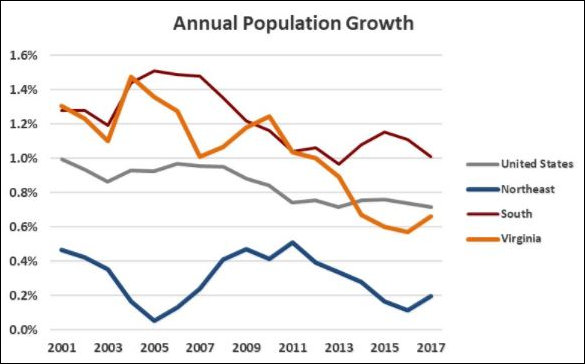
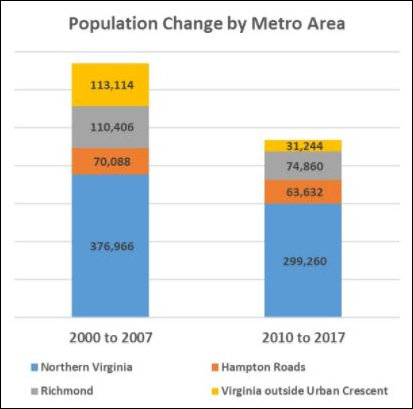
    After decades as one of the nation’s fast-growth states, Virginia’s population now is growing line with national averages, according to data found in Hamilton Lombard’s latest post on the University of Virginia Demographics Research Group’s StatChat blog.

    Lombard attributes the lagging population growth to out-migration resulting from the impact of federal budget austerity on Northern Virginia’s defense-oriented technology sector. Despite this slowdown, NoVa is adding to the state’s population faster than any other region in Virginia because its population skews younger — more women are in the child-bearing age. Indeed, since 2010, NoVa has added more people than the rest of the state combined.

    The Richmond region has added the second largest number of people since 2000. And despite its lagging economy, Hampton Roads has contributed substantially to population growth. However, due to emigration of young people, an aging population, and fewer births,ย population growth in Virginia outside the urban crescent has collapsed since 2010.

    Writes Lombard: “Without a surge in population growth, by 2020 Virginia could have close to 200,000 fewer residents than would have been expected based on past population growth trends. Meanwhile, Virginiaโ€™s aging population will likely cause the number of counties with more deaths than births to continue to increase, slowing population growth throughout the Commonwealth, even in Northern Virginia.”


  • E-Lofts and the Recycling of Old Office Properties

    Fairfax County has more than 18 million square feet of vacant office space, with little hope of filling it in the foreseeable future. Having already enactedย  zoning changes to make it easier to convert empty buildings in industrial and mixed-use areas to other uses, the county now is considering a proposal to do the same for buildings in suburban neighborhoods. Summarizes a county description of the proposed change:

    This could give these offices new life as apartments, schools, co-working spaces, maker spaces or food incubators. As an example, a former, five-story brick office building across from the Seven Corners Shopping Center was converted into Bailey’s Upper Elementary, the county’s first “high rise” school. …

    More recently, the board approved the conversion of aย 10-story office building at 5600 Columbia Pikeย into flexible live-work units. The building stood empty for about four years, and it willย put the 173,000- square foot building back into use in an innovative way that meets market demands.

    The county’s Office Building Repositioning and Repurposing Work Group is particularly enamored with the potential for converting office space into “e-lofts” — highly flexible spaces within a building that can be used as apartments or small offices.

    Bacon’s bottom line: Rigid, obsolete zoning codes across the state are hindering the ability of the real estate sector to adapt to changing market conditions. Zoning codes arising from the post-World War II era of rapid suburbanization are hopelessly antiquated and self-defeating today. Aging office and industrial parks are emptying out. Unless we want them to resemble the ghost malls of the retail sector, we must give property owners the flexibility to re-purpose their assets in line with market demand.

    The Fairfax initiatives represent a positive step forward. If people want to convert an old office or industrial building into apartment housing, why not let them? E-lofts sound like an especially promising idea. A similar evolution is taking place in Scotts Addition in Richmond. That light-industrial district is rapidly transitioning to mixed offices, restaurants, and apartment buildings. People are perfectly happy to live in the neighborhood despite the continued presence of light-manufacturing activity.

    The only problem with the Fairfax proposal is that it doesn’t go far enough. The county should encourage the wholesale recycling of antiquated office properties by permitting greater densities and the construction of new buildings, not just the re-purposing of individual buildings. Zoning codes slow the process of adaptation to a snail’s pace. Time to open up the process and turn loose the animal spirits!