• Virginia Supremes Speak

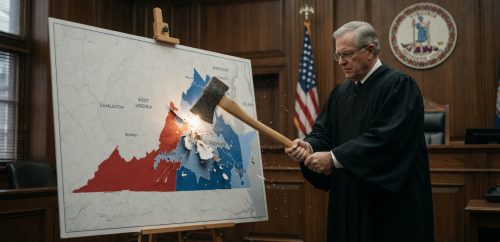
    A judge in a courtroom striking a map of Virginia with a gavel, highlighting the division between different regions marked in red and blue.
    Ai-generated image by Grok

    The Virginia Supreme Court has struck down the redistricting amendment on the grounds that lawmakers violated the state constitutional procedure for placing amendments on the ballot. I’m leaving for vacation today, but I’ll post reactions on the blog — in the order they arrive in my inbox (newest on top) — until I have to head to the airport. — JAB


    Statement of House GOP Leader Terry Kilgore Statement on Supreme Court Ruling

    GATE CITY, Va–House GOP Leader Terry Kilgore issued the following statement regarding today’s ruling from the Supreme Court of Virginia:

    “Todayโ€™s ruling establishes once again that the Constitution of Virginia means what it says. The rule of law requires that Virginians have an opportunity to review a Constitutional Amendment before they vote for the House of Delegates in a meaningful way. You cannot violate the Constitution to amend the Constitution.”ย 


    Attorney General Jason Miyares issued the following statement through Fair Maps following this morning’s Virginia Supreme Court ruling:

    โ€œVirginians spoke loud and clear in 2020 that voters should pick their elected officials, not the other way around. Today, their voices were heard over the shamefully deceptive rhetoric and language of an unconstitutional effort by Richmond Democrats to carve up the state for themselves. We thank the Justices for their swift action to uphold the rights of our fellow Virginians all across the Commonwealth.โ€

    (more…)

  • The Day Grant Saved America

    As Virginia celebrates the 250th anniversary of the Declaration of Independence, there’s another anniversary we should honor as well: the Wilderness Campaign.

    by Shaun Kenney

    A wooded area with lush green trees surrounding a road intersection featuring a stop sign and a yield sign.

    โ€œThey came to a crossroads in the track out of the eastern reaches of The Wilderness. If they turned left it would mean they were heading north. If they turned right โ€” south. And from their throats burst a tremendous shout of exultation. It was in the darkness and dust that they had what they later remembered as a rebirth of themselves as men and as an army. Through their ranks came Ulysses S. Grant, and they shouted for him and waved their hats in the air for him.โ€

    โ€” Gene Smith, โ€œLee and Grantโ€ (p. 201)


    While I have no idea why Virginia 250 is sputtering, I am absolutely shocked to see that Virginia isnโ€™t doing anything cohesive to celebrate and promote the founding of America.

    Not to put too fine a point on it, but America is a Virginian idea, created by Virginians, bled for by Virginians, where Virginia conceded her western claims which entitled her to be a nation unto herself, where Virginians โ€” Jefferson among them, but George Mason and George Wythe as well โ€” articulated the reasons for the separation with Great Britain, where the American War for Independence resolved itself at Yorktown, where Virginians led by James Madison forged the U.S. Constitution, and where the Virginia Dynasty from Washington through Monroe led the early republic for 32 of its first 36 years.

    What is little disputed is that the two bonds that kept the United States together were the words Liberty and Union โ€” โ€œLiberty and Union, Now and Forever, One and Inseparable!โ€ was Senator Daniel Websterโ€™s reply to South Carolinaโ€™s John Calhoun when the prospect of nullification, an idea floated by Jefferson and Madison in the Virginia and Kentucky Resolves, hovered around the debate between statesโ€™ rights and the scope of the federal government. President Andrew Jackson threatened to call up the troops and South Carolina submitted to the Union, for a time.

    (more…)

  • Government Oversight of the Integrity of Healthcare Programs in Virginia – Part 1

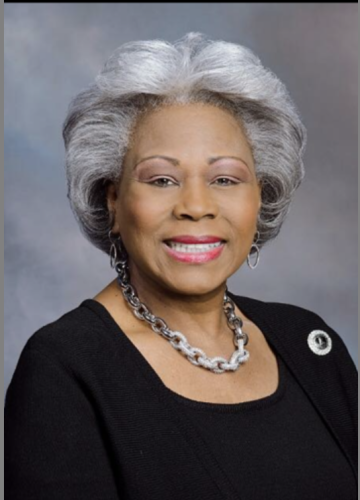
    A professional portrait of an older woman with gray hair styled in a wavy fashion, wearing a black top and a large silver chain necklace. She is smiling and facing the camera.
    Senator Louise Lucas, president pro tempore of the state Senate.

    by James C. Sherlock

    This authorโ€™s unbroken experience over many years has been that majorities in the General Assembly have sought to protect the healthcare industry from competition (COPN) and leave it alone to operate as it sees fit. They have not wanted oversight because many of their largest donors and most influential constituents in the healthcare business have not.ย It has proven both embarrassing and enraging to watch.

    Their constituents who are not in the business have had no idea how much danger that has put them in.

    Over the authorโ€™s 15 years of investigative reporting on healthcare in Virginia, it has proven difficult to build and maintain a consistent, integrated picture of state government oversight of program integrity. That traces to the fact that healthcare program integrity has not in that time been consistent, well-funded, or integrated in Virginia. Yesterdayโ€™s headlines about issues in Portsmouth are the tip of the iceberg. We need to do much better.

    Key pieces of the puzzle include:

    1. Who and how many in the Virginia government are responsible for overseeing government healthcare programs?
    2. If and how they exercise that responsibility;
    3. Their complaint, investigation, and reporting mechanisms;ย 
    4. Their various authorities and responsibilities to sanction errors and fraud; andย 
    5. The level of internal coordination within the Virginia government of those authorities, responsibilities, and actions.

    All five change regularly, driven by both federal and state decisions, and program integrity oversight hasn’t worked well in Virginia yet. Websterโ€™s defines a system as “a regularly interacting or interdependent group of items forming a unified whole.โ€ As defined there, Virginia has had no healthcare oversight system. There has been no “unified wholeโ€.

    Some of that is Virginiaโ€™s fault, some not. Weโ€™ll look.

    (more…)

  • Dominion’s Fantasy PIPP Application Should Be Rejected or Resubmitted

    by Steve Haner

    Dominion Energy Virginia has asked the State Corporation Commission (SCC) to allow it to begin collecting the cost of a low-income energy subsidy program, adding a small monthly charge to all its customers.ย  The application should immediately be dismissed because it fails to recognize how the 2026 General Assembly expanded the program.

    At the very least, the SCC should direct the utility to amend its application to reflect the legislative changes that go into effect next January 1.ย  The participation and ultimate cost of the program are going to expand rapidly under House Bill 884.ย  The monthly charge Dominion has applied for will not even come close to paying for it.

    The program is the Percentage of Income Payment Program, or PIPP, discussed often on Baconโ€™s Rebellion since the 2020 Virginia Clean Economy Act created it. ย It caps the monthly electric bills of eligible participants at ten percent of their income, with the balance paid by increasing the bills of everybody else.ย  The money also covers past due bills in the PIPP households.

    The utility is also dealing with several other major cost increases expected this year โ€“ a much higher fuel factor charge, and the need to start collecting a carbon tax from its ratepayers โ€“ so perhaps it had reason to low-ball this third bill addition.ย  It only asked to add 16 cents to that illustrative 1,000 kilowatt hour monthly bill so often discussed.

    That is estimated to produce about $14 million in PIPP revenue for the 12 months starting November 1.ย  But the 2026 legislation, signed by Governor Abigail Spanberger (D), allows Dominion to expend up to $100 million annually on subsidies and administrative costs, if needed.ย  That is likely to be exactly what Dominion will need to collect.ย 

    (more…)


  • Meet the Soros-Funded Prosecutor Taking Soft-on-Crime to a New Level

    Fairfax County Commonwealth Attorney Steve Descano could have saved Stephanie Minter by simply doing his job.

    A man in a suit and tie is smiling and shrugging his shoulders on a city sidewalk, while a masked figure appears to be threatening an elderly woman in a coat nearby.
    AI-generated image by Grok.

    by Drew DiMeglio

    Sierra Leone national Abdul Jalloh, 32, has been arrested more than 30 times in Fairfax County, Virginia. From five malicious wounding cases in a two-year span to additional assault, battery, and theft-related offenses, Jalloh racked up quite the rap sheet between his initial capture by immigration officials in 2018 and his most recent arrest in February. Yet somehow, the list still wasnโ€™t long enough for Fairfax County Commonwealth Attorney Steve Descano, who dismissed the violent charges in each case. 

    The consequences: Jalloh was released to the streets, where he allegedly went on to stab Stephanie Minter, a Fairfax-born single mother, to death earlier this year.

    The Fairfax County Police Department had warned Descanoโ€™s office that Jalloh posed a danger to the community. The attorneyโ€™s office responded with silence.

    The egregious leniency Jalloh received was not a fluke. In fact, it was by design.

    Descanoโ€™s website proudly featured the following statement until recent, interestingly timed edits: โ€œIf two people commit the same crime, but only oneโ€™s punishment includes deportation, thatโ€™s a perversion of justice and not a reflection of the values of Fairfax County.โ€ 

    How can that be? The two people did not commit the same crime if one entered the country illegally and the other did notโ€”that is, unless you think illegal immigration is not a crime. 

    (more…)

  • FBI Targets State Sen. Louise Lucas

    A woman with light-colored hair, wearing a green blazer, speaking into a microphone.
    “I wake up every morning with a fight in my heart.” Louise Lucas at redistricting town hall.

    by Kerry Dougherty

    Democrat Louise Lucas has been the queen of machine politics in Portsmouth for decades. Graceless in victory, venomous in defeat, relentlessly partisan, full of braggadocio and vulgarities, Lucas has prospered while the city she represents has become increasingly dysfunctional.

    Casino gambling and weed were what she offered the people. Not only are they businesses that prey on the poor, but both lend themselves to certain business irregularities.

    So when news broke Wednesday morning that the FBI and DEA were raiding Lucasโ€™ district office, her cannabis business and reportedly her Medicaid waiver services center, no one in the commonwealth who has watched Lucas in action was shocked.

    Some knee-jerk Democrats tried to paint this as a Trump administration vendetta resulting from the recent redistricting referendum, but The New York Times quickly reported that that these raids were part of a sweeping fraud and public corruption investigation that began three years ago, during the Biden administration.

    Just how serious did the suspected fraud have to be for Bidenโ€™s politicized DOJ to investigate a Democrat?

    The Washington Post reported, The specifics of the probe remain unclear, though the officials, who spoke on the condition of anonymity to discuss details of the investigation, said it involved allegations of bribery related to the cannabis dispensary. One of those officials said the investigation began during the Biden administration.

    Once Trump is taken out of the equation, Lucasโ€™ allies will inevitably pivot and claim the investigation is racially motivated.

    Let them. The search warrants were signed by a federal judge. Ten separate locations were reportedly raided yesterday.

    While the media is focusing on Lucasโ€™ cannabis business, her bigger problem may be with Lucas Lodge LLC her Medicaid waiver service for the disabled. Investigative reporter Jim Sherlock has been reporting on widespread corruption in Virginiaโ€™s nursing home and home health industry on baconsrebellion.com. We plan to run his series beginning this weekend. Continue reading.


  • News Bulletin – FBI at Lucas Lodge

    by James C. Sherlock

    This author was just contacted by a local TV station, which notified him that the FBI is currently executing a search warrant at Lucas Lodge in Portsmouth.  L. Louise Lucas, President Pro Tempore of the Virginia Senate and Chair of the Senate Finance and Appropriations Committee, is the CEO of Lucas Lodge.


    For anyone wanting to know the background of the Lucas Lodge story, read Jim Sherlock’s dogged reporting on Bacon’s Rebellion. — JAB

    Part 1: Betrayal

    Part 2: The Virginia General Assembly

    Part 3: Out-of-Control Programs

    Part 4: Portsmouth

    Part 5: Lucas Lodge LLC

    The Virginia Senate’s Louise Lucas Dilemma

    For broader context, here’s a list of Sherlock’s coverage of the nursing home industry and Medicaid fraud generally. The Lucas Lodge story is the tip of the iceberg of what warrants public attention.


  • Virginia’s “Fitness Tax” Was Never Really About Gyms

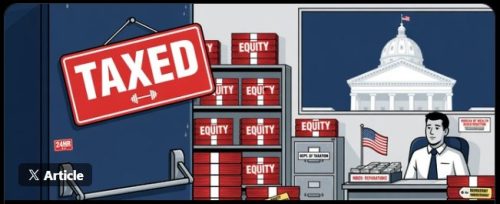
    It was about expanding government taxation to fund equity-based redistribution in Virginia schools.

    An illustration of a room with a sign labeled 'TAXED,' featuring stacks of boxes labeled 'EQUITY' and a person sitting at a desk. In the background, a government building with a flag is visible.

    Loudoun County resident Scott Mineo is doing great work as a citizen journalist. You can read his X posts under the name of “A Guy on X Striving to Be the Virginia Change Agent” @VaChangeAgent. He’s not a journalist, but he does love to dig into documents. And there’s a lot to probe in the avalanche of bills submitted to the General Assembly each year. Not all pass — those he profiles below didn’t — but they do reveal how the rising generation of leftist legislators hopes to advance the “equity” agenda. — JAB


    Most Virginians heard the headlines. โ€œDemocrats want to tax gym memberships.โ€ But after digging through HB978, HB900, SB730, committee records, fiscal language, and revenue allocation formulas, something much larger begins to emerge:

    The proposed โ€œfitness taxโ€ was not an isolated policy idea.

    It was part of a sweeping attempt to permanently expand Virginiaโ€™s taxation system into the modern service economy โ€” and redirect a massive portion of the new revenue toward equity-based education funding structures across the Commonwealth.

    The gym tax was simply the politically visible tip of the spear. The real story was buried much deeper in the legislation. And most Virginians never saw it.

    Continue reading Scott’s post.


  • In the Business of Health Care Fraud, Virginia is Minnesota

    In the Business of Health Care Fraud, Virginia is Minnesota

    by James C. Sherlock

    Health care fraudsters are often treated by Virginia elected officials in the same way moonshiners were in this state, as local heroes pursued only by the feds.ย Many prefer not to interrupt the product flow.ย They simply want a taste from the jar.

    Dick Hall-Sizemore, a dedicated contributor to BR and a good man, wrote in a comment on this authorโ€™s article on restructuring Medicaid: โ€œHaving that much money at stake should be an incentive to go after fraud.ย Even a relatively small reduction in fraud can amount to big bucks.โ€ ย 

    He is exactly right.ย But “should be โ€œis a plea, not an observation. ย 

    Dick’s goals cannot be fully realized in Virginia and other states as long as elected officials treat Medicare and Medicaid as found money.ย With a ton of money at stake that is mostly federal, too many state politicians continue to view the fraudsters as harmless and motivated donors rather than as criminals. But the outcome of the worst frauds is the destruction of the lives and the premature and suspicious deaths of Virginians who cannot help themselves. Corrupt public officials have been around as long as governments themselves.ย The majority of Virginia elected officials at the state and municipal levels are on the take. Bribery is legalized here through unlimited campaign donations at both the state and local levels.

    Members, the Governor, and the Attorney General, in January of this year, accepted campaign donations from those who have long been committing fraud in plain sight. Some of the most powerful members of our legislature treat healthcare fraud as a means to funnel money into the โ€œcommunities.โ€ One senior member has been identified by state inspection results as violating state laws and regulations. There is a word for that.

    With $20B in Medicaid funds and $24B from Medicare flowing into Virginiansโ€™ pockets every year, medical services fraud has become a major industry in the state. It is stolen for the same reason Willy Sutton robbed banks. Federal estimates put annual healthcare fraud nationwide at over $50 billion, which would make Virginiaโ€™s share over $1 billion a year. Bet the over. In Virginia, this authorโ€™s years of research and reporting show that $1B a year appears to be a major underestimate of the take from fraud in the nursing home industry alone.

    A recent headline shows law enforcement chipping away at fraud. The case recovered $10 million that had been stolen over a six-year period.ย It is easy to see that a joint federal-state investigation and prosecution at that level likely costs more than the recovery.ย But this author applauds it nonetheless.ย  ย 

    The biggest problem is with the regulators. ย The General Assembly hobbles them, but they have not, in 60 years, used the authority they do possess to stop fraud. ย This author tends to lay that at the feet of the political appointees who make the decisions, not the career staff.

    (more…)


  • Just What Fairfax Schools Need: More PhDs


  • Fuel Price Spike Hits Your Dominion Bill Next. Pow!

    by Steve Haner

    The typical Dominion Energy Virginia electric bill could rise another $22 this summer to cover the rising cost of the fuel it uses and the cost of its purchased power, according to the companyโ€™s latest filing on its fuel charge with the State Corporation Commission.

    The utilityโ€™s costs of fuel and purchased power are collected in a direct pass-through charge designated Rider A on bills, and for residential consumers it is one of the charges still visible on their monthly invoice. Right now, a consumer using 1,000 kilowatt hours per month is paying $29.68 for the current fuel charge and another $2.91 to slowly pay off the fuel cost spike that resulted from the war in Ukraine.

    Dominionโ€™s application projects its fuel costs for the 12 months beginning July 1 as $2.7 billion and seeks recovery of over $1 billion for the costs it did not anticipate during this current 12-month period. If collected all at once starting July 1 the charge for 1,000 kwh would reach $51.47 month, plus the $3 bucks in deferred costs.

    It wasnโ€™t that long ago that $50 a month would cover the whole electric bill in many households. At the beginning of 2026 here in Henrico a 1,000-kwh residential bill totaled $171.51, including the local taxes. The full fuel cost would be almost a 13 percent increase.

    It has been a busy time over at the SCC with Dominion filings. The only newspaper that even pretends to cover the SCC, the Richmond Times-Dispatch, chose to ignore the fuel filing and instead wrote this week about an SCC decision on solar customers who use net metering. Thatโ€™s about 65,000 customers. All 2.7 million Dominion customers care about the fuel charge, which is often an even larger portion of an industrial customer bill. 

    The media in Virginia is also still ignoring the flashing red warning light about the coming costs of compliance with the Regional Greenhouse Gas Initiative. The futures market price that was the basis of this Baconโ€™s Rebellion post, $41 per ton, started this morning instead at $52 per ton.

    (more…)

  • Adversarial Government Works Best

    A graphical representation contrasting the left and right perspectives in governance, depicting various stakeholders in a tug-of-war scenario, symbolizing accountability, social justice, and the balance of power in a democratic system.
    Image credit: ChatGPT

    by Chap Petersen

    A couple years ago, I wrote an essay entitled: “Single-Party Government Didn’t Work in the Soviet Union, and It’s Not Working in Fairfax County Either.”

    My goal was to point out the parallels in failing one-party systems.

    But frankly the points were too obvious. So I didn’t bother publishing it. Maybe I should have.

    The last couple weeks have been depressing. On April 21, Virginia voters by a narrow margin (3 points) approved a redistricting map which will create a “10-1” map for Democrats, by intentionally diluting the votes of rural white voters.

    A week later, the U.S. Supreme Court ruled that the 1989 Voting Rights Act violated the “Equal Protection” clause of the Fourteenth Amendment by requiring states to create “minority-majority” districts, whenever possible.

    The logic of the Supreme Court’s majority was unassailable: classifying voters based on race is inherently fraudulent, if not impossible in today’s America. (The  modern reality of mixed families defies the precepts of racial classification). The reality is a bit more complicated, however.

    With the striking down of the race-based districts, there is now an open invitation for Republican legislatures to redraw their maps, just like Virginia, and wipe out any Democratic-leaning seats, both in Congress and in state legislatures. It would make short-term partisan sense.

    But it is a terrible idea.

    (more…)

  • A Solution to the Threats to Medicaid in Virginia

    A Solution to the Threats to Medicaid in Virginia

    by James C. Sherlock

    Medicaid fraud is not a new issue, but it has exploded into the public consciousness as the Trump administration has taken action against it. Virtually every critique of Medicaid fraud, from both sides of the debate over how pervasive and costly it is and what to do about it, has been written from a Washington perspective. This article will offer a Virginia perspective. It is not a pretty one.

    As of early 2025, more than 1.7 million people are enrolled in Virginia Medicaid, including over 595,000 covered under the expansion guidelines. Mental health, substance use, home care, nursing home services, and support services for the intellectually and developmentally disabled are major sources of fraud nationwide and in Virginia.

    Medicaid, established in 1965, is a joint federal and state program fundamental to the health of the poor and disabled. It is rife with fraud because states that manage it have perverse incentives to police it, driven by the predominance of federal funding.

    Only a fundamental change in the funding mechanism will drive significant reductions in Medicaid fraud.

    (more…)


  • The Technological Republic and the Re-Industrialization of America

    Here’s a fact: the data center buildout is going to re-industrialize America. The sooner we embrace this reality; the sooner we reap the rewards.

    by Shaun Kenney

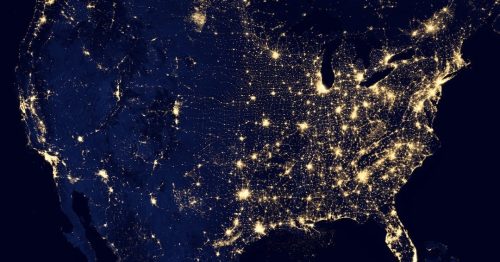
    A satellite image of the United States at night, showcasing illuminated city lights against a dark background.

    Data centers have arrived and itโ€™s about time they did โ€” and itโ€™s your fault, too.

    Well, not entirely your fault โ€” but if youโ€™re watching Netflix and Amazon Prime, using AI tools to generate images or research or God forbid grade term papers, youโ€™re in on the joke.

    โ€ฆand they are everywhere.

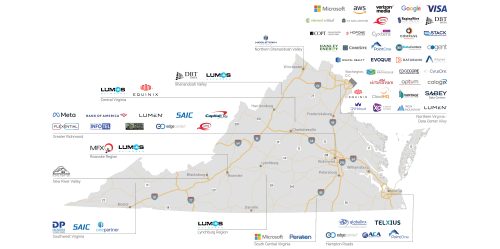
    Map of Virginia showing locations of various technology and telecommunications companies, including logos of firms such as Microsoft, Visa, and Equinix.
    Gratuitously stolen from The Virginia Mercury. source: VDEP

    Of course, organizations such as the Piedmont Environmental Council naturally takes their place in the constellation of groups that have questions, though it is difficult to tell if they oppose data centers per se or whether they oppose the present means by which data centers are changing the economy.

    One thing seems to be in agreement โ€” the internet of things is here to stay, the energy problem isnโ€™t as difficult to resolve as one might think, and the use of cool tech to cool the data centers is already here โ€” even if the ubiquity of small modular reactors (SMRs) are at best a decade away.

    Yet even if we wanted to go back to newspapers and the Res Publica Litterarum โ€” and I certainly would be in line to do so โ€” the fact of the matter is that artificial intelligence is going to be as serious a jump in technology as the automobile, the early internet, air conditioning, the steam engine, rural electrification, cell phone towers, public sanitation, and movable type.

    Itโ€™s happening โ€” the match will not be postponed.

    (more…)

  • Jeanine’s Memes

    A humorous depiction of three men standing together, with a caption discussing Alabama's student scores in math and English being higher than those in New York and California.

    View more memes at The Bull Elephant.