
by James C. Sherlock
This author’s unbroken experience over many years has been that majorities in the General Assembly have sought to protect the healthcare industry from competition (COPN) and leave it alone to operate as it sees fit. They have not wanted oversight because many of their largest donors and most influential constituents in the healthcare business have not. It has proven both embarrassing and enraging to watch.
Their constituents who are not in the business have had no idea how much danger that has put them in.
Over the author’s 15 years of investigative reporting on healthcare in Virginia, it has proven difficult to build and maintain a consistent, integrated picture of state government oversight of program integrity. That traces to the fact that healthcare program integrity has not in that time been consistent, well-funded, or integrated in Virginia. Yesterday’s headlines about issues in Portsmouth are the tip of the iceberg. We need to do much better.
Key pieces of the puzzle include:
- Who and how many in the Virginia government are responsible for overseeing government healthcare programs?
- If and how they exercise that responsibility;
- Their complaint, investigation, and reporting mechanisms;
- Their various authorities and responsibilities to sanction errors and fraud; and
- The level of internal coordination within the Virginia government of those authorities, responsibilities, and actions.
All five change regularly, driven by both federal and state decisions, and program integrity oversight hasn’t worked well in Virginia yet. Webster’s defines a system as “a regularly interacting or interdependent group of items forming a unified whole.” As defined there, Virginia has had no healthcare oversight system. There has been no “unified whole”.
Some of that is Virginia’s fault, some not. We’ll look.
Virginia laws, sometimes in strict accordance with federal law, assign those roles and responsibilities to multiple Executive Branch departments, including the Attorney General. Most of the departments with state duties and authorities in healthcare also have statutory federal responsibilities.
But program integrity has been hampered by a single persistent problem over the years. Virginia laws, regulations, and funding for that purpose have virtually never exceeded the minimum federal requirements for participation in Medicare and Medicaid.
Perhaps the last time the General Assembly legislated its own idea was in 2020, when it changed Virginia law to give the Office of the State Inspector General (OSIG) oversight of DBHDS and its facilities. That was not the result of a federal law, and the resulting fiasco will be the subject of its own article in this series.
But it is most often the General Assembly’s funding, or lack thereof, that determines the Executive Branch’s ability to carry out its duties. For decades, it has done the bidding of the state’s healthcare industry. It just happened again in the 2026 session.
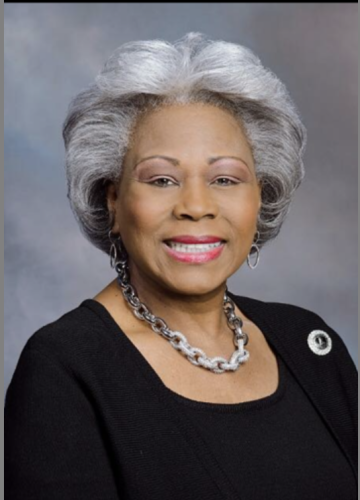
The Virginia House Appropriations Committee tabled a budget item from the administration. It requested five additional staff members for the Department of Behavioral Health and Disability Services (DBHDS) to carry out its responsibility to refer cases for license denial to a court in compliance with the Administrative Process Act. It will be “studied.” The bill never made it to the Senate Finance and Appropriations Committee that Louise Lucas chairs. She does, however, sit on the Joint Commission on Healthcare, to which the study was directed to determine whether providers like Lucas Lodge will be more vulnerable to license denial.
Perhaps she will recuse herself.
There have also been disconnects among the state agencies. Virginia law only lightly addresses how state and federal responsibilities will be coordinated among state actors. But most of the Virginia oversight agencies work for the Secretary of Health and Human Resources. In the last administration, that office worked very hard to improve program integrity and made some headway after the Colonial Heights scandal.
The new Secretary has a good reputation. We hope he keeps pressing.
Leave a Reply
You must be logged in to post a comment.