• Leadership by Example Has Broken Down at VMI

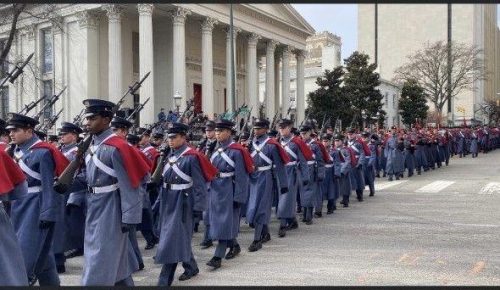
    A formation of cadets in military uniforms marching in a parade with rifles, showcasing the traditional military presence and discipline at the Virginia Military Institute.
    Photo credit: The Cadet

    by George Mayforth

    My recent visit to the Institute during Parents Weekendโ€”an occasion traditionally marked by pride in the Corps and confidence in the VMI systemโ€”left me with observations that must be addressed openly and honestly. These concerns do not arise from distant rumor or nostalgia; they come directly from what I witnessed on Post. And while the current administration has begun tightening standards, the conditions I observed demonstrate that the Institute faces deeper cultural issues that cannot be ignored. The issues I witnessed suggest that much more must be doneโ€”and done with urgencyโ€”if VMI is to remain true to its mission and its standards.

    Physical Fitness and Military Bearing: A Visible Decline

    The most visible and immediate concern was the overall lack of athletic conditioning across the Corpsโ€”an issue not limited to the Rat Line but evident at every class level. This is not simply about cosmetic appearance; physical readiness is a foundational pillar of a military college and central to the development of citizen-soldiers.

    (more…)

  • The Empty Bus to Nowhere

    Why Virginia’s rural transit subsidies need a reality check

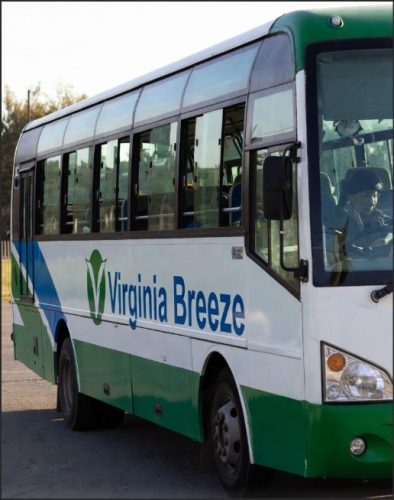
    A Virginia Breeze public transit bus parked, featuring a green and white design with the 'Virginia Breeze' logo.
    AI-generated image of empty bus: Grok

    by J.D. Wong

    If you live in one of Virginiaโ€™s picturesque rural counties, you may have seen a familiar, yet puzzling sight: a large, brightly branded public bus rolling down a country road or regional highway, carrying nothing but a driver and a volume of air.

    This phantom fleet is largely funded by the Federal Transit Administrationโ€™s Section 5311 program, a well-meaning but economically obsolete initiative that pumps millions of tax dollars into “Formula Grants for Rural Areas.” Administered in the Commonwealth by the Department of Rail and Public Transportation (DRPT), these subsidies are designed to provide mobility to rural residents. But from an economic perspective, we must ask the hard question: Is this a good use of money?

    The answer, increasingly, is no. The Section 5311 program represents a classic government failure.

    Public transit relies on density to be efficient. In urban centers like Arlington or Richmond, a bus can serve dozens of riders per hour, spreading the operating costs across many riders. In rural Virginia, where population density drops to fewer than 50 people per square mile, the economics of fixed-route transit collapse.

    (more…)

  • “They should no longer have police in traffic enforcement.”


  • Busted: GOP in Panic Mode Over Goldman Redistricting Strategy

    by Paul Goldman

    Thank you sir: Mr.ย Emilio Jakseticโ€™s attempt to refute my articleย actually demonstrates the GOP is in a panic over my redistricting strategy. The GOP realizes I have indeed come up with a way to outfox Judge Thomas and his colleagues. Their rationale in the Texas case told Gov.-elect Abigail Spanberger, House Speaker Don Scott, D-Portsmouth, and Senate Majority Leader Scott Surovell, D-Fairfax, their proposed plan is DOA.ย Ironically, the GOP right now will get crushed nationally in 2026 mid-terms no matter how the Supremes try to help them.ย 

    The lengthy response to my article โ€œOutfoxing Judge Thomas: An Alternative Redistricting Strategy for VA Democratsโ€ is well-written. I appreciate the seriousness of Mr. Jakseticโ€™s piece.ย 

    He says, โ€œI will discuss Mr. Goldmanโ€™s proposed strategyโ€ฆย and explain why it is legally flawed.โ€ It is always flattering to have someone write a column in response to your articles. In college, I used to write a political/current events column entitled โ€œGolddust.โ€ This inspired a rival column entitled โ€œGoldrustโ€, likewise billed as a critique of sorts. It proved quite the rivalry. And also ultimately unpersuasive.ย 

    (more…)

  • Jeanine’s Memes

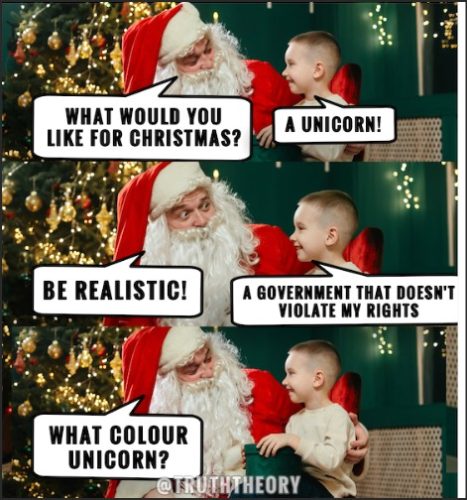
    A humorous comic strip featuring Santa Claus asking a child what they would like for Christmas, followed by a dialogue where the child requests a unicorn and later comments on government rights.

    See more memes at The Bull Elephant


  • Bacon Meme of the Week

    Text graphic with a purple background. The quote reads: 'Don't be so hard on yourself. Nobody could have resisted that last piece of bacon. Nobody.'

  • A Critique of Paul Goldmanโ€™s โ€œOutfoxing Judge Thomasโ€

    Historical document of the Virginia Constitution, detailing the framework for the state's government and legislative authority.
    AI-generated image by Grok

    by Emilio Jaksetic

    On December 5, 2025, Paul Goldmanโ€™s โ€œOutfoxing Judge Thomas: An Alternative Redistricting Strategy for VA Democratsโ€ was posted on Baconโ€™s Rebellion. Mr. Goldman presented a strategy that he claimed could avoid potential legal barriers to efforts by Virginia Democrats to amend the Virginia Constitution to return the redistricting authority to the General Assembly and allow it to change Virginiaโ€™s Congressional Districts before the 2026 elections.

    In this article, I will discuss Mr. Goldmanโ€™s proposed strategy (hereinafter โ€œthe proposed strategyโ€) and explain why it is legally flawed.

    The proposed strategy relies on a combination of three elements:

    (1) reliance on a single passage of Virginia Constitution, Article II, Section 6;

    (2) a claim that the broad, comprehensive nature of the General Assemblyโ€™s legislative power gives it the inherent authority to (a) hold hearings to develop testimony that shows the current Congressional Districts are โ€œunfair,โ€ (b) issue a declaration that the Congressional districts are
    โ€œunfair,โ€ and that the General Assembly has the right and duty to fix the problem; and (c) then โ€œpresent a bill creating the new fair districts meeting Section 6 requirements for Governor Spanbergerโ€™s signature soon after her inaugurationโ€; and

    (3) the claim that โ€œ[b]y precedent, a federal court is therefore obligated to adopt this GA legal position on Section 6 since a Virginia state court would do likewise.โ€

    I will address each element in turn, and explain why these elements fail to provide legal support for the proposed strategy.

    (more…)

  • More Blue on Blue

    Prediction: as Democrats consolidate power in Virginia and relegate Republicans to the sidelines, the party’s internal schisms will come to the fore. (See “Geographic Schism Among Virginia Dems?”) That’s human nature. — JAB


  • In a Toxic Culture, Defining What It Means to Be a Man

    My favorite living sociologist (Edward Banfield passed away in 1999), the University of Virginia’s Brad Wilcox, is perhaps the leading conservative scholar on the sociology of the U.S. family. This tweet links to his review of Scott Galloway’s book, “Notes on Being a Man” in the Wall Street Journal. — JAB


  • Virginia’s Most Conservative City Births Plan to Thwart Abortion Tourism

    Lynchburg is proving that the fight against abortion starts at the local level.

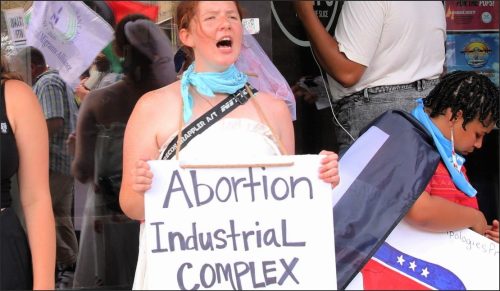
    A protester passionately holding a sign that reads 'Abortion Industrial Complex,' wearing a blue bandana and surrounded by other demonstrators.
    Image credit: Restoration News

    by Hayden Ludwig

    Planned Parenthood boasted earlier this year that “Virginia is the last state in the South without an extreme abortion ban.”

    That’s a campaign consultant’s way of twisting the truth: the Old Dominion has the most liberal abortion laws south of the Potomac. With Democrats soon to take charge of the state government, things will only trend further left in 2026.  

    Virginia Democrats have already announced their goal of codifying the “right to reproductive freedom” in the state constitutionโ€”an amendment Gov.-Elect Abigail Spanberger (D) endorsed for the November 2026 ballot. Experts believe it will pave the way for California-style third-trimester abortions, transforming Virginia into a hotspot for “abortion tourism” from nearby red states.

    Yet conservatives in Lynchburgโ€”the only major city in the commonwealth that voted Republican in 2025โ€”are showing how pro-lifers can fight back through their local government. Their tool of choice: Zoning laws cleverly crafted to limit where and how many abortion clinics may operate inside city limits.

    (more…)

  • Bill Could Release Dangerous Murderers

    by Hans Bader

    Serial killer Kevin McDuff

    A bill introduced in Virginia could lead to the release of dangerous murderers who committed their crime as teenagers. If passed, SB60 would mandate that the Virginia Parole โ€œBoard shall not deny parole for a juvenile offender based on factors outside of his demonstrated ability to change, such as the nature of the offense or any effects resulting from the commission of such offense.โ€

    An inmateโ€™s dangerousness is sometimes shown by โ€œthe nature of the offense,โ€ such as when the inmate is a serial killer, who killed again and again after previously being released from incarceration. Consider Kenneth McDuff, the โ€œbroomstick killer.โ€ At the age of 19, after being paroled, McDuff and an accomplice kidnapped three teenagers. He shot and killed two boys, then killed a girl after raping her and torturing her with burns and a broomstick. Later, after being paroled yet again, he murdered additional women โ€” as many as 15 women in several different states.

    To keep such killings from happening, a parole board needs to take into account โ€œthe nature of the offenseโ€ as one of many factors, in order to avoid releasing such dangerous inmates. But SB60 would keep parole boards from considering that as a factor in their decision in deciding not to release an inmate.

    (more…)

  • UVA’s President Was Right to Resign

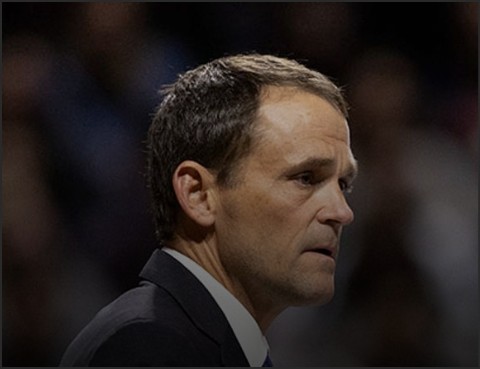
    Close-up profile of a man in a suit, looking thoughtful or contemplative, with a blurred background.
    Jim Ryan

    “Former university head Jim Ryan presided over a potential pattern of civil-rights violations, writes John D. Sailer at the Manhattan Institute — highlighting a fact that has largely been ignored by state Senate leaders intent upon asserting control over the University of Virginia’s Board of Visitors.

    From his article in the City Journal:

    Rather than take responsibility for the fact that his institution had drawn a federal investigation, he conjures a shadowy cabal plotting his ouster. But the only cabal at work was the DEI apparatus that Ryan failed to dismantle.

    Ryan appears unable to concede that the DOJโ€™s concerns were likely justified. Near the end of his public letter, he writes: โ€œToo often, people within the DOJ and on our own Board have implied that if we were following policies that they did not favor, we were somehow doing something illegal. . . . We were committed to following the actual law.โ€

    This assertion is suspect, given his administrationโ€™s embrace of racialist practices. Under his watch in 2020, the UVAโ€™s Racial Equity Task Force implemented aย nearly $1 billionย plan that would, among other things, dramatically strengthen racial preferences inย admissionsย and faculty hiring. According to a 2023ย studyย by the Heritage Foundationโ€™s Jay Greene, UVA had a uniquely massive DEI bureaucracy, with 6.5 DEI personnel for every 100 faculty. It had the second-largest DEI apparatus, proportional to its faculty, of any public university in America.

    Ryanโ€™s record makes it unsurprising that the DOJ would doubt his commitment to correcting problems stemming from DEI at the university.

    Read the whole article.


  • $62 Billion For Grid Batteries is Not a Path to Affordability

    A 550 megawatt hour battery storage facility in California. The pending legislation would mandate over 150 such plants in Virginia.

    By Steve Haner

    The 2026 General Assembly is likely to amend the Virginia Clean Economy Act (VCEA) to greatly expand the construction of utility-scale batteries for our electric grid. Based on the current prices for Virginia battery installations, this may saddle ratepayers with $54 billion in new capital expenses over 20 years.    

    The Commission on Electric Utility Regulation (CEUR) has endorsed a revised version of a bill that passed in the 2025 General Assembly but was vetoed by Governor Glenn Youngkin (R). The senators and delegates on the panel discussed the bill briefly at two meetings last week without anybody even asking what this might cost.   

    The lack of attention to costs on this battery bonanza bill is legislative and media malpractice when the political meme of the day is affordability. But the same thing happened last year as a similar bill rode a railroad track to fast approval.   

    The Virginia Clean Economy Act as passed in 2020 included a demand for battery installations and deemed them โ€œin the public interest.โ€ Appalachian Power was directed to develop 400 megawatts of battery storge by 2045, and Dominion Energy a larger 2,700 megawatts. The assumed technology to be used was batteries of up to four-hour duration, so that was a total for both utilities of up to12,400 megawatt-hours of backup.   

    How many hours the batteries can discharge is the key metric, so the faceplate megawatt value must be multiplied by their claimed duration. What the VCEA is demanding now is about 12.4 gigawatt hours (GWH) of storage. From here on, this discussion will use GWH. A gigawatt hour is a great deal of electricity, the output of a nuclear plant or that natural gas plant Dominion just got approved.  

    (more…)

  • Geographic Schism Among Virginia Dems?

    Louise Lucas, D-Portsmouth, the president pro tempore of the state Senate, goes on to tweet:

    Recently Fairfax commissioned a study with the Weldon Cooper Center at UVA claiming they only get 50 cents back on each tax dollar raised by the Commonwealth. This is false- and is a number derived by only counting money we send the county directly- not services used by all.

    For example they donโ€™t count money spent supporting the Fairfax County Sheriff, Clerk of Court or Commonwealths Attorney. They donโ€™t count the billions spent in support of our colleges and universities that have more students from Fairfax County than anywhere else in Virginia.

    (more…)

  • Do Students Benefit from College Athletics?

    James V. Koch, a former university president, prolific writer about college governance, and huge college sports fan, chats with Jim Bacon about the seismic changes in the college sports landscape. In his new book, “The Economic Impact of Intercollegiate Athletics on Former Students,” Koch explores the pros and cons of college athletics for students and concludes that they are a net negative for graduates as measured by a variety of economic outcomes.

    Lightly edited transcript

    Jim Bacon: Hello, everyone. I’m Jim Bacon, and this is the Oinkonomics Podcast.

    No doubt, some of you have surmised that oinkonomics is a wordplay on my name — Bacon, pigs, oink — and oiko, the Greek word for economics. Although I’m a historian by academic training and a journalist by profession, I’m a great admirer of the economist’s way of thinking. Such economic concepts as alternate opportunity cost, return on investment, and net present value are indispensable for the rational analysis of public policy issues. Today, for the first time on this podcast, I’m actually interviewing a real live economist — Dr. James V. Koch.

    Virginia listeners may recall Jim Koch from his 11-year tenure as president of Old Dominion University. Since retiring from that post in 2001, he has spent the past 24 years as president emeritus doing pretty much what he pleases, which has meant focusing on the economics and governance of higher education in the United States. From his time at ODU, and previously as president of the University of Montana, he has a deep well of hands-on experience to draw from.

    In his latest endeavor, Koch is co-author with Richard J. Cebula and Robert N. Finili of โ€œThe Economic Impact of Intercollegiate Athletics on Former Students.โ€ The book touches upon many issues of interest to anyone concerned about higher education in America today, and we’ll get into some of those questions in the interview. The central question of the book is what impact does athletics have on students’ financial well-being after they graduate?

    As Virginia universities grapple with new rules governing college athletics, effectively turning football and basketball programs into professional farm teams for major league franchises, governing boards at some institutions will have to cough up tens of millions of dollars to pay their athletes. Where will that money come from? And how much of the cost will be passed on to students as athletic fees, And what is the payoff, if any, for the students?

    Jim, welcome to the Oinkonomics podcast. Bring us up to speed on how big-time college athletics is changing, and the kind of choices boards of visitors here in Virginia and elsewhere are faced with.

    (more…)