• Higher-Ed’s Endless Mission Creep

    Neetu Arnold

    by James A. Bacon

    Based on informal observation of Virginia’s public colleges and universities over many years, I have oft lamented “mission creep” as a factor pushing the cost of college attendance ever higher. But I neverย  explored the idea systematically. Fortunately, a new study has done that job for me.

    In “Priced Out: What College Costs America,” Neetu Arnold, a research associate with the National Association of Scholars, explores the factors, many of which I have not seen identified before, responsible for the higher-ed affordability crisis. One important section of her study identifies the surge in non-instructional costs.

    “Modern American colleges and universities no longer think education alone justifies their existence,” writes Arnold, who based her study on data from 50 leading U.S. universities, including the University of Virginia and George Mason University. “They increasingly divert their attention and their expenditures to non-instructional endeavors — and away from their core mission of instruction.” (more…)


  • You Thought Payday Lenders Were Bad? Welcome to Internet Lending.

    by James A. Bacon

    A new law that went into effect this year is designed to protect Virginians against “predatory” short-term loans by limiting what lenders can charge. And in honor of National Consumer Protection Week, Attorney General Mark R. Herring is encouraging Virginians to familiarize themselves with the risks associated with smaller-dollar loans.

    I’m all in favor of educating consumers, and I’m glad to see that the AG’s office is vigilant against fraudulent lending. But I can’t escape the worry that the political class’s do-gooder instinct to “help” poor people by regulating one of the few industry sectors willing to lend them money may do them more harm than good. Regulating payday lenders pushes poor people into the arms of online lenders.

    In a press release today, the AG’s Office reported some interesting numbers regarding the scope of payday lending. Citing data from the 2019 Annual Report of the Bureau of Financial Institutions, the press release notes that 83,107 Virginians took out 268,097 payday loans totaling nearly $110 million with an average annual percentage rate of 253%. (more…)


  • The Soul of the University – Still Thinking

    by James C. Sherlock

    The battle for the soul of the University of Virginia is on writes Jim Bacon, like me an alumnus. There is apparently only one fighter on the side of freedom of expression, reasoned debate and the maintenance of order as key foundations of academic freedom. That is the Board.

    University President Ryan has shown himself to be conflicted about those foundations. He has found himself frozen in several sets of headlights trying to maintain any of the three, much less all of them.

    The left has replaced reason in education with “social-emotional learning.โ€ Letโ€™s hear from the “Collaborative for Academic, Social, and Emotional Learning (CASEL)โ€ (Did you doubt there would be such an organization?):

    “Social and emotional learning (SEL) is an integral part of education and human development. SEL is the process through which all young people and adults acquire and apply the knowledge, skills, and attitudes to develop healthy identities, manage emotions and achieve personal and collective goals, feel and show empathy for others, establish and maintain supportive relationships, and make responsible and caring decisions.โ€

    (more…)


  • Coal Counties Make Bid for Data Centers

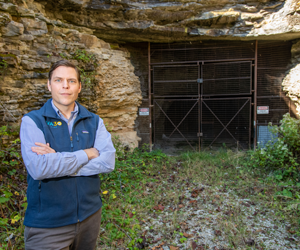
    Coal mines as source of geothermal cooling. Shown here: Will Payne, director of InvestSWVA. Credit: Virginia Business.

    by James A. Bacon

    Six localities in far Southwest Virginia have agreed to offer big tax breaks in a bid to recruit more data centers to the economically depressed region. The Project Oasis initiative will dangle the lower taxes as well as geothermal cooling from old coal mines as enticements that no other region can match.

    The localities in the Lonesome Pine Regional Industrial Facilities Authority — Dickenson, Lee, Scott, and Wise counties and the City of Norton — have agreed to tax data-center equipment at a rate of $0.24 per $100, almost half the rate of the $.40 rate, the previous lowest rate in the state, that enabled Henrico County to attract a $1.75 billion Facebook data center.

    As a kicker, Project Oasis offers industrial sites located near former coal mines filled with water naturally cooled to a temperature of 51 degrees. Energy consumption for cooling is a major expense for data centers. Project Oasis claims that geothermal cooling could save data centers more than $1 million annually in reduced electric costs and municipal water purchases. (more…)


  • Sign Standards for UVa’s Lawn Upheld

    No longer allowed

    by James A. Bacon

    No longer will it be permissible for residents of the University of Virginia’s rooms on the Law to post large signs on their doors proclaiming, “F— UVA,” as a Lawn resident did last semester. Under new policies issued by the University administration, Lawn residents will have to confine their profane proclamations to within the borders of two message boards, reports the Cavalier Daily.

    In a collective statement to the student newspaper, several Law residents criticized the new rules as prejudicial against students of color. The restriction, said the statement, will result in “increased surveillance,” which in turn will “inherently harm and endanger the most marginalized and vulnerable students in this space.”

    โ€œThis policy displays the extent to which the University is selective about who can exercise free speech and the content of that expression. Evidently, BIPOC students and allies cannot be critical of the University while simultaneously living on the Lawn.โ€ (more…)


  • Virginia’s Progressive Assembly Turns to Taxes

    by Steve Haner

    First published this morning by the Thomas Jefferson Institute for Public Policy.ย 

    The COVID-19 recession barely dented Virginiaโ€™s state budget. The massive spending growth adopted in the pre-COVID budget a year ago is largely back on track. Yet some legislators think the time is ripe to hunt for more revenue by re-writing the stateโ€™s tax code.

    The two-year $48.2 billion General Fund revenue estimate endorsed by the General Assembly Saturday is less than $200 million lower than the comparable figure a year ago, a rounding error in a $143 billion overall budget. There is every reason to believe the current tax estimates will prove too low as another round of federal stimulus revs the economy in coming months.ย  (more…)


  • Enough

    by Kerry Dougherty

    Oh look.

    Weโ€™re coming up on the one-year anniversary of 15 Days to Slow the Spread. Remember that? The big lie that if we simply shut down the country for just two weeks, it would stop the coronavirus from rampaging coast to coast and allow hospitals prepare for the onslaught.

    They warned us that if we didnโ€™t take a two-week timeout weโ€™d turn into Italy.

    And we believed them.

    Well, 15 days didnโ€™t slow the spread. And neither did 10 months. Meanwhile, we never turned into Italy and hospital staffs had time to make cute TikTok videos.

    In fact, is was January 2021 (and December in some places) that set records for cases from coast to coast. That was also true internationally, even in countries that donโ€™t celebrate Christmas. It seemed to make no difference if the states had mask mandates or lockdowns.

    The pattern was eerily similar across much of the world. Almost as if mitigation didnโ€™t matter. (more…)


  • What Do Students Really Value in a College?

    by James A. Bacon

    An ongoing debate about the economics of higher education is the degree to which students value their education as an investment (a way to get a better job and generate higher income) and to which they view it as a consumer good (four years of parties and good times). The question is of more than academic interest because it gets to the heart of affordability and access. Acting on the conviction that students value the non-academic side of the college experience, higher ed institutions invest in athletic programs, swanky student unions, and other amenities to aid in student recruitment. But these programs and amenities have costs, which are reflected in higher tuition, fees, and charges for room and board — which discourage recruitment.

    A new study, based on the preferences of University of Arizona students, has put some numbers on college students’ Willingness to Pay (WTP) for college-related activities before and after the COVID-19 epidemic. The authors found students willing to pay only a small premium — about 4.2% of average net costs — for in-person instruction as opposed to a remote format. Students place a bigger premium on on-campus social activities — about 8.1% of the average annual net cost of attendance. (more…)


  • Private-Equity Ownership and Nursing Home Quality

    by James A. Bacon

    Several days ago, Carol J. Bova published data showing that 50 of the 101 Virginia nursing-home facilities rated as below average in the latest Medicare ratings belong to privately owned firms “When is the Department of Health going to enforce basic standards,” she asked in conclusion. “And when are our legislators going to appropriate enough for inspectors to do the job?”

    In the comments, I cautioned about jumping to conclusions about equating for-profit nursing home chains with lower quality. In particular, I wondered if for-profit firms were more likely to acquire nursing homes funded by Medicaid, which chronically underpays its vendors.

    Now comes a new study that suggests that Private Equity (PE) ownership of nursing homes is adverse to patient health. “Our estimates show that PE ownership increases the short-term mortality of Medicare patients by 10%, implying 20,150 lives lost due to PE ownership over our twelve-year sample period,” write Atul Gupta and the co-authors of “Does Private Equity Investment in Healthcare benefit Patients? Evidence from Nursing Homes.”

    The lost lives are accompanied by declines in other measures of patient well-being, such as lower mobility, while taxpayer spending per patient episode increases by 11%, the authors write. Operational changes at the nursing homes that help explain these effects include declines in nursing staff and reduced compliance with standards. (more…)


  • 2019-20 School Year Attendance

    by John Butcher

    Itโ€™s Spring! Theย Narcissiย are standing tall and promising blossoms. Theย Croci are in flower. Data are sprouting in last yearโ€™s Superintendentโ€™s Annual Report.

    Table 8, โ€œNumber of Days Taught, ADA, ADM,โ€ gives us an early measure of the impact of the pandemic-related shutdowns on school attendance.

    The City of Richmondโ€™s end-of-year count of days taught was 120, just two-thirds of the statutory minimum. Richmondโ€™s total was one day more than those of Hampton and Newport News, three days more than Norfolk, and 6.6 days short of the division average.

    (more…)


  • “Hard” and “Soft” Threats to Academic Freedom

    by James A. Bacon

    Dismissals and de-platforming of conservatives in academia have gotten a fair amount of media attention, but they are only the most outrageous and visible of the threats to intellectual diversity on college campuses. In a new study for the Center for the Study of Partisanship and Ideology, Eric Kaufman, a professor of politics at the University of London, finds that lesser forms of discrimination against conservatives and other intellectual minorities, such as gender-critical feminists, occur outside of public view. (more…)


  • Politicians Get the Gold Mine, the Middle Class Gets the Shaft

    by James A. Bacon

    Thousands have Virginians have fallen behind on their electric bill payments as they struggle through the COVID-19 epidemic. The General Assembly wants to help. So, in the budget compromise reached by the House of Delegates and the state Senate, Dominion Energy will be directed to forgive customers’ unpaid balances that were more than 30 days in arrears as of Dec. 31, 2020.

    Who will pay for this? Not the Commonwealth of Virginia. The state may be awash in $2.4 billion in federal COVID relief funds plus $410 million in tax revenue over forecasts this year, but, no, legislators want to spend every dime.

    And not Dominion Energy. The budget bill reaffirms the utility’s right to use the bill-forgiveness costs to offset earnings from 2017 to 2020 in the State Corporation Commission’s next review of its profits, reports The Virginia Mercury.

    You, dear ratepayer, will pay the cost (unless you’re one of those who have fallen behind in your payments). With apologies to Jerry Reed, the politicians get the gold mine, and Virginia’s middle class gets the shaft. (more…)


  • Scrap Art Genius Sam Hundley Debuts First Book

    Sam Hundley, author/illustrator of “Gifts of the Magpie,” photographed on the Chesapeake Bay beach in Ocean View, Norfolk, VA, Oct. 17, 2019. Photo by Randall Greenwell.

    by Kerry Dougherty

    Remember when The Virginian-Pilot was a thing of beauty?

    When the graphics that accompanied the hard-hitting news stories were so dazzling that they were what grabbed your attention?

    Remember when newspapers around the country imitated what we were doing in Norfolk?

    There was one man behind much of that style and sizzle: Sam Hundley.

    For decades he was the newspaperโ€™s unrivaled artistic king. The guy who wore out the carpet at newspaper awards ceremonies as he shyly marched up to the stage over and over again, collecting prizes while the rest of us just sat there.

    In addition to the countless Virginia Press Association awards hoovered up by all of The Pilotโ€™s talented designers, Sam won gold awards from the Society For News Design International. He illustrated the October 2011 cover of National Geographic Magazine and the 2019 album cover for the Meat Puppetsโ€™ โ€œDusty Notes.โ€ (more…)


  • Virginia Ranks 40th of 53 in Nursing Home Ratings

    by Carol J. Bova

    One of three nursing homes receiving Medicare payments in Virginia (35.3%) scored below average or much below average in the latest Medicare ratings found in the new Care Compare website.

    On February 1, 2021, the Centers for Medicare and Medicaid (CMS) updated its ratings report for nursing homes in the United States, District of Columbia, Puerto Rico and Guam. Compared to the ratings before the COVID-19 pandemic, Virginia has reduced the number of facilities with the low 1- and 2-star ratings. Still, Virginia nursing homes ranked 40th of 53 for below and much below average overall quality.

    Nursing Home Ratings by State

    Who owns these nursing homes? (more…)


  • Racial Preferences for Minorities in COVID Vaccinations?

    By Hans Bader

    Virginia is apparently giving preference to certain clusters of minority residents in access to the COVID-19 vaccine, as Judicial Watch notes:

    In the next few weeks, the state will give preference to black and Latino residents 65 and over while much older white seniors, many in their 80s, cannot secure an appointment to get inoculated. The plan was announced a few days ago by Dr. Danny Avula, who was appointed by Governor Ralph Northam this year to be the stateโ€™s vaccine coordinator…. In recent weeks, [a news] article says, roughly 10,000 vaccines were channeled specifically toward trusted clinics in neighborhoods with older black residents… the reporter cites โ€œsome expertsโ€ that have raised concern over age-based vaccine prioritization because it fails to account for lower expectancies among black and Latino communities, though it does concede that 75% of Virginiaโ€™s deaths are among those over 70….

    (more…)