• Warren Buffett on Taxing the Rich

    Warren Buffett

    In response to the post composed by Peter the Menshevik, er, mensch, below, I have dusted off and updated an old column that languished unpublished in my files. JAB

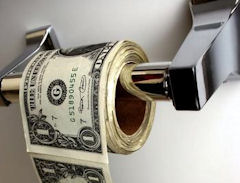
    When President Obama justifies raising taxes on โ€œthe richโ€ โ€“ billionaires, millionaires and anyone making more than $250,000 a year โ€“ he cites as a moral authority no less than the second richest man in America. โ€œWarren Buffett doesnโ€™t need another tax cut,โ€ the president said earlier this year. โ€œNot if we have to pay for it by making seniors pay more for Medicare. Or by cutting kids from Head Start. Or by taking away college scholarships that I wouldnโ€™t be here without. โ€ฆ And I believe that most wealthy Americans would agree with me.โ€

    Setting aside the fact that no one is talking about giving Warren Buffett a tax cut โ€“ it is a rhetorical tic of the president to equate not raising taxes with actually cutting them — let us focus a moment upon the idea of Buffett as moral exemplar.

    In an interview with ABC last fall, Buffett said that rich people should pay more in taxes and that Bush-era tax cuts for top earners should be allowed to expire. โ€œI think that people at the high end โ€“ people like myself โ€“ should be paying a lot more in taxes.โ€

    The oracle of Omaha has been sounding the same theme for years. Speaking at a $4,600-a-seat fundraiser for Senator Hillary Clinton in 2007, he famously criticized the U.S. tax system for allowing him to pay a lower tax rate than his secretary. He was taxed 17.7% on the $46 million he made the previous year, he said, while his secretary, who earned $60,000, was taxed at a top rate of 30%. He also took a swipe at Republicans who wanted to reduce the inheritance tax.

    Why Buffett has any more moral authority on the subject than anyone else is beyond me. Jacking up the top tax bracket for households earning $250,000 or more in salary, bonuses, tips, interest and dividends would have zero impact on him. A notorious tightwad, Buffett pockets a nominal salary of $100,000 from his company, Berkshire Hathaway. And he collects no dividend income from the company because Berkshire Hathaway doesnโ€™t pay dividends. I admire him for his parsimony โ€“ itโ€™s refreshing in this era of lavishly compensated CEOs โ€“ and I think he sets a positive example. But letโ€™s be honest here. Reversing the Bush-era tax cuts would raise other peoplesโ€™ taxes, not his.

    The reason Buffett is taxed so little is that he reports his income as capital gains. When he needs a few million dollars in pocket money, he sells some of his Berkshire Hathaway share — a totally discretionary act. According to an op-ed piece he ran in the New York Times last month, he paid $6.9 million last year on a sum that can be calculated to be $39 million. In other words, his taxable income constituted less than 1/1,000th of his $45 billion net worth. By holding onto the overwhelming majority of his Berkshire Hathaway stock, he incurred no taxable obligations he wasn’t willing to pay.

    Buffet does go against his narrow self interest by saying the United States should tax capital gains at a higher rate. In the NYT column, he advocated raising the tax rate (he didn’t say how much), including for dividends and capital gains, on income exceeding $1 million, and an even higher rate for anyone making more than $10 million. If he still supported repealing the Bush tax cuts, he did not say. But President Obama please take note: His $1 million threshold would apply to only 237,000 households — far fewer than the 3.2 million that would be affected by your call to raise taxes on everyone making $250,000ย  ($200,000 for singles) or more.

    If Mr. Obama’s aim is to strike empty poses against the rich, then by all means he should raise the capital gains tax. He just shouldn’t delude himself into thinking he will actually collect more taxes that way. Historically, raising the capital-gains tax rate has not raised the sum of money collected. For most people, the tax is entirely discretionary, just like it is for Mr. Buffett. If Uncle Sam raised the tax from 17% to, say, 35%, a lot of people would balk at paying the higher taxes and never execute taxable transactions.

    While Buffett might not mind forking over tax dollars, some people do. For an extreme example, read the story in today’s Wall Street Journal about William H. Millard. The founder of the ComputerLand retail chain, who has been found living in Grand Cayman, dodged a$100 million tax bill for the past 20 years by means of 50 shell companies, trusts and bank accounts.

    Buffett also supports a higher tax on inherited estates. But that wouldnโ€™t affect him either. Opposing โ€œdynasties of wealth,โ€ he plans to give away 99% of his fortune to philanthropy. Very noble. What he doesnโ€™t oppose is putting his wealth in tax-sheltered foundations that endow social causes that he believes in. Apparently, he thinks he can put those billions of dollars to better use than the government can. I donโ€™t blame him. I’m just not impressed by his moral authority on the subject. If he really believes rich people ought to pay more, maybe he could stroke a check to Uncle Sam and set an example for others to follow. As President Obama might say, he can afford it.

    In the meantime, Mr. Obama might query the sage of of the sagebrush why he would apply the higher taxes only on income over $1 million — four times the level he proposes. And he should stop invoking Buffett’s name in support of a tax policy that he apparently no longer advocates.
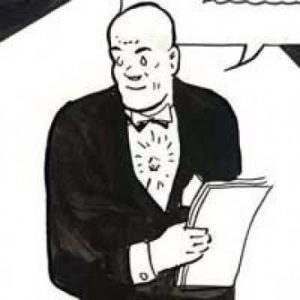


  • Thanks, Monsieur Warbucks!

    By Peter Galuszka

    Sometimes there are enlightened people out there.

    This is point to shake up the Baconauts and Boomergeddons, but the New York Times has an editorial this morning about the enlightened rich.

    Following the lead of Warren Buffett, the investment Sage of Oamaha who says he should pay more taxes: “Sixteen of France’s wealthiest individuals urged the government to raise their taxes. The Italian Formula One magnate Luca di Montezemolo publicly backed Mr. Buffett’s idea ‘for reasons of fairness and solidarity.’ About 50 of Germany’s richest people have been campaigning for a higher top tax rate since 2009.”

    Now before the Chief Baconaut emerges from his cave-like basement office, and, scratching his eyes like a groundhog, starts to retort, let’s explain more from the Times editorial. These folk are motivated by “enlightened self-interest” besides true altruism.

    Austerity, of the very type the Baconauts scream for, “is already economic economic growth on both sides of the Atlantic.” True Euro-Weenies, as the Chief Baconaut dubs them, are more inclined to protest than we stoic Americans, but the day could be coming with the overburdened poor and middle class start indicating they’ve had enough with cutting their kids education and their roads.

    So, it’s something to think about. Policy should be taken away from the “I got mine now get away!” crowd. We should look at the good and needs of all.


  • Why Dulles Will Never Have $17 Tolls

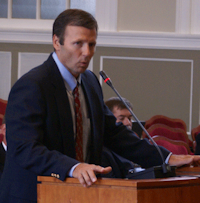
    Patrick Forrest, a Republican attorney running for Janet Howell’s state senate seat in the Reston area, speaks for the common man in Northern Virginia on the inevitable increases in the Dulles Toll Road tariff. The top toll, $2 today, could reach $17 per trip, if the Metropolitan Washington Airports Authority can’t find some other pot of money to pay for the Rail-to-Dulles heavy rail project.

    For years, Northern Virginians vaguely approved of the heavy rail project but didn’t pay close attention to how it would be financed. Only recently has it become clear that cost overruns would be borne by the hundreds of thousands of commuters who use the Dulles Toll Road and could cost those who travel the full distance as much as $7,500 a year!

    Admittedly, the $17 toll is roughly 30 years away, so many commuters paying $2 today will have moved to Sun City or checked into the Pearly Gates by then. Still, I’d hate to be the politician who has to explain that nuance to voters when dissembling over why he (or she) did nothing to halt the rate hikes even as big engineering/construction firms and landowners with commercial property around the Metro stations raked in the big bucks.

    Dulles Toll Road commuters represent an enormous constituency and the projected toll increases are big enough to propel them to the polls. I have no idea if Forrest has a chance of beating Howell or not, but it almost doesn’t matter. If she hangs onto her seat, she’ll get the message.

    (Hat tip: LarryG.)

    — James A. Bacon


  • About those 100,000 Extra College Degrees…

    by James A. Bacon

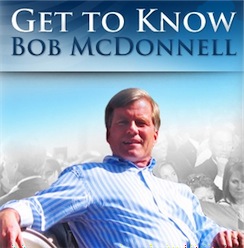
    Gov. Bob McDonnell has set a goal for Virginia institutions of higher learning to award 100,000 more degrees in the next 15 years. “In this increasingly interconnected global economy a world-class education is the key to economic growth in our communities and personal success for our citizens,” he said last year when touting the Higher Education Opportunity Act. “A well-educated citizenry is what companies are looking for when they are deciding where to locate and expand. I want Virginia to be a magnet for the high-paying jobs of the 21st century.”

    In so speaking, the governor articulated one of the few truths that resonate across regions, political parties and special interest groups. In setting the 1000,000-degrees goal, McDonnell employed logic very similar to that of President Obama, who espouses the ideal that everyone who wants to go to college should be able to. Few would disagree.

    This trope in American political discourse does have some justification. Higher levels of education are correlated with higher levels of income — for individuals, for racial and ethnic groups, even for nations. But that broad truth obscures as much as it reveals. It is easy to oversell the value of educational investment. There is a risk that Virginians will spend more on higher education than can be rationally justified.

    The governor cited a study by the Cooper Center at the University of Virginia, which concludes that awarding 100,000 more degrees would create $39.5 billion more in Virginia’s Gross Domestic Product by 2025, $36 billion in increased personal income and $4.1 billion in new tax revenues. “In short,” he said, “Virginians will be more prosperous and Virginia will be more competitive.”

    Two points are worth making. First, not all college degrees are created equal. Some provide skills that are more highly valued and more highly compensated in the marketplace than other degrees. According to “What’s It Worth?“, a publication of Georgetown University’s Center on Education and the Workforce, those who hold degrees in petroleum engineering have median earnings of $120,000, while those who earned degrees in counseling/psychology have median earnings of only $29,000. Thus, it very much matters which disciplines those 100,000 extra degrees are in. (It is reassuring to see that McDonnell’s Commission on Higher Education Reform is giving special attention to the so-called STEM degrees — science, technology, engineering and mathematics but there is no assurance that those are disciplines that Virginians will choose to master.)

    Second, the fact that the average earnings of people with college degrees is $46,000 doesn’t mean that the median earnings of those 100,000 additional degree holders will be $46,000. Americans most likely to hold college degrees also are Americans who (a) come from families that placed a greater emphasis on academic achievement, (b) were better educated in high school, (c) are more highly motivated and self disciplined, and/or (d) are just plain smarter. Dipping deeper into the talent pool for the purpose of increasing college enrollments will not yield the same caliber of student. It is foolhardy for public policy makers to expect that these students have the same earnings prospects as those who started with more advantages in life — and it’s cruel to the students who will rack up large educational debts only to discover themselves earning less than expected.

    Just as citizens must demand that lawmakers prioritize dollars invested in transportation and infrastructure by Return on Investment, we should insist that our dollars we spend on education be spent the same way. High-blown rhetoric may stir the soul but it won’t change the reality that we cannot afford to squander scarce public dollars.


  • The Wonk Salon, September 9, 2011


    Drugs in the Drinking Water
    Government Accountability Office
    Pharmaceuticals are being discovered in measurable quantities in the drinking water of some metropolitan areas. Federal agencies need to do a better job of monitoring the trend and reporting to the public.

    Which Comes First: Poverty or Decline in Marriage?
    Economic Policy Institute
    Hispanics and African-Americans aren’t poor because they are less likely to be married. They are less likely to be married because they are poor.

    The Unraveling of the American Middle Class
    Demos
    Stagnant wages, unaffordable housing, rising health care costs, increasing cost of college — it ain’t easy being a middle-class American anymore.

    How Obama’s Health Reform Pays for Itself
    Century Foundation
    Sure, Obama care will cost $940 over the first 10 years, but it will more than pay for itself through higher taxes and fees, select program cuts, and efficiencies in the health care system.


  • Battle over C-ville Bypass Moves to Next Phase

    James Utterback, Culpeper District administrator, addresses the Albemarle Supervisors. Photo credit: Charlottesville Tomorrow.

    By James A. Bacon

    The battle over the $200 million Charlottesville Bypass isn’t over, not by a long shot. The Southern Environmental Law Center (SELC) and Piedmont Environmental Council (PEC) held a press conference earlier today to “send a clear message” to the Charlottesville-Albemarle community that the U.S. 29 Bypass “has a long way to go.”

    “We want to make clear to the community that the bypass is not a done deal. There are many critical steps still to go, many questions that need to be answered, before the first shovel of dirt is turned,” said Trip Pollard, SELC Land and Community Program Director in a prepared statement. “Citizens need to demand that local and state officials provide a full accounting of the impacts and costs of this project before any further steps are taken to advance it.”

    The project received the thumbs up this summer from the Albemarle County Board of Supervisors and the Charlottesville-Albemarle County Metropolitan Planning Organization, paving the way for funding approval by the Commonwealth Transportation Board. But the Virginia Department of Transportation has to complete a number of steps before it can start moving dirt.

    “No work has been done on this project since 2002 other than administrative update,” James Utterback, Culpeper District administrator yesterday told the Albemarle supervisors yesterday. (Read the story by Charlottesville Tomorrow.)

    VDOT soon will commence with an environmental reevaluation, right-of-way acquisition and issuance of the request for proposals, with the goal of awarding a contract by the first quarter of 2012. Additionally, the Federal Highway Administration must “review” the project under theย  National Environmental Policy Act (NEPA), a process that will require public input. A key question is whether the circumstances have materially changed since the previous environmental impact statement, which is now 18 years out of date. If so, the FHA could order VDOT to conduct new studies.

    “There are still a lot of unanswered questions, but it is clear that this ‘ready, fire, aim’ approach is not adequate to get the data to make an informed decision and the public involvement they suggest would be too little too late,” Pollard said. “The 29 bypass is not a NIMBY issue. Every community, every citizen in the Commonwealth should take note and be concerned about the waste of resources, the willingness to bulldoze ahead without adequate information, and the disregard for public input demonstrated here.”


  • Nice Try, Cooch

    By Peter Galuszka

    Surprise, surprise, surprise.

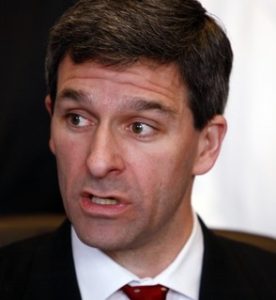
    The Fourth Circuit Court of Appeals has tossed out a notorious challenge by Virginia Attorney General Kenneth Cuccinelli and arch-conservative Liberty University to Obamacare.

    In a surprise move, a three-judge panel at the appeals court ruled that the two plaintiffs did not have standing to bring the case and that their court had no standing to rule on it.

    The judges are all Democratic-appointees who had been expected to rule in favor of Obamacare, especially the controversial section that requires all Americans to buy health insurance in 2014. A lower court had ruled on the merits of the case, but the Fourth Circuit, in effect, punted.

    The Virginia General Assembly passed a law earlier this year nixing the forced purchase of insurance, but that put a state in conflict with federal law. Guess who usually wins?

    That should toss the issue to the Supreme Court and a ruling next summer. It should also be a lesson in constitutional law for the hard right.

    And speaking of the hard right, just for laughs I am posting part of the response of Tea Party leader Jamie Radtke who is running for the Republican nominationf or U.S. Senator:

    “The U.S. Court of Appeals in Richmond has demonstrated a shocking lack of understanding of the U.S. Constitution and the intent of the states that ratified it, by virtue of the courtโ€™s ruling today that Virginia has no standing to challenge the constitutionality of a federal law that directly conflicts with a Virginia statute.”


  • The Dulles Rail Financial Disaster Continues

    Will Taxpayers Bail It Out?

    A guest column by Ronald D. Utt

    Gosh, what a surprise! The yet to be completed 23-mile extension of the Metro rail line to Dulles airport is already confronting serious financial difficulties. Added to the money problems are a series of lapses in managementโ€™s performance and the revelation that flaws in the systemโ€™s design will discourage ridership and further diminish its currently projected marginal contribution to regional mobility. In response, the systemโ€™s manager โ€“ the Metropolitan Washington Airports Authority (MWAA) โ€“ is seeking bailouts from the state of Virginia and from the federal government.

    A Project Doomed to Fail. The only surprise in all of this is that the many people in charge of overseeing the project are surprised and disappointed by these revelations: As the record reveals, the mediocre performance of the system was predicted by the projectโ€™s own justification report submitted to the federal government in 20041, and recognized by the leadership of the United States Department of Transportation (USDOT) during the Bush Administration who refused to fund the project until beaten into submission by Congress.

    Consider the key findings of WMAAโ€™s 2004 report to USDOT:

    • By the projectโ€™s completion in 2025, traffic volumes on the ten highway links in the corridor would be reduced by only 1.5 percent compared to levels that would occur without the extension.
    • This negligible gain in traffic relief would be erased by 2027, given projected trafficgrowth rates. In effect, an estimated $6 billion (in current dollars) would be spent for two years of trivial traffic relief.
    • As a consequence, net energy saving by 2025 (measured in energy saver per BTU, as car usage declines and transit usage rises) would be 0.5 percent for the full 23 mile project,while the Phase I (to Restonโ€™s Wiehle Avenue) link of 11.7 miles of track would actually increase energy usage.

    Importantly, given the new automobile mileage standards since adopted, and the proposed 54.5-mpg requirement, this projected energy savings may already have turned into a loss. Again, keep in mind that the data in the above three bullet points were provided by consultants to MWAA and submitted by them to the Federal Transit Administration (FTA). To put this in perspective, the Heritage Foundation estimated that the cost per new rider attracted from a car
    (daily rider annualized) exceeds $15,000. That is enough to lease each new Dulles rail transit rider two BMW 328i convertibles for life and still return a few thousand dollars back to the taxpayer. By this measure, the Dulles extension would be one of the most expensive new transit projects ever conceived. Read full essay.

    Ronald D. Utt is the Herbert and Joyce Morgan Senior Research Fellow at the Heritage Foundation. This essay is being published simultaneously by Bacon’s Rebellion and The Score Radio Network.


  • The Wonk Salon, September 8, 2011

    Saving Southern Forests with Carbon Offsets
    World Resources Institute
    Forest carbon offsets can create a non-trivial incentive for southern woodland owners to engage retain or restore forests instead of selling out to real estate developers.

    Measuring Teacher Effectiveness: Ignore Credentials and Seniority
    Manhattan Institute
    Traditional criteria for evaluating teachers — certification, advanced degrees and seniority — reveal next to nothing about how well teachers perform in the classroom. Debate over. Time to devise new metrics.


  • Notes on the Wealth Gap: The Role of Health Care

    by James A. Bacon

    Stagnating incomes for middle Americans are a significant driver of the increasing income and wealth gap with top-earning Americans. Why have middle-class incomes stagnated? There are lots of theories — globalization, automation and (my favorite) rent-seeking by the rich and powerful. But a new report by the Rand Corporation identifies the real culprit: health care.

    In “How Does Growth in Health Care Costs Affect the American Family?,” the Rand Corporation depicted the effects of rising health care costs on a median-income married couple with two children covered by employer-sponsored insurance between 1999 and 2009. The main findings: (1) Health care expenditures, including insurance premiums, out-of-pocket expenditures, and taxes devoted to health care, nearly doubled between 1999 and 2009; (2) this increase substantially eroded what an average family had left to spend on everything else, leaving them with only $95 more per month than in 1999; (3) had health care costs tracked the rise in the Consumer Price Index, rather than outpacing it, an average American family would have had an additional $450 per month โ€”more than $5,000 per year โ€” to spend on other priorities.

    Total compensation for Americans increased over the decade. The compensation just didn’t make it into peoples’ paychecks. When you consider that the median household income in the U.S. is a little more than $50,000, that $5,000 represents about 10% of the average family’s income. As a percentage of income, the impact on upper-incomes was proportionately smaller.

    The inflation in health care costs probably doesn’t explain all of the income gap, but it would seen to explain a lot of it.


  • Virginia Reform, Kremlin-style

    By Peter Galuszka

    What is it about Virginia’s Republicans and secrecy?

    Gov. Bob McDonnell has stirred the cackles of open government advocates and Democrats by keeping private “working groups” of his Governor’s Commission on Government Reform, one of his signature programs.

    Meanwhile, U.S. Rep Eric Cantor, House Majority Leader and overnight budget hawk, has raised eyebrows by holding a meeting of his “advisory council” of supposedly ordinary constituents while keeping the media and possible critics out.

    Anita Kumar broke the story about McDonnell’s shenanigans, noting that the Virginia Freedom of Information Advisory Council believes the governor is breaking the law by holding closed meetings among his commission members who are supposed to hack out ideas on how to “streamline” government.

    McDonnell’s people claim that the closed meetings are kosher because they are “working groups.” Another curiosity is that none of the four elected Democrats appointed by McDonnell to the commission are on any of the work groups.

    Tucker Martin, McDonnell’s spokesman, has been quoted in a kind of New Orwellian Language that the meetings are private since: “More voices are being heard. More opinions are being considered. That kind of transparency can be difficult for some to properly conceptualize, as it is a relatively new way of doing business at the government level.”

    What level of government is that anyway? The Kremlin level?

    Megan Rhyne, writing in today’s op ed page of the Richmond Times-Dispatch, has similar concerns. The executive director of the Virginia Coalition for Open Government wrote that this “new way” of doing things might not be new at all but “instead is the very smoky, back-room dealing transparency in general, and FOIA in particular, seeks to eliminate.”

    Maria Everett, executive director of the FOIA Council, says flatly that McDonnell is in violation of the law. Bob Edgar, president of Common Cause, says the modus operandi is anything but reform.

    Yes, you have to wonder what the buzz is about government “reform.” It seems to be a right wing code word for limiting the input of ordinary citizens in favor of big business and big Republican campaign contributors. It also smells of chopping government for the sake of chopping, ridding checks and balances and using the closed door to get rid of nettlesome regulations that may annoy business but may actuallyprovide safeguards for ordinary folk. In other words, it’s the kind of thing that goes down well with the lobbyists who run the Thomas Jefferson Institute for Public Policy.

    The Cantor story is similar. He rented a conference room on Midlothian Turnpike in Chesterfield recently where he met with constituents who were on his so-called “advisory council.” Meeting with constituents is always a good idea, but Cantor has shut out the media. Why? Are they enemies? Ditto protestors from a liberal group, about 200 strong, who demonstrated against Cantor’s rampant budget cutting policies.And while anyone supposedly can sign up to be on a Cantor advisory council, some have said they weren’t allowed to participate.

    Odd, then, that the very Republicans who are limiting basic American freedoms are the ones who so often wrap themselves up in the American flag.

    What’s even sadder is that there isn’t an even stronger outcry.


  • Map of the Day: Income Gained, Lost from Migration

    This map from the Tax Foundation shows the annual income gained or lost due to interstate migration between 1999 and 2009. The biggest winner was Florida by a country mile, followed by Arizona, Texas and North Carolina. Bottom line: If your state was attractive to retirees, you bolstered your income. The big losers: New York, California and Illinois.

    Virginia ranked among the “stable” states, showing a modest $1.4 billion gain in income over the decade. (Click on map for more legible image.)


  • The Wonk Salon, September 7, 2011

    Phew, Rest Easy, Teacher Evaluation Models Still Valid after Adjusting for Missing Data
    Rand Corporation
    Educational evaluation models for evaluating teachers on the basis of student performance still stand up after accounting for the fact that the data for some students is incomplete.

    NYC’s Elite Exam Schools: Little Long-Term Impact
    National Bureau of Economic Research
    Everyone wants to get into NYC’s elite exam schools with their rigorous academic programs. But attendance has little impact on SAT scores, college enrollment or college graduation rates.

    Race, Gender, Test Scores and Downward Mobility
    Pew Charitable Trusts
    One third of all children raised in the middle class will fall out of the middle class as adults. Crack and heroin use are major downers. Downward mobility also associated with lower test scores.

    Redesigning State Government
    National Governors Association
    Hot trends in the states include closing prisons, changing teacher compensation and tenure, downsizing state workforces, reforming pension plans, and reviewing tax expenditures.


  • Discrimination at Cardinal Financial? Or Race Hustling at Obama’s DOJ?

    by James A. Bacon

    In 2004, Cardinal Financial Corp., a regional bank based in Tysons Corner, purchased George Mason Mortgage, which originated mortgage loans in the Washington metropolitan region, predominantly in Northern Virginia. Seven years later, in a July 1 letter to Cardinal Financial Corp., the U.S. Department of Justice (DOJ) accused the $2 billion regional financial institution ofย failing to “serve predominantly black areas on an equal basis with predominantly white areas.”

    For specifics, the letter noted that the financial corporation had not opened branches in majority-black areas or engaged in “effective outreach activities.”

    To remedy this deficiency, DOJ wanted the bank to add nine counties to the Federal Deposit Insurance Corp.-approved geographic area where Cardinal does business, wrote Mary Kissel in a Wall Street Journal opinion piece last week. “Never mind that the FDIC in the past gave kudos to Cardinal for its lending practices. Justice is now accusing Cardinal of failing to open branches and achieve racial loan quotas in counties that its federal regulator never before contended should be the focus of its lending.”

    (I have placed calls to both Cardinal Bank and the DOJ to see if I can find additional details on this case.)

    The Cardinal action is part of a larger pattern in which Obama’s DOJ has moved from enforcing the law to coercing banks into lending more money to minorities. Please note: No one is accusing Cardinal of discriminating against African-Americans who apply for loans. No one is accusing Cardinal of “red lining,”ย  or refusing to lend to particular minority neighborhoods in communities it otherwise serves. If Kissel’s representation of the letter is accurate, DOJ wants Cardinal, in effect, to change its business model and to expand into municipal jurisdictions where it does not now have a presence.

    In a wrap-up of similar cases, American Banker wrote that the Obama administration has targeted banks for alleged redlining and other fair-lending violations to an extent not seen since the Clinton administration. “Critics charge the effort has gone too far, claiming Justice has misused legal interpretations to bring complaints to court, alleged redlining in areas outside a bank’s market area and encouraged loans to unqualified borrowers as part of expensive settlements.”

    American Banker quotes Paul Hancock, who once ran the fair lending unit for Justice under former Attorney General Janet Reno and now defends banks against prosecution as a partner at K&L Gates:

    These types of enforcement efforts are resultsโ€oriented and tantamount to demands for racial loan quotas. Such extremism has always been harmful to civil rights enforcement because of the backlash that it causes. It is more akin to social engineering than fair civil rights enforcement, and that simply doesn’t work.

    This Obama administration initiative bolsters two important narratives I have been building on this blog.

    First, it is one more intrusion in the marketplace that chills business confidence and discourages investment and job creation. Robert Rowe, a vice president and senior counsel at the American Bankers Association, told American Banker that an overly aggressive-regime could make banks — nervous about committing fair-lending violations — even more reticent to lend to anyone, although he added that it is “too soon to say” if the current enforcement cycle has reached that point. It’s a lot easier and less risky for banks to invest their capital in Treasury bills.

    Second, this is a replay of the Community Reinvestment Act that pushed banks into the sub-prime mortgage market during the run-up to the real estate crash and financial collapse. Government policy encouraged banks to abandon lending standards then, and the Justice Department is, in effect, pushing banks to do so again. The bottom line: Don’t lend on the basis of an individual’s credit-worthiness — shovel loans into minority communities already plagued by high unemployment, foreclosures and over-indebtedness.

    So what if African-Americans are suffering foreclosures at a rate far higher than other racial groups? Blame it on “predatory lending” practices instead of the lowering of lending standards and the giving of mortgages to individuals who were in no way equipped financially to handle them. So what if African-Americans have seen their net worth nearly wiped out in the housing bust (see the Economic Policy Institute report on how bad the sitution is). Blame discrimination and racism instead of self-defeating public policy.

    In the war against ever more rarefied forms of “discrimination,” the race hustlers have done, and continue to do, more to sabotage the economic well being of African-Americans than all the grand wizards, dragons and poobahs of the Ku Klux Klan could have devised in their most fevered imaginations. While Martin Luther King broke the shackles of Jim Crow and racial segregation, Barack Obama is binding African-Americans with the manacles of MassOverconsumption and excess indebtedness.


  • The Wonk Salon, September 6, 2011

    Helping Foster Kids Find Jobs
    Center for an Urban Future
    Half the children aging out of NYC’s foster care system don’t have jobs. The city can do more to ensure that minor wards of the state don’t become adult wards of the state.