• Zoom Zoom Zoom!

    Albemarle Supervisors declined to ask state highway officials to update an 18-year-old analysis of the Charlottesville Bypass before putting the project out for bids. Itโ€™s full speed ahead for the controversial, $245 million project.
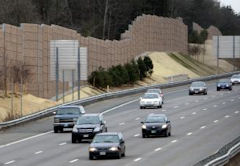
    Sound barriers — will they be in the RFP?

    by James A. Bacon

    The Albemarle County Board of Supervisors nixed a resolution Wednesday to ask the state highway department to update a traffic and environmental analysis of the Charlottesville Bypass before putting the $245 million project out for bids. The board voted instead to ask the Virginia Department of Transportation to complete the update before construction commences.

    Why the controversy? Ann H. Mallek, the board chair, and Dennis S. Rooker argued that it is crucial to get updated information in circulation before VDOT issues the Request for Proposal. That way, contractors will know exactly what they are bidding on and the state wonโ€™t have to come back later with expensive change orders.

    But a majority of board members were satisfied that the project schedule laid out by VDOT at a previous board meeting would accommodate any needed changes. They worried that putting off bids until the completion of the Environmental Impact Statement would create unnecessary delays for a project that has languished for nearly 20 years.

    In remarks after the board meeting, Mallek conceded that the compromise resolution โ€œhas no power.โ€ VDOT is not obligated to honor the boardโ€™s request. Further, once a contract is awarded, it will be too late to request changes to the project design without incurring extra charges. Morgan Butler, senior attorney with the Southern Environmental Law Center, termed the final resolution โ€œmeaningless.โ€ Even Neil Williamson, president of the Free Enterprise Forum, described it as a โ€œtoothless resolution.โ€

    The original Environmental Impact Statement (EIS) for the U.S. 29 Bypass was written 18 years ago, and a supplemental impact statement, focused mainly on protecting the countyโ€™s drinking-water reservoir, was completed eight years ago. Although the project has received all necessary approvals, VDOT is required to conduct a written re-evaluation before construction begins. Mallek and Rooker contended that the data in the old evaluations are seriously out of date and that new data could influence the final design. Not only are the traffic numbers obsolete, but recent scientific research has documented the detrimental effects of highway pollutants on the health of children โ€“ a particularly sensitive issue given that six schools are located near the proposed Bypass route.

    The resolution called on VDOT to update traffic modeling of the bypass, consider the scientific research on the effects of highway pollutants, conduct an analysis of health and noise impacts, engage with citizens in a public hearing, and consider a reduction in the bypass design speed from 60 miles per hour to 50 miles per hour.

    Supervisor Kenneth Boyd contended that it was not necessary to hold up the RFP, which VDOT has scheduled for September. โ€œTheyโ€™ve told us theyโ€™re going to award a design-build contract with the caveat that theyโ€™ll come back after the public hearing and may make change orders.โ€

    Read more.


  • The Wonk Salon, September 14, 2011

    Dental School for SW Virginia? Maybe Not Such a Great Idea
    Weldon Cooper Center for Public Service
    No question: Southwest Virginia would benefit from having a dental school. But there are three big challenges: finding the money to build the school, recruiting faculty, and enrolling college grads with the necessary skills and ability to pay the tuition.

    Pittsburgh Promise Fulfills Its Promise
    Rand Corporation
    Pittsburgh Promise offers $40,000 scholarships to public school kids who excel academically with the goal of fostering high school completion and college readiness. The program works.

    Expanding Access to Health Insurance Will Drive Up Hospital Utilization
    American Enterprise Institute
    Obamacare advocates say their health reform will drive down costs by expanding access to primary care. Foes say it will mean more hospitalization and higher costs. It ain’t even close. Buckle your seat belts and brace yourself for higher costs.

    Single Parenthood, Risky Behavior, Dropping Out and the Perpetuation of Poverty
    Urban Institute
    It’s the indirect influence of single parenthood that perpetuates poverty. Children of single mothers are more likely to engage in risky behavior like sexual activity, drug abuse and crime, and are more likely to drop out of school. Those behaviors turn poor children into poor adults.

    Preventing Sexual Assault in Prison
    Urban Institute
    One out of 33 inmates in local jails reports being sexually assaulted in the past 12 months. Some practices that can reduce the problem: Put cameras in cells, provide training to correctional officers, and encourage officers to wander around and interact with inmates.


  • Chart of the Day: The Great Divergence


    This chart comes from a new paper by Shawn Fremsted, “Talking about Poverty in a Jobs and Economy Framework,” published by the Center for Economic Policy Research. Fremsted’s aim is to to re-cast the debate over poverty, which opinion polls show most Americans don’t care about, to one of “jobs” or the “economy,” which appeals to a much broader cross section of the population. This chart goes to the heart of the problem. In the first two decades following World War II, worker pay rose with productivity, and all income classes shared in the rising income. Then, around 1980, the relationship between productivity and pay diverged, with an increasing share of income going to the wealthiest Americans. (Click on chart for a more legible image.)

    Explaining that divergence and responding to it appropriately, it seems to me, is one of the great challenges of our era. The left-of-center narrative is that the divergence represents a trend that can be corrected by redistributive policies. A right-of-center narrative suggests that the divergence can be attributed to the dysfunctions created by an ever-growing government that consumes an increasing share of society’s resources. Whichever side you favor, the graph does help clarify the debate.

    Robert Reich thoughtfully addressed the Great Divergence from a leftist perspective. In “Supercapitalism,” he blamed the evolution of the capitalist system from a syndicalist arrangement in which America was dominated by industrial oligarchies and trade unions to divvy up the economic pie more justly into a hyper-competitive capitalist society. He captures elements of reality in his explanation.

    But I think there’s a lot more to the story. The Great Divergence in worker pay and compensation began well before 1980 — it began in the mid-1960s, although it markedly accelerated in the 1980s. What happened in the mid-1960s? President Johnson launched the Great Society, the greatest expansion in the size, scope and activism of government since the Great Depression. Coincidence? I think not. Even those who would lay the blame elsewhere (globalization, automation, the rapacity of the private sector, supercapitalism) have to confront this basic fact: The unprecedented growth in the size and intrusiveness of government has failed to reverse the Great Divergence.

    I will concede that government may not be the only factor accounting for the divergence. The 1960s also marked the rise of the counter culture and the assault on traditional boring,ย  “bourgeois” middle-class values such as thrift, self-reliance, traditional family structures and the deferral of gratification. The “Save for a Rainy Day” ethic was replaced by the “If It Feels Good, Do It” ethic. Those who clung to the work ethic tended to prosper. Those who rejected it tended to fail. Just a theory.

    — James A. Bacon


  • Multimedia Enterprise Emerges from the Muck of the Virginia Blogosphere

    by James A. Bacon

    Bearing Drift Media has announced a merger with Virginia Line Media LLC to provide conservative content to Virginians across multiple channels, including the Internet, print, radio and social networks. The combination represents the first instance I can recall of Virginia bloggers making a serious bid to bootstrap their way into mainstream media.

    Bearing Drift produces the Bearing Drift blog, the most highly trafficked right-leaning blog in the Virginia blogosphere, as well as a monthly magazine. Virginia Line Media owns The Score Radio Network, a conservative radio interview show broadcast on stations in Richmond, Williamsburg and Lynchburg as well as three online radio networks.

    โ€œThis is yet another step forward for Virginians who are looking for a substantial, statewide conservative alternative for their news and information โ€“ how they want it and when they want it,โ€ said Jim Hoeft, Bearing Driftโ€™s founder and new president of Virginia Line Media in a prepared statement. โ€œBy combining with Virginia Line, conservatives now have a clear alternative to hear, read, and instantaneously share the political information that is most important to them โ€“ information that affects their family and livelihood.โ€

    โ€œTo partner with Bearing Drift means we instantly gain access to a well-established online conservative voice โ€“ and we provide a well-established radio voice to amplify the message,โ€ said Norman Leahy, founder of Virginia Line, and a contributor to Bacon’s Rebellion. โ€œOur combined efforts will give conservatives an outlet for their concerns, and will provide feedback to legislators and pundits about what a substantial part of the electorate believes is the right direction for the commonwealth โ€“ without censorship or condescension.โ€

    Although I am a periodic guest on The Score, I don’t speak with any inside knowledge. However, I would expect that the most obvious “economy of scale” in the merger will be the ability to better support an advertising staff. I suspect that it would be difficult for either group to generate enough sales to support a full-time sales staff on their own. But the two combined could well pull it off.

    A sure sign that Bearing Drift Media has broken out of pigeonholing as a niche political publication is if it can start generating more than Republican-campaign and conservative-advocacy ads. Given the polarized nature of media today and its line-up of some of the top Republican/conservative writing and radio talent in Virginia, Bearing Drift has a very good shot at building a significant audience. The big question is whether it can pull in enough advertising to build a profitable and enduring enterprise.

    Is Bearing Drift Media the future of Virginia media in a digital world? We’ll have a clue if Blue Virginia or Not Larry Sabato start orchestrating mergers with other blue-state blogs. Stay tuned…


  • The Wonk Salon, September 13, 2011

    How Middle-Class Schools Are Failing their Students
    Third Way
    Three out of four middle-class high school students fail to earn a college degree. As it happens, middle-class schools spend the least per pupil, pay teachers the least and have the highest enrollment to teacher ratios compared to schools in upper-income and lower-income school districts.

    Virginia Third Grade Reading: Pretty Good, but Could Be Better
    Joint Legislative Audit and Review Commission
    Student pass rates on 3rd-grade reading SOLs have improved substantially over the past 10 years, reaching 83% in 2010. But the goal of 95% is “questionable.”

    When JLARC Speaks, Legislators Listen
    Joint Legislative Audit and Review Commission
    JLARC’s 2011 annual report summarizes the watchdog group’s activities over the pastย  year.

    A Blueprint for Restoring Virginia’s Prosperity
    The Commonwealth Institute
    Virginia’s center-left think tank hits the big themes: Pave the way for an economy that works, educate tomorrowโ€™s workers today, ensure a healthy and productive workforce and create a 21st century revenue system for a 21st century economy.


  • Good Intentions Bring Terrible Results

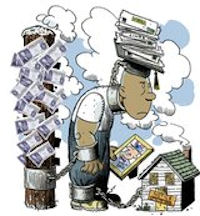
    What’s holding back black Americans? Government, not discrimination

    Image credit: Washington Times

    by James A. Bacon

    After nearly a half-century of government-led exertion to lift black Americans out of poverty, how are they faring? New data and research tell the story. According to census data, 26 percent of blacks, compared with 10 percent of whites, lived in poverty in 2009. The unemployment rate for blacks is 16.7 percent, more than twice the rate for whites. And a study by the Pew Charitable Trusts Economic Mobility Project finds that black men in the middle class are 37 percent more likely than white men to tumble down into the bottom 30 percent of income earners.

    A recent study by the Economic Policy Institute concludes that wealth destruction suffered by Americans during the Great Recession hurt blacks more than others. According to โ€œThe State of Working Americaโ€™s Wealth,โ€ the median net worth of black households slid to $2,200, compared with the median net worth of whites at $97,900. Forty percent of black households had zero or negative net worth.

    Liberals, race hustlers and others committed to the idea that America is an unjust society in need of remediation have a ready explanation: Blacks continue to suffer discrimination. Racism may be more subtle than when Bull Connor unleashed the dogs upon civil rights marchers, they say, but it is still pervasive and damaging. Yet that narrative is getting harder and harder to maintain. Indeed, it is dawning upon many that blacks remain mired in poverty precisely because their political leaders have looked to government for salvation. And government – far from rescuing blacks from poverty – has kept them trapped in it.

    Uncle Sam still transfers hundreds of billions of dollars yearly to the poor and downtrodden in the form of Medicaid, the Childrenโ€™s Health Insurance program, nutritional assistance (food stamps), Temporary Assistance for Needy Families, the Earned Income Tax Credit, fuel assistance and a host of narrow-bore programs aimed at ameliorating the hardships of poverty. Social scientists have long warned of the corrosive effect of welfare upon black Americansโ€™ family structure, self-reliance and initiative.

    If thatโ€™s where government โ€œhelpโ€ ended, the condition of blacks today might not be as dire. But one reason blacks suffered such devastating financial losses in recent years is that much of their net worth was tied up in real estate. When the housing market imploded and equity values collapsed, much of their net worth evaporated. While people of all races experienced equity losses, black homeowners suffered more than others. A 2010 study by the Center for Responsible Lending found that among recent borrowers, 8 percent of blacks and Hispanics, compared with 4.5 percent of whites, had lost their homes to foreclosures. (Of course, the foreclosure crisis is far from over – those percentages have climbed higher since.)

    While the causes of the housing bubble are complex – low interest rates, financial innovations on Wall Street and a general decline in lending standards fed the frenzy – government policy played a supporting role. Under a bipartisan banner of promoting homeownership, government agencies encouraged subprime lending to households that had no business having mortgages. Then, after the crash, Obama administration policy prolonged the financial agonies of homeowners facing foreclosure through a mortgage-modification program that spared some homeowners but caused others to deplete their savings by making payments they couldnโ€™t afford.

    The latest canard is the notion that everyone should be entitled to a college education. President Obama has ramped up loans and grants for college students to unprecedented levels. Unfortunately, no one seems to be checking how many are graduating. Many Americans, including blacks in disproportionate numbers, are not academically prepared for college and never make it through. The result is a silent college dropout crisis. States a recent study from the American Institutes for Research: โ€œMuch of the cost of dropping out is borne by individual students, who may have accumulated large debts in their unsuccessful pursuit of a career.โ€

    In tacit acknowledgment that there is a big problem, the Obama administration is targeting for-profit colleges, where tuition costs and defaults tend to run higher, for criticism. But the underlying premise, that government should help pay for anyone to get a college education, is as flawed as the premise that everyone should own a house. The result of good intentions gone awry is a generation of college dropouts living in modern-day indentured servitude.

    The do-gooders have all the best of intentions, of course. They just donโ€™t pay attention to results. In the name of compassion, they keep blacks hooked on initiative-sapping welfare dependency. In the name of building the American dream, they promote home ownership for people who lack the financial wherewithal to keep up payments. In the name of equal opportunity, they dispense college loans to people who will never graduate. Lord, deliver us from those who would save us.

    This column was published originally in the Washington Times.


  • Kaine leaps into the Ponzi Pool

    By Norm Leahy

    I don’t begrudge Democratic Senate candidate Tim Kaine’s desire to stir-up the base with this meeting, or forum, if you prefer, on Social Security. It is amusing, though, to read the quote Wes Hester pulled from the Kaine campaign’s press release announcing the event:

    A release from Kaineโ€™s campaign announcing the Tuesday morning said that Perry โ€œwill no doubt promote the extreme Republican agenda which labels Social Security a โ€˜Ponziโ€™ scheme and seeks to privatize it.โ€

    Damn those extreme Republicans and their wicked attempts to denigrate the most successful of entitlement programs…it puts them in the same league as that equally nefarious Paul Krugman:

    โ€œIn practice it has turned out to be strongly redistributionist, but only because of its Ponzi game aspect, in which each generation takes more out than it put in. Well, the Ponzi game will soon be over, thanks to changing demographics, so that the typical recipient henceforth will get only about as much as he or she put in.โ€

    One can only imagine what Mr. Kaine will have to say about that…

    (H/T: Don Boudreaux)


  • Norm and Jim on the Score

    Scott Lee with the Score Radio Network interviews Chris Horner with the American Tradition Institute about ATI’s Freedom of Information Act battle with the University of Virginia, Norm Leahy about Eric Cantor’s federal disaster kerfuffle and yours truly about President Obama’s government-centric jobs program. Click here to access the radio clips.

    — Jim Bacon


  • Common Sense or Delaying Tactic?

    Map credit: Charlottesville Tomorrow

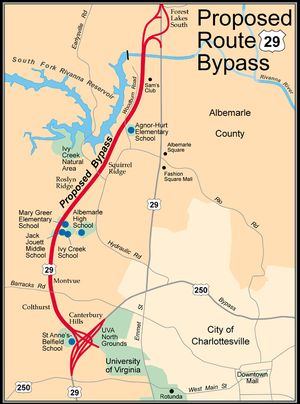
    Opponents of the Charlottesville Bypass are calling for an update to the project’s 18-year-old environmental impact analysis.

    by James A. Bacon

    How old does a traffic impact analysis for a major highway project have to be before it gets so old that you should throw it out and start over?

    To be more specific, if the traffic analysis contained in the Environmental Impact Statement (EIS) for the Charlottesville Bypass is 18 years old and the supplemental EIS is eight years old,ย should the Virginia Department of Transportationย conduct an updateย before buildingย the controversial, $244 million project?

    Ann H. Mallek and Dennis Rooker, members of the Albemarle County Board of Supervisors think so. And they have submitted a resolution, to be considered Wednesday, for the board to formally request VDOT to update traffic modeling for the bypass and consider new scientific research documenting the effects of highway pollutants on children in nearby schools before awarding a contract.

    The Commonwealth Transportation Board has approved $197 million funding for the project — on top of tens of millions of dollars already spent on right-of-way acquisition and engineering — and is moving expeditiously to get the project underway. However, foes of the project, who insist that the money could be better spent on alternate projects in the U.S. 29 corridor,ย  say that the project “is not a done deal.” (See “Battle over C-ville Bypass Moves to Next Phase.“)

    “Among other items, the traffic modeling, the traffic estimates, the air quality analyses and the noise analyses in the environmental impact statements are now outdated and additional analysis needs to be done,” states the resolution. “There is significant new information that has been developed since the environmental impact statements were prepared, including new scientific research documenting the detrimental effects of highway pollutants on the health of individuals, and children, especially.”

    “There has been tremendous growth around the northern terminus of the Bypass,” says Rooker. The largest residential development in the county, Hollymead, was not fully built out at the time. Hollymead Town Center, one of the county’s biggest shopping centers did not exist. Either did major employment centers such as the National Ground Intelligence Center and the University of Virginia Research Park. Also, although the U.S. 29 corridor was zoned for development in the early 1990s, he says, much of it has been rezoned.

    “You’ve got thousands of people living there that weren’t there,” says Rooker. “You’ve got more vehicles in and around that area now.” Travelers through Charlottesville will encounter miles of stoplights and congestion north of the Bypass, making the project obsolete the day it opens.

    Furthermore, new scientific research has documented the detrimental effect of highway pollutants on the health of children. That point was made repeatedly during public hearings by citizens concerned that the Bypass would run very close to six different schools. “Several states have outlawed the building of highways within 1,000 feet of schools,” Rooker notes.

    The resolution is sure to inspire opposition from supporters of the Charlottesville Bypass, who argue that after nearly two decades of obstruction it’s time to start construction. Neil Williamson, president of the Free Enterprise Forum, sees no point in studying the traffic impact again. What’s it going to change, he asks? A new count showing more commuters than projected two decades ago will provide all the more justification for the bypass.

    “It’s not a huge leap of faith to think that traffic has increased,” he says. Thousands of commuters living north of the Bypass terminus and commuting to the University of Virginia or other Charlottesville destinations will gladly take the bypass to circumvent part of the congestion.

    As for the impact of automobile emissions on child health, Williamson says, the EPA website says that findings should not be used at this time in determining road-siting decisions.


  • The Wonk Salon, September 12, 2011

    How Hospitals Cross-Subsidize Medical Services
    National Bureau of Economic Research
    When hospitals face competition in their profitable medical services, surprise, surprise, profits erode and they respond by curtailing subsidizes of less profitable medical service lines.

    Why Emergency Rooms Are Closing
    Rand Corporation
    Between 1990 and 2009, the number of emergency rooms in the United States declined by 27 percent (from 2,446 to 1,779). Why? This fact sheet doesn’t make it clear but it apparently has something to do with… losing too much money!

    Inadequate Education Hurting Employment in U.S. Metro Areas
    Brookings Institution
    One factor holding back the recovery of employment in some metropolitan regions is a mismatch between the supply of, and demand for, educated labor. Brookings’ solution: More investment, guided by wise liberal elites, into sectors like manufacturing and the “green” economy.


  • Xu Bing’s Tobacco Show

    By Peter Galuszka

    The history of Virginia is intertwined very tightly with that of tobacco.

    The Golden Leaf boosted the two colonies from their earliest days. One of the first acts of the new colonial legislature in the Old Dominion was establishing price supports for tobacco, which was used a currency and was the state’s most important export product. The first machine to roll cigarettes was invented in Richmond, creating an entirely new industry.ย One of the last remaining major cigarette factories is in the capital

    With this history in mind, and if you looking for something to do on a weekend, you might consider driving down to Richmond to see the new “Xu Bing: Tobacco Project” exhibit at the newly renovated Virginia Museum of Fine Art.

    Begun in 2000 when Chinese-born Xu Bing was artist in residence at Duke University, the tobacco project mixes cigarettes, advertising, brand names old books, pay checks and other memorabilia into a highly unusual exhibition exploring the relationship between humans and tobacco.

    One work involves 440,000 cigarettes fashioned into the form a 40-foot-long floor rug shaped like a tiger. A wall is covered with old tobacco advertisements. Another curiosity is a 50-foot-long reproduction of a Zhang Zeduan painting from the 10th century, “Along the River During the Qingming Festival,” that has an extra-long cigarette burned down its center.

    Xu Bing plays with the ironies of tobacco’s deadly nature and its attractiveness to people. Tobacco kills about 400,000 Americans every year and may kill billion globally in this century, according to the World Health Organization. Xu Bing’s father died of tobacco-related lung cancer.

    I asked Xu Bing, who won a MacArthur Foundation “genius” grant in 1999 and who moved to the U.S. in 1990, about this contradiction at a reception this morning. “My show isn’t about propaganda,” he says, “it is about the relationship between tobacco and human beings. It is sort of like love and its effect on people. It is awkward.”

    Curiously, after I first posted this blog item, I saw that the Wall Street Journal had run a similar story on Xu Bing with one important difference. The Journal noted that the artist had gone to Altria, the operator of a huge Philip Morris plant in Richmond, to ask for hundreds of thousands of cigarettes. But Altria, a major donor to the VMFA as it is to many Richmond entities, turned him down. So Xu Bing had to try another route.

    Last Friday, I had asked a VMFA spokeswoman where Xu Bing had found so many cigarettes and she said that the VMFA had helped locate and pay for them. She did not bring up Altria’s role, most likely because of their funding relationship with the museum. I asked her about it today and she said she wouldn’t have volunteered the information because Altria was not involved in this particular exhibit.

    I guess I can understand that, but it does raise many questions, once again, about the tobacco giant’s impact on its new corporate headquarters home of Richmond. Years ago, the American Tobacco Company was such a moneybags that the Medical College of Virginia acted as its chief researcher and promoter. One science historian writing about tobacco research labeled his chapter on the cozy relationship “Sold, American!”

    Later, Virginia Commonwealth University got skewered by entering into secretive research contracts with Philip Morris requiring that the cigarette maker be notified immediately if anyone, especially a news reporter, asked aboutย them. VCU later decided not to get into such contracts again.

    And now, we’re finding tobacco’s stained hands on art in Richmond. It’s really too bad because the Great Recession has killed off several firms that were major benefactors in the city, leaving basically, Altria, Dominion and MeadWestvaco.

    The good news is that Altria’s refusal did not prevent Xu Bing’s show from taking place. It is a good thing that VMFA found another way.ย Given tobacco’s impact on the region’s history, his show, which is free, is worth a look.


  • The Wonk Salon, September 11, 2011

    Free Market Telecom Works in Texas
    Texas Public Policy Foundation
    Texas has deregulated local telephone service and promoted competition in video. Since 2001, the number of broadband subscribers has grown more than 1,015%.

    The Unproven Case for Missouri Aerotropolis
    Show-Me Institute
    Missouri legislation would subsidize the air cargo industry at the St. Louis airport to the tune of $360 million under the guise of creating a globally competitive “aerotropolis.” But if the economic value is there, why doesn’t the private sector make the investment itself?

    The Digital Teacher Corps
    Progressive Policy Institute
    Nothing else seems to be working. Let’s create a Digital Teacher Corps to unleash the untapped power of digital media to boost literacy among our most vulnerable children.

    Oregon’s Adverse Selection Problem
    Oregon Center for Public Policy
    Oregon got off to a fast start in creating a health insurance exchangeย called for by Obamacare. Just one problem:ย Insurance plans in the exchange will be more expensive and less attractive to healthy Oregonians, potentially creating an adverse-selection death spiral.


  • Never Forget


    Oh, yes, 9/11 happened here in Virginia, too. We’ll never forget.


  • Uh, Oh, MWAA Bonds Downgraded

    by James A. Bacon

    As if the Metropolitan Washington Airports Authority didn’t have enough problems with the Rail-to-Dulles project, the Fitch rating service has just downgraded its bonds to AA-. Reports Reuters: “The downgrade reflects Fitch’s view that the authority will maintain a stable yet narrower level of debt service coverage cushion when compared to both its historical performance and previous forecast estimates.”

    The airport still has great strengths, including the strong competitive position of Dulles and National airports in the Washington metropolitan market, well-managed financial operations, a firm airline use-and-lease agreement and traffic volume that has held up well since the recession.

    However, stated Fitch, “The authority’s ongoing use of borrowings in recent years to fund a majority portion of its Capital Construction Program (CCP) has resulted in an elevated debt burden profile and will require increased reliance on airline charges to meet total airport cash flow requirements. In Fitch’s opinion, the rising debt burden places an added measure of risk to the authority’s financial profile given the downward revisions in forecasted traffic growth, especially when compared to earlier projections in prior years. In Fitch’s view, the forecasted financial metrics would no longer be consistent with ‘AA’ rating pursuant to Fitch’s criteria for airports.”

    Fortunately, the authority has nearly completed its $5.1 billion 2001-2016 capital construction. Major projects left within the CCP at Reagan include runway overlay and rehabilitation and in-line baggage screening systems. At Dulles, the remaining projects include an in-line baggage screening system and taxiway Y reconstruction.

    The airports are a critical economic driver for Northern Virginia, so any development that makes it more difficult to finance capital improvements comes as bad news. The reduced financial flexibility also may complicate the bond financing of Phase II of the Rail-to-Dulles project. I’ll provide details as I find out more.


  • Ecologists Need Not Apply

    By Peter Galuszka

    Stacking the deck seems to be the modus operandi of the administration of Virginia Gov. Robert F. McDonnell.

    First, he annihilated nearly the entire board of the Virginia Ports Authority.

    And on Friday, he announced his new picks for the Virginia Coal and Energy Commission. It is a very important decision since the commission will have significant influence on whether the General Assembly decides to end a decades’ long ban on uranium mining and go forward with a proposed and highly controversial operation near Chatham in Southside. Plus, commissioners will influence whether Virginia continues with the highly destructive mountaintop removal method of coal mining in which thousands of areas of mountaintops are destroyed to get at thin coal seams. They also will set policy about how the state deals with hydro-fracking to get at deep natural gas reserves. The method could threaten groundwater with toxic chemicals.

    McDonnell has appointed seven people. All are either energy company executives or lobbyists of some sort of large corporations that use coal, nuclear power or natural gas. Not one is from an environmental group. Not one has a scientific background. Let’s run through the list:

    • Barbara Altizer of Jewell Ridge in the far western coalfields is president and executive director of the Eastern Coal Council.
    • Jodi Gidley of Virginia Beach is president of Virginia Natural Gas.
    • Ken Hutcheson, is a top lobbyist at Williams Mullen, one of Richmond’s most powerful advocacy firms.
    • James K. Martin is a senior executive and lobbyist at Dominion Resources in Richmond. He is also a former executive at Peabody Coal. I had a run-in with Martin at the World Affairs Council of Greater Richmond of which is is president and I am a member. Martin refused to tell me anything about corporate contributions for the non-profit group or any information that is publicly available in their tax filings. I wouldn’t count him as an outspoken advocate of transparency.
    • John Matney of Bristol has been in the coal mining industry since the 1970s besides leasing coal reserves in Kentucky is head of a company that has a big golf course community in Georgia.
    • Donald L. Ratliff of Big Stone Gap is a lobbyist for coal-producer Alpha Natural Resources, which just took over troubled Massey Energy in June. Twenty-nine miners died in an underground mine explosion at a Massey mine in West Virginia in April, 2010 and Massey has been accused to ruining the Appalachians with its mountaintop removal surface mining operations.
    • Rhonnie Smith of Lynchburg is a retired executive from nuclear reactor maker Babock & Wilcox, which has fuel facilities in Lynchburg.

    McDonnell did not choose one person from the Sierra Club, National Resources Defense Council, Union of Concerned Scientists or any of the groups that study the impact of fossil fuel on climate change.

    This is entirely predictable of McDonnell, but the impact of his profound one-sidedness could be felt for years.