• Option One: Spend More Money. Option Two: Replicate Patrick County.

    The student pass rate for the reading portion of Standards of Learning has improved from 55% in 1998 to 83% in 2010. So says a new report from the Joint Legislative Audit and Review Commission, “Strategies to Promote Third Grade Reading Performance in Virginia.” But given the number of disadvantaged and disabled children in the population, it will be a struggle reaching the ultimate goal of 95%.

    Only one school division, Patrick County, exceeded that goal in 2010. However, progress can be met with mo’ money, JLARC contends. The two most costly initiatives proposed in this study — funding more reading coaches and literacy specialists for grades K-3 — would cost between $40 and $70 million.

    That’s one approach. Here’s another. Dispatch JLARC to Patrick County: population 18,500; unemployment rate, 9.7%; household income, 37% below the national average; dominant ethnic group, Bubba; and per pupil expenditures, 12% below the state average. Find out what Patrick County is doing, then replicate it. (Could it have something to do with an initiative launched by Patrick County native Gerald Baliles more than a decade ago? I’d love to know.)

    — JAB


  • Boosting the Productivity and Quality of Road Design

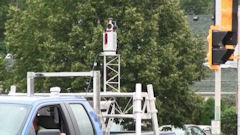
    truck mounted laser scanner

    Here’s how state highway departments do their project design work: An engineer sits at a work station equipped with Microstation 3-D modeling software and downloads topographical data provided by VDOT surveyors. To get new data, the engineer sends a request over to the surveying department. When a surveyor is available, he is dispatched to the site where he takes the measurements. Sometimes the surveyor, using his best judgment, gets everything the engineer wants. Sometimes not, and he has to be dispatched again. Then the engineer starts tinkering with the design. Often he (or she) realizes he needs more information, and he issues another request to the surveying department. It’s not unusual for the process to take weeks.

    3-D modeling software has dramatically increased engineer productivity, and GPS tools have dramatically increased surveyor productivity. But neither can do much to improve the clumsy interface between the two. Along comes TopoDOT, a Microstation plug-in created by Certainty 3-D, a start-up company in Orlando, Fla. All it takes is driving down the road and pausing periodically for the laser scanner in the truck bed to sweep the area. TopoDOT’s technology dumps the data into Microstation for instant access. Engineers now can gather all the topographical data they need in a single sweep. A job that once took days now takes hours.

    Engineers can work faster and without interruption, says Certainty 3-D CEO Ted Knaak. They can run more what-if scenarios. They can spend more time and effort into creating the most cost-effective design. “The information’s right at their fingertips.”

    I ran into Knaak in the exhibit hall of the Governor’s Transportation Conference last week. The hall was packed with vendors and consulting companies of all stripes, but Knaak’s was the only exhibit with any technological pizzazz.

    Knaak charges $7,000 for the software plus a flat fee for each use. The technology will enable DOTs to save a lot of money on surveying costs while speeding up design times. “Everything is 40 to 50 percent cheaper than what they did before,” he asserts. But even bigger savings can come from reorganizing work processes around the technology. In theory, better project design should translate into more cost-effective projects at a savings of millions of dollars. Virginia is one of five DOTs that have acquired a license, although at this point, only one person at VDOT is actively using it.

    There is no magic technology bullet to solve Virginia’s transportation woes. There certainly is no substitute for adopting more efficient human settlement patterns and for selecting projects that provide the greatest Return on Investment. But boosting VDOT employee productivity represents a small step forward, and engineering more cost-effective designs a pretty big one. Every little bit helps.

    — JAB


  • Cuccinelli: Not a Single Penny for Phase 2

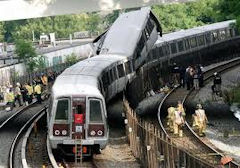
    Speaking of the Rail-to-Dulles fiasco… Attorney General Ken Cuccinelli reiterated his opposition to the Metrorail expansion last week and predicted that the General Assembly would spurn a McDonnell administration request for an extra $150 million state contribution needed to refinance Phase 2 of the controversial project.

    โ€œI would oppose putting a single penny of state dollars to bail out Phase 2,โ€ he said, according to the Washington Times. โ€œI hope that legislators will not agree to spend the $150 million.โ€

    A General Assembly refusal to kick in the $150 million would collapse a fragile deal brokered by U.S. Transportation Secretary Ray LaHood to cut costs and otherwise limit exposure to users of the Dulles Toll Road. The original financing deal called for contributions from Fairfax County, Loudoun County and the Metropolitan Washington Airports Authority, with the balance to be paid by revenues from Dulles Toll Road. But as estimated costs ballooned from $2.8 billion to $3.8 billion, creating the prospect of $20 tolls within a couple of decades, political resistance flared in Fairfax and Loudoun.

    Cuccinelli raised the prospect that the Loudoun Board of Supervisors, which has approved the LaHood deal, could reverse its position if the newly elected boardย  reconsiders the issue. He also said that the $150 million contribution would be a hard sell in a General Assembly looking for ways to close a $1 billion budget gap. โ€œIf I had to predict, Iโ€™d bet against.”

    Given Cuccinelli’s popularity among conservative Republicans, these comments won’t make it any easier for McDonnell to squeeze the money out of the General Assembly. It may be time to dust of those Bus Rapid Transit plans!

    — JAB


  • Stacking the Deck for Heavy Rail

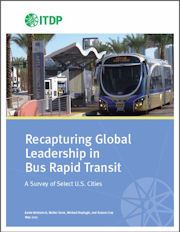
    The Rail-to-Dulles project is a classic example of how the transit-selection process in the United States is rigged in favor of rail projects and seriously biased against buses, contends a new report, “Recapturing Global Leadership in Bus Rapid Transit,” published byย  published by the Institute for Transportation & Development Policy. States the report:

    Numerous studies have shown that travel demand for large transportation infrastructure projects worldwide โ€” especially rail projects โ€” is frequently overestimated while costs are frequently underestimated, due to systematic optimism bias and strategic misrepresentation of project costs and benefits. Looking at 210 projects in fourteen nations, Bent Flyvbjerg found that nine out of ten rail projects overestimated passenger demand by an average of 106 percent. For seventy-two percent of rail projects, forecasts were overestimated by more than two-thirds. This bias is often a product of the political competition for public investment that pushes analysis to favor locally-preferred alternatives. …

    Under current law, the [Federal Transit Authority] has minimal requirements for what types of alternatives must be included within an alternatives analysis. … Moreover, the project sponsor can modify the alternatives in ways that will change their cost-effectiveness ratings. [An] example of this deck-stacking technique is the 2002 Dulles Corridor (West Falls Church to Dulles Airport) Environmental Impact Statement, which considered fewer stations for BRT alternatives than for the metro-rail alternatives, and envisioned BRT as a closed system, running only on the new alignment. The analysis thus failed to consider the most obvious potential strength of a BRT option in the Dulles corridor โ€” the ability for buses to operate off-corridor at one or both ends of their trip, picking up and delivering passengers at locations off the BRT corridor, while gaining travel time advantages from use of dedicated bus lanes in the corridor. Indeed, it is this ability of open-system BRT to deliver many more one-seat rides that can accrue significant environmental benefits by making mass transit attractive to a larger share of the potential travel market.

    And why the bias for rail? Rail is backed by powerful constituencies like engineering firms, construction firms and labor unions coveting contracts to work on the often-massive projects (Dulles rail will cost more than $6 billion before it’s all done) and by land owners who stand to reap windfall gains in property values. By contrast, there is no local constituency for Bus Rapid Transit, the main beneficiaries of which are politically powerless out-of-state bus manufacturers.

    Question of the day: Is it still too late to consider Bus Rapid Transit for Phase 2 of the Metrorail-to-Dulles project? Or has that train left the station?

    (Hat tip: Larry Gross.ย  For another take on this story, see Toll Road News.)

    — JAB


  • Hold Hands, Sing Kumbaya and Avoid Taxes

    The least studied, hence least understood, component of 21st-century America’s political economy may well be the rise of the not-for-profit sector of the economy. While real GDP grew by 38% from 1995 to 2010, real total revenues reported by charitable nonprofits registered with the IRS grew by 65%. Nationally, medical services and education, two vast sectors dominated by not-for-profits, accounted for 15.1% of all employment in 2010.

    A new study, “Property Tax Exemption for Nonprofits and Revenue Implications for Cities,” explores the impact of the growth of the not-for-profit sector upon municipal finances. Not-for-profit exemption from property taxes can blow a big hole in municipal budgets, especially in metropolitan areas such as Pittsburgh, Philadelphia and Boston where medical services and education exceed 20% of employment (and probably aย  higher percentage of economic activity). Arguing that the rise of not-for-profits displaces a greater tax burden on homeowners and for-profit businesses, the authors present a variety of arrangements, from municipal-service user fees to Payments In Lieu Of Taxes (PILOTs), to avoid the hollowing out of the tax base.

    In Virginia, the challenge is particularly acute in jurisdictions such as Blacksburg that are dominated by a large educational institution, or in the case of Charlottesville, by a large educational institution coupled with a large not-for-profit health care system.

    The rise of the not-for-profit economy is significant in other ways not touched upon in the paper. E M Risse refers to not-for-profits as “institutions” in his Estate Matrix, as opposed to “agencies” (government) and “enterprises” (corporations). Institutions include, among others, foundations, labor unions, professional and trade associations, universities, hospitals, museums, political parties, political action committees, conservation advocates, chambers of commerce and other consumption advocates, churches and think tanks.

    A growing “institutional” economy means that an ever-larger chunk of the supposedly private sector is exempt both from the wealth-extracting exertions of the federal government and from the Darwinian, for-profit imperative to innovate, boost productivity or die. Not-for-profit status is a great tool to channel the economy’s energy into socially beneficial uses. But the not-for-profit-ication of U.S. society does not augur well for economic dynamism, growth of the tax base and fiscal sustainability.

    — JAB


  • How to Run a Transit Company without Breaking a Sweat

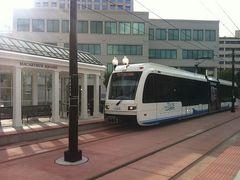
    MacArthur Station: Where Bacon's Rebellion nearly met an untimely end.

    by James A. Bacon

    NORFOLK–When the Norfolk light rail project was piling up cost overruns and threatening to run off the rails because no one had the money to pay for it, the powers that be in Hampton Roads prevailed upon Philip Shucet to bring the project back under control. Taking over asย CEO of Hampton Roads Transit, he quickly fulfilled that mission,ย and then went on to improve the productivity and efficiencyย of the region’s bus system as well.

    Shucet had proven his mastery of large, unwielding organizations as Virginia Department of Transportation commissioner under Gov. Mark Warner, and then joined the private sector, where he conducted a clinic on productivity and efficiency in bridge building with the Jordan Bridge project. Rebuilding the aged and decrepit bridge had been deemed so expensive, around $200 million,ย that the City of Chesapeake shut it down. Working under the flag ofย Figg Bridge Developers,ย Shucet said he could complete construction of the bridge for less than $100 million.ย He left that project in order to take the helm of HRTransit but, according to press reports, the bridge is scheduled to open in 2012. If anyone wonders why Transportation Secretary Sean Connaughton believes that outsourcing the design and construction of mega-projects to the private sector is a good idea, the Jordan Bridge is a case study.

    In a Thursday panel discussion during the Governor’s Transportation Conference, Shucet explained how he applied his magic touch to Hampton Roads transit, and he made it sound simple. The key was to stay focused, he said, and stop making changes. “We held the line and said, ‘no.’” He re-worked contracts, he let a few people go. And he managed expectations by telling the truth. When there was bad news to reveal, it didn’t sugar coat it. The results have been gratifying. He stopped the runaway costs dead in their tracks. Originally estimated to cost $232 million, the project had shot way over the $300 million mark when Shucet came on board. The final capital cost, he said,ย came in at $317.6 million.

    The Tide light rail, which runs 7.4 miles from Norfolk General Hospital through downtown Norfolk and out to Newtown Road, also is generating nearlyย twice as many passengers asย originally projected: 4,900 weekday riders daily on average versus an estimate of 2,900. Operations are still far from profitable, but they are considerably less unprofitable than budgeted.

    (As an aside, during the conference, I have been riding the Tide between my parents’ downtown condo and the Norfolk Marriott Waterside. The stations are attractive, the buses are clean and trains run on time. The experience is much more pleasant than driving — and less expensive than parking. I did nearly kill myself —ย literally — when sprinting to catch a train before it left MacArthur Center Station. I ran in front of the street-level train to get to the boarding platform just as the driver was about to leave the station. The guy was so rattled he stepped out of his cabin to warn me to never, never dart in front of a stationary train — the darn things jump out like jack rabbits.)

    Meanwhile, Shucet has been shaking up the region’s bus operations.ย Many buses and trains run nearly empty, he explained. He figured that almost anything that got butts in seats would represent an improvement, so he marketed aggressively to the region’s universities and major employers, offering a variety of incentives to encourage people to use mass transit. In a parallel initiative, Hampton Roads Transit restructured its routes, eliminating routes with minimal ridership and increasing frequency of bus runs on its strongest routes. Total ridership has increased and this year HRT was able to rebate some money to the local governments that support the organization.

    Shucet will remain as CEO of HRT through January then step down to resume his more lucrative career in the private sector, where he will look for more opportunities like the Jordan Bridge to make money by saving taxpayers money.


  • How to Increase Transportation Revenue without Raising Taxes

    by James A. Bacon

    NORFOLK–Declaring that transportation is a “core responsibility” of state government, Gov. Bob McDonnell outlined today a legislative package that would increase funding for roads, highways and transit from the General Fund. Traditionally, Virginia has paid for transportation projects primarily through dedicated revenue streams such as the motor fuels tax, a half percentage pointย of the sales tax,ย a tax on automobile registrations and other narrow-bore levies.

    McDonnell’s plan would divert an additional one-quarter percentage point from the state sales tax, a bigger share of end-of-year budget surpluses, a full percentage point of the General Fund budget when revenue growth exceeds 5% in a year, andย a Tax Increment Financing-like mechanismย for capturing a share of state tax revenues made possible by state-funded infrastructure.

    “Transportation and economic development and prosperity are inextricably linked,” said McDonnell, presenting his initiative to the Governor’s Transportation Conference in Norfolk. “Whether it’s the infrastructure needed to move people and goods, or certain transportation-related industries poised for major growth and job creation, we must continue to make progress in improving our transportation networks if Virginia is to remain economically competitive.” (Read the press release.)

    The governor’s address was interrupted briefly by an outburst from a group identifying itself as Occupy Norfolk.ย The protestersย employed the Occupy movement’s trademarked human microphone technique to greet him with, “Welcome Governor McDonnell.”ย That elicited a fleeting smile, but the protesters then proceeded to shout over the governor as he tried to address the audience.

    The biggest chunk of new revenue would come fromย phasing in a one-quarter percentage point increase in theย share of the state sales tax dedicated to transportation over eight years. If enacted, the plan will boost theย share from one half percent (.50%) currently to .055%, or one-twentieth of a percent, sufficient to bolster transportation revenues by $110 million next budget. The governor provided no estimate of how much the other measures would generate, although he noted that over the past two years the state has transferred $100 million in surplus funds to transportation.

    Last year, the General Assembly backed McDonnell’s proposal to accelerate borrowing —ย $4 billion during his administrationย — to take advantage of low interest rates and low construction costs.ย Interestย will be repaid from sources traditionally dedicated to transportation. A potential sticking point with the new plan is that, by taking money from the General Fund, it may be perceived as funding transportation at the expense of priorities such as K-12 education, higher education, Medicaid and corrections, that rely upon the General Fund.

    McDonnell deals with potential objections by limiting the circumstances in which the transfers to transportation would be made. The proposal toย steer 75% of budget surpluses to transportation would apply only if the state runs a budget surplus. Takingย a one-percent slice from the General Fund would apply only in years whenย revenues increase by more than 5%. It’s not clear how the Tax Increment Financing proposal would work, butย the logic is that it would return to transportation a share ofย the revenues made possible by a transportation investment in the first place.

    Another foreseeable objection is that the planย will focus on the factย that McDonnell’s emphasis is on raising more money for transportation rather than reprioritizing how the money is spent. A recent Sierra Clubย report accused the governor of borrowing billions of dollars to build โ€œmajor, unneeded and destructive roadwaysโ€ instead of funding transit, bike paths, carpooling and transit- and pedestrian-friendly land use.

    In justifying the need for more revenue, the governor made two key points. First, the motor fuels tax, the primary source of transportation funds,ย will decline in the future.ย An increasing number of carsย will shift to alternate fuels, and even those that don’t will get better gas mileage. “Add those two things together and you have a math problem,” the governor said.ย 

    Secondly, transportation is vital to economic development. McDonnell cited a study by Chmura Economics & Analyticsย that found the 2011 transportation package will grow the Virginia economy by over $13 billion and sustain an additional 104,000 jobs. Among specific economic-related initiatives, the governor mentioned additional funding for the Mid-Atlantic Regional Spaceport, with the goal of making it the number one commercial space flight facility in the nation.

    The governor also touted theย ย the I-85 Connector Economic Development and Promotion Zone, an initiative that is tied to the construction of a new, limited-access U.S. 460 between Petersburg (the northern terminus of I-85) and Suffolk. A southern route linking Hampton Roads to the national interstate highway network would provide an Interstate-quality alternative to the overloaded U.S. 64 and open up vast new acreage for industrial and warehousing development.


  • VDOT Makes the Case for I-95 HOT Lanes

    by James A. Bacon

    NORFOLK–The McDonnell administration characterized a public-private partnership agreement for HOT lanes on Interstate 95 as a win-win arrangement that will expand capacity and create new choices for Virginia drivers without dunning taxpayers or motorists who don’t want to pay tolls.

    The agreement in principle with Fluor Transurban also protects taxpayers from financial harm if ridership projections fail to meet expectations but shares revenue with the state if revenues exceed a pre-set level.ย  “People have a choice. Nobody’s forcing them to go onto the HOT lanes,” Transportation Secretary Sean T. Connaughton said during Wednesday morning meeting of the Commonwealth Transportation Board. “As tolls rise, it will encourage people to use transit or carpools. This is all about using market forces.”

    Hours later, at the Governor’s Transportation Conference, the McDonnell administration highlightedย other design-build and public-private partnership projects (P3s), including a major truck-climbing lane on rugged terrain on Interstate 81, the addition of HOT lanes to the Washington Beltway, the Coalfields Expressway and the Interstate 295 interchange in Chesterfield County. In the absence of significant new revenue sources, the administration is turning to P3s to leverage the $4 billion the state will borrow during Gov. McDonnell’s four-year term.

    The unapologeticย trumpeting ofย P3s andย megaprojects followed the release yesterday of a report by the Virginia Chapter of the Sierra Club,ย “21st Century Green Transportation: A Vision for Virginia,” that criticized McDonnell’s “frantic road building program”ย for spending billions of dollars in borrowed money to build “major, unneeded and destructive roadways.”ย The Sierra Club said the state should prioritize spending on maintenance, establish performance standards to guide the selection of projects,ย require stronger links between transportation and land use and devote more spending to alternate forms of transportation such as mass transit, van pools, bicycles and pedestrian-friendly infrastructure.

    The governor’s office announced the I-95 HOT lane agreement Tuesday morning. The $940 million deal will add, improve or extend 29 miles of HOV lanes from Fairfax County through Stafford County. The HOV (high occupancy vehicle) lands will be converted to HOT (high occupancy toll) lanes, in which people can pay a toll to bypass congested traffic in the general lanes.ย  Carpoolers, buses and motorcycles will be allowed to continue using the HOT lanes with no extra charge.

    Virginia Department of Transportation officials expect that trips will run around 11 miles for a $4 charge on average, although the toll will change continually, depending upon demand, and could be considerably higher or lower. There will be no toll gates.ย Drivers will enter the HOT lanes like they enter HOV lanes, but they will pass under a gantry that will record their activity based on EZPass transponders in their cars. Toll rates will be set to maintain free-flow conditions of 55 miles per hour minimum speed.

    As tolls rise, the HOT lanes will encourage to carpool, ride buses or even join the ranks of “slugs” who hitch rides with drivers eager to avail themselves of the free HOV lanes, Connaughton said. To create transportation options, the deal contemplates the investment of $200 million in the expansion of transit bus services and park-and-ride lots.

    Chief Deputy Commissioner Charlie Kilpatrick gave a detailed explanation of how the commonwealth’s interests are protected in the agreement with Fluor Transurban. Although the state is granting a 73-year concession upon completion of construction, it will maintain legal ownership and all assets will revert to the state at the end. The state has the right to audit the concessionaire’s books, and it can suspend tolling in emergencies. The agreement outlines the concessionaire’s obligations to maintain operating standards and roadway conditions. And Fluor Transurban assumes the full risk of cost overruns or schedule delays.

    By investing $97 million, the state will attract roughly$840 million in private investment, some of it equity and some of it financed by bonds. CTB members asked what protection the state has if revenues fall short of projections and the venture loses money. Revenues would go first to pay operating expenses, he said, and only then be used to meet payments to bond holders. If the entity went bankrupt, private investors would lose their equity.

    The agreement also builds in options and protections for Fluor Transurban, such as allowing the enterprise to propose enhancements not contemplated in the original deal. The state has no effective veto over tolls, which are set by market rates. And the private partner has the right to be compensated if the state undertakes a project that is proven to impact the revenue flow from the road, such as making significant improvements to U.S. Route 1, which runs parallel to the Interstate.

    The Federal Highway Administration is scheduled to review and approve the project in the spring of 2012. The financing will close that summer. Construction is scheduled to be complete in 2015.


  • Fast and Furious

    The Fast and the Furious, starring Vin Diesel as Sean Connaughton, Paul Walker as Tony Kinn and Jordana Brewster as Thelma Drake.

    by James A. Bacon

    The public-private partnership deals are coming fast and furious. The McDonnell administration announced a new one today, a $940 million agreement in principle with Fluor-Transurban to build, operate and maintain a 29-mile HOT/HOV lane project on Interstate 95 from the Springfield Bypass to Stafford County.

    “With HOT lanes on both the Beltway and I-95, we will create a region-wide network of managed lanes that will enable travelers to get to and from some of Virginia’s most employment centers and military sites,” said Transportation Secretary Sean T. Connaughton in a prepared statement.

    Highlights of the project include:

    • Expansion of HOT/HOV capacity from two lanes to three for 14 miles in the northern leg, improvements to six miles in the middle leg, and extending the HOV/HOT lanes for nine miles into Stafford County, “alleviating the worst bottleneck in the region.”
    • Establishing a seamless connection with the Interstate 495 HOT lanes now under construction.
    • Free access for High Occupancy Vehicles.
    • Investment of $200 million into the expansion of regional bus services, including construction of more than 3,000 new park-and-ride spaces. A Department of Rail and Public Transportation study recommended a total of 9,575 park-and-ride spaces, 46 more buses, off-site parking, shuttle services at the Franconia-Springfield Metrorail station and other intermodal features.

    The project will generate revenue by charging single-occupancy vehicles for using the HOT lane; traffic volume will be regulated to ensure minimum travel speeds. The price will vary according by time of day, fluctuating with demand.

    The commonwealth will contribute $97 million to the project. Fluor-Transurban will pay for the rest. The consortium will have a 73-year franchise.

    The statement provided no details on what toll rates are expected. Connaughton undoubtedly will provide details in a media briefing this afternoon, but I will be on the road to Norfolk, where I will attend the Virginia Transportation Conference tomorrow. Although I-95 HOT lanes are not on the schedule of events, I would be surprised if the topic doesn’t come up for discussion.


  • Defiant MWAA Resists Seating of McDonnell Appointees

    666, baby! The mark of the beast.

    I missed this when it happened last week, but it’s never too late to comment… The Metropolitan Washington Airports Authority board won’t let a little thing like a new law passed by Congress and signed by President Obama encroach upon its autonomy. The board, which oversees management of the extension of Metro rail to Dulles airport, has retained legal council to resist increasing the size of the board from 13 seats to 17.

    According to Charles Snelling, chairman of the airports authority board, the law is not operable until Virginia and the District approve changes to the โ€œgoverning MWAA compact.โ€ That comes by way of Dana Hedgpeth, the Washington Post‘s Dr. Gridlock.

    Therefore, said Snelling in a letter to Rep. Frank R. Wolf, R-10, who authored the bill, the board will not seat two new board members appointed by Gov. Bob McDonnell last month. Wolf’s bill added two new seats for Virginia, and one a piece for Maryland and Washington, D.C. Wolf had argued that Virginia was under-represented on the board, which controlled not only Dulles and Reagan airports but the state-built Dulles Toll Road.

    โ€œTheyโ€™re ruining the credibility of the airports authority by fighting this,โ€ Wolf told Hedgpeth.”They’re ultimately going to lose. Theyโ€™re just dragging this thing out.โ€

    I’m amazed that this story isn’t far bigger. Maybe there’s a legal case to be made for Snelling’s position, but the MWAA is definitely coming across as combative and recalcitrant. The board opposed Wolf’s bill from the beginning, and this latest gambit looks like more foot dragging. Add to the MWAA’s legal resistance the lack of transparency in other areas — which I hope to find time to blog about in the future — and the authority comes across as an alien, undemocratic and oppressive beast that must be brought to heel.

    — JAB


  • New Studies, Reports and Inanity…

    Motor Vehicle Dealer Internet Access Study
    Report to the General Assembly

    In 2011 the General Assembly adopted legislation requiring all newly licensed automobile dealers to have an Internet connection and email address. The Motor Vehicle Dealer Board even engaged the Point Management Group to conduct a study, which proceeded to document that all MVDB dealers already have Internet access. But that didn’t stop Point Management from recommending that all new dealers — just in case someone laying thousands, even millions, of dollars on the line to open a new dealership was too friggin’ stupid to think of setting up an email address and Internet connection — should be required to do so as well.

    Why stop there?ย  Why not write a regulation requiring every auto dealer to have a phone? Why not spell out in detail how they must stock their offices with desks, chairs, copying machines and free coffee. Grrr. Makes me so mad. Hey, Gov. McDonnell, while you’re consolidating and closing all those useless state boards and commissions, here’s idea. Add the friggin’ Motor Vehicle Dealer Board to the list!!

    Status Report: Regulations Establishing Nutritional Guidelines For Competitiveย Foods Sold in the Public Schools
    Report to the General Assembly

    The General Assembly is rightfully concerned about increasing obesity rates among Virginia’s youth, and legislators have rightfully honed in on the volume of junk food that school kids consume from vending machines, snack bars and a la carte items in the cafeteria. This draft report contains numerous recommendations on how to regulate these sources of empty calories. Snack items shall contain no more than 200 calories per portion, derive no more than 35% of calories from fat of sugar, or have a sodium content exceeding 200 mg, blah, blah, woof, woof. But, oh, the regulation shall not apply to beverages.

    Really? Is that it? Did it occur to the geniuses drafting the regulations that restricting calories per snack might encourage kids to…. buy more than one snack? And what’s this about exempting soft drinks? Did the General Assembly cave in to the soft drink bottling industry?

    Let me make this real simple. Ban all vending machines and shut down all snack bars in public schools. When kids got thirsty back in my school days, they drank — can you imagine this? — water from the friggin’ water fountain! When we wanted snacks, we had to wait until we got home and raid the cookie jar. As far as I’m concerned, purveyors of junk food should be allowed to sell whatever they want to whomever they want, but not where they want. They have no more right to peddle their garbage in schools any more than they have to set up a vending machine in my pantry. Board of Education, get a friggin’ spine!

    What kind of monument are we talking about anyway? One like this…

    First Annual Executive Summary Commemorative Commission to Honor the Contributions of the Women of Virginia
    Report to the General Assembly

    You could make the case in a state that once practiced slavery and then oppressed blacks through decades of Jim Crow laws that there is justice in erecting a monument to Civil Rights heroes. Unfortunately, the General Assembly followed up that laudatory effort to establish a commemorative commission to honor the contributions of the women of Virginia.

    … or one like this?

    The rationale seems less than clear. Judging from this report, the commission devoted its proceedings over the past year bloviating in banalities about the contributions of the fairer sex and hosting a series of eight “community conversations” across the state. Public attendance appears to have been sparse. In the Richmond meeting, “the Commission heard from a group of students from St. Catherineโ€™s School and two members of the public.”

    Having gleaned valuable public input, the commission then moved on to more important matters, like voting to hire a consultant.

    Evaluation of Camera Use to Prevent Crime in Commuter Parking Facilities: A Randomized Controlled Trial
    Urban Institute

    Before 2003, half of all crimes on METRO property took place in commuter parking lots. Metro Transit Police teamed up with the Urban Institute to see if prominently placed video cameras would discourage car thefts and break-ins. Due to budget limitations, only one-third of the cameras were live, rendering the intervention of limited use for investigative purposes. The findings? “The cameras had no discernible impact on crime.” Oh, well, it was worth a try.

    Just remember to take the darn things down.

    — JAB


  • State Seals $2.1 Billion Midtown Tunnel Deal

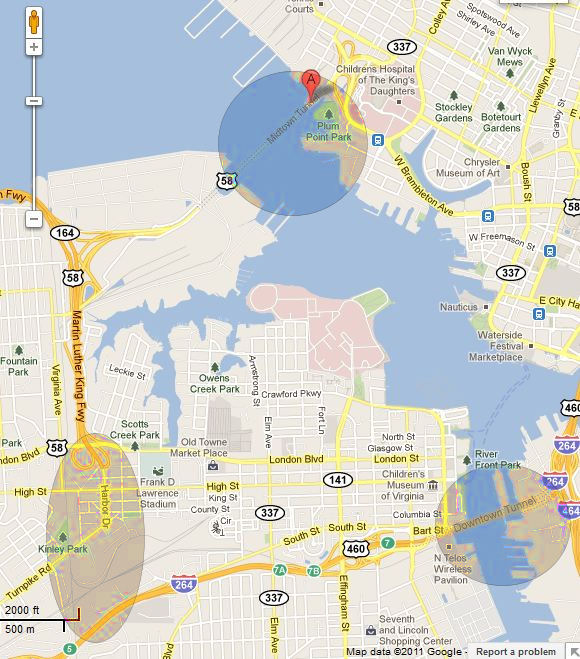
    Google map shows location of major improvements in the Midtown Tunnel deal. (Click on map for larger image.)

    by James A. Bacon

    The McDonnell administration has entered into a public-private partnership agreement with Elizabeth River Crossings to rehabilitate the Midtown and Downtown tunnels between Norfolk and Portsmouth and to extend the Martin Luther King Freeway. Construction on the $2.1 billion project is expected to begin next year.

    Of all the mega-projects under development by the McDonnell administration, this arguably offers the most clear-cut economic return on investment. The commonwealth will contribute $362 million to attract $1.7 billion in private investment, which will be repaid by means of higher tolls ranging initially from $1.59 to $1.84 per car for the tunnels and up to $1 for the MLK freeway extension.

    That’s a big hit to motorists who now use the facilities for free. But the two tunnels are two of the worst transportation bottlenecks in Hampton Roads. In a prepared statement released this morning, Virginia Highway Commissioner Gregory Whirley estimated that the average round-trip user will save 30 minutes a day when the project is created. The improvements also will increase evacuation capacity in the event of a hurricane.

    The agreement has been under negotiation for five months between VDOT, the new Office of Transportation Public-Private Partnerships and ERC, a joint venture between Skanska Infrastructure Development and the Macquarie Group. ERC will finance, build, operate and maintain the facilities for a 58-year concession period, and will assume risk for delivering the project on a performance-based, fixed-price, fixed data contract that protects taxpayers and users from cost overruns and delays.

    The agreement calls for a slightly smaller financial contribution from the state, $362 million, than the $395 million envisioned only a few months ago. VDOT attributed the difference to lower-than-projected interest rates, buttressing the McDonnell administration’s argument that it makes sense to borrow borrowing more money now in order to take advantage of lower construction costs and interest rates in the post-recessionary economic environment.

    โ€œThe Midtown Tunnel project has been at the top of the regionโ€™s priorities for many years,โ€ said Transportation Secretary Sean T. Connaughton. โ€œThe stateโ€™s use of a public-private partnership structure will enable VDOT to attract approximately $1.7 billion in private investment to a project that yields tangible long-term benefits to the region and the state.โ€

    Key components of the project include:

    • Doubling the capacity of the Midtown Tunnel by adding a new two-lane tunnel under the Elizabeth River
    • Increasing transit service between Portsmouth and Norfolk
    • Rehabilitating the existing Midtown Tunnel and both Downtown tunnels
    • Extending the Martin Luther King Freeway from London Boulevard to I-264, with an interchange at High Street in Portsmouth
    • Modifying the interchange at Brambleton Avenue/Hampton Boulevard in Norfolk

    ERC will provide financing through a $422 million TIFIA loan, and approximately $1.3 billion through equity, debt and revenue from operations. The state contribution will be used to buy down the cost of the tolls.

    The press release made no note of how rapidly tolls are projected to rise or what oversight the state will exercise over future increases.


  • The New Road Rage: Driverless Cars

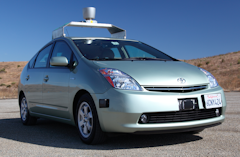
    Google's driverless car

    by James A. Bacon

    The automobile industry may not be anybody’s idea of a dynamic business sector, but it is highly competitive and more innovative than people give it credit for. The latest example is the research being conducted on driverless cars, which Bloomberg Business Week predicts could become the new “road rage,” a sci-fi dream that “could be real within a decade.”

    Needless to say, no-hands cars would scramble everything we think we know about transportation preferences today. On the positive side, automobilesย  equipped with laser sensors would allow them to travel much closer together, increasing the capacity of existing roadway and reducing the number of accidents. Driverless cars also would provide more independence for the elderly and the disabled. Furthermore, people could do something productive with their drive-time, like reading, answering email or surfing the Web (OK, maybe that’s not so productive), instead of listening to talk radio. On the other hand, driverless cars potentially would put more people (and cars) on the road, aggravating traffic congestion. It’s hard to say how it would all play out.

    There is, however, one factor missing from the breathless Bloomberg Business Week article, in which the only sign of skepticism is whether the technology really will be ready for widespread commercialization within 10 years. Here’s the big question: Will driverless cares be affordable? There was no indication in the article how much driverless systems would cost. Equipping cars with all those lasers, sensors, GPS navigation systems, artificial intelligence and who knows what else will be expensive.

    The cost of automobile ownership is already slipping beyond the financial reach of more and more American families as it is.ย  (See “The Era of Foreclosed Possibilities.“) Meanwhile, other factors are driving costs higher. The Obama administration has proposed mandating an increase in U.S. car-fleet fuel efficiency from 27.3 miles per gallon today to 54.5 miles per gallon in 2025. The Heritage Foundation says the mandate will add $2,000 to $2,800 to the sticker price of a car. Admittedly, that would be offset by lower gasoline expenditures, but it does not account for an increase in the number of injuries resulting from lighter cars and concomitant cost of insurance.

    Americans will not wake up one day to find that the technology fairy waved her magic wand and converted the entire motor vehicle fleet into driverless cars. Most likely, the new-car market will bifurcate into two tiers with auto makers packaging driverless cars for the high-end market and selling the old-fashioned dumb vehicles to middle-class Americans. And don’t forget the 10 years it takes to turn over the automobile fleet. Those two factors mean that a lot of dumb cars will stay on the road for a long, long time. Will the putative benefits of reduced traffic and improved safety materialize if only 10% of the cars on the road are equipped with lasers and sensors that allow them to communicate with other cars? One way around that problem would be for government to mandate use of the driverless technology. But another mandate would put the price of cars beyond the reach of even more Americans.

    Personally, I would love to own a driverless car, especially on those long, boring rides to visit family or escape to the beach. While my wife whips out her laptop, switches on her Verizon air card and answers business emails, I get stuck behind the wheel. Grrr. If a driverless car came equipped with a computer screen that would let me play Civilization, read a book or post content to Bacon’s Rebellion, I would pay almost any price! But I suspect that most Americans would deem driverless cars to be a luxury they cannot afford.


  • McDonnell Administration Moving to Reclassify Roads

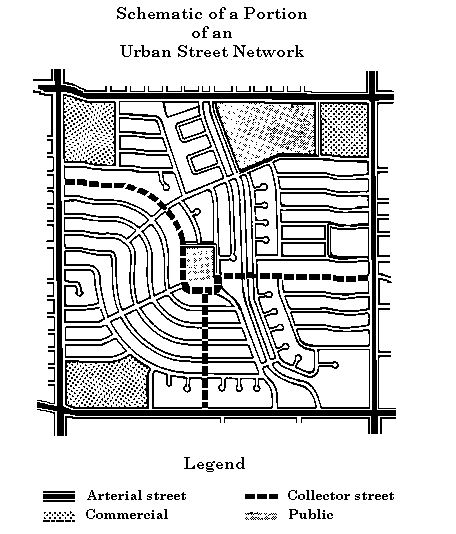
    Click map for more legible image. (Image credit: Federal Highway Administration)

    by James A. Bacon

    The McDonnell administration has prepared legislation to reclassify state roads along the lines of the system used by the federal government, Transportation Secretary Sean Connaughton told a transportation roundtable Friday sponsored by the Thomas Jefferson Institute for Public Policy.

    Virginia’s outdated classification of roadsย  — primary, secondary and Interstates — does not serve the commonwealth well, Connaugton said. Some “secondary” roads in Northern Virginia carry far more traffic than many “primary” roads in other parts of the state. By contrast, the Federal Highway Administration has a well-defined set of criteria for classifying streets as principal arterials, minor arterials, collectors or local roads based on their length, traffic volume and function in the road network.

    The classifications are important. For one reason, the Virginia Department of Transportation allocates money for maintenance and construction to separate funds based on road classification. As Connaughton acknowledged, if Virginia changes the road-classification system, it will have to change funding allocation formulas. For another, the McDonnell administration is inching closer to devolving responsibility for maintenance of secondary roads to local governments.

    Virginia is one of only four states in the country for which the state is responsible for maintaining secondary roads. “It’s crazy that the commonwealth is paving and plowing cul de sacs in Fairfax County,” Connaughton said. Moreover, formulas for allocating maintenance funds have become severely out of whack. VDOT pays cities an average of $17,000 per lane-mile for maintaining roads within their borders, leaving only $5,000 per lane-mile on average for county roads for which the state is responsible, he added. State law requires that reimbursements to cities be adjusted annually for inflation, which drives up VDOT’s payments to the cities over time. By contrast, VDOT’s main revenue source, the gasoline tax, is not adjusted for inflation — it has remained the same since 1986.

    Whit Clement, former transportation secretary in the Warner administration, warned that legislators will be concerned mainly with “where the dollars fall out.” The way to pull off reform, he advised, would be to “hold rural areas harmless” by ensuring they don’t end up with less money than before. But that would require injecting new money into the system — money the state doesn’t have.

    In related discussions, roundtable members explored ideas on how to raise more money for road funding. Among the candidates: Raise the motor fuels tax, pursue more public-private partnerships and create more special tax districts. There was little discussion in this Republican-leaning roundtable about exploring ways to moderate the number of Vehicle Miles Traveled through land use reforms or strategies such as Transportation Demand Management.

    Connaughton was the exception. A critical reason for devolving responsibility for secondary roads to local governments, he said, was to put accountability for transportation and land use decisions at the same level of government. He cited Fairfax County’s decision to upgrade density in Tysons Corner, which will stick the state with a $1 billion liability for improving road access to the business district. He also noted that the City of Alexandria lobbied the Pentagon to relocate 6,400 defense workers to the Mark Center office complex, which will cost the commonwealth $100 million for transportation improvements. Local officials weren’t concerned about the transportation implications of their decisions, the secretary said: They assumed the state would pick up the tab.

    Connaughton did not say if the administration had yet lined up anyone to sponsor its road-reclassification bill nor did he provide details on how VDOTย  funding formulas might be rejiggered.


  • Virginia and the Racism Index

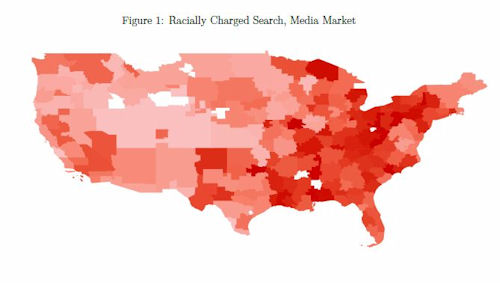
    How does one measure racism? It’s a tricky question. Public opinion polls reveal very little overt racist sentiment. Racism has not disappeared, some pollsters think, it has just gone underground. People don’t want to sound gauche, so they don’t admit to racist sentiments in opinion polls. However, Harvard professor Seth Stephens-Davidowitz has come up with an interesting proxy for racism — Google searches employing the “N” word.

    In a study aiming to to guesstimate how many Americans voted against Barack Obama for president because he is black, Stephens-Davidowitz compares the difference in votes for John Kerry in 2004 with votes for Obama in 2008 and generates correlations with the frequency of the “N” word in Google. He makes a number of assumptions that readers may or may not find plausible but his presidential election analysis is not what interests me. His findings on the frequency of the use of the “N” word are what intrigue me. Always on the look-out for fascinating sociological insights into the Old Dominion, I was particularly fascinated by his state-by-state breakdown.

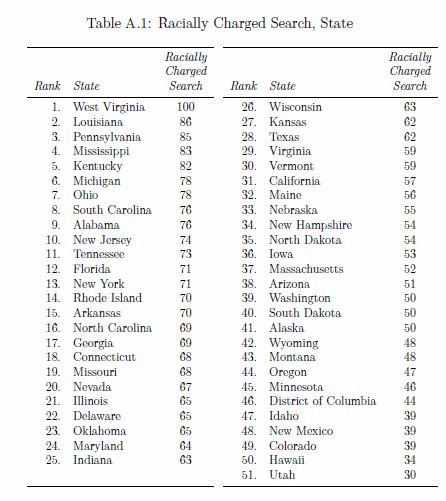
    Stephens-Davidowitz argues that use of the “N” word is a predominantly white usage, hence a valid gauge of racist attitudes, as opposed to the African American usage, “nigga.” The red chart at the top of this post shows a breakdown by media market. The area corresponding to Virginia is a center of relatively low use of the word compared to surrounding regions. Darker areas show higher search volume using the “N” word. Here is a state-by-state breakdown:

    So, where does Virginia fare on the Racism Index? Not as well as I’d like, but not as badly as I feared. We are 29th in the country — the lowest ranked of all the Southern states. Interestingly, West Virginia, which seceded from Virginia during the Civil War fought over slavery, is the most bigoted by this measure. Perhaps most interesting of all, those bastions of Yankee liberalism and enlightenment — New York, New Jersey and Connecticut — have more frequent recourse to the “N” word than Virginia.

    Heh! Heh!

    — JAB