• Virginia Transportation Priorities as Out of Date as the Rotary Phone

    The smart phone: the essential transportation tool of the 21st century.

    by James A. Bacon

    Memo to the McDonnell administration, the General Assembly and Virginia Free (see previous post): Virginia’s transportation policies are based on totally outdated assumptions. I’ve been banging that drum for several years now, but don’t believe me. Even the Washington Post has caught on.

    Vehicle Miles Traveled (VMT) in the United States peaked in 2004. Part of the decline in automobile travel can be attributed to the economic downturn, but the decline set in before the recession. Major economic and demographic forces are at work here. The cost of owning and operating automobiles is increasing faster than incomes. And the digital revolution as epitomized by the Smart Phone is transforming young peoples’ ideas of mobility.
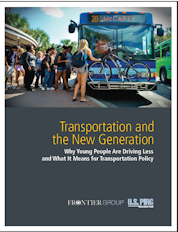
    While the average American reduced VMT by 6% betweenย  2004 and 2011, young people (16 to 34 years old) drove 23% less, according to an April study by the Frontier Group. They are biking more, walking more and doing more ride sharing. This change in attitude is driven in part by technology. Says the Frontier Group:

    Communications technology, which provides young people with new social networking and recreational possibilities, has become a substitute for some car trips. Improvements in technology make transportation alternatives more convenient. Websites and smart phone apps that provide real-time transit data make public transportation easier to use, particularly for infrequent users. Meanwhile, technology has opened the door for new transportation alternatives, such as the car-sharing and bike-sharing services that have taken root in numerous American cities.

    Public transportation is more compatible with a lifestyle based on mobility and peer-to-peer connectivity than driving. Bus and train riders can often talk on the phone, text or work safely while riding, while many state governments are outlawing using mobile devices while driving.

    Interestingly, driving laws that crack down on distracted driving (driving while texting) are hastening the trend. Given the choice between their phones and their cars, many would choose their phones!

    We’ve only just begun to see the impact of technology on driving. I’ve written about Uber, a service that allows people to summon luxury-automobile rides on their smart phones that’s active in Washington, D.C. Uber soon will be followed by Avego real-time car sharing that claims, “Anyone can turn their car into a bus, saving time and money by picking up passengers along their route.” Just download the Avego app and discover available rides around you, says the website. Avego also has services that enable van pool operators to improve the efficiency of their busineses, as well as fleet-management tools for coach fleet operators and public transit companies.

    Special interest groups are decrying a “transportation crisis” that is fast fading. We are experiencing a transportation revolution, but Virginia is still building the transportation system of the 20th century. The only crisis is that we’re building the wrong projects in the wrong places! We need to re-visit every single road project in the state’s Six Year Improvement Program to see if they all are still needed and if the money can be better spent elsewhere. Why are we building the Charlottesville Bypass? Why are we studying the Tri-County Parkway in Northern Virginia? These projects are totally divorced from what’s happening in the real world — and so are the people crying for more taxes to build more roads that the next generation won’t be using.

  • Bad Roads Bring “C+” Grade

    By Peter Galuszka

    Every year, Virginia FREE rates the Old Dominionโ€™s legislators according to its definition of how well they support the lobbyโ€™s definition of what it means to be โ€œpro-business.โ€

    Despite the free-for-all conservatism of this yearโ€™s General Assembly, the legislature only gets only about a โ€œC-plusโ€ grade. The big reason? Lack of progress on improving roads.

    Republicans may control the Senate with a split of 20 seats each between the parties and Republican Lt. Gov. Bill Bolling holding the deciding vote. FREEโ€™s figures, however, show that the Senate rates only a 78.4 โ€œpro-businessโ€ score, according to an analysis by the Associated Press. The GOP-controlled House of Delegates gets slightly less at a 77.7 score.

    โ€œFREEโ€ says that the legislative year started well enough with Gov. Robert F. McDonnell pushing $3 billion in new debt for roads with another $1 billion in unspent funding for transportation. But he and the legislature didn’t do anything about raising gasoline taxes, which have languished at 17.5 cents per gallon for nearly three decades and havenโ€™t even been adjusted for inflation. โ€œAt a bare minimum,โ€ FREE says, โ€œnew money is required to meet basic maintenance needs, restore viability to the construction budget and ensure that Virginia is a viable partner with the private sector on (public-private transportation) projects.โ€

    FREE also issued its perpetual complaints about a minor business tax that has been around since the War of 1812. Legislators are reluctant to do much about the Business Professional and Occupational License tax since the money raised by it goes to localities and the ;legislature would have to make it up.

    Whatโ€™s interesting about the Virginia FREE assessment is that the 2012 General Assembly is memorable for its outlandish moves involving social conservatism. It gained national attention for its laws required women considering abortion to have an ultrasound exam, kept gays from adopting children in some cases and expanded gun purchases.

    While Virginia was highlighted by satirists on โ€œSaturday Night Liveโ€ and โ€œThe Daily Show,โ€ not much was really done to handle the problems important to the stateโ€™s business community, which for decades has dominated the conservative wings of both political parties.

    Virginiaโ€™s road problems, meanwhile, remain largely unsolved.


  • Boomergeddon Watch: Japanese Debt Downgraded

    Land of the Setting Sun

    From today’s Wall Street Journal: Fitch Ratings delivered a surprise announcement yesterday, downgrading Japan’s sovereign debt rating to A+, a far cry from AAA status. That puts the debt of Japan on a par with Estonia and Malta. Fitch cited Japan’s lack of progress in bringing its massive deficit under control.

    “With 93% of the bonds held domestically, there is little chance of a crisis sparked by a flight of international capital as has been seen in countries such as Greece and Spain,” notes the Journal. Moreover, Japan remains the world’s largest creditor nation.

    However, Japan’s saving rate has plummeted as its population has aged. Also, investors are willing to accept extraordinarily low interest rates. But foreign investors, to whom the government eventually will have to turn, may not. The national debt has shot way past 225% as a percentage of GDP — twice that of Greece. If interest rates went higher, that debt could quickly become unsustainable. And if the Japanese began liquidating overseas assets, such as their $1 trillion in U.S. Treasuries, their problems could become our problems in a big hurry.

    Boomergeddon’s coming. It’s gonna get ugly. Only those who plan ahead will survive intact.

    — JAB


  • Virginia and the “Creative Food Economy”

    Evrim Dogu stands in front of his bakery Sub Rosa, which is still under construction.

    by James A. Bacon

    Evrim Dogu had a simple idea: He wanted to start a bakery that used locally grown and milled grains for his bread. But as he researched his business plan, he discovered that simple didn’t mean easy. The consolidation of grain farming, milling and baking into industrial combines serving national markets has left little local infrastructure to support artisanal bakers.

    A century ago, every Virginia county had a mill, says Dogu, a spindle-thin man with heavy stubble and a mop of unruly hair.ย  Some had 20 or 30. Now there’s only one stone mill in the state that grinds grains in small amounts but it can’t produce enough for the bakery he has in mind. Rebuilding that infrastructure to serve the burgeoning locally owned foods movement won’t be easy. “A miller will laugh at you if you come to him with 5,000 pounds [of grain]. …A lot of knowledge has been lost.”

    But Dogu is forging ahead, even if it means milling the grain himself. Thanks to a Supporting East End Entrepreneurship Development (SEED) grant from the Bon Secours Richmond Health System, he’s acquiring a mini-stone mill from Austria that will allow him to grind wheat, rye and corn on the premises of his Church Hill bakery. Meanwhile, he’s been reaching out to Virginia farmers willing to supply grains according to his demanding — some might say fanatical — specifications. When he opens, Richmond foodies will be able to buy bread for which the grain was grown, cleaned, milled and baked locally.

    The locally grown food movement is catching on nationally, and the Richmond-Charlottesville region is in the forefront. In a trend that parallels the consumer shift from national beer labels to locally grown breweries (see “Hoist a Mug to Win-Win-Win Economic Development“), an increasing number of Virginians are seeking out locally grown wines, cheeses, meat and produce. It part, the shift reflects a quest for food that is tastier and healthier. In part, it represents a backlash against standardized products produced by distant corporations. Many Richmonders like to know the people who are putting food on their table, and they like supporting local enterprises.

    From a regional economic development perspective, the locally grown food movement is a healthy trend. As Urbanist Jane Jacobs argued in “Dark Ages Ahead,” import replacement — the local manufacture of products formerly imported from outside the region — can really boost a metropolitan economy. An additional reason to encourage locally grown foods is that they appeal to members of the so-called “creative class” who propel economic progress in the knowledge economy.

    Writes economic geographer Richard Florida: “The demand for higher-quality food โ€“ both from individual consumers and from restaurants โ€“ is already leading to a tighter, more organic, higher-quality food supply chain. Adding creativity, so to speak, to food production will increase its value; weโ€™ll pay more for it, and that will make this kind of food production economically more viable. Who knows? Perhaps the economics will someday enable the remaking and reuse of declining ex-urbs as centers of more vital, higher-end, creative farming communities.”

    Such considerations are probably far from the mind of Evrim Dogu, who is driven by a passion all his own. The son of a successful Northern Virginia restaurateur, Dogu came to Richmond to attend Virginia Commonwealth University. (Dogu, by the way, is a Turkish name and the “g” is silent.) After graduating in 2006, he swore off the restaurant business, where he’d been working since age 14, because he wanted to teach. But the food bug bit him and he started baking artisan bread for Richmond-area subscribers, using his father’s wood-fired ovens in Northern Virginia.

    Now he has set the bar higher. It’s not enough just to grow grains locally. He wants to use “heirloom” grains — grains that trace their genetic heritage to Virginia’s pre-industrial era. That means persuading farmers to switch from the super high-productivity seeds distributed by industrial combines to the likes of Turkey Red, brought to the United States by Mennonites from the Ukraine, and Triumph 64, a modern grain whose genetics haven’t been altered in 50 years. “Part of the challenge,” he freely concedes, “is convincing people to grow these things.” But he’ll do what it takes, including spending all day with the farmer cleaning the seed.

    It’s a tough business, says Rick Grossberg, managing director of The Farm Table, a 750-member co-op that distributes locally grown produce in the Richmond area. Despite all the work it takes to produce, locally grown bread does not command a large price premium in the market. But, he says of Dogu, “If he’s going to mill his own flour, he’s the only one I know of who’s doing it. That’s very cool.”


  • Supporting Community Development One Business at a Time

    Neil Smith shows off a mini-pie.

    by James A. Bacon

    New Zealand-born Neil Smith was on tour with Nine Inch Nails seven years ago, serving as personal chef for the industrial rock band, when he found himself in Richmond. There he met Nikki, a local woman hired to help out for the day. One thing led to another and before long they got married. After 10 years on the road, he figured that Richmond was good a place to settle down. The city reminds him a bit of home, he says, and he’s made a lot of friends here.

    And, it so happens, when he needed help launching a new business venture, the Proper Pie Co., he found ample community support. His start-up was one of four to receive funding last year from the Supporting East End Entrepreneurship Development (SEED) program bankrolled by the Bon Secours Richmond Health System.

    Kiwis love pies — meat pies, vegetable pies, dessert pies. They devour them like people wolf down burgers and pizzas here in the States, says Smith, a stocky man with a buzz cut and tattoo-stitched arms who could pass for a rugby player. He started thinking about the idea several years ago. When he noticed that a couple of pie restaurants had popped up in New York, L.A. and other U.S. culture hubs, he figured the idea might fly in Richmond, too. The community funding helps underwrite his plan to open a pie shop in a targeted commercial-residential corridor in the Church Hill neighborhood.

    In the launch phase, says Smith, he will start small, concentrating on perfecting the product and drawing customers to his restaurant, where guests can order coffee and comfort food like mashed potatoes with the pies. If all goes well, he’d like to add some outlets around town.

    Proper Pie Co., which hopes to open in August, served as the setting for a press conference Monday held by Bon Secours to highlight the winners of its 2011 grant competition and to announce the grant of a second $50,000 to stimulate the development of businesses in Richmond’s 23223 zip code. Bon Secours, which operates Richmond Community Hospital, launched the program as part of its outreach to Richmond’s east side. The Catholic health care system partnered with the Virginia Local Initiatives Support Corporation to identify potential recipients.

    Other entrepreneurs to receive funding included Evrim Dogu, who is opening a bakery that will make bread from indigenous and locally grown grains; Jodi Burton, who is starting a hauling and disposal business; and Karen Wilson,who is using the funds to develop classes for her natural beauty company.

    Smith’s meat pies are delicious. I wouldn’t be surprised if the Kiwi pies sweep the nation as the next big culinary fad. On the other hand, the flame-out rate for small business is scarily high. Whether or not Smith and his co-recipients survive the ruthless winnowing of the market place, I’m willing to bet that community-based micro-grants like these will create a lot more jobs per dollar than when the federal government indiscriminately air drops dollar bills around the country. Moreover, the grants will help bring vitality back to an urban area that had been significantly depopulated by the white flight of the 1960s and 1970s — an area well served by existing infrastructure that won’t pose an added burden to the region’s transportation system or to taxpayers. The program doesn’t just create jobs, it creates jobs in the right location. Kudos to Bon Secours and the City of Richmond.


  • Virginia’s New Manufacturing Challenge — Peoria, not Peking

    by James A. Bacon

    At long last there is evidence to suggest that manufacturing in the United States has turned the corner. After a decade and a half of steady of corporations moving their manufacturing platforms overseas, U.S. manufacturing employment has enjoyed a modest rebound the past two years. Chinese labor costs are rising, corporations are less enamored with complex, global supply chains, and domestic energy costs (particularly for natural gas) are falling.

    In the 1980s and 1990s, Southern states would have been beautifully positioned to grab the lion’s share of gains from a manufacturing renaissance. Low taxes, low wages and right-to-work laws made the south the most competitive region in the country for manufacturing investment. But in the 2000s, the Midwest pulled slightly ahead of the South in manufacturing performance, says the Brookings Institution in a new report, “Locating American Manufacturing: Trends in the Geography of Production.

    Since 2000, the long-term shift of manufacturing jobs away from the Northeast and Midwest was partially reversed, suggesting that recruitment of manufacturers on the basis of low labor costs and locational subsidies may no longer be an effective regional policy for attracting manufacturing jobs, if it ever was. In the first decade of the century, when all regions of the country lost manufacturing jobs, but the Midwest and South both lost those jobs at about the national rate of 34 percent.

    During the last two years the Midwest was the nationโ€™s largest gainer of manufacturing jobs. Between the first quarter of 2010 and the last quarter of 2011, the Midwest gained those jobs much more rapidly than the nation as a whole (with an increase of 5.2 percent, compared with a gain of about 2.7 percent nationwide). Nearly half of all manufacturing jobs gained during this period were gained in the Midwest. At the same time, the South saw manufacturing job growth of 2.2 percent.

    I’m not entirely convinced that there has been a shift in competitive advantage. I would conjecture that the surge in Midwestern manufacturing jobs in the past couple of years can be traced to (a) the rebound in the automobile industry and (b) the rebound in the steel and metal fabrication business for oil and gas pipeline and drilling equipment. The shift can be explained, in other words, by the fluctuating fortunes of key industries, not a generalized gain in competitive advantage. But let’s not quibble with the Brookings scholars. Let’s hear them out.

    Brookings argues that manufacturing is becoming part of the “innovation economy,” in which the critical variable is not the cost of land, labor and utilities, but the ability to innovate. And manufacturing innovation, they say, is most likely to arise in dense industry clusters where there is a pooling and interaction of people with specialized knowledge. And those clusters are still strongest in the Midwest.

    The nature and duration of any new manufacturing moment are going to be highly shaped by the local dynamics of regional supply chains and industry clusters. … Dense economic activity has many benefits for society. Firms that locate near other firms (whether these firms are in the same industry or diverse industries) are more innovative. Because firms lose access to these advantages if they move away, they are less likely to move to lower-wage locations.

    Virginians should bear this dynamic in mind as they ponder state economic development policy, especially when committing to massive infrastructure projects like the U.S. 460 Connector. Sure, we’ve got the land, the labor and the transportation assets. But we cannot take it for granted that those factors will drive manufacturing investment like they once did. Economic development strategies that worked for Virginia 20 years ago may not work today.

    See Brookings’ metropolitan profiles:

    Hampton Roads
    Richmond
    Washington


  • MWAA’s Murky Constitutional Status

    How many angels can dance on the head of a pin?

    by James A. Bacon

    Is it possible to create an interstate compact when one of the “states” is the District of Columbia, which, in fact, is not a state? To be more specific, is the agreement between the Commonwealth of Virginia and the District of Columbia that creates the Metropolitan Washington Airports Authority a true “interstate” compact, and should it be governed by the same rules as compacts between two actual states?

    Dan Scandling, chief of staff for Rep. Frank Wolf, R-10, concedes that the issue is arcane. But the questions have come to the fore in the power struggle over the composition of the Metropolitan Washington Airports Authority (MWAA) board of directors.

    Last year Congress passed a law, signed by President Obama, that would expand the MWAA board from 13 members to 17, including two appointees from Virginia. The law also required board members whose terms had expired to step down. (Two board members are currently serving even though their appointments have expired, and that number could increase to three by the end of this month.) The law also empowers appointing executives like Governor Bob McDonnell to remove board members with cause. If enacted, the provisions could lead to a major shake-up of the board.

    MWAA has argued that it could not comply until both Virginia and D.C. amended their interstate compact. The United States Constitution gives power to Congress to review and approve compacts between two more states, MWAA contends. But the Constitution is silent on Congressโ€™ authority to amend an interstate compact. The issue has never been addressed by a court, so the MWAA board contends, in effect, that it is exempt from the dictates of Congress.

    Scandling disagrees. “It is the law. Period.”

    When asked to elaborate, he added, “This. Is. The. Law. The authority knows it.”

    The District is a federal entity, he continues, so the agreement between Virginia and D.C. is not an “interstate compact.” Dulles airport sits on federal land. The airport was created by the federal government. There are three federal appointees on the MWAA board. Therefore, MWAA is subject to the power of the federal government.

    MWAA was opposed to the governance legislation as it worked its way through Congress. And the very same day Obama signed it into law, Scandling says, MWAA hired an outside law firm to advise the board on how it could avoid complying with the bipartisan law. That firm, Jenner & Block, duly obliged.

    Furthermore, Scandling pokes a hole in Jenner & Block’s case. In its 24-page memo, the law firm stated:

    In the entire history of interstate compacts, we are unaware of a single instance in which Congress purported to amend or rescind a compact that it had approved. Had Congress intended such path-breaking legislation, it likely would have provided some sign in the legislation or its accompanying materials indicating as such. … No such sign is present. Instead, the Legislation consists of a series of small changes in 49106 that were adopted as part of larger appropriations legislation and that contain no explanatory language indicating an intent to change the terms of the Authority substantially.

    But the law firm got it wrong, Scandling maintains. A document accompanying the legislation, referred to as a “report,” does, in fact, provide explanatory language that summarizes the major changes of the law.

    However, in possible contradiction of Scandling’s position, the report’s language also includes the following: “The conferees expect the jurisdictions to expeditiously implement these modifications.” That wording that could be interpreted as meaning that some other action from the jurisdictions/states was required to implement the law.

    So, who’s right? I’m no lawyer. I checked with the state Attorney General’s office. Here is the response I got from the communications office: “We don’t have anything we can share right now, but I will get back to you as soon as we do.”

    Murk alert: It gets even more complicated. A friend offers another twist on this issue. Under the U.S. Constitution, Congress exercises exclusive jurisdiction over the District in “all cases whatsoever.” Although it delegated much of its authority in 1973 to elected city officials under home rule, Congress can revoke that authority at any time. Thus, even if the District refuses to amend the interstate compact, Congress can overrule the mayor and city council.


  • Are We Going Back to Selma?

    By Peter Galuszka

    Imagine it is Alabama in early 1965. The Southern state, like Virginia, has for decades deployed a number of ruses such as poll taxes and literacy tests to prevent U.S. citizens and state residents from voting. These people otherwise would have been qualified voters but also happened to be African-Americans whom the ruling white elite wants to keep from exercising their constitutional right. In Selma in 1965, three civil rights workers, Jimmie Lee Jackson, James Reeb and Viola Luizzo who are advocating for voter rights, are shot and killed in their car by the Ku Klux Klan.
    Travel a bit farther into south Texas and find that the Lone Star State has its share of disenfranchisement devices in use to stop Mexican-Americans from voting, even though some have been legal residents from the day Texas became a state and part of the United States. In some counties, Mexican-Americans are by far the large group, which is exactly why the white elite want them not voting in strength.

    And imagine, a well-meaning, white, privileged and otherwise intelligent man from these parts supporting restrictions on voting, telling people they should โ€œget over it.โ€

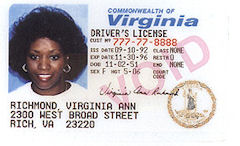
    Welcome to the future. The events in 1965 resulted in the Voters Rights Act, a landmark piece of legislation. Yet when Gov. Robert F. McDonnell signing his own weasely version of the voter identification law supported by arch conservative Republicans in the General Assembly, the Old Dominion, most of which still under federal election supervision for its tarnished past, is putting new roadblocks in front of voters.

    They used to have to show a photo ID and if they didnโ€™t have one, theyโ€™d sign an affidavit saying they were who they claimed to be. Now, their vote will be โ€œprovisionalโ€ and they will have to show up official at a later date and show the ID. Only then will their vote be counted. To make things easier, McDonnell is ordering millions of new โ€œvoter IDโ€ cards to be issued statewide. Odd that he doesnโ€™t mention how much this will cost since the flavor of the moment is strictly containing budget expenses.

    A few points on this rather strange set of events:

    • There have been absolutely no known major scandals involving voter fraud in Virginia. So, if thereโ€™s nothing broken, why go through all the trouble to โ€œfixโ€ it?
    • It is clear that restricting voting is a major ambition of the Republican Party which fears that President Barack Obama may get the boost in November’s election as he did in 2008 from the poor, the minorities and the young.
    • Regarding these groups, 25 percent of African-American voters do not have valid government-issued IDs compared with 8 percent of whites, according to a study by the Brennan Center for Justice at New York University. Some 15 percent of people earning less than $35,000 a year likewise have no such ID. According to the Project Vote, about 15,000 people voted without IDs in Virginia in 2008.

    Thus, Virginiaโ€™s conservative leaders and their cheerleaders are targeting what they consider to be a threatening group of voters as part of a campaign to correct a phony โ€œwrong.โ€ This is just another part of a sweeping socially-conservative agenda that has women, gays, dark-skinned immigrants and African-Americans in their crosshairs.

    And no, Iโ€™m not going to โ€œget over it.โ€ I refuse to be patronizing when it comes to basic civil rights.


  • Voter ID: Get Over It, and Get Out the Vote

    by James A. Bacon

    I didn’t see any pressing need for the Voter ID law in Virginia but now that we’re going to get one, I don’t see the need to get all agitated about it. In signing the Voter ID legislation into law, Governor Bob McDonnell issued an executive order instructing the State Board of Elections to issue voter cards to every Virginia voter by election day and to launch a public education campaign to raise awareness for the need to bring an ID card to the polling place. (See the press release.)

    The idea that African-Americans and Hispanics will be disenfranchised by the thousands is a paranoid conspiracy fantasy peddled to whip up the fears of minorities. Really and truly, it’ s nothing but race mongering.

    Why am I so confident that the impact on voting will be minimal?

    First, because of McDonnell’s aforesaid prophylactic measures: issuing cards to voters and launching a public education campaign. And second, because Democrats, like Republicans, spend massive sums in get-out-the-vote efforts. How much effort will it take for Dem organizers to make sure every potential Democratic voter has a proper ID card?

    Someone was certainly effective in persuading convicted felons to vote in 2008. (See “What Do You Know, There Is Electoral Fraud in Virginia?”) If minorities fail to turn out in the hoped-for numbers, blame the Democratic Party for running an inadequate get-out-the-vote effort.

    And if a handful of people slip between the cracks, well, it won’t threaten the democratic system. The Bacon family knows what it’s like to be deprived of the right to vote. (See “Voter Suppression through Bureaucratic Lethargy.”) I dare say that the problem of registering people moving in and out of the state will be a far bigger problem than “voter suppression” by a dozen times over.


  • Former Guvs Urge MWAA to Backtrack on PLA Policy

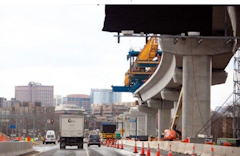
    Three former Virginia governors and a former U.S. Senator have urged the Metropolitan Washington Airports Authority (MWAA) to “put ideology, partisan politics, pride and parochial interests aside” and reverse its decision to favor Project Labor Agreements (PLA) when evaluating construction bids for Phase 2 of the Rail-to-Dulles project.

    “The Project Labor Agreement (PLA), the key point of contention, is a political and philosophical issue upon which reasonable people can disagree. To resolve that issue, we recommend that the MWAA board adopt the same prescription for Phase 2 as it prescribed for Phase 1 and leave it to the selected prime contractor to choose the best method to meet MWAA’s requirements for Phase 2,” stated the letter signed by Republicans John W. Warner and Linwood Holton and Democrats Chuck Robb and Gerald L. Baliles.

    Current MWAA board policy is to favor a PLA, but not require one, by giving additional points in the bid evaluation to prime contractors whose proposals include a PLA. Under a PLA, the contractor hires labor through a union shop. The governors are urging the board to revert to the policy that prevailed during Phase 1 construction in which the winning bidder, Dulles Transit Partners, voluntarily signed a PLA but sub-contractors were not required to.

    Critics of the MWAA’s pro-PLA policy say that it might discourage open shop contractors from bidding on the estimated $2.7 billion project, thus increasing the likelihood of a higher bid.

    The copy of the May 14 letter that was passed along to me was addressed to Todd A. Stottlemyer, a Virginia representative to the MWAA board recently appointed by Governor Bob McDonnell. I do not know if the letter was distributed to other board members.

    “As Republicans and Democrats, we come together again to ask that you and your fellow decision makers on Dulles Rail continue to work with [U.S. Transportation] Secretary [Ray] LaHood — and with each other — to resolve your differences and move this vital project smartly forward in a cost effective manner, and without putting an unfair burden upon the Dulles Toll Road users.”

    My only question… Why were the signatures of other former governors — Sen. Mark Warner, Tim Kaine, George Allen, Jim Gilmore and Doug Wilder — not affixed to the letter?

    — JAB


  • Yes, the Cville Bypass Is under Budget

    Photo credit: The Hook

    by James A. Bacon

    Last week the Virginia Department of Transportation (VDOT) opened bids for the design and construction of the Charlottesville Bypass, claiming that the low bid of Virginia Beach-based Skanska-Branch/JMT came in beneath the department’s official projection and within the $197 million allocated to the project. However, project foes stated that, based upon the evidence available to them, the low bid appeared to be over the limit. (See previous post.)

    Additional information provided by VDOT officials strengthens the case that the Skanska bid did come in below the official estimate. Assuming Skanska meets VDOT’s criteria as a qualified contractor — it has sufficient bonding capacity, it meets disadvantaged enterprise goals, etc. — there appears to be no substantial barrier for the controversial project to proceed.

    The total cost of the project, including money spent on engineering and right-of-way, was estimated to be $244.5 million. Of that amount, VDOT had set aside $125.6 million for additional engineering and construction. Skanskaโ€™s bid was $136 million, or seemingly $10 million higher. How could VDOT say that the project came under bid?

    Because the new project design slashed Right of Way costs, says Jim Utterback, Culpeper district administrator. Instead of spending $71 million to acquire additional ROW, the state will have to spend only $35.4 million — a difference of almost $36 million. The original design called for elaborate flyovers crossing U.S. 29 at the northern terminus. The revised design eliminates the flyovers, sparing the necessity of acquiring land east of the highway. The revised design also reaped smaller savings in land acquisition at the southern terminus, he said.

    Does that mean the final cost will come in $25 million under estimate? Probably not, says Utterback. VDOT has to set aside a contigency fund, and it will have to absorb Construction and Engineering Inspection costs. He anticipates that the available funds will cover those administrative costs.

    Despite questions regarding expenditures such as landscaping and noise abatement, Jeff Werner, Albemarle and Charlottesville land use officer for the Piedmont Environmental Council, conceded that the project appears to come in under budget. He is baffled by how it’s possible for Skanska to slash out so many of the costs identified by VDOT staff but not incorporated into the original cost estimate, and he would like to dig into the accounting. But as long as Skanska does what it says it will, he said, he has no grounds to object to the bid.

    The big question now is this: What trade-offs did Skanska make in its proposed design and how will they effect the bypass performance? In the original design, the Bypass would shave 2 1/2 to 3 minutes in driving time. But the substitution of a stop light or tighter curves for flyovers, and a steeper slope over Stillhouse Mountain to reduce excavation costs, could diminish the time savings and degrade the project’s economic Return on Investment.

    Opponents also say that by the time the Skanska design is made public, there will be no public hearings or any other opportunities for the public to critique the alterations from previous incarnations of the design.


  • Will Washington Mayor Gray Side with McDonnell on MWAA?

    by James A. Bacon

    Overlooked in the contentious debate over Virginia’s representation on the Metropolitan Washington Airports Authority board is this salient fact: MWAA won’t seat the two new directors appointed by Governor Bob McDonnell until the District of Columbia joins Virginia in amending the interstate compact creating MWAA. While Virginia passed the necessary legislation, which goes into effect July 1, D.C. has not.

    Indeed, there is no assurance that the District will play ball. According to my sources, Mayor Vincent C. Gray’s office agrees with MWAA that no new representatives can be added to the authority’s board until D.C. also amends the compact. And right now, the mayor’s office is reviewing its options. Nothing has been decided. No measures have been introduced to City Council.

    Governor Bob McDonnell and the MWAA board have been battling over a number of issues relating to the cost and financing of the Rail-to-Dulles heavy rail project. Last year Congress passed a law, which was signed by President Obama, that would expand the MWAA board from 13 members to 17, adding one representative from Maryland, one from the District and two from Virginia. McDonnell promptly appointed two members but MWAA refused to seat them.

    The United States Constitution gives power to Congress to review and approve compacts between two more states, explains Philip Sunderland, MWAA legal counsel. That makes sense, he says, because “you don’t want the states getting together and giving themselves power to perform federal activities.” But the Constitution is silent on Congress’ authority to amend an interstate compact. The issue has never been addressed by a court, so there is a legitimate question.

    MWAA hired an outside law firm, Jenner & Block, to dig into the issue. In a 24-page review, the firm concluded that Congress does not have unilateral authority to impose its will on the states.

    “We shared that opinion with a lot of people,” says Sunderland, including officials with the U.S. Department of Transportation, the Department of Justice and even the Virginia Attorney General’s office. “We are told that there are no lawyers with DOT or Justice who disagreed with the conclusions. … We never got anything back from Virginia.”

    In a letter to the USDOT inspector general, which released a report critical of the MWAA board’s ethics and transparency, Rep. Frank Wolf, R-10,ย  declared that MWAA had retained the law firm specifically for the purpose of “advising the board on how it could avoid complying with a bipartisan law passed by Congress and signed by President Obama.”

    Sunderlin rejects that characterization, insisting that MWAA hired the firm “to get direction on how to comply with the law.”

    “We’re out to obey the law, not create the law,” he said. “We were not looking for a preordained conclusion.”

    In theory, it would be marginally to D.C.’s advantage to increase the size of the board. By adding one seat to its existing three, it would juice the percentage of representation from 23.1% to 23.5%. However, that incremental gain may be offset by D.C.’s stance on MWAA’s decision to give preferences to Project Labor Agreements in the bidding process for Phase 2 of the Rail-to-Dulles project, or other issues.

    I have put in calls to Wolf’s office and the Attorney General’s office and will update this post if they respond. If they do not contest Sunderland’s analysis of the legal issues, I may have to update my characterization of MWAA as a rogue agency. Wrong, perhaps. But not rogue.


  • Virginia’s Perpetual Bigotry

    By Peter Galuszka

    All the talk of a โ€œnewโ€ Virginia that is somehow the apple of Richard Floridaโ€™s โ€œNew Urbanistโ€ eye got a drubbing this week when the General Assembly voted against a gay man for a judgeship, showing just how badly the social right-wing is running amok and how more thoughtful people canโ€™t control them.

    Tracy Thorne-Begland, an openly gay man who had been in the Navy for 20 years and had served as deputy commonwealthโ€™s attorney in Richmond, was rejected as a new general district court judge. He was strongly opposed by the Family Foundation lobby and ultra-rightist Del. Bob Marshall who told CNN that โ€œsodomy is not a civil right.โ€

    Even Atty. Gen. Kenneth Cuccinelli had said that sexual orientation should not be a criteria for deciding judgeships. Ditto Lt. Gov. Bill Bolling. The man who looks the most gutless in this sorry episode is Gov. Robert F. McDonnell who had supported Thorne-Begland then left him twisting in the wind. The freshly rightist General Assembly had made McDonnell look so Neanderthal on gay and womenโ€™s issues just as he was making progress resetting himself as a moderate in a ploy to make him a vice presidential candidate.

    The pathetic thing about all of this is that Virginia just canโ€™t shed its historic tendencies for bigotry against African-Americans, gays or brown-skinned foreigners.

    Over a vacation, I finished Robert A. Caroโ€™s โ€œLyndon Johnson, The Passage to Powerโ€ which is part of a trilogy. This book covers LBJ from 1960 to 1965 from his hapless vice presidency to his dynamic leadership as the new president after John F. Kennedy was assassinated.

    At one point, Johnson needed Virginiaโ€™s notoriously racist Senator and Kingmaker Harry F. Byrd to agree to a tax bill that would meet Byrdโ€™s demands as head of the Senate Finance Committee to bring down the federal budget (sound familiar?). This was part of Johnsonโ€™s agenda for sweeping civil rights reform, which Byrd would naturally oppose.

    After all, writes Caro, Byrd was openly hateful of African-Americans and had a very bad reaction when Virginia was forced to conform to the 1954 Brown versus Topeka decision by the Supreme Court that integrated schools and school buses. Caro writes:

    โ€œWhen a federal judge had issued a ruling to enforce it (integration) ย in Byrdโ€™s native Virginia, the senator had pointed out the dangers. Six-year-old children of both races were going to be โ€œassembled in little huts before the bus comes, and the bus will then be packed like sardines,โ€ he said โ€“ and everyone knew what would come of that: What our people fear most is that by this close intimate contact future generations will intermarry.โ€ Intermarriage! Miscegenationโ€ the mongrel race. . . โ€œ

    Substitute โ€˜gayโ€ for โ€œAfrican-Americanโ€ and you get Marshall, who is todayโ€™s โ€œByrd.โ€

    Odd that one of our esteemed bloggers has just returned from a โ€œNew Urbanistโ€ conference in Florida where he waxed eloquent on the teachings of Richard Florida, who believes that a โ€œcreative classโ€ of innovators, many of them gay, will be more important than corporations in defining the future of cities. This is a world view one often reads in Baconโ€™s Rebellion โ€“ how Virginia fits very neatly into the Florida ideal.

    What the Thorne-Begland decision shows, unfortunately, is that this world view is so much dreamy bullshit. The Old Dominion will never really advance until it sheds its Old Bigotry.


  • Media General Sells Newspapers, Old Richmond Fades Away

    Times-Dispatch office. Photo credit: William H. Harnett

    by James A. Bacon

    Richmond-based Media General announced the sale this morning of all of its newspapers, except those in the Tampa Group, to Berkshire Hathaway, Inc. for $142 million in cash and help in refinancing its capital structure. Newspapers affected include the Richmond Times-Dispatch as well as daily newspapers in Charlottesville, Lynchburg, Danville, Bristol and Manassas.

    Heavily indebted since the purchase of major broadcast properties years ago, Media General was looking for ways to refinance bank debt that comes due in 2013. Berkshire Hathaway will provide Media General with a $400 million term loan and a $45 million revolving credit. The new loan, which will mature in May 2020, will be used to fully repay the companyโ€™s existing bank debt. Stated the press release:

    The Media General newspapers will be part of BH Media Group, along with the Omaha World-Herald Company newspapers. A sister company of the Omaha World-Herald Company, World Media Enterprises, Inc., will manage the Media General newspapers.

    โ€œIn towns and cities where there is a strong sense of community, there is no more important institution than the local paper,โ€ said Warren Buffett, Chairman of Berkshire Hathaway. โ€œThe many locales served by the newspapers we are acquiring fall firmly in this mold and we are delighted they have found a permanent home with Berkshire Hathaway.โ€

    The sale is deeply symbolic, marking the passing of the old Richmond elite. The Richmond Dispatch was founded in 1850 and the Daily Times in 1886. By 1900 Joseph Bryan had brought the two newspapers into common ownership. Richmond Newspapers Inc. entered an aggressive growth phase under D. Tennant Bryan, who acquired newspapers in Tampa, Fla., Winston-Salem, N.C., and other cities, as well as newsprint, broadcast and cable television properties.

    Under the leadership of D. Tennant’s son, J. Stewart Bryan III, the company reached its apogee, shedding its newsprint operations and selling its cable television operations in Fairfax County and Fredericksburg for $1.4 billion, then forged a strategy around the anticipated digital “convergence” of broadcast, print and Internet media. Despite fears that the Internet would erode advertising margins for traditional media, Media General doubled down with major acquisitions during the 2000s as well as some ill-advised acquisitions in the Internet space. However, the increase in Internet revenues didn’t come close to offsetting the loss of traditional advertising revenue. Burdened with massive debt, profitability declined markedly.

    The bow-tied Stewart Bryan was a fixture of the old Richmond establishment. He was an old-school gentleman and he knew newspapers and broadcast but I got the sense that neither he nor his successor as CEO, Marshall Morton, ever understood the Internet. The first executive they put in charge of the company’s Interactive Media Division (IMD) was a blowhard who held endless meetings that accomplished nothing, and was single-handedly responsible for my decision to leave the company. As publisher of Virginia Business, I saw no great future for traditional print media, and it was my goal to migrate the Virginia Business brand to the Internet as rapidly as I could. But I could do nothing except through the IMD and found myself thwarted at every turn and unable to deliver on promises made to customers. Media General had treated me well otherwise — overlooking my occasional outbursts of speaking truth to corporate power — but I departed in frustration in 2002.

    As symbolized by the sale of the Times-Dispatch, few of Richmond’s “old money” companies survive. The old Virginia dynasties aren’t especially wealthy anymore — the Bryans have seen their ownership stake in Media General evaporate to almost nothing — and they certainly aren’t as visible in positions of civic and business leadership. But it’s not clear at all who will succeed Bryan and his peers. The good news is that the field seems to be wide open. Richmond is reinventing itself and I remain optimistic about the region’s long-term future. What Berkshire Hathaway ownership means for the Times-Dispatch and other newspapers, however, remains to be seen.


  • Quote of the Day: Jim DeMint

    From a viewpoint written by Sen. Jim DeMint, R-SC, and published by the Republican Joint Economic Committee:

    “Just as Greece enjoyed years of low interest rate loans to finance their debt due to the backing of the Euroโ€™s good name, the United States is today enjoying a time of artificially low interest rates as a result of loose monetary policies from the Federal Reserve and global marketsโ€™ assessment of the United States as a relative safe haven. The era of cheap borrowing for the United States will eventually end, and the longer Congress waits to enact serious fiscal reforms, the more painful that day will be.”

    When U.S. interest rates start rising, that’s when the deck of cards starts collapsing. It doesn’t matter who’s running the country. The only question remaining is how long we can stave off the inevitable. Boomergeddon cometh.

    — JAB