-
Jeanine’s Memes
-
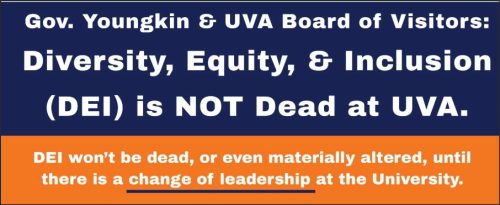
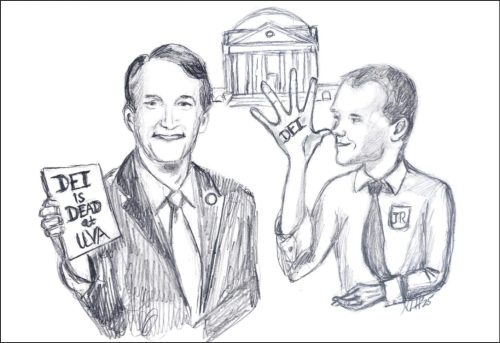
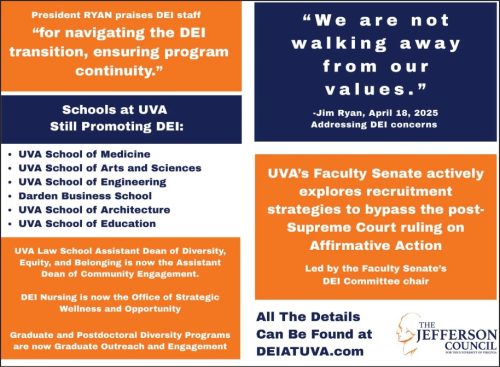
DEI Not Dead at UVA
-
When Did Democrats Begin to Resemble the Rockettes?
Virginia Democrats long defended and preserved the state’s “right-to-work” law. They’re shifting in unison.
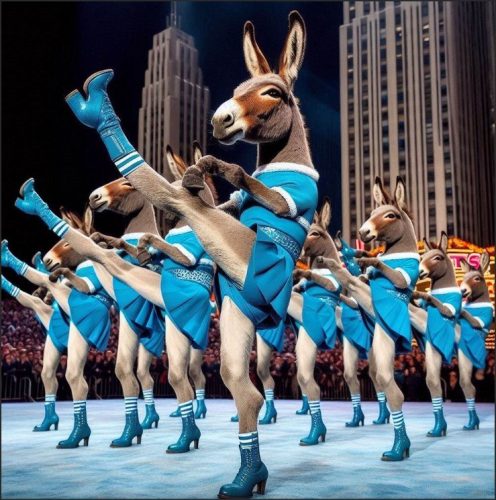
Image credit: Bing Image Creator by Gordon C. Morse
Join a labor union, if you like.
Or do not join a labor union, if you like.
Your choice. Virginia law says that no one can force you to financially support a union as a condition of employment.
Does the law put labor unions at a disadvantage? You bet.
Which was politically sound. There previously existed a clear consensus in favor of right-to-work. In 1985, the director of the state’s Department of Economic Development called right-to-work “almost Biblical.”
Was it resented? Sure. Danny LeBlanc, the stalwart Virginia labor leader of that era, said, “The whole purpose of the right-to-work law is to make unions weak.”
It really wasn’t the whole thing, but that wasn’t far off.
LeBlanc further claimed that state politicians “feel they have to have the corporate bosses in order to get elected. They are the ones who have the bucks to make things go.”
Well, unions make things go, too, bucks included. The cash just flows differently.
It mostly comes down to a question of where power best resides and how the answer encourages or discourages private business investment and economic growth.
Has public sentiment on this matter shifted? We’re about to find out.
-
Bacon Meme of the Week

-
Bonfire of the Sheepskins

Image credit: Bing Image Creator by James A. Bacon
As tuitions climb ever higher and the wage premium for a college degree has plateaued, an increasing percentage of Americans — especially younger Americans — consider their diplomas a waste of money, concludes Indeed.com, an online job site, on the basis of a new survey.
Twenty percent of Baby Boomers considered their college degrees worthless, but the percentage increased to 41% for Millennials and 51% for Gen Z, found the poll, which queried 772 U.S. adults who are employed or seeking employment and have an associate degree or higher.
The high cost of higher-ed means that half of all respondents (52%) were saddled with student debt. Unsurprisingly, those with higher debt burdens were more likely to question the value of their degrees.
“The combination of stagnating wage benefits, skyrocketing costs, degree saturation, and debt may explain why younger generations increasingly question whether college is worth it,” states Indeed’s analysis. “The traditional promise of higher education simply doesn’t align with the reality many younger professionals experience.”
-
Why Harvard and the UDC Should Keep Their Tax Exemptions

Strange bedfellows. Image credit: Chat GPT by Derrick Max
Every taxpayer dollar sent to any university or private entity should be closely scrutinized. In the case of the billions sent to Harvard University and other elite schools, the probe being imposed by the Trump administration is long overdue.
The research grants which make up the majority of Harvard’s non-medical federal funding, notoriously lack transparency, allow for use of funds for supposed “indirect costs” that go almost unfettered to the University, and are the type of grants that are not available to most other colleges and universities in the country.
When the Harvard Crimson reports that more than three-quarters of Harvard’s faculty self-identify as “left” or “far left” and 65 percent of Harvard graduates identify as “progressive” (only 12 percent identify as “conservative”), the level of federal funding from a progressive leaning federal bureaucracy rightly raises concerns about “self dealing” in the eyes of a newly elected conservative administration.
With famous liberal graduates like former Presidents John F. Kennedy and Barack Obama and liberal Justice Ruth Bader Ginsberg, it is no wonder that Harvard is considered the intellectual center of the failed progressivism that is an offense to much of what was rejected by voters in this last election. President Trump is right to view Harvard with some distrust, if not disdain. On this, we and most conservatives agree.
Throw in the lackluster response to the antisemitism running rampant on Ivy League and other college campuses and you have more than enough reason to take a second look at the taxpayer funding given to these institutions.
But, this disdain and scrutiny should not bleed over into any consideration of challenging Harvard’s tax-exempt status. While President Trump’s mention of removing Harvard’s favored tax status could just be a part of a broader negotiating strategy (three dimensional chess), it would set a dangerous precedent.
Such a move, without question, would put Liberty University — Virginia’s largest University and 18 other Christian colleges in the Commonwealth — square in the crosshairs of some future progressive President who would use Liberty’s policies on homosexuality and gender as justification to end their tax status.
(more…)
-
About Being Virginia’s Lieutenant Governor

Patrick Herrity by Gordon C. Morse
Earlier this week, Patrick Herrity dropped out of the June 17 primary for the Republican nomination for lieutenant governor, and it’s too bad. The son of Jack Herrity had not fallen far from the tree and that alone promised to make his race both fun and useful.
About his old man: born in Arlington, Jack Herrity opened his political career by winning a spot on the Fairfax County Board of Supervisors in 1971. Five years later, he was elected chairman and remained so for the next 12 years.
Herrity favored economic growth in the 1970s and 80s when “growth” invariably inspired a protracted fight. Herrity stayed the course, and in the process, earned lasting respect.
It earned him growing opposition, too. In 1987, the slow-growth forces in Fairfax handily defeated him, though his legacy remains undiminished.
Son Patrick likewise embraced a “let’s-get-things-done” mentality. His business background stood him out in a part of the state now celebrated for its ideological blather. You didn’t always have to agree with Pat Herrity to see that his knowledge of local government would have benefited him in state office.
-
The Opportunity-for-All Candidate
by James A. Bacon
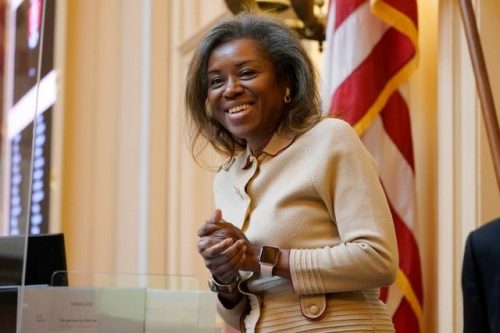
Pundits and politicians are enamored with the idea that Virginia will “make history” in its gubernatorial elections this fall. No matter who wins the election — Republican Lieutenant Governor Winsome Earle-Sears or Democrat Abigail Spanberger — she will be the first woman to serve as Governor.
The making-history observation applies to Earle-Sears in triplicate. She’d be the first woman, the first immigrant, and the second African-American to become governor — an undisputed winner of identity-politics sweepstakes. But it’s not a distinction she’s looking for.
“I acknowledge that [the election] is historical, but I don’t stand on that,” Earle-Sears told an audience of roughly 200 at the University of Virginia yesterday in an event sponsored by The Jefferson Council and Center for Politics. The luster of being a historical first wears off quickly, she said. People quickly adopt the attitude, “Now what? What have you done for us?”
Earle-Sears did not delve into detailed policy proposals. Rather, she sounded broad themes. She believes in equal opportunity, not equal outcomes. The keys to achieving equal opportunity in Virginia are freedom of choice in education, an all-of-the-above energy policy, safe communities and a robust economy.
-
More Bizarro Logic from the Intelligentsia
by James A. Bacon

Image credit: Bing Image Creator Governor Glenn Youngkin issued a press release yesterday highlighting the success of the Virginia Homeland Security Task Force, which, in cooperation with federal authorities, has made 521 arrests since February 25, including 132 individuals affiliated with MS-13, Tren de Aragua, and other transnational criminal gangs.
Markus Schmidt with the Virginia Mercury covered the story with an article that quoted extensively from the press release without distortions or cherry-picking of data (which means he’s not yet ready to work for The Washington Post). So, kudos to Schmidt for that.
Sadly, however, he chose to assault readers with this down-the-rabbit-hole logic:
A 2024 report funded by the National Institute of Justice (NIJ) found that undocumented immigrants are arrested at significantly lower rates than U.S.-born citizens.… The findings challenge an unproven core assumption underlying the rhetoric around initiatives like the VHSTF — that undocumented immigrants pose an outsized threat to public safety.
-
Some Small Victories for Good Government
by James A. Bacon
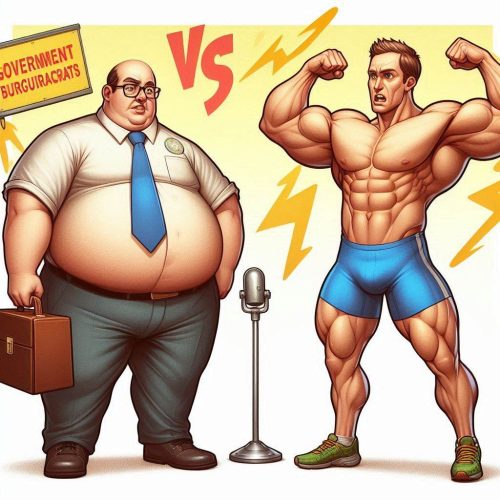
Image credit: Bing Image Creator Virginians can argue all day long about the proper size and scope of state and local government. But we should be able to agree upon one thing: that whatever it does, government needs to do its job as efficiently and cost-effectively as possible.
So, it’s good news to hear that the state Office of Transportation has generated $105 million in savings, according to Dave Ress with the Richmond Times-Dispatch. It’s not clear from the article whether the savings occurred in fiscal 2024 or the three years since Governor Glenn Youngkin set up the office. Either way, it’s not chump change, even in a General Fund that spends roughly $30 billion a year.
On the other hand, the savings cited in Ress’ article come from administrative efficiencies that seem in retrospect to be no-brainers: reversals of practices that should never had been allowed in the first place.
The biggest gains came from changes in procurement policy. For example, as described to Ress by Chief Transformation Officer Rob Ward, state agencies hire professional services, such as consulting services, without knowing (or caring) that other agencies have engaged the same consultants at lower hourly rates. Adjusting payments for all services to the lower rates netted $47 million in savings.
-
About That $660 Million
by Dick Hall-Sizemore

Sample of damage to Virginia Creeper Trail by flooding following Hurricane Helene.
Photo Credit: Cardinal NewsEarlier this year, I had an article in Bacon’s Rebellion discussing the concerns of U.S. Senator Mark Warner about a possible hold-up of federal disaster funds meant for the repair of the damage to the Virginia Creeper Trail caused by Hurricane Helene. Several readers expressed their consternation, and rightly so, at the cost estimate of $660 million for the trail’s repair.
It is a lot of money and seems an unreasonable amount to repair a walking trail, even if those repairs include replacing numerous trestles and relocating the trail in some areas. It was with some chagrin that I had to admit that I had not focused on the cost. Subsequently, I decided to find out the basis for that cost estimate.
It has sometimes been a frustrating search but a fascinating one overall. Before going any further, some background might be helpful.
Virginia Creeper Trail background
The Virginia Creeper Trail is an example of the “Rail to Trail” movement in which abandoned railroad rights-of-way have been converted to trails—walking, biking, horseback riding, etc. The right-of-way was originally purchased and cleared in the 1880’s by a company hoping to build a rail line to haul iron ore out of the mountains east of Abingdon. That effort was abandoned.
-
Solving the Greatest Mystery in History
by James A. Bacon
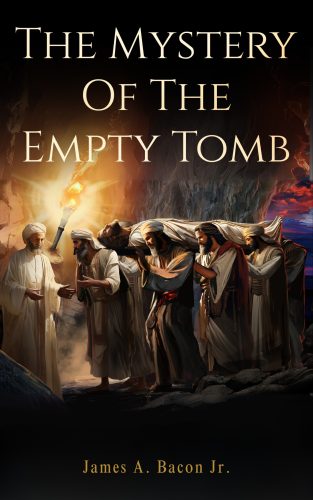
Easter, the holiest day of the Christian calendar, marks the resurrection of Jesus Christ. The historic underpinnings of Christian doctrine have long fascinated me, and I have spent many years of amateur study of Jesus’ life and times in an effort to achieve a greater understanding of this seminal moment in human history.
The result is my new novel, The Mystery of the Empty Tomb, which tells the story of Jesus’ entry into Jerusalem in the year 33 C.E. (Common Era), his arrest by the temple priests, his trial and crucifixion by Pontius Pilate, his burial, and the disappearance of his body from the tomb. The story is narrated by Nicolaus, a Greek by culture, native of Caesarea, and aide to Pilate. Grave robbery was endemic in the ancient world and the purloining of corpses was forbidden by imperial decree, so Roman authorities would have immediately assumed that the body had been stolen. The conceit of the novel is that Pilate puts Nicolaus in charge of identifying the culprits and tracking them down.
Nicolaus’ investigations take him from the palace of Herod the Great to the Temple of Jerusalem (the greatest of the ancient world), into the mansions of the high priests, through the streets and marketplaces of Jerusalem, and to the cities and villages of Galilee and Samaria. Through Nicolaus, the reader learns about the power struggle between Pilate and the priests, the rivalries between Sadducees and Pharisees (and among factions of Pharisees), the ethnic tensions between Jews, Greeks and Samaritans, and the revolutionary aspirations of the anti-Roman zealots. As Nicolaus probes deeper into the sects and doctrines of the Jews, he introduces readers to the mysteries of throne mysticism and arcane practices of sorcery.
-
Jeanine’s Memes
-
Who Should Lead Virginia?
by Gordon C. Morse
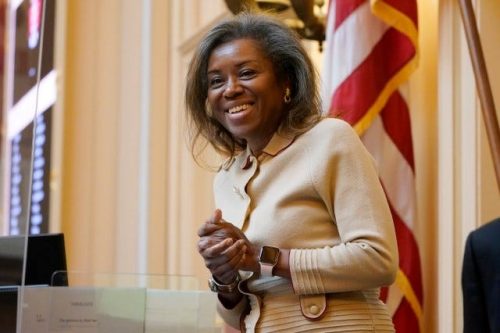
In roughly six months, Virginia will elect a new governor, and her name is Abigail Spanberger.
That appears to be the consensus view and, based on the circumstances (money, history, money, Trump, and money), the logic favoring Spanberger, a Democrat, appears convincing.
So where does that leave Spanberger’s GOP opponent, current Lt. Gov. Winsome Earle-Sears? In need of a compelling, un-risk-averse message. She will have to take some chances. A formulaic, by-the-numbers campaign will likely not get it done for Earle-Sears.
Let me first attempt a description of the overall situation.
“Virginia does presidential reactions,” a seasoned, wise and experienced chum said on Thursday, while we sat eating lunch in bucolic Charles City County. It’s less and less about Virginia, per se, in other words.
My friend pegs the shift to year 2016, when Donald Trump first ascended to the White House. America suddenly and urgently needed to channel its response – as felt by those, of course, who did not care for Trump – and Virginia promptly offered an electoral opportunity to do so the following year.
The theory behind Virginia’s offset elections, so we’re told, once sat in the notion that the commonwealth should avoid entanglements. No one in Virginia (if it was to remain Virginia) would benefit from state politics getting too tied up in national politics. Keep the two separate.
Well, so much for that.
-
Bacon Meme of the Week