By Derrick Max

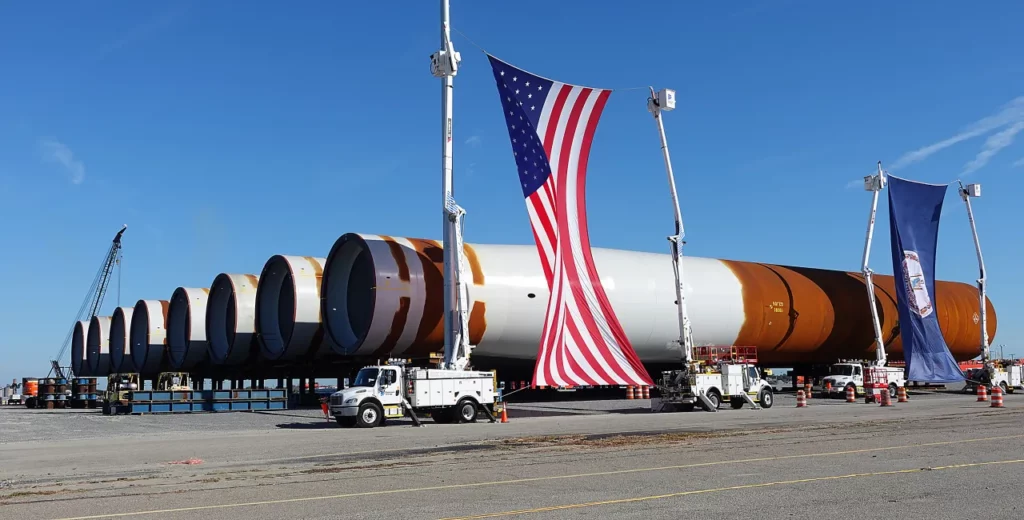
President Trump’s decision to suspend Dominion Energy’s massive Coastal Virginia Offshore Wind (CVOW) project is sure to stir up another gale of political fights across the Commonwealth. While some will hail it as a triumph for fiscal and national security; others will see it as an assault on clean energy. Both sides are worthy of debate before such projects are ever approved but are now trumped by one single fact – ending this project at this point of construction will strand at least $8 billion on Virginia ratepayers without getting a single kilowatt of power in return.
CVOW is no ordinary renewable project. It was created by legislative command. The 2020 Virginia Clean Economy Act (VCEA) declared Dominion’s 2.6-gigawatt wind farm “in the public interest,” effectively tying the hands of the State Corporation Commission and guaranteeing Dominion full cost recovery and profit. The risk doesn’t sit with shareholders — it sits with Virginia’s ratepayers.
The Thomas Jefferson Institute opposed that structure from the start. We warned that forcing captive customers to underwrite an unproven, high-cost project located in a hurricane prone region would expose Virginians to escalating bills with little accountability. Yet when a group recently asked the federal government to shut CVOW down, we declined to join. Why? Because government shouldn’t pick winners and losers — not when it mandates projects, and not when it stops them. Especially when a project is in its final stretch and no economic analysis of such a decision has been completed (or shared).
If the project were canceled in its final buildout phase, Dominion would still seek recovery for billions in sunk costs, leaving consumers paying for turbines that never turn. That would be even worse for ratepayers than finishing the project.
The Trump administration’s pause is tied to classified national security concerns involving foreign-made components — undersea cables, turbine electronics, and data systems linked to Chinese suppliers. Those concerns are legitimate. The U.S. has already barred Huawei from telecom networks for similar reasons, and it would be naive to ignore potential risks in critical energy infrastructure.
(more…)