by Steve Haner
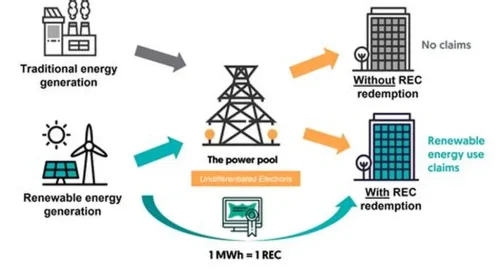
A key, but poorly understood, provision of the Virginia Clean Economy Act (VCEA) is a requirement that Virginia’s two largest electric utilities must either generate or purchase a growing number of renewable energy certificates (RECs). Eventually their RECs must equal 100% of their non-nuclear generation. What are RECs and why do they matter to you?
Put simply, a REC is an electronic record that proves a generator produced one megawatt hour of electricity from an approved “renewable” source, usually solar or wind. It can be a utility, an independent energy generator, a business with solar on its roof or even a shared community solar system that is granted a REC. A small portion of RECs are awarded for hydro or geothermal generation.
The certificate is issued and tracked by a third party, and – here is the point – can be sold. Recording and tracking RECs is one of the jobs done by the PJM Interconnection regional grid operator. There are several marketplaces compiling and transferring them.
The buyer then “retires” the REC, in effect cashing in the environmental virtue of that “green” energy. It can be retired only once. The entity that earns the REC can also be the one to retire it, but usually they are traded.
One website that reports on the REC industry put the total world REC market at more than $20 billion in 2024, predicting it will exceed $40 billion by 2030. The annual compound growth rate is higher than 10%. The same website was quite open about what is going on:
“By buying RECs, companies can effectively offset their carbon emissions and achieve 100% renewable energy consumption without significant investment in renewable energy infrastructure.”