• April 21: Not Really What Virginia Needs Now

    A group of children protesting in the streets, holding signs saying 'Yes' and 'No', with a variety of expressions showing determination and passion.

    by Gordon C. Morse

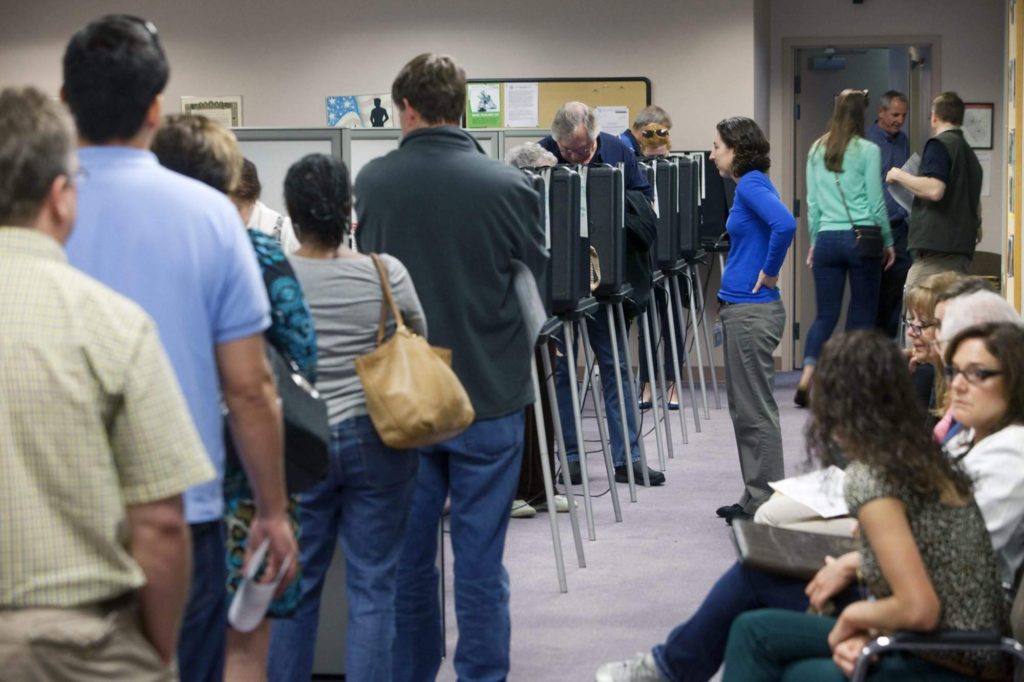
    Want a political version of blunt force trauma? Then welcome to Virginiaโ€™s April 21 referendum on congressional redistricting. Look at the map and behold the winners. No one has to be fair about โ€œfairness.โ€

    Itโ€™s โ€œtemporary,โ€ they keep saying. Temporary โ€” as in, it wonโ€™t last long.

    You could say as much about the vaunted redistricting commission. Installed via a constitutional amendment but five years ago, it proved very temporary.

    Appointed to a college or university board by the governor? Thatโ€™s temporary, too.

    Such appointments were previously tantamount to service. There was no pause in between or abrupt removal. You even got a certificate, suitable for framing: โ€œTo All To Whom These Presents Shall Come โ€” Greeting. Know Ye, that from special trust and confidence reposed in his fidelity, our Governor by virtue of authority vested in him by law, hath appointed and hereby commissions …โ€

    I pulled that language right off a certificate in the hallway, which names moi to the Board of Visitors of Virginia Commonwealth University in 2009. Itโ€™s signed by Gov. Tim Kaine.

    Republican Speaker Bill Howell, with his partyโ€™s majority in the House of Delegates then, could have killed that appointment dead to rights. He did not. Why? Because Speaker Howell was an honorable public servant who respected Virginiaโ€™s governing traditions.

    Or maybe Speaker Howell just shrugged and said to himself, โ€œJeez, that twit,โ€ and let my appointment go with no more thought.

    (more…)

  • The General Assemblyโ€™s 22.5% โ€œLabor Taxโ€ Gamble

    by Derrick A. Max

    As the Virginia General Assembly enters the final weeks of its 2026 session, a wave of new labor mandates is about to reach the Governorโ€™s desk, two of which she has promised to sign, and one she seems inclined to support as well.

    House Bill 5 (Paid Sick Leave), Senate Bill 2 (Paid Family and Medical Leave), and House and Senate Bill 1 ($15 minimum wage) are moving through both chambers, putting the Commonwealth on the verge of a fundamental transformation in its labor market — one that carries a rigid and predictable consequence for every small and medium sized business in the Commonwealth. 

    For those tracking the economic health of Virginia, these aren’t just “wage and benefit” bills; they represent a coordinated, multi-layered surcharge on the act of hiring. When you combine a $15 minimum wage with a new sick leave mandate and a paid family and medical leave tax, you are pricing growth out of reach for many smaller firms, and reducing employment for low productivity, entry-level employees.

    The 3.3% Base

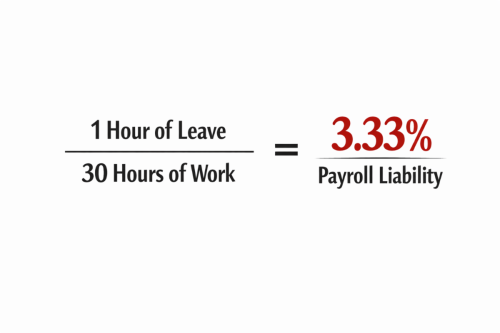
    House Bill 5 mandates one hour of paid sick leave for every 30 hours worked. This calculates to a fixed 3.33% mandatory increase in the cost of labor.

    (more…)

  • The Fiscal Flywheel Effect

    In my Feb. 13 podcast, former Finance Secretary Steve Cummings explained the positive feedback loop between strong state finances and economic development. His observations about the fiscal flywheel effect are worth highlighting here. –JAB

    Cummings: “The underlying premise here is growth. When you have a declining revenue stream, when you have declining population, youโ€™re gonna have a really hard time running a government and running it effectively.

    “Through the policies that the governor implemented, weโ€™ve attracted companies, weโ€™ve added 277,000 jobs over the term of the governorโ€™s administration. Thereโ€™s still 220,000 open jobs, not counting jobs that arenโ€™t yet open, but 85,000 new jobs that are in the economic development pipeline to be delivered over the next five years. And that does not include the 40,000 construction jobs that are associated with them. So, when you put all that together, itโ€™s like 600,000 people who still are looking to fill jobs and growth thatโ€™s coming. So, Virginia has jobs.

    “This is the narrative that we think is fact-based and others donโ€™t want to talk about. And the reality is that at 220,000, we have 1.6 jobs for every unemployed person in Virginia. Nationally, itโ€™s under one. That dynamic is underlying your revenue stream because withholding is our biggest revenue source. And that is what can help the flywheel get going here, where we are successful in generating revenues that continue to grow and which allows us to fund other things and reduce taxes.

    “You can look at a couple other key states here. North Carolina is the best example. They got that flywheel going five to 10 years ago, and they have been consistently reducing taxes while their budget has increased.”


  • VDH Rejects CDC Vaccination Guideline Changes

    by Dick Hall-Sizemore

    Dr. Cameron Webb, Virginia State Health Commissioner

    Virginia has joined 23 other states and the District of Columbia in rejecting the new guidance from the Centers for Disease Control regarding childhood vaccinations. 

    The CDC guidelines no longer include hepatitis A and B, rotavirus, flu, COVID-19 and meningitis in the routine immunization schedule.

    Explaining that the recent changes in the CDC guidelines were made โ€œinย theย absence ofย new data or safety signalsย toย prompt such an update,โ€ Dr. Cameron Webb, Virginia State Commissioner of Health, in a recent letter to clinicians throughout the state, said that the Virginia Dept. of Health โ€œstrongly recommends that all children in the Commonwealth be vaccinatedย in accordance withย theย American Academy of Pediatrics (AAP) Recommended Child and Adolescent Immunization Scheduleโ€ instead.

    Thanks to Axios of Richmond for alerting me to this story


  • The Cabal Strikes Again


  • Fairfax County Prosecutor Lets Killers Escape Justice Through Insanity Defenses

    by the Liberty Unyielding staff

    The chief prosecutor of Fairfax County is letting some killers escape a conviction by accepting insanity pleas that would almost certainly be rejected by a jury. The insanity defense is used in less than 1% of criminal cases and is successful only about 25% of the time, making it a rare and difficult defense to employ. Defendants typically have to prove, by clear and convincing evidence, that they were unable to distinguish right from wrong due to severe mental disease or defect at the time of the crime. Merely having a mental disorder is not enough to establish an insanity defense. It is the defendant who has the burden of proving insanity.

    Close-up portrait of a smiling man with short blonde hair and blue eyes against a neutral background.
    Joshua Danehower, plead Not Guilty by Reason of Insanity for shooting a man ten times in his bed.

    But Fairfax County Commonwealth’s Attorney Steve Descano (D) has let 11 killers avoid conviction by accepting their plea of “Not Guilty by Reason of Insanity.” That’s about a fifth of the killers recently arrested in Fairfax County. So killers are 100 times more likely to avoid a conviction by claiming to be insane in Fairfax County than they would be in the rest of America. Even though there is no reason to think insanity is more common in Fairfax County than in the rest of the country, much less 100 times more common.

    As Mary Katharine Hamm notes, “A man murdered Gret Glyer execution style, shot him” ten times “as he slept next to his wife.” The killing was premeditated, and the killer “even wrote it down in ‘The Plan.’โ€ Yet Descano’s office has now accepted “a flimsy insanity plea” to send the killer to a “mental health facility, where he will be evaluated and eligible for release soon and over and over, each time potentially free and dangerous again.”

    (more…)

  • Neither House nor Senate Budget Raises General Taxes

    But the Senate Strips the Data Center Tax Break Next Year

    by Steve Haner

    The Senate and House of Delegates financial committees met on Sunday to approve competing sets of amendments to the next Virginia budget, neither proposing any general tax increases. The Senate version included modest tax reform: a small taxpayer rebate for this year and an increase in the income tax standard deduction. ย 

    The Senate, however, allows the existing sales tax exemption for the data center industry to expire at the end of 2026, which raises almost an additional $1 billion over the next two years. A portion of the sales tax is dedicated to transportation, and the extra sales tax money to be paid by the data centers is earmarked for public transit in Northern Virginia.ย ย ย 

    The full Senate and House are expected to pass their competing budget bills in the coming week, setting up the annual conference committee process to reconcile differences before the scheduled General Assembly adjournment on March 14. Because of the Senateโ€™s move against the data centers and its proposed tax reforms, a contentious conference is possible.ย 

    Both budgets include an increase of the base legislative salary to $45,000 per year starting in 2028. Neither committee discussed the raises openly during their meetings, with the only mention coming when a Senate Republican spoke up to announce he would abstain on that individual item.ย ย 

    (more…)


  • Jeanine’s Memes

    Two women engaged in a conversation, with one expressing disbelief about the effectiveness of education spending. Text overlay indicates a quote about spending $3 trillion on education and questioning the outcomes.

    See more memes at The Bull Elephant.


  • It’s Just a Box!

    Virginia is one of three states that require businesses that sell caskets to get a funeral director’s license.


  • Tariff Ruling Correct, Good for Virginia

    by Derrick A. Max

    The Supreme Courtโ€™s decision in Learning Resources v. Trump is a landmark reaffirmation of one of the Constitutionโ€™s most fundamental principles: the power to tax belongs to Congress alone. Article I, Section 8 of the Constitution explicitly vests in the legislative branch the authority โ€œto lay and collect Taxes, Duties, Imposts and Excises.โ€ Tariffs are taxes, and the Court rightly held that the International Emergency Economic Powers Act (IEEPA) does not authorize the President to impose sweeping tariffs without clear congressional authorization.

    Chief Justice Robertsโ€™ opinion underscores what constitutional conservatives have long warned: permitting the Executive to wield such sweeping taxation authority erodes the separation of powers and undermines democratic accountability. Without this limit, revenue policy, the heart of governance, could be made unilaterally by a single individual rather than debated and enacted by the peopleโ€™s elected representatives. We did not overthrow a tax and tariff Monarch to be replaced by a tax and tariff executive.

    Yesterdayโ€™s Supreme Court decision vindicates the concerns voiced by the Thomas Jefferson Institute, and by former Virginia Governor George Allen who participated in this case. In earlier commentary, Governor Allen criticized these tariffs as โ€œan unconstitutional seizure of taxation power,โ€ a position rooted not in ideology but in constitutional textualism. The Framers deliberately placed fiscal authority in the legislative branch to prevent exactly the kind of executive overreach this case presented.

    Governor Allen rightly warned about the risk of creating a unilateral emergency power, that when in the hands of a future President of the Left, could be used to declare a climate emergency to impose massive tariffs on all sorts of items and fuels in furtherance of the leftistโ€™s hysterical green agenda.  

    (more…)

  • Time to End the Baseless Attacks on UVA’s Presidential Search

    by The Jefferson Council

    The Rotunda at the University of Virginia, featuring a circular structure with a domed roof and large white columns against a blue sky.

    If you have listened to some of the continuous, repetitive commentary surrounding UVAโ€™s recent presidential search, you might be led to believe it was some kind of rushed, politicized backroom maneuver. The facts and the truth tell a totally different story.

    In fact, the search committee was the broadest and most inclusive in UVA history and the timeline itself was clearly in accordance with recent University history. The committee had twenty-eight members (the largest number ever), composed of faculty, students, and a bipartisan group of present and former Board members. The search committee also created a dedicated website inviting public engagement and input. By any reasonable measure, this was an expansive and inclusive process.

    The timeline actually followed by the committee was squarely in sync with prior UVA presidential searches. At five months, it mirrored the searches that brought John Casteen and Terry Sullivan to UVA, thus giving the lie to the oft repeated calumny that this was an intentionally rushed process. Moreover, the search firm retainedโ€”Isaacson, Millerโ€”was the same one that recruited Jim Ryan. There was no sudden deviation from past practice, no improvised structure, no secret alternative track. The process followed was established and familiar.

    What is different is not the process, but the highly coordinated reaction to the outcome.

    (more…)

  • Finally, a Law to Help Teachers!

    by Matt Hurt

    This year HB568 was introduced in the General Assembly.ย The bill aims to reduce the amount of work required by educators to comply with the Virginia Literacy Act by leveraging technology.ย  If enacted, this law would significantly reduce the time teachers and reading specialists spend on paperwork, allowing them to devote more time to helping students learn to read.

    A joyful teacher in a suit stands in a classroom, celebrating while covered in red streamers, as surprised students watch in amazement.
    Teacher shredding red tape. Image credit: Grok

    The Virginia Literacy Act (VLA) has many requirements related to reading instruction in grades Kindergarten through eight, with different expectations across grade bands.ย This article focuses on the requirements for students in grades Kindergarten through 3; however, HB568 would be beneficial across all grades.

    Among other requirements, the VLA mandates that student reading be assessed using the VALLSS assessment.ย In Kindergarten through third grade, this assessment functions as a screener to identify students who may be struggling readers.ย Students who are identified as โ€œhigh riskโ€ based on VALLSS results are required to have a reading plan.ย The goals and objectives to be written in each studentโ€™s plan must be derived directly from VALLSS data and address the specific reading weakness for each student.

    During the 2023โ€“2024 school year, a group of reading specialists and division literacy leaders from our consortium met to address the daunting task of creating and managing the large number of reading plans anticipated under the VLA.ย Over several months, the group researched commercially available solutions to help manage this workload. While a few options were identified, they were ultimately found to be insufficient.ย ย 

    A smaller group of these educators continued to meet and eventually decided that we needed to build our own technology solution to meet the requirements of the VLA.ย They developed a detailed document outlining functional expectations for such a system.ย Several divisions in the consortium endorsed the idea and agreed to fund its development.ย A programmer was hired to bring the educatorsโ€™ vision to life, resulting in a program later named the โ€œVLA Trackerโ€.

    (more…)

  • Bacon Meme of the Week

    Packages of cinnamon-flavored bacon labeled 'Cinnamon Toast Crunch' on a store shelf, featuring colorful branding and a humorous caption questioning the necessity of this product.

  • Note on Comments

    The goal of Bacon’s Rebellion has always been to maintain a high-quality comments section where people of diverse views can engage in civil dialogue on topics of state and local interest. Inevitably, commenters, being human, are tempted to stray from matters addressed in the columns. Before long, some wind up debating the price of eggs in China. Readers of the comments who are curious to see what others are saying about the column can be deluged with irrelevant material.

    To address that problem, Bacon’s Rebellion is limiting new threads to two per reader. That restriction does not apply to those responding to the comments of others. Readers still will be able to respond to one another on existing threads as much as they like. (We will monitor those threads, however, to make sure readers aren’t using them to introduce new and off-topic subjects.)

    If readers have a burning desire to discuss issues not raised by our regular columnists and guest contributors, I will consider setting up a special post where you can go at it with your favorite antagonists. Email me your suggestions at [email protected].


  • Give Us Your Voter Registration Rolls

    by Dick Hall-Sizemore

    The Trump administration has sued the Commonwealth of Virginia for refusing to turn over its voting registration rolls to the U.S. Dept. of Justice (DOJ).

    The Commonwealth is not alone. Currently, the administration has sued 24 states and the District of Columbia for refusing the demand. The states sued were primarily those with Democrat governors.

    Last May, the administration sent โ€œrequestsโ€ to all the states for digital copies of their registration rolls to include at least the following information: โ€œthe voter registrantโ€™s full name, date of birth, residential address, his or her state driverโ€™s license number or the last four digits of the registrantโ€™s social security number.โ€ย The purpose of the request was to enable the DOJ โ€œto test, analyze, and assess statesโ€™ VRLs [Voting Registration Lists] for proper list maintenance and compliance with federal law.โ€

    Along with submitting the data, states were asked to sign a โ€œConfidential Memorandum of Understandingโ€. That MOU included among provisions:

    • โ€œAfter analysis and assessment of your stateโ€™s VRL, the Justice Department will securely notify you or your state of any voter list maintenance issues, insufficiencies, inadequacies, deficiencies, anomalies, or concerns, the Justice Department found when testing, assessing, and analyzing your stateโ€™s VRL.โ€
    • โ€œYou agree therefore that within forty-five (45) days of receiving that notice from the Justice Department of any issues, insufficiencies, inadequacies, deficiencies, anomalies, or concerns, your state will clean its VRL/Data by removing ineligible voters and resubmit the updated VRL/Data to the Civil Rights Division of the Justice Department to verify proper list maintenance has occurred by your state.โ€
    (more…)