
by Dick Hall-Sizemore
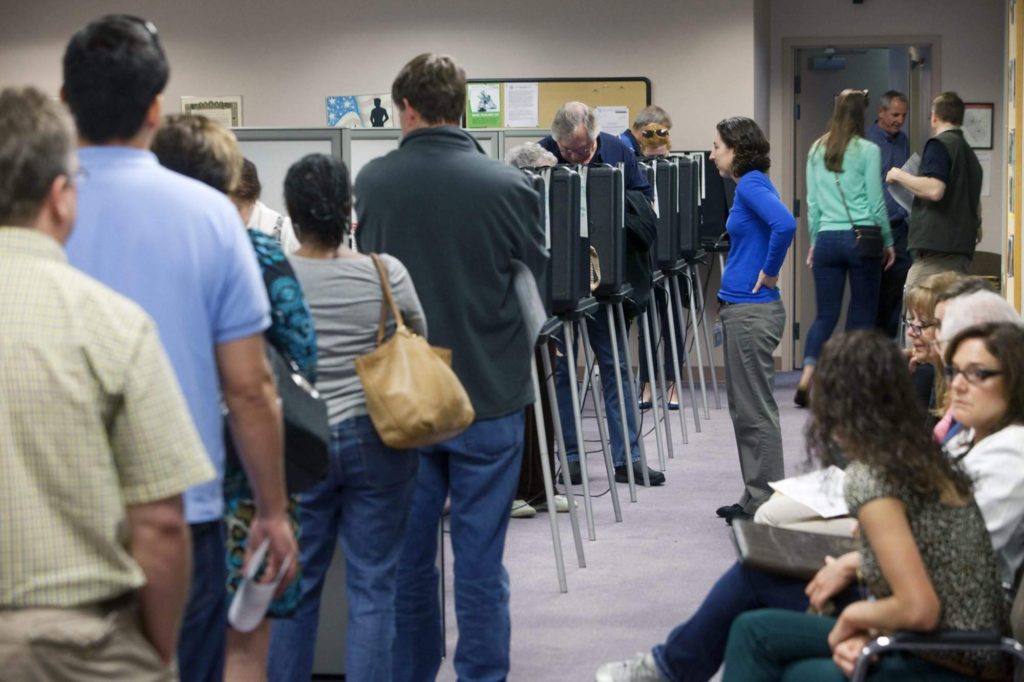
The Trump administration has sued the Commonwealth of Virginia for refusing to turn over its voting registration rolls to the U.S. Dept. of Justice (DOJ).
The Commonwealth is not alone. Currently, the administration has sued 24 states and the District of Columbia for refusing the demand. The states sued were primarily those with Democrat governors.
Last May, the administration sent “requests” to all the states for digital copies of their registration rolls to include at least the following information: “the voter registrant’s full name, date of birth, residential address, his or her state driver’s license number or the last four digits of the registrant’s social security number.” The purpose of the request was to enable the DOJ “to test, analyze, and assess states’ VRLs [Voting Registration Lists] for proper list maintenance and compliance with federal law.”
Along with submitting the data, states were asked to sign a “Confidential Memorandum of Understanding”. That MOU included among provisions:
- “After analysis and assessment of your state’s VRL, the Justice Department will securely notify you or your state of any voter list maintenance issues, insufficiencies, inadequacies, deficiencies, anomalies, or concerns, the Justice Department found when testing, assessing, and analyzing your state’s VRL.”
- “You agree therefore that within forty-five (45) days of receiving that notice from the Justice Department of any issues, insufficiencies, inadequacies, deficiencies, anomalies, or concerns, your state will clean its VRL/Data by removing ineligible voters and resubmit the updated VRL/Data to the Civil Rights Division of the Justice Department to verify proper list maintenance has occurred by your state.”
There has been considerable pushback from the states. According to the Brennan Center, only 11 states have agreed to turn over their full statewide voter registration lists, including driver’s license and Social Security numbers. Of that group, only two, Texas and Alaska, agreed to sign the MOU. DOJ has gone to court to compel some of the recalcitrant states to produce the data. So far, federal courts in three states, California, Oregon, and Michigan have dismissed the suits, saying that “the Justice Department is not entitled to the voter data at the heart of the suits.”
Contrary to what many readers of this blog may assume, it was not the resistance of the Spanberger administration that sparked the federal suit. It was the Youngkin administration that refused to comply with the request. The complaint filed by DOJ in the U.S. District Court, Eastern District of Virginia, lays out the following timeline:
- July 15, 2025—The U.S Attorney General sent a letter to Susan Beals, Commissioner of the Virginia Department of Elections requesting a copy of Virginia’s statewide voter registration list within 14 days.
- August 14, 2025—DOJ sent another letter to Beals requesting the voter registration data.
- August 2025—January 2026—“The United States and Commissioner Beals had extensive discussions.”
- Jan. 8, 2026—“Representatives of Commissioner Beals expressed in person that she would not be providing the SVRL. Despite various representations and commitments of the Youngkin administration to produce Virginia’s SVRL, the SVRL had not been produced to the United States as of this date.”
The suit was filed on Jan. 16, 2026, on the last full day of the Youngkin administration.
When the Youngkin administration, which was ordinarily quick to cooperate with, or accede to, the Trump administration, refuses a “request” from DOJ to turn over data and prompting, in the process, a complaint from DOJ that it had been misled, one knows that serious issues and concerns are in play.
To be fair, the Youngkin administration was not the only Republican state administration that resisted. There have been reports that at least a half-dozen Republican-led states have refused to hand over non-public data. The West Virginia Secretary of State was blunt, declaring, “They can have the [public] voter rolls. They’re gonna pay for it [$500] like everybody else. They’re not going to get our personal information.” The Secretary of the Oklahoma State Election Board informed DOJ that state and federal privacy laws prevented him from complying with the request. Similarly, the Missouri Secretary of State informed the state legislature that he did not intend to comply with the request unless ordered to do so by a court.
Leave a Reply
You must be logged in to post a comment.