• RVA 5×5: Redefining 100 Percent Compliance

    by Jon Baliles

    The recent stories from the City Jail have been anything but good โ€” inmates dying far too often, staffing shortages leading to dangerous work conditions,ย  deputies quitting, and the lack of leadership that canโ€™t fill the vacancies while conducting lie detector tests on some of the staff that remain.

    Tyler Layne at CBS6 reports: โ€œIn December 2022, Richmond Councilperson Reva Trammell sent a formal letter to the Board of Local and Regional Jails requesting an investigation into the facility for compliance with state regulations. Several of Trammell’s colleagues on Richmond City Council said they supported her efforts.โ€

    Few people beyond Trammell sounded much of an alarm about the jail until recently, when it became far too obvious that something needs to be done. Families, advocates, and elected officials have finally started raising the volume in recent weeks.

    Layne went to the meeting of The Board of Local and Regional Jails (a state board charged to oversee, regulate, and investigate facilities across Virginia) to try and get some answers as to what, if anything, the state is doing. At the meeting, the board discussed ten different cases but found no violations (each caseโ€™s location were not revealed), but Layne was told after the meeting that Richmond was not one of the ten cases discussed.

    Board Chairman Vernie Francis, Jr. told Layne โ€œWeโ€™ll handle all the investigations of any facility the same way, through the process, treat every facility the exact same way.”

    Francis told Layne that once an investigation is concluded and reported back to the Board, the facility must develop a corrective action plan if violations are discovered; the action plan can be approved or rejected by the Board.

    CBS6 submitted a request under the Freedom of Information Act (FOIA) for the board’s recent email communications related to Richmondโ€™s jail. Ryan McCord, the Board of Local and Regional Jails executive director wrote Layne that โ€œthe board withheld 50 records, citing a FOIA exemption that applies to information about imprisoned people. The board withheld an additional 75 records, citing an exemption that applies to working papers of the Governor’s Office.โ€
    (more…)


  • Bacon Meme of the Day


  • School Choice for Poor Still Hard Sell to Democrats

    By Chris Braunlich

    On being told that peasants were starving for lack of bread, Marie Antoinette is reputed to have said โ€œLet them eat cake.โ€

    Marie Antoinette had nothing on Delegate Suhas Subramanyam.

    At a House subcommittee meeting on Wednesday, Delegate Subramanyam was confronted with more than a dozen low-income families and Black community leaders demanding educational choices and opportunities for their children. (more…)


  • Bacon Bits: More Mad-As-Hell Stories

    Ditch the name, keep the money. The University of Richmond recently removed the name of T.C. Williams from its law school because he owned slaves, even though, his descendants say, he contributed to the demise of slavery. Now the same descendants are arguing that the university should refund the money Williams donated to the institution … plus interest. โ€œIf suddenly his name is not good enough for the University, then isnโ€™t the proper ethical and indeed virtuous action to return the benefactorโ€™s money with interest? At a 6% compounded interest over 132 years, T.C. Williams’ gift to the law school alone is now valued at over $51 million,” Williams’ great-great grandson Rob Smith told The College Fix. Funny thing about that: long-ago university benefactors may be dirty, but their money never is.

    Speaking of colleges and money… It’s all-out war between dissident alumni of the Virginia Military Institute and the VMI Alumni Agencies. The establishment alumni agency wants to raise $19.74 million from the 50th reunion class. Some members are saying, “Hell no, we won’t go.” In fact, they’re urging classmates to take what they would have given the VMI alumni association and contribute it to an alternative group, The Cadet Foundation. Alumni associations everywhere, beware; do not write off your older, conservative alumni. They can raise hell and make your lives miserable. You can win the battles and still lose the war.

    Sage’s law. Delegate Dave LaRock has submitted a bill, HB 2432, that would require school officials to inform parents if their child self-identifies as transgender at school. The Family Foundation has dubbed it “Sage’s Law,” in honor of a 15-year-old girl who was adopted by her grandmother because her parents were unfit, identified as transgender at Appomattox High School, ran away, and got sucked into a sex trafficking ring. You can read the horrifying details of her horrific story in The Federalist. What happened to her is unforgivable. (more…)


  • Free at Last

    by Jim McCarthy

    Compulsory K-12 education under state law is a fact often taken for granted since its enactment in 1908 in the Commonwealth of Virginia. In 1984, the state authorized homeschooling initiated by an earlier Supreme Court decision in 1972 (Wisconsin v Yoder), providing for a religious exemption from compulsory attendance in public schools.

    At present, some 56,000 youth are homeschooled in Virginia. Enhanced empowerment of parents was a principal plank in Gov. Glenn Youngkinโ€™s campaign for the statehouse and continues to be extolled even as he travels around the country in support of GOP candidates. The newly elected Speaker of the House of Delegates, Todd Gilbert (R-Woodstock), enthusiastically proclaimed upon his elevation, โ€œWeโ€™re all about empowering parents.โ€

    Under current regulations, homeschooling is authorized where parents demonstrate the following:

    1. Possession of a valid high school diploma (or a higher degree, such as can be obtained through a university), which must be submitted to the district’s superintendent (a GED does not fulfill this requirement); or,
    2. A valid teacher’s certificate as approved by the state; or,
    3. Provide a distance or correspondence curriculum approved by the Superintendent of Public Instruction; or,
    4. Provide evidence that they, as the teaching parent, can meet the Virginia Standards of Learning objectives.

    Perhaps, under the excitement of the leadership of Youngkin and Gilbert, a newly woke conservative effort is emerging designed further to shed or minimize state control in this area. Del. John McGuire (R-Louisa) introduced House Bill 1454 to eliminate the existing qualifications for homeschool proctors. Evidence of student academic progress remains a requisite at the end of the school year and may be based upon a standardized test on a nationally recognized examination, or an evaluation by a licensed educator, or a report from a distance-learning vendor. (more…)


  • Senate Privileges and Elections Committee Votes for Virginia to Remain an Oligarchy

    Sen. Chap Petersen speaking on senate floor. Credit: Virginia Mercury

    by James C. Sherlock

    Oligarchy: a small group of people having control of a country, organization, or institution.

    The Privileges and Elections Committee of the Virginia Senate has voted down two bills by Senator Chap Petersen that would have restored some semblance of a democratic republic status to Virginia.

    Senate Bill 803 would have for the first time set campaign finance limits in Virginia. Part of the bill summary:

    Prohibits persons from making any single contribution, or any combination of contributions, that exceeds $20,000 to any one candidate for Governor, Lieutenant Governor, Attorney General, or the General Assembly in any one election cycle.

    If SB803 had been signed into law, the contributions of persons, campaign committees, political committees, and corporations could not as thoroughly dominate Virginia politics in the future as they do today.

    No more one-stop shopping for $250,000 campaign contributions. For $20,000 I expect my calls to be returned. For $250,000 I expect more.

    Senate Bill 804 would have prohibited campaign donations by public utilities. Dominionโ€™s river of ratepayer money flowing to politicians would dry up. What, exactly, do we think Dominionโ€™s take-away is from that vote other than that the bazaar is still open?

    The two bills were supported in the Senate Privileges and Elections Committee only by Democrats. Just not enough Democrats. And no Republicans.

    So we are left with state-sanctioned political corruption. (more…)


  • SCC Term Bill Could Break Deadlock on Vacancies

    SCC Commissioner Jehmal T. Hudson

    By Steve Haner

    A Northern Virginia state senator has introduced legislation to change the terms of the members of the State Corporation Commission, perhaps creating a path to compromise on picking two or more new judges. Political deadlock between the Republican-controlled House and Democratic-controlled Senate has stalemated that process for more than a year.

    Democratic Senator Scott Surovellโ€™s Senate Bill 1482 gives new commission members full six-year terms.ย  Without that, the two vacancies are for unexpired terms of one and five years, leaving the new members vulnerable to a change in the political wind after less than a full term. The discrepancy gives the two parties something else to argue about, so Surovell levels that field. (more…)


  • School Discipline, Part III: Reframing Discipline in Virginia and Considerations for Making New Policy

    by Matthew Hurt and Kathleen Smith

    Reframing School Discipline

    The Student Behavior and Administrative Response (SBAR) data collection was implemented in response to reframing school discipline from that of criminal, punishment, and exclusionary practices from 1991-2020 to that of restorative, intervention, and inclusionary practices in 2021 and beyond. The SBAR reports on behaviors that impede academic progress, behaviors related to school operations, relationship behaviors, behaviors that present a safety concern, behaviors that endanger self or others, and behaviors identified as persistently dangerous.

    The SBAR records responses to discipline such as class removals, suspensions, expulsions with or without instructional services, and loss of privileges; behavioral interventions such as parents contacts, referrals, restorative practices; and instructional supports such as changes in placement, virtual programs, and support with and without face-to-face teacher contact.

    The collection will always have inherent problems. Some data are clear: suspension or expulsion. Some data are not clear: support with or without face-to-face teacher contact. What if that contact was made by an administrator? Would removal for the last five minutes of class period be considered a removal? The reporting individual could inadvertently make the data very unreliable.

    A cursory literature review demonstrated that โ€œreframing disciplineโ€ occurred not only in Virginia, but throughout most educational institutions and juvenile justice organizations. Tight discipline policies in the late 1990s and early 2000s were replaced by less rigid or loose policies as early as 2010. After expulsions and suspensions catapulted, deterrent policies that used police, cameras, metal detectors, and locker searches were replaced by progressive policies that allow for a continuum of responses, prevention, intervention, supports, and consequences that foster positive behaviors.

    Unintended Consequences of Both Tight and Loose Policies

    Tight discipline policies do not allow for mitigation. The teacher uses minimal discretion for enforcement of rules. Breaking a rule, no matter the circumstance, is followed by a prescribed consequence. Loose discipline policies allow for more teacher and principal latitude over managing students. Loose discipline policies allow them to navigate the circumstance and use their professional judgment and expertise to decide on how much or how littleย  consequence should be received.

    Our efforts to address disproportionality through looser policies that allow more educator discretion and at the same time provide better reporting and hold schools accountable may have inadvertently caused additional problems. (more…)


  • UVa’s Killjoys at Work

    Girls just want to have fun? Credit: UVa Club Gymnastics Instagram site

    by James A. Bacon

    Yesterday I criticized Virginia’s colleges and universities for nurturing campus cultures that turn students into snowflakes unprepared for the adversity of the modern-day workplace and life as adults. A big contributor to the snowflake phenomenon is what psychologist Jonathan Haidt calls “safetyism” — protecting students from the risks of undergoing a bad experience.

    Reporting on the Hazing Misconduct Report, yesterday’s Cavalier Daily described two cases of safetyism in which the university referred the Women’s Club Gymnastics and the University Guide Service student groups to the University Judiciary Committee for adjudication.

    The kind of hazing that most people think of as requiring suppression usually results in wandering around stoned and naked, passing out blind drunk, or jumping out of windows. Everyone agrees that such outcomes are to be discouraged. But how bad is the following?

    On Sept. 16, according to the bill of particulars, the Women’s Club Gymnastics instructed initiates to arrive at an event location precisely at 9:16 p.m… “without information on the nature or purpose of the gathering.” (Gasp!) They were divided into groups by colors: blue, yellow, pink and orange. (Ew. Bad taste.) Then they were instructed to do “wall sits” until they succeeded in making a current club member laugh. The consequence of failure to induce laughter led to taking “a shot of alcohol or water.” (more…)


  • Hokies, Join the Resistance!

    From Campus Reform:

    Virginia Tech prof accuses student of spreading misinformation, threatens to delete discussion board posts

    A pro-life student at Virginia Tech was publicly accused of spreading misinformation by her professor after submitting a discussion board assignment expressing pro-life views.

    After being admonished publicly, student Alyssa Jones met with her professor and recorded the conversation.ย โ€œI hadnโ€™t really been thinking the way you want me to I guess,โ€ she said. โ€œI didnโ€™t say anything that was factually incorrect in my discussion post, and Iโ€™m just a little bit confused as to why you told the class that I was spreading misinformation.โ€

    Bacon’s bottom line: Push back. Document everything. And take your case public. Students, there are people who will help you,

    By the way, Hokie alumni, where the heck are you? You’ve got the most politically conservative (or least “progressive”) students among the major Virginia universities. Why aren’t you standing up for them? Join the University of Virginia, Virginia Military Institute, James Madison University, and Washington & Lee in forming an alumni resistance group. We’re happy to help. Contact me at [email protected].

    — JAB


  • Another Price Virginia Pays for Certificate of Public Need – Mediocrity in Cancer Treatment

    NYCโ€™s Memorial Sloan Kettering (MSK) has ranked in the top two โ€œBest Hospitals for Cancerโ€ every year since U.S. News & World Report began rating hospitals in 1990.

    by James C. Sherlock

    In an article titled “60 hospitals and health systems with great oncology programs headed into 2023,” Beckerโ€™s Hospital Review gives us a glimpse of one of the greatest costs of Virginiaโ€™s decades-long Certificate of Public Need (COPN) program.

    The hospitals and health systems featured on this list have earned recognition nationally as top cancer care providers and many are on the cutting edge of novel therapies and researcher to improve outcomes and access to care.

    The hospitals and health systems below are among the vanguard of cancer treatment and research in the country. Many of them have earned National Cancer Institute comprehensive cancer center designation and are ranked among the top hospitals for cancer care by U.S. News & World Report.

    The list also features cancer centers with busy research institutes, multiple clinical trials and safety designations that exceed national benchmarks.

    Hospitals and health systems listed below are dedicated to expanding their oncology departments and regional cancer centers to improve patient care locally and nationally. We accepted nominations for this list. Click here to find the 2023 nomination forms.

    Sixty leading cancer programs. Not one of them is in Virginia, the 12th largest state. What we get, to be blunt, is state-sponsored and state-protected mediocrity among the nationโ€™s hospitals in that specialty.

    Central planning and lack of competition will produce that result. OK at a lot of things, the best at nothing.

    If you want in on a clinical trial, Virginia is not the state in which to look for one.

    Look at your leisure at COPN rules.

    You will find no exception for excellence. (more…)


  • Graduating Snowflakes into the Workforce

    by James A. Bacon

    More than half (51%) of young professionals in the United States report emotional or mental-health issues, according to a survey just released by the Mary Christie Institute, American Association of Colleges and Universities, and allied organizations.

    Sixty-eight percent of men reported good or excellent mental health compared to 45% for women. Blacks and Asians reported better mental health than Whites and Hispanics (60% and 63% respectively compared to 52% and 49%).

    The findings are intriguing on a number of grounds. First, it reinforces my view that mental health is, to some degree, a social construct that varies by racial and ethnic sub-culture. Under the systemic-racism paradigm prevalent today, one would expect young Black professionals to report the worst mental health because, as many “studies” have contended, systemic racism afflicts Blacks with unremitting stress. But, according to this study, young Black professionals are handling the stress of the workplace better on average than their White peers. (Blacks were less likely, however, to feel a part of their workplace community.) (more…)


  • Leave Arlington’s Confederate Memorial Intact

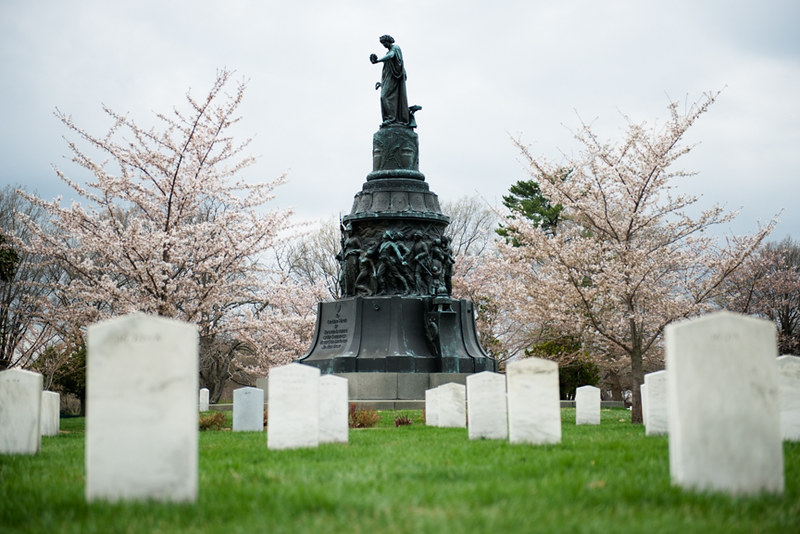
    Cherry trees bloom in Jackson Circle around the Confederate Monument in Section 16 of Arlington National Cemetery, April 7, 2015, in Arlington, Va. The Confederate Monument was unveiled June 4, 1914, according to the ANC website. (Arlington National Cemetery photo by Rachel Larue)

    by Phil Leigh

    Arlington National Cemeteryโ€™s Confederate Memorial should remain intact. Although four of the first seven cotton states arguably seceded from the union over slavery, they did not cause the Civil War. They had no purpose to overthrow the federal government. After forming the seven state Confederacy in February 1861, they promptly sent commissioners to Washington to โ€œpreserve the most friendly relationsโ€ with the truncated Union. Instead of letting the cotton states depart in peace, the Northโ€™s resolve to force them back into the Union caused the war.

    With half of the military-aged white men of the eventual 11-state Confederacy, the four states of Virginia, North Carolina, Tennessee, and Arkansas only joined the original seven after President Lincoln called upon them to provide volunteers to force the first seven back into the Union. In response to a telegram from Lincolnโ€™s Secretary of War Edwin Stanton directing that Virginia provide her quota of such volunteers, Governor John Letcher replied that his state would not comply and concluded: โ€œYou have chosen to inaugurate Civil Warโ€ฆ.โ€

    On the eve of the war, Northerners and Southerners differed on their relative loyalties to the federal and state governments. According to historians Edward Channing and Eva Moore, Northerners had

    the general opinion that the Union was sovereign, and the states were part of itโ€ฆ. The idea that the people of the United States formed one nation had been reinforced by the coming of immigrants from abroad. These people had no conception of a โ€˜stateโ€™ or a sentimental attachment to a โ€˜state.โ€™ They had come to America to better their conditionโ€ฆ.

    By mostly settling in the North, they reinforced the Northernersโ€™ belief that they owed their loyalty to the Union first and only secondarily to the state. (more…)


  • Spotsylvania Pandemonium

    Posted for the benefit of readers who are still in denial about the meltdown in discipline and the epidemic of violence in Virginia schools:

    There have always been fights in schools. It’s never been like this.


  • The Naming Commission’s Diktats

    by Donald Smith

    The Congressional Naming Commission (CNC) was authorized as part of the FY2021 National Defense Authorization Act. Its eight commissioners included two retired Army generals, a retired Navy admiral and a retired Marine Corps general. It also had academics with imposing credentials. One commissioner is a professor emeritus at United States Military Academy West Point and another is a senior official at the American Enterprise Institute. The commission’s chief historian, Connor Williams, took a leave of absence from his faculty position at Yale to serve on the CNC. The CNC even had an elected federal official โ€” Austin Scott, a Republican congressman from Georgia.

    The CNC recommended โ€” among many, many other things โ€” that all active U.S. Army bases named for Confederate generals be renamed. And, in the Preface to Part 1 of its report, it appears to pick a fight.

    This is how the CNC report’s Preface characterizes monuments erected to Confederates and the Confederacy in the years following the Civil War:

    Most importantly, during the end of the nineteenth century and the start of the twentieth century, the South and much of the nation came to live under a mistaken understanding of the Civil War known as the โ€œLost Cause.โ€ As part of the โ€œLost Cause,โ€ across the nation, champions of that memory built monuments to Confederate leaders and to the Confederacy, including on many Department of Defense assets. In every instance and every aspect, these names and memorials have far more to do with the culture under which they were named than they have with any historical acts actually committed by their namesakes. (Preface, page 3).

    The obvious implication of this statement goes well beyond changing some base names. The commissioners presume to pass judgment on (a) what these names and memorials meant to everyone and (b) what the “real” motivations for those statues were. Think about that. (more…)