
Question: How would Louise Lucas’ “ten to f***ing one” congressional redistricting map fare if voters cast ballots more in line with yesterday’s voting pattern than the 2025 gubernatorial election pattern?
-
Don’t Write Off the Virginia GOP Just Yet
-
The Bill Promising “Lower Power Bills” Got Changed on Final Day

And the winner, envelope please…Dominion! by Steve Haner
Remember the highly hyped bill at the General Assembly that was going to lower most electric bills by shafting Virginia’s data center industry? It underwent a late transformation, and the promise of big financial relief is fading. It was always unrealistic.
Under a rewritten version of Senate Bill 253, approved as a conference report just before the Assembly adjourned Saturday, Dominion Energy Virginia is still called upon to ask the State Corporation Commission to shift major costs to the largest users. The data centers would be asked to pay 100 percent of the utility’s purchased capacity costs on the theory they are fully responsible for the utility’s energy generation shortfalls (which is absurd).
But as the bill passed the Senate weeks ago, that petition was to be filed by July of this year. Now the proposal will become part of the company’s next general rate review, no earlier than 2027. And the conference version adds a declaration that the Commission “may, in its discretion, approve or deny the Phase II Utility’s proposal in whole or in part.”
There have been so many examples in recent years of the Assembly restricting the SCC’s authority that the inclusion of that clear “be our guests and say no to this” is noteworthy.
By delaying the issue until the end of the next Dominion rate case, what will have happened before this is decided? The 2027 elections for the House of Delegates and State Senate will be over, with Democrats campaigning on the claim that this toothless bill was a great consumer victory. They got the newspaper headlines and X messages they needed from it.
(more…)
-
Betrayal 3 – Out-of-Control Programs

by James C. Sherlock
Medicaid and Medicare are established under the Social Security Act. They creates federal and state organizations to set rules, monitor compliance, provide funding, sanction, and ultimately exclude those who misuse funds or fail to follow the rules.
Federal and state governments have proven better at spending than at oversight. Virginia’s programs are literally out of control.
Readers will see diagrams here that the author built describing Virginia’s two funding and oversight architectures, and may question whether such schemes could work.
In Olmstead v. L.C. (1999), the Supreme Court ruled in a major Americans with Disabilities Act (ADA) legal precedent that the unjustifiable institutional isolation of people with disabilities is discrimination. States must provide services in the least restrictive environment achievable. That ruling resulted in the shutdown of most state institutions for the intellectually disabled. Since Olmstead, intellectual disability services in Virginia are divided between state-run and private institutional services and private community-based services.
The funding for these programs comes from Medicaid.
The ADA and Olmstead, as executed in Virginia, have resulted in a web of virtually countless providers and services, limitless opportunities for fraud, and an oversight nightmare.
-
A Twisted Sense of Priorities
Fairfax leaders favor illegal-immigrant rights over girls’ safety in schools.

Pictured: Israel Flores Ortiz; Credit: Fairfax County Sheriff’s Office by Stephanie Lundquist-Arora
Republished with permission from IWFeaturesOn March 7, Israel Flores Ortiz, an 18-year-old illegal immigrant from El Salvador enrolled as a junior at Fairfax High School, was arrested for allegedly fondling the genitals of multiple female students in the hallways during school hours.
More than two weeks after the students reported the incidents to school officials—and only after his arrest—Fairfax High School Principal Georgina Aye sent an email notifying parents of the incident.
“We are writing to share the news of the recent arrest of a student who was charged with inappropriately touching other students at school,” she wrote. “These incidents involved the student touching students’ buttocks while they were transitioning in the hallways.”
The email notably did not disclose that the alleged perpetrator was an adult who illegally entered the country in 2024, nor that the alleged “touching” extended beyond the victims’ “buttocks.” One mother of an alleged victim described the delayed email as a “completely sanitized letter” that minimized the harm done.
Incredibly, the parents also reported that district leaders informed them Ortiz would be permitted to return to the high school after his release from jail.
(more…)
-
Ex-Cadet Behind Attacks on VMI Has Activist History
Jeremiah Woods has been a left-wing activist since high school with questionable credibility.
by Victoria Manning
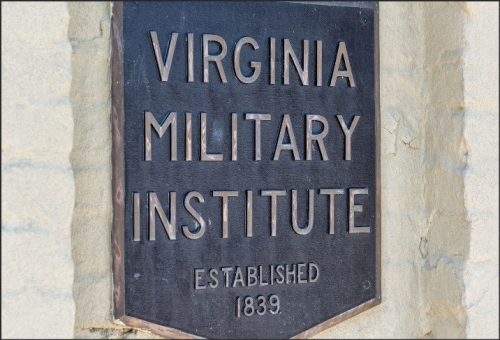
The Virginia Military Institute (VMI) has been under fire from Virginia Democrats who introduced legislation that could significantly change the school’s oversight structure. These bills follow allegations of racism by a former black cadet and left-wing activist Jeremiah Woods, who transferred out of VMI under unclear circumstances. Yet Democrats are silent about institutional policies at VMI that promote systemic racism against White male students and employees.
Democrats despise VMI’s over 150-year-old historic ties to the Civil War and Gen. Stonewall Jackson. Because of that history, Democrats now want to dismantle the school over unverified claims of racism, and Woods has provided them with unsubstantiated allegations to fulfill their agenda.
One anti-VMI bill sponsor, Del. Dan Helmer (D-Fairfax), claims VMI is an institution “incapable of separating itself from a Lost Cause ideology that promotes White supremacy.” Virginia Democrats continue the false narrative of racism at VMI because it’s a talking point that fires up their far-Left voter base.
(more…)
-
Virginia Redistricting: Swallow Hard–But Vote “Yes”
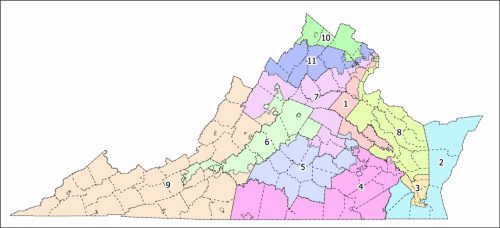
New Congressional map proposed by Democrats. by David J. Toscano
If a car runs a red light and is about to hit you, you don’t just complain that the driver violated the rules–you do something! When Texas and other Republican legislatures across the country, at Donald Trump’s request, enacted unprecedented mid-decade redistrictings designed to ensure GOP control of the U.S. House after this year’s midterm elections, a response was necessary. Virginia voters now have the chance to be part of that response.
The vote on Virginia’s redistricting constitutional amendment in the next month could influence who controls Congress and whether the Trump administration faces any meaningful accountability in the next several years. A “YES” vote on April 21 improves those odds.
Virginia’s redistricting commission
After years of effort, Virginia voters in 2020 overwhelmingly approved a constitutional amendment designed to end partisan redistricting in the Commonwealth. The amendment created a redistricting commission to draw state and Congressional electoral districts, becoming fifteenth state to do so. If the commission could not agree, the state Supreme Court would determine the districts.
(more…)
-
A Dangerous Mission Creep for Virginia’s Public Schools
by Derrick A. Max
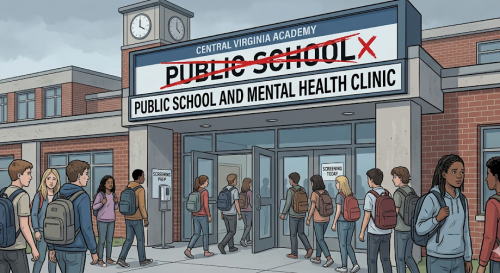
Virginia parents should be alarmed that the Virginia General Assembly just passed House Bill 355 which mandates annual mental health screenings for all public school students in grades 6 through 12. While framed as a compassionate response to a very real “mental health crisis,” it represents a fundamental shift in the mission of public education: from academic instruction to clinical surveillance.
By institutionalizing mandatory mental health screenings, HB 355 threatens to undermine parental authority, pathologize normal developmental issues experienced during difficult age ranges, and likely ignores the cultural and religious values of many Virginia families.
The primary objection to HB 355 is not clinical, but structural. The family is the foundational unit of a free society, yet this bill treats parents as secondary stakeholders. By utilizing a “passive consent” (opt-out) model, the state assumes the right to probe a child’s internal psyche unless a parent proactively intervenes. This, of course, assumes that parents fully understand or even receive critical opt-out notices that are sent home – notices that are likely crafted with “we are here to help” verbiage.
In a healthy society, the state must require explicit, informed “opt-in” consent before any psychological assessment. Make the schools convince parents that this is the right choice for their children and ensure they have their informed consent and partnership. When government screening is the “default,” it signals to parents that their role as the primary protector of their child’s well-being has been superseded by the state. Do nothing and the school will do it for you, and better (or so they believe).
This is not a safety net; it is a soft form of state overreach that erodes the parent-child bond.
-
Pray for Sun; Solar Is the Only New Power We Get
by Steve Haner

A small 100 watt “plug ‘n play” solar panel now coming to an apartment balcony or back patio near you. The 2026 General Assembly has decided Virginia’s future energy eggs will come from a basket made of sunbeams. A series of approved bills are intended to accelerate the proliferation of solar panels on rural fields, rooftops, urban parking decks and apartment balconies, even if local objections need to be disregarded.
Giving the industry a further boost, a revision to the electric utility integrated resource planning (IRP) process for future generation deeply parallels the solar-heavy Virginia Clean Economy Act (VCEA). The new rules demand the State Corporation Commission (SCC) impose an intangible “social cost of carbon” to make natural gas appear more expensive and sets as a goal – for the first time in an IRP — a “carbon free energy grid.”
No legislation passed would override the authority the SCC has under the VCEA to approve expanded use of natural gas if grid reliability is threatened, but the legislators behind these bills are determined to prove solar can do the job if only enough of it can be built.
A distributed energy model known as a “virtual power plant.” which creates incentives for customers to develop their own solar and battery facilities and sell the output back to the utility at times, is now authorized to spread from Dominion Energy Virginia to the smaller Appalachian Power Company and the many rural electric cooperatives.
-
Is it time for Virginia to cut back on studies and commissions? Lawmakers are weighing it.
Virginia lawmakers consider limiting state studies and commissions following similar actions in other states to streamline government, reduce bureaucracy, centralize oversight and cut regulatory barriers.
by Nathaniel Cline
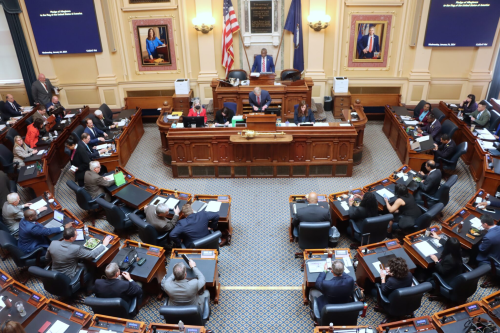
The Virginia government is sponsoring around 200 interim studies and commissions created through various actions by the state legislature and governor’s office, and that number is expected to grow with pending legislation. But several lawmakers are now saying there are too many of these initiatives.
Shortly before the session ended last Saturday, state leaders, including Senate Democratic Caucus Chair Sen. Mamie Locke, D-Hampton, told the Mercury that the number of studies and commissions has become “ridiculous.”
“People need to stop turning legislation into studies, and that’s what’s been happening,” Locke said. “These pieces of legislation get into a committee and get turned into a study, and that’s why you get the proliferation of the studies. Just kill the bill.”
Senate Pro Tempore Louise Lucas, D-Portsmouth, recently criticized members of her own party and committee chairs for failing to reject unpopular bills, which often morph into studies. Legislators should “grow a backbone and kill bills that they don’t feel worthy of passage instead of sending them all to me to kill for them,” Lucas posted on X, formerly Twitter.
(more…)
-
Dorothy McAuliffe Bigfoots Fellow Democrat Dan Helmer

Dan Helmer riding lobster district to victory? Image credit: Grok by Kerry Dougherty
I almost feel sorry for Democrat Del. Dan Helmer. OK, not really.
He desperately wants to go to Congress and his twice-thwarted dream seemed within reach when Democrats drew a lobster-shaped district just for him in their new gerrymandering scheme.
Now it looks like Helmer’s going to get his teeth kicked in.
Again.
You see, he was bigfooted last week by Dorothy McAuliffe, wife of former Gov. Terry McAuliffe, who jumped into the race and brought along a squad of Democrat women.
Helmer ran for Congress twice before: In 2018 when he lost to Jennifer Wexton and in 2024 when he lost to Suhas Subramanyam.
Helmer’s an unapologetic abortion and gun-control enthusiast, you’d think he’d be a winner.
The delegate who’s been tirelessly campaigning for a YES vote in this spring’s gerrymandering referendum, appeared to have a district drafted just for him. You know, that lobster-shaped monstrosity.
A reward, if you will, for his loyal service to the Democrat party. Continue reading.
-
Is a Casino the Answer to Fairfax County’s Genteel Decline?
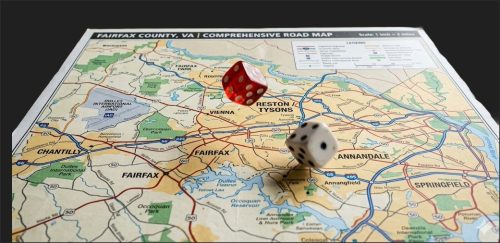
Image credit: Nano Banana by Chap Petersen
A few things are certain in life. Death, taxes and UVA losing to Duke in the ACC men’s basketball final. (No, I’m not bitter).
Another one is well-funded interests getting their way in the Virginia General Assembly.
A mere decade ago, our battle was with Dominion Power who sought to avoid customer refunds through the deceptively named “rate freeze” bill (ed. note: today’s corollary would be bills for “fair elections”).
The “rate freeze” fight later morphed into the perennial struggle to ban Dominion — a public monopoly — from making donations to the same Virginia lawmakers who decided its profits. Year after year, I filed the bill. And year after year, the GA defeated it. (Thank you Danica Roem for carrying on the struggle!)
Flash forward to 2026. The economy of Fairfax County is in a genteel decline. The Federal government is contracting. There is a major office vacancy problem. Small businesses are being hit by higher taxes and regulatory burdens, e.g. European-style “paid sick leave” laws. There is no open space for data centers to fill the revenue gap.
The answer: a Casino in Tysons!
(more…)
-
Betrayal 2 – The Virginia General Assembly
by James C. Sherlock
People, including our elected representatives in the General Assembly of Virginia, might not know that the Commonwealth is subject to a permanent federal court injunction requiring compliance with the Americans with Disabilities Act (ADA). The “Commonwealth of Virginia” is enjoined, not just the executive branch.
The author herein informs the General Assembly, the Governor, and Virginia’s Attorney General, who is responsible for defending the action in federal court, that a bill passed this year and another one left in the House Appropriations Committee combine to carry profound human and legal implications.
2026 HB 1380
The House of Delegates was presented this session with House Bill 1380 (HB 1380) to authorize the Virginia Department of Behavioral Health and Disability Services (DBHDS) to:
- adopt regulations requiring providers of services for individuals with developmental disabilities to conduct regular emergency medical drills; and
- impose sanctions on providers for human rights violations that threaten the health, safety, or life of individuals receiving services.
The Fiscal Impact Statement for that bill reported no fiscal impact for part 1 and an annual impact of $663,048 to fund part 2. But the FIS revealed far more than that.
(more…)
-
Assembly Found Nine Ways To Make Electricity More Expensive
by Steve Haner
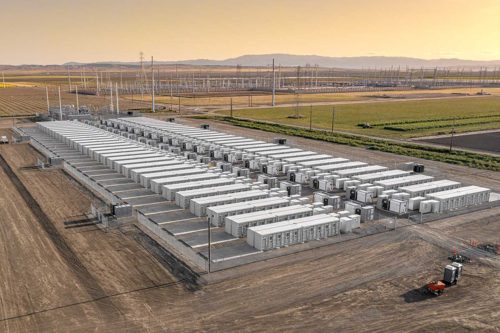
A 600-megawatt hour battery storage facility in California. The legislation would mandate up to 200 times that much capacity in Virginia. The 2026 General Assembly has passed at least nine separate new laws that will increase the cost of your electricity. Not one of the bills creates a single megawatt of additional energy for our use.
Most of the bills create new ways for the utilities to take money from all their ratepayers and spend it to benefit a small set of their customers, mainly based on their low income. Those will be praised by advocates as “affordability” measures, at least for those beneficiaries, but for the vast majority they will mean added cost.
Few of these bills have cost estimates. The list:
#1. Over the next twenty years, the largest increase in customer cost will come from the expansion of the Virginia Clean Economy Act to include construction of huge battery storage complexes, perhaps as much as 140 gigawatt hours of storage. The battery bill, also passed in 2025 but vetoed, will create a ratepayer revenue requirement in the tens of billions of dollars, much of it profits for utility investors as the plants are amortized over decades.
#2. Right behind the battery construction mandate in customer cost impact will be the return of Virginia to the Regional Greenhouse Gas Initiative (RGGI), which imposes a carbon tax on any power plant that uses natural gas, coal, oil or biomass as fuel. Based on the recent carbon auction price of about $25 per ton, Virginia’s many such plants will pay more than $550 million in carbon taxes starting no later than next winter.
-
Off the Interstate: An Old Church Still Serves its Community
by Dick Hall-Sizemore
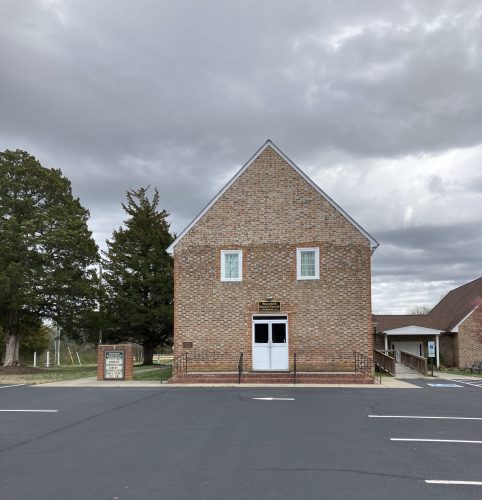
Mangohick Baptist Church, King William County Along Rt. 30 in King William County is the community of Mangohick. There is not much to see there, except a very old church whose congregation is still very much active.
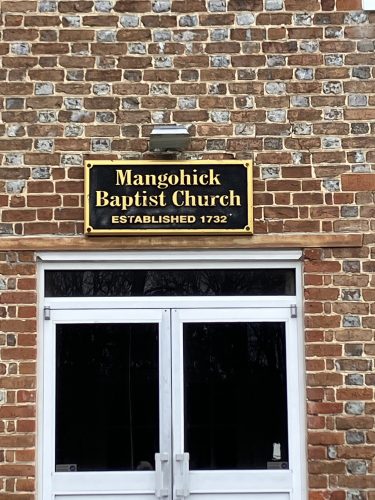
The Mangohick Baptist Church was built between 1730-1732. It is listed on both the Virginia Historic Landmarks register and the National Register of Historic Places. According to the nomination form submitted to the National Park Service by the Virginia Historic Landmarks Commission, Mangohick Church was begun in 1730 as a “chapel of ease.” Those buildings were meant to serve members who lived in remote areas of the parish. Thus, its “architecture is much plainer than the larger more elaborate parish churches of the era.” It got its name from nearby Mangohick Creek, a tributary of the Pamunkey River.
The church continued to serve the Episcopal parishes in the area until the Revolutionary War. After the Episcopal Church was “disestablished” as the official church of Virginia, the Episcopalians abandoned the Mangohick Church. It then became a “free church” for use by any denomination. After the Civil War, the Union Baptist Church, consisting of both white and Black congregants was organized. By the latter part of the nineteenth century, however, the congregation was made up entirely of Black members, who received legal possession of the property in the 1920’s. At some point, the current name was adopted.
The 1730-1732 original building with its fine Flemish bond brickwork with the glazed header pattern”, along with a modern addition, still serves the community.
-
No “Global Boiling” in Virginia This Winter
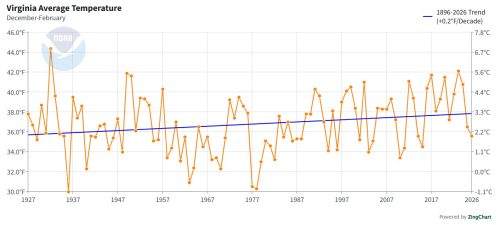
The news media won’t bother to show you that chart, because it undercuts the narrative of a dangerous climate crisis upon us. The three winter months of December 2025 through February 2026 in Virginia were well below average in temperature for the past 100 years, with 60 of those years colder than the past three months. The previous year was also below the century average, with 53 years warmer. The warmest recent winter was 2022-23, hyped by the climate panic crowd as the warmest year on record — but it wasn’t for those three months. That honor goes to 1932, with 1949 and 1950 basically equal to 2023. You can also see the years in the mid 1970s that led to all the stories about a looming ice age. Is there a slight warming trend in that data? Looks like 2 degrees Fahrenheit per century, “global boiling” indeed. — SDH

