
by Steve Haner
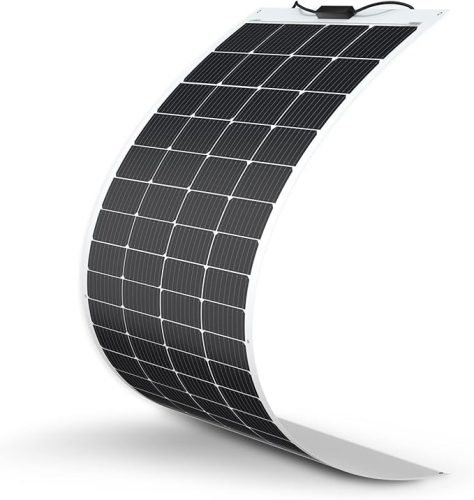
The 2026 General Assembly has decided Virginia’s future energy eggs will come from a basket made of sunbeams. A series of approved bills are intended to accelerate the proliferation of solar panels on rural fields, rooftops, urban parking decks and apartment balconies, even if local objections need to be disregarded.
Giving the industry a further boost, a revision to the electric utility integrated resource planning (IRP) process for future generation deeply parallels the solar-heavy Virginia Clean Economy Act (VCEA). The new rules demand the State Corporation Commission (SCC) impose an intangible “social cost of carbon” to make natural gas appear more expensive and sets as a goal – for the first time in an IRP — a “carbon free energy grid.”
No legislation passed would override the authority the SCC has under the VCEA to approve expanded use of natural gas if grid reliability is threatened, but the legislators behind these bills are determined to prove solar can do the job if only enough of it can be built.
A distributed energy model known as a “virtual power plant.” which creates incentives for customers to develop their own solar and battery facilities and sell the output back to the utility at times, is now authorized to spread from Dominion Energy Virginia to the smaller Appalachian Power Company and the many rural electric cooperatives.
The caps on how much shared community solar that both Dominion and Appalachian must allow on their networks will now go up substantially. Dominion’s limit will rise from 150 to 525 megawatts, and Appalachian’s will rise from 50 to 150 megawatts. These programs are getting to the size where they could cost other ratepayers money in the form of subsidies, recovered as a purchased power cost.
Not everybody is cheering. Virginia counties are asking Governor Abigail Spanberger (D) to veto a bill that reduces their oversight of proposed major solar facilities within their borders, but smoothing the path for Big Solar was one of Spanberger’s major campaign promises. She spoke often of having the state find a way to overcome local objections to the large projects.
House Bill 711 and its identical Senate companion do not impose the kind of strict controls on local decisions that were included in similar 2025 legislation. But they still have the Virginia Association of Counties objecting in a letter to Spanberger.
They complained all applications will have to be considered “regardless of whether the location of the proposed facility is contrary to local comprehensive plans and land use ordinances,” tools many have used to keep the projects out of their jurisdictions. And then they must go to the State Corporation Commission and explain any rejections.
But overriding local ordinances and local citizen objections was a theme for the solar advocates this session.
Another pair of bills (see Senate Bill 443) dictate that where a large solar facility is permitted and built, no additional local permitting is required to build major battery storage capacity right alongside of it. Pairing solar and battery can improve the utilization (and profits) of the project, but local concerns over battery safety are significant.
Also overridden are local regulations and utility restrictions on small solar installations that individuals can purchase and supposedly just “plug in” at home, hanging off their balconies or standing out in their yards (see Senate Bill 250). Landlords cannot say no to tenants who want them, with devices of up to 1,200 watts of output permitted. Homeowner association rules do not seem to be voided.
Localities will at least have a choice whether to amend their ordinances to require the installation of solar panels on 100-space and larger parking facilities for non-residential buildings. Senate Bill 26 is like a bill voted last year by Governor Glenn Youngkin (R). The building owner can escape the local mandate if the site is too shady due to tall trees or adjacent buildings.
The contractors who sell and install solar systems have many new sales angles to pitch. Theirs is the only form of electricity generation getting a major boost from this session, along with the batteries they claim will allow homeowners, businesses or utilities to store all the new solar output.
Once they have found a new customer, a state-managed “internet-based platform that automates plan review and instantly releases a permit or a permit revision to construct certain residential solar energy systems” will be available day, night and weekends to speed approvals. The state will get that set up by 2028 under Senate Bill 382. Again, localities must accept it.
One of the nine bills that will increase electricity prices mentioned yesterday will have the two large providers using ratepayer dollars to install solar power on the homes of customers eligible based on low income, age or disability. This is big step beyond installing LED light bulbs and insulation to lower home energy demand.
What could go wrong with all this? Sometimes there is no sun hitting the panels. A law banning cloudy days or shortening the hours of darkness every night would be nice. No such bill was introduced, so the basic shortcomings of solar remain.
Leave a Reply
You must be logged in to post a comment.