Let’s stop kidding ourselves and each other about voter ID.
And, yes, I AM talking to you Sen. Mark Warner.
Virginia does not – I repeat – does not have voter ID. No matter what our bloviating senator may say about Virginia being a model for the nation.
The SAVE Act is the most blatant attempt at voter suppression in ages.
I support requiring voters to show identification, like we do in Virginia. However, the SAVE Act discriminates against servicemembers, married women, rural Americans, and anyone else who doesn’t have a…
Fact is, although we’re asked for ID at the polls – and virtually everyone complies, because no matter what the Dems say every voter has a photo ID – you do not need to produce actual ID to vote. Unless you consider your electric bills ID.
Try to board a domestic airline flight with an electric bill as ID. I dare you. Continue reading.
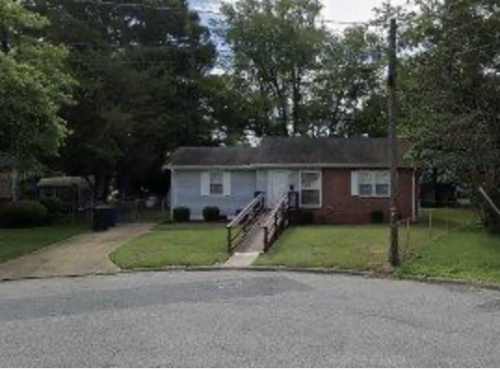
Photo: Lucas Lodge Residential 4-Person Group Home
by James C. Sherlock
This is a real-life horror story.
One hundred and two serious incidents with injuries reported since 2019 by a single provider of community-based residential services whose tiny houses host a maximum of 24 intellectually and developmentally disabled adults at a time. Not counting those who died.
This is the story of Lucas Lodge, a Portsmouth provider of community-based services. It is a story of that provider’s repeated inability to run its program in compliance with the law, and the consequences, including deaths and serious injuries to the people it is paid to protect.
And it is the story of the state regulator, which inspected, found serial violations of safety and health regulations, read the reports of injuries and deaths, and did virtually nothing.
Legal Jeopardy for the Commonwealth
The executive branch of the Virginia government has, for at least 40 years, violated the letter, the spirit, or both of state and federal laws intended to protect the health and safety of the less fortunate. This author has reported on those issues regarding nursing homes for a decade.
But successive Virginia administrations have, as with nursing homes, repeatedly cited both institutional providers and providers of community-based services for persons with developmental and intellectual disabilities (DD/ID) for violations of state and federal laws without imposing significant sanctions. That is a more consequential legal matter than with nursing homes.
The 1999 Supreme Court Olmstead v. L.C. decision (527 U.S. 581) ruled that unjustified segregation of people with disabilities in institutions is unlawful discrimination under the ADA. It established that states must provide community-based services when appropriate, desired by the individual, and reasonably accommodated.
The Commonwealth has twice (in 2012 and 2020) been sued by the Justice Department for violating Olmstead and subject to orders from Senior Judge John A. Gibney Jr. of the U.S. District Court for the Eastern District of Virginia requiring compliance. Since January of 2025, Virginia has been permanently enjoined by that same court to comply with the specific settlement agreement criteria certified in the 2020 order and enshrined in Virginia law and regulations since August of that year.
The evidence presented here raises questions about whether the state has ever tried to comply with those orders.
Hairbags. Scum. Thieves. Con artists. Swindlers. Grifters.
I’m running out of nouns.
No, I’m not talking about politicians. I’m talking about the con artists who spend their time trying to fleece hard-working Americans.
Who knows if they operate from Internet cafes in Nigeria, Myanmar or Short Pump. All we know is that their relentless campaigns to separate law-abiding folks from their dough take on a different form daily.
Project quacks like student housing, and city schools will pay the price.
by Joe Fitzgerald
It took me a long time to figure out why Harrisonburg’s Community Development Department doesn’t use one of the clearest metrics available to predict growth in the city’s schools. It’s similar to the reason no local news media use it. In each case, under the rules of their operations, they don’t have permission to use it.
The metric in question is the correlation between growth of JMU student housing and growth of Harrisonburg City Public Schools’ student population. Since Sunchase opened in 1999, three bedrooms of new student housing generate one new K-12 student as the older housing is gradually repurposed as family housing. If you put new bedrooms next to new students in a spreadsheet and ask the program if they rise together, the program will tell you that they do 88 percent of the time. If you ask the program to build a three-year lag into its calculations, it will tell you that the numbers line up 97 percent of the time. For shorthand purposes, let’s call this the Sunchase correlation.
Saying that one asks the program is an old man’s phrasing. (I recently turned 70, which means that in Biblical terms, I’m in overtime.) Today, one does simply ask the computer that’s running the program. Asking in Biblical times, when Alan Turing, Grace Hopper, and dinosaurs walked the earth, meant writing a procedure to step through the numbers one by one and run a formula. Those of little faith would test the formula with a pencil, and a sheaf of paper, and a cup of strong coffee, and perhaps a slide rule. Later generations used a calculator and an energy drink, which didn’t affect the numbers.
DD/ID (Intellectual and Developmental Disabilities) refers to services, supports, and classifications for individuals with cognitive, physical, or emotional impairments. The author’s first three articles on this subject provided background on Virginia’s broken system of services to that population. In many instances, it doesn’t work well due to combinations of oversight failures and unethical or incompetent providers. But overall, the system struggles due to its design. The Commonwealth has shared and devolved authority and responsibility for oversight of services for the DD/ID population beyond any reasonable expectation of effectiveness.
When everyone is in charge, no one is.
This series has focused on the Virginia Departments of Behavioral Health and Disability Services and of Medical Assistance Services. But there is also local responsibility across 40 Community Services Boards (CSBs) and a single Behavioral Health Authority. See afirst-person accountfrom a veteran of a citizens’ advisory board to one of those CSBs, Lefty 665. He speaks more eloquently about the problems in CSBs than anyone this author has read.
Portsmouth
Portsmouth has made its community services board (CSB) a department of the city government. Its mission statement:
The mission of the Portsmouth Department of Behavioral Healthcare Services is to promote independence, recovery, and positive outcomes for those we serve, through excellence in the delivery of integrated Mental Health, Intellectual Disability, and Substance Abuse, and Co-Occurring services.
It has all gone horribly wrong there.
The City of Portsmouth sends “clients” screened by its Behavioral Healthcare Services department to local providers of incredibly dangerous “services” to developmentally and intellectually disabled children, adolescents, and adults. The dangers are catalogued in heartbreaking state and federal inspection records.
Government officials need only read them. They will get an opportunity in this series.
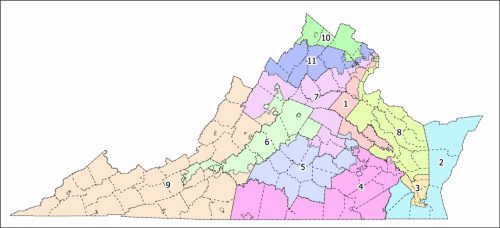
Question: How would Louise Lucas’ “ten to f***ing one” congressional redistricting map fare if voters cast ballots more in line with yesterday’s voting pattern than the 2025 gubernatorial election pattern?
Remember the highly hyped bill at the General Assembly that was going to lower most electric bills by shafting Virginia’s data center industry? It underwent a late transformation, and the promise of big financial relief is fading. It was always unrealistic.
Under a rewritten version of Senate Bill 253, approved as a conference report just before the Assembly adjourned Saturday, Dominion Energy Virginia is still called upon to ask the State Corporation Commission to shift major costs to the largest users. The data centers would be asked to pay 100 percent of the utility’s purchased capacity costs on the theory they are fully responsible for the utility’s energy generation shortfalls (which is absurd).
But as the bill passed the Senate weeks ago, that petition was to be filed by July of this year. Now the proposal will become part of the company’s next general rate review, no earlier than 2027. And the conference version adds a declaration that the Commission “may, in its discretion, approve or deny the Phase II Utility’s proposal in whole or in part.”
There have been so many examples in recent years of the Assembly restricting the SCC’s authority that the inclusion of that clear “be our guests and say no to this” is noteworthy.
By delaying the issue until the end of the next Dominion rate case, what will have happened before this is decided? The 2027 elections for the House of Delegates and State Senate will be over, with Democrats campaigning on the claim that this toothless bill was a great consumer victory. They got the newspaper headlines and X messages they needed from it.
Medicaid and Medicare are established under the Social Security Act. They creates federal and state organizations to set rules, monitor compliance, provide funding, sanction, and ultimately exclude those who misuse funds or fail to follow the rules.
Federal and state governments have proven better at spending than at oversight. Virginia’s programs are literally out of control.
Readers will see diagrams here that the author built describing Virginia’s two funding and oversight architectures, and may question whether such schemes could work.
In Olmstead v. L.C. (1999), the Supreme Court ruled in a major Americans with Disabilities Act (ADA) legal precedent that the unjustifiable institutional isolation of people with disabilities is discrimination. States must provide services in the least restrictive environment achievable. That ruling resulted in the shutdown of most state institutions for the intellectually disabled. Since Olmstead, intellectual disability services in Virginia are divided between state-run and private institutional services and private community-based services.
The funding for these programs comes from Medicaid.
The ADA and Olmstead, as executed in Virginia, have resulted in a web of virtually countless providers and services, limitless opportunities for fraud, and an oversight nightmare.
Fairfax leaders favor illegal-immigrant rights over girls’ safety in schools.
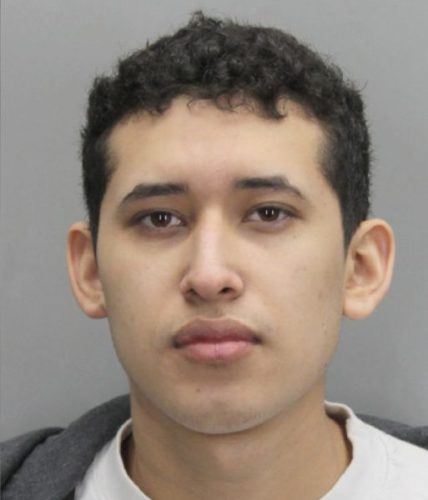
Pictured: Israel Flores Ortiz; Credit: Fairfax County Sheriff’s Office
by Stephanie Lundquist-Arora Republished with permission from IWFeatures
On March 7, Israel Flores Ortiz, an 18-year-old illegal immigrant from El Salvador enrolled as a junior at Fairfax High School, was arrested for allegedly fondling the genitals of multiple female students in the hallways during school hours.
More than two weeks after the students reported the incidents to school officials—and only after his arrest—Fairfax High School Principal Georgina Aye sent an email notifying parents of the incident.
“We are writing to share the news of the recent arrest of a student who was charged with inappropriately touching other students at school,” she wrote. “These incidents involved the student touching students’ buttocks while they were transitioning in the hallways.”
The email notably did not disclose that the alleged perpetrator was an adult who illegally entered the country in 2024, nor that the alleged “touching” extended beyond the victims’ “buttocks.” One mother of an alleged victim described the delayed email as a “completely sanitized letter” that minimized the harm done.
Incredibly, the parents also reported that district leaders informed them Ortiz would be permitted to return to the high school after his release from jail.
Jeremiah Woods has been a left-wing activist since high school with questionable credibility.
by Victoria Manning
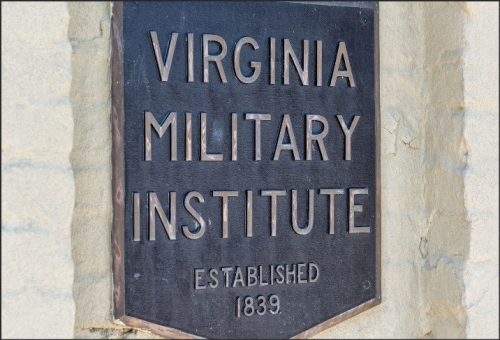
The Virginia Military Institute (VMI) has been under fire from Virginia Democrats who introduced legislation that could significantly change the school’s oversight structure. These bills follow allegations of racism by a former black cadet and left-wing activist Jeremiah Woods, who transferred out of VMI under unclear circumstances. Yet Democrats are silent about institutional policies at VMI that promote systemic racism against White male students and employees.
Democrats despise VMI’s over 150-year-old historic ties to the Civil War and Gen. Stonewall Jackson. Because of that history, Democrats now want to dismantle the school over unverified claims of racism, and Woods has provided them with unsubstantiated allegations to fulfill their agenda.
One anti-VMI bill sponsor, Del. Dan Helmer (D-Fairfax), claims VMI is an institution “incapable of separating itself from a Lost Cause ideology that promotes White supremacy.” Virginia Democrats continue the false narrative of racism at VMI because it’s a talking point that fires up their far-Left voter base.
If a car runs a red light and is about to hit you, you don’t just complain that the driver violated the rules–you do something! When Texas and other Republican legislatures across the country, at Donald Trump’s request, enacted unprecedented mid-decade redistrictings designed to ensure GOP control of the U.S. House after this year’s midterm elections, a response was necessary. Virginia voters now have the chance to be part of that response.
The vote on Virginia’s redistricting constitutional amendment in the next month could influence who controls Congress and whether the Trump administration faces any meaningful accountability in the next several years. A “YES” vote on April 21 improves those odds.
Virginia’s redistricting commission
After years of effort, Virginia voters in 2020 overwhelmingly approved a constitutional amendment designed to end partisan redistricting in the Commonwealth. The amendment created a redistricting commission to draw state and Congressional electoral districts, becoming fifteenth state to do so. If the commission could not agree, the state Supreme Court would determine the districts.
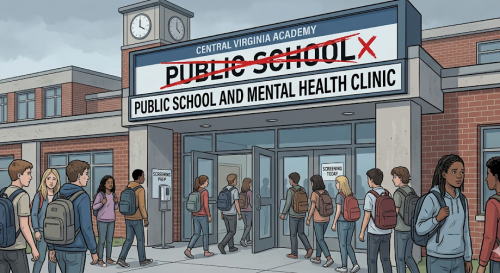
Virginia parents should be alarmed that the Virginia General Assembly just passed House Bill 355which mandates annual mental health screenings for all public school students in grades 6 through 12. While framed as a compassionate response to a very real “mental health crisis,” it represents a fundamental shift in the mission of public education: from academic instruction to clinical surveillance.
By institutionalizing mandatory mental health screenings, HB 355 threatens to undermine parental authority, pathologize normal developmental issues experienced during difficult age ranges, and likely ignores the cultural and religious values of many Virginia families.
The primary objection to HB 355 is not clinical, but structural. The family is the foundational unit of a free society, yet this bill treats parents as secondary stakeholders. By utilizing a “passive consent” (opt-out) model, the state assumes the right to probe a child’s internal psyche unless a parent proactively intervenes. This, of course, assumes that parents fully understand or even receive critical opt-out notices that are sent home – notices that are likely crafted with “we are here to help” verbiage.
In a healthy society, the state must require explicit, informed “opt-in” consent before any psychological assessment. Make the schools convince parents that this is the right choice for their children and ensure they have their informed consent and partnership. When government screening is the “default,” it signals to parents that their role as the primary protector of their child’s well-being has been superseded by the state. Do nothing and the school will do it for you, and better (or so they believe).
This is not a safety net; it is a soft form of state overreach that erodes the parent-child bond.
A small 100 watt “plug ‘n play” solar panel now coming to an apartment balcony or back patio near you.
The 2026 General Assembly has decided Virginia’s future energy eggs will come from a basket made of sunbeams. A series of approved bills are intended to accelerate the proliferation of solar panels on rural fields, rooftops, urban parking decks and apartment balconies, even if local objections need to be disregarded.
Giving the industry a further boost, a revision to the electric utility integrated resource planning (IRP) process for future generation deeply parallels the solar-heavy Virginia Clean Economy Act (VCEA). The new rules demand the State Corporation Commission (SCC) impose an intangible “social cost of carbon” to make natural gas appear more expensive and sets as a goal – for the first time in an IRP — a “carbon free energy grid.”
No legislation passed would override the authority the SCC has under the VCEA to approve expanded use of natural gas if grid reliability is threatened, but the legislators behind these bills are determined to prove solar can do the job if only enough of it can be built.
A distributed energy model known as a “virtual power plant.” which creates incentives for customers to develop their own solar and battery facilities and sell the output back to the utility at times, is now authorized to spread from Dominion Energy Virginia to the smaller Appalachian Power Company and the many rural electric cooperatives.
Virginia lawmakers consider limiting state studies and commissions following similar actions in other states to streamline government, reduce bureaucracy, centralize oversight and cut regulatory barriers.
by Nathaniel Cline
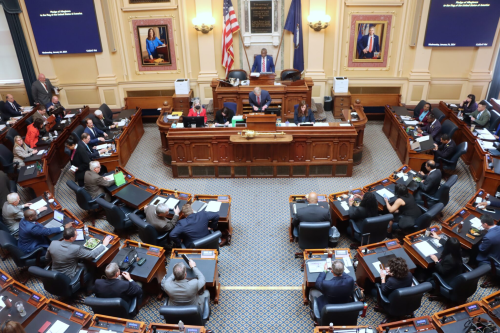
The Virginia government is sponsoring around 200 interim studies and commissions created through various actions by the state legislature and governor’s office, and that number is expected to grow with pending legislation. But several lawmakers are now saying there are too many of these initiatives.
Shortly before the session ended last Saturday, state leaders, including Senate Democratic Caucus Chair Sen. Mamie Locke, D-Hampton, told the Mercury that the number of studies and commissions has become “ridiculous.”
“People need to stop turning legislation into studies, and that’s what’s been happening,” Locke said. “These pieces of legislation get into a committee and get turned into a study, and that’s why you get the proliferation of the studies. Just kill the bill.”
Senate Pro Tempore Louise Lucas, D-Portsmouth, recently criticized members of her own party and committee chairs for failing to reject unpopular bills, which often morph into studies. Legislators should “grow a backbone and kill bills that they don’t feel worthy of passage instead of sending them all to me to kill for them,” Lucas posted on X, formerly Twitter.
The year: 2075. The American colonies on the Moon are getting restless under Washington’s tyrannical rule….
This second edition of “Dust Mites” has a snazzy new cover, includes helpful lunar maps, and is 5,000 words tighter than the original. The sequel, “Trogs,” is scheduled for publication this summer.
Advertisement
Advertisement
Advertisement
Advertisement
About
Bacon’s Rebellion is Virginia’s leading politically non-aligned portal for news, opinions and analysis about state, regional and local public policy. Read more about us here.
Fund the Rebellion
Shake up the status quo! Your contributions will be used to pay for faster download speeds and grow readership. Make a one-time donation by credit card or contribute a small sum monthly.
Can’t wait until tomorrow
For your Bacon’s Rebellion fix?
Enter your email address to receive immediate notifications of new posts by email.
SUBSCRIBE
Search Bacon’s Rebellion
Categories
Archives
The Jefferson Council
Protecting Thomas Jefferson’s Legacy at the University of Virginia
Forgot Your Password?
Shoot me an email and I’ll generate a new password for you.