Raising rent to keep up with inflation isn’t what most people would consider “rent gouging,” even when the landlord has to increase rent by more than 3%. For example, Washington, D.C.’s rent control board allowed most landlords to raise rents in recent years at annual rates such as 8.9% and 6.2%.
But a recently-introduced bill in Virginia’s legislature, SB 1136, would allow local governments to adopt “anti-rent gouging” ordinances. These ordinances would define raising rent by more than 3% as illegal “rent gouging.” Indeed, even a 1% or 2% increase could be deemed rent gouging, because SB 1136 would require the local government to set an “annual residential anti-rent gouging allowance that is no more than three percent,” but which could be less than 3%, such as 1%.
Virginia does not currently let local governments impose rent control or rent regulations. Virginia’s Dillon Rule requires an enabling statute before local governments can adopt a rent-control ordinance.
The largest item among Governor Glenn Youngkin’s many proposed changes to the Virginia state budget is his idea to set aside $1.1 billion from last year’s surplus revenue to cover three years of future car tax rebates. You don’t need to call the California Psychics who run ads on Richmond’s conservative radio station to predict what will to happen to that.
When the Democrats who control the money committees in both the House and the Senate report their list of budget amendments in a few weeks, most or all that dedicated fund to support those rebates is likely to be diverted to their spending priorities. The rebates are also in doubt.
The Republican governor, facing his final of four General Assembly sessions, has been among the most fortunate of governors on financial matters. This is the fourth of four fat years, with no painful lean year during his term.
The General Fund revenue of $31.4 billion now predicted for Fiscal Year 2026 (starting next July) is $5 billion (19%) more than the revenue projection four years earlier, for Fiscal Year 2022. Almost another $5 billion in cash is locked up in reserves, $2 billion more than was being held as protection against a downturn at the start of Youngkin’s term.
Despite that, the budget and tax policy debate coming in the 2025 General Assembly is far more focused on spending than on tax cuts. Youngkin put most of the state’s General Fund surplus and revenue growth – $4.4 billion dollars – on the spending side of his ledger.
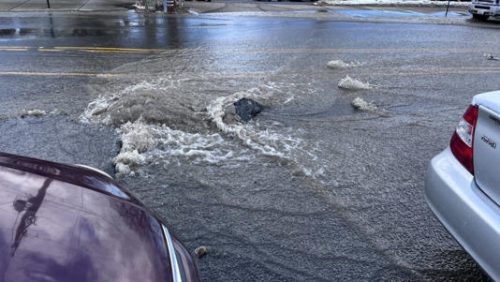
Water main break on Harrison Street. Image credit: WRIC
by James A. Bacon
Ordinarily, one would categorize a busted-water main story as routine news and forget about it the next day. But in the wake of the breakdown of the City of Richmond’s water treatment plant, which cut off water supplies for the better part of a week, the natural reaction is, what’s next? How deep does the rot run?
City crews responded to the break Saturday and repaired the break by early Sunday morning, according to WRIC News. Meanwhile, city officials have warned that water-main breaks will most likely increase as water service is restored to residences after last week’s breakdown and temperatures drop below freezing.
Read this detailed WRIC dive into the 2022 Environmental Protection Agency report on problems with water treatment plant. Even if you don’t read the whole thing, scan it for the photos. If the treatment plant, the centerpiece of the city water system, is in this bad a condition, just imagine what the outlying pipes, pumps and other facilities are like.
The start of every New Year often comes with people making resolutions to do more exercise, choose better eating habits, and make changes to improve one’s life. One of the newer traditions in recent years has been Dry January, which started in England but has spread worldwide and challenges people to spend the first 31 days of the year alcohol free to improve their health, lose weight and let their bodies rest and recharge.
But this year, Dry January has taken on a new meaning for Richmonders after the self-inflicted failure of the city’s water plant and ensuing five days of chaos that is now, hopefully, behind us. If you made the Dry January pledge here but found yourself instead with a 12-pack of brews this week because there was no water from the tap or at the store, then don’t feel too bad. Just redefine it as “Semi-arid January,” declare victory, and get back on track now the water is flowing and clean again.
I jest, of course, (but only a little) because what happened this week in Richmond is a serious matter that underscores what we have seen for more than a decade — massive negligence of essential infrastructure investment in critical city functions. I won’t repeat much of what happened because local media has done a fantastic job of covering it. The Richmonder, CBS6, WRIC, VPM News the Times-Dispatch in particular have been covering and digging and showing what was happening across the region and that water is finally flowing again.
This crisis is also solid proof to the corporations and media overlords who have slashed and burned local media in recent decades that local coverage of local news is vitally important to people’s lives and well-being. There is a very real demand for local news. It’s also proof what can happen when local media is not there or able to cover local government that allows local politicians to get away with spending money on things they want instead of things that the people need — you know, like water to drink, live, prevent illness, take medicine, for cleaning, and putting out fires.
Lewis Puryear, lead plaintiff in class action law suit seeking compensation for being held in prison beyond release date
The refusal of the Youngkin administration to follow the law and Virginia Supreme Court decisions will cost the taxpayers $1.6 million.
As reported by the Washington Post, the state has agreed in a court settlement to pay, in addition to $420,000 in attorneys’ fees, $1.2 million to former inmates who were held in prison beyond their legal release date. Involved in the settlement were 53 former inmates, 21 of whom were held for at least six months beyond their proper release date and at least seven who remained incarcerated for more than a year longer than they were supposed to be held.
The settlement arises from a major change in law enacted by the 2020 General Assembly and the efforts of Attorney General Jason Miyares to impose the administration’s interpretation of the law on its implementation.
I have set out a detailed description of this dispute here. Therefore, I will provide only a brief summary. In 2020, the General Assembly greatly expanded the number of sentence credits an inmate could earn toward reducing his time behind bars. The legislation did exclude inmates convicted of specific violent acts, set out by statute in the legislation, from benefiting from the enhanced sentence credits.
Richmond Mayor Danny Avula committed himself yesterday to an “independent” investigation into the failure of Richmond’s water treatment facility, while Governor Glenn Youngkin said yesterday that the state would conduct its own inquiry.
“We are absolutely outsourcing this. We’re going to bring in a third party to do that investigation,” Avula said at a Friday morning news conference.
It wasn’t clear from press reports, however, exactly what would be investigated. The Richmonder framed the mayor’s promise in the context of answering questions about the timeline of events leading up to the water stoppages and steps taken to prevent the situation from spiraling out of control.
A statement from the Governor yesterday afternoon implied that the state’s probe will be fairly broad in scope.
“The commonwealth will start a detailed after action assessment and investigation immediately coordinated through the Virginia Department of Health Office of Drinking Water,” Youngkin said in a statement. “I know that the city of Richmond has announced they would do an independent assessment at the city level, but we need to do this work, because there are lots of issues, from operations to maintenance to infrastructure. We need to understand exactly what happened and what we need to do in order to make sure it doesn’t happen again.”
There’s an irony in the fact that the City of Richmond has extended its boil-water advisory until Saturday, even as city officials, generically speaking, find themselves in increasingly… hot water. That’s no comment on Mayor Danny Avula who just arrived on the job, but I’m betting that some city administrators and councilpersons are feeling the heat. –JAB
Once again, Richmond city government is facing a crisis of competence. The current water treatment plant fiasco is symbolic of this long history. You can’t run a city by moving from crisis to crisis. That’s why I believe Mayor Danny Avula should create an independent committee to review the city’s well-documented infrastructure mess and finally propose a solution,
He should choose people whose knowledge of government finances is beyond question. And they should be individuals unafraid to step on whoever’s toes may need stepping on.
I’m hoping the new mayor will see the wisdom in this proposal. When facing similar type financial situations, former governors Wilder and Warner asked for my advice. They took it. This advice helped them win accolades for Virginia as the best-managed state. I’m convinced what I’m proposing for Avula will put Richmond on the road to being one of the best managed cities.
The first thing RVA needs to do should be clear to any honest person: The 16-year era of the race-baiting politics of former Mayors Dwight Jones and Levar Stoney needs to come to an end. They and their cronies have used race to enrich too many, for far too long, with contracts they don’t deserve, jobs they can’t perform, patronage positions the city doesn’t need, and projects like the proposed Casino given to friends of the Mayor on a racial basis to folks who don’t actually respect the integrity of Black citizens.
Delegate Phil Hernandez, D-Norfolk, has introduced legislation to raise state income taxes on people making over $1 million per year. Their marginal tax rate would rise from 5.75% to 10%, under HB 2333. This tax increase won’t become law this year, but it might become law under a future Democratic governor.
Virginia already has higher income taxes than most of its neighbors, unlike a decade ago. Back in 2015, Virginia had lower income tax rates than West Virginia, North Carolina, and Kentucky. Back then, the top marginal tax rate was 6.5% in West Virginia, 6% in Kentucky, and 5.8% in North Carolina, compared to 5.75% in Virginia. And the lowest tax rate (for low-income households) was 5.8% in North Carolina, 3% in West Virginia, and 2% in Kentucky, compared to 2% in Virginia (most taxpayers pay the top marginal tax rate in each state).
But in the decade since, most of Virginia’s neighbors have cut tax rates, while Virginia has not. Kentucky now has a maximum tax rate of 4%, North Carolina now has a maximum tax rate of 4.25%, West Virginia now has a maximum tax rate of 4.82%, while Virginia still has a maximum tax rate of 5.75%. Tennessee has no state income tax. As a result, Virginia is now one of the ten-highest taxed states.
Evidence continues to emerge of warning signs that the City of Richmond’s water-treatment and distribution system suffered from a failure to properly maintain, repair and upgrade its physical plant. WTVR-CBS reported yesterday that a 2022 Environmental Protection Agency alerted the city to corroded pipes and bacterial contamination. Today the Richmond Times-Dispatch cites a planning department document in which a utility-department engineering manager requested replacements for three outdated water pumps at the Byrd Park Pumping Station for which repair parts were no longer available.
The Water-Gate fiasco presents Richmond’s new mayor Danny Avula with a challenge and opportunity. His immediate priority is to restore supplies of drinkable water to the city and neighboring counties, a task he has undertaken with energy and earnestness.
The obvious follow-up is to determine exactly what went wrong and ensure that it never happens again. But the work doesn’t stop there. Any inquiry into the causes of Water-Gate must examine the managerial and budgetary contributors to the breakdown.
Why were the warning signs ignored? Was it managerial incompetence in the department of public works? Was it managerial incompetence in the upper echelons of the city administration? Were maintenance projects delayed due to chronic underfunding? Was City Hall distracted by the bright shiny object of “equity”?
These questions are not easily answered. I join Paul Goldman, aide to former Governor L. Douglas Wilder and periodic candidate for city office, in calling for an independent investigation. The need for such an inquiry should be uncontroversial. What’s crucial is how the scope of the project is defined. Will the broader questions be addressed or will they be ruled out from the get-go?
The 2025 General Assembly is expected to consider another proposal to create a state-level approval process for certain large renewable energy projects, overriding local zoning authority. Based on recent public debates about the proposal, it is facing severe headwinds.
Similar bills were proposed and failed in 2024. The legislative Commission on Electric Utility Regulation (CEUR), newly energized with a strong renewable energy bias, has spent a year on a stakeholder process seeking to calm complaints from local governments, agriculture and forestry industry representatives and green energy skeptics.
The push for the bill is coming from renewable industry representatives and environmental activists who complain that good projects are being rejected for what they deem “bad reasons” by local authorities.
The most recent version of the proposed legislation was discussed at a CEUR meeting January 6, one the few public meetings this week in the waterless Virginia Capitol. The idea seemed to be drawing just as much fire as it was a year ago. In perhaps the clearest sign the bill starts with a fever, Speaker of the House Don Scott (D-Portsmouth) expressed firm opposition.
Part One of this series served as an introduction to the circumstances surrounding one of the worst deaths humanly imaginable. It shows what happens when standards are not enforced.
Charges against staff. The government has alleged that the death was the result of criminal acts by facility staff at Colonial Heights Rehabilitation and Nursing Center (CHRNC) in Chesterfield County.
It appears they may have a case. But it better be a strong one.
The defense will plead that:
facility owners were at fault for systematically understaffing the facility to increase profits; and
the government was at fault for failing to oversee the facility and enforce federal law.
Both of those claims will have the distinct advantage of being true.
Charges against ownership? We do not know if indictments are pending against the owners of CHRNC. But that case may prove easier to make than the cases against staff.
The data on staffing related to enforcement of federal law are incredibly granular to the level of hours of specific job codes on the payroll every day of every quarter. The data are submitted by the owners themselves, are auditable against payroll systems the coding of which is mandated by CMS, and are available going back to Q1 of 2017.
Because they control patient census, the owners will have limited options for defense to the charge of understaffing as a business model if the case is proven with their own data.
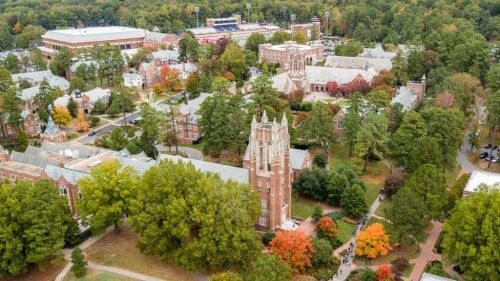
The state of Virginia spends more than $100 million annually for Virginia students to attend private colleges and universities in the state.
The program is the Tuition Assistance Grant program, commonly known as TAG, authorized in Sec. 23.1-628 through 23.1-635 of the Code of Virginia. There is no need or merit requirement. The student only needs to be a Virginia resident attending a Virginia accredited, private, nonprofit school. The program is available to undergraduate and graduate students.
The amount available per student is set out in the Appropriation Act. For the current biennium, the basic annual grant is $5,125 the first year and $5,250 the second year. The amount for graduate and medical students is $5,000 for both the first year and second year. Totally on-line students receive half of those amounts; students attending a Historically Black College and University can receive $7,500 annually.
The school that received the most, by far, was Liberty University, with $11.5 million distributed in the fall of 2024. Next was Virginia Union University in Richmond, at $5.7 million, followed by Shenandoah University in Winchester, with $4.2 million. The full list, provided by the State Council of Higher Education for Virginia, which administers the program, can be found here.
The year: 2075. The American colonies on the Moon are getting restless under Washington’s tyrannical rule….
This second edition of “Dust Mites” has a snazzy new cover, includes helpful lunar maps, and is 5,000 words tighter than the original. The sequel, “Trogs,” is scheduled for publication this summer.
Advertisement
Advertisement
Advertisement
Advertisement
About
Bacon’s Rebellion is Virginia’s leading politically non-aligned portal for news, opinions and analysis about state, regional and local public policy. Read more about us here.
Fund the Rebellion
Shake up the status quo! Your contributions will be used to pay for faster download speeds and grow readership. Make a one-time donation by credit card or contribute a small sum monthly.
Can’t wait until tomorrow
For your Bacon’s Rebellion fix?
Enter your email address to receive immediate notifications of new posts by email.
SUBSCRIBE
Search Bacon’s Rebellion
Categories
Archives
The Jefferson Council
Protecting Thomas Jefferson’s Legacy at the University of Virginia
Forgot Your Password?
Shoot me an email and I’ll generate a new password for you.