
by James A. Bacon

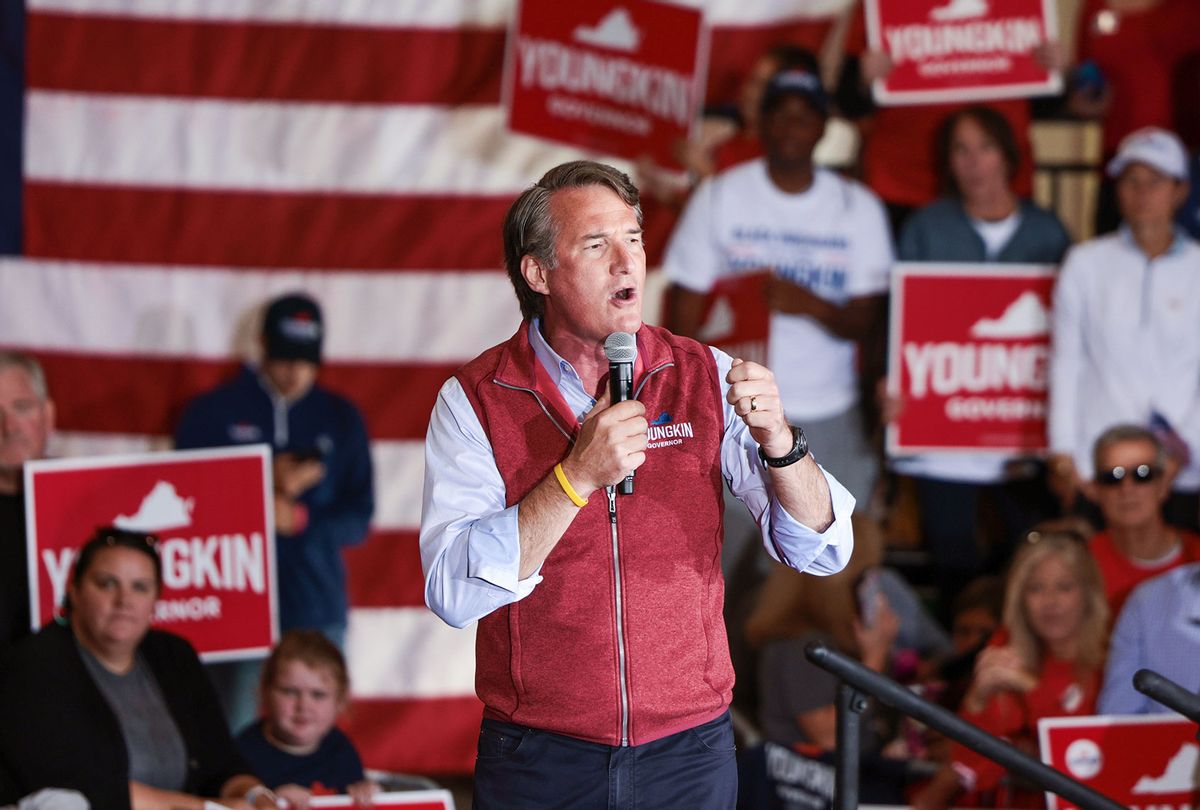
Speaker of the House Don Scott, D-Portsmouth, has called for the resignation of Lindsey Burke, a conservative member of the George Mason University Board of Visitors, but Governor Glenn Youngkin is standing by her. Fortunately for Burke, her nomination was approved by the General Assembly earlier this year, and there isn’t much that Scott or anyone else can do about it.
But Scott’s demand sends a signal that Democratic legislators are paying close attention to the shifting balance of power on the boards of Virginia’s public universities and are likely to give greater scrutiny to Youngkin’s nominees than in the past. The stakes are high as Youngkin appointees now comprise majorities on every public university board and are in a position for the first time to shape university policies.
In a letter to Youngkin, Scott cited Burke’s authorship of the “Education” chapter in the Heritage Foundation’s 2025 Project, a document that burst into public view when regime media began denouncing it as a dystopian manifesto for a second Donald Trump presidency, even though Trump disowned the project.
Scott criticized Burke’s arguments that the federal government should play a reduced role in education, which traditionally was the preserve of state and local government. In particular he took issue with what he characterized as her support for eliminating the federal Department of Education, her opposition to student loan forgiveness, and her call to roll back legal protections for LGBQT+ students and sexual assault survivors. Wrote Scott: “Her extreme views are alarming and contradicts [sic] the Commonwealth’s efforts.”
“Without quality educational opportunities, prosperity for all Virginians would greatly suffer.” Scott wrote. “Our world-class education system would become less equitable and inclusive, and academic excellence would diminish. We need champions that believe in good governance to serve on our public institution boards, not extremist ideologues.”
In response, Youngkin defended Burke by citing her professional credentials but sidestepped the specific concerns that Scott cited. “We need more outstanding Virginians stepping up to serve on our Boards of Visitors and other collegial bodies,” wrote Youngkin in a letter. “Removing her would not only do a disservice to George Mason University, but it would undermine the spirit of Virginians of all walks of life coming together to improve their community and their Commonwealth.”
Burke is one of six Youngkin appointees to the GMU board with a connection to the conservative Heritage Institute, which has fought for years for shrinking the size and scope of the federal government and returning power to the states. Heritage espouses a small-government philosophy that once prevailed in the Republican Party but has been relegated to the sidelines as the GOP has refashioned itself under Trump’s leadership. Project 2025 essentially is a series of white papers outlining the priorities that old-school Republicans wish for in the event of a Republican victory this fall.
Burke is highly critical of the Department of Education for spending billions to entangle public school districts in bewildering regulations and advancing a radical ideology of intersectional oppression. She argues that the department needs massive structural reform. Some DOE programs should be eliminated, others transferred to other departments. Most of her recommendations refer to K-12 education and are irrelevant to her role as a GMU board member.
However, her proposed reforms to loosey-goosey federal student-aid programs would restrict the blank check given higher-ed in the past decade. In summarizing key reform principles, she writes:
Treating taxpayers like investors in federal student aid. Taxpayers should expect their investments in higher education to generate economic productivity. When the federal government lends money to individuals for a postsecondary education, taxpayers should expect those borrowers to repay.
Protecting the federal student loan portfolio from predatory politicians. The new Administration must end the practice of acting like the federal student loan portfolio is a campaign fund to curry political support and votes. The new Administration must end abuses in the loan forgiveness programs. Borrowers should be expected to repay their loans.
As a GMU board member, Burke isn’t in a position to influence federal student-lending programs, but her views are hardly “extreme.” Americans are divided on the issue of loan forgiveness, and their views are nuanced. An overwhelming majority, according to a June NPR/IPSOS poll, favor making college more affordable over forgiving loans. As a GMU board member, Burke is in a position to make at least one university more affordable.
Universities are, of course, a core constituency of the Democratic Party, and politicians like Scott have shown zero interest in making universities more affordable if it means significant cutbacks to university headcounts and payroll.
Regarding LGBQT+ protections, Burke argues for rolling back Title IX regulations implemented by the Biden administration that were never contemplated in the enabling legislation.
“The next Administration should move quickly to restore the rights of women and girls and restore due process protections for accused individuals,” she writes. “There is no scientific or legal basis for redefining ‘sex’ to ‘sexual orientation and gender identity’ in Title IX. Such a change misrepresents the U.S. Supreme Court’s opinion in Bostock, threatens the American system of federalism, removes important due process protections for students in higher education, and puts girls and women in danger of physical harm.”
As a GMU board member, Burke will be in a position to influence how the university implements Title IX policy, whatever shifting guidance is issued by whichever administration winds up in power. In this case, Scott’s fears are probably warranted. Unlike most board members unfamiliar with Title IX’s legal and regulatory complexities, Burke brings deep expertise to the table. The GMU administration can bamboozle untutored board members; it can’t pull the wool over Burke’s eyes. On DEI-related issues, I expect she will be a force to be contended with.
College presidents have long used the mushroom theory of management — keep ’em in the dark and feed ’em you-know-what — for handling their boards. Thanks to Burke and other Youngkin appointees, that won’t be possible at GMU.
Read the Richmond Times-Dispatch’s treatment of the controversy here.



Leave a Reply
You must be logged in to post a comment.