

by James A. Bacon
Everybody hates McMansions, it seems, other than the people who build them.
That certainly seems to be the case in the City of Richmond, where Councilman Andreas Addison and a sympathetic Axios Richmond decry the phenomenon of “teardowns” that is “threatening the historic charm and character of many of Richmond’s most established neighborhoods.”
In the city’s affluent West End, people are snapping up properties in neighborhoods of small single-family dwellings built more than a half century ago and replacing them with houses double the size. The trend is driven by buyers who want to live in one of the more desirable neighborhoods in the Richmond metro area but want larger, more luxurious homes than the unremarkable, Levittown-style dwellings that were a product of a less affluent era.
“Not only are we losing ready-to-move-in homes that are affordable, we’re also fast-tracking the rest of the neighborhood to be unaffordable for everyone else,” Addison told Axios.
Smarter and equitable growth, protecting existing residents’ ability to stay in the city, and reigning in gentrification are the city’s “next chapter challenge,” he added.
Axios tells us why this matters: “The teardown trend is bulldozing some of the city’s affordable housing stock — literally — while threatening the historic charm and character of many of Richmond’s most established neighborhoods.”
Where do I begin?
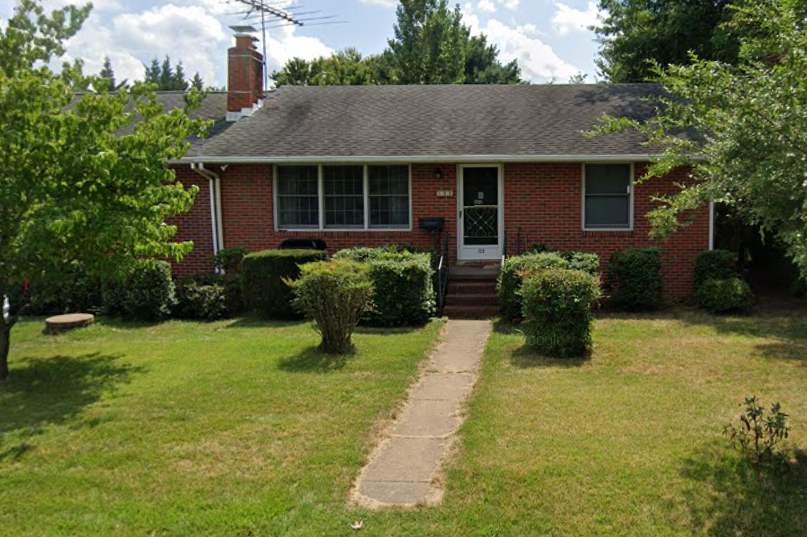
I know this part of town pretty well. First of all, I fail to see the “historic charm” of these neighborhoods. There is nothing memorable about the architecture of these small Cape Cod-style dwellings. And judging by the examples referred to by Axios, the larger houses replacing them are not monstrous McMansions but tastefully designed with exterior features, materials and scale compatible with the neighborhood. (See the Zillow image above.) The main difference is that the houses are larger and have more amenities. They represent an upgrade to the neighborhood.
There’s a deeper issue at stake — the belief that tearing down older, smaller buildings represents a form of “gentrification” and contributes to a shortage of affordable, entry-level housing.
To be sure, replacing a $400,000 house with a $1.2 million house does put that particular property beyond the reach of many potential homebuyers. But it doesn’t shrink the housing stock. Indeed, it marginally increases the size of the city’s housing stock. A house with more bedrooms and bathrooms can accommodate a larger family.
This should not be a social problem. It becomes one only if zoning codes in Richmond and neighboring counties restrict the development of new affordable housing units… which, admittedly, they sometimes do. The solution, however, is not to restrict development of neighborhoods with the goal of preserving cheaper housing, as some might suggest, but to loosen restrictions that hinder the incorporation of multiple-unit housing into old neighborhoods of single-family dwellings.
As a side note, the City of Richmond should be delighted by a trend that replaces $400,000 houses with $1.2 million houses. At current property tax rates, each such dwelling yields about $9,600 more in taxes each year. Multiply that by a hundred teardowns, and you’re talking real money.
Addison’s concern is that higher prices for some houses will affect “comparables,” drive up assessments across the neighborhood, and raise taxes for all. I think that’s a legitimate point as far as it goes. But I can’t muster a lot of sympathy for a homeowner whose property value increases from, say, $400,000 to $500,000 due to absolutely no effort on his part. If he doesn’t like paying an extra $1,200 a year in taxes on the $100,000 increase in value, sell the house, move to a neighborhood that isn’t being “gentrified,” and pocket the $100,000!



Leave a Reply
You must be logged in to post a comment.