
by James A. Bacon
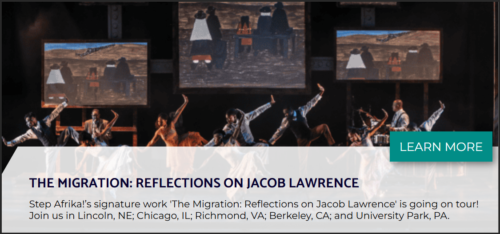
The University of Richmond’s Modlin Center for the Arts is bringing the dance troupe Step Afrika! to Richmond to perform its signature work, “The Migration: Reflections on Jacob Lawrence.” Inspired by the paintings of Lawrence, an African-American artist of the era, the production “charts the story of African American migrants moving from the rural South to the industrial North to escape Jim Crow, racial oppression, and lynchings in the early 1900s.”
The Great Migration reflects badly on the American experience, to be sure, and it is important never to forget the history of racism and segregation. But our cultural elites who finance, package and promote such productions seem to be interested in telling only the history of racial oppression, reliving traumatic events as if they happened yesterday, and ignoring the immense progress that American society has made toward becoming a post-racial society.
We rarely hear about the great Reverse Migration, which is actually occurring today — not a century ago. How many movies, documentaries, theatrical productions, or New York Times best-selling books tell that story?
What’s the Reverse Migration? If you have to ask the question, you’re making my point.
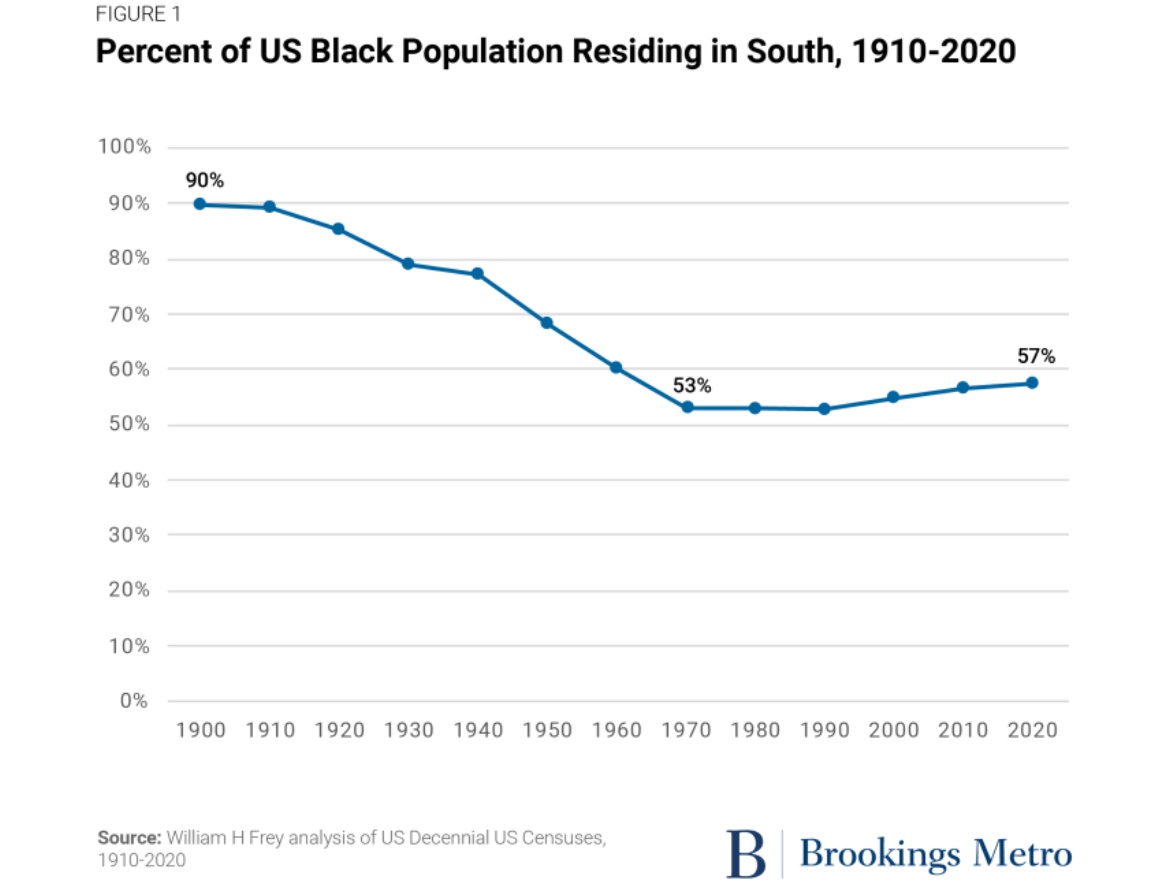
For an overview read this Brookings Institution paper.
The reversal of the Great Migration began as a trickle in the 1970s, increased in the 1990s, and turned into a virtual evacuation from many northern areas in subsequent decades. The movement is largely driven by younger, college-educated Black Americans, from both northern and western places of origin. They have contributed to the growth of the “New South,” especially in Texas, Georgia, and North Carolina, as well as metropolitan regions such as Atlanta, Dallas, and Houston.
Young educated Blacks are leaving Blue states north of the Mason-Dixon Line to partake in the greater economic opportunity available in the South. Why doesn’t the world of haute culture celebrate that?
Two reasons. First, showcasing the Reverse Migration would highlight the governance failure of Blue states, which talk the talk of creating economic opportunity for minorities but don’t walk the walk. Second, if a story doesn’t advance the racial oppression narrative, the cultural elites just aren’t interested. The idea that African Americans can create greater economic opportunity for themselves by packing up and moving South does not meld well with the conviction that they are hobbled by systemic racism, and nowhere more so than in Southern states only one step removed from George Wallace, Lester Maddox, burning crosses, and baton-wielding police with snarling attack dogs.
Wouldn’t it be nice if the University of Richmond and other arbiters of Virginia culture celebrated Black success and achievement? Instead of fixating exclusively on the injustices of past generations, maybe we could tout the wide-open opportunities in our own.


Leave a Reply
You must be logged in to post a comment.