
by Jon Baliles
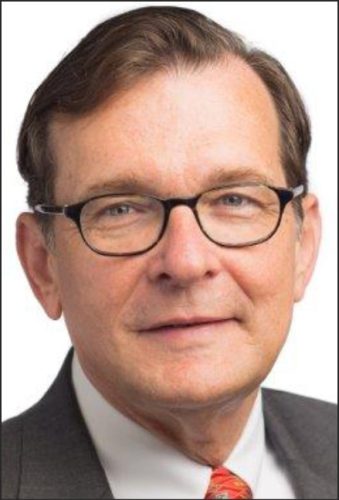
As mentioned in Part 1, Richmond lost two giants of history and change at the end of 2025 when Ed Slipek died after a brief illness and soon after, Bill Martin was struck by a car in the crosswalk on Broad Street, only two blocks from The Valentine Museum, which he had led for more than 30 years. The opening third of Part 1 (which you can read here) highlighted how both Bill and Ed embraced this city’s history and saw using it as an adventure to start conversations, open people’s eyes, and change their minds by learning more about the city around them. They were human time machines of Richmond history and could instantly transport anyone back to a specific neighborhood, year, or historical event and almost instantly convey what happened and what it meant in context of that time and where we are today. Where we are today, sadly, is that we have lost two men who possibly did more than any other two to expand the knowledge of this city’s history and never stop searching for more stories about it.
Perhaps what is so astonishing about Bill’s legendary career and life in Richmond is that his tenure at The Valentine almost ended before it really began. Bill, who had been serving as Petersburg’s Director of Tourism, was hired in 1994 to be the museum’s marketing director just as it launched the ambitious and very expensive project called Valentine Riverside. The $23 million project (centered around Tredegar Iron Works and where the American Civil War Museum is today) was an interactive history park with live re-enactors and used what was, at that time, pretty cutting-edge sound and light shows as well as offering bike and river tours, and shuttles to Hollywood Cemetery and Shockoe.
The project failed spectacularly within 16 months as the crowds never materialized and suddenly the ship was in a storm. As the failure of Riverside became evident, so did the magnitude of the trouble. Debt mounted to $10 million, most of the staff were laid off (out of 85 staff, only 12 remained), the Director was ousted, and the endowment slid from $4 million down to just $500,000.
Harry Kollatz recalled in 2012 that even the tour vans they used at Riverside were in danger of repossession. “A city sheriff’s deputy in charge of assessing the Valentine’s collection for possible bankruptcy proceedings left in tears, upset that the city’s history museum was probably going bust. The museum that concerned itself with Richmond’s sometimes-tangled history had to unknot its own troubled chapter,” he wrote.
As financial ruin loomed for the Valentine Museum and even closure seemed possible, most of the Board abandoned ship, perhaps because some didn’t want to be there when the museum dedicated to Richmond’s history had to close its’ doors and sell off its collections to other museums. A few Board members stayed on to weather the storm like Henry Valentine II (and my mom, Jeannie Baliles) to try and help rescue the ship.
“It was a damned mess, is what it was,” said Valentine II in 2021, the former longtime chairman of Davenport & Co., who with Martin struggled to save the museum his family had founded. “If it wasn’t for Bill, I can tell you, I don’t think there’d even be a museum at all.”
Bill was named director and had to move smartly and quickly to save the ship from going down. “That expansion was financially debilitating to the Valentine,” Martin told Greg Weatherford in a Style article that named him Richmonder of the Year in 2024. “I was here three months when it became clear that the financial situation of the organization was pretty critical, and that for the Valentine to survive, the board was going to have to make some decisions about what the place would look like going forward.”
T. Justin Moore III, who served on the Valentine board from 1999 to 2012, credited Martin for pulling the Valentine from the brink and pivoting to the future. “He’s come up with the most creative ways to engage the community,” he said, “From the Stride Through Time to tours to Manchester and everywhere else you might not otherwise think to go. Seems like every six months he comes up with something new.”
However, looking back, through the failure of Riverside came a transformational and transitional moment in Richmond’s history; in fact it was a “two-fer.” Richmond’s attention turned towards to the river as the true heart and soul of the city, and Bill was elevated as director of The Valentine.
For so many years, everyone focused on Broad Street as the center of Richmond, but the late 1990’s saw eyes turn towards the river as the place for people to gather, recreate, exercise, and have fun, and it hasn’t stopped since. The year after Riverside failed, the city held arguably its’ greatest one-night party ever when the Olympic torch run came to town in June on its way to Atlanta. Somehow, 15,000+ people crammed into the area where Riverside had been to jam with the Neville Brothers and watch the torch arrive that night, and it got so crowded the police closed the area off, which led some people to scale fences to sneak in to join the fun (or so I heard).
Since then, so much about the what and how Richmond thinks and operates and celebrates is down by the river. Even though Brown’s Island had been donated by the Ethyl Corporation in 1987, it was not a focal point or gathering spot. But after Riverside, the canal project was finished in 1999, Friday Cheers moved from Festival Park to Brown’s Island in 2000, The National Folk Festival came to the island in 2005 (the precursor to the Richmond Folk Festival), and now we have the Potterfield Bridge, a new amphitheater as well as great new improvements coming to Browns’ Island and other development like the CoStar tower that will have publicly accessible places.
Perhaps more importantly though is that the failure of Riverside saw Bill’s appointment to a job few were eager to take. After being named acting director, he tried to staunch the financial bleeding, and he also realized they needed to focus on the museum’s operations at The Valentine House in what was historically the Court End neighborhood at 10th and Clay Streets.
When the financial status began to stabilize after some years, Bill began rethinking and reorganizing the Valentine and its’ mission. One of the forward thinking changes Bill made in 2002 was to study the 1.6 million photographs, objects, artifacts, and even marquee signage in their inventory (which hadn’t been done in 50 years). Before Bill took the helm the museum had fallen prey to opening “blockbuster exhibitions” twice a year funded by corporate money and grants, but they didn’t result in huge visitation numbers. However, it strained the staff’s ability to create thematic shows and got in the way of actual curatorial duties.
Bill made a course correction away from blockbusters and wanted to become more of a community driven institution by going out into the public and offering programs that were more accessible. It was quite the fortuitous move to make more than 20 years go but he saw the vision and impact the smaller community galleries would have.
Kollatz wrote in 2012: The community spaces will allow the museum to address Richmond’s current events by displaying the elements that led to them. He makes an example of the present city plan to revitalize the train shed of Main Street Station. Martin explains that if the community galleries existed, the Valentine could use photographs, artifacts and text to show a brief history of the station, the importance of railroads in Richmond’s growth and the various attempts at repurposing the station. A city representative could speak about the plans and engage in a public conversation. “This is the kind of thing we’re looking to do more of,” Martin says. “It’s engaging, relevant — and even fun sometimes.”
Saving and resuscitating a Richmond institution that had been on the precipice of the abyss is a pretty good legacy to leave behind on any resume, but Bill was just getting started. If his first legacy was saving The Valentine itself, his second legacy became focusing on the community — all of the cities’ communities — and starting conversations and telling a more complete picture of Richmond’s history, especially the stories that people didn’t know but were important to who we are and how we have gotten here.
Bill also began to use his knowledge, wit and charm (and the occasional frown or smirk) to put his thumbprint on this city’s DNA. And did he ever. Over the last two+ decades, the city’s historical center of gravity shifted just two blocks, but it was seismic. It moved from The White House of the Confederacy (next to VCU’s Main Hospital) where a specific history of the city had long been told, and it moved over to the Valentine itself, which told a more complete version of what Richmond had been and is about, and still ongoing. That was not an accident at all, it was because of Bill.
That shift began with two of Bill’s favorite things — questions and conversations. He was happy to encourage conversations by asking questions, or he might start conversations which led to more questions. Either way, it often led to more knowledge about our history, which led to a better and often times a more complete understanding of things we may not have known before through stories that never got much attention elsewhere.
Bill could cite chapter and verse most of Richmond’s history and provide footnotes, but he wanted to move past the “textbook” history and seek out and share a fuller understanding of the things that happened here. Some of those stories across our history made some people uncomfortable, while others didn’t know anything about them but had their eyes opened. What Bill knew was that progress does not happen if you keep telling the same story.
To tell those lesser known stories, he worked with any and every group telling a story or wanting to be heard, and sometimes he was even the guide. Bill often led some of the museum’s walking tours around town and would frequently take museum visitors behind the scenes for a private director-led special. In early 2021, Bill led a chilly walking tour to the site of the infamous 1811 Richmond Theatre Fire on Broad Street that killed 72 people, including the sitting governor. Greg Weatherford recalled Martin talking about six slaves who were also buried in the crypt on site:
“One of the things that is very interesting here is that it is an interracial burial,” Martin says. After the theater fire, he explains, Richmond’s leaders confronted a problem both simple and profound: The bodies of those who perished were unrecognizable as white or black. The differences that seemed so stark to everyone at the time — and to so many in the centuries before and the centuries to come — had been erased by the flames.
While Bill understood that knowing about the past was very important, he believed what was more important was answering, “What comes next?”
John Sarvay recalled on his Substack a lunch with Bill 15 years ago and his ability to ask tough questions and not be afraid of seeking the answers.
“For a hundred years, we’ve told the story of white Richmond. And for twenty years, we’ve tried to tell the story of Black Richmond,” he told me over one of our first lunches. We were discussing strategic planning with then-board chair Jim Klaus. “I want to know whose story we need to tell for the next 100 years.”
“He was a catalyst. He accelerated our community’s leap away from the past by elevating new stories, and challenging the way we told old stories. He was part of the spine that has held the leaders of the region’s museum and cultural institutions together for decades.”
Sarvay also included a telling and brilliant “Five Ways to Channel Your Inner Bill Martin” cheatsheet:
1. Ask the 100-Year Question — Even When It Slows the Meeting — what really matters after we are gone?
2. Treat New Voices as Essential, Not Symbolic — When someone new enters a room, assume they see something you don’t, and ask.
3. Be Serious Without Being Earnest — Humor wasn’t deflection for Bill; it was accessibility.
4. Invest Before There’s Proof — The Valentine amplified stories on the margins before funders were ready. That’s leadership, not performance.
5. Keep Going. Not relentlessly. Not blindly. But adaptively. Curiously. With eyes wide open. Like Bill.
The Valentine long ago acquired the nickname, ”Richmond’s attic.” However, Bill wasn’t interested in only filling the “attic” with fancy antiques or relics; he also wanted to include things that said “Richmond,” which included contemporary pieces that will become artifacts and tell stories generations hence what this city was doing and thinking at this point in time and look back and learn from it.
After activist Alan Schintzius died in late 2024, Bill talked about him as a change maker who pushed established narratives but was always willing to talk with anyone. Bill told Style that Schintzius had donated 115 videotapes of his old cable access show from years ago as well as the “No Casino” airplane banner that was flown over the Folk Festival for two days before the second casino referendum in 2023, which caused a minor quake on social media just a few weeks before the referendum was defeated (again).
“What an amazing influence on the city,” Bill said about Alan. “He was always pushing … and he was consistently underestimated in how much he could actually get done and the kind of influence he actually had. It was about his persistence and passion about these things … even if you didn’t always agree with him, this was a strong independent voice. There was integrity and honesty in what he said.”
Christy Coleman, executive director of the Jamestown-Yorktown Foundation and former Director of the American Civil War Center, said part of Bill’s magic was his “extraordinary capacity for empathy. He was at the heart of intersectionality for Richmond. There wasn’t a space where Bill wasn’t welcomed, not because he put himself there — because he was invited there.”
And he was invited just about everywhere. However, Bill also had a maestro’s ability to perform an Irish goodbye and disappear before people’s very eyes at a function or event, in some cases, because he wanted to support as many organizations and people as he could. Enjoli Moon, founder of Afrikana Film Festival said, “Bill was a giver, and it was part of his ethos to show up for people. I used to tease him about how he could slide in and out multiple events without people realizing he’d left. He had mastered how to show up and show love then move on so he could sprinkle some more elsewhere.”
Bill was always willing to show the love, but also have the hard conversations because that was where the learning took place. “For museums to be useful, we all need to be asking hard questions about our history,” Martin said. “You’re not learning unless you’re just a little bit uncomfortable.”
When the Jefferson Davis statue on Monument Avenue was pulled down in the summer of 2020, Bill didn’t hesitate to bring it to the Valentine. The Monument Avenue Commission had recommended the removal a year prior, and The Valentine had begun trying to acquire it then. After it was pulled down, he saw no irony in the fact that the first President of The Valentine, Edward Valentine, had designed the statue more than 100 years earlier and many others like it of other Confederate figures. Bill saw it as a piece of history from both past and present and was emblematic of how many opinions and attitudes at the beginning of the 20th century were not the same as many people in the early 21st century. The establishment of the Lost Cause mythology that rose and became accepted in the early 20th century had been revealed as just that, a myth that did not match what historical records, newspapers and other documents recorded.
In June 2022, Bill said in an op-ed that the fallen Davis statue would soon be exhibited in the museum. He wrote: “This significant work by Edward Valentine, the museum’s first president, will be shown in its unrestored form for the next six months. The reality is Confederate monuments have been removed, and there are a wide range of opinions about the events of 2020 that we hope to capture. We must use this moment to build a better understanding of history and figure out the best way forward — together.”
He also mentioned that the museum had done surveys and focus groups and events to determine the best path forward and invited more input. “One of those surveys showed us that 80% of you would prefer to see Confederate statues in museums with appropriate context, rather than displayed in public spaces or destroyed. Now that the Davis statue is in our gallery, we need your input as we continue to move forward,” he wrote, adding that the responses would not only mark this moment in Richmond’s history but also be used to inform the museum’s Sculpture Studio and other future exhibitions.
Some of Bill’s stances drew the ire of some people who sent nasty emails and even death threats, but he would respond to them with an invitation to lunch and talk. Meg Hughes, now the acting director of the Valentine who worked with Bill for more than two decades said, “Bill embraced developing relationships with those critics, not necessarily to change anyone’s opinion, but to say that we’re both humans, we can talk together, we can civilly disagree.”
Bill was always pushing and fighting for The Valentine’s stated vision, which “is to be recognized as the premier source for experiencing Richmond’s history – using its past to inform the present, and to shape the future.” He was always focused on that vision every day and virtually embodied it. “The Valentine can hint at where we live up to those values and where we fail,” he said. “We have to look beyond the standard stories. We have to.”
Ana Edwards from the Defenders’ Sacred Ground Project said of Bill: “I think he believed there was no gift more interesting or appropriate than giving Richmond the truth-telling platform of Richmond’s actual history – with the record of it preserved and made available to help us through it, to improve and track the city as it continues creating its history. He sought to create space for good work and never get in its way.”
Imagine Richmond today without the Valentine or Bill’s tenacity and love for wanting to paint a full picture of our city’s history, warts and all? Every city has them, but he led us to a place where many others have not yet gone, and in pursing the museum’s vision, he would constantly dig, discuss, uncover and present everything he could find or learn in order to make our city a better place in the present and for the future. And he was still at it right up until December 27th.
In Greg Weatherford’s Richmonder of the Year article in Style in 2024, he wrote: “As [Bill] sees it, there’s still plenty of work to be done: a restoration and reinterpretation of the Valentine’s Wickham House; a redesign of the Valentine Garden; further engagement with Richmond Public Schools; focusing efforts on the First Freedom Center at Shockoe Slip; and helping Richmond reimagine its downtown and celebrate its unique history.”
And the work will go on. Acting Director Meg Hughes said last month, “Bill really left us in a good place. We have a good strategic plan. We have a new capital campaign that’s about ready to launch. It’s very clear what priorities he had and what things he wanted to see accomplished.”
Of all the comments, statements, and memorials about Bill since his passing, Lisa Sims, president and CEO of Venture Richmond, had a touching and perfect summation of Bill’s impact and legacy in this city. Having known and worked with him on countless occasions over the decades, she had a front row seat to watch Bill work his magic, and said:
“Bill was a student of history – of Richmond’s history – not only because it was his job, but because he understood better than most its impact on the lives we lead in this community every day. He understood that our history is ever-present, a real-life presence that we must address. And he never met an uncomfortable conversation that he didn’t want to illuminate. Bill’s talents were so many – a brilliant mind, impeccable memory, a quick, dry wit, irrepressible charm, and the uncanny ability to gain more attention by lowering his voice than by raising it. But his real gift was showing us all how the history of this place we call home affects the lives we live today. That intersection of past and present was his sweet spot, working every day to ensure we do not forget our past as we move forward. He KNEW Richmond. All of it. And he never shied away from any of it. I believe it was his great love, and he was willing to take on the hard work to make it better.”
Bill has been called an icon, a legend, a visionary, a treasure – all of which are accurate. But he was also a big part of Richmond’s soul and its conscience,” Sims added. “And he was a true and loyal friend. Like many today, I’m heartbroken. We will not see another Bill Martin.”
The Valentine Museum is financially secure and not going anywhere for a long time, which is good because not long ago Bill was saying a lot has been done, but there is a lot more work left to do.
“What this place proves is that people and institutions can change,” he said. “We haven’t changed enough. We have lots of change ahead of us. But we have this particular opportunity in this particular moment, and these stories need to be told.” Sadly, we have lost our friend Bill, and all of us must not allow the opportunity for more stories, conversations and change slip away in the future so we can all keep learning and growing. Bill will be watching over us to make sure that we do.
Jon Baliles is a former Richmond city councilman. This article is republished with permission from his Substack blog, RVA 5×5.
Leave a Reply
You must be logged in to post a comment.