
by Jon Baliles
The end of 2025 in Richmond was a rough and painful one as the city lost two of our dearest friends, visionaries, change agents, and just down right kind-hearted people that collectively did more to inspire change and keep it on the front burner to make this city a better place.
I am talking about Bill Martin and Ed Slipek. Slipek passed away on December 15 after a brief illness, and Martin was struck in the crosswalk at Broad and 10th Street on December 27 and died the next day. It’s hard to put into words what those two men meant to this city because they were both such giants, and both were on a journey to make sure Richmond learned from its past to make sure we have a better future.
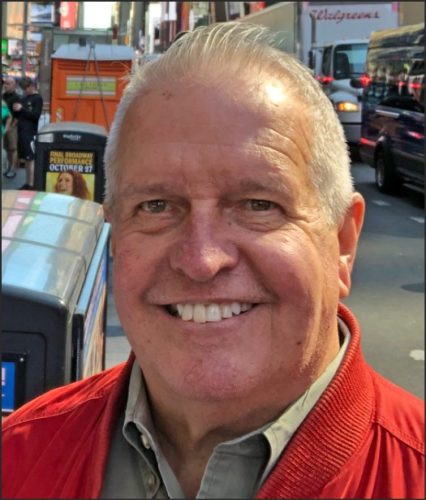
Both Bill and Ed were able to affect change in Richmond in ways that politicians and other leaders were not. They committed wholeheartedly to make the city better through ideas, insight, storytelling and their never-ending passion and desire to know more and share all of it. They were human time machines of Richmond history ready to transport anyone within earshot back to a specific neighborhood, year, or historical event and almost instantly convey what happened and what it meant in context of that time and where we are today.
They weren’t afraid of our history, they embraced it. Each worked constantly to share their knowledge and make sure we didn’t fall prey to the famous Santayana line, “Those who cannot remember the past are condemned to repeat it.” They wanted us to not only NOT forget the past, but also learn about all the things that many of us never knew before or things that weren’t talked about much or taught in classrooms.
They saw it as an adventure to use history and conversation to change people’s minds by learning more about the city around them. It wasn’t a personal journey; they welcomed anyone who wanted to come along with them and explore the history and the DNA of this city, even if it was a trip that, for many years, made some people uncomfortable or they didn’t want to join at first, or didn’t want to go on at all.
But Bill and Ed never relented. They made it their goal, each in their own way and sometimes collaboratively, to keep shining the light on telling the history of this city, warts and all, and wanted people to think, reflect, and examine what they learned. They weren’t afraid of the good, the bad, and the ugly parts, and they didn’t shy away from any of it because they knew it was vital for us to understand and come to terms with our past in order to grow. To them it was an adventure and a challenge worth facing. The entire city and so many of us in it are better off because of their zeal, and this place will sadly never be the same without them.
Ed Slipek grew up in Ginter Park and went to college at Boston University and VCU. He became the architectural critic for the cutting-edge newspaper The Richmond Mercury in the early 1970’s, and later became director of corporate communications for Best Products and worked with the architects who developed those wild building facades for their stores across the country.
He is best known as a writer and journalist but was always so active and did so much more than write. He was an educator and taught architectural history at VCU and at Maggie L. Walker Governor’s School. He often led special tours for groups like The Woman’s Club of Richmond, the VCU Commonwealth Society, and Westminster Canterbury, and he became a set designer at The Firehouse Theater. He was also constantly on the move despite not having a cell phone, car or even e-mail (until the pandemic). He was active with Historic Richmond and also co-founded the online encyclopedia and forum called Architecture Richmond. If you ever wondered about the history or designs of buildings around town, this site takes a look at the inspiration, design, and history of everything from the 1784 Adam Craig House in Shockoe Bottom to the new, mammoth Otis apartment building in Scott’s Addition.
Ed wrote a lot about the city’s rich and abundant architectural history and styles, but he was such a walking encyclopedia of history that almost all of his articles were like mini-classes about what happened on our streets and in our neighborhoods, 50, 100, and 200 years ago. He knew so much about seemingly everything, was relentlessly positive and upbeat, and you always learned something when you read his articles or talked with him. His written work for Style Weekly and Richmond BizSense (among others) won him countless journalistic awards over the years.
He often used his time machine to explain what Richmond used to look like and how it fits (or doesn’t) into modern Richmond. He would frequently cite in his stories current streets, neighborhoods, buildings or goings-on and then connect the present to the past. Many of his articles feature well known spots that people may have visited or gone by daily or a hundred times, but they may not have known where an old streetcar line ran or where a prominent building or train terminal once stood, or which famous people may have been there in the past. He had a gift for tying an event taking place in the present day to the past.
For example, when The National opened as a music venue in 2009, Ed wrote about how that venue had been reborn, but lets you in on some of the history that had taken place there almost 90 years earlier. It had opened as a movie theater in 1922 “at a time when silent films and live productions shared the stage. Orson Welles was among the actors who performed here. He pointed out the original architect also designed other theaters throughout the south as well as dozens of homes in Richmond in a broad range of styles.
Ed spared little criticism for what used to a block known as Theater Row that was almost completely erased. “It’s probably a miracle that the National is standing at all. Without kicking a dead horse, it’s a fact that Richmonders are Neanderthal in destroying entire blocks of historic building fabric.” Two theaters on the block were demolished, but the Historic Richmond Foundation saved The National in 1989 from the wrecking ball. However, the space sat vacant for years, in part, because “old prejudices lingered. Bottom line, it was on the “wrong side of Broad,” a term that some white Richmonders of a certain age still use to describe the side of the street that had saloons, theaters and, most importantly, wasn’t in the shadow of the Miller & Rhoads and Thalhimers department stores.”
In April 2009 during the Great Recession, Ed wrote a piece for Style about how the original J.P. Morgan spent three weeks at a house on Grace Street (near the Main Library) during the Wall Street Panic of 1907. Morgan was here for the Episcopal Church’s three-week, 300th anniversary celebration in America, which brought 100 Episcopalian bishops from around the world and “Richmond was host to one of the largest and most prestigious gatherings in its history.”
The Panic started after Morgan arrived in Richmond but, During three critical weeks, most evenings Morgan was enjoying an expensive cigar on a private porch in downtown Richmond. Morgan was focused on his devotion to the conference while in town, which Ed covers, but he also has other fascinating tidbits about Morgan. When he did finally go back to the panic in New York (which was very relevant when Ed wrote this piece in the early months of 2009), he concludes:
It took the Panic of 1907 to see that old banking methods had to be reworked for the modern age. Morgan would work with Sen. Nelson Aldrich of New York during the next two years, and later Virginia Sen. Carter Glass, to develop a new system, what would become the Federal Reserve. Just as the response to the Panic of 1907 brought change, will recent financial events require new thinking and new systems in global finance and banking?
Ed wrote a lengthy and fascinating story about Winston Churchill’s trip to Richmond (and America) in 2018 when “The Crown” and “Darkest Hour” became very popular on streaming platforms. Churchill visited in 1929 when he was out of office and he toured several museums and Civil War battlefields and stayed at the Executive Mansion in Capitol Square. Ed pointed out that even Prohibition would not stop Churchill from his famous afternoon imbibe, and “it seems that someone was dispatched from the mansion to Shockoe Bottom to rustle up some hooch.”
Ed also had a fun piece in Richmond BizSense just before King Charles was crowned in 2023. The then-Prince had founded the Prince’s Institute of Architecture and his students (but not the Prince himself) came to Richmond for two weeks in 1996 where they explored and talked with people about an urban design plan for Monroe Ward. The Institute’s students suggested things like a “wide variety of residential structures,” “numerous small parks and public squares,” “adaptive reuse of civic buildings,” and two way streets and encouraging more cars on to the expressway.
Ed, in his always playful way, said that if King Charles III were to come to Richmond today to see what ideas from the 1996 visit became a reality he would find “a decidedly mixed bag,” including VCU’s unique “Collegiate Baroque” style on Belvidere Street, too much surface parking, and a new 16- story apartment building on Grace Street he called “an unforgivingly greedy behemoth of a structure.” He concludes: So if not “Off with their heads,” Charles III’s command might be: “Back to the drawing boards.”
Ed also used his time machine to talk about what kinds of development might be realized in areas of town that needed attention, focus, and improvement. His 2010 piece about the need to improve and reimagine Chamberlayne Avenue weaves in the changing history of that road, which started out as a streetcar route, then became part of Route 1 and later became dirty and congested with cars and trucks trying to avoid the toll on the Richmond-Petersburg turnpike. He noted that the corridor “has had so much of its building stock ripped out that it’s a gouge between intact sides of the neighborhood. Repairing the damage will be tough, but here are some ideas,” and goes on to list a few common sense solutions.
He wrote a fantastic article in 2007 about the old 8th Street Office Building that the state was preparing to demolish, and Ed was biting in his criticism and encouraged people to take in the architectural masterpiece before a monstrosity took its’ place. He points out the “bravura entablature of the Eighth Street Office Building (which was inspired by Michelangelo’s roofline of the Farnese Palace, arguably Rome’s grandest palazzo). That kind of detailed craftsmanship is all but impossible today.
Designs for a massive new office building on the site, which would stretch along Broad from Eighth to Ninth streets, are now being circulated. They show a neo-modern structure that calls attention to itself like a hyperactive child. With a variety of materials, irregular rooflines and weirdly placed setbacks, it would snake along Broad Street like a giddy conga line. But that’s a discussion for another day.
Consider this a last call for those who enjoy the power of good architecture. Go downtown and enjoy a final look at what’s being lost. Its exterior is a textbook lesson in early high-rise design. Before modernism swept the design world, architects were trained in classicism and followed strictly prescribed proportions.
The “shaft” where columns would go consists of eight repetitive floors. Marble quoins and vertical implied-pier columns run up the surface of the building. On the top two floors, the entablature is capped by the richly articulated cornice. It doesn’t get any better than this.
That “conga line” building was never built. Instead, the state built a six-story parking deck, which in 2023 Ed called a mausoleum and warned: “How does a handsome old American burg lose its architectural character? Slowly, or in one fell swoop, depending on the neighborhood and who’s doing the pushing and pulling.”
Richmond would be much farther along if some city leaders had listened to Ed about another mausoleum that was, and still is, north of Broad Street. In 2005 — 21 YEARS AGO — Ed wrote a compelling case about the need to develop that area in an article called, “Desolation Row.” He talked about tearing down the public safety building (which was finally demolished last year), linking Court End and VCU to the convention center and the-then functioning Coliseum, adding green space, walkability and adding residential development in the surface parking lots. He said,“there’s a lot going on north of Broad… but no soul.”
He highlighted the history of the area and how what had once been the historic Eastern Jackson Ward and Navy Hill neighborhoods that were demolished and paved over for interstates, the Coliseum, and “modernist, post-World War II urban planning and architectural theory.” Bill Martin was quoted in that story and said, “Urban areas are about the rhythm of blocks, and it is this natural rhythm that makes a city.” Ed mentioned that the entire area had lost its rhythm and “throughout the district, visual energy and excitement that make cities pop was lost and not replaced.”
Ed listed six things that could be done to revitalize the area that still sound familiar today. Things like, reestablishing the original street grid, structured parking on the fringes, residences, dorms, and retail, enhanced green space in Festival Park and around the Coliseum, and “Convene a pow-wow of principal landowners and residents of the area to develop approaches and a plan to invigorate North of Broad.”
Sadly, here we are today still talking about those things and the area remains desolate. Ed noted in that 2005 piece, “What we have underfunded or lost sight of is the soul of downtown — the grid, museums, brick sidewalks, intimately scaled buildings and places that evoke the American history. After 40 years of hemorrhaging, how much longer will be continue to suck the oxygen out of this neighborhood?”
Sadly, those 40 years he mentioned have now become 61 years, and it’s just flat out pathetic this area has essentially not changed at all. It remains undeveloped in any meaningful way and the city has been talking about it for decades without movement, much less success. The area has fallen prey to Richmond’s misguided desire/obsession to find the perfect scheme for development (the word scheme is intentional). The only thing preventing the city from developing that area is the city, as leader after leader instead falls for scams or bad deals and wastes years on things like the Navy Hill Boondoggle and the botched VCU Health real estate disaster that cost the health system $80 million. Now, the “vaunted” City Center plan is going into its’ fourth year, but it remains all talk and no movement (but not even a developer, yet). It will likely remain Desolation Row for many more years before anything new is actually built, like a much-needed convention center hotel that is twenty years overdue.
In 2007, Ed featured a great piece called “Untold History” about the publication of the book “Built by Blacks: African American Architecture and Neighborhoods in Richmond, VA” by local historian Selden Richardson. He wrote: “Traditionally, Richmond histories are written with a political, institutional or military focus. Richardson’s approach, along with photographer Maurice Duke, is to let the city’s buildings, streets and neighborhoods speak. And “if the walls could talk,” is not an empty cliché in this 138-page volume. Richardson becomes a shaman in telling often difficult-to-hear stories about sometimes obscure places — the sites and structures where Richmond’s underserved black population sought shelter, comfort, dignity and, when possible, expression. The book is modest in size but packs a wallop.”
Ed was a visionary who loved this city and always worked to make it better. He was always optimistic about our future and never let the city’s oft-repeated mistakes or lack of action bring him down. Don O’Keefe, who co-founded ArchitectureRichmond with Ed, once asked him if he would consider living elsewhere for a year or so like he had earlier in his life: “‘No,’ he said after a long pause and a distant gaze. ‘I’m just beginning to figure this place out.’”
His passion for life and everything he did was obvious to everyone. He rarely stopped moving his legs and his mind was always moving, as were his lips; but no one cared he was a talker because he told fantastic tales, scintillating stories, and he had a laugh that could put anyone or an entire room at ease. He was the life of any event or party and unrelentingly joyous, which is why people sought out and embraced his presence.
That was obvious from reading some of the reflections and memories so many people shared after Ed’s passing about his life and his impact on them and this city. Below are just a few of so many.
O’Keefe, who is also the principal architect at O’Keefe & Associates, where Ed had come on board just a few years ago, said, “Eddie was a creature of Richmond. His curiosity about the city was insatiable. How does it work? Why is it the way it is? And who made it that way? Eddie wanted to understand it all.” When O’Keefe asked him once where he would live if he had a million dollars, Ed replied he would “divide the money and buy a $250,000 home in each of the city’s four quadrants: Northside, Southside, East End, and West End. “I’d move around between the places,” he explained. “Then I’d really know what’s going on.”
Melissa Sinclair Barber, former Style reporter remembered, “To me, Ed Slipek was Richmond. As a young reporter at Style — new to journalism, new in town — I was enchanted by his encyclopedic knowledge of the city. Eddie could tell you the story behind any story. He always knew who to call. Eddie had all of old Richmond’s charm with none of its prejudices. He understood the city’s history and challenged those who wanted to erase it. He was a brilliant writer and a friend to us all.”
Bill Martin, director of the Valentine Museum said, “He was a good friend and wise counsel for over 30 years. As the Valentine began planning major building initiatives and new exhibitions, I always started with Ed. He would bring that special eye for design and a unique perspective that made every project better. My first question was always ‘What would Ed think?’ After a long dinner and maybe a few beverages, I got my answer.”
Cyane Crump, executive director of Historic Richmond said, “As an academic and an unparalleled raconteur, he knew more about Richmond’s history than just about anyone, and he delighted in sharing the stories of the people and places that make Richmond special. He had the reporter’s eye for the story behind the story, finding the unique angle on the people who shaped the places that Richmonders know and love today.”
Elizabeth Kostelny, retired director of Preservation Virginia, said: “He was one of a kind. Always quick to assess the situation. Always kind in offering encouragement. Through his writings, teaching and advocacy, Ed championed what makes Richmond stand out: the integrity of its historic fabric. As issues arose, he forwarded solutions that accommodated growth and change while preserving the distinct character of this historic city. There will never be another Ed Slipek.”
Former Style Editor Greg Weatherford hit the nail on the head about Ed’s impact: “It’s hard to put into words what Ed Slipek meant to Richmond’s cultural life. He elevated how the city understands its urban landscape because he never forgot that the purpose of the buildings and streets and spaces that make up a community is to make life livable. He loved beautiful architecture, but throughout his career as a critic and public intellectual Ed preached a gospel of urban planning that put people first. He disdained architecture that disdained people because Ed believed that people are what matter most. And he lived that credo in everything he did, from how he spoke to people to how he used his critic’s pen (literally, in his case; he preferred to handwrite, not type). He was wise and kind and generous with his time and wisdom. And he knew everybody.”
Brent Baldwin, former arts editor and current editor for Style, also had a stellar remembrance: “I keep remembering how thoughtful he was. Many times, Eddie walked me back from the precipice with his trifecta of good humor, social graces and friendly wisdom, or he might bombard you with over-the-top compliments meant to lift your spirits. Most impressively, he was always able to maintain his heightened curiosity about people, and the world, which feels increasingly rare. I’ll miss that mischievous Eddie grin, his wonderful laugh, and the way he could disarm anybody with the story of his latest adventure. You forgot your troubles in Eddieland. When somebody that special is gone, the world feels like a colder, dimmer place – but he would shoo away any self-pity and tell us to stay curious and keep working hard. He always knew what to say and when to say it.”
Sadly, now, we have to say goodbye to our friend Ed.
Jon Baliles is a former Richmond city councilman. This column, Part 1 in a two-part series, is republished with permission from his Substack account RVA 5×5.
Leave a Reply
You must be logged in to post a comment.