The Risk of Offshore Turbine Blade Failure

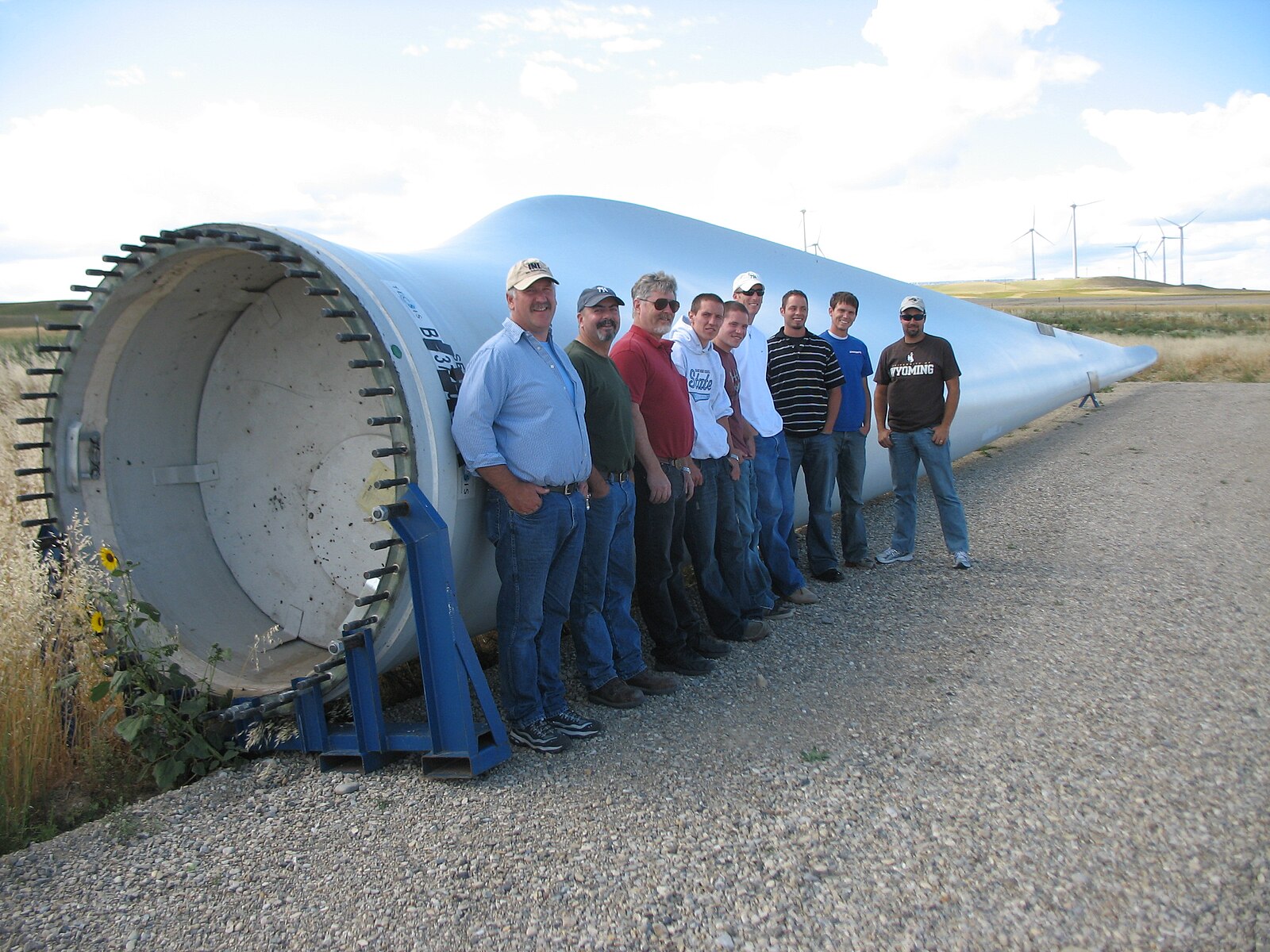
Image: Idaho National Laboratory Creative Commons

by David Wojick

On July 26, CFACT’s President Craig Rucker sent Virginia Governor Glenn Youngkin a letter warning him about the serious risk of blade failure in the giant offshore wind facility being built off Virginia. The warning builds on the recent blade failure off of Nantucket, which has littered the beaches with fiberglass fragments. Virginia is also at risk.

In this article, I present some technical background on that risk. The Virginia offshore wind facility will be one of the world’s biggest, with 176 enormous turbines. It is just getting started with pile driving, so no turbine blades have been installed to date. This is an opportune time to undertake caution.

The Nantucket turbines are made by GE, and they are the world’s largest in operation today at 13 MW, each driven by three huge 107-meter-long blades. That is 351 feet for those of us who do not speak metric. The Virginia turbines will be even bigger at 14 MW with blades 108 meters (154+ feet) long. They are made by Siemens Gamesa, or SG for short.

The GE turbines and blades have been in production for going on two years, so have some operational experience. The SG turbines and blades just came into production so there is no experience with them. One could say they are being beta tested off Virginia.

This newness in itself is a great concern. At three blades each, there are an incredible 528 blades with a combined length of over 57,000 meters (187,000 feet or 35 miles) of blades. To take first-production blades to these huge lengths is surely very risky.

Multiple or even systemic failures are certainly possible. A sound engineering approach would be to build a few and see how they did over time. Note, too, that the prototypes were in Europe, so these blades have never been tested in a hurricane, to which offshore Virginia is prone.

Now let’s look at the blade stress physics just a bit, as it is amazing. SG has a quick look on their website, saying this:

The rotational forces found in offshore wind turbines in operation put IMMENSE STRAIN ON THE BLADES and the rest of the wind turbine structure. [Emphasis added.] At a tip speed of approximately 90 meters per second – equivalent to 324 kilometers per hour! (201 mph!) – and a projected lifetime of more than 25 years, high-quality and innovative design is imperative. For a 108-meter-long blade, the rotational forces are around a staggering 80 million newton meters, and the strain on the blades and the structure is intense! To put this into perspective, the force pulling on a human shoulder while spinning a 1 kg object around in an outstretched arm is only about 10 newton meters!

(Eighty-million newton meters is about 59 million pound-feet of torque).

Given these immense, intense strains, the novelty of the SG blades becomes even more of an issue.

To begin with, they are constructed in an unusual way. GE and other major manufacturers build half a lengthwise blade at a time, then glue the two halves together. Building half a tube is relatively simple, just lining a trough-like mold with fiberglass. Gravity is your friend, and inspection is easy.

In contrast, SG builds the entire tubular blade at once. I have no idea how, but it cannot be simple. Gravity wants to distort the tube, and inspection must be difficult. In addition, while SG has built a lot of smaller blades this full tube way, their giant blades are of a different composition. Because of the extreme stresses, they have added carbon fibers.

In summary, we have a newly huge blade, subject to immense stresses, made for the first time in an unusual way with a new composition and never tested in a hurricane. The high novelty risk to Virginia is obvious.

But there is another big risk issue as well; a business issue, if you like. SG no longer exists as a corporation. It was absorbed by its majority stockholder to keep it from going under. The reason, as Reuters puts it, is “quality issues and ramp-up problems caused a 4.6 billion euro (5 billion dollar) annual net loss.”

In Virginia, we are looking at the biggest wind turbine ramp-up in history, where high quality is imperative. One has to wonder if SG is capable of this prodigious task at this time, and that wonder signals a big risk. Not only does SG have a deep history of problems, they are undergoing restructuring.

Given these novelty-laden circumstances, it surely is unwise to try to throw up 35 miles of untested blades without further consideration. Hence Craig Rucker’s letter to Governor Youngkin.

This article has been republished with permission from Cfact.


ADVERTISEMENT

(comments below)


Comments


Comments

92 responses to “The Risk of Offshore Turbine Blade Failure”

  1. Dr. Havel nos Spine' Avatar
    Dr. Havel nos Spine'

    In October 1941, a 1.25-megawatt โ€œSmith-Putnamโ€ turbine was connected to the electric grid of Central Vermont Public Service on Grandpa's Knob in Castleton VT. It was the first time ever wind power fed the high-voltage lines of a utility system.

    The turbine operated on and off for five years, facing winds up to 115 MPH. Then, in March 1945, after developing some sort of vibration, an eight-ton blade broke from the turbine and flew 750 feet โ€“ landing on its tip. With World War II still raging, and project cost exceeding estimates, the experiment was halted.

    What is not generally known – and may be just an urban legend based on "old-timer" tale telling – is that when the blades were being transported up the mountain on a flatbed truck, one blade fell of the truck resulting in a tiny little crack. The crew placed the blade back on the truck and said nothing to management. The rest is history.

    1. David Wojick Avatar
      David Wojick

      Good story. I forgot to mention that these blades each weigh around 60 tons. A lot of debris.

  2. James Kiser Avatar
    James Kiser

    If you notice very few of the congressional people or their staffs have any electrical or mechanical engineering back grounds. Where they do get any ideas is from people outside the military industrial complex (to use an old DDE term). It is why people like Granholm or Butteig or Gore push insane ideas like electric Semi's or locomotives or wind turbines that function only with massive govt subsidies. Never under estimate the power of stupid people in large numbers to screw sh*t up.

    1. Nancy Naive Avatar
      Nancy Naive

      FWIW, most locomotives are already electric.

      1. LarrytheG Avatar
        LarrytheG

        well.. diesel-electric… but as far as I can tell , I've seen no credible info that they have to be all-electric by some date.

        speaking of military-industrial comples:

        https://uploads.disquscdn.com/images/30aa15630720afa69c852defbe876a65c9bf6da1bbb0f6effb263999f4418b48.png https://uploads.disquscdn.com/images/b4259a175d01bb235c0c1d86bee5f0c7ace4f6796e1104e5d0dc78e3ba5cca0a.png

        1. Nancy Naive Avatar
          Nancy Naive

          The ability to solar charge vehicles means no fuel transport issues. Plenty of sun in, oh say, north Mali as opposed to Wawa or Sheetz.

          1. WayneS Avatar

            That is an excellent point. However, the efficiency and speed of solar charging will need to increase dramatically before it will be an effective means of keeping our military vehicles and equipment running well enough to fully rely on it.

            I think hybrid-diesel is what the military should be concentrating on right now. Solar and plug-in charging could be included on the electric side, and on the ICE side the diesel engines could be designed to run on pretty much any kind of oil they run across.

          2. WayneS Avatar

            That is an excellent point. However, the efficiency and speed of solar charging will need to increase dramatically before it will be an effective means of keeping our military vehicles and equipment running well enough to fully rely on it.

            I think hybrid-diesel is what the military should be concentrating on right now. Solar and plug-in charging could be included on the electric side, and on the ICE side the diesel engines could be designed to run on pretty much any kind of oil they run across.

          3. Nancy Naive Avatar
            Nancy Naive

            The problem with military vehicles is that they are incendiary bombs of their own making. Newer lithium batteries (lifepo4) donโ€™t heat under load or charge. No heating means they can be heavily shielded. Hybrid might be the worst of both worlds.

          4. Use the new Lithium for batteries. Diesel and Biodiesel fuels are not that great of an explosion hazard.

            Gas turbines, though? BOOM!

      2. James Kiser Avatar
        James Kiser

        No they are not. They are diesel electric. There is no all electric freight locomotive

        1. Nancy Naive Avatar
          Nancy Naive

          Theyโ€™re electric. How the electricity gets to them is a matter of choice.

  3. energyNOW_Fan Avatar
    energyNOW_Fan

    We just need a name for it, and we'll be fine. NC is the Tar Heel state, call it glass foot? But honestly the long-term performance of the large blades will be crucial to the economics, and is probably an unknown for this large blade size. I am sure we will not hear much except hype about actual vs. expected performance.

  4. walter smith Avatar
    walter smith

    Shouldn't 108 meters be more like 354 feet, not 154?
    These things are huge. A boondoggle. Will wear out long before being projected currently.
    Will no one rid me of this meddlesome stupidity? Please!

    1. David Wojick Avatar
      David Wojick

      Yes that is a big typo. Good eye.

    2. James Kiser Avatar
      James Kiser

      If I read the article correctly he was saying the blades would be 154 feet longer than previous designs.

      1. David Wojick Avatar
        David Wojick

        No it was a simple lapse going from my calculator to my text processor. Hey I am four months older than Biden.

        1. Lefty665 Avatar
          Lefty665

          But, you've still got all your marbles.

          1. Nancy Naive Avatar
            Nancy Naive

            You sure?

        2. James Kiser Avatar
          James Kiser

          LOL still smarter than him.

  5. Kathleen Smith Avatar
    Kathleen Smith

    Unbelievable. And we have not even considered what warming has done to the paths and strengths of hurricanes?

    1. Nancy Naive Avatar
      Nancy Naive

      Warming? Haner says thatโ€™s a hoax.

  6. Clarity77 Avatar
    Clarity77

    Just another aspect of the Green New Scam. A fool's folly.

  7. f/k/a_tmtfairfax Avatar
    f/k/a_tmtfairfax

    All aspects of technology need to be evaluated, most especially since ordinary people both pay for the technology and are dependent on its working correctly. But tradeoffs must be made. Nothing is risk-free. Is there a difference between on- and off-shore use of these windmills?

    Last year, while on a bus traveling from Vienna to Bratislava, I viewed a tremendously large wind turbine field. We were led to believe that blade failure has not been a problem.

    1. LarrytheG Avatar
      LarrytheG

      Congrats! Yes. Richmond is currently dumping millions of
      gallons of sewage into the James River. Bad technology?

      1. energyNOW_Fan Avatar
        energyNOW_Fan

        That because in the past we blamed private industry for pollution, and insisted they pay for fixes or leave the Country, when municipal sewage was over 50% of the problem and not addressed…but getting better.

      2. energyNOW_Fan Avatar
        energyNOW_Fan

        That because in the past we blamed private industry for pollution, and insisted they pay for fixes or leave the Country, when municipal sewage was over 50% of the problem and not addressed…but getting better.

      3. energyNOW_Fan Avatar
        energyNOW_Fan

        That because in the past we blamed private industry for pollution, and insisted they pay for fixes or leave the Country, when municipal sewage was over 50% of the problem and not addressed…but getting better. Human nature. I am retired but if I ever saw a job for fixing for example Alexandria waste water treatment I might consider. I do not know if they already fixed it.

        1. LarrytheG Avatar
          LarrytheG

          We set standards for discharge and you meet the standards or else close. But that is separate from Municipal
          Sewage treatment which also has standards. Most all cities have two problems. CSO – combined sewage overflow which is that street gutters go to the sewage treatment plant and in rain events, it can overwhelm it. The second (and this particular problem in Richmond) is aging infrastructure and pipes located where they cannot be easily upgraded/fixed. Alexandria still has a CSO problem but is working on it. Whether it is private sector
          or municipal what is your view/position? Should Allied Chemical be left alone to continue to dump Kepone, or any commercial enterprise allowed to pollute a river to the level it is a threat to humans and animals?

          1. how_it_works Avatar
            how_it_works

            Ironically, most of the places derided as "urban sprawl" have infrastructure new enough that CSOs are not a problem.

          2. LarrytheG Avatar
            LarrytheG

            Yes. They LEARNED from past mistakes! But some folks are not happy with storm ponds or storm water taxes
            to create back-fit stormwater facilities.

            These are entirely separate from wastewater treatment in many more recent exurban areas.

        2. f/k/a_tmtfairfax Avatar
          f/k/a_tmtfairfax

          Absolutely. For years, Alexandria officials were virtue signaling on Climate Change and other environmental issues, even as they failed to separate its sanitary and storm sewer systems. I remember when I was in High School, the City of St. Paul, MN did that. Disgusting hypocrisy. Walk your talk.

          1. LarrytheG Avatar
            LarrytheG

            It's not easy to separate storm from sewer.

            Virtually all older cities (including Washington, Richmond, have the problem including around the world and the US does more about it than most other countries. 80% of the world's sewage is not treated.

            The raw sewage going into the Potomac from Arlington is far, far less than it used to be. It's just not 100% yet but every year it gets better.

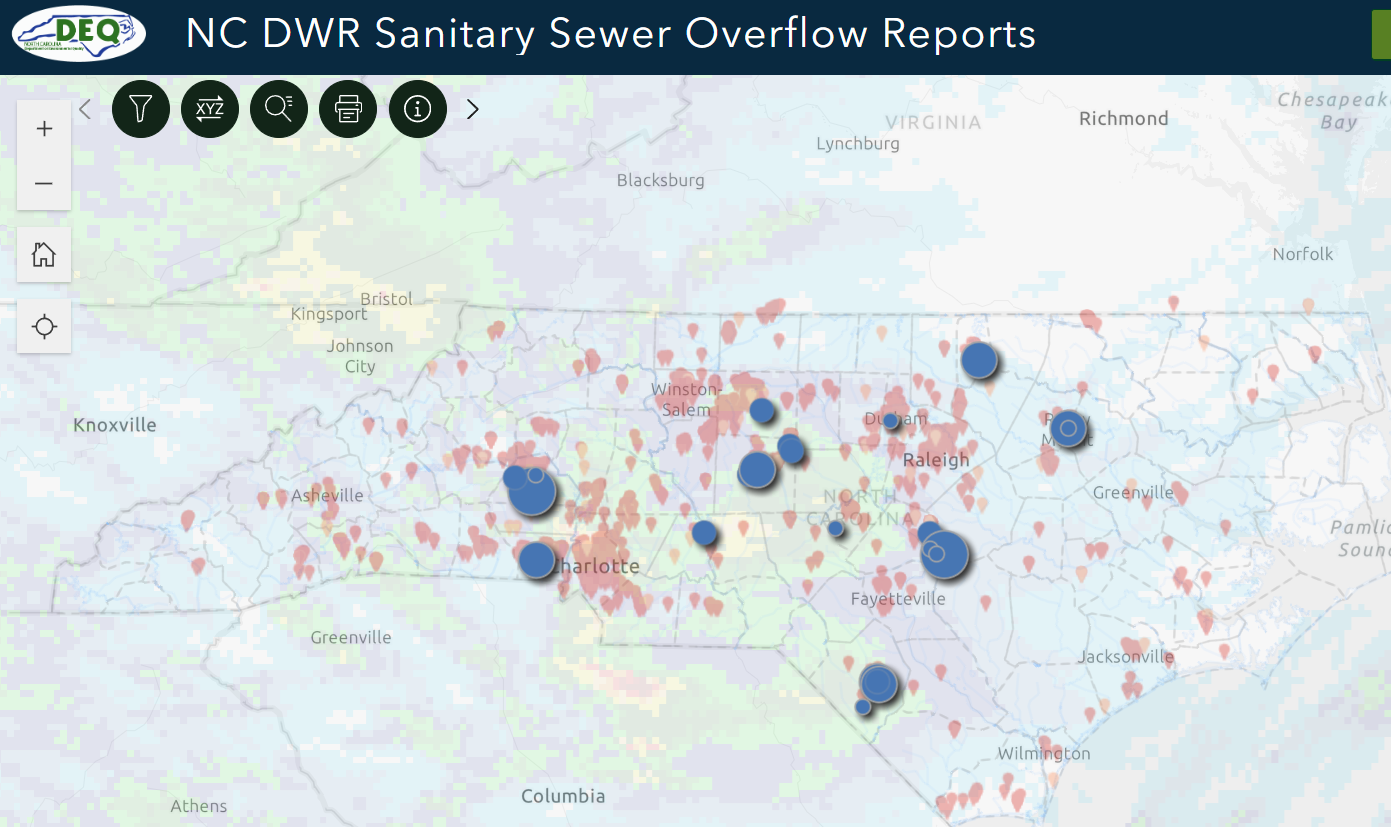
            NC has it's own issues also

            https://uploads.disquscdn.com/images/f7c74dfccff22f149d464f992d6c781168e9e2229a6c8d9502f96c3e6fbae78a.png
            It's entirely possible to be concerned about climate change and at the same time still have CSO (or SSO) issues. They are not dependent on each other and they do evolve on separate paths.

          2. WayneS Avatar

            FYI – Combined Sewer Overflow (CSO) and Sanitary Sewer Overflow SSO) are not the same thing.

          3. LarrytheG Avatar
            LarrytheG

            yes. and your point?

          4. WayneS Avatar

            You were talking about CSOs, and then you changed the subject.

          5. LarrytheG Avatar
            LarrytheG

            Actually talking about technology "fails" in general and gave some examples:

            which included both SSO and CSOs…

            it wasn't specific to either, they were both examples of "design" and "technology" failures that are not at all uncommon to include most all infrastructure, even modern:

            https://uploads.disquscdn.com/images/195bc44481a75d39b4c245c7d7780f4146e573517f23fb7d77e8f532e1b998a7.png

          6. WayneS Avatar

            Most of Richmond's combined sewers are well over 100 years old, with some more than 150 years old.

            They hardly qualify as modern.

          7. LarrytheG Avatar
            LarrytheG

            sigh! yes. But THE point is that we build things and over time we find out if they “work” the way
            we thought/intended, as opposed to not building because they are “risky” and we’re not 100% sure
            so we decide not to… re: big turbines seem “risky” and that coming from folks who are not engineers,etc
            right?

            I have confidence that the “big” turbines have been well-designed, modelled, etc… I have no reason to
            doubt them any more than any other newly-designed technology and time will tell if they are “too big”,
            not some folks playing culture-war what-a-boutism.

          8. WayneS Avatar

            I have no problem whatsoever with properly designed and tested wind turbines. However, I think we should learn from past mistakes (like combined sewers) and not rush new technology to the mass market without trying to identify, and account for, all reasonably foreseeable modes of failure. I also think the useful service life of wind turbine blades is not as long as is currently being claimed, so I'd appreciate some honesty on that front.

            My only real issue with off-shore wind applications is that I think the added risk to endangered whales and other sea creatures is being understated by proponents of the technology. I hope research is being done on noise-cancelling methods which can be utilized so that these animals are not harmed any more than we have already harmed them.

            …except sharks and sea snakes, of course, they can all die as far as I'm concerned… ๐Ÿ˜‰

          9. Matt Adams Avatar
            Matt Adams

            We don't need no stinkin FEMA/FMECA's done, this is new tech get it out there, post haste…

          10. LarrytheG Avatar
            LarrytheG

            I don’t have any reason to have any more doubts about turbine than I do about other advancing technology. I don’t have enough background to be able to form more informed view so I’m good with the folks in the industry doing their thing.

            CFACT and others got shot down almost immediately in court because all they had was an assertion
            without any evidence while the govt had a ton of it.

            I don’t see the folks building the turbines as “proponents” per se but rather engineers and associated providing their best effort at state-of-the-art technology. If they do turn out “too big”, I trust them to make adjustments even backtrack if need be, much more so than I do the culture-war climate-denying opponents like CFACT.
            And apparently so does Gov. Youngkin.

            I don’t care for any critters that will bite me or eat me but they all have a place in the ecosystem. However I
            might be persuaded with respect to black flies, ticks and mosquitos.

          11. WayneS Avatar

            I don't have any reason to have any more doubts about turbine than I do about other advancing technology.

            Yes. My point exactly…

    2. energyNOW_Fan Avatar
      energyNOW_Fan

      We need to know blade size experience…to my knowledge most of the installed base is less than 5 MW…I did not know if you meant huge field of many turbines or huge blades. They are big in the base case.

      For Virginia, it might have made sense if our two test turbines offshore Virginia Beach had some size-resemblance to what we actually installed in the final construction. I am guessing the gargantuan blade size is a new idea with relatively little actual experience.

      1. David Wojick Avatar
        David Wojick

        The test turbines are just 6 MW each so no precursor to the 14 MW. In this case both the blades and the field are the biggest in the world. The only experience for the SG 14 is a prototype built about 2 years ago in Europe. I cannot find out if it was even offshore. Vesta's big offshore turbine test site was on land.

    3. David Wojick Avatar
      David Wojick

      The big difference is onshore is much smaller, max 4 MW or so, because these enormous blades cannot make the turns in the roads.

  8. LarrytheG Avatar
    LarrytheG

    We have trains that derail with hazardous waste. Ships that run into bridges. Trucks with gasoline that burn up overpasses and airplane doors that blow off, to name a few.

    Why is this "infrastructure" judged any differently than those others?

    1. energyNOW_Fan Avatar
      energyNOW_Fan

      You are comparing accidents with power plant design engineering.

      1. LarrytheG Avatar
        LarrytheG

        like Nukes and pipelines and coal plants?

      2. LarrytheG Avatar
        LarrytheG

        don't we have "design" issues also with things like bridges, airplanes, even train infrastructure?

        what makes this particular infrastructure unique in this regard? How many people died in the Baltimore Bridge
        failure because they failed to have the proper protection for the bridge legs?

        Things like this happen on a fairly regular basis… right?

        We don't stop building bridges or carrying hazardous waste on trains or interstates, right?

        1. David Wojick Avatar
          David Wojick

          If you actually read Rucker's letter there is nothing about not building this stuff. We just learned of a new risk and it needs to be assessed and addressed before going on.

          1. LarrytheG Avatar
            LarrytheG

            We routinely build other infrastructure and then find out later, it has risks we did not realize and
            design flaws, right? How many bridges have we built that turned out later to have risk and flaws not
            recognized before-hand? It’s not how it works. We build first, then we find out after! Pro Forma!
            We killed a bunch of astronauts that way, right?

    2. David Wojick Avatar
      David Wojick

      All these hazards are heavily regulated for safety. Offshore wind is not, or not yet and that is what we hope to change.

      Historical aside. The very first federal regulations were for railroad safety around 1900. Now we have a million or so pages of regs and counting

      1. LarrytheG Avatar
        LarrytheG

        and we STILL have accidents, right? That affect people and towns directly. Way more than these turbines
        will ever do directly. On land, how many people have been killed by turbines or for that matter, worldwide?

        1. David Wojick Avatar
          David Wojick

          Yes there will always be accidents. That is not relevant to the present issue. You are working a diversion as you often do here.

          1. LarrytheG Avatar
            LarrytheG

            Was the bridge collapse in Baltimore an accident or a design flaw? How about the rail accident in Palestine, Or the door issue with Boeing?

            Point is, we don't not build because we haven't checked out the risks to the level that some folks want , like in this case.

            THe "diversion" is the opponents of wind looking for excuses to stop the turbines. RIght?
            Didn't start with the "big" ones.. just the lates
            opposition!

            What happened to the whales by the way?

            If we did EVs and Tesla this way, we'd have neither!

            The so-calledl "risks" of the Turbines is minimal compared to other infrastructure and evolving technologies including Nukes and SMRs!

      2. Matt Adams Avatar
        Matt Adams

        You should inform said Poster that the reason the railroads haul TIH/NIH and beyond is because they are the only authorized mode of transportation and are required to haul it as per Federal Law.

        1. Lefty665 Avatar
          Lefty665

          I got Toxic Inhalation Hazard, what are the NIH category and the PIH category?

          1. Matt Adams Avatar
            Matt Adams

            Noxious Inhalation Hazards, less toxic but still not cool. Additionally, I didn’t list but they are also the required transporter for Nuclear materials.

            The only plus for all those nasty things, is they are able to charge whatever they’d like to move it.

      3. Nancy Naive Avatar
        Nancy Naive

        And even with all that regulation, they still have trashed the environment far beyond any catastrophic windmill accident. Oh heck, letโ€™s be real. More than ALL windmill catastrophes since recorded history.

        1. LarrytheG Avatar
          LarrytheG

          A million pages of regulations for rail and they're still tipping over with hazardous waste in the middle of towns…

          Geeze, if they took the recommended windmill approach… no can do…. clearly they might tip over with hazardous waste so nope , no can do!

        2. David Wojick Avatar
          David Wojick

          The difference is these systems are essential while wind is worse than useless. All it does is destabilize the grid.

          1. Nancy Naive Avatar
            Nancy Naive

            Some would disagreeโ€ฆ and do.
            โ€No kind of power plant runs 24/7, 365 days a year, and operating a grid always involves managing variability of demand at all times. Even with no solar and wind power (which tend to work dependably at different times and seasons, making shortfalls less likely), all electricity supply varies.โ€

            https://e360.yale.edu/features/three-myths-about-renewable-energy-and-the-grid-debunked

            https://www.americanprogres… .

            https://www.nrel.gov/docs/fy21osti/79224.pdf

          2. Nancy Naive Avatar
            Nancy Naive

            Some would disagreeโ€ฆ and do.
            โ€No kind of power plant runs 24/7, 365 days a year, and operating a grid always involves managing variability of demand at all times. Even with no solar and wind power (which tend to work dependably at different times and seasons, making shortfalls less likely), all electricity supply varies.โ€

            https://e360.yale.edu/features/three-myths-about-renewable-energy-and-the-grid-debunked

            https://www.americanprogres… .

            https://www.nrel.gov/docs/fy21osti/79224.pdf

        3. WayneS Avatar

          What about the great Dutch Windmill Plague of 1618? It preceded the bubonic plague by at least 3 years, and it wiped out almost 75% of the wind mill population of that country. It also sent billions of rotting wood particles as high as 65 feet into the atmosphere… ๐Ÿ˜‰

        4. WayneS Avatar

          What about the great Dutch Windmill Plague of 1618? It preceded the bubonic plague by at least 3 years, and it killed almost 75% of the wind mill population of that country. It also sent billions of rotting wood particles as high as 65 feet into the atmosphere… ๐Ÿ˜‰

    3. ZWarmac9999z Avatar
      ZWarmac9999z

      Nobody knows the impact of large diversions of the wind.

      1. LarrytheG Avatar
        LarrytheG

        “diversions” ? you mean like a skyscraper that diverts the wind? or a bridge?

      2. LarrytheG Avatar
        LarrytheG

        “diversions” ? you mean like a skyscraper that diverts the wind? or a bridge?

  9. Nancy Naive Avatar
    Nancy Naive

    How do it compare to Exxon Valdez or BP Deepwater Horizon?

    1. LarrytheG Avatar
      LarrytheG

      It's silly stuff. It's like " Oh, we found out we can't build turbines that big, I guess we'll have to tear them all down now and not build any more at all"….

      lord.

      1. Nancy Naive Avatar
        Nancy Naive

        Why tear them down? According to all these highly trained engineers at BR, theyโ€™ll come down all by their little lones.

        https://www.youtube.com/watch?time_continue=1&v=5m-jwwM3qRs&embeds_referring_euri=https%3A%2F%2Fwww.google.com%2F&source_ve_path=Mjg2NjY

        1. LarrytheG Avatar
          LarrytheG

          Well, if one comes down and kills a single whale, it's ALL OVER!

          1. Nancy Naive Avatar
            Nancy Naive

            Odds? You have a higher probability of killing a kangaroo with the Skylab.

          2. LarrytheG Avatar
            LarrytheG

            yeah, but… risks you know…

  10. WayneS Avatar

    90 meters per second tip speed with a diameter of 216 meters comes out to just under 8 rotations per minute (7.96 to be exact). I was under the impression these things were designed to rotate faster than that.

    1. David Wojick Avatar
      David Wojick

      No they will look deceptively slow at 7.5 seconds per rotation because they are so big. Of course at 200 mph birds have zero chance of getting out of the way.

      1. Lefty665 Avatar
        Lefty665

        Hopefully they'll make enough noise to warn them off. Something that big moving that fast at the tip has got to generate some wind noise.

      2. Nancy Naive Avatar
        Nancy Naive

        Yeah, but closer to the center, the birds have a chance.

      3. WayneS Avatar

        Thanks. I was going by what I have read in the literature, a lot of which states that very large turbines will rotate at up to +/-20 rpm. That'd bring the tip speeds of the giants planned by Dominion up to around 500 mph.

        And if they can crank 'em up to 30 rpm the tip speed would be close to the speed of sound. That would make things interesting, to say the least… ๐Ÿ˜‰

        1. energyNOW_Fan Avatar
          energyNOW_Fan

          The blade speed means that particulates (rain, snow, sea mist) will have potential to erode the blades resulting in less power production than expected. Which will be not a catastrophic failure but longer term economics issue. I am concerned we/public may not be privy to performance monitoring data.

        2. David Wojick Avatar
          David Wojick

          Very interesting! Enormous rotational stresses.

          1. WayneS Avatar

            Yes. That's probably why no one is recommending that large wind turbines operate at 30 rpm. And even the 20 rpm figure must be outdated. What was considered a very large wind turbine 10 years ago is not really all that large compared to what they are designing today.

          2. David Wojick Avatar
            David Wojick

            Yes the bigness race. Here is a list of fields with dates and you can calculate sizes.
            In 2017 it looks like 6 MW was big. 2013 sizes look like 3.5 and 5 MW.
            https://en.m.wikipedia.org/wiki/List_of_offshore_wind_farms
            China just announced a 20 MW turbine.

        3. energyNOW_Fan Avatar
          energyNOW_Fan

          The blade speed means that particulates (rain, snow, sea mist) will have potential to erode the blades resulting in less power production than expected. Which will be not a catastrophic failure but longer term economics issue. I am concerned we/public may not be privy to performance monitoring data.

  11. Haig48 Avatar

    Cute little religion. Kind of like burning witches, i guess.

    1. Nancy Naive Avatar
      Nancy Naive

      crucifying windmills?

Leave a Reply


ADVERTISEMENT