• Va. Lawmakers Ban Phones in School, Remove Punishment for Breaking The Law

    by Kerry Dougherty

    In principle, legislation is usually preferable to executive orders. Iโ€™m talking at the state and federal level. They canโ€™t be overturned with the flash of a pen by the next executive, for one thing.

    This is why Congress needs to act quickly to enshrine President Trumpโ€™s executive orders in law.

    But when legislators act, they can make things worse.

    Case in point: The Virginia General Assembly, currently in Democrat control.

    Last summer Gov. Glenn Youngkin issued an executive order telling schools that student cellphones must be banned during the school day. Exceptions were carved out for kids with disabilities that might require them to be able to use a phone for emergencies.

    For reasons that are unclear, a number of school districts took their sweet time implementing Youngkinโ€™s order, as if it required a great deal of work at the local level to tell the kids to leave their damned phones powered off and in their backpacks.

    Next, the General Assembly decided to get in on the act and codify the rule. Democrats even lavished lukewarm praise on the governor, agreeing that cellphones were a distraction and donโ€™t belong in the classroom. Neither do smartwatches.

    Excellent! A rare flash of sanity from the far-left kooks in Richmond.

    It was too good to be true, however.

    Continue reading.


  • Not a Satire: Refracting the Black Reproductive

    by James A. Bacon

    I bring to your attention a flier promoting an event — “Refracting the Black Reproductive” — held at the University of Virginia last week. My intent is not to critique the substance of what Samantha Pinto, an English professor from the University of Texas at Austin, had to say. To discuss her thinking, I would have to understand her… which I do not. Rather my point is to illustrate how the language of academic leftists has gotten so inbred and arcane — and Ms. Pinto is a teacher of English, mind you — that it has become incomprehensible to ordinary Americans.

    Here’s how Pinto described what she planned to discuss:

    I ask: How might a transnational feminist politics represent the multiple demands on the Black womb through rather than against the tensions of individual and collective rights? How might we turn toward African, Caribbean and US-based Black feminist expressive culture for models of engagement with the reproductive that center vulnerability, ambivalence, uncertainty, disutility, and temporariness, all of which challenge ideals of autonomy and community?

    In case you had difficulty deciphering the meaning, the flier contains this helpful context:

    (more…)

  • Mark Warner Needs A Thesaurus

    by Kerry Dougherty

    For years, theyโ€™ve worked as an adjunct to the Democratic National Committee, obediently trotting out talking points and providing their critics with hilarious montages of these mid-wits spouting the exact same lines.

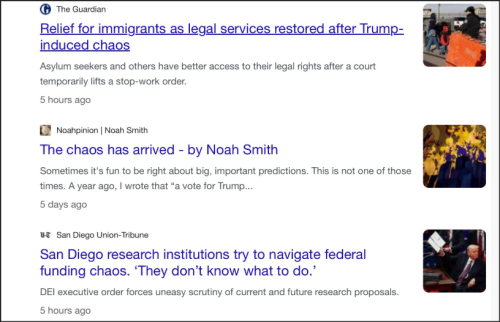
    With their heads spinning since Donald Trump became president, the left has latched onto a tired word to characterize what most of us believe to be an energetic swamp draining.

    They describe it as โ€œchaos.โ€

    Hereโ€™s a small sample of the Democrat lickspittleโ€™s headlines:

    Continue reading.


  • Why Did Tax Bill Die? It’s a Governor’s Bill!

    Delegate Joe McNamara

    By Steve Haner

    Virginia will remain out of step with the rest of the United States on how it taxes service-providing businesses after General Assembly Democrats voted in lockstep to once again kill a logical income tax reform.  

    There was absolutely no partisan angle to the policy debate, yet party line votes killed it. It is impossible not to consider that one fatal flaw for the idea was that Republican Governor Glenn Youngkin supported it and suggested the Assembly make the change.  But the idea has been knocking around for years, long before Youngkin. A respected tax department official told the House Finance Committee she had been working on the issue for 15 years. 

    โ€œIt shifts the burden from in-state companies to out-of-state companies,โ€ Kristin Collins of the Department of Taxation told legislators.  You would think this would be a bipartisan winner.  

    The tax rule Democrats rejected by defeating House Bill 1866 in House Finance on January 31 has been adopted by at least 39 of the 48 states that have corporate income taxes. The senate version, Senate Bill 1456, was killed January 28.  

    Most of the states Virginia competes against for business locations and expansions use what is called โ€œmarket based sourcingโ€ in calculating the tax on income from services.ย According to the fiscal impact statement prepared by the Department of Taxation (very detailed, as usual) โ€œnone of the states contacted reported an unexpected revenue loss as a result of market-based sourcing.โ€ย 

    (more…)


  • VCU Loses DEI Grant

    Virginia Commonwealth University is one of three universities to have a federal grant canceled in the latest step by the Trump administration to defund Diversity, Equity & Inclusion.

    The education schools of VCU, California State University-Los Angeles and the University of St. Thomas in Minnesota had received a series of grants under a larger $1 billion Biden administration initiative. Reports The Washington Free Beacon:

    Ostensibly meant for teacher training and development, the grants were in fact used to support courses and workshops on DEI conceptsโ€”including “white privilege,” “systemic racism,” and “linguistic supremacy”โ€”as well as the establishment of a “social justice” center.

    The VCU education school, which has explicitly included “social justice” in its mission statement, hosted workshops on “decolonizing the curriculum” and “becoming an antiracist educator.”

    (more…)

  • Political Infighting Over VMI’s Board of Visitors Puts Cadets at Risk

    Lightning strikes VMI. Image credit: The Cadet

    — The Cadet editorial staff

    The Virginia Military Institute (VMI) has long stood as a symbol of discipline, leadership, and service. However, recent political disputes over Board of Visitors (BOV) appointments have placed cadets in the crossfire of a battle they neither sought nor deserved.

    Former BOV President Tom Watjen, who remains on the Executive Committee, lamented the July 2024 appointees, stating, “I am disappointed in how politicized the board appointment process has become, impacting board experience and continuity.” His concern extends beyond VMIโ€”politicizing governance at the expense of cadets undermines the Instituteโ€™s core mission.

    Dedicated Leaders Denied Without Justification

    Two highly qualified and committed alumni, Quintin Elliott โ€™85 and Clifford Foster โ€™93 were appointed to the BOV by Governor Glenn Youngkin in July 2024. VMI Superintendent Maj Gen. Cedric Wins praised their appointments, noting, “Each individual brings a unique set of skills and experiences that will help us continue to move the Institute forward.” Despite their strong credentials, the Virginia Senate rejected their appointments, with the House expected to follow suit, leaving the BOV short of experienced leadership just before one of its three annual meetings.

    (more…)

  • Jeanine’s Memes

    From The Bull Elephant


  • Reassessment Blues

    I just opened my reassessment notice from Henrico County. The assessment of my house is 13.5 percent higher than it was last year!

    It is not a grand or fancy house. Just a brick Cape Cod with about 1,300 sq.ft, built in 1955.

    It is not the house; it is the neighborhood. Houses stay on the market only a few days and there are almost several offers, many above the listing price. The house next to me sold last year for almost half a million dollars. It too is a brick Cape Cod, but it has a family room addition that mine does not have and it has been extensively renovated inside. In addition, it has a detached garage. None of that applies to me. Nevertheless, that selling price undoubtedly had an effect on my assessment.

    If my house could sell for what the county says it is worth, I understand why so many people are having trouble finding something they can afford.


  • Bacon Meme of the Week


  • A Purge Victim Speaks

    by James A. Bacon

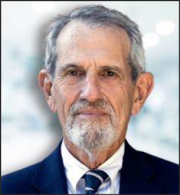
    Stanley Goldfarb

    One victim of the Democrats’ winnowing of Governor Glenn Youngkin’s appointments to state boards and commissions this year was Stanley Goldfarb. The General Assembly nixed 13 appointees in all — an unprecedented number in modern Virginia history, I believe. Most, like Goldfarb, were outspoken conservatives who had demonstrated a willingness to speak out against the “progressive” project in Virginia higher-ed.

    Youngkin’s other appointees have kept a low profile for fear of triggering retaliation of exactly the sort that occurred this year. But not Goldfarb. He paid the price for his views. But he was not silenced. He let it all hang out in a column published this morning in the Wall Street Journal.

    Youngkin appointed Goldfarb, the founder of the Do No Harm medical organization that combats wokery in the medical field, to the Board of Visitors of Old Dominion University in June. A former associate dean of curriculum of the University of Pennsylvania School of Medicine, he brought impressive credentials to the task. He took his job as board member seriously. And he ran into a brick wall.

    The story he tells is shocking. Having observed similar treatment of activist board members at the University of Virginia, though, I don’t find it surprising. When it comes to conservative reformers, ODU’s leadership, like those of many other public Virginia universities, adheres to the mushroom school of management: Keep ’em in the dark, and feed ’em… you know what.

    Goldfarb was naive enough to think that he might have something to offer ODU, which had recently absorbed the Eastern Virginia School of Medicine (EVMS) and had no institutional experience managing a medical school. He was particularly interested in understanding how the Diversity, Equity & Inclusion ideology had permeated the institution.

    He never got the chance.

    (more…)

  • CVOW One of Four Wind Projects Not Frozen By Trump. Yet.

    by Steve Haner

    Dominion Energy Virginiaโ€™s current offshore wind construction project is one of only four still in the process of building towers and turbines in the wake of an executive order from President Donald Trump.ย  It is also the largest of the survivors, with more planned power output than the other three combined.

    Coastal Virginia Offshore Wind (CVOW) will include 176 turbines and several offshore substations, with a nameplate value of 2,600 megawatts. The other projects still underway at this time are Vineyard Wind 1 off Massachusetts (806 MW), Revolution Wind serving Rhode Island and Connecticut (704 MW) and Sunrise Wind, a New York project with 924 MW.

    Vineyard Windโ€™s construction was interrupted last summer by a defective 351-foot turbine blade that shattered and scattered debris far and wide. Now it is dealing with the revelation that more than 60 additional blades from supplier GE Vernova have a similar flaw and will need to be replaced.ย 

    Dominion continues to report a smooth construction process but has announced a cost overrun of $900 million in recent days. Perhaps the thing to note is that Dominionโ€™s project is the only survivor under construction that has among its backers a sitting Republican governor. The other three are in deep blue states. It is also the only one to be owned directly by the utility (now with a non-controlling partner) and thus guaranteed by its captive ratepayers.

    (more…)


  • The Provost Search Is On

    by James A. Bacon

    Now comes the battle to replace the University of VIrginia’s provost Ian Baucom. The University has assembled a 14-person group to launch a national search, according to an announcement in the UVA house organ UVA Today.

    Ian Baucom

    The announcement attributed the appointments vaguely to “the University of Virginia,” without identifying specifically who made the selection. An educated guess is that President Jim Ryan picked the members of the search committee, perhaps in consultation with Rector Robert Hardie, his close ally on the Board of Visitors. But that is only an inference.

    The announcement gave no clue what criteria “the university” would use in seeking a successor. Baucom was Ryan’s right-hand man who executed his “great and good” agenda to transform UVA in line with social-justice and equity principles. It would surprise no one if Ryan wanted a chief academic officer who would sustain that legacy.

    The selection of the second most powerful administrator at UVA could be contentious, however. It is not in the least melodramatic to suggest that the future of UVA’ hangs in the balance.

    (more…)

  • A Tired Ryan Contemplates a Difficult Future

    UVA President Jim Ryan. Image credit WVIR-TV.

    by James A. Bacon

    When University of Virginia President Jim Ryan appeared in a WVIR-TV interview in late January, he seemed fatigued. His brow was deeply furrowed and his face, already lean from marathon training, wore an expression of perpetual worry.

    The last few months have been the most trying time in Ryan’s six-and-a-half-year tenure. After enjoying tremendous initial success in implementing his priorities at UVA, he is now mired in endless controversies which threaten to unravel his legacy.

    In his early years under Democratic governors and a friendly Board of Visitors, Ryan advanced a sweeping “great and good” overhaul of the University based on the principles of social justice and equity: publication of the Racial Equity Task Force report, renaming of the Alderman Library, removal of the George Rogers Clarke statue, erection of a monument to enslaved laborers, expansion of a Diversity, Equity & Inclusion bureaucracy, imposition of DEI statements, steering tens of millions of dollars toward the recruitment of minority students, grad students and faculty, the stacking of faculty with far-left professors, and much more.

    It all came easily. Ryan was popular with students and faculty, the Board was cooperative, alumni were somnambulent, and after the 2020 George Floyd protests, he was in sync with the national vibe.

    But the vibe has changed, and the past few months have been a strain.

    (more…)


  • A $29 Billion Virginia Battery Bonanza, Unanimous in VA Senate

    By Steve Haner

    A 137 megawatt battery storage facility in California. The pending legislation would mandate about 30 such plants in Virginia.

    Based on current pricing for the present-day energy storage projects, legislation pending at the Virginia General Assembly could cost ratepayers of the two largest electric utilities between $18 billion and $29 billion over the next 20 years.  

    That capital cost, based on the current $300,000 to $500,000 price per megawatt hour for the massive utility scale battery projects, may not include the financing costs that always accompany such large construction projects.  Both utilities would expect their standard annual profit margin on the investments, as well.  What regulators call the revenue requirement will dwarf the numbers mentioned above.  It is the revenue requirement that drives the cost on customer bills.

    And for all that money the utilities would not create a single electron of additional electricity.  The batteries envisioned simply store energy created by a real generation plant, releasing it to the grid when needed (such as when the sun is not producing solar electricity, or the wind has deserted the ocean turbines.)  The cost of producing the electricity they store is on top of the cost of the batteries themselves.

    The Senate version (Senate Bill 1394) of the legislation passed unanimously, but neither it nor the House version (House Bill 2537) are fully through the Assembly process.  There is time to face the reality of what this would cost.  No official fiscal impact statement of any kind has been produced by the State Corporation Commission or the Commission on Electric Utility Regulation.  That is because not one of 140 legislators has even asked. 

    In an earlier article discussing the battery storage mandates, the figure of $500,000 per megawatt hour (MWh) in capital costs was used and was promptly challenged by an anonymous renewable energy fan in the comment string.  That person is probably not aware of the cost of some smaller battery projects already approved by the Virginia State Corporation Commission, which make $500,000 per MWh look cheap.

    (more…)

  • Passing the Baton

    Image credit: Chat GPT

    by James A. Bacon

    I’m old enough to remember — waaaay back in the early 1980s — when Richmond was the dominant business center in Virginia. But as editor of the start-up Virginia Business magazine in 1986, it quickly became apparent that the mega-trend business story of the era was the extraordinary economic and demographic growth of metropolitan Washington. I recall publishing a magazine running a cover story describing Northern Virginia as “The Suburb that Ate Virginia.” By the late 1980s, it wasn’t even a contest. Northern Virginia had become the commonwealth’s growth driver.

    And so it has been ever since. Fortune 500 companies began moving to NoVa. The tech sector boomed. The population swelled. Household incomes soared. Northern Virginia, which once was thought to extend from Washington to the Occoquan, now in the public imagination reaches to the Rappahannock. Somehow, NoVa’s economic dynamism persisted despite the challenges of soaring housing prices, strained infrastructure, and arguably the worst traffic congestion in the country.

    For four decades, Virginia’s state capital was left eating NoVA’s dust.

    Then, suddenly, around the time of the Covid pandemic, something changed. Northern Virginia, once a massive magnet for domestic in-migration, became an exporter. The population continued to grow thanks to a steady influx of foreigners, but more “domestic” migrants (people moving within the country) were leaving the region than arriving. Meanwhile, more domestic migrants were moving to the Richmond metropolitan area than ever.

    Citing the work of Hamilton Lombard, who runs the demographic research group at the University of Virginia’s Weldon Cooper Center, I’ve noted the sea change on this blog. Now the Richmond Times-Dispatch has taken belated notice that the baton of population and business growth has passed back to its hometown.

    In the past four years, Central Virginia has added more residents than any comparable period since the first census taken in 1790.

    (more…)