• Public-Private May Get Overhaul


    Since 1995, Virginia has been a leader in public-private funding schemes for transportation projects. The state has been able to fund several highway and bridge projects in the Richmond area and Northern Virginia by turning to private financing and operators and avoiding burdening taxpayers who don’t want to pay more taxes or be burdened with extra debt.

    To be sure, the public-private schemes have their critics who say that turning public obligations over to the private sector doesn’t always ensure efficient operation despite what the free market mavens would have you believe. And, the schemes often build roads where none are needed and the result is either more suburban sprawl or nothing at all but debt.
    So, it is interesting that the McDonnell Administration has come out with a consultant’s report that examines the states public-private process. The report was done for about $100,000 by KPMG Corporate Finance.
    The upshot is that Virginia needs to set up a separate agency to better coordinate its public private affairs. More important, it uses the process only for highways when it could try a more “multi-modal” approach that would involve rail, light rail and combinations thereof with highways.
    KMPG recommends that the state set up a program with fewer steps to decide a PPTA (public private) project, standardize documents used, develop targets and make sure there’s competition on price when soliciting bids. This could be done by setting up a stand-alone PPTA program office as governments in Ireland, Ontario, Texas and Georgia have done.
    Another goal should be to make PPTA less highway-specific, which is a goal of state Transportation Secretary Sean Connaughton. Right now the two biggest PPTA projects include the Pocahontas Parkway near Richmond and the Interstate 495 hot-lane projects near Washington. Connaughton’s newer projects would be to use PPTA a limited access superhighway linking Petersburg and Hampton Roads along U.S. 460 and replacing the Midtown Tunnel in Portsmouth.
    Environmentalists, such as Trip Pollard of the Southern Environmental Law Center, say that increasing the multi-modal focus” of PPTA is “a good recommendation.” Even so, Pollard is critical of the secrecy with which the state cloaks itself when talking PPTA with private firms, the amount taxpayers have to pay versus the relatively small exposure of private equity holders and the failure to consider alternatives or be completely straight with taxpayers about overall costs.
    A classic example is the Pocahontas Parkway that connects Interstates 95 and 295 and 64 southeast of Richmond. There are big questions why the road is necessary. It cuts about 20 minutes from the time it takes people in Petersburg or south of Richmond to get to the airport, but that’s about it. Apparently, planners hoped for a big explosion of eastward sprawl from Richmond similar to the ugly sprawl one sees around Short Pump in Henrico County and Hull Street Road in southwestern Chesterfield.
    Not only is promoting sprawl with a spanking new highway a bad idea, but officials have to scramble when ridership doesn’t go according to script. That’s what happened with Pocahontas. Far fewer people used the road than expected, revenue from tolls was down, the state almost lost its Triple A credit rating and a new PPTA scheme had to be worked out chop-chop.
    So, the KPMG study may have some good ideas, but they can’t correct bad planning or the goofy and lingering idea that Virginians can always get something for nothing with PPTA.
    Peter Galuszka


  • LOCATION-VARIABLE COSTS — LINE LOSS

    In a comment following Peter Gโ€™s 25 May 2010 post โ€œA Coal Plant Proposal Gets Even Dirtier,โ€ Groveton said:

    โ€œSide note to EMR … I had a chance to talk with the head of engineering at a mid-western electricity company today. I asked him about line loss. He says a good rule of thumb is 7% of electricity is lost in transport – 3% in the transmission facilities and 4% in the distribution network.

    โ€œI am not sure how you arrive at the estimate of 30% line loss in calculating location variable costs. It sounds like the number should be 3% not 30%.โ€

    EMR could make a โ€˜Peter G.-likeโ€ comment about the quality of Grovetonโ€™s research but will refrain.

    The latest report of DOEโ€™s Energy Information Administration (EIA) notes that of the 21 Quadrillion Btus devoted to the delivery of residential and commercial electrical energy, about 62 percent is โ€œlost during generation, transmission and distribution.โ€

    A utility can lower line loss by shortening distribution systems and keeping the transmission voltages high. Utilities can also cut line loss by lowering the temperature of the conductor โ€“ surrounding it with liquid nitrogen, etc โ€“ but that is not cost effective for most applications.

    A smart utility would carry electrical service to big users at as high a voltage as possible to minimize line loss and that would lower the average system-wide line loss.

    All that makes NO difference with respect to the 10 X Rule.

    The numbers for total cost of delivering electric service in the 10 X Rule calculations — including line loss — were based on the actual cost of delivering the electricity over the actual distance required to distribute the service to 10 acre lots in a 10,000 acre area using the cost due to actual loss at the voltage used for distribution by the utility that provided the data for the specific distribution pattern in that specific location.

    There is no back door. The bottom line is:

    It is not possible to scatter Urban dwellings across the Countryside and provide them with electrical service โ€“ and other goods and Services โ€“ at a price that the end user would be willing to pay IF THE USER HAD TO PAY THE TRUE LOCATION-VARIABLE COSTS.

    A few notes:

    We suspect Groveton got an irrelevant answer because he has yet to wrap his mind around all the implications of dysfunctional geographic distribution. He was thus not able to articulate what he needed to know from the engineer.

    EMR has pointed out for 37 years that FAR HIGHER efficiency can be achieved from Cluster, Neighborhood, Village and Community scale systems (including Modular Integrated Utility Systems) that capture and use the heat and generate the electricity โ€˜atโ€™ the consumption site.

    About 57 years ago EMR was privy to a powerful demonstration of the overwhelming economic advantage of bringing big users of electricity to the site of hydro-electric generators.

    EMR is not sure where the โ€œ30 percentโ€ figure Groveton cites came from. System wide, EMR has assumed that line loss was between 8 and 15 percent but does not recall the basis for that assumption. But again, that has nothing to do with the 10X Rule.

    It is interesting to note that in EIAโ€™s Annual Energy Review, they are specific about the waste of energy in producing electricity but not other forms of fuel. It must take energy to pump, transport, refine, transport and distribute gasoline โ€“ the โ€˜bestโ€™ internal combustion engines in Autonomobiles on the market today are only 30 percent efficient โ€“ but that data is not front and center as is the โ€œloss during generation, transmission and distributionโ€ of electricity.

    Hope that helps Groveton.

    EMR


  • Real Cops Hate Arizona’s Racist Law

    What is so ironic about the right wing law and order crowd is that they often act within a vacuum totally devoid of what the real law enforcement professionals think.
    Take the anti-immigration crowd including Bacons Rebellion bloggers who hail Arizona’s racist pat ’em all down law. They say they are just against “illegal” immigration and are just trying to keep things tidy and legal.
    Well, according to this news article, the real cops say Arizona’s law is a ridiculous and harmful waste of scarce resources. Police chiefs from Los Angeles, Houston and Philadelphia, among others who actually know something about real crime, say laws like Arizona’s will divert police resources from far more important criminal investigations and spook illegals who might be important witnesses in criminal prosecution.
    According to L.A. Police Chief Charlie Beck : “This is not a law that increases public safety. This is a bill that makes it much harder for us to do our jobs. Crime will go up if this becomes law in Arizona or in any other state.”
    Funny that Beck didn’t bring up how Arizona’s law might also stop bomb-laden terrorists dead in their sandy tracks as they try to infiltrate the U.S. border. A number of BR bloggers have, but one wonders if they really know what they are talking about. After all most of us are business people or former land use planners, not narcs or homicide detectives.
    One has to wonder why it is so important to net Jose whose papers might have expired as he returns from his night job of bussing tables at Denny’s.
    But the right wing crowd often is strangely at odds with real law enforcement.
    Take Gov. Bob McDonnell who has backed lax handgun regulation and thinks it is just dandy if a modern Jesse James wants to take his .357 Colt Magnum into a bar or Starbucks.
    McDonnell actually got behind-the-scenes pushback from the Virginia State Police who often are the ones who have to look down the barrel of some hombre’s handgun or try to separate two gun-toting cowboys in a bar parking lot.
    It’s a Second Amendment thing, we are told. You know, TJ, limited government and all that crap.
    As someone who was a newspaper reporter on the police beat years ago, I got to know a lot of cops and have seen my fair share of what guns can do. I also have seen the victims’ families in hospital emergency rooms. Although this was an accident, I will never forget the 20-year-old sailor after he had rushed his 9-month-old son to a hospital. The sailor had been cleaning his pistol with his son in his lap. The gun went off, taking away the child’s head.
    What is tragic today is that some of those families could have been spared a lot of grief had someone came up with sensible gun laws and not diverted law enforcement resources to deport hard-working and otherwise lawful immigrants.
    Peter Galuszka

  • Obama & Groveton – Birds of a Feather…

    The Obama Administration today announced that it would send 1,200 troops to help secure America’s southern border. President Obama will also spend an additional half a billion dollars on the effort. Opinions vary as to why President Obama is taking this action. Some say Republicans from the Southwest forced his hand. Other say that Democratic Representative Gabrielle Giffords (D-AZ) asked for the troops. Many believe that President Obama is a regular visitor to Bacons Rebellion and has seen the wisdom of trying to seal the border after reading my article earlier this week. Finally, there are a few commentators on this site who know that anybody seeking to secure the border is a racist and must, therefore, conclude that President Obama has suddenly become a racist himself.

    You can read an article about this decision here.

    Racism seems to be getting contagious. Some who blog on this site have gone to great lengths to establish that anybody who “conflates” border security with law enforcement actions against terrorists or drug dealers is a racist. Well, it seems that the Democratic representative from Arizona, Ms. Giffords, has also suddenly become a racist. Here’s an important sentence from the article, “Arizona Democratic Rep. Gabrielle Giffords said the situation on the ground now is different from when Bush deployed the Guard. Arrests have fallen in the Arizona sector and there’ve been record drug seizures.”.

    If that isn’t enough, here’s another point from Rep. Giffords, “She said the border is more violent and law enforcement is outgunned. She and other lawmakers want the troops to be armed โ€” they were not in the previous deployment. She said the U.S. needs to “spend what it takes” to secure its border with Mexico.”.

    In a real stunner, it appears that our racist president forgot to order any troops to the Canadian border.


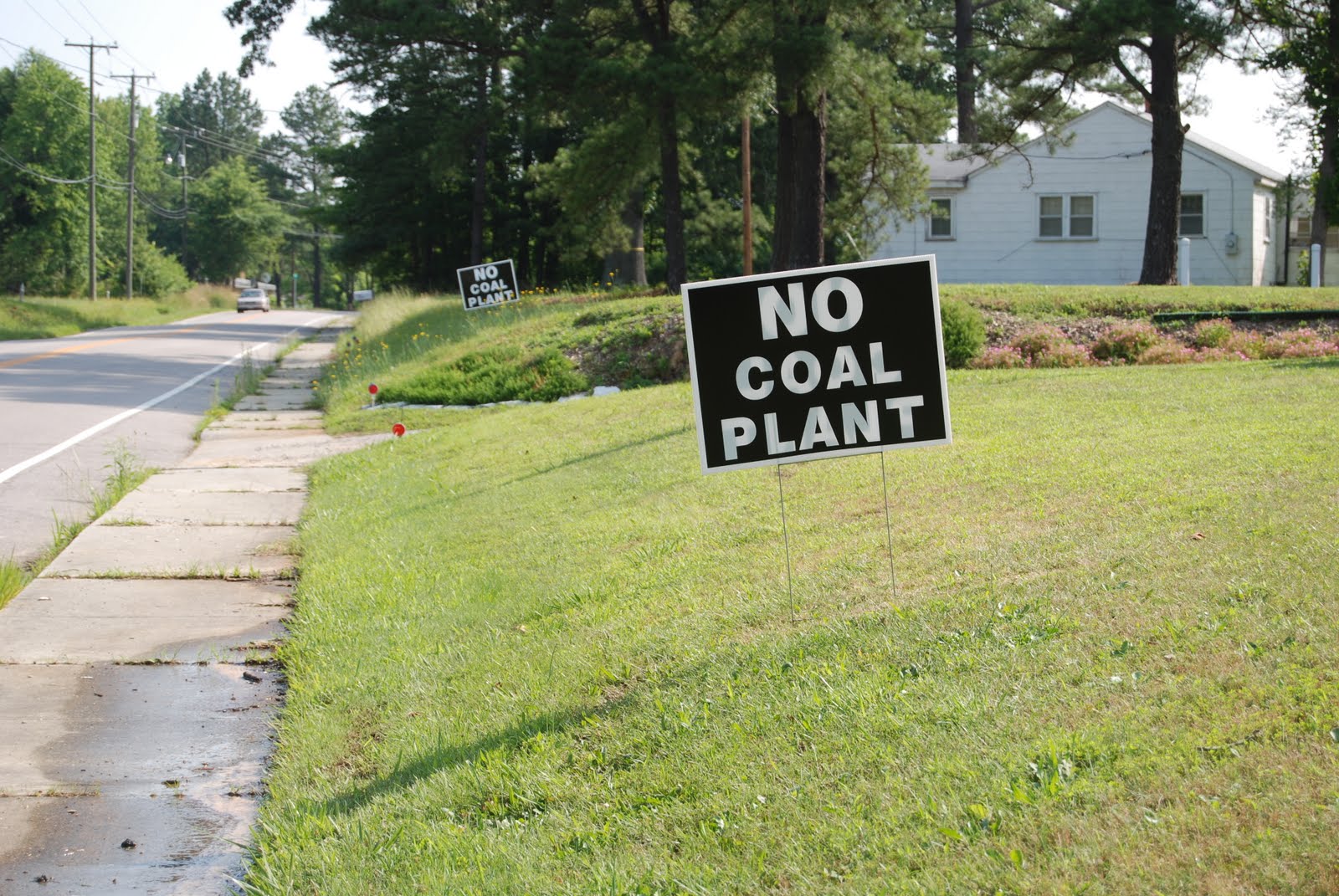
  • A Coal Plant Proposal Gets Even Dirtier


    Coal-burning electricity plants are a hot button for environmentalists who somehow have shown more interest in Dominion Virginia Power’s $1.5 billion station in Wise County than the much bigger, $5 billion plus one planned by a group of electrical cooperatives not all that far from Colonial Williamsburg.

    The project is planned by the Old Dominion Electric Cooperative which is based outside of Richmond and represents 14 coops in Virginia, Maryland and Delaware. The plan is for two, 750-megawatt coal plants in the little town of Dendron in Surry County.
    What is curious about the ODEC project is that it is much closer to tourism attractions and theme parks in Williamsburg, Jamestown and other spots. It would be the state’s biggest polluter and when I covered the issue earlier, state air pollution officials told me flatly that the amount of toxic mercury the plant would emit is many times too much. The mercury would shoot into the atmosphere and then fall as tiny particles on the already pollution-stressed James River and Chesapeake Bay.
    So, it is intriguing that The Virginian-Pilot has a story that takes the issue to new dimension, such as that ODEC’s plan is splitting Surry County’s 6,000 plus folk along black and white and have and have not lines.
    The Pilot says that blacks tend to want to plant because it would provide about 200 permanent jobs not including the 3,000 temporary construction jobs. Whites tend to oppose it because it will be huge, polluting and require about 500 noisy and dusty gondolas of coal coming in from the Norfolk Southern mainline every week.
    Some of the haves say they don’t want their retirement homes in sleepy Surry squandered. Some of the have nots say they’d rather get a well-paying job at the plant rather than have to wake up before dawn to catch the Jamestown Ferry so they can change bed linen at the posh Williamsburg Inn.
    And so it goes. There have been accusations of subterfuge and even bribery. ODEC, which needs about 50 permits for the behemoth, has launched an aggressive campaign for it, such as inviting ministers out for fried chicken and barbecue suppers.
    I know how they operate. A year ago when I proposed doing a story about the project for Richmond magazine, ODEC immediately called and emailed (mispelling my name) the magazine’s publisher and editor saying I was biased because I had blogged on the Wise County plant. Richmond magazine balked.
    When I went to Style Weekly, where I am now a contributing editor, they had no qualms. And when I learned that ODEC had sent similar warnings to Style, I called ODEC and threatened legal action. They shut up. Funny that I never get that rude treatment from Dominion. But it says more about weak-kneed Richmond magazine, which is better off sticking with light-weight stories about kitchen remodeling.
    Besides their odd PR, ODEC does have some other issues. One is economic. One wonders why a collection of coops needs such a big plant. In late 2008, their biggest customer, the Northern Virginia Electric Cooperative, cut their ties with ODEC over a contract dispute. More likely is that ODEC plans to market the electricity to other utilities if it gets the plant. It also stands to reason that ODEC needs some partners, but who they might be, ODEC hasn’t said.
    The class and caste issue in Surry County is an interesting development. But it, too, has its oddities. Unemployment there is about 7 percent or about the state average. It isn’t in the double digits as it is in Southside areas like Martinsville and Henry County.
    Is the have and have not issue real? Or is it something ODEC has created and exploited?
    Peter Galuszka

  • DC Metropolitan Area: America’s Fittest City

    The American College Of Sports Medicine has just named the Washington, DC Metropolitan Area as the nation’s fittest city – for the third year in a row. The ratings are created through the use of a fitness index which measures everything from baseball fields to how many servings of fruit and vegetables the residents eat in a day. On a more quantitative basis, the incidence of diabetes is also a factor. The DC-area has a 6.7% diabetes rate compared to 8.3% nationally and 10.5% in America’s least healthy city – Oklahoma City. You can read the full article here.

    I found the most interesting part of the article to be a short description of people biking or walking to work. The article says, “Washington has the second highest rate of people walking or biking to work aided by 60 miles of bike lanes.”. Isn’t that interesting? I have read countless comments from people on this site about the low level of pedestrian friendliness in Northern Virginia and the Washington D.C. area. However, when it comes to the DC area, many of the commenters on this blog do not let facts cloud their arguments.

    I have also read a lot of comments about people paying their location variable costs. I wonder if superior fitness would be a location variable cost. Given the statistical difference between DC and cities on the wrong end of the list you’d have to say that fitness varies by location. Given the recent debate on health care it seems that illness certainly has a cost. So, when do I start getting rebates on my health insurance from the people living in RoVa?


  • The Home Project

    I just watched an internet video one hour and thirty three minutes in length. It is worth every second. EMR has written extensively about people depleting our natural capital. This video brings those thoughts to life. It is a liberal thesis. However, it is also a jaw dropping, eye popping wonder. Let nobody say that Ole Groveton can’t recognize brilliance – even in the liberal cause. The section on Haiti (beginning at about 0:52) is haunting.

    As a side note, embedding was “disabled by request” on YouTube. Therefore, I am providing the link to the video. Also, there have been about 3,500 articles posted on Bacon’s Rebellion since its inception (articles, not comments). It’s quite possible that this video was posted in the past. I seem to have a vague recollection of parts of the video. However, even if this is a “dupe”, I think it is worth a re-visit.

    I hate it when liberals do something right!

    See the video here.


  • TOSSING ROCKS AT EMPTY PIGEON HOLES

    With his post on terrorists and porous borders (โ€œOpen Door Policy for Terroristโ€) Groveton has done it again: Tossing rocks at empty pigeon holes.

    This time it is not โ€˜liberalsโ€™ and โ€˜conservatives,โ€™ it is โ€˜leftiesโ€™ and โ€˜righties.โ€™ That is better but the result is the same.

    What Groveton will always get are replies like Peterโ€™s and then pointless back and forths with no progress toward consensus on a plan of action.

    Many agree with Groveton that a demonstrably porous border is an invitation to more than just Mexicans and Central Americans seeking a better life or implementing a better drug distribution system.

    However, most who give the topic any rational thought will also agree with the points raised by Peter and Larry.

    What is the point? Why throw stones? There is NOTHING in those pigeon holes, not even pigeons.

    First, terrorists:

    The only way to stop terrorism is to eliminate the CAUSES of terrorism.

    Second, Illegal Immigration:

    There are millions of illegal immigrants not because of soft hearted โ€˜leftiesโ€™ but because of the laws were not enforced as TMT points out in his comment.

    The laws were not strengthened, the laws were not enforced and resources were not allocated to enforce the laws because of political pressure from Enterprises and Institutions. Thank you Supremes.

    The pressure that resulted in millions of illegals has not come from โ€˜lefties.โ€™ The pressure has come from those who one would โ€˜expectโ€™ to find in a โ€˜rightiesโ€™ pigeon hole. (As Groveton suggests โ€œ … the righties believe that illegal is illegal and if you are caught doing something illegal you should pay the price (presumably deportation).โ€ Check out the positions of the US Chamber of Commerce, check out Big Ag, etc.

    The Wealth Gap has been growing wider since the mid 70s. A major reason is that wages and benefits have not kept up with productivity and profit. One way to be sure there is NOT a Balance of supply and demand is to let cheap labor sneak into the nation-state.

    In the last 35 years four Donkey Clan administrations (lefties?) and six Elephant Clan administrations (righties?) have overseen decade after decade of more and more porous borders vis a vis cheap labor (and drugs).

    Those who have supported weakening and / or not enforcing immigration laws have made campaign contributions and lobbied for these actions because they wanted cheap labor. They also wanted to prevent a โ€˜labor shortageโ€™ that would drive up the cost of doing business.

    Sealed borders will not stop terrorists. Even if they would, according to Enterprise Media, the majority of the terrorists arrested IN the US of A since 2002 are US citizens.

    The widening Wealth Gap in the US of A and aggression that can be spun to seem like it is aimed at a specific religious group (many attribute the actions to a desire to keep the price of oil low) are given as the reasons for radicalization of the Times Square bomber.

    Anwar al-Awiaki, the “teacher” of the American born US Army major in the Ft. Hood shooting is also American born.

    In the EU, the UAE and elsewhere, tight borders controls, identity cards, profiling and other tools has not prevented the tensions from rising over โ€˜guest workers.โ€™ To solve a problem one has to go to the root of the problem.

    The only way to stop illegal immigration is to help sender nation-states provide a better way of life for citizens.

    Intelligent Globalization is co-terminus with Regional sustainability

    One Region cannot sustain itself by unfairly obtaining the resources of another Region. The definition of โ€œfairโ€ has to be agreed upon by BOTH Regions.

    One Region (or group of Regions in an nation-state) cannot pay less than a fair price for any resource โ€“ not oil, not diamonds, not labor. Nation-states and continental / multi-nation-state trading blocks cannot provide โ€˜international development aidโ€™ that results in the extraction and export of resources from less well to do Regions to more well to do Regions.

    On a flat Earth with literate populations, instantaneous communications and weapons of mass destruction, the parameters of what is intelligent must reflect reality.

    To protect itself, the US of A should be providing expertise in education and specifically in governance transformation to create equal opportunity for all citizens and population management that reflects the enlightened self-interest of citizens. These are the tools Agencies should be providing to our own population.

    EMR


  • Open Door Policy for Terrorists

    Arizona’s recent passage of SB1070 reignited a long simmering debate in America about immigration and border security. One imagines that this debate will continue to be an issue through this year’s November elections.

    Those on the right claim that illegal immigrants take jobs away from Americans, sap government funds, increase gang violence and commit sundry crimes against people legally in America. Moreover, the righties believe that illegal is illegal and if you are caught doing something illegal you should pay the price (presumably deportation).

    Those on the left contend that almost all “undocumented workers” are hard working people just hoping to find a piece of the American dream. The lefties contend that the jobs being worked by “undocumented workers” are jobs that Americans wouldn’t take anyway and that “undocumented workers” are no more prone to commit crimes than those legally in the United States.

    All of which misses one big point – the federal government’s open door policy to our borders is an open door policy for terrorists.

    We have enacted the Patriot Act, presumably to stop terrorism. We are fighting two wars, presumably to stop terrorism. Everything from re-entering the United States with a valid US passport to opening a bank account is much more difficult than it used to be, presumably to stop terrorism.

    Yet, the lefties just can’t handle the fact that our open borders are among the biggest risks we have to another wave of terrorist attacks. The following video sums up the matter rather well. And remember, it only takes one terrorist attack to ruin your whole day.


  • LET US TALK PIGS

    Enough of this settlement pattern chatter, let us talk of PIGS.

    PIGS as in โ€˜Euro Zone PIGSโ€™ and especially the โ€˜Gsโ€™ of PIGS as in the nation-state, Greece.

    In the Friday, 21 May 2010 WaPo, Steven Pearlstein published another powerful and insightful column titled,

    โ€œForget Greece โ€“ Europeโ€™s Real Problem is Germany.โ€

    The column is a must read. Reprinting it here would deprive WaPo of the web traffic that generates ad revenue.

    Hopefully a brief summary will inspire all to read the column with care and distribute it widely:

    Germanyโ€™s quality exports generate a trade balance.

    Germans are saving folks by nature and so they save the surplus.

    Unfortunately they โ€˜saveโ€™ the money by putting it in under capitalized banks.

    The banks then buy the Agency, Enterprise and Household debt of the trading partners (especially the PIGS).

    The PIGS use the proceeds to buy more German goods and Services AND / OR they spend it on unsustainable programs that make PIGS citizens happy, fat and believe they are entitled.

    (NB: The German banks also use some of the funds to gamble on worthless mortgage backed securities, etc. but that is another story.)

    Now the Germans (aided by other NonPIGS) have to waste the rest of their hard earned income bailing out the PIGS.

    You have to read the column and Pearlstein’s use to PIGS to illustrate similar practice in the Global economy including the current US of A economic doldrums.

    What the PIGS story reinforces is the reality that humans must start to become Intelligent Globalists.

    That means understanding what is happening to the PIGS, to the US of A and others and to the enablers of PIGS like Germany and China.

    Based on this understanding, Intelligent Globalists must not just marvel at the Flat Earth, they must fundamentally change direction to keep from falling off the edge.

    EMR deals with what needs to be understood in more detail in the section titled UNDERSTANDING THE MEGAMEGA ECONOMY in the review of David Owenโ€™s Green Metropolis. (The most recent version is in Chapter 50 of TRILO-G)

    The Bacon Bottom Line (to barrow a phrase from The Jim Bacon Himself) is:

    Intelligent Globalism is Regional Sustainability.

    Regional Sustainability rests on Balanced Communities as documented in The Shape of the Future a decade ago.

    For any citizen and her Household the most important aspect of the economy โ€“ Global, Continental, MegaRegional or Regional โ€“ and guidance of where to “invest” is understanding the importance of:

    Economic, social and physical investment in her Unit, her Dooryard and her Cluster See PROPERTY DYNAMICS PART ELEVEN of TRILO-G.

    To make her Unit, Dooryard and Cluster โ€˜livableโ€™ (aka, provide a path to a high quality of life for her Household), her Neighborhood and Village must be functional.

    To achieve functional Neighborhoods and Villages the Community must be Balanced.

    Balanced Communities are the building blocks of sustainable Regions, especially New Urban Regions.

    There you have it. That is what one can learn from the PIGS.

    OK, so we got back to human settlement patterns.

    But that is to be expected. Human settlement patterns are the primary determinate of human economic, social and physical well being. You can take that to the bank.

    EMR

    Two hopeful signs on the way to a rationally scaled world order:

    Thai X-ing, a Thai restaurant with three tables in the Federal District, will get two stars from the WaPo restaurant critic tomorrow.

    The new bakery on Main Street in Warrenton has four tables and is running two cash registers with lines out the door on Saturday morning.


  • LOCATION-VARIABLE COSTS

    WHY IS IT SO HARD FOR CITIZENS TO UNDERSTAND THE FACTS ABOUT LOCATION-VARIABLE COSTS?

    THE 10X RULE AND ITS APPLICATION TO ACHIEVE FUNCTIONAL HUMAN SETTLEMENT PATTERNS IS A KEY TO UNDERSTANDING WHY LOCATION-VARIABLE COSTS ARE SO IMPORTANT.

    In a recent โ€˜Current Perspectivesโ€™ draft (โ€œA Shelter Must Readโ€ 17 May 2010) Groveton, the newest BaconsRebellion Blog Contributor and frequent commentor over the past few years, again demonstrated continuing confusion.

    After spinning out details of a hypothetical (aka, โ€˜typicalโ€™) eastern Loudoun County Household (See End Note One) Groveton asks:

    โ€œWhat else do we need to know in order to estimate how much these “scoff societies” are stealing from us?โ€

    The short answer is: โ€œAlmost everything because that โ€˜dataโ€™ on the hypothetical Household has no relationship to an understanding of location-variable costs or their allocation.

    STIPULATIONS

    1. Under current conditions, two Urban Households that:

    A. Occupy the same price dwelling (technically โ€˜two dwellings with the same assessmentโ€™ but not necessarily the same VALUE) in the same municipal jurisdiction, and

    B. Have the same income and consumption profiles

    Will pay about the same amount for most location-variable goods and services REGARDLESS OF THE SETTLEMENT PATTERN IN THE DOORYARD, CLUSTER, NEIGHBORHOOD, OR VILLAGE if their respective Households.

    That is THE PROBLEM, it is not an indication that there is NO PROBLEM.

    2. Often Urban Households with high disposable incomes choose to live in locations where subsidy of location-variable cost make living in these location DOUBLY attractive.

    First they have the privacy and exclusiveness of โ€œthe American Dreamโ€ AND second, someone else is paying much of the cost of that privilege.

    Three major points to remember about this second stipulation:

    A. Neither Jim Bacon nor EMR have EVER said that Urban citizens should not have the right to live in these locations โ€“ or anywhere else โ€“ SO LONG AS THEY PAY THEIR FAIR SHARE OF LOCATION-VARIABLE COSTS.

    B. If Urban Households in these โ€˜exclusive areasโ€™ fall INSIDE the Clear Edge around the core of a New Urban Region (or one of its large SubRegions) this area MAY have a negative impact on the evolution of functional settlement patterns at the Alpha Community or SubRegional scale.

    This is due to the fact that the โ€˜exclusive areaโ€™ may insulate, separate or isolate two or more components of the Community or SubRegion that would otherwise have a synergistic economic, social and / or physical impact. (See literature on NIMBYism.)

    However, these possible Community, SubRegional or Regional costs are NOT factors in the 10 X Rule derivation because the 10 X Rule only deals with Urban dwellings at the Dooryard, Cluster, and Neighborhood scales. There are obviously cost at larger scales but they are beyond the scope of the 10 X Rule.

    C. If Urban Households in โ€˜exclusiveโ€™ areas fall in higher Radius Band locations (beyond the logical location of the Clear Edge as clearly illustrated with census data and air photos in โ€œThe New Urban Region Conceptual Frameworkโ€ a PowerPoint found in Chapter 49 of TRILO-G), the same Radius Band will ALSO include many Households that are in the bottom 90 percent of the Ziggurat. (NB: In this context the โ€˜Zigguratโ€™ may also be known as โ€˜the economic spectrum.โ€™)

    It is often suggested that those Urban Households in โ€˜exclusive areasโ€™ which are at the top of the Ziggurat (both inside AND outside the Clear Edge around the Core of the New Urban Region) pay MORE than their fair share of taxes and fees. In some cases that may be true but these taxes and fees almost never contribute directly to a fair allocation of location-variable costs.

    The less well-to-do Urban Households in Outer Radius Band โ€“ the bottom 90 percent of the Ziggurat โ€“ fall into two categories:

    First: Those distributed around the middle of the Ziggurat have fallen for the Myths behind the โ€œdrive-til-you-qualifyโ€™ ploy to โ€œget more house for the moneyโ€ and the Myth that buying a bigger dwelling than the Household โ€˜needsโ€™ is a good investment. (Larry G. articulates the views of these residents in Spotsylvania County and in similar locations on a regular basis.)

    The second group are those at the bottom of the Ziggurat who are seeking Affordable Housing but end up with InAccessible Housing. (See discussion of concentrations of foreclosures and underwater mortgages in โ€œA Shelter Must Read,โ€ 17 May 2010 and in โ€œThe Importance of Housing Location,โ€ 18 May 2010.)

    LOCATION-VARIABLE COSTS AND THE 10 X RULE

    With the above stipulations and clarifications that should put Groveton on a more positive track spelled out, EMR repeats yet again:

    The Shape of the Future spells out:

    1. Why the โ€˜cost of sprawlโ€™ studies that have been a staple of the settlement pattern debate are tragically flawed.

    2. The 10 X Rule and its derivation.

    Here again is a brief summary:

    During the mid-90s, planning graduate students carefully examined two conditions in several jurisdictional contexts:

    In each case the a 10,000 acre area was selected and in each case 1,000 dwellings were located.

    In Alternative A the 1,000 dwellings were designed in a Planned Neighborhood Development. See End Note Two.

    In Alternative B the 1,000 dwellings were distributed on 10 acre lots.

    For both Alternative A and B 40 (+/-) location-variable costs were calculated. The number of categories varied from jurisdiction to jurisdiction depending on the way goods and Services were packaged and delivered but for most situations there were 30 plus goods and Services that were the same in every case.

    One bellwether was the cost of the construction of the electrical infrastructure and the cost of delivery of a kilowatt of electric service due to line loss. One of the easiest was the cost of Roadways because of the standards enforced at the time by VDOT.

    The result was the 10 X Rule:

    In a typical case, the same size dwelling with the same uses in configuration A would have an annualized cost of $6,700. In configuration B the cost would be $67,000, thus โ€œ10 X.โ€

    VALIDITY OF 10 X

    There has often been disbelief expressed about these results. However, no one with understanding, experience and access to actual land development data has offered a substantive critique or suggested that the 10 X Rule does not present a valid perspective on location-variable cost allocations.

    Several factors makes incremental scattered Urban dwellings in the Countryside seem less expensive than they turn out to be:

    One is the excess capacity in Countryside serving infrastructure that exited before 1950.

    For example farm to market Roadways intended to serve NonUrban land uses can be used for this and that new dwelling and it is only when the total impact of a decades accumulation is considered that the true impact is realized.

    It is widely agreed that traffic from orphan Dooryards and Clusters were dumped out on VDOT roads by county โ€œpro-growthโ€ land use control processes. This is the root cause of โ€˜congestionโ€™ in Fairfax, eastern Loudoun and Prince William Counties.

    Another โ€˜excess capacityโ€™ illusion that hid the real impact of scatteration was the subsidized electrical distribution system. When Urban users are added, the rate payers in the entire service area โ€“ those with efficient patterns and densities as well as those with inefficient patterns and densities โ€“ pay for system capacity expansion.

    Another major factor has been the failure to factor in externalities such as the cumulative impact uninspected and unmonitored septic tanks on ground water and the impact of over fertilizing and watering mown grass.

    Perhaps most important is the stupendous power of FLAT RATES for goods and Services ranging from mail delivery to electrical service.

    Flat rates were justified before computers made it possible to fairly allocate the cost on an individual Household basis.

    Understanding the basis for a locational-variable cost bill would be the most powerful way to demonstrate the truth in the overarching reality illuminated by David Owen in Green Metropolis.

    Exacerbating the impact of flats rates has been the use of volume discounts to reduce the cost of a good or Service if one uses more of it. This seemed like a good idea when the economy was based on burning through Natural Capital.

    IN RETROSPECT

    After a decade and a half there have been no substantive questions raised about the 10 X rule โ€“ or the other four Natural Laws derived from the settlement patterns that have evolved since 1950.

    There are, however, several caveats:

    First and most important, the 10 X Rule and the 10 Person Rule were based on settlement patterns that evolved when energy was cheap and the use of Large, Private vehicles was heavily subsidized by burning through Natural Capital.

    Those days are gone. As suggested in prior work by SYNERGY, the rising cost of energy as well as the higher cost of ALL goods and Services if the current level of technological activity is to be preserved means that and โ€˜sweet spotโ€™ of 10 persons per acre at Alpha Community scale will be significantly higher and thus the 10 X rule may become the 20 X Rule.

    It is clear that all costs have gone up but that does not mean there has been a fundamental shift in true cost / benefit relationships.

    No one has yet figured out a way to:

    Transport children from scattered location to school except by bus.

    Mix clean water with human waste and Household waste (that now includes a range of chemical and biological pathogens) and then treat / dispose of it in a way that is easy, cheap and has not significant externalities.

    Propel Large, Private vehicles (directly via petrochemicals or indirectly via carbon generated electricity) that is cheap and free of environmental externalities.

    Grow mown grass in the Mid-Atlantic MegaRegion without extensive use of fertilizer and water

    Perhaps the best illustration of location-variable costs is electricity. No one has figured out how to deliver electricity without transmission lines, substations, distribution networks and transformers AND no one has figured out a cost effective way to reduce line-loss, especially at low voltages.

    With these notes, it is hoped that bright folks like Groveton can articulate ways to inform citizens about the importance of fairly allocating location-variable costs. In addition this post will give Larry G. enough information so he does not ask yet again for the โ€œlist.โ€

    EMR

    ……………….

    END NOTES

    1. From Grovetonโ€™s comment: โ€œOh yeah … the house is in Loudoun County, required a $40,000 proffer to build and generates 1% real estate tax on its assessed value. The working couple who live in the house have a combined income of $250,000 and are raising 2 children (ages 10 and 12) who attend public school. Their average state income tax is 5.4% and their average federal income tax is 34%. They spend @75,000 per year on various things paying an average sales tax of 5%. The husband commutes to Tyson’s – which is 17 miles away. The wife commutes just 8 miles. Hubby uses a combination of the Greenway and Dulles Toll Road. Wifey uses surface streets (i.e. no tolls).โ€

    2. (Actually, Alternative A was more complex. The plans evolved in stages. First, the 1,000 Units were distributed in compact Dooryards, in the next iteration, the Dooryards were collected into compact Clusters and finally the Clusters were located in a single Neighborhood. The X factor was calculated for each step up toward functionality.


  • Take THAT, Groveton


    Regarding Virginia’s renegade attorney general, Kenneth N. Cuccinelli and his assault on science at the University of Virginia, our own beloved Groveton says there ain’t no such thing as academic freedom.

    The case, of course, involves Cuccinelli’s civil investigative demands for info and emails involving former global warming scientist at UVa Michael Mann and five research grants..

    As Groveton wrote in a recent blog posting:
    “There has never been a right to academic freedom. There is no right to academic freedom. And, God Bless, there will never be a right to academic freedom. So, any criticism of Ken Cuccinelli’s Civil Investigative Demand against Michael Mann as violating the right of academic freedom is null and void.”
    My Dear Mr. Groveton, some 800 (eight hundred, count ’em) scientists in Virginia beg to differ. They all have written a letter to Cuccinelli asking him to go away on this one. See: letter.
    I realize that Groveton is probably in an airplane over the Pacific somewhere. But when he gets email access, maybe he can explain to us why these 800 scientists are misinformed on academic freedom.
    Peter Galuszka

  • A Tale of Two Companies

    There are plenty of battlefields among U.S. corporations with banks, car companies and offshore oil drilling consulting firms in mind. But few come closer to home than than embattled coal firm Massey Energy and tobacco giant Philip Morris USA, both based in Richmond.

    Massey owns the Upper Big Branch mine in southern West Virginia where an explosion on April 5 killed 29 miners in the worst such disaster in 40 years. Massey is infamous for its safety record, its huge safety and environmental fines and its reputation for mountaintop removal in which entire tops of the Appalachians are chopped off completely to get at thin seams of high grade coal, much of it for Asian steel markets.
    What makes Massey distinctive is its decades-long anti-union stances and the tough-guy attitudes of its CEO, Don Blankenship, who has no problem confronting whom he calls “greeniacs” (like Al Gore) while pumping in millions in campaign contributions to West Virginia politicians and judges and vacationing in Monaco with the chief justice of the Mountain State.
    Tuesday was no different when Massey held its annual meeting at the Jefferson Hotel in downtown Richmond. That’s the spiffied up old matron that used to have the alligators in the lobby pool and whose staircase was supposed to be the model for Tara in ‘Gone With the Wind.”
    The mood Tuesday was definitely not moonlight and magnolia. Outside, several hundred protesters including students and members of the United Mine Workers of America chanted and waved signs proclaiming “52 Miners Dead in 10 Years.” Inside the cavernous hotel lobby, several dozen hotel security people plus police officers, some with big bundles of plastic for handcuffs stuffed in their cargo pants, stood at key spots. For more details see my Style Weekly online piece.

    We reporters were herded into a big room with a coffee urn where the meeting was piped in to us. I wandered off to the real meeting and was told at a desk by a woman in a black dress to get lost and no, I couldn’t have an annual report. When I asked for names and started writing things down, some employees covered up their name tags. I left under police escort.

    Back in the Empire Room, Blankenship’s voice was piped in. The families of the dead miners are being well provided for. Massey’s chief mission is safety. Environmental violations are down 22 percent. Coal revenue was $2.3 billion in 2009, not as good as $2.5 billion in 2008, but there was a recession.

    Then came question and answer with the shareholders. At that point they cut off the feed to the journalists. Outside the miners and student demonstrators cheered each time a car passed by an blinked its lights.

    It’s a curious way to handle public relations.

    But then consider Philip Morris USA and its parent Altria. They will hold their annual meeting Thursday at the downtown convention center in Richmond.

    PM USA has been through a gigantic transformation that dated back in the 1990s. At the time Big Tobacco, as now) was awash in health-related lawsuits and its reputation as the cynical purveyor of cancer-causing products prevailed.

    So, PM created something called “Project Sunrise” that promised to remake entirely PM’s political and public relations worldview and, hopefully, the public’s perception of the company. A number of initiatives kicked off, such as having the firm admit on its Website that its products are harmful and that you really shouldn’t use them, that the FDA should regulate tobacco and that the firm shouldn’t use sports and entertainment as advertising vehicles.

    It split away Philip Morris International and sent it to Switzerland where it could hawk higher tar and nicotine products to less educated smokers in China and Indonesia with no danger of U.S. lawsuits. If someone were to point this out to PM USA, the answer was “sorry but that’s a separate company.”And, parent firm Altria moved its HQ from hostile New York City to tobacco-friendly Richmond.

    So, there you have it. A Tale of Two Companies. Which approach is more honest? I’d have to say Blankenship’s and risk UMWA wrath. Massey badly needs a makeover both in terms of its safety and strip mining policies and pr. But at least Blankenship has the guts to take it on the chin rather than hide behind some secret corporate master plan and doubletalk.

    Imagine if Massey touted on its Website: “We mine coal, but it’s dangerous so don’t use it.”

    Imagine if PM USA said: “So what if it causes cancer?”

    Peter Galuszka


  • THE IMPORTANCE OF HOUSING LOCATION

    THE LOCATION AND SIZE OF DWELLINGS IS CRITICALLY IMPORTANT IF THE AFFORDABLE AND ACCESSIBLE HOUSING CRISIS IS TO BE SOLVED.

    For TMT and CJD here is a draft EMR is circulating for comment:

    DRAFT OPEN LETTER

    18 May 2010

    Professor Steven S. Fuller, PhD
    Director, Center for Regional Analysis
    George Mason University

    Dear Steve:

    Our paths have not crossed in some time. Your report โ€œThe Future of the Washington Metropolitan Area Economyโ€ released on 8 April 2010 and your โ€˜Commentaryโ€™ published in Capital Business on 10 May 2010 suggests that it is time to touch base.

    JOBS / HOUSING IMBALANCE

    A recurring theme of your academic work and consulting efforts for as long as we can remember has been the negative impact of a Jobs / Housing ImBalance in the National Capital SubRegion. This area is variously known as the Washington Metropolitan Area, the Washington dominated portion of the Washington – Baltimore Consolidated Metropolitan Area, โ€˜Greater Washington,โ€™ โ€˜the State of Potomac,โ€™ the Wash COG service area plus surrounding municipal jurisdictions โ€“ or as it is termed in the 10 May 2010 Capital Business โ€˜Commentaryโ€™ โ€“ โ€˜The Washington metropolitan areaโ€™ โ€“ no capitals).

    The POTENTIAL of a Job / Housing ImBalance in the National Capital SubRegion that you identify in your 8 April report and cite in the 10 May โ€˜Commentaryโ€™ is far more important today than any previously projected Jobs / Housing ImBalance.

    That is the reason for this letter.

    Action to avoid the POTENTIAL of the Jobs / Housing ImBalance which you have projected is critically important to the economic well-being of every citizen, Household, Enterprise, Agency and Institution in the National Capital SubRegion. You underscore the reasons for this fact in your 10 May โ€˜Commentary.โ€™

    THE SHAPE OF THE FUTURE

    The National Capital SubRegion โ€“ by whatever name โ€“ is today profoundly different than it was just three years ago. And it will never again be โ€˜the way it wasโ€™ in the periodic Boom periods during in the past five decades.

    As you know the projections of growth in Jobs and residents in the Greater Washington Area (aka, The National Capital SubRegion) by you, by Wash COG and by others have been quite accurate in past decades. That โ€˜accuracyโ€™ has, however, depended on the continual expansion of what might be called โ€˜Ever-Greater Washington.โ€™ The pellmell radial expansion has been driven by forces examined in The Shape of the Future. The geographic expansion has resulted in dysfunctional settlement patterns and large areas of vacant and underutilized land. Much of this vacant and underutilized land lies well inside the logical location of the Clear Edge around the Core of the National Capital SubRegion.

    Going forward, the critical issue will be insuring that there are functional locations for future Urban activities IF the projected Jobs โ€“ and the concomitant demand for shelter โ€“ become a reality.

    A critical factor in Projected Jobs becoming reality will be Affordable and Accessible Housing Affordable near the Jobs. In addition, Affordable and Accessible Housing will be needed for those who will fill the jobs of those who retire over the next two decades. This is critical since the dwellings the retirees now occupy โ€“ if they are Accessible โ€“ are NOT yet Affordable.

    The Jobs / Housing ImBalance cannot be side-stepped in the future as it has in the past by continually expanding the Urbanized area in the National Capital SubRegion.

    The finite limit on global resources โ€“ reflected, for example, in rising energy costs as well as other indicators โ€“ mean that it will not be possible to work in the National Capital SubRegion (aka, Washington Metropolitan Area, etc.) and live โ€˜somewhere elseโ€™ even if citizens apply Telework and other tactics.

    The potential Jobs / Housing ImBalance identified in your 8 April report will NOT just result in longer commutes. This has been the result over the recent decades.

    In the Fundamentally Transformed SubRegional, Regional, MegaRegional, continental and global economic context, the Potential Jobs and the Potential Job Holders will locate inside the Clear Edge or they will migrate to OTHER SubRegions, New Urban Regions or MegaRegions. The alternative is that the Potential for these new Jobs will not materialize as you suggest in your 10 May โ€˜Commentary.โ€™

    Living outside Radius = 30 Miles from the Centroid and working in the Core of the National Capital SubRegion โ€“ much less in the Zentrum of the SubRegion โ€“ will continue to grow more and more costly. The scatteration of Households by Unit and in Dooryard-, Cluster- and Neighborhood-scale enclaves will continue to grow less attractive from many other perspectives as well. A fair allocation of all locations-variable costs will accelerate this trend. This fair allocation of costs is an inevitable result of tightening economic conditions.

    โ€˜Drive-until-you-qualifyโ€™ โ€“ including driving into โ€˜anotherโ€™ SubRegion โ€“ is an idea that is no longer viable. In the 20 year span you examine in the 8 April report, inter-SubRegional commuting will grow to be completely out of reach of the vast majority of workers, especially those in the lower half of the Ziggurat who have been forced into long commutes in the past.

    As โ€œSame House-Same Builder-Different Locationโ€ comparisons clearly demonstrate it has been those at the bottom of the economic Ziggurat who have been relegated to dysfunctional locations from a Jobs / Housing Balance perspective.

    The Housing Plus Transportation (H + T) Index by Center for Neighborhood Technology documents this reality. It is important to note that the interpretation of this data at it applies to the outer Radius Bands of the SubRegion by some is very misleading.

    The high cost of energy is exacerbated by a vast over-build of โ€˜Wrong Size House / Wrong Location.โ€™ This is evident from Radial Analysis of foreclosures and underwater mortgages.

    WHERE NEW JOBS WILL END UP

    New Jobs upon which to base economic prosperity in future decades will agglomerate in attractive and functional New Urban Regions if they are generated anywhere. Attractive Regions will be those that provide functional and sustainable human settlement patterns. As evidenced by recent economic trends, these Regions will provide locations for Jobs AND Affordable and Accessible Housing as well as Services / Recreation / Amenity. They will provide Affordable and Accessible Housing IN CLOSE PROXIMITY to Jobs for workers of all skill levels.

    In the future, Affordable and Accessible housing in the National Capital SubRegion MUST exist in close proximity to Jobs / Services / Recreation / Amenity. Otherwise the most desirable Jobs and the most qualified potential Job holders will relocate to Regions that provide functional settlement patterns. Central to attracting a qualified work force will require attention to the parameters for meeting the needs of โ€˜the creative class.โ€™

    The alternative is that the Potential to create new economic activity will evaporate. The Potential for new Jobs will evaporate just as relatively inexpensive and comfortable air travel has evaporated. That was then, this is now.

    The shape of the future will be a result of physics and economics, not of policy or political ideology.

    COMPLICATING FACTORS

    There are a number of factors that will complicate the evolution of effective SubRegional and Regional strategies.

    Some question the scale of the Job growth Potential in the current nation-state, continental and global context but that is NOT the critical issue. In order for the Projected Jobs to evolve in the National Capital SubRegion there must be places for those Jobs to locate AND places for Affordable and Accessible Housing as well as Services / Recreation and Amenity to support those workers.

    Using the term โ€˜workerโ€™ in the last paragraph underscores the importance of โ€˜workforceโ€™ housing as opposed to the past emphasis on โ€˜home ownershipโ€™ and promoting a Householdโ€™s primary residence as an โ€˜investment.โ€™

    There will be a need for a place for workers to live AND that place must be Affordable and Accessible. In most cases, that means the Housing must be closer to the Jobs than is now the case for the current Job holders. This also applies to those who are attracted Potential new Jobs and for those who will replace retirees but who cannot afford the housing that is now available.

    Increasing pressure to limit immigration will focus pressure on housing for those in the lower half of the Ziggurat. This housing must be near Jobs rather than relying on distant cheap labor enclaves. The cheap labor enclaves have moved farther and farther from the Centroid in past decades. The location of these enclaves can be identified by mapping the locations of low-end foreclosures in the past three years.

    In your 8 April report you identified two million workers who will retire over the next 20 years. This cohort poses both an opportunity and a challenge. Recent surveys indicate many would like to stay in the Region after they retire. The majority would prefer to โ€˜retire in place.โ€™ However, they may not be able to do that for a range of economic reasons.

    There is a vast over build of Single Household Detached Dwellings. Many of over-sized dwellings are the product of the Wrong Size House / Wrong Location epidemic that resulted from the 90s and 00s booms and the myth that buying more house than one needs was a โ€˜good investment.โ€™

    Many of the Wrong Size / Wrong Location dwellings are owned by near-future retirees. Finding ways to more efficiently exchange dwellings and transfer equity in dwellings could help move those who believe they need a larger house to meet their Household demands without building more too-big dwellings. Accessory dwellings, granny flats and granny pods could also help meet the need for flexible shelter for older citizens.

    Many have more house than they โ€˜needโ€™ but often those houses are NOT in the right place to meet the needs of future Job holders. Subdivision recycling, parcel consolidation and equity transfer strategies will be needed to implement flexible strategies.

    One of the underlying barriers to achieving a Jobs / Housing Balance strategy has been the result of not clearly identifying the parameters of the โ€˜real Regionโ€™ and its components. Even more important is the failure to quantify the land necessary to provide dwellings of a size that the workforce can afford.

    That is why SYNERGY has worked for 20 years to articulate the parameters and boundaries of the New Urban Region as well as the SubRegions, Communities, Community components and most recently MegaRegions. This work has resulted in the evolution of a robust Vocabulary and the articulation of a comprehensive Conceptual Framework with which to understand human settlement patterns. In addition, SYNERGY has developed Regional Metrics and applied Radial Analysis to quantify land requirements in a way which citizens can understand.

    Finally, differences between your projections and those of Wash COG need to be reconciled. The self-employed, part-time and contract workers need to be factored into the Regional and SubRegional Strategies.

    THE CRITICAL REALITY

    The overarching concern your study raises is that if SubRegional and Regional cooperation and coordination does not make a rapid 180 degree reversal to provide the opportunity for a Jobs / Housing BALANCE in the Core of the SubRegion, many Jobs will NEVER be created.

    The employment base will atrophy and contribute to SubRegional and Regional deflation. If Jobs and potential Job holders cannot migrate to other Regions it will contribute to MegaRegional, continental and global deflation and depression.

    A SILVER LINING

    There is a potential โ€˜win-winโ€™ scenario for the National Capital SubRegion as well as the Washington-Baltimore New Urban Region and its residents IF enough citizens grasp reality very soon.

    There is more than enough vacant and underutilized land within the Clear Edge around the Core of the National Capital SubRegion to meet the demand for all the Jobs and Houses you project as well as space for the Services, Recreation and Amenity to serve these new Urban activities.

    If the OPPORTUNITY for evolving functional patterns and densities of Urban land uses exists, then the POTENTIAL for substantial economic activity will exist. Without locational opportunities, there will be no chance for achieving the SubRegionโ€™s Potential and evolving Balance in the Communities that make up the National Capital SubRegion.

    FACTS

    The availability of vacant and underutilized land for new Jobs / Houses / Services / Recreation / and Amenity was made crystal clear nearly a decade ago in โ€œBlueprint for a Better Region.โ€ This reality and the centrality of the vast majority of key jobs can be confirmed through Radial Analysis of the June 2002 Wash COG study โ€œMetropolitan Washington Regional Activity Centers.โ€ This very important, broad-based initiative was sidetracked by political pressure and dog-in-the-manger municipalism (sometimes called anti-Regionalism).

    It is fortunate that the concept of Activity Centers was rescued and there is an ongoing effort to coordinate these the evolution of these Activity Centers with the Potential growth of Jobs and Housing in the next round of COG projections and the 2010 Census. To achieve this Potential there must be reality-based Quantification of Activity Center capacity and a rational allocation of economic activity to achieve Balance.

    THE WAY FORWARD

    What is missing from the tool box necessary to evolve functional human settlement patterns that will accommodate Potential Job growth and support prosperous, happy and safe residents?

    1. A robust Vocabulary with which to articulate >

    2. A comprehensive Conceptual Framework which will allow citizens and their leaders to >

    3. Apply science based metrics to Quantify settlement patterns so that it is possible to evolve >

    4. A broad based citizen consensus which supports >

    5. A Balance of Jobs / Housing / Services / Recreation / Amenity in every Community in the National Capital SubRegion.

    There a number of specific tools such as โ€œNext Higher Component RePlanning / ReZoningโ€ that can implement a SubRegional Sketch Plan base on the METRO armature and the Activity Centers.

    Some decentralization of Jobs will be desirable. However, decentralization will ONLY be useful if the new relocations contribute to creation of Balance at the Alpha Village- and Alpha Community-scales. This is true for BOTH Balanced Communities inside the Clear Edges around the Cores of SubRegions and for Disaggregated-But-Balanced Communities outside the Clear Edges around the SubRegional Cores. This process is the exact opposite of the BRAC relocation process which lacked the five tools listed above.

    It will be possible for a small number of workers to live within walking distance of an intra-Regional (inter-SubRegional) shared-vehicle system (e.g. commuter rail) station. But an ImBalance of โ€˜commutersโ€™ will result in dysfunction in the โ€˜residence Communities.โ€™

    The ONLY REAL HELP that can be provided to โ€˜commutersโ€™ from OUTSIDE the Core of New Urban Regions (and the Cores of major SubRegions such as the National Capital SubRegion) is to help them become non-commuters.

    A PLACE TO START

    The vacant and underutilized land that must be made ready for Urban land uses in order to void a Jobs / Housing ImBalance includes land within 0.5 miles of existing and planned METRO station platforms.

    Some Business-As-Usual supporters and geographic expansion advocates like to pretend that there is not enough capacity in the METRO system to serve functional station-area settlement patterns. That is because of the failure to evolve Balanced settlement patterns in the METRO station areas. This lack of Balance is why most of the METRO trains leave most of the METRO stations most of the time ESSENTIALLY EMPTY while at the same time there is peak hour / peak direction crowding and congestion on the METRO system.

    There has also been a failure to evolve shared-vehicle systems to supplement and support the METRO system. SYNERGY has advocated Transformations to achieve system-wide Balance since the mid 80s as documented in the earliest versions of โ€œIt is Time to Fundamentally Rethink METRO and Mobility in the National Capital SubRegionโ€ recently updated in TRILO-G.

    The bottom line is that there must be system-wide Balance of shared-vehicle system capacity with the travel demand generated by the settlement pattern โ€“ especially the settlement pattern in the station-areas.

    BEYOND AUTONOMOBILES

    Perhaps most important, citizens must come to understand that in the future, Large, Private vehicles cannot be the MAIN or even the MOST IMPORTANT component of the Mobility and Access system serving ANY large New Urban Region for the reasons spelled out in PART FOUR of TRILO-G.

    Every large Urban agglomeration on the planet has gotten MORE congested when new facilities are built to bring additional Large, Private vehicles inside Clear Edges. In every case the Mobility and Access of the average and the median traveler (based on income / cost, time and distance) has gotten worse. In the US of A, the Core of every large New Urban Region has brown more congested as documented by the Texas Transportation Institutes Annual Mobility Analysis. Those Regions that built more lane miles of Roadway to accommodate Large, Private vehicles grew more congested than those that relied on more sustainable strategies.

    Those who suffer the most loss of Mobility and Access by increasing the use of Large, Private vehicles (aka, Autonomobiles) are those in the bottom half of the Ziggurat.

    In addition, the per square foot values of built environment document that more functional settlement patterns not dominated by Autonomobiles are heavily favored by the market.

    It is especially tragic that many try to perpetuate the Myth of Automobility in a Region where federal Agencies have already provided most of the basic infrastructure needed for a functional alternative.

    AN OVERARCHING REALITY

    The first three decades of EMRs professional career our work focused on the interests of Enterprises. During the last two decades the efforts have been dedicated to developing the Vocabulary, Conceptual Frameworks, metrics to Quantify settlement patterns.

    In working with Institutions and with governance practitioners it is clear that, no matter how much the โ€˜leadersโ€™ agree with the need for Fundamental Transformations based on these tools, it requires a Critical Mass of citizens who support them.

    In a democracy, the only way to achieve a sustainable trajectory is to build a consensus among a Critical Mass of citizens. The key to evolving that consensus is citizen education that makes it clear that the individual and collective best interest of citizens is Fundamental Transformations of settlement pattern, governance structure and economic systems.

    Among the leaders of the group that sponsored your 8 April report are the leaders of the National Capital SubRegions premier educational Institutions. They must articulate an educational process to achieve a Critical Mass of citizen support.

    SUMMARY

    A Business-As-Usual expansion of what is called โ€˜Greater Washingtonโ€™ that relies on Autonomobiles for Mobility and Access will not accommodate Affordable and Accessible Housing near Jobs. Thus it will not support the Potential of Job growth.

    As noted in OUT OF THE OILY SLIME, the leadership of the National Capital SubRegions has wasted a decade since a consensus was reached on a promising path to a sustainable future.

    The same powerful economic, social and physical forces that cause dysfunctional human settlement patterns work to perpetuate those settlement patterns.

    As noted above, in a democracy, the only way to achieve a sustainable trajectory is to build a consensus among a Critical Mass of citizens. The leaders of the National Capital SubRegions premier educational Institutions must articulate an educational process to achieve a Critical Mass of citizen support.

    One element is to evolve functional Regional governance as called for by โ€œRegional Leadership and Governance for the National Capital Regionโ€ which was also presented on 8 April.

    The chief obstacle to achieving a sustainable strategy is to convince a working majority of the citizens of all the municipal jurisdictions in the National Capital SubRegion that they need to support Fundamental Transformation to a functional SubRegional and Regional governance structure.

    Good luck in that important work.

    E M Risse
    SYNERGY


  • A SHELTER MUST READ

    THE AFFORDABLE AND ACCESSIBLE HOUSING CRISIS MARCHES ON.

    THE 17 MAY WaPo HAS A โ€˜MUST READโ€™ FOR THOSE WHO HAVE NOT BEEN PAYING ATTENTION.

    THIS AND OTHER ENTERPRISE MEDIA STORIES ON THE HOUSING MARKET ARE IMPORTANT FOR WHAT THEY SAY AND EVEN MORE IMPORTANT FOR WHAT THE DO NOT SAY OR SAY IN CONFUSING WAYS.

    On the front page of WaPo for 17 May there is an important story on Housing. Read it from end to end and one finds the headline โ€œHealthy signs in the areaโ€™s housing marketโ€ is VERY misleading.

    The story, when one takes into account the sources of the โ€˜he said / she saidโ€™ quotes, is โ€˜correctโ€™ AND it disproves the headline.

    For a more complete picture see CNN Moneyโ€™s 13 May story โ€œForeclosures plateau – finally. Repossessions soarโ€ and their 17 May story โ€œHousing market diagnosis: Bipolar.โ€ Also see the 15 May story in the New York Times โ€œBuilding Is Booming in a City (sic) of Empty Houses.โ€ As the colleague who called this article to our attention said: โ€œ… for ridiculous, unsustainable, wishful thinking that is oblivious to too many realities to count… this is actually scary.โ€

    Back to the 17 May WaPo story:

    As EMRโ€™s beautiful wife said: โ€œWe did not learn a thing for that story.โ€ True, but most citizens do not even know that much about what is happening in the shelter industry and the prospects for ending the Affordable and Accessible Housing Crisis.

    If you have been distracted by the oily slime you might find the story useful. If you read the story or do not bother, here is a short list of the problems:

    Vocabulary:

    What territory are they taking about? They refer to:

    โ€œthe Washington areaโ€
    โ€œthe regionโ€
    โ€œthe areaโ€ (several times)
    โ€œthe Washington metropolitan areaโ€ (no capital โ€˜Mโ€™ or โ€˜A.โ€™)

    From the context, it is clear that most of the references are to DIFFERENT geographies.

    Data:

    Almost every sources of data has a different reference geography and most of the specifics are about county โ€œAโ€ or county โ€œBโ€ without regard to the relative location of that municipality vis a vis the Centroid of the SubRegion.

    The most significant omission and source of confusion in the WaPo story is the complete lack of attention to the variation of Housing market conditions by Radius Band.

    If one understands that Prince William County is a major part of the R=20 to R=30 Radius Band in Virginia (the rest of the R=20 to R=30 Radius Band is the eastern part of Loudoun County) one starts to get some sense of what is happening.

    Read the story with this in mind and new insights come to the surface.

    NB: Arlington, Alexandria the Federal District are inside R=10. Note what Gregory Leisch of Delta Associates says is the reason that there has not been a big drop in house prices in those jurisdictions. He and John McClain of GMUโ€™s Center for Regional Analysis both make good points in response to the questions they were asked.

    The most important fact that is obscured by the WaPo story is that the biggest problems are in the R=30 Plus territory of the National Capital Subregion. The story does not even mention a municipality in this geography except for Frederick County, MD and Frederick has a separate set of parameters.

    The territory outside R=30 from the Centroid of the National Capital Regions is where the house values have fallen the most. It is also where the most concentrated pockets of foreclosures and underwater mortgages are located.

    This is where the lower half of the economic Ziggurat has been pushed to find Affordable (but not Accessible) housing.

    This is also where many of the Wrong Size House / Wrong Location dwellings are located. These dwellings were sold to those who should have known better and could have qualified for house that met their shelter needs โ€“ as opposed to their real estate speculation fantasies โ€“ closer to their Jobs and Services.

    One can get a glimpse of what is going on because Fauquier County makes up part a substantial part of the R=30 to R=50 Radius band in Virginia. (Most of the rest of this Radius Band is the western part of Loudoun County as well as parts of the Greater Fredericksburg SubRegion which has its own set to circumstances due to the Jobs and Services in the I-95 Corridor and inside the Clear Edge around the Core of that SubRegion. As noted above, the same is true for Greater Frederick, MD.)

    In Fauquier County the newspaper of record publishes real estate closings each week. Over the past month, the listings of foreclosures have continued to be at near record levels with the listed sales are primarily short sales and bank sales. Essentially nothing has sold for more than 70 percent of its 2007 value for reasons outlined in the stories quoted above.

    In the meantime, the same paper ran a story on 12 May titled โ€œHousing shows signs of strengthโ€ which can be characterized as โ€œbuilders and real estate agents whistling past the grave yardโ€ if one understands what the WaPo story and other coverage documents. It fact it is almost as bad as the New York Times story about Los Vegas, but not nearly as funny.

    The bottom line is that builders nation-wide will try to build โ€˜cheapโ€™ houses in scattered locations. That will continue to sour the market for resales as suggested in the New York Times story. Dysfunctional settlement patterns will continue to propagate.

    The result will be an overbuild of Too Big Houses AND an overbuild of Too Cheap Houses โ€“ ALL in the Wrong Locations. For those who came in late, that means Housing that is NOT near Jobs / Services / Recreation / Amenity.

    This will be due to the fact that citizens do not have the information they need to make intelligent decisions in the market โ€“ or intelligent decisions in the voting booth. Check out the primary results tomorrow night.

    EMRโ€™s next Current Perspective item will address those attempting to create SubRegional โ€˜economic growthโ€™ by finding ways to expand the Urbanized area of the National Capital SubRegion.

    Geographic Illiteracy is a terrible thing.

    EMR