• ANTIPARTISANISM A WEEK AFTER 2010 MIDTERMS

    So where does AntiPartisanism stand after the mid-term elections?

    Well first, based on the comments from Jim B and Groveton to the ONE MORE DAY post, plus those heard from via other channels, six Baconโ€™s Rebellion โ€˜regularsโ€™ followed Rule One or Rule Two of the AntiPartisan Voters Guide. Not bad for a start.

    However, something much more important came up in the dialogue following ONE MORE DAY. Mr. Baconโ€™s observed that his vote was often cancelled out by that of his wife.

    That observation is tremendously important!

    It is important, not just because it also happens in many other Households about which EMR has direct knowledge, it is important because it indicates what is wrong with partisan political activity in general.

    Mr. and Mrs. Bacon obviously can come to agreement on a number of major issues that impact the existence of, and what is in the best interest of, the Bacon Household, but not on Clan politics.

    The contention at SYNERGY is that humans are running out of the surplus natural capital that in the past has allowed citizens the luxury of relying on COMPETITION ALONE to allocate resources.

    As noted in the current Beta Draft of PRIMER:

    ………..

    PRIMER can also be seen in a larger context:

    For the last two centuries the citizens and their Organizations in the US have been propelled by a philosophy of consumption:

    Consumption is good and more consumption is better.

    This ethic is based on the illusion that the US was blessed with infinite resources and unlimited โ€˜opportunity.โ€™ This is the mantra popularized and politicized of Andrew Jackson. It has been reinforced by the Myth that UberGrowth driven prosperity raises all boats.

    In the context of these illusions, Mass OverConsumption has been seen as โ€˜progress.โ€™ This is spite of a long tradition of pointing out the practical and moral shortcomings of these perspectives. For example see The Waste Makers by Vance Packard and The Cultural Contradictions of Capitalism by Daniel Bell. More recently, see Deep Economy by Bill McKibben which includes a complete disembowelment of The Moral Consequences of Growth by Benjamin M. Friedman. Also see the sources cited in Chapters 6, 7, 10 and 23 of THE SHAPE OF THE FUTURE and Chapter 24 โ€œGreed, Excess, Ignorance, Myths, Entitlements, Windfalls and Subsidiesโ€ in PART SEVEN of TRILO-G.

    Now, the US, the First World and the planet are beginning to embrace the reality of FINITE limits to human consumption. In many nation-states humans are already be in Overshoot. Peak Petroleum is a reality but so are diminishing stores of other limited resources such as some metals, โ€˜rare earthsโ€™ and fossil water.

    Leading indicators of natural system resilience โ€“ e.g. biological diversity and climate โ€“ are growing more negative. Supposedly โ€˜renewableโ€™ resources โ€“ fisheries, top soil, potable surface water and rechargeable water tables, timber and other natural systems upon which humans rely are in decline and some are beyond the point of restoration without grave hardship to those that rely on the dwindling resource base. The fantasy of importing resources from the Moon and beyond is the last gasp of irrationality.

    At a minimum, in the future ALL resources will cost more because they will be harder to recover and to renew. The end of cheap energy to drive a technologically-advanced civilization is the bellwether.

    Equally important is the PACE of human activity. It is not just the rate of consumption but the frenetic pace of activity โ€“ productive and anti-productive that is of concern. This includes the pursuit of entertainment that robs citizens of the time and energy to make rational decisions in the voting booth and in the marketplace. This hyper activity acts as a driver of societal dysfunction.

    It is not just MORE AND MORE, but MORE AND MORE, FASTER AND FASTER that has been seen as an excuse for Business-As-Usual โ€˜growthโ€™ and Mass OverConsumption. For a splendid exposition of this reality, see the feature length movie Home at http://www.youtube.com/watch?v=jqxENMKaeCU (Thank You Groveton!)

    ………

    Page 1 of the 7 November Outlook section of WaPo has a clever do-it-yourself Elephant / Donkey reconciliation exercise: Fold the page and โ€˜discoverโ€™ โ€œCompromise,โ€ โ€œHarmony,โ€ โ€œUnity,โ€ โ€œMiddle Groundโ€ and, a SYNERGY favorite โ€œBalance.โ€

    If the two adult voters in the Bacon Household can come to consensus on a wide array of decisions but not on partisan politics, the fault lies in the concept of two party competition being a rational way to determine the public interest in the 21st century.

    That is a very important indicator!!

    EMR


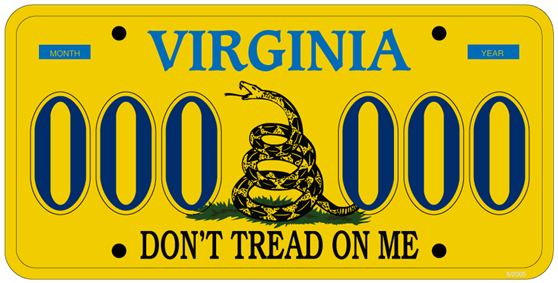
  • If You Liked the Flag, You’ll Love the License Plate

    I like my old “Usuthu” license plate just fine (if you’ve never watched the movie “Zulu” starring Michael Caine, you won’t understand), but it may be time to trade it in for a new one. You’ll find the details on how to get one of your very own at Right Side News.

  • No Cuts, No Glory

    (From today’s Washington Times, online edition):

    As the old saying goes, be careful what you pray for: The gods just may grant you your wish. Republicans fervently hoped for a return to power, and the political furies granted them their biggest win in six decades. Now the GOP must make good on its promises to cut spending, reduce deficits and stabilize the national debt.

    Here’s the big question that no one asked during the campaign season: How much fiscal consolidation in the form of spending cuts and/or tax increases must Congress enact to put the nation back on a financially sustainable course?

    In its Pledge to America, the GOP House leadership vowed to roll back government spending “to pre-stimulus, pre-bailout levels,” thus saving $100 billion in the first year alone and “putting us on a path to begin paying down the debt.”

    Putting us on a path to paying down the debt? Whoever composed that line must have stayed up way too late and taken way too much No-Doz. It’s blather. Rolling back spending $100 billion a year won’t accomplish anything.

    In the 10-year forecast submitted with the midyear review of the fiscal 2011 budget, President Obama already assumes a $75 billion reduction in discretionary spending between 2011 and 2012, thanks to resumed economic growth, reduced unemployment and reduced entitlement payouts to the poor.

    House Republicans might respond that the pledge also promises to put a “hard cap” on domestic discretionary spending to limit federal spending on an annual basis. Yet Mr. Obama, in his State of the Union address, already vowed to impose a three-year freeze on discretionary domestic spending. In his 10-year forecast, he sees such spending topping out at $533 billion in 2011 (the current fiscal year) declining to $459 billion in 2014, and rising slowly to $529 billion over the next six years.

    In other words, House Republicans swore in their pledge to accomplish little more than Mr. Obama already has committed to deliver. (Read more.)


  • The Next Train Wreck: Failed States

    Meredith Whitney is on the warpath against out-of-control state spending. The banking analyst warns today in the Wall Street Journal that a wave of municipal defaults and indiscriminate bond selling will prompt the next big federal bailout. Indeed, she writes, the bailout has already begun.

    More than 20% of California’s debt issurance in 2009 and 30% in 2010 to date has been subsidized by the federal Build America Bonds program, in which Uncle Sam covers 35% of the interest paid by the bonds. The BABs have subsidized an even higher percentage of bonds issued by Illinois and Nevada.

    But debt subsidies are the tip of the iceberg. Writes Whitney:

    General federal government transfers to states now stand at the highest levels on record. Traditionally, state revenues were primarily comprised of sales, personal and corporate income taxes. Over the years, however, federal government transfers have subsidized business-as-usual state spending not covered by state tax collections. Today more than 28% of state funding comes from federal government transfers, the highest contribution on record.

    Get this: New York state expenditures represented 250% of its tax creceipts over the past decade. The figure for the 15 largest states by GDP was 220%. “Clearly,” says Whitney, “states have been spending at unsustainable levels without facing immediate consequences due to federal transfer payments and other temporary factors.”

    Doo doo, as the saying goes, rolls downhill. Local governments depend upon state government transfers for 33% of their funding. If the federal government has to cut aid to states, the states will likely cut aid to localities. Expect a huge uproar from entrenched political interests when the house of cards collapses.

    That day is not far off. States are staring at the second consecutive year of $200 billion budget shortfalls. Says Whitney: “Rainy day funds are depleted, pension-fund contributions are already at record lows, and almost all of the major federal government subsidy programs will run out in June 2011.”

    One of the early tests of the new Congress will be whether or not to bail out the states and municipalities. If Congress refuses to act, we could see that wave of state and municipal bankruptcies. If Congress buckles, it opens up giant barrel of moral hazard.

    Virginia’s General Assembly has hardly covered itself with glory when it comes to spending, but it has been less reckless than most states. We don’t need a bailout. And our elected representatives should not vote to approve bailouts for states that are chronically undisciplined and profligate. I’ll be following this issue closely, and I won’t be the only one. If any Virginia congressmen vote to bail out other states, they can expect one heck of a voter backlash.


  • Two More Years for the “Party of No”

    At first glance, Tuesday’s election was an obvious rout of Democrats, with Tom Periello, Rick Boucher and Gelnn Nye losing their seats in the U.S. House of Representatives. The fate of Gerald Connolly isn’t known yet.

    House Minority Whip Eric Cantor easily won relection and with Republicans now in charge of the House, he’ll likely be House Majority Leader, giving the Old Dominion GOP new luster in Washington.

    The convention wisdom is that popular frustration with the lack of job growth, President Barack Obama’s health care law, growing federal debt and deficits and the expansion of federal government power, either real or imagined, fueled the drubbing.

    But if one starts to dissect the voting, the exercise becomes a bit more confusing. Periello
    lost because he backed Obama on many issues, including health care. Nye lost because, for one reason, he broke with Obama on health care. Boucher, a veteran, 14-term congressman from the state’s coal country lost because he backed cap and trade legislation to control global warming. Perhaps, but real cap and trade is quite a ways into the future and the boom, if any, in the state’s coal industry is from exporting metallurgical coal to Chinese steel mills which would not be affected by any U.S. cap and trade law at all.

    If you read columnists at The Wall Street Journal, Cantor is responsible for the Republican victories because he helped conceive and lead a come-back strategy for his party. The “Young Gun” admitted his party srayed during the years of George W. Bush, although Cantor forgets he voted lockstep with Bush on just about everything.

    So, what’s next? If Cantor prevails, we are certain to have a federal legislature that won’t do anything at all. Cantor and his confederates will raise “the Party of No” to a new level, but it will still be “No.” They will spend the next two years trying to repeal Obamacare, which is still a long-shot because the Republicans did not take the Senate and Obama still has veto power. As for creating new jobs, there hasn’t been much in the way of ideas on the Cantor front.

    Another curiousity is how Cantor will get along with U.S. Rep. John Boehner, who will likely replace Nancy Pelosi as Speaker of the House. But don’t expect a new GOP lovefest. There appears to be tension between Boehner and Cantor, who somehow left Boehner out of his “Young Guns” book.

    As for the Tea Party movement, they got on the roadmap by fanning their frustrations with Washington, but they didn’t have a complete sweep. Delaware’s Chrstine O’Donnell, for instance, was easily defeated despite her support from Sarah Palin.

    True, Tuesday was a GOP victory. But it was a limited one and did not give the GOP both houses of Congress as their 1994 rout against Bill Clinton did. Virginia’s new congressmen and Cantor’s ascension do not spell progress, but two more years of stalemate.

    Peter Galuszka

  • ONE MORE DAY

    CNN sayโ€™s 75 percent of the voters want to throw the bums out.

    Well known political analyst Brewster Rockit goes one better:

    โ€œDonโ€™t Let the Bums in.โ€

    The ANTIPARTISAN VOTERS GUIDE โ€“ YEAR ONE

    With Federal mid-term elections looming tomorrow and important contests facing voters in many states, please memorize The ANTIPARTISAN VOTERS GUIDE โ€“ YEAR ONE.

    The ANTIPARTISAN VOTERS GUIDE for the inaugural year of the AntiPartisan campaign can be reduced to four simple rules:

    1. If the incumbent is a Donkey Clan member, vote for the Elephant Clan candidate UNLESS there is a creditable non-aligned candidate* who can win.

    2. If the incumbent is an Elephant Clan member, vote for the Donkey Clan candidate UNLESS there is a creditable non-aligned candidate* who can win.

    3. If the office in question is โ€˜open,โ€™ vote for the Donkey Clan member, UNLESS there is a creditable non-aligned candidate* who can win.

    4. In the rare instance where there are two creditable non-aligned candidates* who can win and one is a lawyer, vote for the other one.

    *โ€˜Non-aligned candidatesโ€™ include all candidates who have formally and irrevocably renounced partisan Clan affiliation.

    A BRIEF EXPOSITION OF THE FOUR VOTERS GUIDE RULES

    On the first two rules:

    Most voters would feel better about themselves if they voted for someone they believed REALLY wanted to make the world a better place for someone besides the candidate, his / her Clan and the Clanโ€™s financial backers. However, it is not prudent to waste votes on someone who has no chance of winning UNLESS the candidate is an avowed AntiPartisan candidate that supports Fundamental Transformations. In this case, every vote WILL count, even if the candidate does not win.

    On the third rule:

    Voting for the Donkey Clan candidate in open contests will avoid the GRIDLOCK that would result from a Donkey Clan administration and Elephant Clan legislature at the Federal level. Citizens of the US do have two years to waste on more governance gridlock.

    One should not worry that a single Clan would control both administration and legislature. The goal, for reasons spelled out below, is Transformation, NOT gridlock. Voting out ALL the Clan-aligned incumbents will send a clear enough message that Business-As-Usual is not an acceptable strategy.

    On the fourth rule:

    Shakespear stated the proper strategy with respect to lawyers and he was centuries ahead of the most egregious problems caused by โ€˜the bar.โ€™ However, the Bardโ€™s strategy must be broadened to reflect 21st century reality:

    Society must evolve to rely the actions of citizens, not the actions of agents, surrogates and unaccountable / unresponsive โ€˜representatives.โ€™

    With respect to governance, citizens must have representatives who understand the need for solutions that meet the needs of the vast majority, NOT representatives who are trained in the art of advocacy for client that are, by definition, WRONG HALF THE TIME.

    It is clear that the enlightened interest of the vast majority of citizens INCLUDES respecting the legitimate interests of ALL minorities.

    Note: These rules reflect the view voters in โ€˜swing districtsโ€™ as documented by โ€œIn Swing Districts, Old is Out and New is In: Seniority no longer prized as more voters demand results.โ€ WaPo 15 October 2010 Page A-1. The key problem will come from entrenched candidates.

    Some suggest term limits would address the problem of entrenched Clan candidates. Term limits are nothing more than an excuse to postpone Fundamental Transformations in governance structure.

    It is the STRUCTURE that is the problem. It matters far less WHO is in office.

    Within a transformed governance structure, term limits would be an integral component of any fair the system. That is not because term limits remove dead wood but because they encourage office holders to change venues, change perspectives and change Estates.

    In addition, term limits would provide an incentive for those with good ideas and initiative to move up โ€“ from Community manager to Regional cabinet member to MegaRegional legislator to Continental chief executive โ€“ even it they do not change Estates.

    EMR


  • Wild about Woo

    I’ve been pretty tough on my alma mater in the Bacon’s Rebellion blog, but I’m detecting positive auras and penumbra emanating from Charlottesville these days. In a recent speech, Meredith Woo, dean of the College of Arts & Sciences at the University of Virginia, said some surprising things. First, she extolled the value of “virtue and character” — concepts that I thought had largely died out in Higher Education as hopelessly antiquated, bourgeois and politically incorrect. It’s good to know that someone still champions them.

    Further, Woo indicated a willingness to make the kind of hard choices that leading universities must make in order to constrain costs while also pursuing excellence. Reading between the lines, I see her taking a page out of the business playbook. UVa, she seems to say, should reallocate resources from fields that generate a return on investment to fields that generate a higher rate of return.

    As we remap the intellectual strengths of the College, we also need to make choices about the areasโ€”or subfieldsโ€”that need to be accentuated and nurtured, as we prune weak or unnecessary branches. No university has every possible department and no department has every possible subfield. We will endeavor to be known for the fields and subfieldsโ€”some old, some newโ€”in which we have unquestionable strength.

    That is a greater departure from the conventional wisdom in academia than it might appear. In “The Revenue-to-Cost Spiral in Higher Education,” Robert E. Martin explains the inflationary bias in the price of higher education (a topic that I blog about with some frequency). Higher Ed is dominated overwhelmingly by not-for-profits, he says. Instead of maximizing profits, universities exist to maximize institutional prestige, which they accomplish by recruiting prestigious faculty, admitting students with the highest SAT scores, building championship athletic programs, erecting magnificent new buildings and the like — all of which require spending more money.

    There are no financial metrics such as Return on Equity or Return on Investment in academia by which to measure performance. Even if such metrics existed, it wouldn’t matter. There are no outside parties, as there are in the for-profit economy, to discipline under-performing management teams via buyouts or takeovers. Accountable to no one, university managements pursue their own agendas.

    Colleges and universities allocate resources largely on the basis of internal politics, in which the interests of administrators prevail over those of the faculty, boards of trustees, alumni and students. “The incentives in higher education … lead to a bias against reform and a bias toward increasing revenues,” writes Miller. Enacting painful cuts to under-performing programs leads to controversy and unpleasantness. It’s far easier to fund new initiatives by seeking money from outside sources. Universities, unlike private companies, feel very little pressure to reallocate resources to uses that generate a higher return.

    If I read Woo correctly, she is bucking the trend. Perhaps it’s wishful thinking on my part but the new management team at Virginia — Teresa Sullivan as president, Woo as dean — is off to a promising start.

  • A Victory for Free Speech in Virginia

    Virginia universities as leaders in the 21st century free speech movement? Who woulda thunk it? Kudos to the new university presidents, Teresa Sullivan at the University of Virginia and Taylor Revely at William and Mary (replacing the smarmy William Casteen and odious Gene Nichol respectively) for taking stands against the banning of politically incorrect speech. How refreshing it is to have something good to say about the executive leadership of our top universities for a change!

    Details come from this release by the Foundation for Individual Rights in Education (FIRE):

    CHARLOTTESVILLE, Va., October 28, 2010โ€”This week, the University of Virginia (UVa) confirmed that it had eliminated the last of its policies that unconstitutionally restricted the free speech of students and faculty members. While more than two-thirds of the nation’s colleges maintain policies that clearly and substantially restrict freedom of speech, UVa is now a proud exception, having fully reformed four speech codes. UVa has now earned a coveted “green light” rating from the Foundation for Individual Rights in Education (FIRE).

    “President Teresa Sullivan and her staff should be commended for making these simple but important changes to guarantee the First Amendment rights of students and faculty members at the University of Virginia,” FIRE President Greg Lukianoff said. “Within three months of taking office, President Sullivan has overseen the transformation of UVa from a school that earned FIRE’s worst ‘red light’ rating for restricting protected speech to our highest ‘green light’ rating. We hope that more colleges will follow UVa’s sterling example and reform their codes to protect free speech.”

    FIRE began working with UVa in April 2010 after a FIRE lecture on free speech at UVa, which was hosted by UVa student groups Students for Individual Liberty and Liberty Coalition. FIRE detailed objections to UVa’s speech codes at the time in a letter to Dean of Students Allen W. Groves on April 7. UVa student Virginia Robinson, a 2010 FIRE Summer Intern, also helped persuade UVa to reform its speech codes.

    First, Dean Groves reformed UVa’s “Just Report It!” “bias reporting” system to promise students that protected speech will not be “subject to University disciplinary action or formal investigation” even if it is reported. Then, Assistant Vice President for Information Security, Policy, and Records Shirley Payne removed unconstitutional language from a policy prohibiting Internet messages that “vilify” others and mailing list messages that are “inappropriate.”

    Finally, UVa’s Women’s Center confirmed that it had removed two policies with unconstitutional examples of “sexual harassment” from its website. The examples stated that “jokes of a sexual nature,” “teasing,” and even mere “innuendo” constituted sexual harassment. The policies further suggested that simple flirting could be sexual harassment if it was not “wanted and mutual,” and that if a person felt “disrespected,” their experience “could indicate sexual harassment.”

    UVa joins its fellow Virginia public institution The College of William & Mary (W&M) in an elite group of 13 “green light” schools. W&M earned its “green light” in October 2009. FIRE is now turning its attention to three more Virginia public universities, including George Mason, which has a “red light” policy, and James Madison and Virginia Tech, which have “yellow light” policies that threaten free speech. …


  • “PolitiJoke” Virginia?

    Barely a week before mid-term elections, the incredible, shrinking Richmond Times-Dispatch has launched a new reporting service called “PolitiFact Virginia” which is a spin off of a service begun in 2008 by the highly respected St. Petersburg Times for which it won a Pulitzer in 2009.

    The idea is to check the veracity of what politicians, pundits and government officials say. It is supposed to be especially useful during election campaigns, such as the current one where truth is much more of a stranger than fiction.

    True, Florida’s Times’ has sprouted off similar services in Wisconsin, Texas, Rhode Island, Oregon, Ohio and Georgia. Somehow in their front page splash the other day announcing the new service, the Times-Dispatch didn’t mention that they are actually eighth in line for the service for which they have hired an editor and temporarily assigned a couple of its staffers.

    The good news is that PolitFact Virginia actually caught House Minority Leader Eric Cantor, a Republican from Henrico, in so-called “Pants on Fire” (the worst kind) fallacy when he claimed that the U.S. spent more in the past two years than the previous 200 years. Total nonsense.

    This is highly unusual since Cantor is considered a favored son by the Richmond establishment that owns the paper and never a discouraging word is said about him. His wife also happens to be on the board of Media General, the TD’s owner. Another oddity that the TD cribbed off the St. Petersburg paper when Media General owns a competitor in Florida, the Tampa Tribune, which a decade ago was supposed to have been some kind of print-electronic media pioneer. What happened there?

    I remember about a year ago, the TD trotted out Cantor for one of its “Public Square” talk shows about health care reform. The article the next morning gave plenty of ink to Cantor’s learned concerns about what the Republican elite wants for health care, but they failed to mention about the hundreds of thousands of dollars in campaign contributions Cantor has received from managed care, doctors’ associations, Big Pharma and so on. I guess the TD editors didn’t see the connection.

    I remember interviewing Cantor in the summer of 2009 and he told be emphatically, “we have to get the federal government out of the capital markets.” I reminded him that it was Republican President George W. Bush who put the government there in the first place and that Cantor himself voted for the plan. It took the congressman about 20 seconds to come up with a response.

    My point is that one has to wonder why the RTD is turning to such gimmicks as “PolitiFact” and “Public Squares” to do what is supposed to be its basic job. The old TD of years past (certainly when I worked there almost 30 years ago) used to report straight political news on a daily basis despite its retrograde editorial section. That took a big shift a few years back when Thomas A. “TAS) Silvestri was named publisher and cut the staff to the bone while reassuring us all what a great job he is doing.

    Now you have to have a splashy, Web-based come-on like this one. Maybe it will prove a good thing. But one has to have doubts when Silvestri doesn’t see the conflict of being head of the Greater Richmond Chamber of Commerce while also being newspaper publisher and pushing the chamber’s agenda in print like a Communist Party apparatchik I used to track in Moscow.

    One also has to wonder why the TD bothered launching this service a few days before an election. Interest will likely diminish and they’ll probably go back to flacking for Cantor again. The TD just released subscription figures. Print was down something like double the national average while Web did little better. Could there be a reason?

    Peter Galuszka

  • Funding the Left — and Indenturing Our Children

    The Obama administration has doled out a record amount of college loans this year to help students cope with the affordability crisis in college tuitions. Meanwhile, college tuitions became even more unaffordable. Gee, do you think there could be a connection?

    Uncle Sam gave out $28.2 billion in Pell grants to students in the 2009-2010 school year, almost $10 billion more than the previous year. Since taking office, President Obama has increased spending on student aid by nearly 50%, to $145 billion total year, reports the Wall Street Journal.

    โ€œBut college affordability remains a problem,โ€ says writer Stephanie Banchero. Gee, do ya think? From 2000 to 2010, tuition and fees at four-year institutions increased an average of 5.6% faster than the inflation rate. Apologists for higher ed blame cutbacks in state appropriations, which declined 5% in 2009-2010. โ€œThereโ€™s only so much cutting you can do before institutions suffer in fundamental ways,โ€ weeps Terry Hartle, an official with the America Council on Education, a higher-ed lobbying group.

    Cutting? Did the man say โ€œcutting?โ€ Higher ed has been one of the great growth industries of the 2000s. In a quick Internet search, I failed to turn up long-term historical data on higher education revenues, but I did uncover some figures covering the school years between 2003/4 and 2006/07 from the National Center for Education Statistics. During those three years, which appear to be representative of later years, total operating expenditures for all U.S. institutions of higher education increased 16.0% (in real, inflation adjusted dollars) over that three-year span.

    Where did the money go? Here are the spending categories that came out ahead:

    Instructional wages and salaries โ€” 16.8%
    Auxiliary enterprises โ€” 17.8%
    Institutional support โ€” 19.0%
    Academic support โ€” 19.9%
    Student services โ€” 20.6%
    Operations & Maintenance โ€” 25.4%

    Here were the relative losers:

    Public service โ€” 13.5%
    Research โ€” 11.7%
    Scholarships & fellowships โ€” 9.6%

    Four of the most administration-intensive categories โ€” institutional support, academic support, student services, operations & maintenance โ€” raked in the most money. (For a definition of the categories, see โ€œTrends in College Spending,โ€ pages 19-20.) In other words, those higher tuition payments and bigger college loans are going largely to expand higher ed bureaucracies. But donโ€™t worry, faculty members appear to be well taken care of. As for making college more affordable through scholarships and fellowships, who do you think colleges exist for? The students? Get real.

    When higher ed spokesmen whine about โ€œhardshipโ€ and โ€œcuts,โ€ theyโ€™re talking about the bitter, cruel, punishing years when expenditures increase only 1% or 2% faster than the general inflation rate. The faculty and administrators in the world of higher ed are one of the most protected classes in the American economy. No wonder the campus crew is overwhelming Democrat and liberal โ€” they are the beneficiaries of one of the most expansive income transfer schemes in the nation. And who is paying for it? We, the taxpayersโ€ฆ We, the parents of college studentsโ€ฆ And the college grads who enter the working world with massive student loans.

    Through the mechanism of runaway college tuitions, Middle America is subsidizing an intellectual elite that trashes our values, mocks our way of life, advocates the politics of wealth redistribution and transforms our children into a 21st century version of indentured servants. Tuition payers of the world, unite, you have nothing to lose but your chains!


  • Mother May I?

    I hate Virginia’s senseless love of Dillon’s Rule. As Baconators know, Dillon’s Rule is a century old legal philosophy which holds that localities have no inherent political power since locality rights are not specified in the US Constitution. The vast majority of states have diluted Dillon’s Rule by overtly granting localities some level of home rule. Virginia has bucked the trend and remained one of the staunchest adherents to an undiluted implementation of Dillon’s Rule.

    Some contributors and comment writers on this blog would have you believe that Virginia’s addiction to Dillon’s Rule is relatively inconsequential. They will say that localities in Virginia have all the power they need to effectively govern, solve their own transportation problems, establish functional patterns of human settlement, etc.
    This Tuesday’s election provides a glimpse into an alternate reality. One of the issues on the ballot is a constitutional amendment for the Virginia Constitution. Voters are asked to decide on this amendment in the form of a question to which they may vote “yes” or “no”.
    Here is the question –
    Question 1: Exempt Property
    Shall Section 6 of Article X of the Constitution of Virginia be amended to authorize legislation that will permit localities to establish their own income or financial worth limitations for purposes of granting property tax relief for homeowners not less than 65 years of age or permanently and totally disabled?

    Wow! We need a constitutional amendment to allow localities to set their own means tests for property tax relief.
    I voted today by absentee ballot (I will be out of my district next Tuesday). Trying to be a good voter, I read Section 6 of Article X of the Constitution of Virginia before I voted. It is an incoherent, rambling almost illiterate belch of prose which illogically staggers through a list of property which may be exempted from state and local taxes.
    For example, Article X, Section 6 (c) (7) provides the following exemption … Land subject to perpetual easement permitting inundation by water as may be exempted in whole or in part by general law. Is this a flood plain, a duck hunting field or a swimming pool?

    So, what’s the “net net” here? We need a constitutional amendment to let localities recognize that being “rich” in Lee County may not make you “rich” in Old Town Alexandria. I suppose the alternative would have been for the General Assembly to set the definition of “rich” for everywhere and let the pieces fall where they may.
    Virginia’s love of Dillon’s Rule handcuffs localities from even the most obvious and logical exercises of self-governance.
    Dillon’s Rule is the crack pipe by which the power addicts in the General Assembly smoke our freedoms to feed their egos.
    It’s time to break their crack pipe.
    We need a new constitution.

  • “Young Gun” in Hiding


    “Young Gun” Congressman Eric Cantor could see his blossoming political career grow even bigger next Tuesday if Republicans win control of the House of Representatives where Cantor serves House Minority Whip.

    Some 116 seats are in play and pundits are betting on a GOP victory with Democrats keeping the Senate. If that happens, Cantor, 7th District Congressman and darling of the Richmond business elite, could become the next House majority leader. In that position, reports The Wall Street Journal, he would be in “the second most powerful post in that chamber behind the speaker. And he could be Barack Obama’s worst nightmare.”

    Should that happen, Cantor has vowed to become a truth squad and ethics disciplinarian against President Barack Obama and the Democratic Party. Cantor has the endorsement of the Richmond Times-Dispatch owned by Media General where Cantor’s wife, Diana, serves as a director (just coincidental, the TD reminds us).

    Yet Cantor has been taking a few lumps. The increasingly powerful Tea Party is clearly anti-Cantor, claiming that he’s just another big-spending Main Street Republican. His refusal to debate his opponents raises questions about his newly-found populism.

    Plus, Cantor, 47, may be one of the few Congressmen ever to get drubbing in a New York Times Book Review article. In an assessment of his book “Young Guns” that he co-wrote with two fellow Republican Congressmen, Cantor notes that both Democrats and Republicans agree that health care is in need of fixing.

    “Well great,” reviewer Christopher Caldwell wrote Sunday, “But for years now Republicans discussing the availability and cost of health care have been like a kid who, when asked why he hasn’t cleaned up his room, replies, “I was just about to!”

    Not wanting to risk debates, Cantor risks come ugly campaign scenes. One happened Monday in Louisa where he appeared in a small coffee shop, supposedly to meet voters.

    One man attending was John Taylor, a member of the Louisa County Democratic Committee and backer of Rick Waugh, Cantor’s Democratic opponent. Taylor and two others were asked to leave the coffee shop, told that it was sudenly “private property.” County police then subdued Taylor, as can be scene in this video shot by his son with his cell phone.

    Events like these raise questions about the decorum of the man who would be in such a powerful position on Capitol Hill. If Cantor says he wants to debate voters, as he did emphatically during his “Young Guns” book tour, he should do so and not hide behind GOP gatekeepers, a newspaper where his wife has influence and a rural police department.

    Peter Galuszka


  • TEA LEAVES IN THE WIND

    At about this time in just seven days the polls will start closing.

    This evening strong front is blowing in from the heartland.

    Which way are the tea leaves blowing?

    Today a CNN.com poll (all-be-it a โ€˜non scientificโ€™ one) has a stunning 84 percent saying it is time to scrap the two party system.

    If the Donkey Clan and the Elephant Clan split the 16 percent who are satisfied with the current canted playing field and a number equal to either of the โ€˜majorโ€™ parties is divided among anarchist, tea partyers and libertarians, one could hope that it still leaves over three quarters of the 90,000 who registered an opinion in favor of something REALLY NEW.

    AntiPartisanism?

    Also on CNN.com, John P. Avlon asks: โ€œSick of Dems?, GOP?โ€ and suggests โ€œThere is Hope.โ€ Avlon provides a nice overview of who is running for what OUTSIDE the two clan monopoly game.

    Even the current president is not endorsing all those running under the Donkey Clan flag.

    Charlie Cook suggests that โ€˜the wave has crested,โ€ the tide has turned. Could all that money dredged up by the supremes and turned into endless ads just make citizens mad at the status quo?

    The Sunday WaPo story on Page 1 A(โ€œA Movement Without a Compassโ€™) provides, data and graphics on โ€˜the tea party.โ€™ The WaPo Sunday Magazine profiles a bus of tea partyers from Dayton, Ohio to Glen Beckโ€™s rally and back. Both document that the tea party is not a โ€˜partyโ€™ at all.

    The title: The Anger of Ignorance fits like a glove.

    Today, Tom Toles has voters trapped in a car between walls labeled โ€˜Democratsโ€™ and โ€˜Republicans.โ€™

    Even C-Dog is advising against voting for incumbents.

    There is hope.

    In the context of instant communication, there is no reason that the wind โ€“ and the tide โ€“ cannot change as quickly as the weather.

    Perhaps, citizens are not as dumb as pandering politicians have been counting on them to be.

    EMR


  • THE BOTTOM LINE IN 500 WORDS

    For those who do not have time to read โ€œAntiPartisan Voters Guideโ€ as revised, here is THE BOTTOM LINE in 500 words, more or less.

    Over the past 200 years humanโ€™s have evolved economic, social and physical systems that depend on competition and consumption in the pursuit of safety and happiness.

    The practical result has been to maximize consumption (aka, Mass OverConsumption) in order to optimize short-term profit. This strategy is justified on the assumption that it assures citizens access to HEALTH, SAFETY and WELFARE.

    How has that worked for Homo sapiens?

    For the most materially fortunate humans to every walk the Earth, especially those living in the most powerful and consumptive nation-state that has ever existed, the answer is:

    NOT WELL.
    HEALTH โ€“ Not well based on performance and cost of the health delivery system as measured by treatment outcomes, longevity, benefit distribution equity and citizen actions in support of their own health.

    SAFETY โ€“ Not well based on ongoing wars, global terrorism, crime, incarceration rates and random aggression or based on food security, water quality, drug resistant pathogens and other parameters.

    WELFARE โ€“ Not well based on the widening Wealth Gap and on measures of happiness compared to other nation-states that consume less per capita and rely less on unregulated competition.

    Globally, the sustainability of human activity does not look promising when judged by parameters such as:

    โ— Resources conservation / consumption (depletion) โ€“ humans are reaching or exceeding Peak Supply of petroleum, rare metals, rare gases, marine animals and other resources

    โ— Energy consumption โ€“ dysfunctional generation, distribution and consumption

    โ— Food production โ€“ topsoil loss, fossil water depletion, mal-distribution and waste of fresh water

    Of primary concern is dysfunctional human settlement patterns which drive Mass OverConsumption and are the root cause of:

    โ— The Mobility and Access Crisis
    โ— The Affordable and Accessible Housing Crisis, and
    โ— The Helter Skelter Crisis

    THE BOTTOM LINE

    On a small planet with Global economic, social and physical interconnections, GROSS INEQUITY at the Community-, SubRegional-, Regional-, MegaRegional- and continental-scales OR between ethnic and religious groups is NOT sustainable.

    All citizens must have the opportunity to prosper based on effort, ability and acceptance of responsibility for their actions โ€“ individual and collective. Success cannot be based on gambling, happenstance and inheritance or on inequitable distribution of resources and opportunity.

    Avoiding Collapse of civilization as-it-has-evolved and the survival for Homo sapiens comes down to understanding that:

    In a โ€˜flatโ€™ world with:

    โ— wide-spread literacy,

    โ— Instant communications / information dissemination, and

    โ— Wide distribution of weapons of mass destruction / massive stockpiles of weapons of conventional destruction / ubiquitous access to weapons of inter-personal destruction:

    There is no alternative but to make Fundamental Transformations of governance structure. These transformations can facilitate evolution of Fundamental Transformation of humans settlement patterns and of economic systems. These three Transformations are imperative if citizens are to achieve a sustainable trajectory for their civilization.

    The question remains:

    Will the genetic proclivities toward competition, acquisition, consumption and xenophobia that got Homo sapiens to this point in their evolution prevent the emergence of an Urban society with a sustainable trajectory?

    EMR


  • The ANTIPARTISAN VOTERS GUIDE – YEAR ONE

    With only nine days until the election, EMR re-posted โ€œThe AntiPartisan Voting Guideโ€ with corrections and changes suggested by those who read the original post on 8 October.

    There is reason to believe that AntiPartisanism has the potential to take root.

    There is the press coverage cited in the revised post, as well as coverage of voter positions in several specific races that support AntiPartisanism.

    Today, WaPo had an important front page stories on The Anger of Ignorance voters in both Section A and in Outlook.

    And then there is this from a weekly paper:

    โ€œDear Congress Member:

    โ€œThe purpose of this letter is to explain to you why I am not going to vote for you.

    โ€œIf you are presently a member of either chamber, and you are running for re-election, I will vote for the person who is running against you. …โ€

    The reasons the letter writer gives for not voting suggest the author is one of those in the grasp of The Anger of Ignorance. However, the fact that citizens do not understand the governance structure or what the issues really are is further proof of the need for AntiPartisanism.

    EMR

    The ANTIPARTISAN VOTERS GUIDE โ€“ YEAR ONE

    With Federal mid-term elections less than ten days away and important contests facing voters in many states, it is time for The ANTIPARTISAN VOTERS GUIDE โ€“ YEAR ONE.

    After analyzing parameters, principles and strategies, The ANTIPARTISAN VOTERS GUIDE for the inaugural year of the AntiPartisan campaign can be reduced to four simple rules:

    1. If the incumbent is a Donkey Clan member, vote for the Elephant Clan candidate UNLESS there is a creditable non-aligned candidate* who can win.

    2. If the incumbent is an Elephant Clan member, vote for the Donkey Clan candidate UNLESS there is a creditable non-aligned candidate* who can win.

    3. If the office in question is โ€˜open,โ€™ vote for the Donkey Clan member, UNLESS there is a creditable non-aligned candidate* who can win.

    4. In the rare instance where there are two creditable non-aligned candidates* who can win and one is a lawyer, vote for the other one.

    *โ€˜Non-aligned candidatesโ€™ include all candidates who have formally and irrevocably renounced partisan Clan affiliation.

    A BRIEF EXPOSITION OF THE FOUR VOTERS GUIDE RULES

    On the first two rules:

    Most voters would feel better about themselves if they voted for someone they believed REALLY wanted to make the world a better place for someone besides the candidate, his / her Clan and the Clanโ€™s financial backers. However, it is not prudent to waste votes on someone who has no chance of winning UNLESS the candidate is an avowed AntiPartisan candidate that supports Fundamental Transformations. In this case, every vote WILL count, even if the candidate does not win.

    On the third rule:

    Voting for the Donkey Clan candidate in open contests will avoid the GRIDLOCK that would result from a Donkey Clan administration and Elephant Clan legislature at the Federal level. Citizens of the US do have two years to waste on more governance gridlock.

    One should not worry that a single Clan would control both administration and legislature. The goal, for reasons spelled out below, is Transformation, NOT gridlock. Voting out ALL the Clan-aligned incumbents will send a clear enough message that Business-As-Usual is not an acceptable strategy.

    On the fourth rule:

    Shakespear stated the proper strategy with respect to lawyers and he was centuries ahead of the most egregious problems caused by โ€˜the bar.โ€™ However, the Bardโ€™s strategy must be broadened to reflect 21st century reality:

    Society must evolve to rely the actions of citizens, not the actions of agents, surrogates and unaccountable / unresponsive โ€˜representatives.โ€™

    With respect to governance, citizens must have representatives who understand the need for solutions that meet the needs of the vast majority, NOT representatives who are trained in the art of advocacy for client that are, by definition, WRONG HALF THE TIME.

    It is clear that the enlightened interest of the vast majority of citizens INCLUDES respecting the legitimate interests of ALL minorities.

    Note: These rules reflect the view voters in โ€˜swing districtsโ€™ as documented by โ€œIn Swing Districts, Old is Out and New is In: Seniority no longer prized as more voters demand results.โ€ WaPo 15 October 2010 Page A-1. The key problem will come from entrenched candidates.

    Some suggest term limits would address the problem of entrenched Clan candidates. Term limits are nothing more than an excuse to postpone Fundamental Transformations in governance structure.

    It is the STRUCTURE that is the problem. It matters far less WHO is in office.

    Within a transformed governance structure, term limits would be an integral component of any fair the system. That is not because term limits remove dead wood but because they encourage office holders to change venues, change perspectives and change Estates.

    In addition, term limits would provide an incentive for those with good ideas and initiative to move up โ€“ from Community manager to Regional cabinet member to MegaRegional legislator to Continental chief executive โ€“ even it they do not change Estates.

    THE TOP PRIORITY

    The top priority for Fundamental Transformation of governance structure is NOT to end wars, balance budgets, eliminate trade deficits, create jobs, support renewable energy, reverse environmental degradation, address climate change, fix Social Security, provide adequate health care, reform the criminal justice system, transform education processes, end monopolies and inequitable subsidies, solve the Mobility and Access Crisis, solve the Affordable and Accessible Housing Crisis, solve the Helter Skelter Crisis or even cure Mass OverConsumption.

    The TOP priority of Fundamental Transformation of governance structure is to set in motion an evolution of governance so that there is match between the structure of Agencies and the economic, social and physical reality in 2010.

    Matching governance structure with reality requires that Agencies exist for EACH of the nine organic components of human settlement from the Cluster to the Community (4), from the SubRegion to the MegaRegion (3) and from the continent to the planet (2). That will allow for the evolution of THE functional governance imperatives:

    The level of control and responsibility must be at the level of impact.

    When there are multiple levels of impact, responsibility must be SHARED in an equitable manner.

    The โ€˜biggestโ€™ Agency does NOT control JUST BECAUSE it has a larger jurisdiction or is โ€˜higherโ€™ in the overall governance structure.

    The closer an Agency is to the subject of Agency action, the better.

    The closer the citizens who elect the Agency are to the subject of Agency action, the better.

    There must evolve governance procedures that respect citizen interests at smaller scales of governance without endangering the interests of citizens at larger scales of governance. The principles that evolve should reflect the universal imperative of sustainability โ€“ to meet citizens current needs without jeopardizing future generations ability to meet their needs.

    These imperatives for the allocation of governance responsibility are no more radical than:

    โ— โ€œThe king does not have the ONLY sayโ€ was in 1215,

    โ— โ€œThere are THREE Estatesโ€ was in 1302,

    โ— โ€œThe Crown cannot UNILATERALLY declare a tax on teaโ€ was in 1773, or

    โ— โ€œOf the people, by the people and for the peopleโ€™ was in 1776

    New scales of governance Agencies and new r
    elationships between governance Agencies are essential for civilization to achieve a sustainable trajectory.

    The root problem is not BIG government. The problem is BAD governance structure.

    The dysfunction of scale in managing society does not end with Agencies,. Big, unaccountable Enterprises and Institutions are just as detrimental to citizens and Households as Big, unaccountable Agencies.

    While it is true that a growing number of Citizens do not trust โ€˜Bigโ€™ government, they do not REALLY trust ANY level of government as currently structured. Many believe any change will just make things worse. The first step is broad citizen support for to Fundamentally Transform the governance structure.

    AND THEN WHAT?

    Once there exists a rational set of Agencies and a rational distribution of governance responsibilities, THEN it will be possible to end the wars, balance budgets, eliminate trade deficits, create jobs, support renewable energy, reverse environmental degradation, address climate change, fix Social Security, provide adequate health care, reform the criminal justice system, transform education processes and solve the Mobility and Access Crisis, the Affordable and Accessible Housing Crisis or the Helter Skelter Crisis.

    Citizens will come to understand that Mass OverConsumption is NOT sustainable and that the Wealth Gap must be closed. Some suggest that a more complex governance structure will slow decisions and thwart โ€˜growth.โ€™ Pardon me? It is excessive consumption and the looming reality of Peak Resources that has placed civilization as-it-is-currently-known in jeopardy. More equitably distributing governance responsibility will increase the number of citizens involved but it need not slow down decisions where the cost and benefits of action are clear and those impacted have a voice.

    To achieve equitable distribution of resources, all citizens must have the opportunity to prosper based on effort, ability and acceptance of responsibility for their actions โ€“ individual and collective. Success cannot be based on gambling, happenstance and inheritance for the reasons spelled out at the conclusion of this Perspective.

    In the new context, Agencies can work with the other three Estates โ€“ Enterprises, Institutions and Citizens / Households โ€“ to insure that ALL Citizens have the opportunity to be happy and safe AND evolve a sustainable trajectory for civilization.

    A sustainable trajectory for civilization will require:

    โ— A Global and continental Balance of consumption with resource regeneration

    โ— Optimizing MegaRegional, New Urban Regional and SubRegional Resilience

    โ— Achieving relative Balance at the Community, Village, Neighborhood and Cluster scales.
    With respect to the imperative of โ€˜sustainabilityโ€™ See Chapter 23 of The Shape of the Future.

    EVOLVING AWAY FORM A TWO CLAN POLITICAL SYSTEM

    The two currently dominate political Clans in the US have perfected the art of achieving a 50.5 percent โ€˜majority.โ€™ This state of affairs does not meet the needs of ANY cohort of citizens or their Organizations โ€“ including the leaders of the Clan that won the last election.

    The โ€˜two partyโ€™ system may have made sense when the vast majority of the humans in the US were not CITIZENS and they were:

    โ— Illiterate

    โ— Had no right or opportunity to participate in the political process

    โ— Made a living as subsistence farmers, indentured servants or slaves

    โ— Participated in Regional agrarian societies with mercantile / colonial supply chains

    โ— Were unconstrained by natural resources (aka, Natural Capital) because resources were effectively โ€˜infiniteโ€™ in relationship to the population and per capita consumption at the time

    โ— It took a week for information to get from northern Massachusetts to southern Geogia.

    Under these conditions, the two Clan system allowed for a articulation of โ€˜clear-enoughโ€™ alternatives that guided part-time governance practitioners who met and acted in isolation from the majority of the citizens they represented. In an agrarian society, governance practitioners acted on a narrow spectrum of issues that reflected the far more simple economic, social and physical context of society.

    In 2010 the VAST MAJORITY of the humans in the US are:

    โ— CITIZENS with the right, duty and opportunity to participate in the governance process

    โ— Illiterate โ€“ a growing number have advanced educations

    โ— Securing their livelihood within a complex, Global Urban society with Global competition and a Global supply chain

    โ— Constrained by per capita consumption because humans have reached and / or exceed Peak Resources and not JUST Peak Petroleum.

    โ— Information transfer is instantaneous

    Compounding these profound differences, there are a bewildering array of new factors to consider at every level of economic, social and physical activity in the Global, Urban society.

    In addition, there are generations of Myths and misconceptions concerning what constitutes the best interest of citizens / Households and their Organizations in the economic, social and physical spheres.

    Finally, in an Urban society there are more community (small โ€˜cโ€™) responsibilities and fewer personal rights, the exercise of which turn out to be in the best interest of the citizens, their Households and their Organizations.

    To advocate โ€œOriginalismโ€ with respect to governance structure is to condemn citizens to conflict and Collapse as noted in The Bottom Line at the conclusion of this Perspective. One starts with the Wealth Gap and moves quickly to terrorism. See Aftershock by Robert Reich.

    Wishing for โ€˜the good old days when things were simpleโ€™ is as intelligent as wishing to be 16 years old again. It is time to move beyond the two Clan political system.

    EVOLVING A GOVERNANCE STRUCTURE TO MATCH THE ECONOMIC, SOCIAL AND PHYSICAL COMPLEXITY OF CONTEMPORARY HUMAN EXISTENCE.

    The current โ€˜three levelโ€™ governance structure of the US (Federal / State / Municipal) reflects the reality of 1784 when Thomas Jefferson outlined the parameters that became the basis for the Northwest Ordinances adopted by the Continental Congress. Since that time citizens of the US have experienced a profound transformation.

    The transition from an Agrarian society in 1784 โ€“ and in 1800 โ€“ to and Urban society in 2010 has been documented by Peter Drucker (The Age of Discontinuity) and others as the most dramatic transformation in the 220,000 (+/-) year existence of Homo sapiens. See resources cited in End Note Seven of the Prologue to The Shape of the Future.

    The 210 year transformation in the US can be summarized as follows:

    1800: The Countryside (including extensive โ€˜wildernessโ€™ beyond a โ€˜frontierโ€™) supported 95 percent of the population. This cohort was engaged in the production of food and fiber โ€“ many were subsistence farmers, indentured servants, slaves and hunter /gathers AND,

    In 1800 a few scattered, compact Urbansides supported 5 percent of the population. This cohort relied primarily on Urban activities for their livelihood.

    2010: There are now 70 large, complex Urbansides (the Cores of the largest 70 New Urban Regions) where 85 percent of the population of the US live and work. (Fifty-six of the New Urban Regions are agglomerated in 11 MegaRegions) AND,

    In 2010 the Countryside (with no โ€˜frontierโ€™ and no true โ€˜wildernessโ€™) supports 15 percent of the population. Most of the Countryside population resides in smaller-scale Urban agglomerations WITHIN the Countryside or in Urban Households scattered across the Countryside. Less than 5 percent of the US population is directly involved
    in the production of food, fiber and other NonUrban activities. There are no slaves, no indentured servants, almost no substance farmers and even fewer hunter /gathers.

    The primary activity of humans in the US can be summarized as follows:

    In 1800 โ€“ NonUrban 95, Urban 5.

    In 2010 โ€“ Urban 95, NonUrban 5.

    A vast array of hunter gather societies supported the evolution of Homo sapiens for about 207,000 (+/-) years. The transformation from these hunter gather societies to a wide variety of agrarian societies evolved over the next 12,800 (+/-) years. These increasingly complex agrarian societies were supported by a tiny minority of citizens who lived in ever more complex Urban enclaves. As noted in The Shape of the Future, these Urban enclaves were the crucible in which contemporary civilization was forged.

    The massive and rapid transformation from multiple agrarian societies with compact Urban enclaves (cities, villages and hamlets) to a complex, interdependent, Global, Urban society was accomplished in less than 200 years. This transformation was unprecedented and the impact is still largely misunderstood.

    Based on unsupported, self-serving Myths, โ€˜leadersโ€™ now expect citizens to get along in 2010 with the same three-level governance structure that existed in 1800.

    How is the three level 1800 governance structure working for citizens? Not well.

    The Industrial Revolution has Urbanized human society as documented in Chapters 1 and 2 of The Shape of the Future. The Industrial Revolution did not exert full impact on the settlement pattern or economic and social structure of the US until after the Civil War ended in 1865. After a post Civil War industrialization boom and The Long Depression (1873 to 1896), the economic, social and physical fabric of the US was transformed by an Urban revolution of unprecedented scale.

    To understand the roots and dynamics of the Urban Revolution from 1800 to 2010 in addition to The Shape of the Future and TRILO-G see, at a minimum: Guns, Germs, and Steel (Jared Diamond) The City in History (Lewis Mumford), Crabgrass Frontier (Kenneth Jackson) and (The Great Reset) Richard Florida. Also see over 100 resources cited in PART I of The Shape of the Future.

    Fundamental transformation in society must be reflected in Fundamental Transformation in governance structure. As Thomas Jefferson noted:

    โ€œI am not an advocate of frequent changes in laws and constitutions but laws and institutions must go hand in hand with the process of the human mind. As that becomes more developed, more enlightened, as new discoveries are made, new truths discovered and manners and opinions change … institutions must advance also to keep pace with the times.โ€

    (Thomas Jefferson to Samuel Kercheval, 1816. ME 15:40)

    Can anyone in good faith suggest that far more changes have already occurred than Jefferson believed were required to necessitate fundamental changes?

    THE BOTTOM LINE

    On a โ€˜flatโ€™ earth with Global economic, social and physical interconnections, gross inequity at the Community, SubRegional Regional, MegaRegional and continental scales or between ethnic and religious groups is not sustainable. As noted above:

    All citizens must have the opportunity to prosper based on effort, ability and acceptance of responsibility for their actions โ€“ individual and collective. Success cannot be based on gambling, happenstance, inheritance or on inequitable distribution of resources and opportunity.

    It comes down to this:

    Avoiding Collapse of Civilization as-it-has-evolved and the survival for Homo sapiens requires and understanding that:

    In a โ€˜flatโ€™ world with:

    โ— wide-spread literacy,

    โ— Instant communications / information dissemination, and

    โ— Wide distribution of weapons of mass destruction / massive stockpiles of weapons of conventional destruction / ubiquitous access to weapons of inter-personal destruction:

    There is no alternative but to make Fundamental Transformations of governance structure. These transformations can facilitate evolution of Fundamental Transformation of humans settlement patterns and of economic systems. These three Transformations are imperative if citizens are to achieve a sustainable trajectory for their civilization.

    The question remains:

    Will the genetic proclivities toward competition, acquisition, consumption and xenophobia that got Homo sapiens to this point in their evolution prevent the emergence of an Urban society with a sustainable trajectory?

    EMR