• The Tea Party: Dumb vs. Smart Growth

    The Tea Party movement in Virginia has a new whipping boy: smart growth.

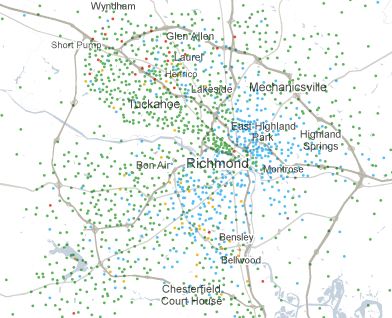
    One focus is Chesterfield County, the largest suburban area in the state capital region which has been beset with the woes of overbuilding and lax oversight for decades.

    That doesn’t faze a Tea Party offspring that calls itself the Virginia Campaign for Liberty. Chesterfield County is going through the process of reconsidering its comprehensive plan, perhaps to avoid past mistakes. In response, a woman named Donna Holt, who lives in the county and is executive director of the “liberty” group, says the plan could be an avenue to massive government intrusion in the form of “some very nefarious ordinances and regulations.”

    Never mind that the county, which hasn’t reviewed its plan in some years, is nowhere close to passing any regulations, the point is clear. The Tea Party types, that eclectic bunch of gun nuts, Patrick Henry impersonators, no tax mavens and Obama birthers, are piling on to make sure that their individual and property rights are not violated.

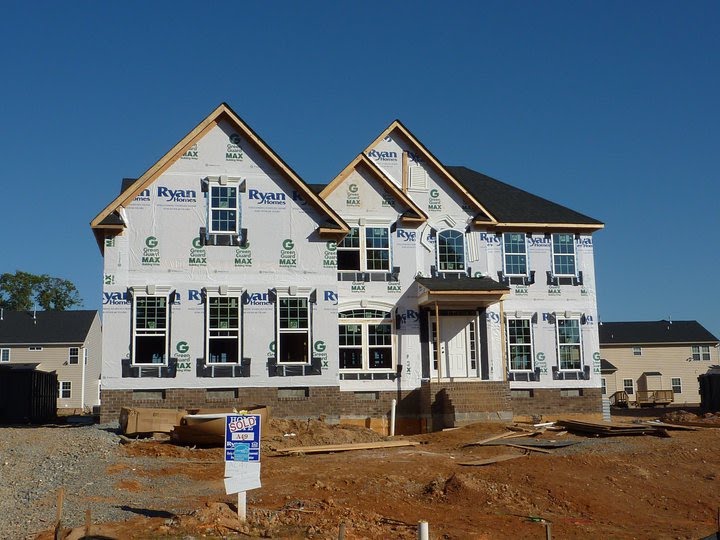
    Holt’s attacks show a basic lack of understanding of what’s been happening in Chesterfield, as well as other suburban and exurban counties such as Loudoun, Prince William and Stafford. The problem is not too many regulations, but too few. For years, laissez-faire mentalities took hold among planning commissions and boards of supervisors. Developers of gigantic, car-centric subdivisions got whatever they wanted. Strip mall builders likewise built at will.

    Needed infrastructure and services were put in a perpetual catch-up mode. The explosive suburban growth from the 1970s until the 2007-08 financial crisis severely tested schools, classrooms, health, police and fire services. Fueled by cheap money and gravity-defying real estate assessments, huge suburban clusters sprang out of cow pastures with little rhyme or reason, other than a developer wanted something and supervisors had “growth” on their brains.

    That’s what happened in Chesterfield. A Republican-controlled board allowed developers anything they wanted. They never met a subdivision plan or a mall they didn’t like. Never mind that Chesterfield is seriously imbalanced in that it doesn’t have a healthy mix of industries or commercial office space to help pay the tax bills, as Henrico County, a sister area, does.

    As homes flew up, kids went to school in mobile homes until new schools could be thrown up as fast as possible. Police were underfunded, so you may have had one or two officers on duty on night shifts patrolling vast areas of the county.

    It all came to a screeching halt when the subprime crisis brought the growth engine to a halt. Since then, Chesterfield has been laying off teachers and other workers as it struggled to deal with real estate assessments that have been dropping for three years.

    Holt, apparently, doesn’t get it. She was quoted as saying that the comprehensive plan could be some kind of pro-government regulation trojan horse. As she points out, somewhere in Alabama, some homeowner was told he or she couldn’t grow a tomato garden because of government land use rules (The horror!)

    The relevancy and veracity of that statement are hard to check. But you can check the “Virginia Campaign for Liberty” website. It is filled with low-brow pieces titled “Global Totalitarian Dictatorship Invading a Town near You with Your Permission (sic).” This rather impenetrable analysis by a man named James Simpson (credentials unlisted) rants on about the United Nations, condoms, Dr. Paul Ehrlich (“Obama’s lunatic Science Czar”) and a host of other issues. I had trouble connecting the dots.

    It is too bad that the Tea Partiers have to go after smarter growth just after the financial meltdown has given us some breathing room to get things right.

    Peter Galuszka


  • I’d Rather Be Snorkling…

    You guys won’t have Bacon to kick around anymore… at least for a while. The Bacon family is off to Hawaii. So long, suckers!
    Update: I know you all were worried… But Bacon & family did survive the tsunami. We were sleeping on a cruise liner on the southeast coast of Kaua’i, opposite from the coast where the tsunami hit. The ship went to sea, sailed around until the tsunami passed, and then re-docked. I slept through the whole thing.
    By the way, Hawai’i (notice how I have adopted the indigenous spelling) has some of the most spectacular vistas on the planet. Just breathtaking. Main drawback: Honolulu is really traffic congested. They could use some serious shared-vehicle mobility systems!

  • The Bigger Issue at Stake in Wisconsin — and Virginia

    From my op-ed today in the Washington Times:

    There is much more at stake in the showdown between Wisconsin Gov. Scott Walker and the public-employee unions than negotiations over pay scales or even the extravagant pension costs that threaten to drive the state into insolvency. The sleeper issue, the one that could have the biggest impact over the long run, is the move to curtail public employeesโ€™ collective-bargaining rights. Why? Because that could overturn the ossified practice of rewarding schoolteachers on the basis of seniority and credentials rather than performance.

    Holding Wisconsin teachers accountable for performance isnโ€™t what all the street protests, the sit-ins and the vein-popping hollering are about. To Republicans, the conflict is about tearing down a corrupt system in which Democratic Party officials and public-employee unions feather each othersโ€™ nests at taxpayersโ€™ expense. To Democrats, itโ€™s about shadowy billionaires underwriting GOP efforts to crush the union movement.

    Ignore all that for a moment and follow my logic here. If there is one thing upon which liberals and conservatives who study educational reform agree, itโ€™s that the single most important thing schools can do to improve the quality of public education is to hire good teachers. The academic research all agrees on that point. The big question among the wonky intellects who debate public policy issues is how to staff schools with good teachers.

    One way to upgrade the overall caliber of the teaching profession is to weed out the bad teachers, but that is nearly impossible when public-employee unions negotiate contracts that eliminate the ability of school management to fire.

    Dan Goldhaber and Roddy Theobold of the Urban Institute analyzed how Washington state school districts handled the layoff of 2,000 schoolteachers at the beginning of the 2010-11 school year. A teacherโ€™s seniority was the greatest predictor of whether he received a reduction-in-force (RIF) notice, they found, but teachers with masterโ€™s degrees or those who were credentialed in โ€œhigh-needโ€ fields such as math, science and special education also were less likely to be furloughed. Teacher effectiveness was not a factor in determining who got axed.

    Because teachers who keep their jobs are more senior and thus earn more money than those who are laid off, Mr. Goldhaber and Mr. Theobold observed, more teachers had to be furloughed. โ€œWe conservatively calculate that districts would only have to lay off 132 teachers under an effectiveness-based system in order to achieve the same budgetary savings they achieved with 145 RIF notices under todayโ€™s seniority-driven system,โ€ Mr. Goldhaber and Mr. Theobold wrote.

    But thatโ€™s chump change compared to the impact good teachers have on the lifetime earning potential of their students. As Eric A. Hanushek wrote in a recent paper published by the National Bureau of Economic Research, โ€œSome teachers year after year produce bigger gains in student learning than other teachers. The magnitude of the differences is truly large, with some teachers producing 1 1/2 years of gain in achievement in an academic year while others with equivalent students produce only 1/2 year of gain. Students starting at the same level of achievement can know vastly different amounts at the end of a single academic year due solely to the teacher to which they are assigned.โ€

    On the assumption that there should be some connection between a teacherโ€™s performance and his compensation, Mr. Hanushek asks, what is the economic value of superior student achievement? He calculates that in a classroom of 20 students, a superior teacher generates an additional $400,000 in present value of studentsโ€™ future earnings.

    Put another way, Mr. Hanushek estimates that dumping the worst 5 percent to 8 percent of all teachers and replacing them with average teachers โ€œcould move the U.S. near the top of international math and science rankings.โ€ The present value of student earnings would be roughly $100 trillion.โ€

    Who are the primary victims of a system geared to protect the rights of the worst teachers? Typically, they are minority students. And that brings us back to Wisconsin. The free-market-oriented MacIver Institute observes that in 2009, 18.9 percent of all Wisconsin students failed to qualify for service in the U.S. Army based on their results in the Armed Services Vocational Aptitude Battery. The figure for black students was 46.9 percent.

    By protecting the rights of bad teachers, public-employee unions are costing Wisconsin students hundreds of billions of dollars of future lifetime earnings โ€“ and blacks lose the most of all. To borrow from the lexicon of the progressives demonstrating in Madison, one might say public-employee unions are a form of โ€œinstitutional racism.โ€ If Wisconsinโ€™s Democrats were genuinely worried about the future of Americaโ€™s minorities or its middle class, they would come out from hiding, join Republicans in revoking the unionsโ€™ collective-bargaining rights and campaign to put better teachers in Wisconsin schools.

    Bacon’s Rebellion addendum: The issue is bigger than what we pay teachers. It’s bigger than how we finance their retirement benefits. The issue is how well we educate our children.

    Virginia’s school teacher union, the Virginia Education Association, does not enjoy collective bargaining rights. But it still exercises tremendous clout with school boards and in state policy. From what I’ve been told, it’s not much easier getting rid of bad teachers in the Old Dominion than it is in Wisconsin. We can no long afford to blindly pump billions of dollars into Virginia schools. We need to enact deep-rooted reform. And that may mean taking on the VEA here so we can develop effective performance measures, replace weak teachers with better ones and replace average teachers with excellent ones.

  • AZA’s ANTIPARTISAN AGENDA

    Since the fifth post on INFRASTRUCTURE that was just put up is intended primarily for Groveton and Larry G., EMR took the opportunity to post AZAโ€™s revision of his AntiPartisan comment on the Virginia โ€œOfficialโ€ Saltwater Fishโ€ post by Peter Galuszka on 23 February. For the background on AZAโ€™s AntiPartisan agenda see the comments by Groveton and others in the Saltwater Fish string.

    ……………..

    Professor Risse asked me to update and revise my comment on Mr. Goozeโ€™s Saltwater Fish post:

    As of this morning, Dr. Risseโ€™s Perspective โ€œENOUGH?โ€ indicates that 17 nation-states with over 410, 000,000 citizens in North Africa and the Middle East are in some form of revolt / unrest about the distribution of resources, economic equity and governance structure. (Mauritania and Oman joined the party in the last 24 hours.)

    That is more citizens / subjects than the expanded EU and nearly 100,000,000 more than are in the US.

    The eventually outcome of these revolts and unrest is, of course, not clear but it is a new day on the planet. An example of what Dr. Risse calls Punctuated Equilibrium as I recall. Now we hear the Beijing riot police are on alert for a demonstration… That DAMNED INTERNET.

    If Tunisians, Egyptians and even Libyans can do it, so can Virginians.

    Now that the General Catastrophe is over, it is the season for those holding seats in the VA senate and house to declare if they will run again. Mary Margaret W. says she will not…

    We suggest everyone within the sound of this Blog calls or emails their favorite two or three MainStream Media contacts and states โ€œI am CONSIDERING running as an AntiPartisan candidate.โ€

    The platform / agenda of AntiPartisanism? Here are some talking points:

    Call a constitutional convention in order to redraft the VA constitution in order to:

    1. Take Agency control out of the hands of the two currently dominate political Clans and their major campaign contributors.

    2. Transform governance structure so that the primary level of decision is at the primary level of impact.

    3. Set the terms of the state executive and all regional executives to two four year terms.

    4. Insure that state, Regional and Community legislative bodies meet at on a regular basis and never take long โ€˜recessesโ€™ as the judicial and executive branches do now. Governance is a full time job.

    5. Set up a procedure to insure that all legislative districts are drawn by a NonPartisan body elected at the Community level to perform this task every ten years.

    6. Expand Freedom of Information and governance transparency.

    7. Make other changes to reflect economic, social and physical reality in the 21st century replacing the 18th century โ€˜traditionalโ€™ perspectives as appropriate.

    AntiPartisan candidates might also want to pledge to limit their time in state and regional legislatures to 8 years (e. g. two senate terms, four house terms).

    For more on the AntiPartisan Agenda and for data on the level of support for Fundamental Transformation of governance structure at the time of the Fall 2010 federal election, check out the posts by Prof. Risse on 1 November and on 8 November in the archives of this Blog.

    AZA


  • INFRASTRUCTURE PART FIVE

    WRAP UP OF RESPONSES TO COMMENTS ON FOUR INFRASTRUCTURE POSTS

    Keeping up with serious comments on the INFRASTRUCTURE posts has been difficult given other commitments. Included below are notes on the remaining comments that merit consideration and response from the four prior INFRASTRUCTURE posts.

    Most of the comments, including those that had to be deleted, on the prior INFRASTRUCTURE postings document beyond a shadow of a doubt that an open-ended Blog is not an environment conducive to serious or fruitful discussion of issues that have a clear context, especially when this context is intentionally ignored by those who comment.

    The Blog format / forum also does not work for topics where the logical conclusion from informed discussion will run counter to the preconceived short-term self-interest of some of the commentors. This is especially true for those who do not understand the context and therefore do not understand what they are talking about.

    The following three comments present useful amplification opportunities:

    I. GROVETON ON URBAN SETTLEMENT PATTERN MODELING

    On 21 Feb 11 and 22 Feb 11 Groveton made comments on the fourth INFRASTRUCTURE post LANDSCAPE URBANISM, NEW URBANISM OR A THIRD WAY.

    These comments related to Urban settlement pattern modeling are very constructive. EMR largely agrees with these observations based on his experience with Urban simulation models dating from his work with the first of these models in 1965.

    However, the context provided by the New Urban Region Conceptual Framework makes beneficial use of modeling far EASIER. It is not an example of the difficulty of creating useful models.

    As noted in THE SHAPE OF THE FUTURE, there have been two kinds of models used to simulate Urban system and Urban sub-systems such as Mobility and Access.

    First there are the complex models that approximate the modeled reality but for which there is no data.

    Second there are simplistic models for which there is data but they do not approximate reality.

    The overarching, comprehensive New Urban Region Conceptual Framework allows one to model the activities of smaller scale systems (at the Unit, Dooryard and Cluster scale) and then incorporate the confirmed outcomes in the next higher component model. That is the basis for the โ€œNext Higher Component Impact Analysisโ€ which is a valuable tool in land use controls.

    Portions of the original comment by Groveton are followed by EMR notes in ALL CAPS.

    ………….

    โ€œLandscape urbanism seems unreal to me. More like religion than science. Lots of theory. Limited practicality.โ€

    WELL PUT.

    โ€œNew urbanism is great – if you have enough money to live in a new urban locale. Seaside? Beautiful. Bring a bag with $1M in it if you want to buy a place there. I know a few people who live in Seaside. They all trade commodities. Great place to live as long as you don’t have to physically show up for work. Kentlands? Great. However, be very careful about where Gaithersburg ends and where Kentlands begins before declaring that there is much in the way of affordable housing there.โ€

    SAME FOR CELEBRATION, AND MANY OTHERS.

    โ€œYour “third way” holds some hope. I just wonder whether any model would be good enough to plan it. the interactions among dooryard, cluster, neighborhood, village, community and NUR are very complicated. Kind of like a human body with cells, organs, skeleton, etc.

    EXACTLY.

    Thousands of years of medicine, trillions of dollars of research and no computer can really model any person’s actual body. Is it possible to model the human settlement pattern for a whole nation-state?โ€

    IN A SINGLE MODEL? IT WOULD BE VERY DIFFICULT BUT THAT IS THE BEAUTY OF HAVING A OVERARCHING, COMPREHENSIVE CONCEPTUAL FRAMEWORK AS NOTED ABOVE.

    ALSO, SINCE THE NUR IS THE FUNDAMENTAL BUILDING BLOCK OF HUMAN ECONOMIC, SOCIAL AND PHYSICAL ACTIVITY, THE NATION-STATE SCALE MODEL IS A MELDING OF NUR AND MEGAREGIONAL SCALE MODELS.

    ANOTHER FACTOR IS THAT:

    HUMANS ARE NOW URBANIZING AND IN THE DEVELOPED NATION-STATES BETWEEN 90 AND 95 PERCENT OF THE HOUSEHOLDS ARE URBAN, AND

    THE MOST FUNCTIONAL URBAN SETTLEMENT PATTERNS FROM ECONOMIC, SOCIAL AND PHYSICAL PERSPECTIVES โ€“ AS DEMONSTRATED BY THE MARKET AND CAREFULLY DESIGNED PREFERENCE SURVEYS โ€“ ARE THE VERY SAME PATTERNS AND DENSITIES THAT HAVE EVOLVED BY TRIAL AND ERROR OVER AT LEAST 13,000 YEARS

    THERE IS โ€˜HARDโ€™ EVIDENCE OF WHAT WORKS AND WHAT DOES NOT.

    SOMETHING TO KEEP IN MIND IS THAT MODELING THE CHESAPEAKE BAY IS HARD BECAUSE FISH, CRABS, OYSTERS AND SAVโ€™s CANNOT READ.

    HUMANS CAN READ AND THEY CAN CHANGE THEIR BEHAVIOR IF THEY UNDERSTAND THAT SUCH A CHANGE IS IN THEIR OWN BEST INTEREST.

    โ€œAnd don’t you have to model it before you can build it?โ€

    YES, BUT…

    TRIAL AND ERROR FOR 13,000 YEARS ALLOWS FOR MAKING A LOT OF GOOD ASSUMPTIONS. See Chris Alexanderโ€™s โ€œTIMELESS WAY OF BUILDING.โ€

    FURTHER, THERE ARE MANY โ€˜RIGHTโ€™ WAYS AND CHOICE, DIVERSITY AND COMPLEXITY ARE POSITIVE FACTORS IN FUNCTIONAL URBAN FABRIC. THAT IS CLEAR FROM VISUAL PREFERENCE SURVEYS AND MARKET DATA.

    โ€œIsn’t this why the new urbanists are obsessed with neighborhoods?

    VERY PERCEPTIVE.

    It’s the biggest unit of organic settlement that can be modeled and planned with today’s methods, practices and technology.โ€

    ACTUALLY MUCH OF THE PROBLEM WITH A NEW URBANISTS PLANS IS THAT THEY DO NOT YET UNDERSTAND SMALLER SCALES DOORYARD, CLUSTER.

    GROVETON IS RIGHT THAT NEW URBANISTS ARE STUCK ON โ€œNEIGHBORHOODSโ€ BECAUSE THEY THINK THEY UNDERSTAND THAT SCALE.

    โ€œIsn’t that why they love grids? If you get the model wrong, you can expand or contract the neighborhood just by adding or removing a few nodes from the grid.โ€

    GOOD POINT.

    Your “Third Way” would require an hour by hour model of every person in a nation state over a period of many years.

    NOT REALLY FOR THE REASONS NOTED ABOVE.

    โ€œEven then, you’d have to consider outside factors like world industrial competition. For example, who (in 1950) could have foreseen Detroit losing one half of its population as the American car industry lost out to foreign manufacturers. Japan and Germany were in ruins and Korea had as much money as Ghana.โ€

    ACTUALLY, THERE WERE THOSE IN THE 20s, NOT EVEN THE 50s, WHO WERE SAYING RELIANCE OF CARS IS NOT THE WAY TO GO. BY THE 50s YOU HAD MANY โ€“ MUMFORD, OWEN AND OTHERS โ€“ WHO UNDERSTOOD THE OVERARCHING DYNAMICS, IF NOT THE SPECIFIC DETAILS OF KOREAโ€™S GNP.

    AND ABOUT DETROIT, THE SHRINKING OF DETROIT IS ALSO AN ORGANIC PROCESS THAT FOLLOWS THE NUR CONCEPTUAL FRAMEWORK.

    โ€œWhat model would have predicted the 2011 jobs imbalance in Detroit back in 1950? From German, Japanese and Korean competition.โ€

    WITH RESPECT TO CORPORATE STRUCTURE, EMR HAS NO POINT OF REFERENCE BUT WITH RESPECT TO SETTLEMENT PATTERNS, NOT A STRETCH.

    โ€œI think you have a great conceptual overview. I just wonder if it can ever be reduced to mathematical practice.โ€

    โ€œAn IBM computer may beat the best human Jeopardy players but people still die of cancer every day. Some problems are just too complex for quantification. When that happens, usually the “invisible hand” of economics comes the closest to a solution.โ€

    WELL, FROM 2007 TO 2011, THE INVISIBLE HAND HAS TREATED HOUSE PRICES OUTSIDE R=30 ABOUT THE WAY IT WAS SKETCHED OUT (A โ€˜DRAFTโ€™ MODEL) IN 1998 BY SYNERGY.

    โ€œAny chance of that happening with human settlement patterns? Let me guess … only when all the location variable costs are properly allocated.โ€

    SMART FELLOW, THAT GROVETON

    โ€œBut that, in itself, is a model too.< br />
    โ€œWhen I was in college I took linear programming. The basic idea was to find maximum and minimum points from a series of lines in space. Only, sometimes, the lines were skew. They didn’t come to a maximum or minimum point.

    โ€œMaybe that’s what we have here. The complexity of doing it right is beyond the possibility of doing it at all.โ€

    SEE PRIOR NOTE ON THE 13,000 YEARS OF TRIAL AND ERROR TO BUILD ON.

    [In a later comment Groveton said:}

    โ€œI’ve got nothing against models. I use them all the time. And I certainly have nothing against linear programming. There were times when I felt like calling my college girlfriend IDA because I spent more time with UVA’s Interactive Data Array than I did with her.

    โ€œI just wonder about the limits of model building. I am unconvinced that anybody can effectively model interest rates over a five year period.โ€

    THAT WOULD BE FAR MORE COMPLEX THAN ESTABLISHING A INTEGRATED SET OF MODELS SCALED TO THE COMPONENTS OF HUMAN SETTLEMENT THAT HELPED GUIDE THE EVOLUTION OF FUNCTIONALITY OF HUMAN SETTLEMENT PATTERNS.

    โ€œEd’s ideas about a Third Way at scale seems like a massive modeling exercise. And without very sophisticated models I wonder how you could design functional human settlement patterns up to (and including) the Super Regional level.

    โ€œI’ve seen a lot of models of the Chesapeake Bay. They are all very interesting and educational. They are also consistently wrong. A predicted good year for blue crabs turns into a bad year for blue crabs and visa versa. The interplay of thousands (millions?) of variables just seems to be beyond the state of the art in model building. Is human settlement beyond the neighborhood level in the same category? I don’t know.โ€

    SEE EARLIER NOTES โ€“ IF WE COULD JUST GET OYSTERS TO READ…

    ……………

    โ€œIn fact, I see parallels between the videoconferencing / collaboration kit now available and human settlement patterns.

    โ€œChanging jobs and two income households always seemed like an Achilles Heel in the theory of functional human settlement patterns. Let’s say you are working in the same neighborhood where you live. Then, you get a better job in a different neighborhood 20 miles away. Do you move or do you commute? Most people would commute. But that could take a long time in shared vehicle systems.โ€

    DEPENDS ON THE STATION AREA SETTLEMENT PATTERNS. THE TIME FOR A 20 MILE COMMUTE IS MUCH LESS FOR ALMOST ALL TRIPS IN THE CORE OF REGIONS SUCH AS WIEN, STOCKHOLM, ETC.

    BACK TO HUMANS BEING ABLE TO READ BUT FISH AND CRABS NOT SO WELL. YOU CHOOSE A PLACE TO LIVE SO THAT YOU MAXIMIZE FLEXIBILITY IF THAT IS WHAT CONCERNS YOU.

    โ€œSo, people figure they’ll just drive their car 40 miles a day.โ€

    NOT IF THEY CANNOT AFFORD TO OR IT TAKES THREE HOURS IN A CAR AND ONE HOUR ON A SHARED VEHICLE SYSTEM.

    โ€œWhat if you could just log in? Sit right in your home office with the video on and work away. Somebody wants to ask you a question – they just click on your video box on their unit and speak. At 1080i or 1080p levels, it’s like walking up to someone in their office or cube.โ€

    FOR THOSE WHO HAVE THE TRAINING, THE PROPER JOB AND THE RIGHT EQUIPMENT, THAT IS AN ANSWER.

    โ€œMaybe there’s a Fourth Way. A technology turbo-charged Third Way.โ€

    FOR SOME. BUT FOR MOST IN A SERVICE BASED ECONOMY, THAT DOES NOT WORK, BUT FUNCTIONAL SETTLEMENT PATTERNS DO.

    ……………..

    II. GROVETON ON CHICKEN WASTE

    As Mr. Bacon suggested, Grovetonโ€™s comment on chicken waste on the post INFRASTRUCTURE PART TWO POINT ONE at 9:18 AM on 5 Feb 11was not up to his usual standards.

    What is most FRIGHTENING is that the comment documents that after all this time, Groveton STILL has no idea TO what the phrase โ€œa fair allocation of location variable costsโ€ refers. He provides a fantasy riff completely unrelated to the context of the post.

    Ninety five percent of the Households in the US are Urban Households โ€“ they receive the majority of their economic support, social interactions and physical actions from Urban contexts.

    โ€œA fair allocation of location-variable costsโ€ refers to the equitable allocation of the total location -variable costs of the 40 +/- Services (capital โ€œSโ€) that make Urban life possible and enjoyable.

    Disposal of chicken waste is NOT one of those 40 +/- services.

    Disposal of chicken waste IS one of the costs of doing business for those who raise chickens.

    There is a very clear Common Law of Nuisance Principle that applies to this case:

    A land owner cannot do ANYTHING on their property that substantially damages others use of their land โ€“ including the use of common land. In the case of impact on water resources the impact is, of course, downstream.

    In the year 1521 one could be beheaded for blatant acts of water pollution in violation of this principle.

    As civilization โ€˜progressedโ€™ the number of things that a land owner could do that negatively impacted those downstream owners multiplied AND the cumulative impact became less and less apparent.

    In the US for 330 years it was assumed that the land resource was unlimited and a blind eye was turned toward land abuse. More recently, in an attempt to keep food prices low and to โ€œprotectโ€ the mythical โ€˜small farmerโ€™ more and more land abuse โ€“ erosion from clear cutting and bad agricultural practices, excessive runoff from hard surfaces, pollution from over fertilization, pollution from on-site waste disposal including animal waste โ€“ have been overlooked.

    There is no fancy cost allocation problem here. It is just a case of โ€œCease and Desistโ€ and โ€œPay the Damages.โ€ This logical Agency position has been neglected for so long it is now the belief of some that they have acquired a โ€˜rightโ€™ to pollute in order to make a bigger profit..

    ………….

    In his comment Groveton says:

    โ€œJust estimating these costs would require a massive government bureaucracy.โ€

    NOT SO.

    โ€œWhich, in itself, would be another location variable cost of the chicken farming industry.โ€

    IF THERE ARE COSTS, THOSE WHO PROFIT FROM THE ACTIVITY REGULATED SHOULD PAY THEM ON AN EQUITABLE BASIS.

    AS MR. BACON POINTS OUT THE REFERENCE TO โ€œconservative elitesโ€ APPEARS TO HAVE NO BASIS OR AT THE LEAST REQUIRES A DEFINITION OF THE COMPOSITION OF THESE โ€˜ELITESโ€™ โ€“ VIRGINIA FIRST FAMILIES? DECEDENTS OF POKAHANTAS?

    …………….

    There are two important contextual points raised by Grovetonโ€™s comments:

    First the meaning of the phrase โ€œA fair allocation of location-variable costs.โ€ As noted above, this phrase applies to the Services that support Urban activities, PERIOD

    Second SYNERGYโ€™S work focuses on evolving functional and sustainable Urban settlement to serve the needs of the 95 percent of the Households. These Households cannot occupy more than 5 percent of the land for daily activities if they are to achieve functional economic, social and physical relationships for the vast majority of those daily activities.

    In this context, the determination of the appropriate use of land or the value of land for NonUrban land uses is not even an issue.

    If society takes care of the Urban settlement patterns INSIDE The Clear Edges, then the NonUrban settlement patterns OUTSIDE The Clear Edges will take care of themselves so long as there is a well-informed market, a fair allocation of the costs of the NonUrban use and appropriate use of both private land and common land.

    There exists a vast speculative bubble concerning NonUrban land value that has been building since before the Revolutionary War. This bubble is rooted in unfounded speculation as to the amount of land that ca
    n be devoted to Urban land uses. This bubble was first inflated by post roads, toll turnpikes and canals serving proto-Industrial Revolution uses. The bubble was inflated by the spread of railroads. It was hyped into the stratosphere by Federal Aid Highway program in the 20s and pushed even higher by the Interstate Highway program in the 50s.

    To this day the speculative land value bubble is maintained at stupendous levels by the false assumption that any place to which one can drive Large, Private Vehicle is a suitable location for Urban land uses.

    The bubble has been so big for so long it is now considered a โ€œRightโ€ to cash in on the unsupportable speculative value. See THE PROBLEM WITH CARS

    III. A NOTE ON LARRY GROSSโ€™s SECOND COMMENT ON INFRASTRUCTURE MANIA

    [In the comments section following the 30 January Post INFRASTRUCTURE MANIA Larry Gross posted two substantive comments on the topic of the post. The first one was addressed at 9:27 AM on 31 January in that comment string. The second one posted at 4:18 PM on 31 January is addressed below.]

    Larry:

    You continue to fabricate disturbing and unfounded strawpersons in an apparent attempt to trivialize the need to understand human settlement patterns. Most of the assumptions you make in constructing your strawpersons were not true 20 years ago based on the data on the actions and desires of those who chose to live at the OLD minimum sustainable density of 10 persons per acre at the Alpha Community Scale.

    Your strawpersons represent conventional wisdom concerning โ€˜traditional valuesโ€™ 40 years ago. These views have never been the majority position and have been declining as a percentage of Regional wide market preferences since that time. See note on the market preference for New Urbanism at the Dooryard, Cluster and Neighborhood scale in LANDSCAPE URBANISM, NEW URBANISM OR A THIRD WAY and in the note by Groveton on the values in Seaside and Kentlands (Kentlands proper) included above.

    It is important to note that with the end of Autonomobile domination, the MINIMUM density at the Alpha Community scale within Clear Edges will move from 10 persons per acre to between 15 and 25 persons per acre.

    This is a change in MINIMUM density at the Alpha Community scale WITHIN The Clear Edge but it is NOT Manhattan (250 persons per acre at the Neighborhood scale).

    Just so everyone will know EXACTLY what the above references to strawpersons mean, here is Mr. Grossโ€™s comment from INFRASTRUCTURE MANIA of 30 January 2011 with EMR notes in ALL CAPS:

    …………….

    โ€œI’d tend to agree with the view of the Volt in terms of economics if it were not for the fact that the Telsa that preceded it was about 100K and the price has now dropped by ยฝ and in general, technology advances by dropping by about ยฝ per decade.โ€

    TESLA IS STILL โ€œPRECEDINGโ€ AT $120,000 PLUS. THE GM VOLT DOES NOT HAVE PERFORMANCE CRITERIA THAT COMPARE TO THOSE OF THE TESLA VEHICLE.

    โ€œWhat happens when the Volt and it’s competitors get 50+ mpg and cost 15K?โ€

    WHAT HAPPENSโ€ IS THAT:

    โ— ALL CITIZENS WILL STILL HAVE THE PROBLEM OF SPACE TO DRIVE AND PARK LARGE, PRIVATE VEHICLES IN FUNCTIONAL SETTLEMENT PATTERNS THAT MEET THE ECONOMIC, SOCIAL AND PHYSICAL NEEDS OF THE VAST MAJORITY OF THE 95 PERCENT OF ALL HOUSEHOLDS THAT ARE URBAN.

    โ— MOST CITIZENS WILL BE DRIVING A VEHICLE THAT IS EITHER UNSAFE TO DRIVE ON THE INTERSTATE HIGHWAY SYSTEM OR ONE WHICH COSTS MORE THAN THEY CAN AFFORD TO BUY AND MAINTAIN.

    โ— A GROWING NUMBER OF CITIZENS WILL STILL HAVE THE PROBLEM THAT BUYING AND MAINTAINING PRIVATE VEHICLE IS OUT OF REACH (EVEN AT $15K). THESE ARE CITIZENS WHO PERFORM JOBS THAT ARE NEEDED TO SUPPLY GOODS AND SERVICES IN A BALANCED, RESILIENT, ALPHA COMMUNITY.

    AS THE COST OF ENERGY AND RESOURCES โ€“ INCLUDING FOOD THAT IS SAFE TO EAT โ€“ CONTINUE TO RISE, FEWER AND FEWER WILL BE ABLE TO AFFORD LARGE, PRIVATE VEHICLES AND THUS WILL BE ISOLATED (LOST) IN THE SETTLEMENT PATTERN REQUIRED TO EFFICIENTLY USE LARGE, PRIVATE VEHICLES TO ACHIEVE MOBILITY AND ACCESS.

    โ€œFor daily home-to-work-to-home commutes – I agree with EMR – that mass transit is the way to go and I see that becoming the defacto standard just about anywhere there are HOT Lanes.โ€

    NOT โ€˜mass transit,โ€™ THE REFERENCE IS ALWAYS TO โ€˜SHARED VEHICLE SYSTEMS.โ€™

    THE VAST MAJORITY WILL NOT BE ABLE TO AFFORD โ€˜COMMUTESโ€™ IN LARGE, PRIVATE VEHICLES, PERIOD.

    MOST WILL NOT FIND LONG DISTANCE COMMUTING TO BE THEIR BEST OPTION ONCE LOCATION-VARIABLE COSTS ARE FAIRLY ALLOCATED.

    โ€œBut Mom is not going to take the kids to Soccer in a bus…โ€ [NO10AC]

    HERE YOU GO WITH STRAWPERSONS.

    [To save space EMR has appended the notation โ€˜NO10ACโ€™ which means that the prior statement was NOT CORRECT for the majority of citizens living at 10 Persons per acre at Alpha Community Scale in 1980. This indicates that this is a strawperson and not a characteristic of the majority of the Households living at minimum sustainable density LONG BEFORE THE GREAT RECESSION.]

    THE VAST MAJORITY OF MOMS HAVE HAD TO GO TO WORK. THEY DO NOT CHAUFFEUR CHILDREN. THE KIDS WALK TO SOCCER PRACTICE AND MOST GAMES EVEN IN 10 Pn Ac PNCs.

    THE LARGER ISSUE IS THIS:

    ONLY ONE HOUSEHOLD IN 4 HAS CHILDREN UNDER THE AGE OF 18. WHOLE COMMUNITIES, SUBREGIONS AND REGIONS CANNOT BE LAID OUT TO SUPPORT 25 PERCENT OF THE POPULATION, EVEN IF THAT IS WHAT THEY WOULD WANT TO DO.

    MORE IMPORTANT, AS A FATHER OF THREE ONCE SAID:

    โ€œA PRIVATE YARD IS A TERRIBLE PLACE TO TRAP A CHILD BETWEEN THE AGES OF 3 AND 18. TO RAISE A CHILD IT TAKES A VILLAGE NOT A YARD. A FUNCTIONAL VILLAGE HAS SOME DWELLINGS WITH PRIVATE YARDS AND A LOT OF COMMON LAND. THE CUMULATIVE IMPACT OF EVERY DWELLING HAVING A YARD โ€“ ESPECIALLY A BIG YARD โ€“ IS TO ISOLATE CHILDREN FROM THE ENVIRONMENTS THAT HELP THEM GROW UP.โ€

    IF THE LOCATION VARIABLE COSTS ARE ALLOCATED FAIRLY, PARENTS COULD NOT AFFORD TO HARBOR THE BIG YARD / PLACE TO RAISE THE KIDS ILLUSION UNLESS THEY WERE IN THE TOP 5 PERCENT OF THE FOOD CHAIN AND COULD AFFORD TO LIVE IN A PLACE LIKE THE WOODLANDS.

    โ€œ…and Dad is not going camping dragging his boat behind a Greyhound.โ€ [NO10AC]

    DAD WILL RENT OR BARROW AN SUV TO TOW THE BOAT, OR BETTER, HE WILL SHARE OWNERSHIP OF A BOAT THAT STAYS AT THE LAKE.

    UNTIL DAD FINDS SIX FRIENDS TO SHARE THE BOAT, HE RENTS A BOAT WHEN HE GOES TO THE LAKE.

    STORING A BOAT AND TWO CARS AT THE DWELLING AND USING THE BOAT TEN WEEKENDS A YEAR IS IDIOCY THAT FEW CAN AFFORD NOW AND EVEN FEWER WILL IN THE FUTURE.

    โ€œMom, Dad and the kids are not going to visit Grandma by riding Amtrak hauling all the presents and dog buffy.โ€ [NO10AC]

    ACTUALLY THEY WILL IF THEY CAN GET THERE IN LESS TIME AND / OR AT LOWER COST.

    IF A SHARED VEHICLE SYSTEM IS NOT AVAILABLE, THEN FOR 1/50 THE COST OF OWNING A VEHICLE THAT IS NEEDED THREE TIMES A YEAR, THE HOUSEHOLD WILL RENT A VEHICLE FOR SPECIAL NEEDS TRIPS.

    THE LARGER POINT IS THAT GRANDMA NO LONGER LIVES OVER THE RIVER AND THROUGH THE WOODS AT SUNNY VIEW FARM.

    GRANDMA SHARES A COHOSING LOFT WITH HER PARTNER NEAR A PRT STATION. SHE USES THE PRT TO ACCESS THE COMMUNITY COLLEGE WHERE SHE TEACHES RESTORATIVE YOGA AND CREATIVE VOLUNTEERISM.

    โ€œEMR must think the average person is going to hold up 364 days a year in his apt in a 32 or 64 du condo or whatever and never aspire to head out to Taco World and then Best Buy before returning home to enjoy the food and Home Theater.โ€

    SARCASM DOES NOT BECOME YOU. THERE IS NO REASON THAT ONE HAS TO DRIVE A LARGE, PRIVATE VEHICLE TO GET TACOS โ€“ OR ANYTHING ELSE.

    BOTH THE 32 AND THE 64 DWELLING UNIT SCALES ARE RATIONAL SCALES FOR A CLUSTER
    OF DWELLINGS WITH SOME PRIVATE ELEMENTS AND SOME SHARED ELEMENTS โ€“ AKA โ€˜CONDOS,โ€™ โ€˜CO-OPsโ€™ OR RENTALS IN LOFT, FLAT OR DUPLEX FLOOR PLANS.

    โ€œThat may happen the day we are out of oil and out of coal and out of options but that day must be 100, 200 years from now and must presume that we’ll also be out of natural gas and solar/wind never panned out.โ€

    โ€œRUN OUT IN 100 YEARSโ€ โ€“ PERHAPS. BUT WHEN WILL THE COST WILL BE TOO HIGH FOR THE MAJORITY? THAT IS NOT 100 YEARS FROM NOW, THAT IS NOW.

    โ€œMy premise is that as long as we have energy – people will want to be mobile and will ….โ€

    THEY MAY โ€˜WANT ITโ€™ BUT CAN THEY AFFORD IT? WHAT WILL THEY GIVE UP TO GET IT? THE MARKET SAYS THAT MOST HOUSEHOLDS HAVE ALREADY MAKE A CHOICE. THAT IS WHY MODE OF THE MARKET DWELLINGS BEYOND R = 30 STARTED DOWN IN 2006 AND ARE STILL GOING DOWN.

    โ€œIt’s an inherent aspect of the human condition and.. yes… civilization.โ€

    NOT ACCORDING TO THE CURRENT MARKET SURVEYS WHEN COST IS A CONSIDERATION.

    โ€œEven in the Jetson Comic Book World – there is uber PERSONAL mobility – even more/better than we have now.โ€

    JETSON MOBILITY IS โ€˜REALโ€™ ONLY IN COMIC BOOKS AND / OR FOR AT MOST 5 PERCENT OF THE POPULATION. See โ€œThe Sky Car Myth.โ€

    LOOK NO FARTHER THAN TUNIS OR CAIRO TO SEE WHAT HAPPENS WHEN THOSE WITH EDUCATION AND COMMUNICATION DO NOT GET A FAIR SHARE. GOOGLE โ€œWHY EGYPT ERUPTEDโ€ OR SEE โ€œENOUGH?โ€ (FORTHCOMING).

    โ€œMany other aspects of settlement patterns, I buy.

    โ€œbut if we have large mass transit commuter buses or high speed monorails – we are also going to have exurbs…. and people will use personal mobility vehicles to get from the station to home.โ€

    AS Mr. BACON POINT OUT REPEATEDLY, NO ONE CAN AFFORD TO PROVIDE โ€œmass transit commuter buses or high speed monorailsโ€ TO SERVE SCATTERED URBAN LAND USES.

    End of Larry Gross Quote

    …………..

    OK.

    THAT IS THE LAST TIME EMR WILL REPEAT THE OBVIOUS:

    EMR will no longer comment on unrealistic strawpersons as an excuse to justify continuation of Business-As-Usual.

    If one REALLY does not understand after all this time, further discussion is of little value. It makes no sense to continue the discussion.

    NB:

    The three core posts on INFRASTRUCTURE will be revised to reflect input โ€“ most of the constructive input came from direct comments to EMR, not from Blog comments โ€“ and be available as an INFRASTRUCTURE Perspective.

    Also please be advised that it has been requested that all comments that do not pertain to the subject of INFRASTRUCTURE โ€“ e.g. FICA, diesel electric mechanics, legislative process, etc โ€“ will be removed from all five posts. EMR has been told by the group that has volunteered to do this work that removal will include disingenuous spam that starts out โ€œthis is what I have been saying for yearsโ€ that is driven by the โ€˜any critic of my enemy is a friend of mineโ€™ strategy.

    EMR


  • The Right’s Latest Pastime: Bashing Public Workers

    It’s both amusing and disturbing how the right-wing keeps moving from group to group seeking out bogey-men to blame for what they claim are the country’s ills.

    Not long ago, it was a foreign-born Barack Obama who mostly likely was a secret Muslim. Then it was Spanish-speaking, dark-skinned Latino immigrants who may or not be properly documented or some of their children who (not exactly their decision) were born on U.S. soil making them U.S. citizens, shocking many in the hard-right. And, of course, the deficit scare-mongers (some of them familiar to this blog) who miraculously got the right-the-federal budget religion on exactly the same day that Obama took office.

    Now, we have new targets, namely, your everyday public school teachers, firemen, sanitation workers and police. These are middle class people whose lives are based on community service rather than making big bucks. Some belong to labor unions, which is actually their constitutional right to do. But to hear the conservative drum-beaters tell it, starting with Fox News, they are strangling our economy and nation with their obscene demands.

    These sniveling free-loaders and their puffed out unions are responsible for making hash of the budgets and economies of places like Wisconsin. In Rhode Island, teachers have all received possible layoff notices. New Jersey Gov. Chris Christi has pushed the Garden State to the brink in his face-off with public unions. These tough measures, they all claim, are essential because of the financial “crisis” they face.

    Here in Virginia, we luckily don’t have the same confrontations. For one reason, our budget situation isn’t as bad as some other states. Plus, we don’t have that many union members. The Bureau of Labor Statistics reports that Virginia had all of 161,000 union members last year, down 5,000 from 2009. Many of them are federal workers or work at some large manufacturing outfits such as Newport News Shipbuilding.

    Virginia’s GOP leadership, nonetheless, is more than happy to jump in the fray. Gov. Bob McDonnell, no friend to the working man, was on a cable news network the other day, praising Virginia’s 64-year-old right-to-work lay for keeping evil unions from befouling the lives of everyday Virginians. Curiously, he also gave possible Senatorial candidate George Allen a big push while faintly noting a “Tea Party” person (Jamie Radtke) without stating her name.

    You have the Richmond Times-Disgrace wondering where former Gov. and head of the Democratic National Committee chief Tim Kaine really comes down on the union-bashing going on in Wisconsin.

    So, the Republican network is milking the issue for all it can. They are trying to establish a rift between the “middle class” whom they want to court and the people who teach their children and protect their lives and property. Like bashing Latinos, this class-based smear campaign is entirely cynical.

    A few other points:

    Places like Wisconsin and New Jersey are culturally different than a quasi-Southern/government job state like Virginia. In other words, people in places that these don’t put up with as much crap from the bosses the way people do here. In the Midwest and Northeast, being a union member is considered an honorable thing and generations of workers owe their liveliehoods, pensions and work-rules to organizers from long-ago.

    Virginia, by contrast, has to live down its history where business executives treated workers as slaves or chattel. In the textile belt from Southside to George, southern mill bosses kept out unions and pitted black against white workers to keep wages down so they could steal business from up north. Don’t believe me? Check out W.J. Cash’s 1941 masterwork, “The Mind of the South.”

    “Right to work” is always misunderstood. It means that a worker can’t be forced to join a union as a condition of employment is a state says so. That’s all it means. Meanwhile, many Virginia companies get away with neo-yellow dog employment contracts, hatched by lawyers and human resources flunkies, stating that a prospective hire as to agree that he or she understands the firm prefers a “union free” environment. In corporatese, that’s not coercion, of course.

    These attitudes automatically assume that Southern corporate management is always right, makes the best strategic decisions and that its workers are lucky to have jobs, period. That however, isn’t always the case. After working for 18 years for a global media company, I accepted a job at a Richmond-based one, where management by fear ruled the cubicles. The bosses, it turned out, were not rocket scientists after all, as the firm’s stock slide in about 10 years from $65 or so a share to about $5, after bobbing in the delisting territory of $1. I bailed on my holdings at about $60– probably the smartest thing I have every done.

    The McDonnells and the George Allens and the RTD editorial writers all are part of this same anti-worker and anti-labor alliance. It is rather disgusting to see them cheer on the sidelines as average folk get bashed once again for problems not of their making.

    Peter Galuszka


  • Virginia’s “Official” Saltwater Fish

    Dealing as they do with weighty matters, the Virginia House of Delegates on Tuesday conferred the honor of “official saltwater fish” to the striped bass, otherwise known to Southerners as the “rockfish.”

    In many ways, this is cause for celebration. Rockfish are extremely tasty and tend to be caught in the cold months, when sustenance is needed. They can be cooked any number of ways, such as grilling, sauteeing and baking. I know a woman who steams them and then serves the fillet bits like a shrimp cocktail. I like to slow-roast mine with winter vegetables.

    But there are questions about the rockfish and its haughty designation.

    Del. Jackson Miller (R-Manassas) almost killed the catch, saying the lowly and oily menhaden was far more important commercially to the Old Dominion. What’s more, it sustained English settlers at Jamestown in hard times.

    I, for one, am tired of romanticized survival stories for, frankly, what were a bunch of indulgent gentlemen who lawn-bowled all day. There are other possibilities for the state fish, although not necessarily of the saltwater variety. One is the blue channel cat, which can grow so huge it can swallow a man whole like Jonah. Or the snakehead, a feared invader that a few years back caused the biggest alien invasion scare in D.C. since Klaatu and Gort landed their flying saucer on the Mall in 1951.

    The rockfish is a fine fish for the Old Dominion. But others do claim it, too, and it may have Obama-like birthing issues. Consider this passage from a 1994 New Yorker assessment:

    “Striped bass are in many respects the perfect New York fish. They go well with the look of downtown. They are, for starters, pin-striped, The lines along their sides are black fading to light cobalt blue at the edges. The dime-sized scales look newly minted, and there is an urban glint to the eye and a mobility to the predatory jaw. If only they could talk, they would talk fast.”

    But if it could talk, would it say, “I really belong in Virginia?”

    Peter Galuszka

  • LANDSCAPE URBANISM, NEW URBANISM OR THE THIRD WAY

    THE SEARCH FOR A COMPREHENSIVE SETTLEMENT PATTERN CONCEPTUAL FRAMEWORK THAT PROVIDES A BASIS FOR RATIONAL INFRASTRUCTURE DECISIONS

    The vast majority agree that there is a desperate need to build and rebuild infrastructure to support functional and sustainable human settlement patterns in the United States.

    The unsustainable trajectory of Business-As-Usual has put citizens, their Organizations and their civilization on the roadway to dysfunction and collapse.

    The current settlement pattern is not working. Therefore, building more โ€˜INFRASTRUCTUREโ€™ to support the dysfunctional settlement โ€˜STRUCTUREโ€™ would be suicidal.

    In spite of the widely acknowledged need for infrastructure investment, there are not even funds available to keep the existing infrastructure repaired. There are many reasons why there is not a critical mass of citizen support for infrastructure investment. However, a prime reason is that citizens have seen trillions of dollars poured down the โ€˜more of the sameโ€™ rat hole for three decades with no relief in sight.

    As documented in THE SHAPE OF THE FUTURE transport is the canary in the minefield of settlement pattern dysfunction. โ€˜Traffic congestionโ€™ is the bellwether and traffic congestion gets worse every year regardless of how much money federal and state DOTs pour into asphalt to support Autonomobiles. There are science-based physical and economic reasons for this reality. See THE PROBLEM WITH CARS โ€“ PART THREE of TRILO-G and the resources cited in the prior sections of this Perspective.

    In this context, where do citizens and their leaders look for guidance to evolve new strategies and functional settlement patterns that can be supported by intelligent infrastructure investments?

    Over 95 percent of the US Households are Urban Households so it is reasonable to ask: What are the parameters of the Urban template that can achieve a sustainable future for human civilization?

    There are two competing philosophies / paradigms that are being intensely debated at this time:

    โ— New Urbanism (and the related consumption-centric Smart Growth Ideal), and

    โ— Landscape Urbanism (which some link with the econ-centric Green Infrastructure Ideal)

    There IS a third paradigm about which few yet understand.

    The question is should the Urban template be:

    A. Landscape Urbanism?

    B. New Urbanism?

    C. Or, a Third Way based on the New Urban Region Conceptual Framework and economic / social / physical reality?

    This section of the INFRASTRUCTURE Perspective addresses this question.

    [NB: This is the fourth, and next-to-final BaconsRebellion Blog post by EMR on the topic of INFRASTRUCTURE. This Perspective is a rough second draft and informed comments are always welcome. The Vocabulary used in this Perspective โ€“ including the phrases โ€˜Landscape Urbanism,โ€™ โ€˜New Urbanismโ€™ and โ€˜New Urban Region Conceptual Frameworkโ€™ have been carefully defined by their proponents. While THE LITMUS TEST has not yet been published, if the reader is NOT conversant with the Vocabulary used and what these words and phrases mean, they would be well advised to not bother posting random thoughts in an attempt to contradict or discredit the Perspective when, by definition, the commentors do not know what they are talking about. For words that may appear to have irregular Capitalization, see the GLOSSARY that accompanies this Blog and which is accessible from the RESOURCES page at www.emrisse.com As has been often noted on this Blog, โ€˜New Urban Region,โ€™ โ€˜Urban Support Region,โ€™ โ€˜SubRegion,โ€™ โ€˜MegaRegionโ€™ and the components of the New Urban Region Conceptual Framework are not terms currently used by advocates of New Urbanism or Landscape Urbanism.]

    THE SPOILS OF WAR

    The conflict between Landscape Urbanism and New Urbanism is a HOT topic among some with professional interest in human settlement patterns. This conflict has the potential to impact the provision of infrastructure to support function and sustainable settlement patterns.

    The question arises:

    Which of these โ€˜Urbanismsโ€™ makes the most sense upon which to base decisions related to the infrastructure needed to support functional and sustainable human settlement patterns โ€“ especially Urban settlement patterns which must support 95 percent of the US Households?

    It turns out the answer is NEITHER.

    Some may be unfamiliar with, or confused about, the two hot topic Urbanisms โ€“ โ€˜Newโ€™ and โ€˜Landscapeโ€™ โ€“ and how they differ. New Urbanism is the more broadly articulated Urbanism. See Peter Katzโ€™s 1994 book The New Urbanism and other resources cited below. Landscape Urbanism Reader assembled by Charles Waldheim in 2006 is credited with being the founding document of Landscape Urbanism.

    For a summary of the conflict between the two Urbanisms โ€“ described by Planetizen as โ€œ… the war for the future of our built environmentโ€ โ€“ see the recent summary by Leon Neyfakh in The Boston Globe at

    http://www.boston.com/yourtown/cambridge/articles/2011/01/30/green_building/

    [NB: If you are required to sign in at the Globe web site to view the article (the sign in requirement seems to be random) and you do not want to do that, you can find a frustrating 8 mini-page version of the material by Googleing โ€œLeon Neyfakh Green Building.โ€]

    Neyfakh presents an Enterprise Media โ€˜he said, he saidโ€™ overview of the โ€˜warโ€™ between the two Urbanisms.

    EMR would advise not trusting the details too far. For example, Neyfakh says Landscape Urbanism โ€˜startedโ€™ at the University of Pennsylvania in the late 1980s. It is clear that the origins of these ideas at Penn go back to at least the 60s and the work of Ian McHarg. Discussion of the topic prompted EMR to review his 1969 copy of McHargโ€™s well regarded Design With Nature.

    This book contains many of the insights that distinguish Landscape Urbanism as articulated by Waldheim via Neyfakh. McHargโ€™s book also exhibits several of the key shortcomings that afflict Landscape Urbanism and prevent it from being an overarching Conceptual Framework that could guide the evolution of human settlement patterns.

    It appears that one can trust the general outlines of the โ€œwarโ€ as depicted by Neyfakh but be careful of the details.

    FIRST, IS THIS A WAR WORTH FIGHTING?

    If you believe writers like Neyfakh, the WAR between Landscape Urbanism and New Urbanism is VERY serious business. (As noted below, there ARE INDEED significant implications.)

    However, there are threshold questions:

    Is this conflict any more than an Ivy League squabble with Princeton / Yale (Duany and Plater-Zyberk) on one side and Harvard / Penn (McHarg and Waldheim) on the other?

    And:

    Are these two โ€˜Urbanismsโ€™ just separate refutations of the culture of Starchitects who suffer from ego-centric edifice complexes? Are the acolytes of these two Urbanisms simply design students and practitioners that in an earlier day found solace and refuge in Chris Alexanderโ€™s โ€˜timeless way of buildingโ€™?

    It is very clear that both Landscape Urbanists and New Urbanists HATE โ€˜modernโ€™ architecture and egocentric Starchitects. That is UNLESS these Starchitects are card carrying supporters of one of the Urbanism. It is also clear that both Urbanisms have champions who are striving for Starchitect status.

    Back to the question of war worthiness:

    The important reality is that if either of these flavors of Urbanism โ€˜winsโ€™ it will have a controlling impact on the type, location and cost of the infrastructure to support humans Urban activity.

    With the advent of Peak Resources to support the contemporary brand of high-t
    echnology civilization, humans cannot afford to toss another generation of resources down the rat hole of dysfunction settlement patterns.

    So the answer is yes, who wins this war IS important.

    As outlined below, it is in citizenโ€™s and their Organizationโ€™s best interest that neither New Urbanism or Landscape Urbanism โ€˜winโ€™ but that selected core values of each emerge in an overarching Third Way strategy.

    The conflict opens the door, not for a โ€˜compromiseโ€™ but for an overarching, comprehensive Conceptual Framework.

    This brief Perspective is not intended to provide the details on any particular position but rather to suggest that there exists a clearly articulated exit strategy from the current dysfunctional trajectory.

    WHO IS ON FIRST?

    At the present, New Urbanism has a big head start but Landscape Urbanism is said to be catching up.

    On what basis is New Urbanism ahead of Landscape Urbanism?

    Well, for starters: Market, Allies and Agencies.

    Market. New Urbanism has proven market acceptance at the Unit, Dooryard, Cluster and Neighborhood scales even after the 2006 built-environment downturn.

    While the call for โ€˜a new urbanismโ€™ came from Grady Clay in the July 1959 issue of Horizon, there were few examples beyond the Unit, Dooryard and Cluster scales until Seaside, FL, was launched in 1981. This Village scale vacation / leisure Urban enclave on the Gulf of Mexico has become the poster child of New Urbanism.

    There is a poster child project for Landscape Urbanism as well. It is a Planned New Community of about 60,000 citizens. It was started in the early-70s and is nearing โ€˜completionโ€™ but apparently most of the advocates of Landscape Urbanism do not yet understand that fact โ€“ or perhaps they do not want to confront the conclusions that can be drawn from this Community which is the subject of a section later in this Perspective.

    As to New Urbanist projects:

    Who would NOT rather vacation in Seaside, FL and live in Celebration, FL or Kentlands, MD as opposed to vacationing in Panama City, FL and living in Kissimmee, FL or Glen Burnie, MD?

    The Creative Class, that is who.

    The citizens who are drawn to New Urbanist projects are the citizens with the skills and ambition to get jobs even in a โ€˜bad economy.โ€™ Consider at a map of New Urbanist projects. It is a location-sort of attractive places for the Creative Class to seek Jobs / Housing / Services / Recreation / Amenity โ€“ The Research Triangle, Austin, Silicone Valley and in other desirable locations in the Boston, Washington-Baltimore, et. al New Urban Regions. Peter Katzโ€™s book The New Urbanism noted earlier provides a mid-90s tour of projects and New Urban News provides regular updates and summaries in its newsletter and now on line at www.newurbannetwork.com

    Allies. As for allies, the New Urbanists are cohabiting with the Smart Growth and the Smarter Growth cohorts who are the champions of comfortable, โ€˜settledโ€™ places and Transit Oriented Development. As anyone at the Urban Land Institute will tell you, THAT IS WHERE THE ACTION IS, down at the Light Rail Station.

    New Urbanists have also formed alliances with the โ€œConservation NGOs and their Enterprise Partnersโ€ โ€“ the Institutions and Enterprises with owners, leaders and members that argue that โ€˜growthโ€™ will raise all boats.

    It is clear that the ideals of New Urbanism have influenced plans and programs even for places and projects that have NOTHING to do with the โ€˜realโ€™ New Urbanism โ€“ or with functional human settlement pattern. Tysons Corner, VA and the National Capital SubRegion METRO Silver Line is a good example. See columns โ€œAll Aboardโ€ Column # 96 and โ€œA Picture is Worth a Thousand Liesโ€ Column # 131 and the resources cited in these columns. The columns are accessible from the RESOURCES Page at www.emrisse.com

    Agencies. Look no farther than the amount of Agency money funneled to New Urbanist projects by HUD and EPA at the federal level and by states and municipalities as well. Without a backfire to rob fuel from New Urbanismโ€™s momentum, the recent past is prologue to what would happen with infrastructure resources if New Urbanism โ€˜wins.โ€™

    In spite of this, as quoted by Neyfakh, Andrus Duany (the leader of New Urbanism) said after projecting a lecture by Charles Waldheim (the leader of Landscape Urbanism) for a summit of New Urbanists:

    โ€œOK, but is there one kid in that room who isnโ€™t a convert?โ€

    Duany is referring to the underlying appeal of Waldheimโ€™s abstract ecological based argument.

    Landscape Urbanismโ€™s hook is ecology, science, climate change and โ€“ surprisingly โ€“ the endorsement of some important parameters of Business-As-Usual such as continued dominance of Large, Private Vehicles to provide mobility and Access. Landscape Urbanism may be the backfire needed to turn New Urbanism from dysfunction to function โ€“ and visa versa.

    HEAD TO HEAD: APPLES AND KUMQUATS

    In a side by side comparison, there are profound differences between the two Urbanisms but each has a core strength.

    First the strengths:

    For New Urbanism the strength is that at the Unit, Dooryard, Cluster and Neighborhood scale New Urbanists champion and deliver places that citizen love to live, work and play. You can take that to the bank.

    For Landscape Urbanism it is that they claim an ecological (existing landscape) base for their ideas. This attracts those concerned about survival of the ecosystem upon which all life, including human life depends. You can take that to the global bank.

    Now the weaknesses:

    The New Urbanists

    As readers of THE SHAPE OF THE FUTURE, TRILO-G and the resources accessible at www.emrisse.com know, EMR has long supported many of the objectives of New Urbanism and many projects designed and implemented by New Urbanists.

    But there are reservations as documented in the Section titled โ€œThe New Urbanism: Light at the End of a Tunnel, or Just Another Train?โ€ in Chapter 18 (โ€œSources of Inspirationโ€“ Planned New Communities, The New Urbanism and other Prospects for Guidance on the Futureโ€) in THE SHAPE OF THE FUTURE. While some of the shortcomings listed in this 2000 book have been addressed and the market for New Urbanist projects has grown, other concerns remain.

    Among those that remain the two big ones are:

    โ— Lack of a robust and consistent Vocabulary, and

    โ— Absence of the comprehensive, overarching Conceptual Framework for human settlement pattern.

    One aspect of the Vocabulary issue is addressed in the following section and the lack of an overarching Conceptual Framework in the section that follows.

    An issue that helps cloud the two overarching issues is a reverence for โ€“ bordering on an obsession โ€“ the grid. This topic is discussed in the chapter of THE SHAPE OF THE FUTURE noted above.

    The long and short of it is that a grid is not a viable settlement pattern beyond the scale of the Cluster and then only when the Cluster has landscape / natural feature Boundaries.

    The grid is not an armature for organic settlement patterns because it fails to provide a tangible boundaries between components of human settlement. It is no more โ€˜realโ€™ than the โ€˜transectโ€™ which is used as a lame substitute for a comprehensive Conceptual Framework.

    There are locations in every New Urban Region that match the illustration of the โ€˜stations of the transectโ€™ but no New Urban Region that is composed of sequential segments of these stations.

    New Urbanism does not recognize that human settlement pattern are organic systems and does not follow the โ€˜timeless way of buildingโ€™ beyond the Unit, Dooryard and Cluster scales and
    perhaps Neighborhoods in some cases. That cannot be done without a robust Vocabulary to articulate a comprehensive Conceptual Framework

    It is not that the advocates of New Urbanism have not thought about the issue of larger (and smaller) scales and the role of New Urbanism in the forces that shape the human settlement pattern, they have. Perhaps the problem is that too many New Urbanists have thought too much about these issues and have reached no consensus beyond the simplistic Transect and a non-specific Vocabulary. See New Urbanism and American Planning: The Conflict of Cultures, Emily Talen (2005), New Urbanism and Beyond, Tigran Hass, Editor (2008) and The Language of Towns and Cities, Dhiru Thadani (2010)

    The Landscape Urbanists

    While there is an assumptionโ€™ that Landscape Urbanism is based on ecological principles that is not clear from Landscape Urbanism Reader. โ€˜Abstract academic principlesโ€™ might come closer to the mark. Landscape Urbanism could vastly improve its level of acceptance by embracing more of McHargโ€™s emotional attachment to the environment and downplay most of the hyper-intellectual (pseudo-intellectual?) abstractionism.

    In spite of stated reverence for the โ€˜organicโ€™ and โ€˜ecologicalโ€™ systems, Landscape Urbanists do not understand that human settlement patterns ARE an organic system

    Further, they are TOTALLY obliviousness to scale and amount of land needed for functional human settlement patterns.

    In other words, while repulsed by what Urbanization has done to โ€˜The Landscapeโ€™ โ€“ as McHarg was about what happened outside Glasgow after World War II โ€“ Landscape Urbanists have no clue of functional patterns of human settlement OR the amount of land needed for functional human settlement patterns.

    Those who read section on โ€˜Green Infrastructureโ€™ in INFRASTRUCTURE MANIA โ€“ the first chapter of this Perspective โ€“will know where this critique is going.

    As documented by the work of SYNERGY, there is already FAR too much land devote to Urban development and that does not include the vast amount of land speculatively held for FUTURE urban development.

    This is a tragic flaw because Landscape Urbanist assume that the future will see far more land converted from NonUrban to Urban land uses and thus the need to use the natural configuration (โ€˜landscapeโ€™) or not yet Urbanized land as the armature for future Urban land uses.

    This may be a blind spot inherited from McHarg. His work identified far more land suitable for future Urban development than was (or is) needed. This work has encouraged speculation and scatteration. The root cause may be in the gross exaggerations of the extent of metropolitan โ€˜growthโ€™ that resulted from extrapolating the trajectories from the 1950 to 1960 census.

    If Loren Eiseley is right that humans are a planetary disease (McHarg used Eiseleyโ€™s analogy over and over in his lectures) then it would seem wise to fit humans into the LEAST CONSUMPTIVE, functional configurations possible. Do not spread out the disease.

    As suggested below, that turns out good idea. More compact Urban fabric DOES NOT mean โ€˜Manhattan Urbanโ€™ for most Urban citizens, but rather โ€˜Georgetown Urbanโ€™ and โ€˜Louisburg Square Urbanโ€™ โ€“ Urbane. What do you know!! That is just what New Urbanist do well.

    To compound the problem, Landscape Urbanists try to curry favor of Enterprises (and supposedly citizens) by genuflexing to โ€˜what citizens wantโ€™ in order to sell their abstractions. โ€œConsumers want cars? We will give them cars.โ€ However, in the process they cause them to drive even farther as documented in the section below devoted to The Woodlands.

    WHY VOCABULARY (AND A COMPREHENSIVE CONCEPTUAL FRAMEWORK) IS SO IMPORTANT.

    Vocabulary is the focus of PRIMER (forthcoming). This Perspective examines the failure to communicate useful information about human settlement patterns and focuses on strategies to avoid Core Confusing Words. This section addresses the topic of Vocabulary only to the extent necessary to explore the key shortcomings of New Urbanism (and Landscape Urbanism) highlighted in the last section.

    First, the problem is NOT that Vocabulary has not been considered by New Urbanists. Dhiru Thadaniโ€™s 2010 book The Language of Towns and Cities runs to 781 pages with 2,500 color images. The problem is New Urbanists have no comprehensive Conceptual Framework to apply a Vocabulary. As will be made clear in PRIMER, the first step is to just avoid Core Confusing Words.

    Vincent Scully (โ€œone of the United Statesโ€™ most brilliant architectural historiansโ€), a long time professor at Yale and mentor to many New Urbanists is the author of American Architecture and Urbanism published in 1969. That is the same year McHargโ€™s Design With Nature was published. In the Afterword of Peter Katzโ€™s 1994 book The New Urbanism, Scully suggests that perhaps New Urbanism should be called โ€œthe New SubUrbanismโ€ citing the work of John Nolan in the 1920s. Nolanโ€™s projects in Florida are in many respects, identical at the Unit, Dooryard and Cluster scales to contemporary New Urbanist.

    When Scully was writing his book on Urbanism, the word โ€˜Urbanโ€™ implied โ€˜highriseโ€™ buildings and โ€˜modernโ€™ architectural design. There is a place for nodes of high density Neighborhoods and Villages but it turns out the majority of citizens do not find higher intensity settlement patterns such as mid-Town Manhattan as attractive a place to work โ€“ and especially to live, work and seek Services โ€“ as โ€˜The Village โ€“ be that Greenwich or Greater Warrenton. There may always be a place for highrise components in the Zentra of the Cores of New Urban Regions but it is not for everyone, in fact these patterns and densities are not attractive to the great majority.

    Contemporary Urban citizens make use of a wide range of patterns and densities, but highrise / Manhattan is not often the optimum economic, social and physical choice for the vast majority.

    The Cost of Service Curve (The Second Natural Law of Human Settlement) articulated in THE SHAPE OF THE FUTURE documents that, it is a VERY GOOD THING that only a small percent of the population of any New Urban Region find the most desirable place to live, work and play to be in a very high intensity setting.

    Scully puts his finger on why โ€˜suburbanโ€™ is a Core Confusing Word, why Vocabulary is so important and why Quantification is essential to establish Balance and Critical Mass at all scales of the organic components of human settlement pattern.

    There is a vast difference between an Urban environments at the Dooryard, Cluster, Neighborhood and Village scales which make up Alpha Communities at 25 persons per acre โ€“ and ones that comprise Communities at 250 persons per acre. In the context of this Perspective, there is a VAST difference in the infrastructure needed to achieve Balance and Critical Mass at those two scales.

    While there are Neighborhoods and Villages at 250 persons per acre in the Zentrum of large New Urban Regions, most of the Core of those New Urban Regions โ€“ where 70 to 85 percent of the citizens of the New Urban Region live, work and play โ€“ are FAR lower. Outside R=3 to R=6 from the Centroid, most Beta Communities are only about 5 persons per acre. These topics are explored in both THE SHAPE OF THE FUTURE and in TRILO-G, and the Vocabulary used in this paragraph is explained in detail in the PowerPoint โ€œNew Urban Region Conceptual Frameworkโ€ found in Chapter 49 of TRILO-G.

    As noted in THE SHAPE OF THE FUTURE Planned New Comminutes built during the 60s, 70s and 80s have densities of 10 person per acre at the Alpha Community Scale. It turns out that 10 persons per acre at the Alpha Community scale WAS the lower bound of sweet spot on the Cost of Services Curve for Autonomobile served settlement
    patterns based on the land actually developed between 1970 and 2000.

    Ten persons per acre at the Alpha Community scale was a convenient benchmark for the MINIMUM density for functional settlement patterns WHEN ENERGY WAS CHEAP.

    With decline in the dominance of the Autonomobile, and growing reliance on pedestrian movement, small vehicles and shared vehicles to achieve Mobility and Access, the Sweet Spot will move up to from 15 to 25 persons per acre at the Alpha Community scale. But it will not migrate to 250 persons per acres. See review of David Ovenโ€™s Green Metropolis in Chapter 50 of TRILO-G.

    Most or the economies of scale and support for pedestrian movement, the use of small vehicles and the use shared vehicles to achieve Mobility and Access can be achieved at 15 to 25 persons per acre at the Alpha Community scale. In other words โ€˜MANHATTANโ€™ is a the reddest of red herrings.

    LOST IN SCALE

    Not every New Urbanist is lost in scale, but as a class New Urbanists โ€“ and their Smart / Smarter Growth compatriots ARE lost in scale.

    The vast majority are obsessed with Neighborhoods. Neighborhoods are FINE. They are WONDERFUL. (โ€˜Neighborhoodsโ€™ are the scale that New Urbanists get the many commissions to design and land use control permission to build. See THE ROOT OF THE PROBLEM, below.)

    But Neighborhoods are NOT the only scale / level of ORGANIC COMPONENTS of human settlement pattern.

    The Cluster scale components are important and in fact many of the New Urbanist projects that actually get built are CLUSTER SCALE. The Dooryard scale is also critical. In other words,
    Neighborhoods are NOT just collections of Units in a gridded street configuration. In fact over application of grids means that the Cluster and Dooryard components are hard to identify โ€“ where does one end and other start?

    As important as the Dooryard, the Cluster and the Neighborhood are, it is the larger scale components that are the most important. For example the Village is the native scale of a station area for a single line, โ€˜heavy railโ€™ shared vehicle system. (A station area serving a multi-line station of several closely associated stations would be of Community scale.)

    Beyond the Village scale, the Community scale components are obviously critical: The terms Community College, Community Hospital, Community Theater and many others are Community ******* for a reason.

    But then, the New Urban Region is important too. The New Urban Region is the basic building block of contemporary Urban civilization as documented in THE SHAPE OF THE FUTURE.

    In addition there are important roles for SubRegions and MegaRegions in functional and sustainable human settlement patterns.

    While the Neighborhood is important, what is more important is to understand the organic structure and the scalar components of functional human settlement patterns.

    This reality of organic components of human settlement patterns is lost on many New Urbanists. While some New Urbanists leaders such as Peter Calthorpe have been involved with notable โ€˜regionalโ€™ plans โ€“ that is not their forte and they focus on the scales of settlement pattern components with which they are comfortable. For example, Calthorpe has written books with titles such as The Next American Metropolis (1993) and The Region City (2001) but the process relied on in these books exhibits prominent use of municipal and state borders rather that natural features.

    The โ€˜regionalโ€™ conceptualizations of New Urbanists provide little evidence of specific overarching, regional-wide strategies. There is no defined role for the Countryside, no component composition within the Urbanside and almost never a Clear Edge between Urbanside and Countryside. (See PowerPoint โ€œNew Urban Region Conceptual Frameworkโ€ in Chapter 49 of TRILO-G.)

    More on the topic of regional reality, Regional Metrics and New Urban Regions below but first, what about Landscape Urbanists?

    LANDSCAPE URBANISTS

    Landscape Urbanists are not REALLY โ€œurbanistsโ€ much less Urbanists.

    One gets the impression that the founders of Landscape Urbanism heard half the worldโ€™s population was now Urban and that large Urban areas in some parts of the planet were becoming more populous at an alarming rate and figured that they needed to have โ€˜urbanโ€™ in their name to be relevant.

    The credo of Landscape Urbanism as spelled out in a dramatic double truck dark image in big white letters in Landscape Urbanism Reader is:

    Landscape urbanism describes a disciplinary realignment currently underway in which landscape replaces architecture as the basic building block of contemporary urbanism. For many, across a range of disciplines, landscape has become both the lens through which the contemporary city is represented and the medium through which it is constructed.

    The first sentence completely ignores pattern and density of sustainable Urban fabric.

    In the second sentence by use of the word โ€˜cityโ€™ (without Capitalization) telegraphs that fact that, like New Urbanist, Landscape Urbanist are lost in scale AND they are lost in time. As documented in THE SHAPE FO THE FUTURE, a valid use of the word โ€˜cityโ€™ (Uncapitalized) to describe Urban fabric became meaningless in the US not long after the end of the Civil War and specifically during The Long Depression from 1870s to the 1890s.

    Most importantly, the credo reflects a failure to understand that in the First World (now known as โ€˜more developed nation-statesโ€™) and especially in the US more urban citizens does NOT mean that more urban land is needed or that the area of Urban activity needs to or should expand.

    In fact, and this is critical from an infrastructure perspective, the amount of land devoted to Urban land use must shrink to achieve a sustainable, functional settlement pattern for the 95 percent of the Households that are Urban.

    See above re the density of at Alpha Community scale and the following section on Regional issues. As an aside, Landscape Urbanism would not be much help in the Third World (now known as โ€˜less developed nation-statesโ€™) where the issue of Urban area expansion is critical because of the failure to understand the function and components of Urban fabric.

    If Landscape Urbanism Reader is the bible of Landscape Urbanism as Neyfakh suggests, they have a long ways to go before they can compete with New Urbanism.

    Those who have been tenure track professors in an earnest and technologically competent university program of architecture, urban design, landscape architecture and planning โ€“ and especially those who have served on administrative committees โ€“ can understand how Landscape Urbanism could be a hot topic in dean selection, chairperson selection and tenure decisions, but as a popular movement? Never happen in its current state.

    One can see citizens waving a book on New Urbanism at a public hearing or being passionate about the results of the latest charrette. But waving Landscape Urbanism Reader with its black and white horror show images? The only color in the entire book is the astroturf that adorns the cover.

    If boarding passenger grabbed this book in an airport bookshop so they would have something to read on the flight and thumbed through the photographs they would be sure they had stumbled onto a mother lode of Landscape pornography. Landscape Urbanism might be written off as just a joke except that many seem to be concerned about its impact. Here is a plausible scenario:

    Landscape urbanism has been created by intelligent, sensitive scholars who ended up in landscape architecture because they were attracted to the idea of creating landscapes as places for warm fuzzy animals to live in peace and harmony.

    Upon getting into the classroom these sensitive students were intimidate
    d by Starchitects and frightened out of their wits by ugly aerial photographs of what industrialization / urbanization (small โ€˜uโ€™) has done to the landscape. Hoping to avoid being tossed out into the cruel world they stayed in school, got a PhD and now have to find SOMETHING to do with their time. Every academic department on every campus has professors who are variations on this scenario.

    There is an especially frightening picture of Single Household Detached (REALLY DETACHED FROM REALITY) Urban Dwellings along the south side of Phoenix South Mountain Park in Landscape Urbanism Reader. The editor was so impressed with the graphic that it is reproduced in two locations in the book. However, it is not clear from the text if Landscape Urbanists consider this is a good example or a bad example. (It could be a strategy to avoid steep slopes for ecological rather than economic reasons or the protect the habitat of kangaroo crickets for example, who knows?)

    Clearly it is a dysfunctional settlement pattern for Urban Households. If the full location-variable costs were fairly allocated these Units would have never been built.

    Just to make sure it was not a visual joke, Google Earth was consulted. This settlement pattern does exists on the ground just as it is pictured. It is North of Pecos Road and West of I-10 in the southern part of the Valley of the Sun (Phoenix) New Urban Region. The camera angle was selected to make the picture look as unworldly as possible.

    There is a significant problem understanding and interpreting what can be seen from an airplane window. Images in books such The American Aesthetic (1969) by Starchitect Nat Owings helped launch the ecological movement. But it is hard to translate from gross images to intelligent action without an overarching Conceptual Framework for human settlement patters and an appreciation of scale.

    Based on the bible of Landscape Urbanism, the โ€˜movementโ€™ could be could be an intellectual joke but for the fact that citizens nation-state-wide NEED Landscape Urbanism to become mainstream so that the it is a real competitor for New Urbanism if there is to be a Transformation to a d functional human settlement pattern for Urban Households.

    That could happen if there is:

    โ— A broader understanding of the natural system heritage inherent in the work of Ian McHarg,

    โ— An intelligent Quantification of the land area actually needed to support the existing and potential Urban population,

    โ— A better grasp of functional and sustainable patterns and densities to achieve Balance at the Alpha Community scale and below,

    โ— An understanding of the existence, role and function of New Urban Regions โ€“ or some other science-based, comprehensive Conceptual Framework for human settlement, and

    โ— A Balance between the settlement pattern and the infrastructure to support that settlement pattern that reflects the limited role that Large, Private Vehicles can play in proving Mobility and Access.

    THE REGION

    As pointed out in THE SHAPE OF THE FUTURE, the โ€˜regionโ€™ and specifically the New Urban Region is the basic building block of contemporary civilization

    Three regional plans impacted the evolution of the New Urban Region Conceptual Framework and the evolution of Regional Metrics.

    One. A 1968 plan for a SubRegion in the Mohawk Valley that created functional settlement patterns by taking the existing Urban enclaves that supported agricultural and industrial activities and adding to those enclaves the elements of Jobs / Housing / Services / Recreation / Amenity that would result in Balance and Critical Mass at the Village, Community, SubRegional and Regional scales.

    Two. The land use control system that now covers the 5,000,000 acre Adirondack Park in New York State. This system allocates the scope / scale of land use controls to the appropriate SubRegion, Community and Village scale component of Urban settlement within Clear Edges and protects the Countryside.

    (Note: These first two plans provide the Urban fabric specifics and implementation details for the 1926 plan for the State of New York by Henry Wright and others.)

    Three. The โ€˜Wedges and Corridorsโ€™ Plan(s) for the National Capital SubRegion developed between 1958 and 1965. The genius of the Wedges and Corridors plans is not the Wedges and Corridors but that the Corridors (Linear SubRegions) are composed of Communities. AND more important, the Communities are composed of Villages, AND still more important, the Villages are composed of Neighborhoods.

    (Note: It was not until Burke Centre (planned and built between 1972 to 1982) that the importance of the fact that the Neighborhoods are composed of Clusters became clear. It was a decade later at Fairfax Center (North Lake Cluster of Fair Lakes Neighborhood) that the importance of the fact that Clusters are composed of Dooryards became clear.)

    Some of the highlights of the New Urban Region Conceptual Framework are:

    โ— Functional and sustainable Urban fabric is composed of multiple scaled components as is every organic system

    โ— Function and sustainable Urban fabric requires appropriate Balance and Critical Mass at all scales for the Unit and Dooryard to the New Urban Region and MegaRegion.

    โ— Neighborhoods are not just โ€˜arrangementsโ€™ of Units.

    (For a graphic exploration of The New Urban Region Conceptual Framework, see the PowerPoint of that title in Chapter 49 of TRILO-G.)

    The abstract concept of โ€œregionโ€, โ€˜regionalismโ€™ and Regional Metrics is hard for citizens to get excited about until they realize that their economic, social and physical well being depends on functional and sustainable New Urban Regions. There will not be support for Fundamental Transformation of human settlement patterns until there is Fundamental Transformation of governance structure.

    A ROOT CAUSE OF THE WAR BETWEEN LANDSCAPE URBANISM AND NEW URBANISM โ€“ WHO PAYS THE BILLS.

    As point out in THE SHAPE OF THE FUTURE when it comes to dysfunctional human settlement patterns, there are no villains. One reason that New Urbanism and Landscape Urbanism have not found common ground is who pays the bills.

    McHarg sagely points out in Design With Nature, โ€“ at the start of two separate chapters for emphasis:

    Professional practitioners in architecture, landscape architecture and planning must focus on the contexts that clients bring to them.

    As Andrus Duany told EMR in a private conversation when questioned about specifics of a canned helping of New Urbanist Rhetoric that Duany had just presented to a gathering of municipal officials, citizens and project promoters in a jurisdiction where Duany had never (and still has not) designed a project:

    โ€œAll that is to first get the commission and then to get the zoning. THEN you do the best you can with the opportunity presented.โ€

    This has caused New Urbanist to scatter cute New Urban Dooryards, Clusters and Neighborhoods in inappropriate places. This is the most widely noted โ€˜problemโ€™ with New Urbanism.

    On the other hand as McHarg also points out those in academia have no opportunity to test their ideas in the marketplace. McHarg suggests that because he had a foot in each camp and so was able to consider a wide range of real world challenges that clients were willing to pay for AND when there was no client turn them into student projects.

    The shortcomings in McHargโ€™s work โ€“ e.g. failure to understand the amount of land needed for functional human settlements at a Regional scale for example โ€“ show up in the student work and are apparent in the work of Landscape Urbanists.

    THERE IS A LANDSCAPE URBANISM PROVING GROUNDS

    Neyfakn makes the point in his review of the war โ€“ and he apparently is reflecting the view of
    Waldheim here โ€“ is that there is no large scale application to test Landscape Urbanism as there with New Urbanism โ€“ Seaside, Celebration, Kentlands and a thousand other, mostly smaller projects at the Dooryard- Cluster- and Neighborhood- scales. This is not correct.

    There IS an application of how Landscape Urbanism would work at the Alpha Community scale (and by extension at SubRegional and New Urban Region scales) with McHargโ€™s fingerprints all over it.

    The Woodlands TX was conceived in the mid-60s by the humanist, visionary and Texas oil man โ€“ not an often encountered combination โ€“ George Mitchell. Mitchell personally hired both Ian McHarg (Partner at Wallace, McHarg, Roberts and Todd) and Richard P. Browne (Partner at Richard P. Browne Associates โ€“ Engineers, Architects, Planners and Landscape Architects, later RBA) to design The Woodlands, a Planned New Community on about 20,000 acres of pumped out and logged over oil fields along I-45 north of Houston. By the time the planning for The Woodlands was designed, nature had largely erased past damage and the tract really is an attractive โ€œwoodland.โ€

    Mitchellโ€™s goal for The Woodlands was to meet the economic and social goals for a Balanced Planned New Community that were articulated by Jim Rouse (Columbia, MD) and Bob Simon (Reston, VA) AND to go far beyond them in ecological sensitivity. Although ecology was an important element in the plans for both of these Planned New Communities and there are thousands of acres of OpenSpace in both, The Woodlands present significant ecological challenges.

    (For a summary of EMRโ€™s relationship with Richard P. Browne Associates (RBA) and to Columbia, MD, Reston, VA, Burke Centre, VA, Fairfax Center, VA, The Woodlands, TX, and Peachtree City, GA and other Planned New Communities, see the BIO / CV page at www.emrisse.com .)

    Unlike Columbia and Reston which are located in โ€˜the uplands,โ€™ The Woodlands is in โ€˜the lowlandsโ€™ and not far from the extensive Gulf flood zones. Much of The Woodlands site was and is subject to flooding.

    The eco-plumbing planned by McHarg and designed and implemented by Browne and others over the past 40 years โ€˜works.โ€™

    The Woodlands has turned out to be a magnificent place to live, to work and to seek Services. It is the perfect place for a Households with 2.5 kids, 2 dogs and Suburban (the state car of Texas) and a Corvette, Eldorado or Land Rover. There are great Recreation facilities and fabulous Amenity IF the Household one has a lot of money and two or more Large, Private Vehicles.

    In most of the Census Tracts that make up The Woodlands over 60 percent of Households have incomes over $100,000, some tracks have over a third of the Households with incomes of over $200,000. Several census tracks have over 25 percent of citizens with masters degree or more.

    And the downside?

    The space to drive and park Autonomobiles AND the space required for the Green Infrastructure make for long drives within the Community.

    In other words the attractive use of landscaping โ€“ the wildflowers are magnificent โ€“ and hiding the Urban fabric behind generous OpenSpace buffers is attractive but when the Urban fabric is further disaggregated by the Green Infrastructure the result is not functional, unless one can afford Large, Private Vehicles, extensive use of school buses, etc. The magnificent pathway system is used for recreation, not a substitute for reliance on Large, Private Vehicles.
    See THE PROBLEM WITH CARS โ€“ PART THREE of TRILO-G.

    AN ALTERNATIVE TO MORE WAR

    Landscape Urbanists claim to have a reverence to organic systems but do not understand that human settlement patterns, especially Urban fabric IS AN ORGANIC SYSTEM and that there must be an overarching and comprehensive Conceptual Framework for understanding human settlement patterns.

    New Urbanist build great components of human settlement at the Cluster and Neighborhood scales but have no overarching Conceptual Framework and no robust Vocabulary with which to articulate that Framework.

    The path forward requires both sensitive design reflecting human needs at the Cluster and Neighborhood scale AND understanding of the ecological context at all scales.

    One way to achieve that goal is The Third Way outlined in HANDBOOK: Three Step Process to Create Balanced Communities and Sustainable New Urban Regions โ€“ PART TWELVE of TRILO-G.

    EMR

  • Cantor’s Pork Vote Is Hush-Hush

    Eric “Young Gun” Cantor, the Republican House Majority Leader from Henrico County, seemed older and out-gunned Wednesday when new Republican members in the GOP-controlled House voted 233-198 to kill an alternative engine for the new F-35 strike fighter that even the Pentagon didn’t want.

    More than half of the new Congressmen voted against the engine that the House’s older leadership, represented by Cantor and House Speaker John Boehner of Ohio, worked desperately to keep in the federal budget.

    Their reason? Pure pork. The alternative engines would be built jointly by Rolls Royce, which has its North American headquarters in Virginia, and in Ohio where partner General Electric has big manufacturing plants. The House decided to drop the alternative and go with the main supplier, Pratt & Whitney, thus saving $450 million.

    One place you won’t read the story is the Richmond Times-Dispatch, which ran a wire service piece about the vote but (predictably) left out any mention of the role of Prince Eric, whom the newspaper deeply loves and whose wife, Diana, serves on the board of parent firm Media General.

    The irony is that Cantor had cast himself in a book he co-wrote called “Young Guns” last year that depicted himself as a youthful, vibrant, deficit and budget-cutting kind of guy. It was meant to play in the mid-term elections which saw a number of GOP victories, such as recapturing the House. The bad guy was free-spending President Barack Obama, who also asked to cut the second jet engine and save billions.

    Now, however, it seems that some of those even younger “Young Guns” have the gumption to stand up to oldster such as Cantor and Boehner. Backed the the Tea Party movement, some actually believe it when they say they want to cut the federal budget, and that means Pentagon sacred cows.

    Odder still is that this particular sacred cow is something to military does not want. They seem happy with the P&W engine for the new fighter jets that will be used buy the Navy, Air Force and Marine Corps. The 2,443 airplanes will cost $382 billion. Defense Secretary Robert Gates says that not adding the extra engine will eventually save $3 billion.

    For further news, one place not to look is the Richmond Times Dispatch.

    Peter Galuszka

  • Ignoring the Truth About Offshore Oil

    Besides the funny papers, one of my favorite Sunday morning treats is skimming the Commentary section of the Richmond Times-Dispatch.

    It is filled with plenty of amusing material, such as the usual local boosterism nonsense from the publisher, why we should ignore anything coming from the Congressional Budget Office and why we should beware Democrat Barack Obama cozying up to Communist China. It was Republican Richard M. Nixon who made the breakthrough to Beijing years ago, but I gather that little fact is too deep for the RTD’s editorial staff.

    Imagine my smile when I saw a piece by Michael Thompson, head of a right-wing, libertarian outfit made up of lobbyists and think tankers grandly called the Thomas Jefferson Institute for Public Policy. Its annual reports feature TJ statues is various heroic and triumphant poses. It also owns the old Bacons Rebellion e-zine, which is too bad, because it used to be a pretty good publication.

    Thompson bemoans the fact that Obama has restricted oil lease sales off the East Coast for about six years. He says that anytime we try to muscle up and create jobs, Bad Old Washington and untrustworthy Obama “make sure we fight these battles with one arm tied behind our back.” Thompson also assumes that the offshore area is particularly “Virginian” which presumably means that much of the revenue from any oil (still unfound) would go to Virginia and any oil spill disaster miles offshore would affect only Virginia.

    The column is strange both in its content and its timing. We’re still not that far away from the worst environmental disaster in the U.S, namely, the BP/Deepwater Horizon, also known as the Macondo, blowout in the Gulf of Mexico.

    Just as I was reading Thomson’s puff piece, in which he predictably buries Deepwater on the newspaper jump page, I was also reading “In Too Deep. BP and the Drilling Race That Took It Down.” This book by Bloomberg Press takes a hard look at the managerial culture at BP and the sloppy regulatory climate in the U.S. that led to Macondo.

    The authors are Alison Fitzgerald and Stanley Reed, both Bloomberg reporters. I can vouch for Stanley. He and I worked at BusinessWeek in the late 1980s and 1990s. Reed knows oil and the Middle Eastern thoroughly. He worked in Cairo for years, speaks fluent Arabic and later, as BW’s London Bureau Chief, covered BP extensively along with the global oil industry.

    In a nutshell, the authors note how BP under former chief executive John Browne went through a feverish effort to expand reserves and boost BP from its second tier status into a true behemoth. Simultaneously, Browne was chopping operational expenses left and right while all the while seeking new elephant oil fields that often were in dangerous and tricky deep water.

    These conflicting goals, and Browne’s over attention on the upstream (exploration and acquisition) side of the business, were reasons why BP’s Bay City, Texas refinery, one of the largest in the U.S, blew up in 2005 with fatal results.

    Macondo, of course, signalled any number of flaws, from bad technology at the ocean floor about a mile down to too much corporate cost cutting to too much attention paid to individual worker safety while forgetting factors that lead to a catastrophic system failure.

    The federal Minerals Management Service which supposedly oversaw offshore drilling was in reality, a hot bed (literally) of cronyism. During the George W. Bush administration, the MMS saw its role as expediting oil production. Its workers accepted oil company bribes and regulators and oil officials were, literally, in bed with each other.

    In his “Drill Baby Drill” screed, Thompson mentions none of these facts. He says that the oil industry has “come together to build a $1 billion spill response system that could be mobilized within 24 hours of an offshore spill.”

    Really? Does he have details about this? Skimmers that were supposed to respond quickly to the BP spill failed miserably. A giant tanker fitted as a skimmer took weeks to get onsite and then didn’t work. Would Thompson have us believe that in the nine or so months since Deepwater Horizon was finally capped that the oil industry was come up with a wonderful new clean-up system? Even better, this gizmo could be moved miraculously from the Gulf, where it would likely be based, to the Mid-Atlantic coast within 24 hours?

    This is the problem with views such as those of the “Thomas Jefferson” lobbying outfit and some newspapers. They put out a bunch of superficial views while ignoring key points — in effect, lying. It’s too bad that Thompson’s e-zine shares the same name as this blog.

    Peter Galuszka


  • Introducing… The Wonk Salon

    My Boomergeddon project is winding down, so it’s on to the next one. This time, I’m entering the no-spin zone…. I’m not peddling my own opinions and nostrums, I’m peddling those of the brightest minds in the public policy arena: think tank scholars. I strip out all the op-eds and blog posts and digest the best — the backgrounders and research reports.

    The Wonk Salon

    If you track public policy issues, you can find an abundance of high-quality research and scholarship on the Web. Trouble is, the good stuff gets lost in the blizzard of op-ed punditry and blogorrhea. To stay current you have only two practical choices: Bookmark the websites of dozens of think tanks and scholarly organizationsโ€ฆ or visit the Wonk Salon.

    We monitor the world of wonkcraft so you donโ€™t have to.

    (See the list of organizations we follow.)

    The Wonk Salon also provides a decorous forum where policy junkies can discuss the merits of serious scholarship. Few think tanks enable comments on their studies and reports. We do. We also police the comments, deleting profanity, vulgarity, off-topic posts and personal attacks. At the Wonk Salon, we debate ideas โ€” not personalities.

    Come check it out!


  • New Views on the Civil War

    The 150th anniversary of the Civil War is approaching and it shows just how much things have changed and, in many ways, how they remain the same.

    Virginia was the epicenter of so much of the grief the war caused plus the triumph of African-American slaves who, in a new historical interpretation of the war, bravely faced death from Southerners for pushing for freedom but also somehow forced their emancipation on a reluctant North.

    What’s important to note is that many of the political and constitutional issues that the war brought forward are still being battled over today, namely the 14 Amendment which gave African-American slaves citizenship if they were born on U.S. Today, some conservatives want to repeal the 14th Amendment because they see it being used by mostly Hispanic illegal immigrants who cook up a legal stew on citizenship if they have babies in the U.S.

    I had the pleasure of putting these questions to Ed Ayers, the preident of the University of Richmond who is a well-regarded historian and scholar on the Civil War and Amerian history. His interview with me has run in two publications, Diverse Issues in Higher Education and in Richmond’s Style Weekly.

    Meeting with me in his study last December, Ayers gave me an hour’s worth of commentary that I found remarkable for its precision and breadth. His key point is that unlike earlier rembrances where Blacks didn’t get to play much of a role, the Sesquicentennial will celebrate Emanicaption as much as the war itself. He blieves that Blacks cleverly forced their emancipation on the North, which he says later celebrated themselves as great human rights heroes.

    He has a point. When the Centennial opened in 1961, I was a boy of about eight living in the D.C. area. The war to me meant lots of cool and gory trading cards showing Confederate and Yankee troops getting blown in half by cannon fire. Indeed, much of the celebration dealt with the usual White Southerner stuff about tactical manuevers by genius Southern generals and the romantic sacrifice for a lost Southern cause. This view was reinforced later in my life when I lived in North Carolina and in Virginia.

    As Ayers pointed out, this manufactured view changed since it hit at a key moment in the Civil Rights movement with Selma, and the March on Washington, the dead college boys in Mississippi, and later race riots in Northern and MidWestern cities. Virginia started the Centennial with Massive Resistance to integration and by the time it ended in 1965, it was still a felony for a White and Black person to marry.

    Here are a few highlights from Dr. Ayer’s interview:

    Regarding the a controversy in Virginia about textbooks erroenously saying that 200,000 Blacks fought for the South.

    “This has been a major point that those who would like to resist this revolution in understanding: If black men had fought for the Confederacy, then the war could not have been about slavery. Itโ€™s the reason people want to show that. But in fact we know that 200,000 black men fought for the Union. While there may have been some who picked up a gun in defense of the Confederacy or alongside their owner, thereโ€™s been nothing like this.
    “Why the North fought against slavery was because black people forced it to be a war against slavery. They started flooding to these Union camps. They started demanding to be an ally in their own freedom. And itโ€™s that northern men started running in shortages for enlistments. So the North needed black men to fight. The number of black troops who fought is larger than all the troops that fought at Gettysburg. This is a significant number of people who were fighting.
    You also see that you didnโ€™t have to be a black soldier to damage the Confederacy and thereby help the Union. Everywhere they could, women escaped to the Union from slavery as fast as they could. When their men were gone, many just refused to work. Without force, they said, now our time is our own. Weโ€™ll feed our children. Weโ€™ll take care of ourselves. Weโ€™ll get a crop in the ground.”

    You have people fighting Hispanic immigration and as part of that they want to repeal the 14th Amendment. You have the anti-immigration laws in Arizona and Prince William Count. Whatโ€™s the context here?

    “It shows that issues touched by the Civil War havenโ€™t left us. That’s why itโ€™s important to understand where the 14th amendment came form in the first place. Every time we think this story is behind us, we find that it is not. Slavery is the great sin of this countryโ€™s history, followed by nearly 100 years of segregation. We canโ€™t think we can just put it behind us. The Civil War is woven into all the hard questions about American society. It involves the powers of the state versus the federal government just this week about health care. There are two things here. One strand is how federalism works. The other is about the place of race and injustice in our society. These two things are always weaving together. The sesquicentennial gives us a way to see that this is all part of the same story.”

    Richmond may be a city of monuments to Confederate generals. But if you go to other Southern cities such as Charleston, S.C, you see them marketing the “Confederacy” to tourists with the flags and uniforms. You donโ€™t see that here. Somehow itโ€™s OK there but not here. Why?

    “Richmond was the capital of the Confederacy. Weโ€™ve had one struggle after the other about this and itโ€™s not productive. Youโ€™ve had the struggle over the floodwall; the Lincoln statue. One of the best days I have had in Richmond was at the unveiling of the Civil Rights Memorial at the capitol. African-Americans in Farmville began a moral revolution in this country.

    “Richmond had half the battles of the Civil War taking place 30 miles from here. Charleston had one day in the Civil War when it fires on Fort Sumter. Richmond, on the other hand, was the center of suffering for so long.”

    For the complete interview, read Style.

    Peter Galuszka


  • Mapping Virginia’s Human Settlement Patterns

    The New York Times has published an awesome tool for visualizing human settlement patterns. I could play with it all day long! The tool, “Mapping America: Every City, Every Block,” breaks down the nation into Census tracts and displays the population with a dot for every 1,000 people in the map scale seen to the left. (As a cool aside, the dots are color coded by race, making it possible to get a sense of how segregated or integrated different communities are.)

    Thus, we can see that the New York metropolitan area — the NY Times’ home turf — is one of the mostly densely settled, if not the most densely settled, places in the country.

    We can also see that the Washington metro- politan area, by national standards, is densely populated in the urban core but that the human settlement patterns outside the core are highly scattered, both on the Virginia side of the Potomac as well as the Maryland side. This vivid, high-altitude view (which is the same scale, by the way, as the New York map above) depicts what people imprecisely refer to as “suburban sprawl,” or what EMR and I refer to as scattered, disconnected, low-density human settlement patterns.

    Now, let’s zoom in for a closer look at the Virginia side of the Washington metro area. Here we can see the truth in EMR’s oft-stated dictum that if all of Northern Virginia were settled as compactly as Arlington and Alexandria — hardly examples of dystopic density — the entire population could fit into an area the size of Fairfax County. If the region’s population were that compact, imagine the possibilites for creating the same kind of alternative transportation systems — both bus and heavy rail — that allows Arlington to boast of the highest rate of mass transit ridership in the country outside of New York! (At this scale, one dot equals 500 people.)

    Finally, let’s take a look at RoVa (the Rest of Virginia), in particular my home town of Richmond, which I love dearly in nearly every way but its extraordinarily inefficient human settlement patterns — a flaw that ultimately may prove to be its economic undoing. Here you can clearly see two small patches of moderate density development (in the Fan, the blue patch, meaning mostly white people live there, and in Church Hill, the green patch, meaning mostly African-Americans live there). You can see low-moderate density in western Henrico County (the upper left-hand quadrant), while the rest is extraordinarily low-density development. Richmonders periodically fantasize about supporting light rail transit but, as the maps shows, the scattered, low-density distribution of the population makes the idea a cruel delusion.

    Hampton Roads is no more densely settled than the Richmond area, if you care to check the map. Smaller cities like Roanoke, Lynchburg and Charlottesville are even lower density. Just imagine how expensive it is to provide infrastructure and municipal services to a such a scattered, low-density population. Yes, there are costs associated with providing services to people in an extremely dense environment, too. I’m not suggesting that Virginia should let its urban cores evolve into mini-Manhattans. But I am suggesting that the sweet spot for providing infrastructure is a density comparable to that in Arlington and Alexandria.

  • INFRASTRUCTURE PART TWO POINT ONE

    OH BOY!

    Mr. Bacon came forward with his 10 percent concern about the SYNERGY take on INFRASTRUCTURE and it is a WINNER!!

    EMR agrees with almost 100 percent of Baconโ€™s 10 percent reservation.

    What is even better, his โ€˜reservationโ€™ is a big fat pitch right over the heart of the plate.

    More on that in a moment, but first:

    WHAT MR. BACON SAID:

    โ€œOK, I’m back for a second try… As usual, I agree with 90% of what EMR says here. There *is* a housing and affordability crisis, there *is* a mobility and access crisis, dysfunctional human settlement patterns *are* at the root of both, and the key to reforming human settlement patterns *is* (a) governance reform, (b) devising rules by which people pay the location-variable costs of where they live, work and play, and (c) (my emphasis) dismantling the zoning/regulatory policies virtually mandate the scattered, disconnected, low-density pattern of land use that plague us today.

    โ€œAlso, let me say that I enjoyed EMR’s perspective on the tradeoffs between affordability, fuel mileage and safety in autonomobiles — a fresh analysis I had not seen anywhere before.

    โ€œThat said, it is inevitable in a conversation to focus on areas of disagreement. While I agree with EMR that the economics of building a transportation system around autonomobiles has reached a dead end, I can’t say I’m enthralled with the alternatives.

    [Mr. Bacon said: I CAN’T SAY I’M ENTHRALLED WITH THE ALTERNATIVES!!

    BACON IS RIGHT…

    IF HE MEANS THE ALTERNATIVES MOST OTHERS HAVE PUT ON THE TABLE.

    But so far in these three perspectives on infrastructure, EMR has only talked about WHAT DOES NOT WORK and why citizens and their Agencies, Enterprises and Institutions must understand what makes Urban settlements functional BEFORE they build INFRA to support their STRUCTURE.]

    โ€œYes, redesigning the urban space can make it possible for people to take more trips on foot and by bicycle (or, who knows, by Segway). That we should do. But let’s be realistic, bicycles will never be more than a niche mode of transportation, and walking is useful only for very short trips.

    [The future of AFFORDABLE Mobility and Access requires that the vast majority of Urban trips be VERY SHORT TRIPS. In the most functional Urban places, they already are — that is what makes them great places to live, work and seek Services.]

    โ€œMy reservation about buses, light rail, heavy rail and high-speed intercity rail is that they all require massive subsidies.โ€

    [Because of the current station area settlement patterns as demonstrated in the case of Tysons Corner. The Silver Line could pay for itself IF it was not a give away to adjacent land speculators. Right TMT?]

    โ€œ Creating more functional land use patterns undoubtedly would improve the dismal economics of buses and perhaps light rail, but there is no getting around the fact that the up-front capital costs of heavy rail are extremely high, that projects routinely experience massive cost overruns, and they will continue needing operating subsidies on an ongoing basis. Do we really want a transportation system with those characteristics as we hurtle towards Boomergeddon?

    โ€œSay what you will about roads and highways, it is possible to make them pay their own way through user fees (gas taxes, mileage taxes, tolls, whatever) in a way that is not possible with mass transit.โ€

    [When roadways do pay their full cost, then roadways and the private vehicles to use them will be more expensive than most Households will be able to pay.]

    โ€œ Here in Virginia, Gov. McDonnell has veered away from the user-pays principle, trying to pay for road improvements by means of anything but user fees. But conceptually, switching to a user fee basis of paying for roads/highways is easy, even if the political will is lacking. The end result may be that roads will cost more than people would like, or roads will be more congested than they want, or more people will be driven to buses, vans, carpools, but the basic principle of people paying their location-variable costs would be maintained.

    โ€œBy contrast, there is no way to get people to pay the location-variable costs of using heavy rail. The best you can hope for in places like Tysons Corner is to reduce the subsidies by introducing more functional human settlement patterns. (There may be niche cases where rail can be made profitable, but I doubt we can build an entire transportation system around them.)

    [The Hong Kong heavy rail shared vehicle system is a money making proposition โ€“ at least it was when the Brits walked away, not telling what it is with Chinese accounting โ€“ but that does not solve the problem for most large Urban agglomerations.]

    โ€œBottom line: I say we have to reform human settlement patterns, make people pay their location-variable costs, and then let the market decide. I am a transportation mode agnostic. I don’t see how subsidizing heavy rail is any more virtuous than subsidizing roads and highways. If I’m wrong about the economics of heavy rail, if someone can figure out how to make heavy rail pay (without offloading all the risk to the taxpayer), then I’m all for it. If I’m right, then I guess we’re stuck with cars and shared-vehicle systems (buses, vans, carpools) that can run on road/highway infrastructure as our alternatives.โ€

    [As one can see there are some small quibbles but EMR is 99 percent on board. One other quibble below.]

    BACON IS 99 PERCENT RIGHT ABOUT HIS 10 PERCENT RESERVATION

    To be specific Bacon says โ€œbuses, light rail, heavy rail and high-speed intercity railโ€ are NOT THE ANSWER.

    That does not mean that Large, Private Vehicles and roadways ARE the answer, only that there must be an alternative. A fair allocation of costs is a place to start as Bacon suggest, BUT…

    The fact that there must be an alternative is EXACTLY what EMR demonstrates in WHAT COMES AFTER THE CAR (Forthcoming,)

    The topic could be left there but will take it a step further:

    The REASON that โ€œbuses, light rail, heavy rail and high-speed intercity railโ€ are NOT THE ANSWER is that each example of each mode has a native sweet spot on The Cost of Services Curve for STATION AREA land use patterns and densities.

    The proof of this settlement pattern axiom can be found in moderate scale Urban agglomerations such as Goteborg, Sweden and Freiburg, Germany where light rail matches the settlement pattern for most of the Urban fabric. Goteborg is the best example because the Urban agglomeration has grown up around a light rail armature.

    However, No large Urban agglomeration is uniform and so one size cannot fit all. And, none of the candidates that Bacon lists achieve optimum Mobility and Access at rational cost for the variety of settlement patterns at the Cluster, Neighborhood, Village and Community scales that are economically viable AND ecologically sustainable where the vast majority of Urban citizens can be happy and safe.

    The Large Urban agglomeration with the best Mobility and Access FOR THE LARGEST PERCENTAGE OF THE POPULATION, especially those who cannot afford a LARGE, PRIVATE VEHICLE (Stockholm, London, Paris, Toronto, Vancouver, Berlin, Wien, and others) employ a variety of different shared vehicle systems. But none achieve optimum Mobility and Access at rational cost for the full spectrum of settlement pattern alternatives that are economically viable AND ecologically sustainable where the vast majority of Urban citizens can be happy and safe.

    ONE OTHER QUIBBLE.

    Jim too often jumps to the conclusion that something that will cost a lot for Agencies to provide (aka, massive subsidies) is bad per se.

    Not so.

    Urban civilization is VERY expensive. Humans have been living on natural capital โ€“ not
    just stored cheap energy but that is the big one.

    If humans are to continue to enjoy civilization as it has evoked to date EVERYONE WILL HAVE TO PAY MUCH MORE:

    HOUSEHOLDS,

    AGENCIES,

    ENTERPRISES,

    INSTITUTIONS.

    That does not take away form the fact that WHAT FOLLOWS THE AUTONOMOBILE will need to be flexible. The good thing is that on a seat-mile basis it will be far, far cheaper โ€“ but not free and not even cheap.

    More in WHAT COMES AFTER THE CAR.

    EMR


  • INFRASTRUCTURE MANIA PART TWO

    So far the comments following INFRASTRUCTURE MEDIA raise few serious questions. EMR addressed one and will try to get to a second one but there is one inquiry that deserves special attention. It is buried so deep in musings, cuteness, irrelevant reminiscences, misconceptions, Idea Spam and Intentional Information Sabotage that few may have gotten to it so it will be addressed here.

    Burying relevant observations and questions is yet another demonstration why THE LITMUS TEST is critical.

    The fact that there are few thoughtful comments is evidence that ALMOST NO ONE is willing to seriously consider looking into the ABYSS that is life in the Post Autonomobile Age โ€“ especially in the US.

    Richard Florida โ€“ and many others โ€“ contend that the Autonomobile Age is almost over. An ever growing number have been predicting this since 1925 but the evidence is now overwhelming that dominance of the Large, Private Vehicle is in decline โ€“ except in the imagination of those who are promoting INFRASTRUCTURE MANIA.

    Yes, humans will use vehicles and yes, some vehicles will be operated exclusively by their owners but no amount of subsidy can sustain for much longer a condition where Large, Private Vehicles are the dominant mode by which Urban humans achieve Mobility and Access. It is a matter of physics as well as economics.

    THE QUESTION IS:

    At 11:28 PM on the day before Groundhogโ€™s Day Jim Bacon asked:

    โ€œEd, I’m curious about this statement:

    “At the present time half of the working adults in the US cannot afford to buy and maintain a Large, Private Vehicle that is fuel efficient AND safe to drive on the Interstate Highway System.”

    โ€œI’m wondering what you base that upon. If you said that half the working adults cannot afford a โ€œnewโ€ large, private vehicle, then I would find that plausible. But the average age of the auto fleet is close to 10 years now. There are a lot of depreciated, inexpensive second-hand cars on the market.

    โ€œAdmittedly, the older the car, the more expensive the maintenance. That’s probably a bigger cost than gasoline.

    โ€œStill, I’m wondering what you base the statement on.โ€

    EMR is glad Mr. Bacon raised this question!

    SOME BACKGROUND

    The statement quoted above is from the current draft of WHAT FOLLOWS THE AUTONOMOBILE (Forthcoming).

    Most know that with respect to the Affordable and Accessible Housing Crisis, the fact that X percent of the Y cohort cannot afford the median priced house is an eye catcher. But is there a similar hook for the Mobility and Access Crisis?

    To find shelter when there is no Affordable Housing close to Jobs / Services / Recreation / Amenity, citizens have been forced to seek Housing in locations that are Accessible only with Large, Private Vehicles.

    This has made the Mobility and Access Crisis worse and worse each year as TTI documents in its annual Urban Mobility Study.

    Some understand that even within the settlement patterns that are designed to optimize use of Large, Private Vehicles these vehicles have NEVER been able to provide Mobility and Access to over half the individuals in the resident population. The majority of the population is too young, too old or too unfirm to drive and park Large, Private Vehicles.

    Even in Planned New Communities with:

    โ— Densities as low as 10 persons per acre at the Alpha Community scale,

    โ— Abundant sidewalks, bike paths,

    โ— Many Clusters and Neighborhoods with higher density, some with mixed uses, and

    โ— A concerted effort to provide non-Large, Private Vehicle Mobility and Access,

    The percentage of citizens that could use Large, Private Vehicles by themselves has almost never been over 50 percent. This is because these places tend to attract larger families and do not provide the amenities sought by the Households without children.

    It is clear to a growing number โ€“ those who bother to consider the facts โ€“ that even with free fuel and Gee Whiz technology Large, Private Vehicles cannot provide Mobility and Access for the majority of citizens in large Urban agglomerations. The reasons are spelled out in THE PROBLEM WITH CARS.

    There is NOT ONE large Urban agglomeration on the planet that does not have one or more shared vehicle systems. The Urban areas with:

    โ— The highest value per square foot of built space,

    โ— The highest value per square foot of land area, and

    โ— The most voluntary visitors (aka, tourists)

    Are almost always served by shared vehicle systems.

    The days of Dallas, Houston, Denver and Salt Lake thumbing their noses at shared vehicle systems is history.

    Pedestrian and bike trips are the fastest growing mode of travel in almost every large Urban agglomeration except in China. That will change now that there are new taxes on private cars in recognition of the fact that shared-vehicles and pedestrian / bike movement is necessary to support large Urban agglomeration. The vast Chinese investment in High Speed Rail is a drop in the bucket compared to the cost of an attempt โ€“ which would eventually fail โ€“ to provide the Mobility and Access to which Chinese citizens aspire via Large (or small), Private Vehicles.

    AND AFTER THE CAR?

    To move past THE PROBLEM and consider what comes AFTER the car, a new perspective was needed. That โ€˜hookโ€™ caught the attention of Jim Bacon.

    The statement:

    “At the present time half of the working adults in the US cannot afford to buy and maintain a Large, Private Vehicle that is fuel efficient AND safe to drive on the Interstate Highway System.”

    is crafted to make clear that:

    โ— Even โ€œworking adultsโ€ โ€“ and not just welfare slackers, meandering teens and old folks โ€“ are in need of alternatives to Large, Private Vehicles. (Including the able-bodied but unemployed would increase the percentage but detract from the focus.)

    โ— Buy AND maintain in SAFE condition are important parameters because when a vehicle is over 3 or 4 years old (out of the dealerโ€™s โ€˜free serviceโ€™ sales incentive) the cost of maintenance increases dramatically and the more Gee Whiz technology, the higher the cost to keep the vehicle up to spec and thus โ€˜safeโ€™ and fuel efficient.

    โ— Fuel efficiency is critical because of the rising cost of energy. Fuel efficiency and maintenance go hand in hand.

    โ— The test of โ€œSafety on the Interstate Systemโ€ is the key.

    Old and poorly maintained cars are not safe to drive at high speed, especially on โ€˜mixed-trafficโ€™ expressways with sleep deprived over-the-road-drivers pushing long haul rigs with multiple safety violations much less other unsafe drivers in unsafe cars.

    Drop the Interstate speed limit to 50 mph and those who could afford a โ€˜safeโ€™ car would increase by at least 10 percent. Pandering politicians keep raising the speed limit to the determent of fuel efficiency AND safety.

    If there was a rational criteria of visibility FROM a vehicle, the number of cars that are deemed โ€˜safeโ€™ to drive on the Interstate system would go down by about the same amount as decreasing the speed limit would raise the qualifying vehicles.

    There have been aerodynamic cars since the mid 20s but only when fuel efficiency became a concern did wind drag become a major design consideration. The design to increase efficiency has drastically reduced visibility from the car.

    As EMR pointed out to Larry Gross:

    The strategy of autonomobile makers has been:

    โ— Deliver as little real change as possible each year,

    โ— Induce purchase of new vehicles as often as possible,

    โ— Make the vehicles as expensive as possible so that the profit per unit is as high as possible.

    All these
    factors increase the percentage who cannot afford a safe, fuel efficient vehicle.

    IS THE 50 PERCENT NUMBER PRECISE?

    With so many variables it is hard to say but using the criteria for โ€˜affordabilityโ€™ for location efficient mortgages and other parameters the number โ€˜half the working adultsโ€ is probably โ€˜conservative.โ€™ EMR is ALWAYS conservative.

    If drive-til-you-qualify is thought of as the way that Affordable and Accessible Housing is provided for those at the bottom of the food chain, then long distances on the Interstate system โ€“ or similar limited access roadways โ€“ will be required.

    Actually, very long distance commuting has been on the decline for 30 years according to Census Data. But that is not the issue. Being forced to own a Large, Private Vehicle to travel 3, 5 or 10 miles contributes to the cumulative problem of space to drive and park and the disaggregation of Urban fabric.

    If one has to own a jalopy to drive 15 miles a day to work, the settlement patterns makes these citizens a slave to both economic and spacial parameters.

    More in WHAT COMES AFTER THE AUTONOMOBILE.

    Oh yes, it looks like the pandering politicians of the Commonwealth will join hands to approve the $4 Billion Beg, Barrow and Steal Anti Mobility and Access Boondoggle.

    Even if it cannot be stopped now, it will die soon due to its short-sighted design.

    At least one can say โ€œWHAT DID I TELL YOU!!โ€

    AARRRGH SQUARED!!

    EMR