• Radical Thinking about Education

    As it becomes increasingly apparent that the United States model of education is broken, some libertarian thinkers have begun challenging fundamental assumptions about the way schooling is organized and delivered. Two new essays trample upon the conventional wisdom.

    In “The Costs of Compulsory Education,” published by the Ludwig von Mises Institute, author Aaron Smith questions the value of compulsory-education laws, the bedrock upon which the system of universal public education exists. Tracing the origin of the laws to Martin Luther and the Protestant Reformation, he shows how compulsory education became a weapon of choice for states seeking to destroy troublesome cultures and languages. (Even today, I might add state schools impose their values –secular humanist in some states, religious in others — upon an unwilling public.)

    One consequence of compulsion is the stifling of creativity and innovation. “Regulations that mandate the character of instruction only serve to silence demand and prevent entrepreneurship and innovation. It is impossible to know the shape and scope of programs that would come into existence otherwise; churches, civic organizations, and entrepreneurs should be permitted to innovate freely.”

    What would become of society if compulsory-education laws were repealed? Parents would have more freedom to determine how their children are educated. Entrepreneurs and philanthropists would create education models never before imagined. Educators would compete for children.

    Smith has less to say about what happens to children whose parents are unable or unwilling to educate them. He closes simply by quoting Thomas Jefferson: “It is better to tolerate the rare instance of a parent refusing to let his child be educated, than to shock the common feelings and ideas by the forcible transportation and education of the infant against the will of the father.”

    In “How to Run Public Schools in the 21st Century,” Chester E. Finn Jr., with the Hoover Institution, questions the premise that schools are necessarily a responsibility of municipal government and that they should be run by independent school boards. Tracing the main structures of U.S. public education to the 19th century, he, too, laments that education has been so slow to evolve new forms. Writes Finn:

    Our inherited structures presuppose a quasi-monopoly over K-12 education — ‘one best system’ that delivers essentially the same instructional package to every child in every neighborhood and that takes little account of individuals differences or preferences, much less the potential of competing providers. In short, the public education system takes for granted that one size does fit all. Wealthy families have always been able to buy their way out of that system via private schools Some middle-class folks have opted to educate their kids at home. But for almost everyone else, the choices were limited — and the system was designed to keep them that way.

    Despite the bias toward stasis in the system, new educational forms have emerged — like grass pushing through the playground asphalt. Charter schools. STEM schools. Governor’s schools. Regional vocational schools. Tech prep and early college programs. “All sorts of improvisations and work-arounds have been devised to compensate for the blunt fact that the system itself is hostile to educational diversity, competition and choice,” Finn writes. “As the system continues to push back against these alternatives, it constrains, weakens, or defeats them.”

    Finn suggests that states should wield most of the authority and provide most of the money in education, with dollars following kids to the schools of their choice. No longer would a child’s educational opportunities be bound by the school district where he or she lives. With parental choice unleashed, alternatives would blossom. Some schools would be brick and mortar. Some would be virtual. Schools would be allowed to affiliate with like-minded institutions in voluntary school networks so they don’t have to invent everything from scratch or buy it in small batches.

    The state’s role would be to ensure that schools’ financial records, staff qualifications and performance are open for public inspection, Finn suggests. Failed schools would lose their licenses to operate. The federal government should stop telling states and schools what to do and focus instead on gathering comparable data about finances and academic achievement.

    In summary, the modern American school system is monopolistic, imposes uniformity, discourages innovation and perpetuates failure. Well-intentioned reforms will be subordinated to the interests of the educrats, not the American children. The bureaucratic 19th-century monstrosity needs to be dismantled and rebuilt through trial-and-error and competition around 21st century technologies, managerial principles and proven pedagogies.

  • The Politics of Tornado Relief

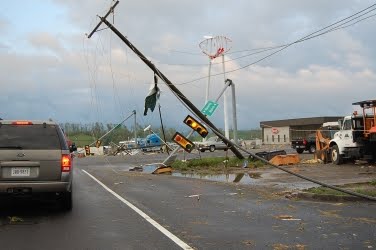
    There’s something odd about The Federal Emergency Management Agency and this spring’s spate of intense tornadoes that all but leveled the cities of Joplin and Tuscaloosa. And for once, I have to come down on the side of Gov. Bob McDonnell.

    In April, as many as 30 tornadoes whipped through Virginia, killing 10 people and destroying or damaging about 1,000 homes. Hit hard were Gloucester and Middlesex counties near Chesapeake Bay as well as Halifax, Pulaski and Washington Counties in Southside or in the west.

    McDonnell sought emergency relief from FEMA for Halifax, Pulaski and Washington and possibly for other locations. In their wisdom, FEMA bureaucrats told McDonnell that his request was denied because relief “was not beyond the combined capabilities of the commonwealth, affected local governments and voluntary agencies.”

    A few weeks ago, I happened to be driving on my way to a business meeting in Tennessee. I was on Interstate 81 a few miles east of Abingdon in Washington County. Suddenly, the rolling landscape took on the appearance of a combat zone. On either side of the highway, just about every tree was cut down. Roofs were missing on homes. Marquee signs on businesses were shattered. I’m no expert, but it certainly looked serious to me.

    A couple of days later, after my meeting, I was heading to my cousin’s home near Chattanooga. He and his wife live on a small farm east of the city which was hit by as many as 60 tornadoes in the same outbreak of storms. An F-4 ripped through about a half a mile from his house and I drove the through a badly damaged area on my way there. It looked an awful lot like Washington County.

    People in his area are going to get $1 million in FEMA assistance, while Virginia gets nothing.

    Why is that? The obvious answer could be that the Obama Administration is punishing McDonnell, a Republican, for being part of the team that is complaining so loudly about federal spending. Specifically, the GOP wants to cut or cripple federal agencies that deal with weather-related crises.

    None other than Henrico’s own Eric Cantor, Republican House Majority Leader, has called for federal emergency spending to be tied to other budget cuts. “If there is support for supplemental, it would be accompanied by support for having pay-fors to that supplemental,” he has said. Translated, this gobbledygook means no dough if no cuts somewhere else.

    Republicans also want to cut funding or end the National Oceanic and Atmospheric Administration, which also is in the weather business by running the National Hurricane Center. It keeps track of storms that also can seriously impact the Old Dominion.

    To be sure, FEMA got a major black eye with its botched handling of the Katrina devastation of New Orleans during the Bush Administration. (Remember Bush-appointee “Blackie, I’m proud of you”?). Reforms were needed.

    But the Obama people are dead wrong if they are hurting ordinary Virginians just to get some political pay back. In this case, McDonnell has every right to be angry.

    Peter Galuszka


  • The Wonk Salon, June 23, 2011

    Ideas for Closing the Justice Gap
    Center for American Progress
    There is a huge gap between the legal needs of the poor and the ability of the legal assistance community to help them. Americans need to spend more money on legal assistance and spend it more effectively.

    Time for Evidence-Based Funding of Legal Aid
    Center for American Progress
    One way to spend legal aid money more effectively is to experiment with innovative legal services models and steer money toward those that deliver the greatest bang for the buck.

    What to Do about Pro Se Representation in the Courts
    Center for American Progress
    More and more Americans find themselves unable to afford a lawyer and representing themselves in court. They don’t do a very good job, and they clog up the courts by demanding more of judges’ time.

    Improving the Odds for Pro Se Litigants
    Center for American Progress
    An initiative to help poor Washingtonians in landlord-and-tenant court stretches the limited legal-assistance manpower by providing limited representation on short notice. Hey, it’s better than nothing.


  • Fast State, Slow State, Red State, Blue State

    If you don’t believe taxes influence human behavior, then you won’t put much stock in the just-published edition of “Rich States, Poor States” published by the American Legislative Exchange Council (ALEC). And you won’t get very excited about Virginia’s rise from the 8th most competitive state in the union last year to the 3rd most competitive. After all ALEC leans to the right philosophically, and the names on the report include those of notorious supply-sider zealots Arthur Laffer and Stephen Moore. The authors have an agenda, so you can ignore whatever they have to say without even bothering to understand why they say it.

    On the other hand, if you’re part of the McDonnell administration, you’re really grooving on the report. (Grooving? OK, maybe only the Baby Boomers in the administration are grooving. The rest are just happy.) โ€œI am pleased to see Virginia recognized for the effectiveness of our pro-growth, pro-jobs policies,” stated the governor in a press release. “Our fiscal discipline gives us a great story to tell to CEOs and entrepreneurs looking for the best place to do business in a competitive global marketplace. Virginia is truly open for business.โ€

    To me, the evidence is overwhelming that people and capital tend to migrate from high-tax states to low-tax states. First there is economic logic. If you tax more of something (income, capital), you get less of it; if you tax it less, you get more. Second, there’s the actual evidence, as encapsulated in the chart above. The population of the Top 10 states embracing the “Red” (as in conservative) economic model of lower taxes, smaller government, less debt, right to work, etc., increased 12.1% on average during the 2000s, while those hewing to the “Blue” model experienced population increases of only 4.5%. Likewise, per capita income in the Red model states increased 44.3% versus 41.2% for the Blues.

    Repeat the formula year after year for 50 years and you end up with something that looks like this:

    That said, “Rich State, Poor State” is a bit of a misnomer. “Fast State, Slow State” would have been more appropriate. More than 80% of the differential in economic growth can be attributed to varying rates in population growth. Only 18% is tied to different rates of per capita income growth. Maybe I speak only for myself, but I’d much rather have more money than more neighbors.

    I would go one step further: Rapid population growth creates strains on regions such as traffic congestion, pollution and inadequate public infrastructure. Population growth may be a sign of economic opportunity but it is not a reliable indicator of the good life. I would be far more interested in seeing what set of economic policies contributes to rising incomes while also taming increases to the regional cost of living, limiting damage to the environment and fostering an all-around better quality of life.


  • Statistical Snapshots of Virginia’s Foreclosure Crisis

    I could find material for a dozen blog posts in the 2011-2012 Virginia Economic Forecast prepared by Chmura Economics & Analytics and just published by the Thomas Jefferson Institute for Public Policy. But there are so many other pressing matters to write about that I will confine myself to the fascinating data presented regarding the foreclosure crisis in Virginia.

    First, consider the graph to the left. Once upon a time, like eight years ago, the percentage of Virginia households that could afford the median-priced home tracked that of the national average. Then the Old Dominion broke free from the pack. By 2006, we had a full-fledged affordability crisis. The gap between Virginia and the national average has narrowed since then as prices have dropped, but it persists. Affordability remains an issue. That’s the bad news.

    Fortunately, there is some good news. The rate of foreclosures in Virginia is half the national average — hardly an outcome I would have expected given the persistence of the affordability gap. The graph to the right shows that the foreclosure rate in Virginia is a small fraction of that in former go-go states like Florida and Nevada. To what do we owe our good fortune? Stronger employment and incomes? More responsible lending on the part of Virginia banking operations? Frankly, I don’t know.

    The third graph shows the details. The surge in housing prices was strongest in Northern Virginia, Hampton Roads, Winchester and Charlottesville. The subsequent drop in housing prices was worst in Winchester and Northern Virginia, followed by Richmond, Hampton Roads and Charlottesville. The smaller metro areas missed much of the run-up… and nearly all of the bust.

    Which brings us to the last graphic, which shows where the foreclosures filed in March 2011 are the most numerous. Not surprisingly, foreclosures occur where the people are, in the most populous parts of the state. It would be helpful to see a breakdown of the number of foreclosures expressed as a percentage of the population or the number of homeowners. Still, we can draw some conclusions from the limited data. There are vast swaths of the state where the number of foreclosure filings were less than 12. If there were fewer than 12 filings in a month in a jurisdiction, it’s pretty safe to say that there is no foreclosure crisis there.

    (Click on maps and charts for more legible images.)


  • COLLAPSE REVISITED

    In 1997 Jared Diamond published Guns Germs and Steel: The Fates of Human Societies. The book was a best seller, won a Pulitzer Prize and garnered wide acclaim. It was panned by some academics whose niche claims to fame and pet theories Diamond demolished. However, for most who read the book, it was an important milestone in understanding how a few Spanish, English, French and Dutch โ€˜explorersโ€™ wiped out millions of humans and dozens of advanced societies in Africa, East Asia and โ€˜the new world.โ€™

    Since 1997 new research including that in the Amazon Basin and in Southeastern US โ€“ The People of One Fire, History Revealed Media and others โ€“ has filled in many gaps in Diamondโ€™s sweeping rendition of why Mandarin is NOT the official language of the Americas.

    In 2005 Diamond published a second major work, Collapse: How Societies Choose to Fail or Succeed. Collapse was a New York Times Best Seller but received a less enthusiastic response. Why? It stepped on the toes of Business-As-Usual.

    See https://www.baconsrebellion.com/Issues05/08-08/Risse.php

    Now Penguin has released a revised edition of Collapse. The cover suggests โ€“ and without a page by page comparison it is not possible to tell for sure โ€“ that the only โ€˜newโ€™ part of the revised edition is a 22 page Afterword on the Collapse of Angkor. Angkor is in present day Cambodia and was the capital of the Khmer Empire.

    The Khmer Empire was the largest empire in Southeast Asia during most of a five hundred year span from 800 AD to 1300 AD. The Khmer Empire rivaled the Tang and Song Dynasty Empires of China with which it maintained an arms length relationship.

    What is special about Angkor is that over this five century span Angkor was the largest Urban agglomeration on the planet. Until the end of the 19th century at 250,000 acres Angkor was the largest Urban agglomeration that EVER existed on the planet.

    Angkor was a โ€˜lower densityโ€™ Urban agglomeration but still had a population comparable to Imperial Rome, Medieval Constantinople (Istanbul), Edo (Tokyo) and Peking (Beijing). Angkor had an Urbanized area ten times the area of any of these more familiar imperial capitals.

    Angkorโ€™s environmental context and low density is larger than, but similar to, Urban agglomerations such as those recently found in the Amazon and previously found in Central America (the Lowland Maya cities of Tikal and Copan) and in Sri Lank as well as a few others in South East Asia and perhaps some smaller examples in Southeastern US. The difference between Angkor and the other Urban places was the Critical Mass of Angkor and the massive engineering projects that made the Urban agglomeration possible.

    Diamond summarizes the enormous, complex water management infrastructure designed to irrigate rice, prevent floods and bridge the gap during droughts. The โ€˜water worksโ€™ โ€“ lakes, canals and hydraulic works – rival the Great Pyramids of Egypt and the Great Wall of China in scale and surpass them in complexity.

    After the Collapse that started in the late 1300s โ€“ and before the first Europeans arrived โ€“ what was left were, not yet clearly understood structures that are called โ€˜templesโ€™ such as Angkor Wat.

    EMR will not spoil the ending for readers but notes that Diamond identifies five causes of the Collapse of Angkor. They fit neatly into the categories that he identified in the first edition:

    โ— Inflicting damage on the environment.

    โ— Climate change

    โ— Unfriendly neighbors

    โ— Friendly trading partners

    โ— Commitment to and dependence upon โ€œan increasingly huge, complex and hard to maintain infrastructure.โ€

    EMR suggests that it does not take a great leap of imagination to go from:

    A. The Angkor water management infrastructure that became to Too Big, Too Dominate and Too Expensive to maintain on one hand, To

    B. The Autonomobile-centric infrastructure necessary to support settlement patterns dependent upon Large Private Vehicles.

    EMR

    NB: Please do not bother attack the last paragraph until you at least read the new Afterword to Collapse as well as the above cited column on the original book. Otherwise it is just tossing rocks at empty pigeon holes.

    The Afterword is worth the price of the Revised Edition. (Note to those who love Kindle et. al.: The print version is less than a dollar more than the Kindle edition from Amazon โ€“ including free shipping for Prime customers.)

    Because this post specifically addresses the topic of human settlement patterns it is subject to The Litmus Test in Chapter 5 of CITIZEN MEDIA, THE NEXT STEP.


  • Shutting the Revolving Prison Door

    The most important job of the state corrections system is to keep criminals locked safely behind bars where they pose no threat to the public or themselves. That’s pretty much of a no brainer. The second most important job is helping prisoners re-enter society as productive citizens. That’s a lot harder to do.

    Nationally, according to a recent Pew Center for the States study, 45.5% of all prisoners are re-incarcerated within three years. Virginia out-performs the national norm: Only 28% of Virginia’s juveniles and ex-cons are later readmitted. But Gov. Bob McDonnell has signed a package of seven bills that aim to ease the reintegration of ex-cons into society.

    Said McDonnell in a press release yesterday:

    An effective prisoner re-entry plan is good government. It improves public safety, reduces recidivism and victimization and improves the outcome for offenders returning to our communities. Everyone deserves a second chance. When a crime is committed, the individual responsible must be punished to the fullest extent. If you do the crime in Virginia you will do the time. But when that prison sentence is completed, and the price to society has been paid, we need to take the additional steps necessary to ensure that our prison system is not a revolving door.

    Last year McDonnell appointed Virginia’s first statewide prisoner re-entry coordinator and established a re-entry council to assist state agencies in developing a coordinated statewide re-entry strategy. One of the laws just signed requires state agencies to create a transition plan for everyone released from prison. Another requires the Department of Corrections (DOC) to establish personal trust account of up to $1,000 for every inmate, to be funded by money the inmate earns in jail. Yet another measure requires prisoners be tested for HIV before release.

    One thing the state still needs to do — if it does, I have not heard it — is create a system for tracking prison inmates through the corrections system and after they have been released. The purpose would be to identify the programs, whether state-funded, nonprofit or faith-based, halfway houses or training centers, that do the best job of getting ex-cons back on their feet. Some are well run, others are inept. The state needs favor those that serve their clientele well and abandon those that don’t.

    Creating such a tracking system will require an up-front capital investment, but it could save tens of millions of dollars yearly by reducing the rate of recidivism. Helping keep people out of trouble, people of all political persuasions can agree, is morally preferable — and fiscally more astute — than warehousing them in jail.


  • The Postman Always Rings Twice

    Former Postmaster General John E. “Jack” Potter has been appointed as CEO of the Metropolitan Washington Airports Authority. “Jack is … the right person at the right time to meet the challenges of building Metrorail in the Dulles Corridor and improving the Dulles Toll Road to promote mobility and economic development for our region,” said MWAA Chairman Charles D. Snelling in making the announcement.

    Potter, the son of a Manhattan mail carrier, began his career as a postal clerk in 1978. He served 10 years as Postmaster General, where, the MWAA press release states, “He worked to modernize management and led the transformation of the Postal Service into a service-driven, customer-focused and cost-sensitive organization.”

    (MWAA did not mention that the Post Office lost $8.5 billion in its most recent fiscal year.)

    Said Potter of his second career: “The core reason I accepted this challenge is because I believe the Airports Authority can do more to grow the economy of this region than almost any organization. Our two great airports and the rail system to Dulles are extraordinary job creators.”

    Potter strikes me as a competent and energetic man. Judging by his statement, he has an expansive view of his job. He will focus on creating jobs, presumably by, to use Snelling’s words, “providing outstanding aviation services to the Washington region” — a potentially expensive undertaking.

    I suspect that the MWAA board found the perfect executive to carry out its ambitious vision for the Rail-to-Dulles project. The big question: Will he balance MWAA’s vision with a respect for the interests of the Virginia taxpayers who will be financing the heavy rail expansion? A second question: Given his experience with the postal union, will he favor or resist the mandated use of organized labor in Phase 2 of the construction project?


  • The Wonk Salon, June 22, 2011

    How Health Care Reform Will Benefit Small Business Employees
    Urban Institute
    Despite widespread fears to the contrary, Obamacare will have “generally positive” effects on small businesses and their employees.

    Addressing the Uneven Geography of Opportunity
    Urban Institute
    Recognizing that out-of-school factors impact educational achievement, planners, community developers and educators need to bust out of their silos and collaborate to create “trajectories of opportunity” for disadvantaged kids.

    When Qataris Tackle Educational Reform, They Don’t Mess Around
    Rand Corporation
    A decade ago, the Emir of Qatar reformed the country’s top-down, bureaucratic school system with a decentralized model built on charter schools and the tracking of results. The country has made significant progress but challenges remain.

    Millions of Poor, Elderly Adults Face “Food Insecurity”

    Government Accountability Office
    Millions of older, low-income Americans experience food insecurity, but redundant and overlapping federal nutritional programs don’t reach them all.


  • Factoid of the Day: Metropolitan Economic Performance

    From the Brookings Institution MetroMonitor: The Washington metropolitan area has ranked among the 20 strongest-performing regions among the nation’s largest 100 since the beginning of the economic recovery. The Richmond and Hampton Roads metro areas ranked in the middle 20. The MetroMonitor tracks employment growth, change in unemployment rate, change in gross metropolitan product, and change in the House Price Index.foreclosures. (Click on map for more legible image.)


  • NO ONE HOME

    EMR will be noting the stupendous mismatch between Chinese infrastructure and citizens Mobility and Access needs and the gross overbuild in โ€˜new city developmentโ€™ in Chapter 2 of ENOUGH?.

    In the mean time go to “New Satellite Pictures of China’s Ghost Cities” and check out the incredible 29 photos of empty projects. There were 64 million new but unoccupied dwellings that no one can afford, according to a recent report.

    A picture is worth a thousand words.

    The Australians seems to be doing a better job of reporting on the coming building bubble Collapse than the US media.

    EMR

    Note: I took the liberty of inserting one of the satellite photos into this blog post to show the enormity of the overbuilding. Click on the photo for a more legible image. — JAB


  • No Left Turns For Me

    Last week, I had an unpleasant surprise.

    I was in my car and wanted to drop by the Food Lion I patronize because it is on the south side of the major thoroughfare in my exburban region. I’ve been going there for ten years and I also drop off my dry cleaning and get my car lubed or repaired in the same nondescript strip mall. Doing so lets me avoid the traffic congestion on Hull Street Road in Chesterfield County, one of the fastest-growing and most traffic-congested suburbs in the Richmond area and the state.

    I couldn’t believe my eyes. A new Honda dealership had been going up for months. As part of its completion, road crews were erecting a median strip on the secondary, feeder road that used to take me home quickly and easily. With the new strip preventing me from making a left-hand turn, I would now have to drive three or four extra miles or spend long, aggravating minutes at Hull Street’s notoriously long stop lights.

    So, I explored the situation and was surprised to learn that the fix had been in for a decade or so and few knew about it. Here’s the my commentary about it in Richmond’s alternative publication Style Weekly, where I work part-time as a contributing editor.

    Peter Galuszka


  • The Wonk Salon, June 21, 2011

    Virginia Rates A- in P&C Insurance
    Heartland Institute
    In marked contrast to the miserable performance of its schools (see previous post), Virginia rates an A- in the Heartland Institute’s ranking of the states by the freedom of its property and casualty insurance markets.

    Hawai’i’s P-3 Initiative: A First-Year Evaluation
    Rand Corporation
    Hawai’i’s P-3 initiative in two demonstration schools hopes to have all children reading by third grade. But the program is beset by lack of clarity about who does what and a lack of rewards for success or punishments for failure.

    State-Consumer Partnerships for Health Care
    National Academy for Health Policy
    The Southern Health Partners initiative, which includes Virginia, calls for closer ties between state officials and consumer advocates in devising state-level health care policy, especially in the creation of state health exchanges.

    Examining the Excise Tax
    Mercatus Center
    Excise taxes account for roughly 15% of states’ revenue. Virginia has relatively low excise taxes. The big revenue earner in the Old Dominion is the tax on gasoline, followed by insurance, alcohol, tobacco, public utilities and pari-mutuel betting.


  • How Bad Is the Virginia Educational System? Try This: Worst in the Country

    For the most part, Virginians are satisfied with their schools. There are pockets of excellence (the Thomas Jefferson School for Science and Technology in Fairfax County) and pockets of dysfunction (Petersburg city schools), but overall we do pretty well. Our educational achievements aren’t stellar, but they’re better than the national average. There is no groundswell for radically restructuring the educational system in the Old Dominion and there are few problems the political class believes that a little more money couldn’t solve.

    Now comes the 2010 State School Report Card published by the Heartland Institute, which should serve as a wake-up call. Nay, it should serve as a banging cowbell in our ears.

    Virginia didn’t merely rank below average in the analysis, which combined learning progress, fiscal efficiency and academic standards. It didn’t just rank in the bottom quintile. The Old Dominion tied with Arkansas for the bottom spot… dead last. Every member of the General Assembly, every school board member and every parent needs to read this report and then start raising holy hell.

    The abysmal performance of the Virginia educational system may not be readily apparent. After all, Virginia students outperform their peers nationally. But it is widely acknowledged that educational achievement is highly correlated to socioeconomic status, and Virginia ranks among the Top 10 states by income and among the bottom states by poverty. Given the demographic characteristics of the population, we would expect Virginia to out-perform other states by a wide margin. The real issue is what are the schools doing with the raw material handed them? What is (to borrow a phrase from a recent post), the schools’ educational value added?

    American students’ achievement scores on international test scores have stagnated even while the United States has pumped more money into education. Per-pupil spending has increased by more than 65% over the past 25 years in inflation-adjusted dollars. Meanwhile, achievement and money spent per pupil varies widely between the states. The purpose of this report is to identify the states that are achieving the most per dollar spent in the hope that other states might replicate whatever it is that they are doing right.

    Here is a synopsis of how the index is compiled.

    Learning. This sub-index is based on gains or loss in National Assessment of Educational Progress (NAEP) test scores for mathematics and reading between 2005 and 2009, measuring the progress of 4th graders in their march to 8th grade, or what the Institute calls time gain. The Institute also calculates a grade gain, which compares math and reading competency of 4th graders and 8th graders during the same year.

    Efficiency. This sub-index measures how much each state spends per student, adjusted for the state cost of living. The study examines cost per graduate, cost per student, cost per unit of learning gain over time, the cost of learning gain between grades, and the ratio of teachers to staff.

    Standards. This component incorporates a rating on how state proficiency scores compare to NAEP scores. “To the extent that a state claimed higher proficiency levels than the national test score results reveal,” the authors explain, “the state’s standard is taken as commensurately lower.” This index also includes a score based on a different methodology for calculating the rigor and content of a state’s math, reading and science standards.

    So, here’s how Virginia stacks up:

    Learning achievement … 43rd in the country

    Efficiency … 48th

    Standards … 32nd

    Overall .. 50th (tied with Arkansas)

    Unfortunately, say the authors, there is little empirical data to suggest why some states do well (Arizona scored first in the country) while others do badly. But they point to an index last updated in 2001 — the Education Freedom Index — for possible answers. This index measured the extent to which educational choice existed in a state, taking into account charter school options, subsidies for private-school choice, school choice within public school districts, and the regulatory environment for home schooling. By this measure a decade ago, Virginia ranked 44th in the country. (Interestingly, Arizona ranked No. 1.)

    In looking to explain Virginia’s dismal performance, consider: We have the fewest number of charter schools of any state in the country. We have zero vouchers. We have a highly centralized school system in which the state educational bureaucracy in Richmond dictates policies to local school boards. The only Educational Freedom measure by which we fare well, I believe, is the considerable latitude we give to home schooling. In other words, the Virginia school system is about as far removed from a market-based school system as anyone in the United States has managed to devise. It is less accountable to parents and more insulated from its failures. It is more hidebound, more rigid and more resistant to change than almost any other.

    The vast majority of widely touted educational “reform” initiatives in Virginia do no more than tinker at the margins. Our public dialog is bankrupt. Both the public and the politicians are in denial. There is no sign of meaningful change on the horizon. Fear for future generations.


  • The Wonk Salon, June 20, 2011

    Energy Star another Greenwashing Program?
    Government Accountability Office
    Undercover GAO investigators submit 15 phony products making outrageous energy efficiency claims, including “gasoline-powered alarm clock,” for certification. Most are approved. Conclusion, the program is ripe for fraud and abuse.

    Medicaid Expansion and the Physician Shortage
    National Bureau of Economic Research
    What happens when we expand Medicaid during a doctor shortage? Doctors spend less time with Medicaid patients.

