• A Little Perspective on the Federal Budget Debate

    by Dick Hall-Sizemore
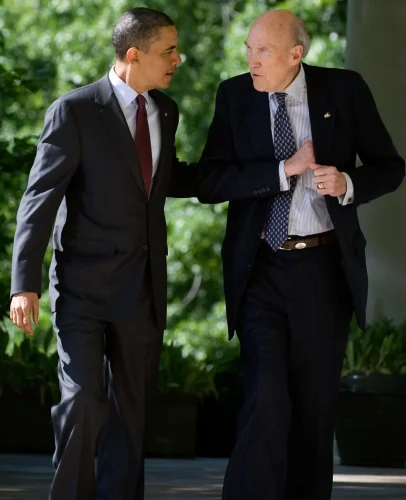
    President Obama and Sen. Alan Simpson, 2010. Picture credit: New York Times

    There has been much commentary on this blog lately about the size of the national debt and the need to cut federal spending. Many of those commenters point fingers at Democrats as being the big spendthrifts. I would like to add a little perspective to this discussion.

    When reading the obituary for the late U.S. Sen. Alan Simpson (R-Wyoming), I was reminded that President Barack Obama appointed Simpson, along with Democrat Erskine Bowles, as co-chairmen of the National Commission on Fiscal Responsibility and Reform. Unlike most such commissions, this one came up with a set of serious recommendations, many of which President Obama included in his budget proposals.

    For example, in his 2014 budget proposal, Obama included a deficit reduction package. That package included proposals that would have reduced the national debt over ten years. Included were substantial savings in Medicare and the adoption of an alternative cost-of-living adjustment affecting Social Security. According to one analysis, โ€œcoupled with the deficit-reduction steps that the President and congressional leaders already have enacted, this package would bring total deficit reduction achieved to $4.5 trillion over the decade.โ€

    The Center on Budget Policy and Priorities, a left-leaning think tank, declared, โ€œThis [deficit reduction] package would reduce the deficit by $1.8 trillion over the next decade and go somewhat beyond stabilizing the debt as a share of the economy, setting it on a slight downward path.โ€ Another, more middle-of-the-road think tank, the Committee for a Responsible Budget, was more cautious. It commented that while the Obama deficit reduction package โ€œwould be a very welcomed package of savings but would almost certainly need to be followed with additional deficit reduction in order to put the debt on a truly sustainable path.โ€

    I did not take the time to research how much of the Obama package was adopted by Congress. However, surely whatever was adopted, any chances of โ€œstabilizing the debt as a share of the economyโ€ and getting it โ€œon a truly sustainable pathโ€ were blown apart by the 2017 Trump tax cuts followed by the COVID relief measures.

    The bottom line: A Democrat president proposed a serious plan to reduce the deficit, including structural changes in entitlement programs. Contrast that with the situation today.



  • Bacon Meme of the Week


  • Oh, All Those Drug Ads

    by Dick Hall-Sizemore

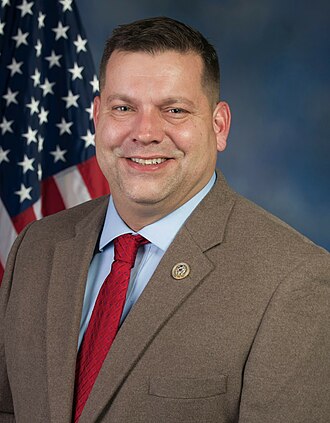
    Del. Tom Garrett (R-Goochland.)

    Tom Garrett, who was formerly a state senator, then a member of the U.S. House of Representatives, and is now a member of the House of Delegates from Goochland County, has called on President Trump to rein in drug prices.

    One of his suggestions is to prohibit drug companies from advertising. Saying that many of the large pharmaceutical companies spend more on advertising and marketing than they do on research and development, he contends that โ€œAmerica is the most overmedicated society on Earth.โ€ He concludes, โ€œEnding direct-to-consumer pharmaceutical advertising wouldnโ€™t just rein in an industry that prioritizes marketing over innovation โ€” it would save lives, free up resources for real research, and lower drug costs for everyday Americans.โ€

    I agree with him. There is just one little problem: the U.S. Supreme Court has held that pharmaceutical advertising is protected speech under the First Amendment.

    (more…)


  • DEI Won’t Die Easily

    Still alive. UVA’s DEI website one week after Board of Visitors abolishes DEI.

    by James A. Bacon

    One might think that revamping a website would be an easy start to complying with the Board of Visitors’ order to dismantle the Division for Diversity, Equity, and Inclusion (DEI) at the University of Virginia. Retitle the home page. Put up an “Under Construction” logo. Post a statement indicating that changes are coming. Do something!

    But a full week after the Board’s unanimous vote, the website still stands, as if nothing had changed. The home page still proclaims the DEI division’s mission, highlights DEI initiatives, and links to DEI-related web pages. To all outward appearances, everything continues as before. George Mason University has managed to scrub its website of DEI references in conformity with a Trump administration executive order, but UVA has not.

    The website is symbolic of the challenge the Board of Visitors faces in carrying out its order. DEI most definitely is not “dead,” as Governor Youngkin prematurely proclaimed earlier this week on Fox News.

    The Board resolution is often vague; there is no clear definition of what constitutes “DEI,” an amorphous concept that can be interpreted in many ways. The UVA leaders charged with enacting the sweeping changes are the very same people who erected the DEI system, the influence of which extends into every nook and cranny of the institution. Disentangling racial preferences from admissions, hiring, promotions, scholarships, discipline, and other aspects of university life will be a complex and delicate task. Meanwhile, outright resistance can be expected from faculty members, a few of whom have already spoken out.

    The Board resolution required President Jim Ryan to report back on his progress within 30 days. Don’t expect much. The mandate is mission impossible, even for someone who shares the Board’s goals. The task likely will take 30 months… if not longer.

    (more…)

  • This DEI Crackdown Goes Too Far

    I fully support the move to purge woke gibberish from Department of Defense websites, but deleting historical sites is not the way to go about it. Unfortunately, that is precisely what happened to the Richmond Armory, believed to be the oldest armory for Black militia in the United States.

    A photo gallery of the armory in downtown Richmond and an article detailing its role in Virginia National Guard history have been taken down after the U.S. Defense Department directed the removal of content promoting DEI in the military by March 5, reports VPM News.

    This is absurd. As museum director Shakia Gullette Warren noted the information about the Armory was part of the historical record. Segregation is part of Virginia history. It’s not something we should dwell on obsessively, but it is something that must be acknowledged and should be remembered as a past to which we wish never to return.

    Unless the materials were drenched in the divisive rhetoric of critical theory, I can see no justification for removing them from public view. Conservative foes of DEI (diversity, equity & inclusion) engaging in this kind of overreach, are guilty of the same offense — imposing their ideological world view in the public domain — they accuse the left of. And they will suffer a public backlash from it.

    What we don’t know who is who made the decision, or why. Was some anti-DEI zealot behind the information purge, or did some National Guard bureaucrat order the deletions in excessive abundance of caution in complying with the Trump administration guidelines? Whatever the case, the material needs to be restored and the history of Black militias in Virginia properly remembered. — JAB


  • A Victory for Transparency

    Kudos to Danny Avula, City of Richmond mayor, for upholding government transparency in the release of documents sought by the Richmond Times-Dispatch that had been withheld on the grounds that they were executive “working papers.”

    The University of Virginia should pay heed. Just because you legally can refuse to turn over working papers doesn’t mean you have to. (See my previous post for the blanket use of the working-papers exemption to withhold information on how decisions are made at UVA.)

    The documents sought by the RTD shed light on the use of taxpayer dollars to fund nonprofit organizations. The city’s practice was to grade the groups seeking financial support and to fund those scoring over 75. The city auditor found that many groups receiving taxpayer dollars fell short of the score, but the city’s FOIA officer refused to turn over spreadsheets with the details. The working-papers exemption, she said, shields records and correspondence โ€œprepared by or for a public official โ€ฆ for his personal or deliberative use.โ€ย 

    (more…)

  • Fog and Shadows

    Decision-making at the University of Virginia is shrouded in secrecy — and leadership is just fine with that.

    by James A. Bacon

    Last week the University of Virginia Board of Visitors faced a history-making judgment: how to respond to Trump administration demands to dismantle its Diversity, Equity & Inclusion programs. Tensions during the meeting, held in the Rotunda conference room, ran high. The exchange of views got heated. And a momentous decision was reached: to shut down the university’s DEI apparatus. But the discussion was conducted in closed session, and board members are sworn to keep their deliberations confidential. The public has no idea what facts and logic impelled the Board to make one of the most consequential decisions it will ever grapple with.

    Virginia’s flagship university has a huge transparency problem — one that goes far beyond Board of Visitors making critical decisions in closed session. Presidential task forces conduct their business in secret. Investigative reports paid for with taxpayer dollars are withheld from the public. And efforts to pry open information using the Freedom of Information Act are routinely blocked.

    As culture wars play out nationally, UVA has reached a critical juncture in its storied, 200-year history. The Board of Visitors appointed by Governor Youngkin is seeking to overturn policies and practices that have defined the institution for years. Regardless of where they stand in this controversy, UVA students, employees, alumni, taxpayers, and even the general public have a right to see how these decisions are being made, who is making them, and why they’re making them.

    The culture of fog and shadows runs deep. President Jim Ryan is part of the problem. The Board of Visitors is part of the problem. Even the university counsel’s office, which answers to Virginia’s attorney general, is part of the problem. The transparency issues plaguing UVA are likely endemic across Virginia’s system of higher education. But some manifestations of secrecy are unique to UVA, its organizational culture, and decisions made by its leadership.

    (more…)

  • Unless Targeted, Extra Math Funds Will Be Wasted

    Chris Braunlich

    by Chris Braunlich,

    Writing in the blog Baconโ€™s Rebellion, Arlington parent and self-described โ€œObama Democratโ€ Todd Truitt has come out swinging against a Virginia budget amendment to spend $12 million extra โ€œto improve student performance in mathematics.โ€

    His argument?ย  Without Governorโ€™s amendments, these extra funds wonโ€™t help math outcomes and will probably hurt.

    Mr. Truittโ€™s main point is that it offers school divisions โ€œblank checks totaling almost $10.2 million โ€ฆ to continue promoting the math-ed equivalent of whole language/balanced literacy.โ€ย  Thatโ€™s a lot of money that runs the risk of following millions more tossed down a rabbit hole of faddish math pedagogy over the last nine years opposing, for example, memorizing the โ€œtimes tables.โ€.

    But as noted in 2023 by the late Rick Nelson, who served as a Visiting Fellow at the Thomas Jefferson Institute for Public Policy, โ€œUniversity of Virginia cognitive scientist Daniel Willingham explains that mathย isย about more than fact memorization. but as a foundation, because of the brainโ€™s structure, forย allย theย basic arithmetic factsย (such as 8 + 7 and 42/6),ย answers must be โ€œnot calculated but simply retrieved from memory.โ€.

    Yet, as former teachers union president Nelson documents, in 2016 Virginia moved away from the practice of practicing math facts.ย  The result was that, by 2024, Virginia ranked 46th in Math recovery from the effects of not teaching math facts and from school shutdowns during Covid.

    (more…)


  • Blame the Nurses — or the Nursing-Home Profiteers?

    by Jim Wright

    Image credit: Bing Image Creator

    So, whoโ€™s the real culprit?

    Eighteen nurses were recently arrested at Colonial Heights Nursing Home, charged with elder abuse and falsification of records. Surely, there was wrongdoing here, but does the blame belong to 18 nurses only?

    In my experience as a nursing-home medical director, Iโ€™ve learned that sometimes the first โ€œculpritโ€ you identify is really not the culprit at all. If you want to get to the root of a problem, you have to keep asking the question โ€œwhy?โ€ Why did 18 nurses falsify records?

    When nurses give bad care, itโ€™s not necessarily because theyโ€™re bad people, but very often because they become demoralized and jaded in a setting where they simply do not have enough staff.

    Colonial Heights is known to staff at levels far below what is considered safe. A government study performed in 2001 found that once a facilityโ€™s nursing-aid presence drops below about 2.5 hours per patient per day, residents experience an increase in disease and harm. Colonial Heights supplied nurseโ€™s aides for only one hour and 38 minutes per resident per day. Registered- nurse presence should be 33 minutes per patient per day. Colonial Heights supplied only 18.

    So, letโ€™s keep asking: Why would Virginia allow nursing homes to operate with staffing levels that have been shown to harm residents?

    (more…)

  • Virginiaโ€™s Nursing Homes and the Courts

    Virginiaโ€™s Nursing Homes and the Courts

    by James C. Sherlock

    Readers have stuck with me for a long time as I have reported on the dire state of many of Virginiaโ€™s nursing homes. ย 

    Recently the employees of one of the worst have been charged with abuse and neglect in the death of a patient. Her suffering was what can only be called medieval.

    Virginia political corruption. I have focused heretofore almost entirely on the failures of state and federal regulators and videotaped corruption in the Virginia General Assembly.

    The nursing homes, like the hospitals and other interests, get influence in the General Assembly the old-fashioned way. They buy it. ย 

    Virginia is one of only five states with no limit on campaign donations. ย 

    The state regulator, the Virginia Department of Health, has been sabotaged by bipartisan majorities in that Assembly for decades. ย 

    • The General Assembly this year passed a bill to deny the Health Commissioner authority to levy penalties. They left her with the authority to grant state licenses to nursing homes but not to revoke them for cause. I must admit the bill showed imagination. I have never heard of such an arrangement in any other state or situation other than this attempt to shield Virginia healthcare facilities from regulatory oversight. I have recommended the Governor veto it
    • The VDH inspection staff for licensing of healthcare facilities and services is the Office of Licensure and Certification (OLC). It also serves under contract to the federal Center for Medicare and Medicaid Services (CMS) to survey Virginia hospitals, nursing homes and home health agencies to ensure compliance with federal regulations. That staff has purposely been starved of funding by the General Assembly for nearly five decades. It has less than half of the highly experienced people necessary to do its job.

    The feds. CMS refuses to use their vast data troves on nursing homes for enforcement of regulations. It instead has based its system of federal sanctions on the results of what are expected to be highly specified and detailed annual health surveys of each facility by the state regulator staffs who look for violations of federal regulations. But CMS takes that to an absurd level. For but one example:

    (more…)


  • Regulate It, Make It Unaffordable, Subsidize It

    Luxury daycare… great if you can afford it. Image credit: Bing Image Creator

    by James A. Bacon

    “If it moves, tax it. If it keeps moving, regulate it. And if it stops moving, subsidize it.” So said former President Ronald Reagan in one of his pithier takedowns of government intervention in the economy.

    I don’t believe that daycare providers were ever singled out for taxation, but here in Virginia, they certainly have been regulated. Now the cost of daycare is burdensome to many parents of young children. Unsurprisingly, the General Assembly wants to subsidize it.

    The legislature passed a bill setting aside $25 million for a pilot project to reimburse businesses that contribute to the childcare costs of their employees, reports WRIC. The bill, supported by groups as diverse as the Virginia Early Childhood Foundation and the Virginia Chamber of Commerce, awaits action by Governer Glenn Youngkin.

    Let us posit for the moment that the cost of daycare is a very real social problem. I know because I hear about it from my daughter and son-in-law, both working professionals, who pay burdensome sums for their two children. I can’t imagine how difficult life is for households that lack their means. So, let me be clear, I do not minimize the dimensions of the challenge facing young parents today.

    But I’ve lived long enough to see how programs like this proposed $25 million subsidy evolves. The program starts small, as a pilot project. Then it becomes institutionalized. Once the principle has been established that daycare is a “right,” subsidized childcare expands incrementally to encompass more and more families until a $25 million pilot project becomes an entrenched $250 million entitlement.

    (more…)

  • Dominion’s IRP Becoming Moot as Federal Rules Pivot

    Rendering of Chesterfield project from Dominion’s public website.

    by Steve Haner

    The expanded use of natural gas as a fuel for electricity is the key debate in Dominion Energy Virginiaโ€™s integrated resource plan pending before the State Corporation Commission. Not waiting for the decision in that case to come later this year, the utility has now filed an application to start building the first of those gas plants. ย 

    Dominionโ€™s Chesterfield Energy Reliability Center would include four small gas turbines designed to run only when needed to meet peak demand, both for Dominion or for other utilities in the PJM Interconnection region. Dominion had previously announced it would start its gas expansion with that project, to be built near a retired coal plant along the James River on ground already zoned for the use.ย ย  ย 

    The entire integrated resource plan, (IRP), prepared before the November election, now rests on several false premises and should likely be scrapped entirely. If the recent changes in federal energy policy are then met with a change in direction for the state, Dominion could then proceed with the far more cost-efficient choice of a full baseload combined cycle gas plant in Chesterfield, instead of the smaller gas turbines being proposed now.ย ย 

    The integrated resource plan and the Chesterfield plant application both hinge on the question of whether additional natural gas generation is required to maintain reliability. Protecting system reliability is the only loophole in Virginiaโ€™s 2020 Clean Economy Act (VCEA), which otherwise prohibits new hydrocarbon plants and demands the existing facilities all close. ย 

    You can watch the paper record on the integrated resource case build here, with a hearing set for next month, or read Dominionโ€™s full application for the Chesterfield plant here. The company and opponents have already lined up experts with impressive credentials testifying that natural gas is either needed or not needed to maintain reliability. The three SCC judges will have to choose whom to believe. ย 

    (more…)


  • Breaking – Colonial Heights Rehab and Nursing Center Closed to New Admissions

    Breaking – Colonial Heights Rehab and Nursing Center Closed to New Admissions

    by James C. Sherlock

    This is the best nursing home news in this space in a long time. A phone call to the facility today confirmed that the infamous Colonial Heights Rehab and Nursing Center is closed to new applicants.

    This reporter is not sure of the driving force behind this specific action, but that facility has made headlines for a series of arrests and indictments of staff. ย 

    It also was absolutely hammered by a 340-page complaint inspection report from the Virginia Department of Health (VDH) Office of Licensure and Certification (OLC) dated January 3rd that was recently released. It was incredibly thorough — the best I have ever read. ย The author of that report clearly felt strongly about what he or she wrote.

    That report detailed 105 violations of federal regulations in a survey of the records of only 33 of 186 residents. Sampling is the normal process for a very good reason — the time it takes understaffed inspector teams to thoroughly review and investigate patient records. But it begs the question of violations in the cases of the other 153 residents.

    We offer both the report of the results of that inspection and a compilation of them into an attached spreadsheet. It makes for scary, riveting reading. I recommend starting with the spreadsheet and going to the actual report for additional detail. ย 

    I sincerely hope that the new patient shutdown was directed by the Center for Medicare and Medicaid services based upon that January 3rd report. But it should not have taken nearly that long.

    As previously described here, the Governor submitted a bill to the General Assembly that would have let VDH take the action directly and in a more timely manner to deny new admissions, but a corrupt General Assembly negated it with a substitute that utterly frustrated its purpose. I have recommended that the Governor veto the substitute.

    We all retain concern for the remaining patients. The facility was at 95% occupancy when the latest inspection commenced.

    But all of that said, it is time for celebration. Thanks to local and state governments for getting us to this point.

    The author has asked VDH for comment and will ask the Virginia Association of Health Plans to do so as well.

    This is a continuing story. It will be updated as new information is available.


  • Is DEI Done? Not Yet.

    by James A. Bacon

    “DEI is done at the University of Virginia,” said Governor Glenn Youngkin in a Saturday interview with Fox News’ Laura Ingram.

    “This is a big day for the University of Virginia,” the governor said a day after the UVA Board of Visitors voted unanimously to abolish the university’s office of Diversity, Equity & Inclusion and end practices that discriminate on the basis of race. “It also, I think, makes a huge statement for the rest of universities across the nation.”

    The UVA decision indisputably represents a milestone in the battle to create a color-blind society in Virginia, but it is an exaggeration to say that DEI is “done.” DEI advocates have been stunned by recent events, but they have not converted. They haven’t even submitted.

    Youngkin expects Virginia’s other public universities to follow UVA’s lead. We won’t know if they will until their boards convene. The threat of losing federal funding combined with Youngkin-appointed majorities could be sufficient to get UVA-like resolutions passed. But responsibility for carrying out the resolutions will fall upon leaders who constructed or maintained the DEI systems in the first place. They will have plenty of support from staff, faculty, students, sympathetic media, and Democratic legislators.

    (more…)

  • Jeanine’s Memes

    From The Bull Elephant