• The Cadet Fact Checks VMI Superintendent

    โ€‹by James A. Bacon

    Two weeks ago, following the decision of the Virginia Military Institute Board of Visitors not to renew his contract, Superintendent Cedric T. Wins, defended his record and asserted that the Board’s decision was influenced by political bias rather than job performance. Bacon’s Rebellion posted his statement here.

    The Cadet, VMI’s independent student newspaper, subjected the superintendent’s claims to critical examination in a lengthy article this morning: “Fact-checking MG Wins: True, False, or Unsubstantiated Claims on His VMI Tenure,”

    Wins, a 1985 alumnus, was appointed superintendent by former Governor Ralph Northam amid accusations of institutional racism and sexism. His tenure included initiatives such as removing the Stonewall Jackson statue and implementing Diversity, Equity, and Inclusion (DEI) programs. Some alumni supported the changes and others criticized them for undermining the traditions that made VMI distinctive and worthy. The Board, dominated by appointees of Governor Glenn Youngkin, voted 10-6 against renewing his contract.

    The Cadet, which has had a tumultuous relationship with Wins, found that some of the claims in his letter were accurate but needed context, others lacked substantiation, and yet others weren’t supported by the facts. Among the highlights:

    Claim: The Board’s decision was politically motivated

    Assertion: The decision not to renew his contract, said WIns, “was not based on my performance or the tangible progress we achieved.”

    Evaluation: Unsubstantiated. “This claim suggests political motivation without evidence. The BOV follows a standardized evaluation process, and no public evidence supports allegations of bias. The BOV, consisting of sixteen highly qualified individuals, conducted its annual performance rating in a closed session as required by its Bylaws and state law. MG Wins was not in the room for those discussions and has no first-hand knowledge.โ€‹”

    (more…)


  • Virginia is Ready to Take Full Control of Education

    by Derrick Max

    Last night, as promised repeatedly during the campaign, President Donald Trump signed an Executive Order directing Education Secretary Linda McMahon to take all necessary steps to facilitate the closure of the Department of Education (the Department). The order also ensures the continued delivery of essential services such as federal student aid and funding for students with disabilities. This historic move will rightly transfer most education funding and authority back to states and local communities — the first step, one would hope, in getting funds to parents, where it belongs.

    This has led to the expected outrage from progressives. Senate Minority Leader Chuck Schumer described the attempt to dismantle the Department as “one of the most destructive and devastating steps Donald Trump has ever taken” (probably the hundredth time he has made this assertion). House Minority Leader Hakeem Jeffries accused the administration of “taking a chainsaw to public education in America,” warning that such actions could lead to increased class size, educator layoffs, and cuts to special education programs.ย 

    President Trumpโ€™s Department closure, however, aligns with long-standing conservative philosophy that education policy is best that is determined closest to the students being served — namely, state and local entities and parents.ย The Thomas Jefferson Institute recently advocated for the closure of the Department, arguing that federal education oversight and funding imposes uniform standards that hinder schools’ adaptability to local needs and divert resources away from classrooms and towards administrative overhead.ย Eliminating the Department empowers states and local communities to tailor educational policies more effectively, fostering environments that better serve their unique student populations.

    (more…)


  • An Obtuse Angle on the Honesty Gap

    by Dale Chu

    Virginiaโ€™s latest bid to raise academic standards took center stage at last monthโ€™s state board of educationย meeting, where policymakers debated the future of the stateโ€™s proficiency benchmarks. At the heart of this discussion is Virginiaโ€™s โ€œhonesty gapโ€โ€”the misleadingly high proficiency rates reported on state exams compared to the more sobering results on the National Assessment of Educational Progress (NAEP). While thereโ€™s widespread recognition of the need for greater transparency in student achievement, not everyone sees the problemโ€”or the solutionโ€”the same way.

    For years, Virginiaโ€™s Standards of Learning (SOL) assessments have set the bar too low, creating a false sense of student success. This is part of a broader national issue where many states, unwilling to confront the true scale of their educational challenges, have lowered expectations to avoid delivering bad news. The recent board meeting underscored that support for raising the SOL cut scores is nearly unanimous. The only real outlier was a lone board member whose resistance to the proposed changes reflects a narrow, and frankly unhelpful, view of whatโ€™s at stake.

    This dissenting voice didnโ€™t dispute the need to raise the bar, as some might have expected. Instead, she dismissed the honesty gap as a โ€˜communications tool,โ€™ arguing that students could still perform well under the existing, lower cut scores. Perhaps, but why not be upfront with parents and students from the start? Without honest data, how can resources be targeted to the students most in needโ€”a constituency for which that this board member claimed to advocate?ย 

    (more…)


  • AG Wins $750,000 Verdict in Racial Discrimination Case

    by James A. Bacon

    In a case prosecuted by the Attorney General’s Office of Civil Rights, a Franklin County jury rendered a $750,000 verdict against a landlord for evicting two families from her rental property on Smith Mountain Lake after learning that one of the family members was black.

    โ€œHousing discriminationโ€”and discrimination of any kindโ€”will not be tolerated in Virginia,โ€ said Attorney General Jason Miyares. โ€œWe are pleased by the juryโ€™s verdict, and Iโ€™m immensely proud of my Civil Rights Unit. The people of Franklin County have spoken: Smith Mountain Lake is for everyone.โ€ย 

    According to a summary issued by the AG’s office, Regina Turner, owner of Lazy Cove Campground on Smith Mountain Lake, had rented lots to families for decades. A couple with a camper on one of Turnerโ€™s lots encouraged friendsโ€”an interracial married couple with a young sonโ€”to lease a neighboring spot. The wife, who is white, negotiated a lease with Turner. However, upon learning that the husband was black, Turner took steps to evict both families, openly stating that she would not have rented to them had she known his race.

    After deliberating less than two hours, the jury awarded $100,000 to each couple for their losses, as well as the humiliation and emotional toll they endured. The jury awarded an additional $550,000 in punitive damages to punish Turnerโ€™s actions and serve as a deterrent against future discrimination.

    (more…)


  • Geology and the Civil War

    by Dick Hall-Sizemore

    Catherine Furnace, Page County

    Just about any aspect of Virginia history is intertwined with the Civil War, and geology is no exception.

    Pictured is the Catherine Furnace on Massanutten Mountain. Some of the pig iron used in Tredegar Iron Works in Richmond to manufacture cannons and other items for the Confederacy came out of this furnace. Workers dug the iron ore out of open trenches (sample shown) further up the mountain. At the furnace, the ore was melted and molded into pig iron. The blocks that constitute the walls of the furnace are Massanutten Sandstone, which came from outcrops nearby.

    Iron ore, Massanutten Mountain

    There is a story that the operator of the furnace during the war was a Union sympathizer who helped Union soldiers escape capture. He was arrested as a result of those activities. However, his captors realized that he was the only one around who knew how to operate the furnace and thus he was released on bond.

    Then there were Melrose Caverns, on Rt. 11 near Harrisonburg. When Union General Nathaniel Banks camped near the spot in 1862, his troops soon discovered the cave and began exploring. For some time, the Union Army used the cave to store ammunition and other arms.

    It turns out that Union soldiers were like soldiers everywhere and in every time. They left their mark on their surroundings. They carved their names into the walls and columns in the caverns, along with etchings of American flags and regimental coats of arms.

    (more…)


  • Should SATs Be Optional in College Admissions?

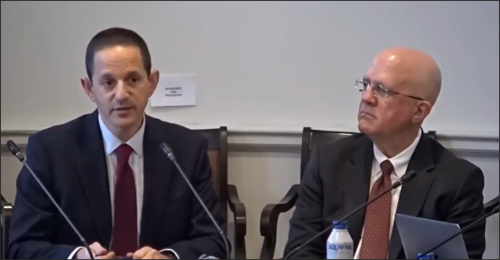
    Ben Castleman (left) and Stephen Farmer address the UVA Board of Visitors.

    By James A. Bacon

    What might a meritocratic admissions system at the University of Virginia look like now that the Board of Visitors has banned racial preferences across the board?

    Board members got a glimpse at some of the factors that could be considered and the tradeoffs involved during a discussion two weeks ago during its March meeting about the use of standardized test scores in evaluating applications.

    UVA President Jim Ryan kicked off the discussion by noting that during the COVID epidemic, UVA had joined many other colleges and universities in jettisoning the once-ubiquitous practice of requiring applicants to submit SAT or ACT scores. Since then, Harvard, Yale, Stanford and MIT, among others, have reinstituted mandatory submissions. Ryan was not convinced, however, that UVA should follow their lead. He said he is leaning toward what he termed a “text flexible” approach that would accept Virginia Standards of Learning (SOL) test results for in-state students as well as other substitutes.

    Standardized college-admission tests like the SATs and the ACTs are predictive of academic success at UVA, said Benjamin L. Castleman, a professor of economics in education who led a faculty group that delved into the value of the tests. UVA students scoring in the 1500-to-1550 range for SATs earned 3.72 GPAs on average. Students scoring in the 1300-to-1350 range earned 3.42 GPAs on average.

    But many other factors predict a student’s academic performance, he added. When other factors including high school grades are taken into account, the added predictive value of SATs is a modest 10% to 20%, he said.

    (more…)


  • DEI at UVA: the Backlash Begins

    From a document attached to a letter addressed to the UVA Board of Visitors.

    by James A. Bacon

    At the direction of Board of Visitors Secretary Susan Harris, a compilation of nearly 50 letters and email messages to the Board and President Jim Ryan was distributed to Board members Tuesday. The letters were almost uniformly critical of the Board’s decision earlier this month to abolish the office of Equity, Inclusion & Community Engagement.

    Many authors declared themselves to be “ashamed” by the action, and several vowed to cease donating to the University. Many described the vote as racist, sexist, and homophobic; several decried it as “fascist.” Some letters criticized Ryan for failing to stand up to the Board, while a few urged him to be true to his values and fight back.

    The purpose of distributing the emails was not clear. The cover letter from the clerk of the Board said only this: “Susan Harris tried to send you an email over the weekend that contained the emails that had been received in regards to the DEI decision that was made. The file was very large and many of you most likely did not receive it. The attached file contains all of the messages to both the Presidentโ€™s Office and the BOV Office on the DEI decision.”

    Several days ago, Governor Glenn Youngkin, who supported the Board’s decision, declared on national TV that “DEI is done” at UVA. He might want to read the letters and re-evaluate his appraisal of the political dynamics at play.

    (more…)


  • Big Pharma Greed — or Low Risk Tolerance?

    by James A. Bacon

    “All over this country, the American people are asking why it is that they pay, by far, the highest prices in the world for prescription drugs?” Vermont Senator Bernie Sanders noted in a screed published a couple of years ago. “Why is it that nearly one out of every four adults in America cannot afford their prescription medication?”

    Sanders’ answer: greedy Big Pharma companies and the gutless politicians who won’t stand up to them.

    Insulin, a compound for which American diabetics pay many multiples of what it costs to manufacture, has been singled out for special attention. In this case, according to the populist narrative, greedy pharmaceutical companies share the blame with greedy middlemen known as pharmaceutical benefit managers.

    Whatever morsels of truth these characterizations might contain, there is very much more to the explanation of why drug costs are so high in the U.S.

    Consider, the story of Civica, Inc., which was formed to make insulin and other generic drugs more affordable. The company opened a manufacturing facility in Petersburg in 2022, inked a deal in 2023 to produce injectable insulin for the state of California under the brand of CalRx, and planned to start shipping in 2024. The company CEO now concedes that goal was “ambitious.”

    (more…)


  • Petitions Donโ€™t Save Beloved Businesses

    by Kerry Dougherty

    One of my pals texted me last weekend to see if I wanted to go to a movie. There was a time when we went almost weekly, but, like many other film lovers, we got out of the habit when our idiot governor closed movie theaters during covid.

    Donโ€™t get me started on Ralph Northamโ€™s reign of terror.

    Thatโ€™s not what weโ€™re here to talk about today.

    โ€œBlack Bagโ€ looks good,โ€ she texted.

    I checked. A spy film, starring Cate Blanchett and Michael Fassbender? Yes!

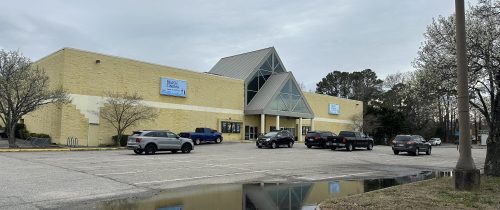
    โ€œI know itโ€™s a tired theater, but letโ€™s support the Beach Cinema and Alehouse. It may be closing.โ€ I replied.

    โ€œSave the Cinema!โ€ she shot back.

    Worried that front-page news about the possible sale of the 34-year-old oceanfront movie complex (historic, by Virginia Beach standards) might mean massive crowds, I hopped online first thing Saturday morning to reserve tickets.

    I neednโ€™t have fretted.

    There were just two others reserved seats in the entire theater.

    TWO. Continue reading.


  • Is the Caterwauling About Proposed Budget Cuts Justified?

    by James A. Bacon

    Image credit: Bing Image Creator

    As the federal government careens toward a fiscal train wreck, Virginia Democrats are bellyaching about the lousy service in the dining car.

    Congressional Republicans are proposing cuts to federal entitlements such as Medicaid and SNAP (Supplemental Nutrition Assistance Program), says Virginia Senate Democratic Caucus Chair Mamie Locke. The cuts could result in a shift of $350 million to the state budget and Virginia taxpayers.

    โ€œUnder the Trump Musk economy food prices are skyrocketing,” Locke said. “We should be having a conversation about strengthening programs that help feed hungry people and not weakening them like the Congressional Republicansโ€™ plan calls for.โ€

    Are Locke’s concerns valid? Would cuts to federal programs force hundreds of thousands of Virginians into penury unless the state intervenes with giant spending increases of its own? Given the abysmal state of journalism in Virginia, it’s impossible to know. Media accounts of the Democrats’ jeremiads provide zero context to help readers reach an informed judgment.

    (more…)


  • Two Energy Updates: RGGI and an Offshore Wind Reversal

    The Regional Greenhouse Gas Initiative held its latest auction for carbon emission allowances last week and produced a price of $19.76 per ton. Because Virginia is no longer a participant, that probably saved electric utility customers another $100 million.ย 

    The March 2025 price, in reality a tax on the use of hydrocarbon fuels, was lower than during 2024, when it peaked at $25.75. The price dropped below $20 a ton largely because the organizers of the auction released more than 8 million allowances from its โ€œcost containment reserveโ€ to better balance supply and demand.ย 

    But the $19.76 price is still 33% higher than the carbon tax Virginia utilities paid in the final auction that included Virginia, in December 2023. Should Virginia return to RGGI, as Democrats led by their gubernatorial candidate Abigail Spanberger will surely promise, that price would likely result in $400-500 million in annual carbon tax receipts.

    Governor Glenn Youngkin (R) had the Air Pollution Control Board repeal the regulation that placed Virginia under the RGGI regime. A local circuit court has ruled that action was invalid, but that is on appeal and the same judge recently decided to let the state remain out of the compact pending that appeal.ย 

    (more…)


  • A Little Perspective on the Federal Budget Debate

    by Dick Hall-Sizemore

    President Obama and Sen. Alan Simpson, 2010. Picture credit: New York Times

    There has been much commentary on this blog lately about the size of the national debt and the need to cut federal spending. Many of those commenters point fingers at Democrats as being the big spendthrifts. I would like to add a little perspective to this discussion.

    When reading the obituary for the late U.S. Sen. Alan Simpson (R-Wyoming), I was reminded that President Barack Obama appointed Simpson, along with Democrat Erskine Bowles, as co-chairmen of the National Commission on Fiscal Responsibility and Reform. Unlike most such commissions, this one came up with a set of serious recommendations, many of which President Obama included in his budget proposals.

    For example, in his 2014 budget proposal, Obama included a deficit reduction package. That package included proposals that would have reduced the national debt over ten years. Included were substantial savings in Medicare and the adoption of an alternative cost-of-living adjustment affecting Social Security. According to one analysis, โ€œcoupled with the deficit-reduction steps that the President and congressional leaders already have enacted, this package would bring total deficit reduction achieved to $4.5 trillion over the decade.โ€

    The Center on Budget Policy and Priorities, a left-leaning think tank, declared, โ€œThis [deficit reduction] package would reduce the deficit by $1.8 trillion over the next decade and go somewhat beyond stabilizing the debt as a share of the economy, setting it on a slight downward path.โ€ Another, more middle-of-the-road think tank, the Committee for a Responsible Budget, was more cautious. It commented that while the Obama deficit reduction package โ€œwould be a very welcomed package of savings but would almost certainly need to be followed with additional deficit reduction in order to put the debt on a truly sustainable path.โ€

    I did not take the time to research how much of the Obama package was adopted by Congress. However, surely whatever was adopted, any chances of โ€œstabilizing the debt as a share of the economyโ€ and getting it โ€œon a truly sustainable pathโ€ were blown apart by the 2017 Trump tax cuts followed by the COVID relief measures.

    The bottom line: A Democrat president proposed a serious plan to reduce the deficit, including structural changes in entitlement programs. Contrast that with the situation today.


  • Bacon Meme of the Week


  • Oh, All Those Drug Ads

    by Dick Hall-Sizemore

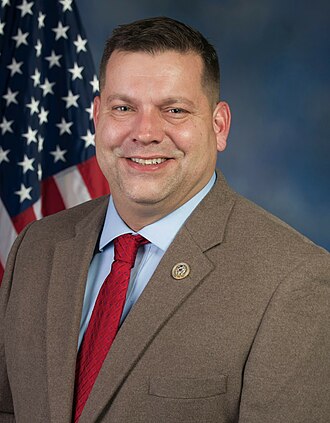
    Del. Tom Garrett (R-Goochland.)

    Tom Garrett, who was formerly a state senator, then a member of the U.S. House of Representatives, and is now a member of the House of Delegates from Goochland County, has called on President Trump to rein in drug prices.

    One of his suggestions is to prohibit drug companies from advertising. Saying that many of the large pharmaceutical companies spend more on advertising and marketing than they do on research and development, he contends that โ€œAmerica is the most overmedicated society on Earth.โ€ He concludes, โ€œEnding direct-to-consumer pharmaceutical advertising wouldnโ€™t just rein in an industry that prioritizes marketing over innovation โ€” it would save lives, free up resources for real research, and lower drug costs for everyday Americans.โ€

    I agree with him. There is just one little problem: the U.S. Supreme Court has held that pharmaceutical advertising is protected speech under the First Amendment.

    (more…)


  • DEI Won’t Die Easily

    Still alive. UVA’s DEI website one week after Board of Visitors abolishes DEI.

    by James A. Bacon

    One might think that revamping a website would be an easy start to complying with the Board of Visitors’ order to dismantle the Division for Diversity, Equity, and Inclusion (DEI) at the University of Virginia. Retitle the home page. Put up an “Under Construction” logo. Post a statement indicating that changes are coming. Do something!

    But a full week after the Board’s unanimous vote, the website still stands, as if nothing had changed. The home page still proclaims the DEI division’s mission, highlights DEI initiatives, and links to DEI-related web pages. To all outward appearances, everything continues as before. George Mason University has managed to scrub its website of DEI references in conformity with a Trump administration executive order, but UVA has not.

    The website is symbolic of the challenge the Board of Visitors faces in carrying out its order. DEI most definitely is not “dead,” as Governor Youngkin prematurely proclaimed earlier this week on Fox News.

    The Board resolution is often vague; there is no clear definition of what constitutes “DEI,” an amorphous concept that can be interpreted in many ways. The UVA leaders charged with enacting the sweeping changes are the very same people who erected the DEI system, the influence of which extends into every nook and cranny of the institution. Disentangling racial preferences from admissions, hiring, promotions, scholarships, discipline, and other aspects of university life will be a complex and delicate task. Meanwhile, outright resistance can be expected from faculty members, a few of whom have already spoken out.

    The Board resolution required President Jim Ryan to report back on his progress within 30 days. Don’t expect much. The mandate is mission impossible, even for someone who shares the Board’s goals. The task likely will take 30 months… if not longer.

    (more…)