
by James A. Bacon
“All over this country, the American people are asking why it is that they pay, by far, the highest prices in the world for prescription drugs?” Vermont Senator Bernie Sanders noted in a screed published a couple of years ago. “Why is it that nearly one out of every four adults in America cannot afford their prescription medication?”
Sanders’ answer: greedy Big Pharma companies and the gutless politicians who won’t stand up to them.
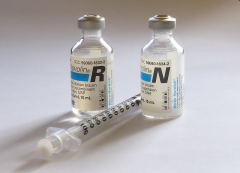
Insulin, a compound for which American diabetics pay many multiples of what it costs to manufacture, has been singled out for special attention. In this case, according to the populist narrative, greedy pharmaceutical companies share the blame with greedy middlemen known as pharmaceutical benefit managers.
Whatever morsels of truth these characterizations might contain, there is very much more to the explanation of why drug costs are so high in the U.S.
Consider, the story of Civica, Inc., which was formed to make insulin and other generic drugs more affordable. The company opened a manufacturing facility in Petersburg in 2022, inked a deal in 2023 to produce injectable insulin for the state of California under the brand of CalRx, and planned to start shipping in 2024. The company CEO now concedes that goal was “ambitious.”
It turns out that getting generic drugs to market is not so easy. Making generic forms of insulin, company spokesman Benjamin Jarvela told the Richmond Times-Dispatch, is a long, complex process that can take up to nine years and requires an investment of between $100 million and $300 million. It’s a challenge even for a company that received $100 million in federal grants to cover the $125 million cost of building its Petersburg manufacturing facility.
The first hurdle was finding a company to supply unfinished insulin. The RTD account is a bit vague, but a supplier’s product must pass muster with the Food and Drug Administration (FDA). For unstated reasons, Civica dropped an Indian manufacturer of insulin and began working with another manufacturer whose insulin product is now undergoing FDA tests.
Civica has manufactured pens and vials, has conducted tests to make sure the environment is sterile, and has completed its first successful regulatory inspection. Next, says the RTD, the company must distribute its insulin to patients for a clinical trial, and then seek final FDA approval.
Said Jarvela: “There is still substantial work ahead, but every milestone removes risk and gives us more confidence in our ability to deliver this important initiative to the patients who need it.”
Think about it: Civica is not driven by the goal of profit maximization, and the federal government reduced Civica’s up-front capital costs by 80%. But the necessity of jumping through regulatory hoops — taking years and costing millions of dollars to approve a drug that naturally occurs in the human body — has kept its affordable product off the market.
Are the regulations justified? How much assurance do you want that an Indian manufacturer of generic pharmaceuticals meets FDA safety standards? How badly do you want someone to approve the sterility of Civica’s injection products? I’m willing to accept that those are assurances that our society, with its low risk tolerance, insists upon. Fine. But let’s not blame greedy Big Pharma. Let us recognize that sometimes life involves tradeoffs.
Critics often attribute the inability of the private sector to make their products cheaper and more accessible to “market failure” — be it low-income housing, the availability of grocery stores in “food deserts,” or the supply of pharmaceuticals. Often, like Bernie Sanders, the critics blame corporate “greed.” There’s one sure-fire way to test their proposition: create a nonprofit not motivated by greed, and see if it can provide the product for less.
It’s been tried and the results aren’t always pretty. Federal public housing programs, set up to address so-called market failures, created the hellholes we call public housing. Philanthropic endeavors to bring grocery stores (the kind that don’t peddle cigarettes, CBD products, lottery tickets, and “skill games”) to inner cities invariably fail. The problem isn’t free-market capitalism.
If you’re looking for examples of “greed” run amok, read Jim Sherlock’s articles on this blog about what could be called “regulatory failure” in Virginia’s nursing home industry.
Some regulations are necessary. Some are ill-conceived. Some are abused by unscrupulous businessmen. Some have trade-offs we’re willing to live with despite their imperfections. We need to be wise enough to make the distinctions.
Leave a Reply
You must be logged in to post a comment.