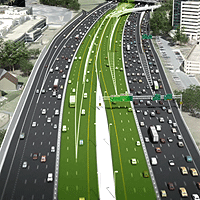
One more tale from the Virginia Bloggers Day event: I asked about the McDonnell/Bolling administration’s plans to build a super-U.S. 460 highway between Petersburg and Suffolk, a project that encompasses $1 billion or so in toll financing, a $500 million commitment of state transportation funds, $5 million a year in Port of Virginia funds far into the future, and $50 million in tax credits for industries locating in the U.S. 460 corridor. (See “Taking a Closer Look at the Jobs Governor’s Industrial Policy.”)
Herewith is an amalgam of answers from Lieutenant Governor Bill Bolling and Tucker Martin, McDonnell’s communications chief.
“Its a transportation initiative and an economic development initiative,” said Bolling.
Insofar as an upgraded highway would expedite hurricane evacuation from Hampton Roads, it’s a transportation initiative. But it’s mostly about economic development.
The driving force is the widening of the Panama Canal, which will allow larger, deeper-draft container ships to reach East Coast ports. Early on, thanks to its 50-foot channels, the port of Virginia will be the only East Coast port capable of accommodating the monster vessels. But other ports are working on improvements that would allow them to compete for the business. Big ships will drop off hundreds of thousands of containers yearly, only some of which can be handled by the railroads. Highway capacity will be a major bottleneck. If trucks can’t get in and out of the terminal, the port loses its competitive advantage.
The Q&A format allowed for limited follow-up. If I had had the time, I would have asked this: If the economics of the giant container vessels are so advantageous and if the Port of Virginia is so well situated to capture the big-ship traffic, why can’t shippers absorb the full cost of the U.S. 460 tolls? Why does the state need to buy down the tolls with $500 million in state funds?
What tolls will the trucks pay? What would they pay without a state subsidy? How much would the higher toll add to the cost of shipping containers through Hampton Roads, and how would that compare to the cost of shipping through other East Coast ports? What evidence do we have that the subsidy is required to accomplish the goal, which all Virginians want to see, of making the Port of Virginia the premier port on the eastern seaboard?
These are questions that legislators and members of the Commonwealth Transportation Board should be asking!
As I alluded to in the previous post, Lieutenant Governor Bill Bolling’s staff handed out a “Jobs Report” to the delegation of bloggers attending the 5th annual Bloggers Day conference in Richmond two days ago. As one would expect from any politician, that report puts the sunniest possible spin on Virginia’s economic performance during the McDonnell-Bolling administration: 737 projects announced $6.4 billion in capital investment, and nearly 67,500 net jobs created.
The 6.2% unemployment rate is 11th lowest in the nation. More than 90% of the new jobs are private-sector jobs. Virginia ranked 9th in the nation since February 2010 in job creation, as compared to 35th in the nation between 2006 and January 2010, when a certain former governor, who shall remain nameless but happens to be running for the U.S. Senate, was in charge.
There is a positive story to tell. But it’s not the whole story. Here’s a figure that the Jobs Report did not mention: The number of Virginia jobs has increased 1.8% since the beginning of the McDonnell administration. That’s less than the 2.4% increase nationally recorded by the Bureau of Labor Statistics. Job creation in Virginia lagged the national average.
It gets worse. Nearly half of all net new jobs (46%) came from a single region, Northern Virginia. NoVa’s economy, as we all know, was goosed over the past decade by massive increases in federal spending under the Bush and Obama administrations. And, as we also all know, the torrid pace of federal spending is unsustainable.
My purpose is not to bash Governor Bob McDonnell’s economic development team, which has competently executed Virginia’s traditional economic development strategies. So far, the administration has announced 737 projects with projected employment of 48,906. I am interested in stripping away the happy face and recognizing that, outside the traditional economic development arena, things are not going very well.
Part of Virginia’s under-performance can be traced to the fact, beyond any governor’s control, that the strongest sectors of the national economy are tied to energy and agriculture, areas in which Virginia is not especially strong. But, as I have hammered home repeatedly, part of our sluggish job creation can be attributed to the paucity (outside Northern Virginia) of start-up companies and of dynamic, fast-growth middle-tier companies. The last thing we need to do is try picking winners and losers by handing out tax breaks or subsidies, but we could think more creatively about how to create the social, economic and tax conditions that stimulate entrepreneurial vitality. Handing out incentives to big corporations won’t do it.
Bottom line: We need to undertake a major re-think of economic development in Virginia, which remains substantially unchanged since the 1980s when I first started writing about it, if not longer.
The Virginia General Assembly is taking a powder on Obamacare.
Faced with a federal mandate of next January to show they are making progress,
Richmond legislators have dilly-dallied past the problem, many apparently fearful that too much action on setting up state-run exchanges for people to shop for health insurance will bring on conservative wrath.
The Patient Protection and Affordable Care Act will require that every American have a health insurance plan and requires the states to set up exchanges to offer plans to citizens who otherwise can’t find one. The act also does away with the “pre-existing condition” clause that allows insurance firms to deny new customers they believe won’t make them as much in profits.
To be sure, many states are balking at Obamacare. As of last summer, only California, Hawaii, Maryland, Vermont, Washington and West Virginia had passed laws that will set up exchanges. A number of states, like Virginia, are in court seeking repeal of Obamacare on the grounds that forcing Americans to buy insurance violates their constitutional rights.
Republican Gov. Robert F. McDonnell has been publicly silent recently on the legislature debate but it is clear where he stands. He wants the state to avoid setting up exchanges until the U.S. Supreme Court rules on Obamacare. As a potential GOP vice presidential candidate, he hardly wants to get too far ahead on a federal program despised by the right wing.
True, there are problems with the General Assembly’s attempts to set up the exchanges. One proposal would have the State Corporation Commission, which oversees private companies and utilities, do it. Critics say that the SCC is too consumer-unfriendly for the job. But alternative proposals to set up independent state agencies to handle the exchanges run into the anti- government crowd’s opposition.
With the clock ticking on this year’s session, it seems likely that nothing will get done. This once again raises the question of state versus federal rights – one in which Virginia has a dark past. There is a tendency in the Old Dominion to ignore federal laws or court rulings it doesn’t like. The shining example is Massive Resistance, in which the state’s official policy was not to integrate schools and close many down rather than bow to the legal power of the U.S. Supreme Court.
We are seeing ghosts of that movement in play today.
Governor Bob McDonnell, like governors before him, issues a statement touting jobs created and capital invested every time the Virginia Economic Development Partnership (VEDP) is involved in a corporate investment project. The closing paragraph of seemingly every press release notes that the deal was cemented by a contribution from the governor’s “opportunity” fund or some other government entity. When the giveaways get too extravagant, free market purists like Norm Leahy over at Bearing Drift and me erupt in ritual denunciation, even though we know that no one is likely to pay any heed.
Given the frequency of the press releases, one might be forgiven for thinking that no corporation makes an investment in Virginia without extracting its pound of flesh from the taxpayers. It is somewhat reassuring to discover that the subsidies are not as ubiquitous as I had feared.
Economic development projects receiving incentives account for only 13.7% of all “announced projects” of 20 jobs or more and less than half of all projects involving the VEDP since the beginning of the McDonnell administration, according to data released by Lieutenant Governor Bill Bolling’s office. But they have a big impact, accounting for 25.9% of all net job creation in Virginia and 36.4% of all investment.
Bolling distributed the data and defended the administration’s track record on job creation during “Virginia Blogger Day,” an event for Republican and/or conservative bloggers (I’m not sure which category they had me confused with) that involved give-and-take with Bolling, senior legislators and political pundits, and was capped off by a reception in the governor’s mansion attended by McDonnell and several members of his cabinet.
“Our focus has been taking our conservative principles and applying them to things that need to be done,” said Bolling. The “McDonnell/Bolling administration” rolled back state spending to levels prevailing in 2006 even while re-prioritizing that spending, investing more than $100 million in economic development programs, raising funding for higher education and pumping $4 billion into transportation projects.
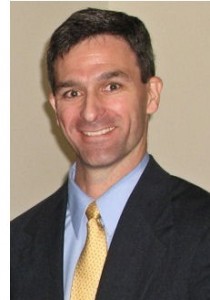
Tucker Martin, McDonnell’s director of communications, was on hand to confirm that the governor views Bolling, who faces a stiff challenge from Attorney General Ken Cuccinelli for the Republican nomination for governor, as an integral member of his team. McDonnell has anointed the lieutenant governor as the state jobs czar. Meanwhile, Bolling’s visibility has increased markedly since he has been called in as the tie-breaker on numerous votes in the state senate stocked with 20 Rs and 20 Ds.
Bolling vigorously defended the use of incentives as a tool to bring jobs to Virginia. “We are not throwing incentives at every economic development deal. We target them very carefully,” he said. Only 14% of major projects receive incentives, and corporations must commit contractually to create the promised jobs and investment or face clawbacks when they don’t deliver.
“In a perfect world, we wouldn’t have to incentivize anyone,” said Bolling. “But I don’t live in a perfect world . … We could do away with corporate incentives tomorrow but we’re not going to get these incentive-driven deals.”
Bolling came across as informed, well spoken, likable and a man who can be reasoned with. I expect that the Main Street business community wing of the Republican Party will be very comfortable with him. He is very much in the mold of Mitt Romney, whom he supports for president. But with his gray hair, extra pounds and low-key demeanor, he sometimes fades into the background. His blandness spares him the barbs and invective that Democrats hurl at Cuccinelli, but he lacks the intensity and charisma that enables the Cooch to fire up the GOP faithful. It will be interesting to see what mood Virginia Republicans are in a year from now and what kind of gubernatorial candidate they will be looking for.
Annual student borrowing crossed the $100 billion threshold for the first time in 2010, and total outstanding loans exceeded $1 trillion. “Evidence is mounting that student loans could be the next trouble spot for lenders,” said Dr. Andrew Jennings, chief analytics officer at FICO and head of FICO Labs. Gee, do ya think?
College seniors who graduated with student loans in 2010 owed an average of $25,250, up 5% from the previous year. And that doesn’t include the $34,000 average in student loans held by parents who have taken on debt.
States the report: “Of the Class of 2005 borrowers who began repayments the year they graduated, one analysis found 25 percent became delinquent at some point and 15 percent defaulted. The Chronicle of Education puts the default rate on government loans at 20 percent.”
Bankruptcy attorneys say student loans are smelling a lot like the mortgage market before the foreclosure crisis: “More and consumers [are] seeking their help with unmanageable student loan debt, and with no relief available.”
Don’t be surprised to see a move to forgive loads of student debt — with consequent losses of tens of billions of dollars to the U.S. Treasury. What gets my blood boiling is that the debt bomb was totally and utterly foreseeable — I’ve been ranting about it for a couple of years now. How friggin’ stupid do you have to be so soon after the real estate bubble to turn around and start lending indiscriminately to college students? However badly this pans out, we Americans have it coming — students for taking the loans, parents for letting them, colleges for jacking up tuition, and Uncle Sam for funding the madness. The avarice, stupidity and short-sightedness of this country know no bounds.
Virginia’s zany attorney general wants to create his own armed, flying squad of crime-busters.
In what could be a 21st century version of “Dragnet,” Kenneth Cuccinelli wants to create his own police force. He wants to arm 40 of the 83 members of his Medicaid fraud investigative arm. They’d have badges, too. Cuccinelli plans on designing them himself, according to the Richmond Times-Dispatch.
The bizarre plan has the Virginia law enforcement community up in arms, so to speak. Ken Stolle, a legislator who is now Virginia Beach sheriff, and Wayne Huggins, head of the Virginia State Police Association and former superintendent of the state police, believe that Cuccinelli’s police force could easily stray from fraud into political probes.
And it’s not as if Medicaid fraud has no watchdog. The attorney general’s office has had an investigative unit just for Medicaid for 25 years and the State Police could help with probes and easily handle any gun play, should the situation arise.
What makes the idea even stranger is that Medicaid fraud usually involves wayward doctors or nursing home administrators, in other words, people not likely to pack Uzis in their closets.
Cuccinelli says that his pistol-toting cops would only involve themselves in fraud cases but, of course, would be on the lookout for other wrongdoing.
And, true to his conservative colors, Cuccinelli insists that the plan won’t cost Virginia taxpayers a dime. It could be funded from the $100 million the state is getting from a 2008 settlement in which drug-maker Purdue Pharma LP paid $634 million to states and the District of Columbia for misleading the public about the dangers of OxyContin, a drug it makes.
“The Cooch’s” latest goofy idea might be funny if it weren’t for the tsunami of social conservatism crashed through Richmond. The newly GOP-controlled General Assembly has been on a tear freeing up pistol purchases, requiring pregnant women to have ultrasound exams before an abortion, and considering ordering drug tests on public housing occupants. This ill-advised storm is going to make Virginia once again look ridiculous nationally. One wonders whatever happened to Governor Bob McDonnell’s meticulous efforts to transform his image from social conservative to a moderate — something he’d better get moving if he wants to be a credible vice presidential candidate.
As for the Cooch, giving him his own armed flying squad would be madness. Imagine what would happen to the Old Dominion if he were to be governor? Germany in the early 1930s?
Governor Bob McDonnell’s omnibus transportation bill has undergone significant revisions during the General Assembly session, sloughing off two of its more controversial proposals, but it still has the environmental and smart-growth lobbies up in arms.
A House subcommittee amended HB 1248, a legislative behemoth that could be usefully broken into five or six separate bills, to cast off one measure that would have created an independent, statewide tolling authority. The authority would have been empowered to construct and operate toll roads, issue bonds backed by tolls but not the full faith and credit of the commonwealth, and set toll rates. It would have operated exempt from the Virginia Public Procurement Act and the Virginia Personnel Act. Smart growth lobbyists worried that the authority would be largely unaccountable to the public. But the deal killer may have been an op-ed published Feb. 2 on the Reason Foundation’s Out of Control Policy blog warning that the authority might compete with Public Private Partnerships. “If the new project is viable,” asked Robert Poole and Shirley Ybarra, “why wouldn’t a private entity consider this policy under the PPTA?”
House lawmakers also shed a provision for creating Transportation Improvement Districts consisting of territory within a five-mile radius of a transportation infrastructure project. Twenty-five percent of any growth in state General Fund tax revenues would have been transferred to transportation projects contained in the the state’s Six-Year Improvement Plan. Critics objected to the proposal as complex, unwieldy and opaque and an unneeded raid on the General Fund.
But the core of the legislation remains, including three provisions for tapping the General Fund to pay for transportation — a bigger share of the sales tax, a bigger share of end-of-year budget surpluses, and a slice of revenue growth in high revenue-growth years — as well as a measure that would give the state unprecedented power over local land use.
The McDonnell administration has justified the tax measures on the grounds that transportation is a “core function” of government that should be funded in part by the General Fund. Critics contend that, unlike education, public safety and health care, transportation has its own dedicated revenue streams; if the state needs more money for roads, raise those taxes and fees rather than diverting money from the General Fund.
Additionally, I have argued (though few seem to have picked up on it) that McDonnell’s proposal represents a historic shift away from the idea of financing roads and highways by means of a user fee — those who use roads are the ones who should pay for them — toward the idea of financing roads through general subsidies. Transportation is fundamentally different from schools and corrections. When the use of roads is free, people will always demand more. They will increase Vehicle Miles Traveled, congestion will increase, and the clamor for more, more, more will never cease. Conversely, if people pay the cost of expanding the road network through user fees, they will be far more judicious about the improvements they demand.
Meanwhile, in a press release issued yesterday, the Coalition for Smarter Growth, the League of Conservation Voters and the Southern Environmental Law Center detailed their objections to the revised bill. “The Governor’s omnibus transportation proposal … would substantially change decades of policies.” The Virginia Association of Counties (VACO) has expressed similar concerns, though in more muted tones. States the environmentalist press release:
The bill could take over $500 million each year from the General Fund for transportation, harming education, public safety, clean water programs, and many other needs—and, unlike transportation, there are few (if any) alternative revenue sources to meet these needs. In just the first two years, the sales tax diversion alone would take over $110 million from the General Fund; enough to fund an estimated 870 police officers, 275 doctors for rural communities, or health care for 77,673 children and mothers in Virginia’s children healthcare program.
For the record, the General Assembly’s Impact Statement estimates that the bill would transfer $110 million in the 2013-14 biennium and $200 million a year by Fiscal 2018, although under the right circumstances revenue transfers could spike significantly higher. While the funds nominally would go into the Highway Maintenance and Operating Fund, because funds are fungible, the transfer would have the effect of increasing road and highway construction.
… Which raises another objection by the environmental lobby. The revenue provisions provide zero new dollars for transit and rail.
Although the environmental/Smart Growth lobby has long called for aligning transportation and land use planning, its spokespersons are not happy about how the McDonnell administration proposes to do that. This bill would require the transportation elements of local comprehensive plans and regional Metropolitan Planning Organization (MPO) plans to be consistent with the Commonwealth Transportation Board’s statewide transportation plan and its Six-Year Improvement Plan. Any project not consistent with the statewide plans, can be deprived of federal and state funding. This would give the state a much greater role in planning local land use, the environmentalists say, and it would create a mismatch “by linking a long-range local planning document (comprehensive plan) to a short-term state funding document.”
One interesting provision not mentioned in the environmentalists’ press release is one that would require the Secretary to study the devolution of secondary road maintenance to local governments and submit recommendations by the end of the year. You can be assured that VACO will be watching that one very closely.
HB 1248 now awaits a vote by the Appropriations committee, while an unamended companion bill SB 639, received a bipartisan, 13-to-0 vote in the Senate Transportation committee.
One has to laugh at just how fantastic the debate over energy has become.
Conservatives are trying to make President Barack Obama a goat for not bowing to the propaganda about the Keystone XL pipeline which would take unusually dirty oil from Canadian tar sands all the way to the U.S. Gulf Coast for refining.
Here’s a gem from a Jan. 18 editorial by The Washington Times: “The White House’s pre-emptive strike on the Keystone XL oil pipeline is a disaster for American workers and consumers. President Obama continues to demonstrate that he has no idea how real jobs are created or how the economy works.”
The propaganda campaign has trickled down to the Virginia level, which would get absolutely zero from the pipeline. Barry E. DuVal, the president of the Virginia Chamber of Commerce has trashed Obama for his decision as has Republican Gov. Robert F. McDonnell, who is maneuvering to get a vice presidential spot with Mitt Romney.
So, it is unusual to pick up today’s Wall Street Journal and see this front page piece: “Oil and Gas Boom Lifts U.S. Economy.” The report states that U.S. oilfield jobs are up to 641,000, a 33 percent increase over the past five years.
Fueling the petroleum boom are new ways of reaching hard-to-tap oil and gas reserves such as hydraulic fracking. Gas from the Marcellus Shale deposit in the Northeast and Midwest has greatly boosted gas supplies. North Dakota’s once played-out oil fields are seeing a boom (not the “Boomergeddon” kind) as oil workers flock in, boosting $300-a-month rents to $2,000- a- month.
To be sure, the boom doesn’t address longer-term problems such as weaning the world from irreplaceable fossil fuels, their impact on climate change and the environmental challenges of fracking.
Rather, it shows the disconnect between the reality out there and the DuVals and Moonie papers of the world. One wonders why any respectable blogger would want to write for The Washington Times.
Ron Utt, a Virginia-based Heritage Foundation scholar, and William G. Reinhardt, publisher of Public Works Financing, have offered a balanced appraisal, from a conservative perspective, of public-private partnerships (P3s) as a solution for America’s transportation woes.
But Utt and Reinhardt acknowledge that there is stiff public resistance to the tolls required to pay for multibillion-dollar improvements.
Policymakers should recognize that P3s are not the solution to the transportation infrastructure investment gap that threatens to undermine commerce in the United States. There are too few financially viable P3 projects to meet the national need for new highway capacity and to modernize existing roads. No amount of enabling legislation will bring private investors into projects that are not financeable, and very few highways could support themselves on tolls alone. Thus, some combination of gas taxes, sales taxes, fees, and appropriations of state funds is necessary to make a creditworthy public–private partnership. …
P3s have demonstrated the ability to raise substantial sums of money for major infrastructure projects, especially to add needed capacity in congested corridors. Experience has also demonstrated that P3 projects can be complicated and time-consuming to create and that not every transportation project is amenable to this approach. As a consequence, other innovative and traditional finance solutions will be needed to meet current and future infrastructure spending plans.
Those are all worthy points but I would append one more critical question: How do we ensure that P3s are economically justified? As Utt and Reinhardt point out, few projects can support themselves on the basis of toll revenues alone. Most P3s require public subsidies to buy down the price of the tolls. If the demand doesn’t exist to support the improvement, or if private-sector players aren’t willing to assume the risk that toll revenues may not materialize, should the project be built at all? I have yet to see a set of clearly articulated principles by which to judge when a public subsidy of a P3 project is warranted.
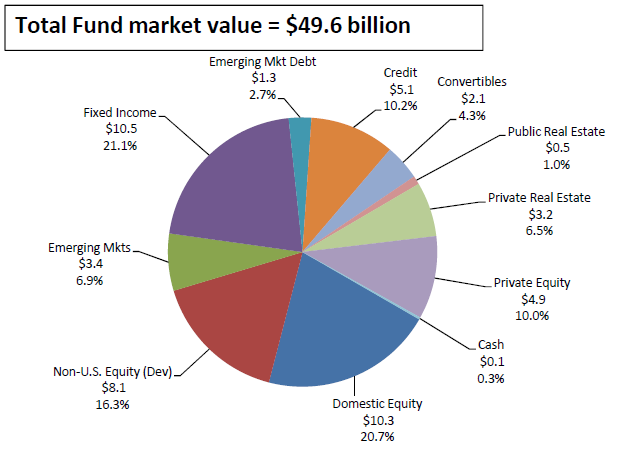
VRS portfolio allocation, Sept. 30, 2011. (Click graphic for more legible image.)
by James A. Bacon
A debate is brewing in Richmond over how much money the Commonwealth of Virginia and local governments should contribute to the Virginia Retirement System, and a key issue revolves around which actuarial assumption to make regarding future VRS financial performance.
According to Times-Dispatch writer Michael Martz, Gov. Bob McDonnell and his allies in the General Assembly want to assume a higher average rate of return — 8% annually over the next 30 years — while the VRS board, chastened after suffering steep market losses during the recession, would prefer to assume a modest 7% rate of return. Assuming that the VRS will make more money on its $52 billion portfolio allows the McDonnell camp to reduce state payments into the retirement fund.
Muddying the waters of the debate is the bizarre fact that local governments are using VRS’s actuarial assumption, not the state’s. Del. S. Chris Jones, R-Suffolk, chairman of the Appropriations subcommittee on compensation and retirement, not illogically says that the state and localities should make payments based on the same rate. But his solution is to propose that the VRS assume an 8% return for purposes of calculating what localities should pay.
Needless to say, none of this inspires confidence in the General Assembly. Indeed, it gives credence to fellow blogger Don Rippert’s characterization of the legislature as a “clown show” and the root of all ills in Virginia. In this instance, I would be hard pressed to disagree with him.
The VRS, which eats, drinks and breathes investing every day and has a fiduciary responsibility to its beneficiaries, is a better judge of what the retirement system is likely to earn than is an elected official like Jones, whose professional background, by the way, is pharmacy. The VRS has even more reason to assume a lower return on investment in light of the Federal Reserve Board’s recent pronunciamento that it intends to pursue a zero interest-rate policy for the next three years.
The pie chart above shows the asset allocation in VRS’ portfolio. Please note: 21% of the entire portfolio consists of fixed income assets. For the next three years, the yield on short-term fixed-income Treasury assets will be about 0.5% while the yield on longer-term assets could range from 2% to 3%. Admittedly, those rates may apply for only three years, if the Fed sticks to its guns. But that exposure will make it significantly more difficult — not impossible, but difficult, and imprudent to assume otherwise — for the VRS to goose its returns. A 7% return on investment seems appropriate to me.
It’s possible that bond yields will rise after the Fed’s pronounced three-year time horizon, allowing the VRS to generate higher returns from its fixed-income investments in later years. But that poses a new problem. Stock prices vary inversely with bond yields. If bond yields go up, they become more attractive by comparison to stocks; money flows out of stocks into bonds, thus depressing stock prices. Many other factors affect stock prices, of course, such as earnings and expectations of future economic conditions, but bond yields are an important influence. As it happens, bond yields stand near historic lows. If they rise, as they likely will once the Fed steps out of the way, stock prices will face a steep uphill climb. What the VRS gains from higher bond yields, it could lose from depressed returns on stocks and other investments.
Right now, the U.S. economy is benefiting from fiscal stimulus in excess of $1 trillion a year plus monetary stimulus of near-zero interest rates. That extraordinary intervention is propping up the performance of everything in the VRS portfolio…. for now. But stimulus of that magnitude is not long sustainable. The VRS is acting prudently to assume a lower rate of return — better safe than sorry — while McDonnell and Jones, recoiling from the political pain of making harsh budget decisions, are acting imprudently.
I agree with James L. Stegmaier, Chesterfield county administrator, who opposes using the higher investment return. “I don’t consider it saving money,” he told Martz. “I consider it borrowing money that you’re going to have to pay back one day.”
If Virginia is to survive the fiscal storm to come, we need to bullet-proof our finances. That means no gimmicks, no short cuts, no sleights of hand.
“The Iron Lady,” a biopic starring Meryl Streep, has brought fresh attention to the policies and philosophies of Margaret Thatcher, the ground-breaking leader who served as Great Britain’s Prime Minister for 11 years – from 1979 to 1990.
Always controversial, Thatcher pioneered much of the conservative framework still in play today, such as privatizing state-owned companies, bashing labor unions, cutting budgets, pushing for flat taxes payable at equal rates by rich and poor and promoting the idea of individual opportunity as a national driver.
As we now see two decades later, while initially successful, a lot of Thatcherism turned out to be bunk and we are suffering for it now. That said, I have to admit that Thatcher is a fascinating personality.
My own involvement came in 1987 when I was a magazine correspondent in Moscow. She was visiting Mikhail Gorbachev, the Soviet leader and man she could “do business with.” She and Ronald Reagan set up the policies that helped lead to the transition of the Soviet Union although neither should get too much credit for destroying that Communist-run state. The real cause of death was decades of internal rot, but that’s another subject.
When Thatcher walked up to the podium at the Foreign Ministry press center on the Garden Ring Road in downtown Moscow, the air practically went electric. She was a truly stunning presence. Her direct manner of speech in her high-pitched voice had the audience riveted. She answered questions with great speed and wit. She was a crystallographer by training but had a natural sense of politics and theater.
Reagan, whom I also heard in Moscow, seemed like a purely stage-managed Hollywood production. He entered the stage with a friendly wave and a stunning brown suit, but he seemed extraordinarily simple-minded, as if he didn’t really understand what was going on and was reading from a very good TelePrompter.
Thatcher, to be sure, had plenty of enemies. She came to power when the U.K. was in a recession far worse than the one the U.S. has recently endured. When I visited the West Midlands in the early 1980s, British television news was a steady stream of job cuts. She beat back union and government control that had dominated the economy since World War II and with great fanfare privatized a few big, government-controlled corporations. She led the Brits in their pathetic war with Argentina over the Falklands and took a tough line against the Irish Republican Army. In the process of the latter, her tough stances spurred a number of deadly bombings. Post-Thatcher negotiations finally
sorted things out.
Her model of privatization and budget spending became the role model in the last decades of the 20th century and the decade so far this century. Longer term, her results have been mixed. The Russians were encouraged to follow the Thatcher model with privatization and ended up with the oligarchs and Vladimir Putin. Bill Clinton was actually a Thatcherite and his go-easy regulatory policies regarding Wall Street, along with George W. Bush’s ineptitude, helped set the U.S. up for the Great Recession.
Still, the movie is a good touchstone to ponder the Thatcher years. Despite an excellent performance by Streep, the movie is marred by its boringly-long portrayal of an elderly Thatcher suffering from dementia. It really doesn’t go too far in examining her policies. The movie, like Thatcher herself, seems a promising idea gone wrong.
During my urban homesteading days in Richmond’s gritty Church Hill some 20 years ago, I lived on a block that, at any given point in time, had two or three crack houses. Gunshots were common background noise. There was a triple homicide in one house, and a separate triple shooting (only one homicide, as I recall) that took place on the school yard a block away. One evening, police car lights were throbbing in front of a ramshackle house about four down from mine. I wandered down to see what was amiss.
The police, as it turns out, had conducted a raid on one of the crack houses. A woman holding an infant was pleading with the officers, “Don’t take my baby away from me! Please, don’t take my baby.” It was heart breaking.
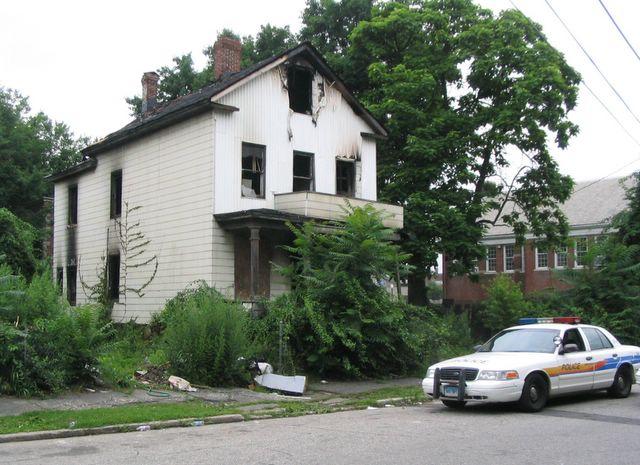
I’d never been inside a crack house before and asked if I could step in for a look. The officers had no objection. The house was stripped almost totally bare — the only furnishing was an old mattress. The downstairs stank of filthy diapers. The kitchen appeared empty, although I did not actually check the refrigerator and cupboards. I’d seen plenty of poverty before, in Appalachian hollows, in Martinsville trailer parks and all around me in Church Hill. But I’d never seen anything as destitute, and dissolute, as this.
So, when legislators debate the merits of subjecting certain welfare recipients to drug testing as a condition for receiving benefits, I question whether many of them have the faintest idea what they’re talking about. On a party-line vote, Democrats in the Social Services Committee voted against a bill submitted by Sen. Stephen H. Martin, R-Chesterfield, that would require local social services departments to screen welfare recipients for possible drug use and test those it believes could be using controlled substances. A positive response could result in the loss of benefits under the Temporary Aid to Needy Families (TANF).
In the minds of some, such a measure would be unfair to welfare recipients. “Are there any people receiving money from the commonwealth who are tested for drugs other than poor people?” asked Sen. Yvonne D. Miller, D-Norfolk, according to Jim Nolan’s account in the Times-Dispatch.
Even more absurdly, Sen. Mamie E. Lock, D-Hampton, wondered why the state doesn’t test CEOs of corporations who receive state tax credits.
I’m no defender of corporate subsidies, but I’ll say this: Instances of corporate CEOs abusing drugs to the extent that his (or her) children are malnourished, in pain from untreated diaper rash or otherwise suffering from abuse or neglect are exceedingly rare. Instances of welfare mothers abusing drugs, sadly, are all too common. Moreover, when welfare mothers take money meant for their children to support their drug habits, they have no other legal means to support themselves. Some of them end up like the woman I saw on Clay Street. Taxpayers don’t like paying for a welfare recipient’s crack habit, and I don’t blame them. But that’s not the real issue. The real tragedy is the child neglect that results from drug abuse in poor households.
As Hillary Clinton once reminded us, “It takes a village.” Well, when the “village” is dispensing welfare to poor women and their children — as is the case with TANF — it also needs to enforce expectations of appropriate behavior. One of those standards, a low one, admittedly, is, you cannot use your welfare money to buy drugs. And if we catch you on drugs, we’re going to assume that you’re spending your welfare money on them instead of your children.
It would be nice if the liberal wing of the Democratic Party showed as much concern for defenseless children as for their drug-abusing mothers.
If there is a flaw in the legislation, it is this: If a drug-abusing welfare mom can’t support her children on a regular TANF check, how can she support them with a reduced TANF check? What will happen to the children? Should they be allowed to suffer? Should they be removed from the custody of the mother? Should the mother be compelled to enroll in a substance abuse program? I don’t know. There are no easy answers. But subsidizing drug abuse is not one of them.
The Washington taxicab — threatened species, or oppressive agent of the status quo?
Personal-driver enterprise can revolutionize transportation services
by James A. Bacon
On Dec. 15, San Francisco startup Uber brought its “personal driver” service to Washington. The selling proposition: Any time you want a car ride, just pull out your smartphone and tap the Uber app, and a luxury car will respond within minutes. You can even watch your phone map as the car gets closer. The service isn’t for everyone. At almost twice the cost of a taxicab ride, Uber serves a rarefied market. But tips are included, the ride is luxurious, the convenience is unbeatable and there are no cash transactions.
The service was an instant hit, easily beating Uber’s ridership and revenue forecasts. Within three weeks, District taxicab drivers began beefing about losing business, and D.C. Taxicab Commission Chairman Ron M. Linton accused the company of operating illegally. “We plan to take steps against them,” he said during a public hearing.
Rachel Holt, Uber’s Washington general manager, insists that the company is operating within the law. There’s a big difference between Uber ride and a taxicab, she says. Taxi cabs take street hails. Uber doesn’t. It’s that simple. She is confident the company can survive any legal challenge.
We’ll see. Never underestimate the ability of a powerful vested interest such as the taxicab industry to wield the coercive power of government to block unwelcome competition. Taxis, whose business model has hardly changed since the invention of the taxi meter in the 1940s, have a lot to worry about. A taxicab company’s technology and business model compare to Uber’s like a Model T does to a Chevy Volt.
“There’s a lot of stuff that goes on behind the scenes to make the magic happen,” says Travis Kalanick, the 35-year-old, venture-funded entrepreneur who co-founded the company in 2009 in San Francisco. The smartphone application is the least of it. The company created a brain trust comprising a nuclear physicist, a computational neurosurgeon and a machine-learning expert to predict the demand for drivers, match the supply with the demand, and then position the cars where the demand will be. “The whole point of the math department is to minimize pickup times and maximize utilization.”
That’s a tricky balance. You can put 1,000 cars on the road and you’ll have very short pickup times – and you’ll go bankrupt. But if there’s a demand for 100 cars and you have only 99, you’ll have long delays and unhappy customers. Getting the right balance under continually changing conditions is an incredible mathematical challenge. The company has developed systems to incorporate feedback from thousands of interactions – people downloading their Uber apps, opening their apps, calling cars – in order to refine their systems.
“It’s happening all the time, real time,” says Ms. Holt. “There’s literally information coming in every second of the day. We’re using that information to make better, smarter decisions.”
While Uber is content for now to dominate the high-end transportation service in six U.S. cities as well as Paris, France, there is nothing to stop it – or new entrants in the marketplace – from migrating the same data-driven, iterative-learning processes to a price point where it competes directly with taxicabs. Someday, startup companies even could be using Uber-like techniques to pack vans and jitneys full of riders. That should be beneficial to everyone except the vested interests who operate taxicabs, bus lines and other government-sheltered artifacts organized around the state-of-the-art transportation technology of a half-century ago.
Thanks to innovators such as Uber and Zipcar, which allows subscribers to rent conveniently located cars by the hour, it may be possible one day for millions of Americans to achieve the “green” dream of a car-free lifestyle. With the driverless cars said to be on the commercial horizon, there’s no telling what dynamic business models might emerge over the next 10 to 20 years.
By embracing radical new approaches, Americans can reignite the market for shared ridership vehicles. We can redesign our communities with fewer parking spaces and less asphalt, making them more compact and pedestrian-friendly. Over the long term, we can drive down the number of vehicle-miles driven, reduce traffic congestion and cut automobile emissions such as hydrocarbons and carbon dioxide.
We can achieve all those worthy goals without social engineering, subsidizing money-losing transit monopolies or forcing Americans into lifestyle choices they would not willingly make if left to their own devices. What an urban transportation system for the 21st century does require is more economic freedom and less government intervention. The D.C. Taxicab Commission needs to back off, and taxicab and limousine services need to learn how to compete by innovating, not by shutting down the competition.
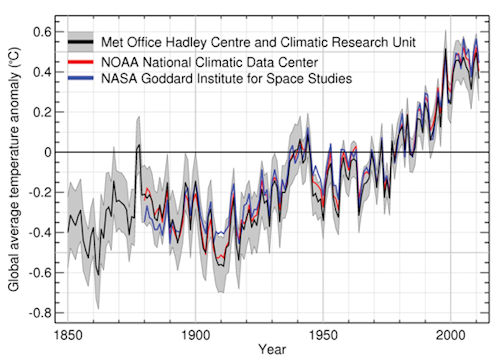
The 160-year perspective. Source: Met Office-University of East Anglia Climatic Research Unit
by James A. Bacon
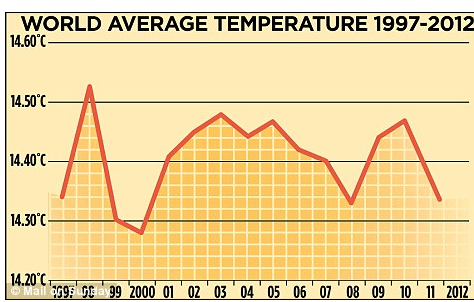
When the United Kingdom’s Met Office released its 2011 global temperature numbers back in November, the results were ambiguous enough that both the Global Warming (GW) establishment and skeptics felt vindicated. A compilation of the world’s three leading global temperature databases — the East Anglia Climate Research Unit, the NOAA Climate Data Center and the NASA Goddard Institute for Space Studies — showed that 2011 was on track to be the 11th warmest year in the past 150 years, stated the Met Office in an article headed, “Warm global temperatures continue in 2011.” Yet skeptics seized on the fact that, despite dramatic increases in greenhouse gases over the past 14 years, global temperatures have plateaued.
The 15-year perspective. Source: (U.K.) Mail Online. (Click for more legible image.)
The GW establishment attributed the pause in rising temperatures to “a very persistent and strong La Niña, which brings cooler water to the surface of the Pacific Ocean.” When the La Niña disappears, global temperatures will resume their rise. Skeptics contend that solar activity plays a far greater role than acknowledged in mainstream climate models and that the earth could be entering a new solar cycle resembling the so-called “Maunder Minimum” that brought on the Little Ice Age.
The scientific battle lines are clearly drawn now, and we should know pretty conclusively within another decade which side is right. I am agnostic on the issue, which, I suppose makes me a closet skeptic because I don’t believe the “science is settled.” But it soon will be. Within the not-too-distant future, one of the two sets of predictions being made now should be proven conclusively wrong.
What won’t be settled, especially if the GW camp’s predictions pan out, is what to do about it. Witness a recent exchange in the letters page in the Wall Street Journal in which Kevin Trenberth and 37 other scientists responded to an op-ed previously published by 16 other scientists disputing that the evidence for global warming was “incontrovertible.” (Local angle: One of those “other” scientists was James McGrath, a world leader in polymer chemistry at Virginia Tech.)
Trenberth made an appeal to authority in support of his position that the planet “unequivocally” is getting hotter. “More than 97% of scientists actively publishing in the field agree that climate change is real and human caused,” he wrote. “It would be an act of recklessness for any political leader to disregard the weight of evidence and ignore the enormous risks that climate change clearly poses.”
He then went on to state, “In addition, there is very clear evidence that investing in the transition to a low-carbon economy will not only allow the world to avoid the worst risks of climate change, but could also drive decades of economic growth.”
Thus, Trenberth transitioned from an appeal to scientific authority to a bald assertion about the economy, which, he, as a climate scientist and not an economist, has no professional basis for making. Will a “transition to a low-carbon economy” really avoid the worst risks of climate change? Would it really drive economic growth? The point is less than incontrovertibly settled. According to today’s Wall Street Journal, the green movement is rethinking its commitment to Europe’s multibillion-dollar commitment to biofuels. In another straw in the wind, the European Commission’s energy department is reappraising its commitment to renewable energy sources in the absence of a global agreement to combat climate change. EU companies would suffer eroding international competitiveness because clean power sources are so much more expensive.
There are multiple, nested layers to the Global Warming (GW) debate, and I am not at all convinced that they lead ineluctably to Trenberth’s position in support of massive government intervention in the economy. Indeed, I suspect that the only people who are persuaded by that chain of reasoning are predisposed to be suspicious of free markets and inclined to favor big government, especially when greater government control puts like-minded people at the helm. Consider these ongoing issues:
Can we really trust our temperature measures? Skeptics have called attention to various biases in the way temperatures are monitored, pointing to land-based measurement stations that once were located in the countryside but now, due to sprawling development, experience the urban heat-island effect. The GW establishment says it has corrected for that upward bias. For the GW orthodoxy to stand, one must agree that the statistical massaging of temperature databases adequately addresses this very real problem. (I suspect that it probably has, and I discount this as a major issue — but it is a source of contention.)
Are today’s temperatures truly unprecedented? Skeptics contend that temperatures have undergone long-wave cycles since the end of the last Ice Age, bringing on periods of global warming during the Roman era and again during the Middle Ages. If they are correct, the current temperature peak we are experiencing could be due to factors other than rising levels of greenhouse gases, with the implication that global climate models are flawed. Using “proxy” measures such as tree ring widths, lake sediments and other natural phenomenon that vary with temperature, the GW orthodoxy downplays past warming eras and maintains that today’s temperature rise is without peer. Again, for the orthodoxy to stand, the reconstruction of past temperature peaks must be correct.
Will greenhouse gases lead to runaway temperature increases? No one disputes the conclusion, all other things being equal, that rising levels of greenhouse gases will have a warming effect on the planet. But the GW orthodoxy goes beyond that, insisting that climatic feedback mechanisms such as increased evaporation of water into the atmosphere — water vapor is a far more potent greenhouse gas than carbon dioxide — will magnify the effect and lead to runaway temperature increases. Skeptics note that even higher CO2 levels in past climate epochs did not lead to runaway warming. Moreover, they say, crucial climate dynamics like cloud formation are still ill-understood. An increase in cloud cover would increase the earth’s reflectivity and reduce the warming sunlight penetrating the atmosphere. Skeptics claim that cloud formation is heavily influenced by varying levels of solar radiation, which interacts with the earth’s magnetosphere to block cosmic rays. The cosmic rays, it is postulated, interact with elements in the atmosphere to seed clouds. If this competing explanation is correct, the climate models underlying the GW orthodoxy need significant revision.
Will rising temperatures be an unmitigated environmental disaster? It is not sufficient for the GW orthodoxy to maintain that temperatures are rising, it must insist that rising temperatures will lead to a string of mankind-threatening calamities from rising sea levels and stronger hurricanes to drought, starvation and conflict caused by scarce resources and the spread of environmental refugees. The potential consequences are so dire that global warming must be halted at all costs. But it strikes me that those hewing to the GW orthodoxy trumpet the downside while muting potential benefits of warming. The orthodoxy refuses to acknowledge, for instance, that increasing levels of C02 amount to atmospheric fertilizer that stimulates plant growth and increases plant resistance to drought. Some skeptics have argued that global warming would boost crop yields and promote plant life generally. While the GW priesthood worries about higher temperatures spreading malaria, no one has explored the impact of warmer weather on cold-weather diseases, such as colds and influenza. The depiction of unmitigated environmental disaster seems incredibly one-sided. Yet the view of global warming as environmental Armageddon is critical to justifying the empowerment of the state over the economy.
Is curtailing greenhouse gases the best way to stave off the impact of global warming? Some economists have argued that the best way to adapt to runaway global warming, assuming it occurs, is to foster economic growth that will enable fragile developing nations to adapt to the postulated increase in fire, flood, disease and famine. Rich societies are more resilient than poor ones. But GW orthodoxy will not entertain that train of thought. The only proffered solution is to roll back the level of greenhouse gas emissions in the belief that (a) the global climate is amenable to such fine tuning, (b) we haven’t already passed the point of no return on irreversible climate change, and (c) there is some ideal, steady-state temperature to which we should aspire, which happens to be the point in time at which people began to get alarmed about climate change.
Is government the best agent of change? Finally, the adherents of GW orthodoxy believe that government, in its all-knowing, far-seeing wisdom, must lead the charge. Private individuals and enterprises cannot bring about the required deep, structural changes to the economy in a timely fashion. Government must coerce, subsidize, threaten and cajole people to accelerate the shift to the low-carbon economy. In the United State, government has lavished billions of dollars upon schemes from home- conservation programs to ethanol and Renewable Portfolio Standards that require power companies to acquire an increasing share of their energy from renewable sources. The home conservation programs were a bureaucratic fiasco. Ethanol, environmentalists have now concluded, represent a step backward, and an expensive one to boot. Solar energy subsidies have brought us Solyndra, there is a growing backlash against wind power, and it is slowly sinking in that variable energy sources like wind and solar require a massive back-up of natural gas-fired generating capacity. Followers of the GW orthodoxy are sublimely confident in their ability to get things right yet they repeatedly get blind-sided by special interests and rent seekers who manipulate the subsidies, tax credits and regulations to their advantage. Tens of billions of dollars (perhaps hundreds of billions in Europe) have been largely wasted already, and the tab would run even higher if the Trenberths had their way. Ironically, if you want to see real progress in energy conservation, look to the one sphere of activity not subject to government meddling — the retrofit of commercial and industrial properties — and you’ll find dramatic progress.
To justify the current array of GW policies put into place in Europe, the U.S., Virginia and increasingly across the world requires the feat of answering “yes” to all six of the yes-no questions I have just enumerated. I am willing to trust the scientific process to sort out the first three of those sets of issues. But I’m not willing to entrust our economy to true believers attempting to implement their vision by means of a corrupted political process.
Finally, I repeat my admonition to my friends in Virginia’s environmental and smart-growth communities: Decouple your arguments for smart growth from Global Warming. If temperatures resume their upward climb in the next 10 years, the scientific debate may be settled once and you will be proven correct. On the other hand, if the orthodoxy collapses — so will a major justification for smart growth. As I hope to show in future posts, a solid case for smart growth can be built on a foundation of fiscal conservatism and repair to Virginia’s native environment.
The Landford crew used a Wirtgen paver that scraped up asphalt, reconstituted it and paved it on the spot. Photo credit: VDOT.
by James A. Bacon
America’s Interstate highways are reaching the end of their design lives. Reconstructing them could cost Virginia billions of dollars and cause massive disruptions to traffic while they are under repair. Fortunately, the Virginia Department of Transportation has developed a system for cutting the costs and slashing construction times that could make the cost affordable and the reconstruction process tolerable.
In a first-in-the-nation demonstration project, VDOT repaired 3.7 miles of Interstate 81 near Staunton last year that could provide the prototype for rebuilding the state’s interstate highway system. Working with contractor Lanford Brothers Company, Inc., of Roanoke, the highway department combined three existing processes — cold in-place recycling, cold central-plant recycling and full in-depth reclamation. The project cost $7.4 million as opposed to an estimated $40 million using traditional techniques.
“Using these pavement recycling methods has the potential to revolutionize how we rehabilitate our aging roads, both in Virginia and nationally,” said Governor Bob McDonnell in a press release. “We expect to continue using these processes, where appropriate, to save money and materials as we rebuild older roads throughout the commonwealth. VDOT next plans to use cold in-place recycling to rebuild a section of U.S. 17 in Isle of Wight County in Hampton Roads during the 2012 paving season.”
Highways consist of three layers: a compacted soil base, a foot of compacted stone aggregate and a foot of hot-mix asphalt. On I-81, the right, southbound lane had received the heaviest pounding and needed the most work. The contractor milled down the upper asphalt layer, stockpiling it on site for reuse. Then it applied a stabilizing agent (cement or lime) to strengthen the aggregate below. The milled asphalt was processed at a nearby mobile plant and applied as a new top layer. For the left southbound lane, which was in better shape, five inches were pulverized in place, mixed with a binding agent, applied back to the roadway and topped off with four inches of traditional hot-mix asphalt. Much of the material work was conducted at ambient, rather than hot, temperatures.
“Savings on the I-81 in-place pavement recycling project go beyond time, money and materials,” said VDOT Commissioner Greg Whirley. “It saved fuel because it reduced the need to transport as much new and old materials. It increased safety for drivers and road workers on the project, because it reduced work-zone congestion. This section of rebuilt pavement also will be stronger from bottom to top, extending its service life and reducing the need for such complex maintenance for many years.”
Using traditional methods, the work would have consumed a year or more non-stop during which much of I-81 traffic would have been diverted to Route 11, where it would have conflicted with local traffic. With the new process, the plan called for work to be confined to eight five-day stretches. In actual practice, only three or four of those segments were needed, says Sandy Myers, public relations manager for the Staunton transportation district.
The project also used a novel traffic-management plan to detour cars onto U.S. 11 away from the construction while large trucks used a lane on I-81 that was not under construction. VDOT alerted motorists to the work several hundred miles from the project via on-road, Web and other communication tools.
The year: 2075. The American colonies on the Moon are getting restless under Washington’s tyrannical rule….
This second edition of “Dust Mites” has a snazzy new cover, includes helpful lunar maps, and is 5,000 words tighter than the original. The sequel, “Trogs,” is scheduled for publication this summer.
Advertisement
Advertisement
Advertisement
Advertisement
About
Bacon’s Rebellion is Virginia’s leading politically non-aligned portal for news, opinions and analysis about state, regional and local public policy. Read more about us here.
Fund the Rebellion
Shake up the status quo! Your contributions will be used to pay for faster download speeds and grow readership. Make a one-time donation by credit card or contribute a small sum monthly.
Can’t wait until tomorrow
For your Bacon’s Rebellion fix?
Enter your email address to receive immediate notifications of new posts by email.
SUBSCRIBE
Search Bacon’s Rebellion
Categories
Archives
The Jefferson Council
Protecting Thomas Jefferson’s Legacy at the University of Virginia
Forgot Your Password?
Shoot me an email and I’ll generate a new password for you.



 By Peter Galuszka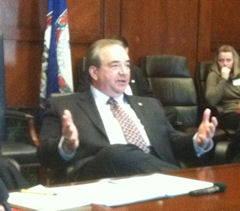

 By Peter Galuszka
 By Peter Galuszka